
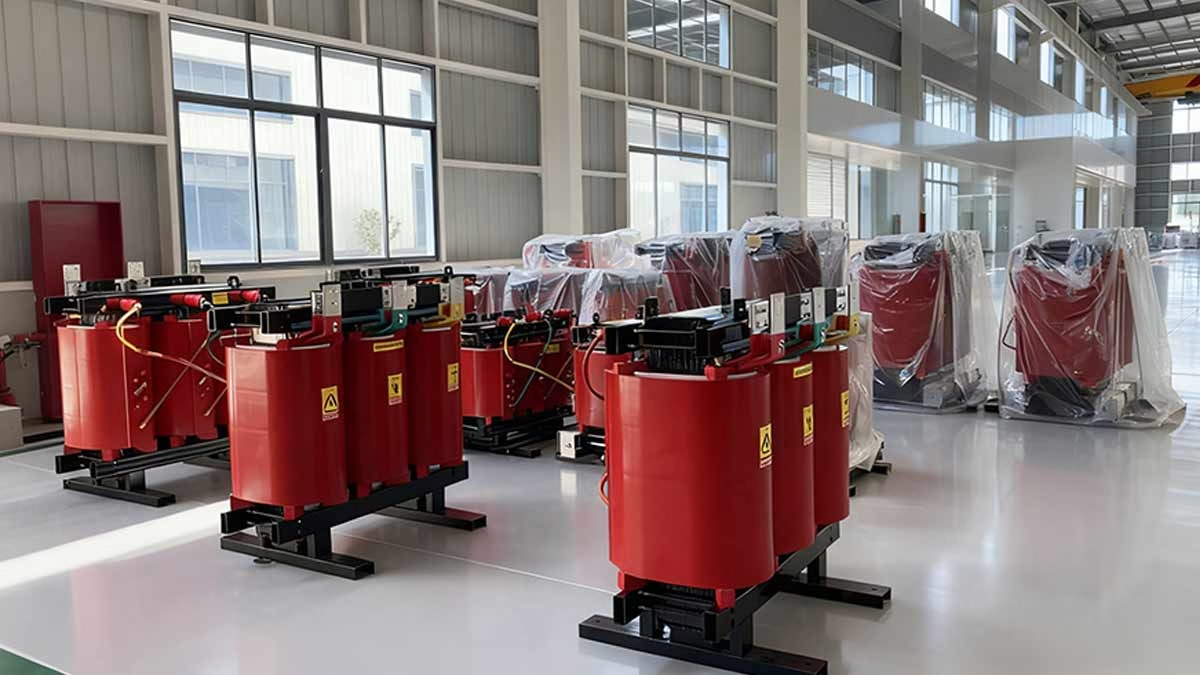
The ideal dry type transformer type isn’t a one-size-fits-all solution—it’s tailored to your application’s unique demands. For harsh industrial settings, cast resin transformers stand out for their ruggedness. Commercial buildings often benefit from VPI (Vacuum Pressure Impregnated) transformers, balancing cost and performance. Renewable energy projects, meanwhile, call for specialized designs: cast resin excels in offshore wind farms, while VPI transformers deliver value in solar installations.
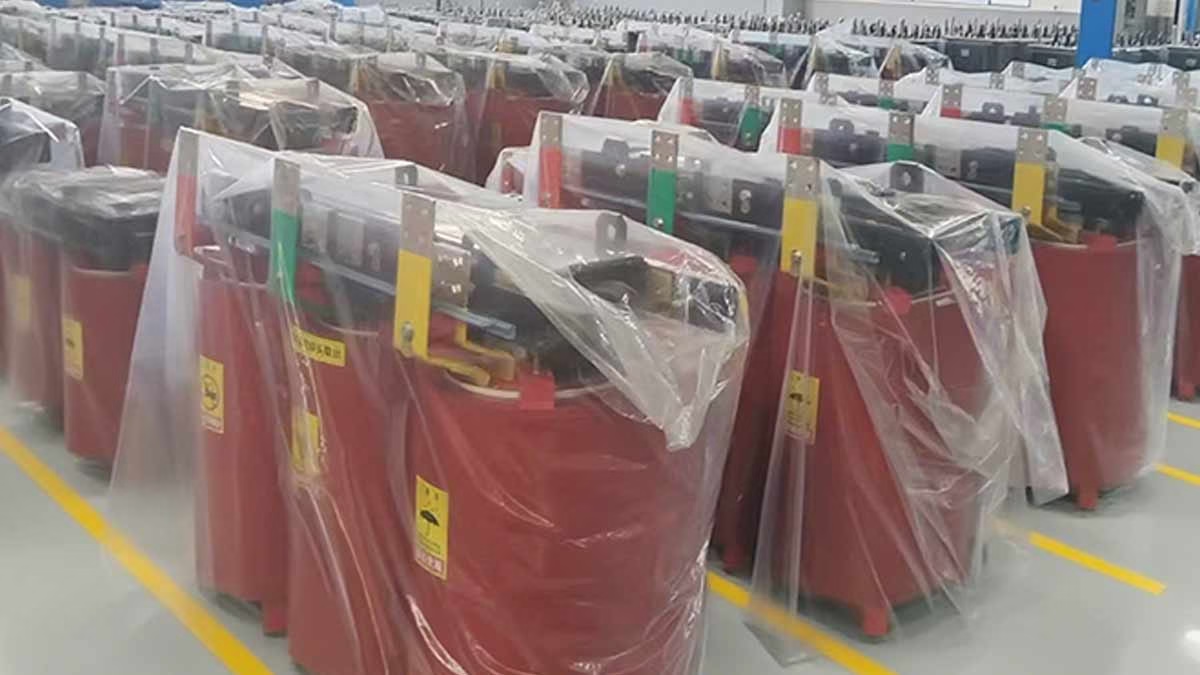
With decades of experience in transformer technology and application engineering, we’ve refined the art of matching transformer types to real-world needs. Below, we break down how to select the right dry type transformer for industrial, commercial, and renewable energy use cases—plus long-term cost considerations and future-ready innovations.
Contents
hide
Industrial Applications: Cast Resin vs. VPI Transformers for Heavy-Duty Environments
Worried about transformer reliability in tough industrial conditions? The stakes are high—subpar performance can lead to costly downtime, safety hazards, and premature replacements. For heavy-duty industrial settings, the choice between cast resin and VPI transformers comes down to environmental resilience, temperature tolerance, and overload capacity.
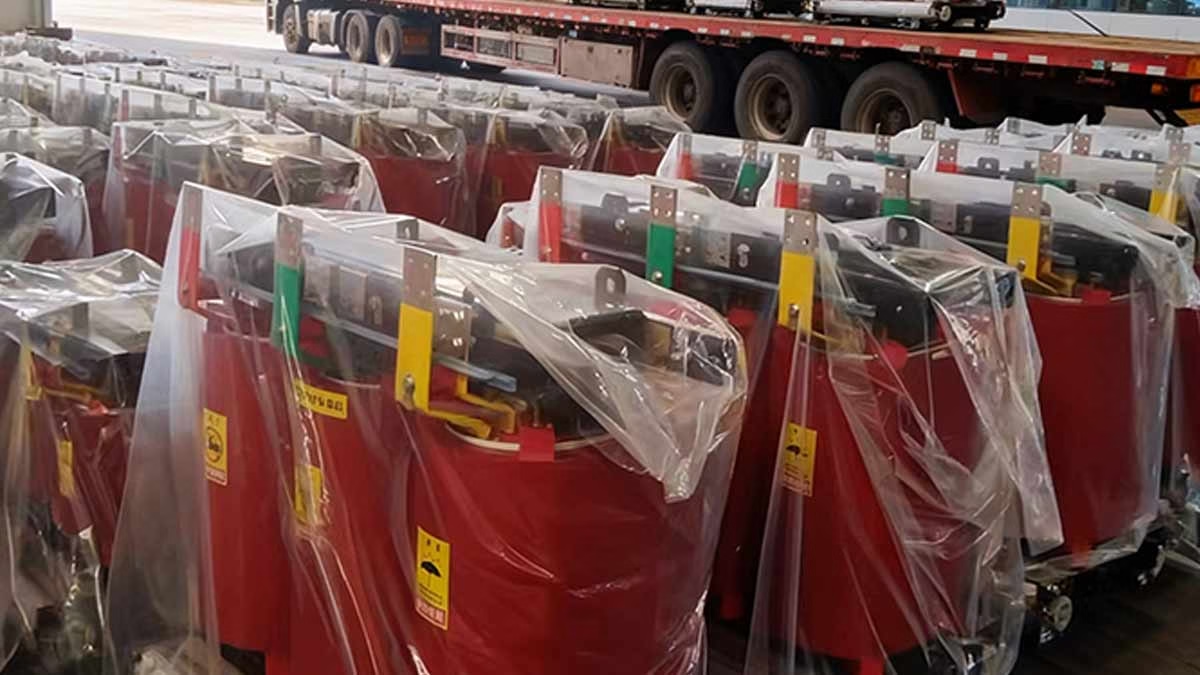
Cast resin transformers typically outperform VPI models in harsh industrial environments, offering superior resistance to moisture, chemicals, and extreme temperatures. They’re the go-to for oil & gas facilities, chemical plants, and heavy manufacturing. VPI transformers, however, can be a cost-effective alternative for less demanding industrial spaces with controlled conditions.
Key Factors for Industrial Transformer Selection
Environmental Resistance
- Cast Resin Transformers: Boast excellent resistance to moisture, salt spray, and corrosive chemicals. From our experience with coastal refineries, these units thrive in high-humidity, salt-rich environments where VPI transformers would degrade over time. They’re also ideal for outdoor installations or areas with heavy pollution.
- VPI Transformers: Offer good performance in standard industrial conditions but struggle with extreme environments. In a recent steel mill project, VPI units required replacement within two years due to heat and chemical exposure—we upgraded to cast resin, which has operated reliably for over a decade.
Temperature Handling
- Cast Resin: Excels in extreme temperatures (-40°C to 55°C) and sudden thermal fluctuations. We installed these in a desert mining operation where daytime temperatures reached 50°C and dropped to 10°C overnight—they maintained consistent performance without overheating.
- VPI: Performs well in moderate temperature ranges (0°C to 40°C) but may need additional cooling in high-heat settings. They’re best suited for controlled indoor industrial spaces, such as light manufacturing facilities.
Overload Capacity
- Cast Resin: Delivers higher short-term overload capacity (up to 30% above rated kVA) and superior heat dissipation. In a paper mill application, these transformers handled peak-production overloads for hours without performance dips.
- VPI: Offers moderate overload capacity, making it suitable for industries with predictable load patterns (e.g., packaging facilities) but risky for heavy-duty applications with variable demand.
| Factor | Cast Resin | VPI |
|---|---|---|
| Chemical Resistance | Excellent | Good |
| Moisture Resistance | Very High | Moderate |
| Temperature Extremes | Excellent (-40°C to 55°C) | Good (0°C to 40°C) |
| Overload Capacity | High (up to 30%) | Moderate (up to 15%) |
| Initial Cost | Higher | Lower |
| Maintenance | Minimal (1x/5 years) | Low to Moderate (1x/2 years) |
For industries like steel manufacturing, oil refining, or chemical processing—where harsh conditions are non-negotiable—cast resin transformers are the safer, more cost-effective long-term choice. VPI transformers can work for light industrial use cases (e.g., food processing plants with controlled environments) but require careful environmental monitoring to avoid premature failure.
Commercial Buildings: Selecting the Ideal Dry Type Transformer for Urban and Office Spaces
Choosing a dry type transformer for commercial buildings means balancing space constraints, fire safety, noise levels, and load profiles. Urban offices, shopping malls, high-rises, and mixed-use developments each have unique needs—and the right transformer should adapt without compromising efficiency or safety.
VPI transformers are the default for most commercial applications, offering compact designs and cost-effectiveness. However, cast resin transformers become necessary for high-rises or buildings with strict fire safety codes, thanks to their superior fire resistance and ability to handle variable loads.
Key Considerations for Commercial Transformer Selection
Space Constraints
- VPI Transformers: Compact and lightweight, making them ideal for cramped electrical rooms or retrofit projects. In a historic downtown office building renovation, we installed VPI units that fit into the existing 8x10ft electrical closet—avoiding costly structural modifications.
- Cast Resin Transformers: Slightly larger footprint due to heat dissipation needs. For a 50-story high-rise, we used cast resin units in the basement, where extra clearance allowed for proper ventilation and heat management.
Fire Safety
- VPI Transformers: Offer good fire resistance (UL 1561 certified) for standard commercial applications. We’ve deployed these in shopping malls and mid-rise offices, meeting basic fire safety requirements without overspending.
- Cast Resin Transformers: Deliver superior fire safety, with self-extinguishing properties and no toxic fumes. Local codes mandated these for a 60-story mixed-use tower in a dense urban area—reducing fire risk and lowering the building’s insurance premiums.
Noise and Load Profile
- VPI Transformers: Operate quietly (≤60dB), perfect for offices, libraries, or hotels. In a luxury hotel project, VPI units met strict noise standards, ensuring guest comfort in adjacent rooms. They excel with stable, predictable loads (e.g., 9-to-5 office usage).
- Cast Resin Transformers: Standard models can be noisier (65–70dB), but low-noise designs are available. For a concert hall, we specified custom cast resin units with sound-dampening enclosures. They’re better for variable loads (e.g., mixed-use buildings with offices, restaurants, and gyms), handling peak demand without voltage dips.
| Factor | VPI | Cast Resin |
|---|---|---|
| Initial Cost | Lower | Higher |
| Space Efficiency | High (compact design) | Moderate |
| Fire Resistance | Good (UL 1561) | Excellent (self-extinguishing) |
| Noise Levels | Low (≤60dB) | Moderate (65–70dB; low-noise options available) |
| Variable Load Handling | Good | Excellent |
| Maintenance | Low (1x/3 years) | Very Low (1x/5 years) |
For standard office buildings, retail spaces, or mid-rises, VPI transformers strike the right balance of cost, size, and performance. Cast resin becomes essential for high-rises, dense urban developments, or buildings with variable loads—justifying the higher upfront cost with enhanced safety and reliability.
Renewable Energy Systems: Optimal Dry Type Transformers for Solar and Wind Farms
Renewable energy projects present unique transformer challenges: variable load profiles, harsh outdoor environments, and the need for efficient power conversion. The right dry type transformer depends on the energy source—wind or solar—and the installation location (onshore, offshore, or urban).
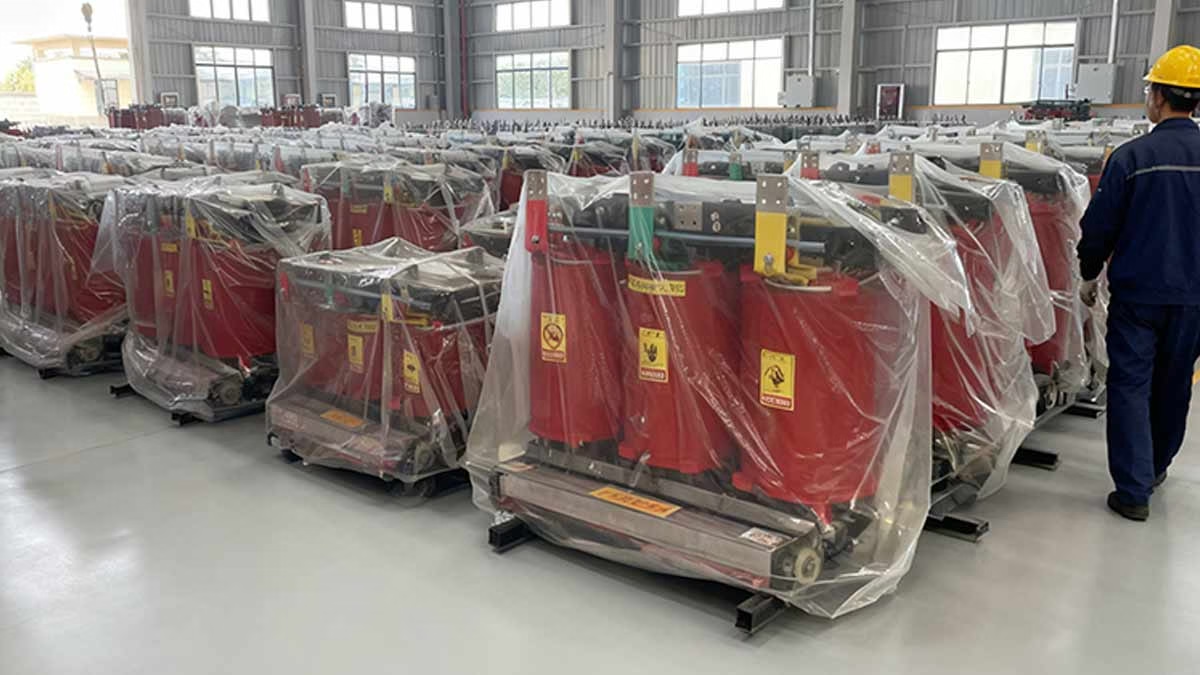
Cast resin transformers are the top choice for offshore wind farms, built to withstand salt spray, high winds, and humidity. Solar installations, meanwhile, often use VPI transformers for their cost-effectiveness and suitability for controlled outdoor conditions. Both types must handle bidirectional power flow and fluctuating generation efficiently.
Transformer Selection for Renewable Energy Applications
Wind Farm Installations
- Offshore Wind: Cast resin transformers are non-negotiable. We specified these for a North Sea wind project, where they’ve operated flawlessly for 8 years despite constant salt spray and 100mph winds. Their corrosion resistance and sealed design prevent moisture ingress, a common failure point for VPI units.
- Onshore Wind: Both types work, but the choice depends on environment. For a mountain wind farm with extreme temperature swings (-30°C to 40°C), we used cast resin. For a plains wind farm with mild conditions, VPI transformers delivered cost savings without sacrificing performance.
Solar Farm Installations
- Large-Scale Solar: VPI transformers are the cost-effective choice for desert or rural solar farms. In a 50MW desert solar project, VPI units maintained 98% efficiency in 45°C heat, with minimal maintenance needs.
- Urban Rooftop Solar: Compact, lightweight VPI transformers are ideal. We installed these in a city-center office building’s rooftop solar system, where weight and space constraints ruled out cast resin units.
Key Renewable Energy Transformer Requirements
- Load Variability: Cast resin handles highly variable wind generation better, while VPI works for more predictable solar output.
- Environmental Resistance: Cast resin excels in coastal, high-altitude, or extreme climate installations. VPI suffices for standard outdoor solar farms.
- Partial Load Efficiency: Both types offer strong efficiency at partial loads (20–100% rated kVA), critical for maximizing energy harvest.
| Factor | Cast Resin | VPI |
|---|---|---|
| Offshore Wind | Excellent | Not Recommended |
| Onshore Wind | Very Good | Good |
| Large-Scale Solar | Good | Very Good |
| Urban Rooftop Solar | Moderate | Excellent |
| Load Variability Handling | Excellent | Good |
| Initial Cost | Higher | Lower |
| Remote Maintenance | Very Low | Low |
For offshore wind or harsh-climate renewable projects, cast resin transformers are worth the investment. For most onshore solar and mild-condition wind farms, VPI transformers deliver the best balance of cost and performance.
Cost-Benefit Analysis: Long-Term Value of Dry Type Transformers Across Sectors
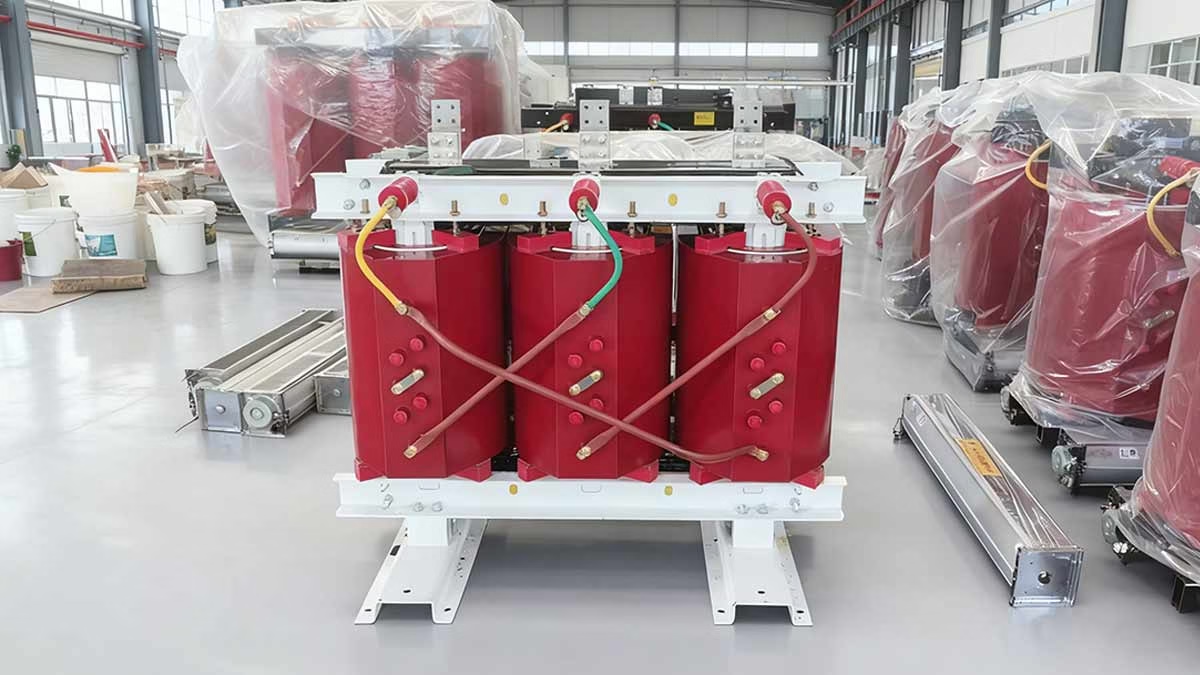
Balancing upfront costs with long-term value is a common challenge—but focusing solely on initial price can lead to higher expenses down the line. The total cost of ownership (TCO) includes energy losses, maintenance, downtime, and lifespan—factors that vary dramatically between cast resin and VPI transformers, depending on the application.
Industrial Sector
- Initial Cost: Cast resin transformers cost 20–30% more upfront than VPI units. For a chemical plant project, cast resin was $15,000 more per unit initially.
- Operational Savings: Cast resin’s lower energy losses (3–5% less than VPI) and minimal maintenance (once every 5 years vs. 2 years for VPI) add up. Over 10 years, the chemical plant saved $40,000 in energy and maintenance costs per unit.
- Lifespan: Cast resin lasts 5–10 years longer in harsh environments. A refinery reported 40% fewer outages after switching to cast resin, avoiding $100,000+ in downtime costs annually.
Commercial Buildings
- Initial Cost: VPI transformers are 15–25% cheaper upfront. For a 10-story office complex, VPI units cost $8,000 less per unit than cast resin.
- Operational Savings: Differences are smaller (1–3% energy efficiency gap), but cast resin’s lower maintenance needs (once every 5 years vs. 3 years for VPI) save money long-term.
- Space Value: VPI’s compact design can save valuable floor space in urban buildings—worth tens of thousands in real estate value for dense city centers.
Renewable Energy Projects
- Initial Cost: Cast resin costs 10–20% more, but offshore wind farms justify this with zero corrosion-related replacements.
- Maintenance Savings: Cast resin requires 20–30% less maintenance in remote locations. An offshore wind farm saved $60,000 over 5 years by avoiding VPI unit repairs and replacements.
| Factor | Industrial Sector | Commercial Buildings | Renewable Energy |
|---|---|---|---|
| Cast Resin vs. VPI Initial Cost Premium | +20-30% | +15-25% | +10-20% |
| Annual Energy Savings (Cast Resin) | 3-5% | 1-3% | 2-4% |
| Maintenance Cost Difference (Cast Resin) | 30-40% Lower | 10-20% Lower | 20-30% Lower |
| Lifespan Advantage (Cast Resin) | +5-10 Years | +2-5 Years | +3-7 Years |
| ROI Breakeven Point | 7-10 Years | 10-15 Years | 8-12 Years |
In harsh or high-stakes environments (industrial, offshore renewable), cast resin’s higher upfront cost pays off in longevity and reduced downtime. For standard commercial or onshore solar projects, VPI transformers offer better short-term value—though cast resin may be worth it for long-term (15+ year) installations.
Future-Proofing Your Choice: Emerging Technologies in Dry Type Transformers
As energy systems evolve—with smarter grids, more renewables, and stricter efficiency standards—your transformer needs to keep up. Emerging technologies in dry type transformers focus on smart monitoring, higher efficiency, and seamless integration with modern energy systems. Whether you’re upgrading an industrial facility, building a commercial high-rise, or expanding a renewable project, these innovations ensure your transformer remains relevant and efficient for decades.
Industrial-Focused Innovations
- Smart Monitoring & Predictive Maintenance: Transformers with built-in IoT sensors track temperature, load, and insulation health in real time. We implemented these in an automotive plant, reducing downtime by 40% by identifying potential failures before they occurred.
- Advanced Cooling Systems: Phase-change materials and heat pipes improve heat dissipation, allowing cast resin transformers to handle 20% higher capacity in the same footprint. Perfect for space-constrained industrial facilities.
- High-Temperature Superconducting (HTS) Materials: Still in early stages, HTS transformers promise ultra-high efficiency (99.5%+) and compact designs—game-changing for high-power industrial applications.
Commercial Building Innovations
- Ultra-Compact Designs: Amorphous metal cores and optimized windings create VPI transformers that are 40% smaller than traditional models. In a Singapore high-rise, these freed up 30% of the electrical room for additional storage.
- Building Management System (BMS) Integration: Transformers that communicate with BMS platforms optimize power distribution based on real-time building usage. We’ve seen these reduce commercial building energy consumption by up to 15%.
- Low-Noise Technology: Advanced core materials and vibration-dampening enclosures reduce VPI transformer noise to ≤50dB—ideal for libraries, hotels, and urban offices.
Renewable Energy Innovations
- Bidirectional Power Flow: Transformers designed for solar-plus-storage systems handle power flow from panels to the grid and back, improving efficiency by 10%.
- Wide-Range Load Efficiency: New designs maintain 98% efficiency from 20–100% load, critical for variable wind and solar generation.
- Solid-State Transformers: Emerging technology that offers precise power control and grid flexibility—perfect for future microgrid and renewable integration projects.
| Technology | Industrial Impact | Commercial Impact | Renewable Energy Impact |
|---|---|---|---|
| Smart Monitoring | High | Moderate | High |
| Advanced Cooling | High | Moderate | Moderate |
| HTS Materials | Potential Game-Changer | Limited | Potential Game-Changer |
| Ultra-Compact Designs | Moderate | High | Moderate |
| BMS Integration | Low | High | Moderate |
| Bidirectional Power Flow | Low | Moderate | High |
Future-proofing means choosing transformers with upgradeable features (e.g., modular monitoring systems) and compliance with upcoming efficiency standards. For industrial and renewable projects, prioritize smart monitoring and environmental resilience. For commercial buildings, focus on compactness, BMS integration, and low-noise operation.
Conclusion
Selecting the right dry type transformer boils down to matching its strengths to your application’s needs: cast resin for harsh industrial and offshore renewable environments, VPI for cost-effective commercial and onshore solar projects. Beyond immediate performance, consider long-term value—total cost of ownership, lifespan, and adaptability to emerging technologies.
By focusing on application-specific requirements, environmental conditions, and future scalability, you’ll choose a transformer that delivers reliable performance, reduces operational costs, and stays relevant as your energy needs evolve. Whether you’re operating a chemical plant, a high-rise office, or a solar farm, the right dry type transformer is an investment in efficiency, safety, and long-term success.