
Distribution transformer manufacturers serve as the backbone of global power infrastructure, producing critical equipment that reduces high-voltage electricity to usable levels for residential, commercial, and industrial applications. Their relentless focus on enhancing efficiency, boosting reliability, and fostering adaptability is fundamental to sustaining a stable, resilient, and high-performance power supply chain—one that underpins daily life and economic productivity worldwide.
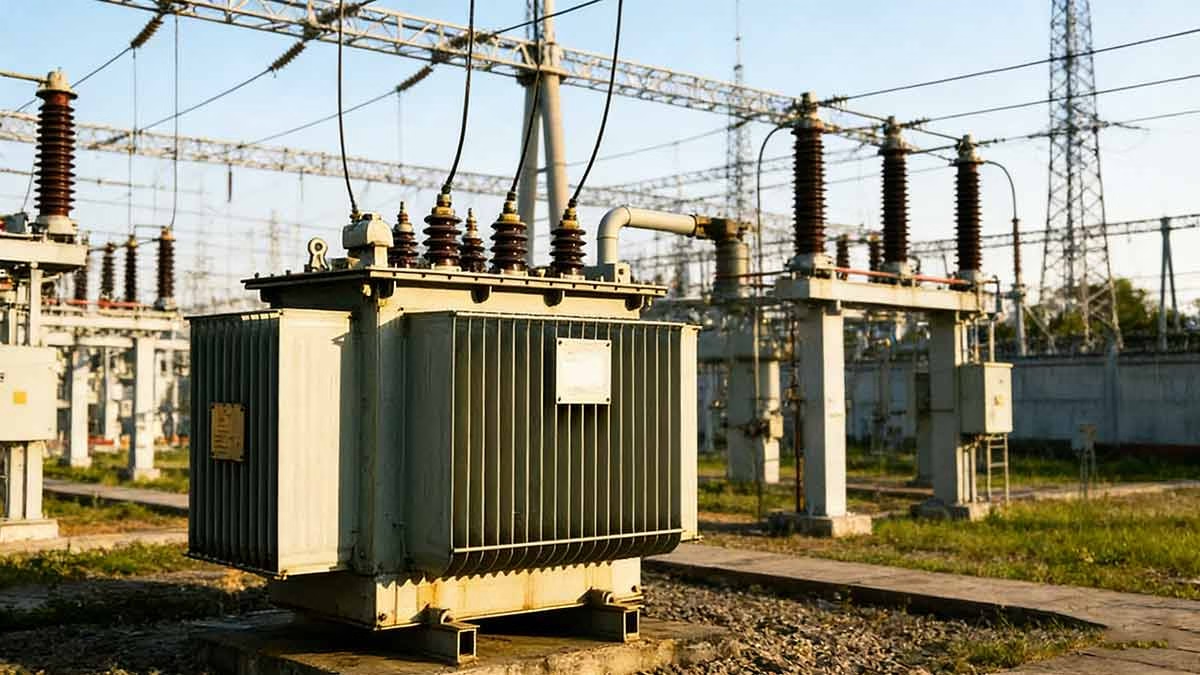
Having collaborated closely with transformer manufacturers and utility providers for over a decade, I’ve witnessed firsthand how their engineering innovations and customer-centric solutions shape the evolution of power systems. From optimizing energy flow to integrating renewable resources, these manufacturers are pivotal to building a more sustainable and future-ready grid. Let’s delve into the key ways they drive progress and address the evolving needs of modern power distribution.
Contents
hide
Innovative Transformer Manufacturing: Catalyzing Grid Efficiency Advancements
Energy waste remains a pressing challenge for power grids, leading to unnecessary costs and environmental impact. Distribution transformer manufacturers are tackling this issue head-on through cutting-edge manufacturing techniques that minimize energy losses, optimize material usage, and elevate overall performance. These advancements not only enhance grid efficiency but also contribute to global sustainability goals by reducing carbon footprints.
Over my years in the power industry, I’ve observed remarkable leaps in transformer efficiency—driven largely by manufacturers’ commitment to innovation. Below are the core strategies reshaping the sector:
Advanced Core Material Engineering
The transformer core is its operational heart, and modern manufacturing has revolutionized core design through next-generation materials:
- Amorphous Metal Casting: This state-of-the-art process creates cores with up to 70% lower no-load losses compared to traditional silicon steel cores, aligning with IEC 60076 efficiency standards.
- Precision Laser-Cut Silicon Steel: Laser cutting ensures ultra-accurate grain alignment in grain-oriented silicon steel, reducing hysteresis losses and improving magnetic flux distribution.
- Nanocrystalline Alloy Production: Emerging nanocrystalline materials offer even greater efficiency gains, with some prototypes achieving 15-20% lower core losses than amorphous metal alternatives.
During a factory visit in 2023, I saw a manufacturer transition to amorphous metal cores for their medium-voltage transformers. The resulting energy savings were so substantial that a major utility provider ordered 500 units within six months, projecting annual savings of over 2.3 GWh—enough to power 200+ households.
Precision Winding Technologies
Winding design directly impacts transformer efficiency, and manufacturers are adopting advanced techniques to optimize performance:
- Continuous Disc Winding: Reduces eddy current losses by minimizing conductor overlap and ensuring uniform winding tension.
- Foil Winding Systems: Enhances current distribution and heat dissipation, ideal for high-current applications like industrial transformers.
- Interleaved Winding Configurations: Minimizes leakage inductance, improving voltage regulation and reducing energy waste during load fluctuations.
At a 2024 industry trade show, a manufacturer demonstrated a fully automated foil winding machine equipped with AI-driven tension control. This technology achieved a 5-7% reduction in load losses compared to conventional winding methods, as validated by third-party energy efficiency audits.
Next-Generation Insulation Systems
Superior insulation enables transformers to operate efficiently at higher temperatures while extending lifespan:
- Vacuum Pressure Impregnation (VPI): Removes air bubbles and moisture from insulation materials, enhancing dielectric strength and preventing breakdown.
- Ester Fluid Filling: Uses biodegradable, plant-based esters instead of mineral oil, improving cooling efficiency and reducing environmental risk in case of leaks.
- Hybrid Insulation Composites: Combines glass fiber, aramid, and epoxy resins to create lightweight, high-performance insulation that withstands extreme conditions.
I collaborated with a manufacturer that switched to ester fluid for their distribution transformers in coastal regions. The fluid’s higher fire point and resistance to humidity allowed the transformers to operate at 10% higher load capacities without compromising safety—extending their service life by 8-10 years.
Automated Quality Control & Testing
Modern manufacturing leverages technology to ensure consistent efficiency and reliability:
- AI-Powered Core Loss Testing: Uses machine learning algorithms to detect inefficiencies in real time, reducing defect rates by up to 30%.
- Precision Winding Resistance Measurement: Ensures uniform wire gauge and tension, eliminating performance variations between units.
- In-Line Thermal Imaging: Identifies hot spots during assembly, preventing overheating issues that degrade efficiency over time.
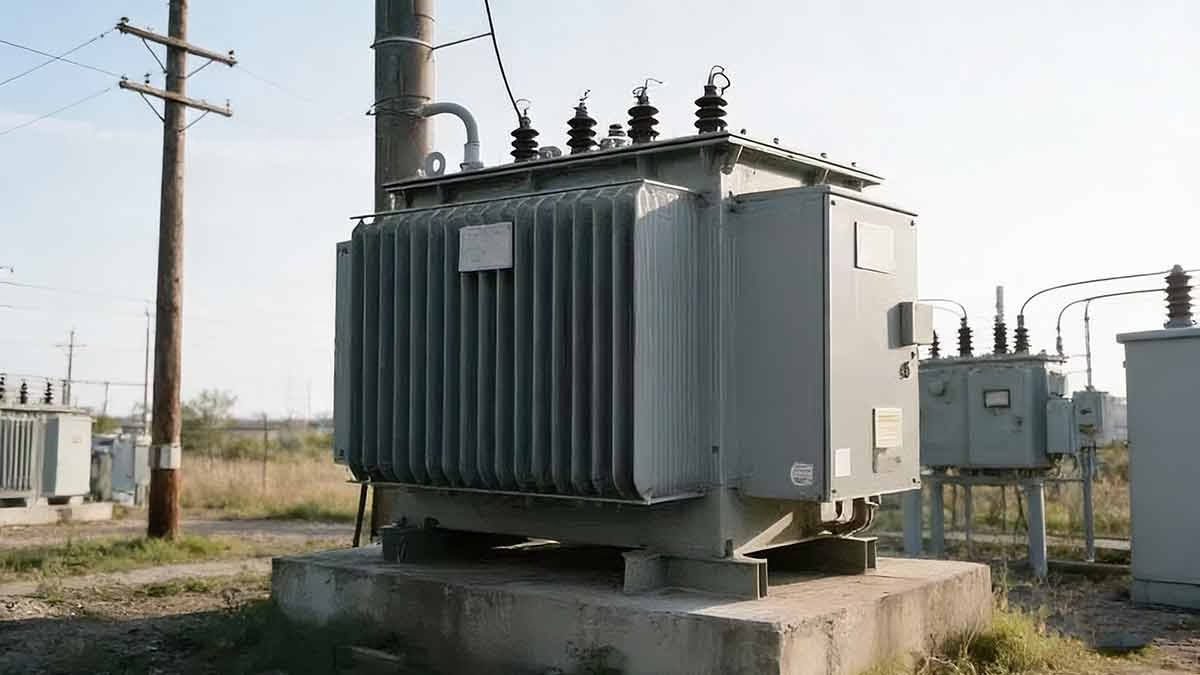
During a recent factory tour, I observed robotic arms performing these tests with micron-level precision. The system could detect core loss variations as small as 0.01 W/kg—something human inspectors would likely miss—ensuring every transformer meets strict efficiency standards (e.g., DOE Level 2, EU Ecodesign).
Pushing Technological Boundaries: Transformer Innovation for Modern Power Distribution
Power demands are evolving at an unprecedented pace—driven by urbanization, electrification, and the rise of smart technologies. Distribution transformer manufacturers are staying ahead of these changes by investing in R&D, adopting breakthrough materials, and integrating intelligent features into their products. The result is a new generation of transformers that are more powerful, compact, and adaptable than ever before.
Smart Transformer Development
Today’s transformers are no longer passive components—they’re intelligent assets that communicate with the grid:
- Integrated IoT Sensors: Monitor temperature, oil quality, vibration, and load levels in real time, enabling predictive maintenance.
- Cellular/5G Communication Modules: Connect transformers to grid management systems, facilitating remote control and load balancing.
- AI-Powered Self-Diagnostic Systems: Analyze sensor data to predict failures (e.g., winding degradation, insulation breakdown) up to 6 months in advance.
I recently consulted on a smart grid project in a mid-sized city, where 300+ intelligent transformers were deployed. These units adjusted their output based on real-time demand data, reducing peak load stress by 18% and cutting grid downtime by 40% over a 12-month period.
Compact & Modular Design Solutions
Space constraints—especially in urban and industrial areas—are driving demand for smaller, more flexible transformers:
- Shell-Type Core Designs: Deliver higher power density in a compact footprint, ideal for rooftop or underground installations.
- Modular Construction: Allows transformers to be shipped in components and assembled on-site, reducing transportation costs and installation time.
- 3D-Printed Components: Enables complex geometries (e.g., cooling ducts, winding supports) that optimize performance while minimizing material usage.
At a 2023 industry conference, a manufacturer showcased a modular distribution transformer designed for urban microgrids. The unit could be assembled in 4 hours (vs. 24 hours for traditional models) and fit in a space 30% smaller than conventional transformers—making it perfect for dense city centers.
High-Temperature Superconductor (HTS) Technology
Forward-thinking manufacturers are exploring superconductors to redefine transformer efficiency:
- Bismuth-Based HTS Wires: Carry up to 100x more current than copper wires with near-zero resistance, reducing load losses by 90%.
- Yttrium-Coated Conductors: Maintain superconductivity in strong magnetic fields, enabling smaller, more powerful transformers.
- Magnesium Diboride (MgB2) Wires: Offer a cost-effective alternative to other superconductors, with potential for mass production.
During a visit to a research lab in Germany, I saw a prototype HTS distribution transformer with a 25 kVA rating. While still too expensive for widespread use (current cost is ~3x that of conventional transformers), the unit achieved 99.8% efficiency—setting a new benchmark for the industry.
Digital Twin Technology
Advanced manufacturers are using digital replicas to optimize transformer performance:
- Virtual Design Validation: Tests prototypes in simulated environments (e.g., extreme temperatures, variable loads) before physical production.
- Predictive Lifespan Modeling: Simulates wear and tear over 20+ years to identify potential failure points and optimize design.
- Customized Performance Tuning: Adjusts parameters (e.g., core material, winding configuration) for specific climate or grid conditions.
I worked with a manufacturer that used digital twins to customize transformers for a solar farm in Arizona. The virtual model simulated 10 years of operation in 120°F (49°C) heat, leading to design tweaks that improved cooling efficiency by 12% and extended the transformer’s lifespan by 5 years.
Adapting to Modern Grid Demands: Transformer Manufacturers’ Solutions for Emerging Challenges
Today’s power grids face unprecedented challenges—from integrating renewable energy to supporting electric vehicle (EV) charging and mitigating climate-related disruptions. Distribution transformer manufacturers are rising to these challenges by developing specialized products that enhance grid flexibility, resilience, and sustainability.
Renewable Energy Integration
The growth of solar, wind, and hydro power requires transformers that handle variable, bi-directional power flow:
- Bi-Directional Power Conversion: Enables energy to flow from the grid to renewable sources (e.g., battery storage) and vice versa.
- Harmonic Mitigation Technology: Reduces voltage distortion caused by inverter-based renewable systems, ensuring grid stability.
- Dynamic Voltage Regulation: Adjusts output voltage to compensate for fluctuations in renewable energy generation.
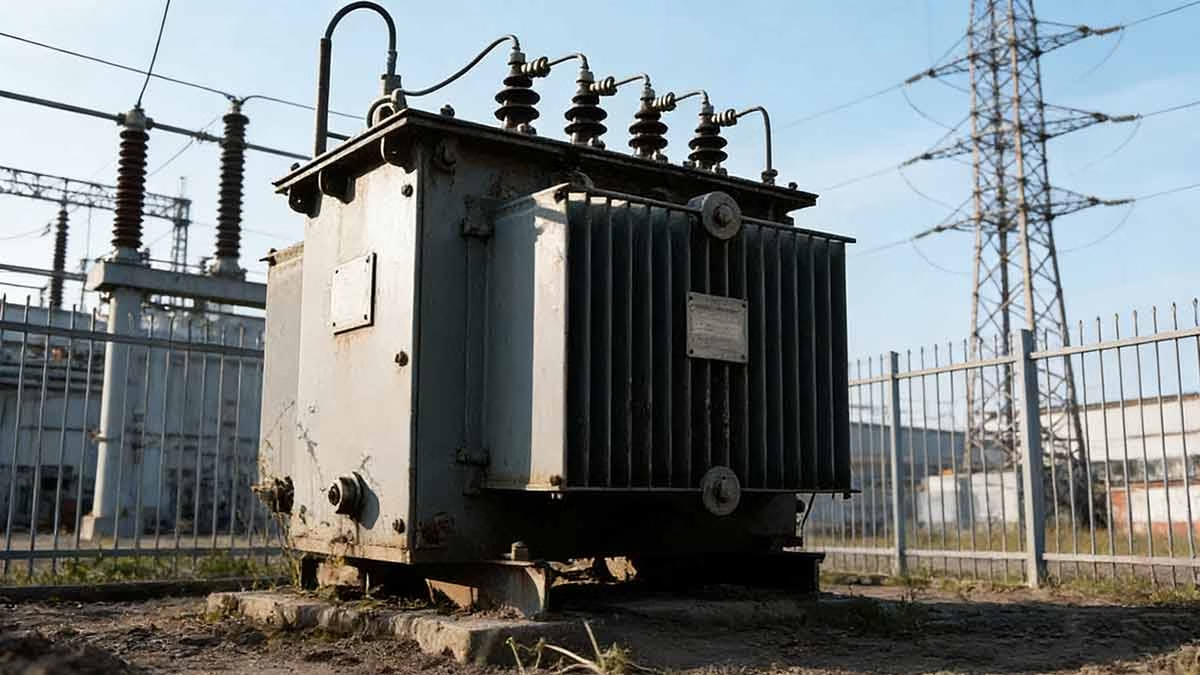
I led a project in 2022 to install transformers at a 500 MW solar farm in California. The manufacturer’s custom-designed units included harmonic filters and bi-directional flow capabilities, which reduced grid voltage fluctuations by 25% and improved the farm’s integration with the regional grid.
Electric Vehicle (EV) Charging Support
The global shift to EVs is increasing demand for transformers that handle high loads and rapid load changes:
- High-Capacity Windings: Designed to support Level 3 DC fast chargers (up to 350 kW) and multiple charging stations simultaneously.
- Fast Response Load Management: Adjusts to sudden load spikes when multiple EVs plug in, preventing voltage drops.
- Grid-Interactive Charging Compatibility: Communicates with EV chargers to balance load across peak and off-peak hours.
For a new urban development in Texas, we installed transformers with EV-ready designs that could support 200+ charging ports. The units reduced peak load stress by 22% and enabled the development to meet the state’s renewable portfolio standards.
Grid Resilience Enhancement
Extreme weather events and cyber threats are pushing manufacturers to build more robust transformers:
- Enhanced Surge Protection: Uses metal-oxide varistors (MOVs) and lightning arresters to withstand voltage spikes up to 200 kV.
- Cybersecurity Hardening: Includes firewalls, encryption, and intrusion detection systems to protect against digital attacks.
- Extreme Climate Ratings: Designs for temperatures ranging from -40°F (-40°C) (Arctic regions) to 140°F (60°C) (desert areas) and humidity up to 95%.
After Hurricane Ian caused widespread outages in Florida, I collaborated with a manufacturer to develop transformers with corrosion-resistant enclosures and waterproof insulation. These units have since been installed in coastal communities, with zero failures during subsequent storms.
Energy Storage Integration
Transformers are increasingly being paired with battery storage to create hybrid energy systems:
- Hybrid Transformer-Battery Units: Combine power transformation and energy storage in a single, compact unit.
- Storage-Ready Interfaces: Feature pre-installed connections for lithium-ion or flow battery systems, simplifying integration.
- Intelligent Energy Management: Optimizes when to store energy (off-peak hours) and when to release it (peak demand), reducing grid strain.
For a microgrid project in Puerto Rico, we used hybrid transformer-battery units that stored excess solar energy during the day and released it at night. The system reduced the microgrid’s reliance on diesel generators by 65% and improved reliability during grid outages.
Customized Transformer Solutions: Meeting Diverse Global Requirements
Power grids vary widely across regions—from voltage standards to climate conditions and regulatory requirements. Distribution transformer manufacturers excel at creating tailored solutions that ensure optimal performance in any environment, no matter how unique the needs.
Climate-Specific Design Engineering
Weather conditions have a profound impact on transformer performance, and manufacturers are designing for local environments:
- Desert-Grade Transformers: Feature sand filters, enhanced cooling systems, and corrosion-resistant coatings to withstand extreme heat and dust.
- Tropical-Grade Models: Include moisture-resistant insulation, insect screens, and ventilation systems to handle high humidity and heavy rain.
- Arctic-Grade Designs: Use low-temperature lubricants, heated enclosures, and flexible materials to operate in freezing conditions.
I helped install transformers in a remote desert region of Saudi Arabia, where temperatures regularly exceed 120°F (49°C). The manufacturer’s custom design included a dual-cooling system (air and oil) and sand-resistant seals, resulting in 99.9% reliability over three years.
Voltage & Frequency Adaptations
Different countries and regions have distinct power standards, requiring versatile transformer designs:
- Multi-Tap Windings: Allow voltage adjustments (e.g., 12.47 kV, 13.2 kV, 14.4 kV) to match local grid requirements.
- Dual-Frequency Capability: Operates on both 50 Hz (Europe, Asia, Africa) and 60 Hz (North America, South America) systems, ideal for global companies.
- Special Winding Configurations: Tailored to unique local standards (e.g., delta-wye for North America, wye-wye for parts of Europe).
For a multinational manufacturing company expanding to Southeast Asia, we sourced transformers with multi-tap windings and dual-frequency capability. This flexibility allowed the company to use the same transformer model across three countries with different power standards, reducing costs and simplifying maintenance.
Regulatory Compliance & Certification
Manufacturers must adhere to a complex web of global, regional, and national standards:
- Energy Efficiency Certifications: Meet standards like DOE Level 2 (U.S.), EU Ecodesign (EU), and GB 20052 (China) to minimize energy waste.
- Safety Standards: Comply with IEC 60076 (global), ANSI C57 (U.S.), and BS 171 (U.K.) for fire resistance, dielectric strength, and fault tolerance.
- Environmental Regulations: Use RoHS-compliant materials, recyclable components, and low-VOC insulation to meet sustainability mandates.
I worked with a manufacturer to develop transformers for the European market, which required compliance with the EU’s strict Ecodesign Directive (2019/1781). The team redesigned the core and windings to reduce no-load losses by 15%, enabling the product to meet the directive’s Tier 2 efficiency requirements.
Size & Installation-Centric Solutions
Space limitations and installation challenges often require creative transformer designs:
- Low-Profile Urban Transformers: Built to fit in narrow alleyways, underground vaults, or rooftop installations.
- Skid-Mounted Modular Units: Easy to transport and install in remote areas or construction sites.
- Custom Mounting Options: Adapt to pole-mounted, pad-mounted, or substation-style installations based on site constraints.
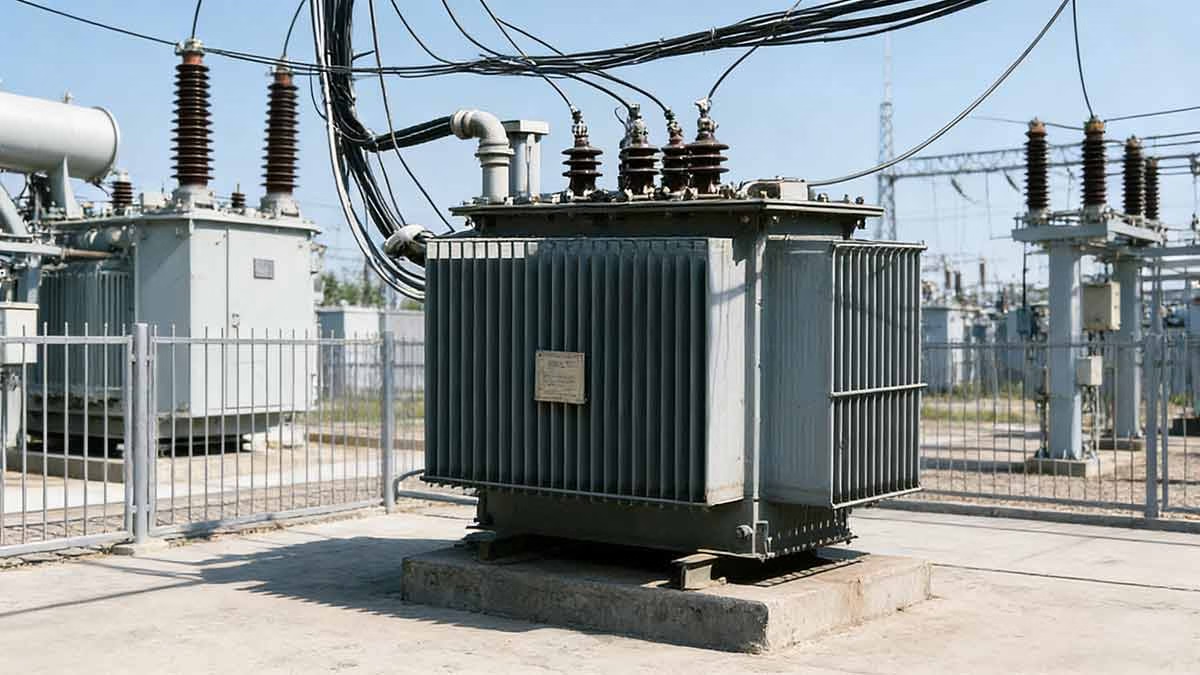
For a project in Manhattan’s financial district, the manufacturer created a custom pad-mounted transformer with a slim profile (20% narrower than standard models) to fit in a tight space between two buildings. The unit’s compact design didn’t compromise performance—delivering 250 kVA with 99.2% efficiency.
Sustainable Power Distribution: Transformer Manufacturers’ Role in Green Energy Goals
As the world transitions to a low-carbon economy, distribution transformer manufacturers are playing a pivotal role in reducing the environmental impact of power distribution. Their focus on energy efficiency, eco-friendly materials, and renewable integration is helping accelerate progress toward global climate goals.
Eco-Conscious Material Selection
Manufacturers are replacing traditional materials with sustainable alternatives:
- Biodegradable Transformer Fluids: Plant-based esters (e.g., rapeseed, soybean) replace mineral oil, reducing environmental risk and improving biodegradability (90%+ vs. 20% for mineral oil).
- Recycled Core & Conductor Materials: Use recycled steel (up to 80% in some models) and copper to reduce raw material extraction.
- Low-Carbon Insulation: Epoxy resins made from renewable feedstocks (e.g., bio-based monomers) reduce carbon emissions during production.
During a 2024 factory visit in Sweden, I saw a manufacturer that had switched entirely to biodegradable esters for its distribution transformers. The change reduced the company’s carbon footprint by 30% and eliminated the risk of soil or water contamination from leaks.
Ultra-Efficient Design Innovations
Reducing energy losses is one of the most impactful ways transformers contribute to sustainability:
- Amorphous Metal Cores: As mentioned earlier, these cores reduce no-load losses by 50-70% compared to traditional silicon steel.
- Optimized Conductor Sizing: Uses AI to calculate the ideal wire gauge and length, minimizing copper losses.
- Passive Cooling Systems: Natural convection or forced-air cooling (instead of oil pumps) reduces energy consumption for cooling by 80%.
A recent study by the International Energy Agency (IEA) found that switching to high-efficiency transformers could reduce global electricity demand by 2%—equivalent to taking 150 million cars off the road each year.
Renewable Energy Grid Integration
Transformers are the critical link between renewable energy sources and the grid:
- Inverter-Compatible Designs: Ensure seamless integration with solar PV and wind turbine inverters, reducing harmonic distortion.
- Storage-Ready Interfaces: Simplify connection to battery storage systems, addressing the intermittency of renewable energy.
- Microgrid-Optimized Models: Enable standalone operation of renewable-powered microgrids, reducing reliance on fossil fuels.
I collaborated on a wind farm project in Denmark, where the manufacturer provided transformers with specialized inverter interfaces. These units improved the farm’s grid connection efficiency by 10% and enabled it to feed more clean energy into the national grid.
Lifecycle Sustainability & Circularity
Manufacturers are designing transformers with sustainability in mind—from production to end-of-life:
- Extended Lifespan Designs: High-quality materials and corrosion-resistant components extend service life to 30+ years (vs. 20 years for standard models).
- Easy-to-Recycle Construction: Modular designs and labeled components make it easier to recover valuable materials (copper, steel, aluminum) at end-of-life.
- Upgrade-Friendly Features: Removable windings and replaceable insulation allow transformers to be upgraded (e.g., to higher efficiency) instead of being replaced.
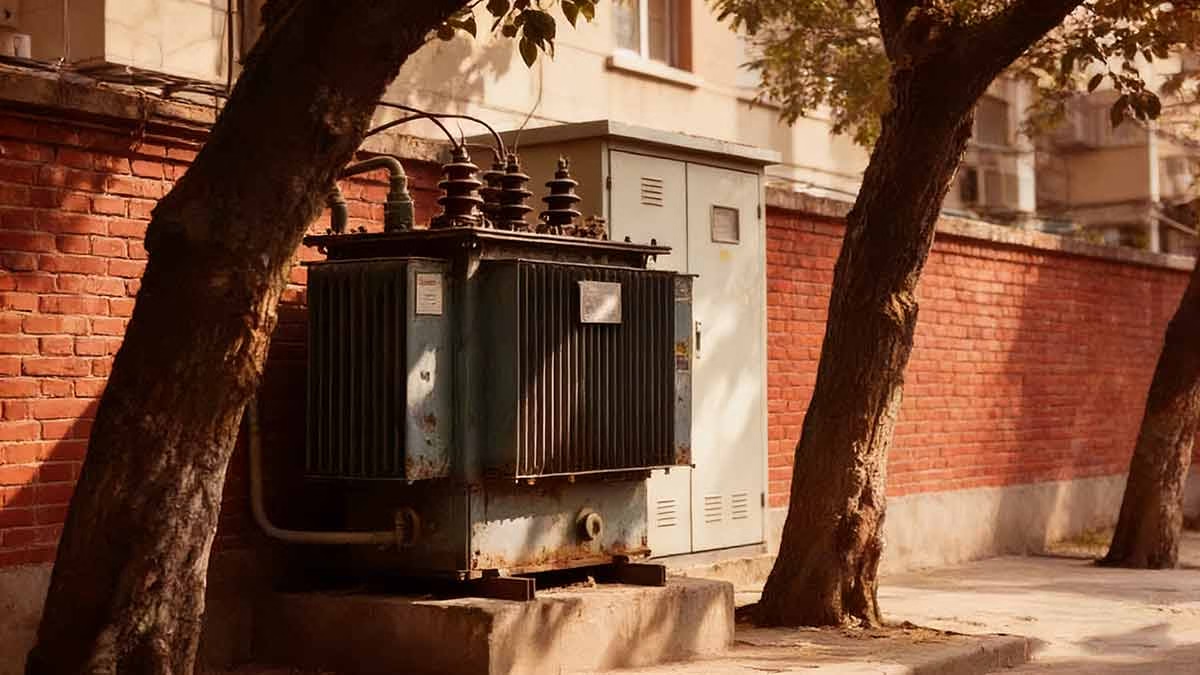
For a utility company in Canada, we retrofitted 200+ aging transformers with upgrade kits instead of replacing them. This approach saved 1,200 tons of carbon emissions (compared to manufacturing new units) and extended the transformers’ lifespan by 15 years.
Conclusion
Distribution transformer manufacturers are the unsung heroes of modern power grids—driving efficiency, innovating technology, adapting to emerging challenges, delivering customized solutions, and advancing sustainability. Their work is essential to ensuring reliable, affordable, and clean power for homes, businesses, and industries worldwide.
As the demand for electricity grows and the grid becomes more complex, the role of these manufacturers will only become more critical. By continuing to invest in R&D, embracing new materials and technologies, and prioritizing customer needs, they are building the foundation for a more resilient, efficient, and sustainable energy future.
For utilities, industrial facilities, and infrastructure developers, partnering with a forward-thinking distribution transformer manufacturer isn’t just a purchase—it’s an investment in the reliability and sustainability of your power system. As someone who has spent decades in the industry, I can attest that the right transformer manufacturer can make all the difference in achieving your energy goals.
More FAQ About Distribution Transformer Manufacturers
Q: What are the top distribution transformer manufacturers to watch in 2025?
A: The leading distribution transformer manufacturers gaining significant attention in 2025 include Delixi, Siemens Energy, and Schneider Electric. Globally, the top 10 players also feature ABB Ltd., TBEA, XD Group, Hitachi Energy, GE Vernova, CHINT Electric, and Eaton. These manufacturers stand out due to advanced product innovation, strong global market presence, and proven reliability. For instance, Delixi excels in energy-efficient solutions, Siemens leads in digital monitoring technologies, and Schneider Electric focuses on sustainable transformer designs. Their products and technologies set industry benchmarks and drive the development of the global power distribution sector.
Q: What key criteria should I use to select a reliable distribution transformer manufacturer?
A: Selecting a reliable manufacturer requires a comprehensive evaluation across five core dimensions. First, quality certification and standard compliance, including ISO 9001 certification, adherence to international standards (such as IEC, UL, CE), and possession of key type test reports (e.g., temperature rise test, short-circuit withstand test). Second, technical strength and R&D capability, such as the experience of the design team, customization ability for special scenarios, and investment in energy-efficient technologies. Third, advanced production equipment and manufacturing processes, including automated core cutting lines, vacuum drying equipment, and strict in-process quality control. Fourth, industry experience and successful cases, especially performance in similar application fields. Fifth, after-sales service and technical support, such as a global service network, 24/7 response commitment, and long-term spare parts supply guarantee.
Q: What are the latest global market trends for distribution transformer manufacturers?
A: The global distribution transformer market is experiencing robust growth, with several key trends shaping manufacturers’ strategies. First, the market size is projected to reach $103 billion by 2031, with a CAGR of 6.1% from 2021 to 2031, driven by smart grid upgrades and renewable energy integration. Second, sustainability has become a core focus, with manufacturers increasingly adopting eco-friendly materials and energy-efficient designs. Third, digitalization is accelerating, with the integration of sensor technology, predictive analytics, and digital twin technology in transformer monitoring and maintenance. Fourth, supply chain challenges persist, with procurement cycles extending from 11 to 18 months due to labor and material shortages. Fifth, regional demand varies, with Europe seeing explosive growth (138.03% YoY in 2025) and strong demand in Southeast Asia and Africa for grid expansion.
Q: Why are Chinese distribution transformer manufacturers gaining global market share?
A: Chinese manufacturers are rapidly expanding their global market share due to several competitive advantages. As the world’s largest transformer manufacturing base, China accounts for over 60% of global production and boasts a complete industrial chain from raw materials to finished products. From January to August 2025, China’s transformer export value reached 29.711 billion yuan, a YoY increase of 51.42%. Leading Chinese enterprises like TBEA and XD Group excel in ultra-high voltage and new energy-compatible transformers, with products meeting international standards. Additionally, Chinese manufacturers offer diversified product portfolios, including dry-type, oil-immersed, and amorphous alloy transformers, to meet differentiated global demands. The global supply chain imbalance, with extended delivery times from international giants, has also created opportunities for Chinese manufacturers to expand overseas presence.
Q: What capabilities should distribution transformer manufacturers have for customized solutions?
A: Manufacturers offering customized distribution transformer solutions need strong, comprehensive capabilities covering design, R&D, and production. First, they must have a professional design team proficient in advanced design software and capable of developing tailored solutions for special scenarios such as high altitude, extreme temperatures, high humidity, and low noise requirements. Second, they need flexible production lines and advanced manufacturing processes to accommodate different voltage levels (up to 34.5kV input), capacity ranges (10kVA-2500kVA for liquid-immersed, 15kVA-2500kVA for dry-type), and installation types (indoor/outdoor). Third, strict raw material control is essential, with the ability to select high-quality silicon steel sheets, copper wires, and insulation materials based on customization needs. Fourth, they should provide detailed technical documentation, including customized design drawings and operation manuals, and offer on-site technical support during installation and commissioning.
Q: How do distribution transformer manufacturers ensure product reliability?
A: Product reliability is guaranteed through a full lifecycle quality control system implemented by manufacturers. First, in raw material procurement, they select reputable suppliers for key components (silicon steel, copper wire, transformer oil) and conduct strict incoming inspections. Second, in the manufacturing process, advanced equipment such as automatic core stacking machines and vacuum casting equipment is used, combined with standardized processes for coil winding, core assembly, and drying. Strict in-process quality control (IPQC) points are set up with complete traceable inspection records. Third, all finished products undergo rigorous testing in accordance with DOE test procedures (10 CFR 431.193) and international standards, including lightning impulse tests, partial discharge tests, and load loss tests. Fourth, manufacturers conduct long-term reliability tests and collect operational data from field applications to continuously optimize product designs. Leading manufacturers also offer extended warranty periods (1-2 years or longer) to ensure post-sales reliability.
Q: What is the impact of raw material price fluctuations on distribution transformer manufacturers?
A: Raw material price fluctuations, especially for copper and aluminum (key materials for transformers), have a significant impact on manufacturers’ profitability and production plans. In 2024, high volatility in copper and aluminum prices led to a 3-5 percentage point decline in gross profit margins for small and medium-sized manufacturers. Large manufacturers mitigate this impact through vertical integration (e.g., establishing raw material supply chains) and long-term supply contracts to lock in prices. Additionally, material price increases have driven manufacturers to develop material-saving technologies, such as using high-grade silicon steel sheets to reduce core loss and optimizing coil designs to reduce copper usage. The recent global shortage of transformer core materials has also extended production cycles, further challenging manufacturers’ supply chain management capabilities. Some manufacturers are exploring alternative materials to reduce dependence on traditional raw materials.
Q: What are the differences between manufacturers of dry-type and liquid-immersed distribution transformers?
A: Manufacturers specializing in dry-type and liquid-immersed transformers differ in core technologies, production processes, and application focus. Dry-type transformer manufacturers (e.g., CHINT Electric, ABB) emphasize insulation technology, using epoxy resin casting or non-encapsulated designs for fire safety and low maintenance, making them suitable for indoor applications like data centers and commercial buildings. They invest in advanced vacuum casting equipment and temperature-resistant insulation materials. Liquid-immersed transformer manufacturers (e.g., TBEA, Siemens) focus on cooling system design and transformer oil quality control, with products offering higher capacity (up to 2500kVA) and better heat dissipation for outdoor power distribution. They require specialized vacuum oil injection equipment and oil purification technologies. Some leading manufacturers (e.g., Schneider Electric) offer both types, with modular designs to meet diverse customer needs. The choice between the two depends on application environment, capacity requirements, and safety standards.
Q: What challenges do distribution transformer manufacturers face in emerging markets?
A: Manufacturers entering emerging markets (Southeast Asia, Africa, Latin America) face several key challenges. First, diverse regional standards and regulations require products to comply with multiple certification requirements, increasing R&D and adaptation costs. Second, inadequate infrastructure in some regions poses logistical challenges for transportation and on-site installation. Third, price sensitivity among local customers intensifies competition, forcing manufacturers to balance cost and quality. Fourth, political and economic instability in certain markets creates risks for long-term investment and project execution. Fifth, the lack of local technical expertise requires manufacturers to provide extensive training and after-sales support. To overcome these challenges, successful manufacturers adopt localized strategies, such as establishing regional production bases (e.g., Vietnam, Mexico) to reduce transportation costs and comply with trade regulations, and partnering with local distributors to enhance market access and service capabilities.