
Dry type transformers stand as a cornerstone of modern power distribution, delivering unparalleled safety, minimal maintenance demands, and eco-conscious design. Available in three primary configurations—cast resin, vacuum pressure impregnated (VPI), and open-wound—each variant is engineered to address unique industrial challenges, from urban high-rises to extreme environmental conditions.
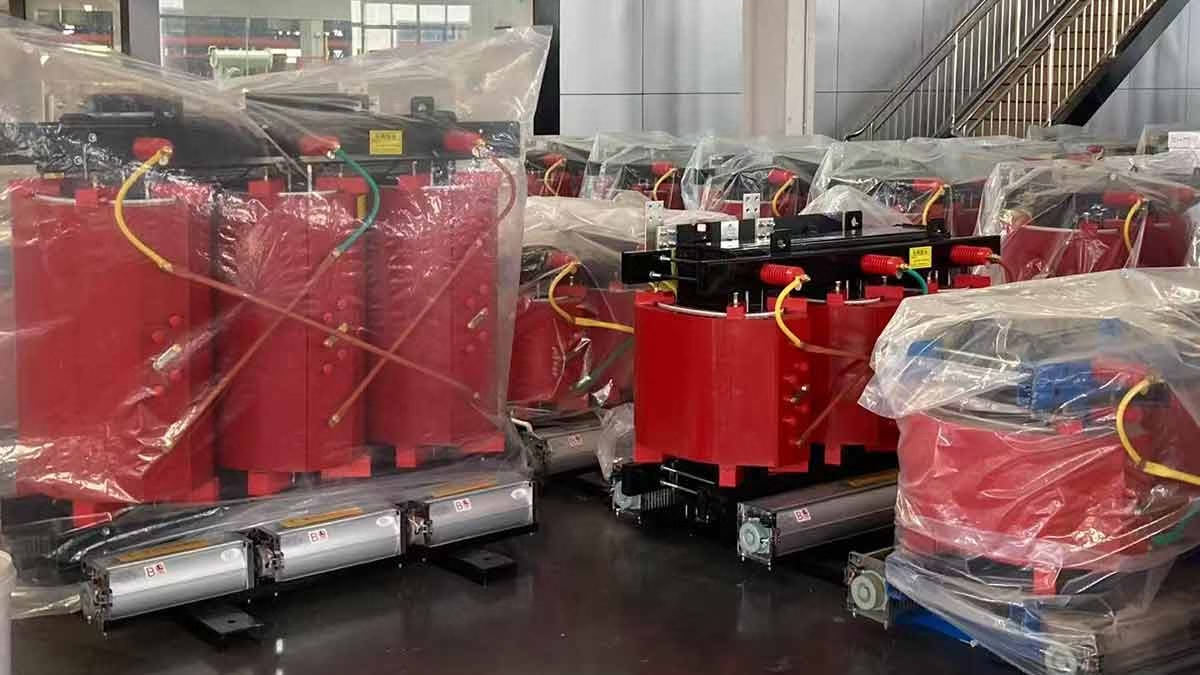
In my decades of working with power systems, I’ve witnessed a seismic shift toward dry type transformers. Beyond their enhanced safety profile, they offer superior efficiency and adaptability that align with today’s industrial needs. Let’s explore their types, advantages, and real-world applications that make them indispensable in modern power infrastructure.
Contents
hide
Dry Type Transformer Varieties: Key Types and Distinctive Attributes
Why do dry type transformers come in different configurations? Each type boasts unique strengths, and understanding these differences is pivotal to ensuring your project’s success.
The three core types—cast resin, VPI, and open-wound—are designed to excel in specific scenarios. Cast resin units thrive in harsh environments, VPI transformers deliver exceptional thermal performance, and open-wound models offer cost-effective solutions for indoor settings. Below is a detailed breakdown of their features and practical applications, drawn from my hands-on experience:
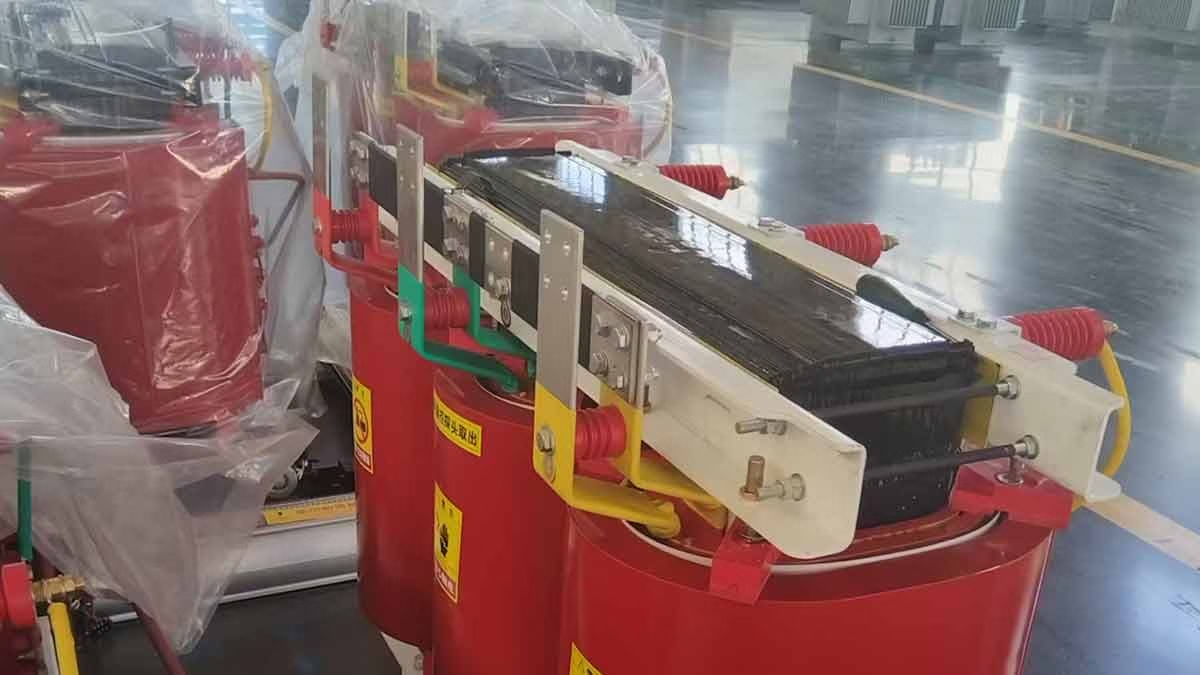
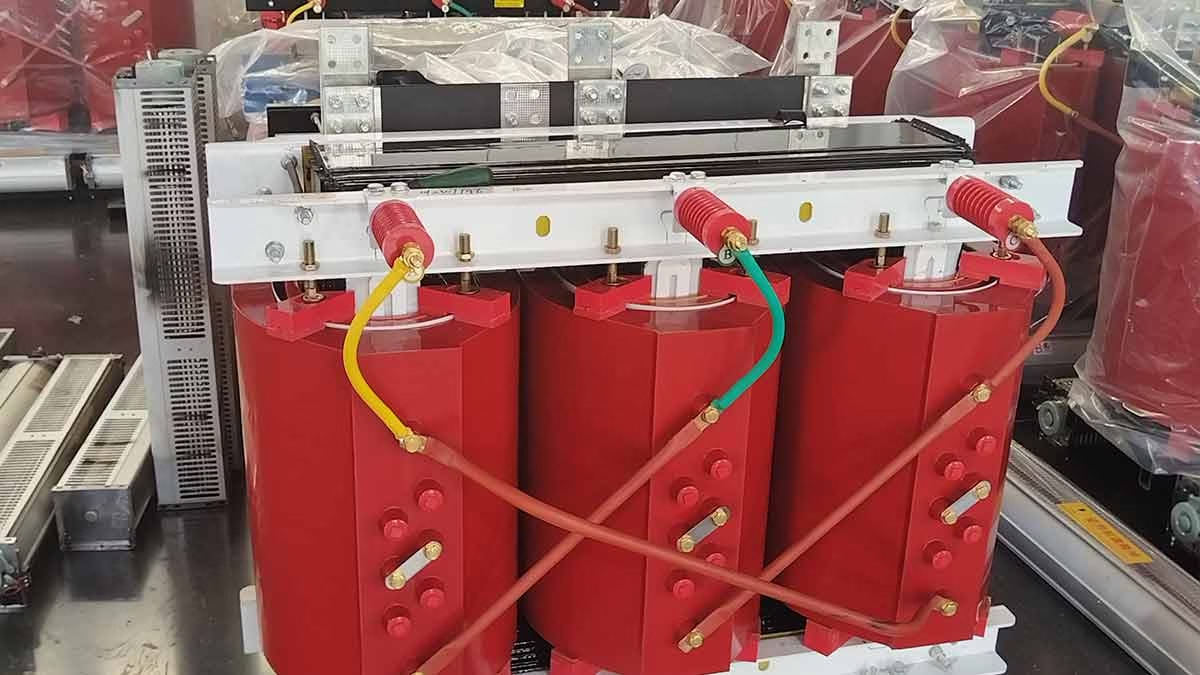
Cast Resin Transformers – The Rugged Performers
- Construction: Windings encased in high-grade epoxy resin, creating a robust protective barrier.
- Core Strengths: Exceptional resistance to moisture, salt, industrial contaminants, and temperature fluctuations.
- Ideal Applications: Outdoor installations, coastal facilities, and industrial plants with harsh operating conditions.
In a coastal industrial facility I oversaw a few years back, we installed cast resin transformers to withstand salty air and occasional sea spray. To this day, those units operate flawlessly—proof that epoxy encapsulation provides unmatched protection for critical windings.
Vacuum Pressure Impregnated (VPI) Transformers – The Heat Management Experts
| Feature | Core Benefit | Target Applications |
|---|---|---|
| Resin-impregnated windings | Superior heat dissipation and insulation integrity | High-temperature industrial environments (e.g., steel mills, foundries) |
| Modular design flexibility | Customizable to meet specific voltage and load requirements | Specialized industrial processes and custom power systems |
| Lightweight construction | Simplifies installation and reduces transportation costs | Retrofit projects and space-constrained facilities |
A recent steel mill project perfectly showcased VPI transformers’ capabilities. The facility’s high ambient temperatures and heavy dust loads would have compromised standard units, but the VPI transformers’ advanced cooling system maintained optimal efficiency—even during peak production hours.
Open-Wound Transformers – The Cost-Effective Indoor Solution
- Design: Streamlined construction with exposed windings optimized for natural ventilation.
- Key Advantages: Efficient air cooling, straightforward maintenance, and competitive pricing for standard applications.
- Best For: Indoor installations with controlled environments, such as office buildings, retail spaces, and non-critical industrial areas.
I’ve recommended open-wound transformers for countless indoor projects where environmental stability is guaranteed. For a recent office complex development, these units struck the perfect balance between performance and cost-efficiency, delivering reliable power without exceeding the project’s budget.
Dry vs. Oil-Filled Transformers: Why Dry Type Technology Takes the Lead
Concerned about oil leaks, fire hazards, or environmental risks in your electrical room? Dry type transformers address these pain points head-on, offering a suite of advantages that make them the preferred choice for modern industries.
Compared to traditional oil-filled transformers, dry type units eliminate flammable materials, reduce maintenance burdens, and minimize environmental impact. They perform reliably under varying load conditions and can be installed in sensitive areas where oil-based units are prohibited. Let’s dive into the key differentiators that drive this industry shift:
Safety as a Priority – Mitigating Core Risks
- No Flammable Substances: Removes the fire risk associated with transformer oil, critical for enclosed or populated spaces.
- Zero Explosion Hazard: Without oil, there’s no risk of catastrophic failure due to fluid expansion or contamination.
- Eco-Friendly Operation: Eliminates the threat of oil spills that can contaminate soil and water sources.
I once consulted on a high-rise building retrofit where oil-filled transformers were replaced with dry type units. The switch drastically reduced the building’s fire risk, satisfying both facility managers and local fire safety regulators.
Maintenance and Reliability: Less Downtime, More Uptime
| Aspect | Dry Type Transformers | Oil-Filled Transformers |
|---|---|---|
| Routine Maintenance | Minimal – no oil testing, filtering, or replacement | Extensive – regular oil analysis, filtration, and top-ups required |
| Operational Lifespan | 20-30 years (with basic upkeep) | 20-35 years (dependent on rigorous maintenance) |
| Load Variability Performance | Excellent – maintains efficiency across fluctuating loads | Good – performance can degrade with oil aging or contamination |
A manufacturing plant I worked with saw a 40% reduction in maintenance costs over five years after switching to dry type transformers. The elimination of oil-related downtime—for testing and replacement—was the primary driver of these savings.
Installation Flexibility: Adapting to Any Environment
- Indoor Compatibility: Safe for installation near workspaces, production lines, or public areas.
- Sensitive Location Approval: Ideal for hospitals, schools, data centers, and other facilities with strict safety requirements.
- Space Efficiency: No need for oil containment structures, freeing up valuable floor space.
When designing the power system for a new hospital wing, dry type transformers were the obvious choice. We were able to place them close to load centers—reducing cable lengths and energy loss—without worrying about oil leaks in a critical healthcare environment.
Versatility in Action: Dry Type Transformers Across Industries
Dry type transformers are far more versatile than many realize, powering everything from cutting-edge data centers to rugged industrial plants. Their ability to operate reliably in diverse conditions—from cleanrooms to outdoor harsh environments—makes them a linchpin of modern power distribution.
Below are the key industries where dry type transformers excel, backed by real-world examples from my career:
Commercial and Residential Buildings: Powering Urban Landscapes
- High-Rise Offices: Safe for installation on upper floors, eliminating fire risks in populated areas.
- Shopping Malls: Reliable power distribution for high-traffic spaces with complex electrical demands.
- Residential Complexes: Quiet operation and compact design suit living environments.
For a landmark mixed-use skyscraper in a major metropolitan area, we implemented a distributed dry type transformer setup—installing units every 10 floors. This approach improved energy efficiency, reduced cable run lengths, and maintained the highest safety standards for residents and businesses.
Healthcare and Research Facilities: Reliability for Critical Operations
| Application | Recommended Transformer Type | Key Advantage |
|---|---|---|
| Hospitals | Cast Resin | Uninterrupted performance for life-support systems and medical equipment |
| Research Laboratories | VPI | Clean operation and temperature stability for sensitive instruments |
| Pharmaceutical Plants | Open-Wound (Controlled Areas) | Cost-effective power for non-critical production zones |
A recent project for a leading research facility required a hybrid approach: cast resin transformers powered critical lab equipment, while VPI units handled general power needs. This combination delivered the perfect balance of reliability, performance, and cost-efficiency.
Renewable Energy Projects: Enabling Green Power
- Solar Farms: Step-up transformers optimized for grid integration of solar energy.
- Wind Turbines: Compact, rugged designs for nacelle installation in offshore and onshore wind farms.
- Energy Storage Systems: Bidirectional power handling for seamless charging and discharging cycles.
I played a key role in designing the power system for a large offshore wind farm, where we installed specialized dry type transformers in each turbine nacelle. These units had to withstand extreme marine conditions—high humidity, salt spray, and vibration—while fitting within the nacelle’s limited space. Their performance has been exceptional, even in harsh offshore environments.
Selecting the Right Dry Type Transformer: Critical Factors for Success
Choosing the right dry type transformer can be daunting, but focusing on key factors ensures optimal performance, longevity, and cost-effectiveness. From load requirements to environmental conditions, every detail matters in matching the transformer to your project’s needs.
Drawing on my experience guiding clients through this process, here’s a breakdown of the critical considerations:
Power and Voltage Specifications: Getting the Basics Right
- kVA Capacity: Must match or exceed the total connected load, with a buffer for future expansion.
- Voltage Ratings: Primary and secondary voltage specifications must align with your power system’s design.
- Frequency Compatibility: Typically 50 Hz or 60 Hz, depending on regional electrical standards.
A common pitfall I’ve observed is clients underestimating future power demands—one client had to replace a newly installed transformer within 12 months due to rapid business expansion. I always advise factoring in 15-20% extra capacity to avoid costly retrofits.
Environmental Adaptability: Matching the Transformer to Its Surroundings
| Factor | Key Consideration | Recommended Transformer Type |
|---|---|---|
| Installation Location | Indoor vs. outdoor exposure | Cast Resin for outdoor use |
| Ambient Temperature | High-temperature environments (e.g., foundries) | VPI for superior heat dissipation |
| Humidity/Contamination | Moisture, salt, or industrial pollutants | Cast Resin for robust protection |
For a coastal industrial plant dealing with high humidity and salt air, we selected cast resin transformers specifically for their corrosion resistance. After five years in operation, the units show no signs of degradation—proving the value of matching the transformer to the environment.
Specialized Requirements: Addressing Unique Project Needs
- Noise Levels: Low-noise designs are critical for residential, office, or healthcare settings.
- Harmonics Handling: Transformers with specialized winding configurations for non-linear loads (e.g., data centers, manufacturing equipment).
- Overload Capacity: Essential for applications with frequent load fluctuations (e.g., industrial processes, peak-hour power demands).
A recent data center project required transformers that could handle high harmonic content from servers and cooling systems. We selected dry type transformers with advanced winding designs to mitigate harmonics, resulting in improved power quality and reduced transformer heating. This not only enhanced performance but also extended the units’ lifespan.
Safety, Sustainability, and Cost-Effectiveness: The Triple Advantage of Dry Type Transformers
Few electrical components deliver the trifecta of safety, sustainability, and cost-effectiveness—but dry type transformers do just that. They redefine industry standards by addressing critical concerns for businesses, the environment, and bottom lines alike.
Let’s explore how each advantage translates to real-world value:
Enhanced Safety: Protecting People and Assets
Dry type transformers eliminate the fire and environmental hazards inherent in oil-based units, making them the safest choice for most applications:
- Fire Resistance: No flammable materials, reducing the risk of electrical fires in enclosed spaces.
- Zero Explosion Risk: Without oil, there’s no possibility of explosive failure due to overheating or contamination.
- Clean Operation: No oil leaks or spills to damage equipment, contaminate soil, or harm the environment.
I consulted on a retrofit project for an old industrial building being converted into a mixed-use development. The switch to dry type transformers was a key requirement for fire marshal approval—their low fire risk was instrumental in repositioning the building for residential and commercial use.
Sustainability: Aligning with Green Initiatives
Dry type transformers support environmental goals through their design and operation:
| Aspect | Environmental Benefit | Impact |
|---|---|---|
| Oil-Free Design | Eliminates soil and water contamination risks | Protects ecosystems and reduces environmental liability |
| Extended Lifespan | Reduces the need for frequent replacements | Conserves raw materials and reduces waste |
| Energy Efficiency | High-efficiency models minimize energy losses | Lowers carbon footprint and reduces energy costs |
For a company pursuing LEED certification, we installed high-efficiency dry type transformers that delivered a 15% cut in energy losses compared to conventional models. This contribution was critical to the company achieving its sustainability goals and reducing its environmental impact.
Cost-Effectiveness: Long-Term Value Beyond Initial Investment
While dry type transformers may have a higher upfront cost than oil-filled units, their long-term savings are substantial:
- Lower Maintenance Costs: No oil testing, filtering, or replacement—reducing ongoing expenses by 30-40%.
- Reduced Insurance Premiums: Lower fire risk often results in discounted insurance rates for facilities.
- Installation Savings: Compact design and no need for oil containment structures cut installation costs and save space.
A hospital evaluating transformer options for a new wing found that while dry type units cost 20% more upfront, they delivered a 35% total cost savings over 20 years. The reduced maintenance needs, lower insurance premiums, and shorter cable runs (due to flexible placement) made them the most cost-effective choice.
Conclusion
Dry type transformers represent the gold standard in modern power distribution, offering a unique combination of safety, versatility, and sustainability. Their three primary configurations—cast resin, VPI, and open-wound—are engineered to meet the demands of diverse industries, from urban buildings to renewable energy projects.
By prioritizing safety, minimizing maintenance, and supporting environmental goals, dry type transformers deliver long-term value that goes beyond operational efficiency. Whether you’re designing a new power system or retrofitting an existing one, choosing the right dry type transformer ensures reliable, cost-effective power for years to come.
In an era where safety, sustainability, and efficiency are non-negotiable, dry type transformers are more than just electrical components—they’re investments in the future of your business and the planet.