
Dry type distribution transformers stand as a cornerstone of energy-efficient power distribution in contemporary grids. By integrating advanced core materials, precision-engineered winding configurations, and state-of-the-art cooling mechanisms, these transformers minimize energy dissipation while maximizing performance. Beyond cutting operational expenses, they play a pivotal role in advancing sustainability goals within today’s complex, high-demand electrical networks.
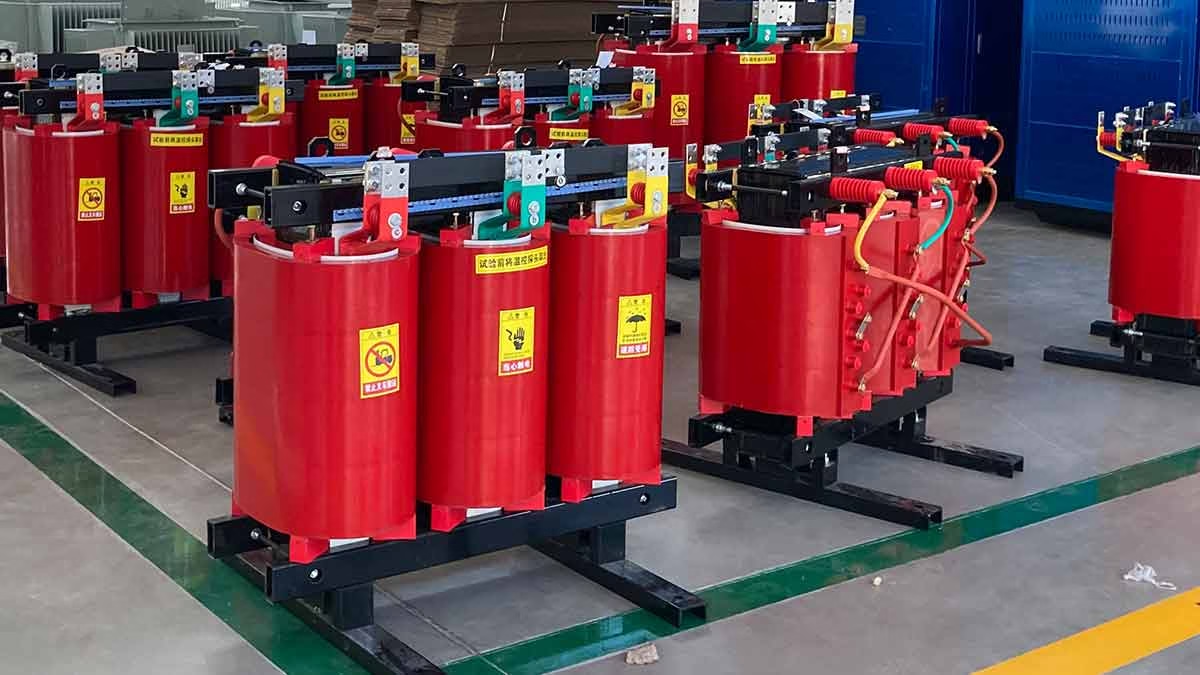
In this article, we’ll navigate the landscape of dry type transformer efficiency—exploring how these innovative solutions are redefining energy conservation for modern power systems. Whether you’re a seasoned electrical engineer or a facility manager seeking to optimize energy use, you’ll gain actionable insights to enhance your network’s efficiency and reduce long-term costs.
Contents
hide
Cool Efficiency: How Dry Type Transformers Master Heat Management
Is your transformer overheating and draining resources unnecessarily? It’s a common challenge for facilities, where heat-related energy losses often go unnoticed. Fortunately, dry type transformers offer a game-changing approach to combating this waste through innovative cooling technologies.
Unlike oil-insulated alternatives, dry type transformers utilize air or epoxy resin insulation—enabling superior heat dissipation that directly boosts efficiency. This design not only cuts energy losses but also enhances safety, making them ideal for temperature-sensitive environments while delivering substantial long-term savings.
Key Cooling Technologies for Dry Type Transformers
Dry type transformers leverage three primary cooling methodologies, each tailored to specific operational needs:
Cooling Method | Efficiency Gain | Maintenance Requirements |
Natural Air Convection | 1-2% | Low |
Forced Air Cooling | 2-3% | Moderate |
Epoxy Resin Encapsulation | 3-4% | Very Low |
Natural Air Convection: Nature’s Efficient Solution
Harnessing natural air circulation, this straightforward design optimizes airflow around windings and cores. Key features include:
- Passive convection channels
- Temperature-responsive ventilation
- Low-maintenance operation
Resin Encapsulation: Sealing in Performance
Epoxy resin encapsulation delivers dual benefits of insulation and heat distribution:
- Enhanced thermal conductivity
- Superior mechanical durability
- Reduced partial discharge risks
Proactive Heat Management
Sustained efficiency requires strategic heat reduction:
- Precision-wound coil geometries
- Low-loss core designs
- Optimally placed cooling ducts
Real-World Impact: Data Center Efficiency Upgrade
A recent project with a large data center highlighted the transformative potential of dry type transformer cooling. The facility struggled with soaring energy costs and unmanageable heat in server rooms—compromising both efficiency and equipment lifespan.
Our solution centered on a tiered cooling strategy:
- Standard server room areas received natural air-cooled transformers with optimized ventilation channels, maximizing passive heat dissipation
- High-density load zones were equipped with forced air-cooled units, featuring intelligent fans that activated based on real-time temperature and load data
- Critical power paths utilized resin-encapsulated transformers, whose compact, heat-dissipating design saved valuable floor space while delivering peak efficiency
We complemented the hardware with a smart monitoring system, enabling real-time temperature tracking and automated cooling adjustments. The results were striking:
- 15% reduction in transformer-related energy losses within the first year
- 10% decrease in server room cooling costs
- Dramatically reduced maintenance requirements (no oil monitoring or replacement)
The project demonstrated that effective cooling isn’t just about heat management—it’s about creating a cohesive system that minimizes waste at every stage. For facility managers evaluating upgrades, the key takeaway is clear: look beyond upfront costs to total ownership value, including energy savings, maintenance reductions, and longevity.
Core Efficiency: The Foundation of Low-Loss Transformers
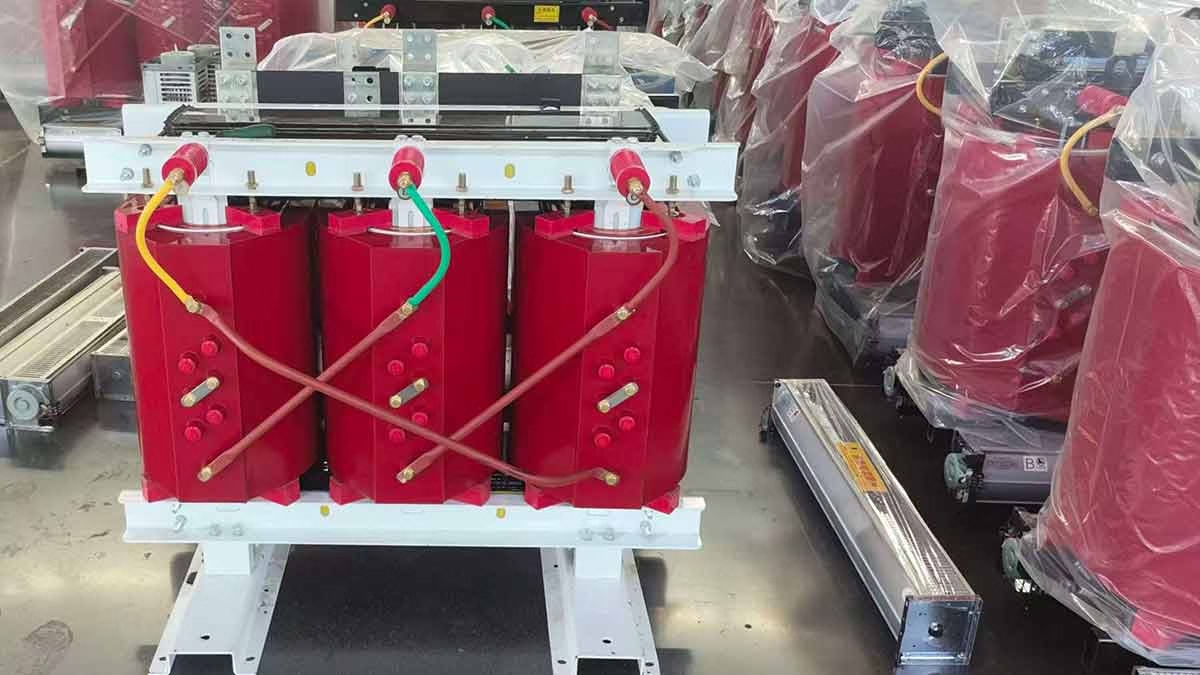
While cooling systems are critical, the true driver of dry type transformer efficiency lies in their core design. Advanced materials and precision engineering have redefined what’s possible—delivering savings of up to 70% compared to traditional core architectures.
The transformer core acts as the magnetic backbone, and its design directly impacts energy loss through hysteresis and eddy currents. Modern innovations in materials and construction have unlocked unprecedented efficiency levels.
Advanced Core Materials & Designs
Core Material | Efficiency Gain | Cost Premium |
Grain-Oriented Silicon Steel | Baseline | Baseline |
Amorphous Metal Alloys | 30-50% | 15-25% |
Nanocrystalline Materials | 40-70% | 30-50% |
Material Innovation
The choice of core material is make-or-break for efficiency:
- Amorphous Metal Alloys: Exceptionally low hysteresis losses, though brittle and challenging to manufacture
- High-Grade Silicon Steel: Time-tested performance with optimized magnetic properties
- Nanocrystalline Materials: Cutting-edge option offering maximum efficiency for high-demand applications
Construction Excellence
How cores are assembled matters as much as the materials themselves:
- Step-lap core joints to minimize flux leakage
- Wound core configurations for uniform magnetic paths
- Distributed gap designs to reduce eddy current losses
Magnetic Flux Optimization
Precision flux management further enhances efficiency:
- Tailored core cross-sections for uniform flux distribution
- Minimized air gaps to reduce magnetic resistance
- Advanced domain refinement techniques for reduced hysteresis
Case Study: Solar Farm Ultra-Efficient Transformers
A renewable energy client developing a large-scale solar farm required transformers that could handle variable loads while minimizing energy loss. Solar power’s intermittent nature demands transformers that perform efficiently across a wide operational range—something traditional designs struggled to deliver.
Our team pushed core design boundaries by:
- Selecting amorphous metal alloy for its ultra-low loss properties, despite manufacturing challenges
- Developing a hybrid construction combining step-lap joints and wound core technology to balance material performance with structural integrity
- Using computational modeling to optimize core geometry, ensuring flux followed the most efficient paths
- Implementing distributed gap technology to reduce eddy currents without compromising magnetic performance
The manufacturing process required custom tooling and specialized handling for the brittle amorphous metal strips. The result exceeded expectations: core losses were 65% lower than comparable silicon steel designs, translating to enough additional annual energy production to power 500 homes.
This project underscored that true core efficiency comes from reimagining fundamentals—combining advanced materials with innovative construction to create solutions tailored to specific operational demands.
Load Optimization: Balancing Demand for Peak Transformer Efficiency
Many facilities overlook a critical efficiency factor: load management. Transformers operating outside their optimal load range—whether overloaded or underutilized—waste significant energy. Smart load balancing unlocks substantial savings while extending equipment life and improving system reliability.
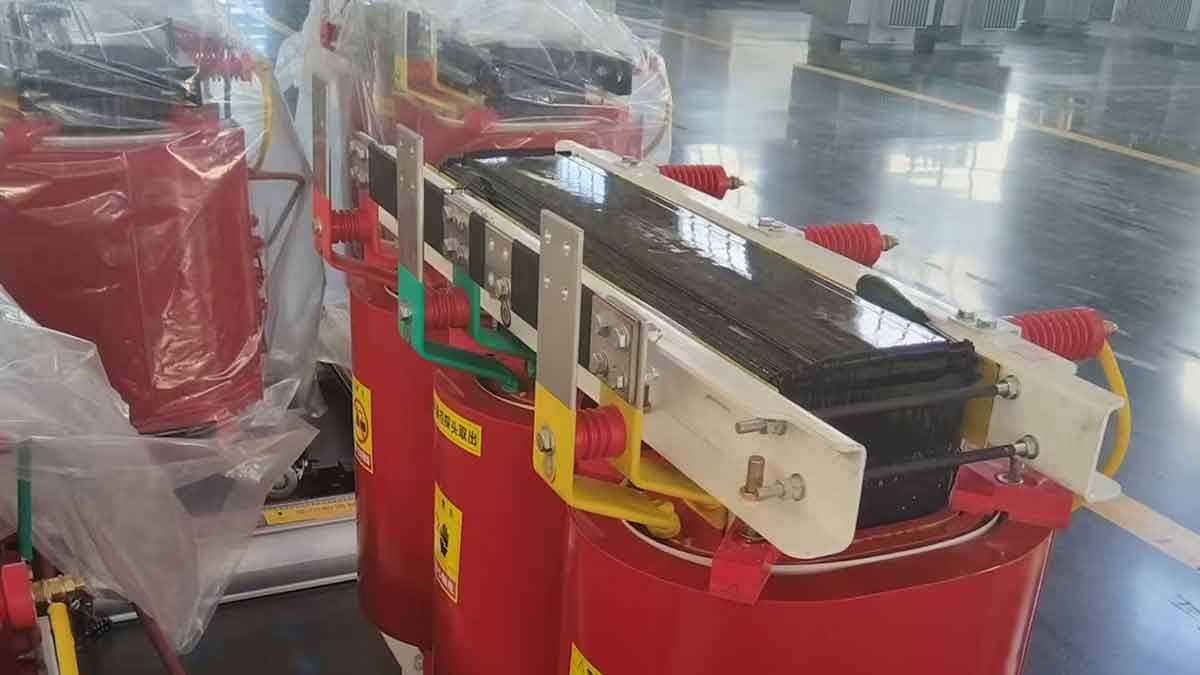
The efficiency of dry type transformers follows a bell curve, with peak performance typically between 40-60% of rated capacity. Operating outside this range—either below 20% or above 80%—dramatically increases energy losses.
Load Management Strategies
Load Level | Efficiency Impact | Recommended Action |
Under 20% | High energy waste | Downsize or consolidate loads |
40-60% | Optimal efficiency | Maintain load profile |
Over 80% | Increased losses | Implement load sharing or upgrade capacity |
Right-Sizing: Matching Capacity to Demand
Precision capacity planning involves:
- Detailed load profile analysis (including peak and off-peak patterns)
- Projections for future growth or operational changes
- Modular transformer systems for flexible scaling
Intelligent Load Sharing
Distributing load across multiple transformers delivers:
- Parallel operation capabilities
- Dynamic load switching based on demand
- Adaptive control algorithms to maintain optimal efficiency
Smart Monitoring & Forecasting
Real-time data drives proactive load management:
- IoT-enabled sensors for continuous load tracking
- Predictive analytics to forecast demand changes
- AI-driven optimization to adjust load distribution dynamically
Case Study: Manufacturing Facility Load Optimization
A large manufacturing plant faced inconsistent energy costs and equipment downtime due to poorly managed transformer loads. The facility’s mix of legacy and modern machinery created highly variable demand patterns—leaving some transformers overloaded during production peaks and others underutilized during off-hours.
Our solution involved:
- A comprehensive load audit to map usage patterns across all facility zones
- Installation of a modular transformer system, replacing large, inflexible units with smaller, dynamically configurable ones
- Implementation of an intelligent load-sharing platform that automatically distributes demand across transformers
- Integration of predictive load forecasting, using production schedules and historical data to anticipate demand shifts
- Deployment of IoT sensors and AI-driven controls for real-time optimization
The results were transformative:
- 25% reduction in transformer-related energy losses within six months
- Improved power quality, cutting equipment downtime by 18%
- Uncovered process inefficiencies through load data analysis, leading to additional cross-facility savings
This project demonstrated that effective load management is about creating responsive systems that adapt to real-world demand—rather than forcing operations to fit rigid transformer capacities.
Technological Innovations: Elevating Dry Transformer Efficiency
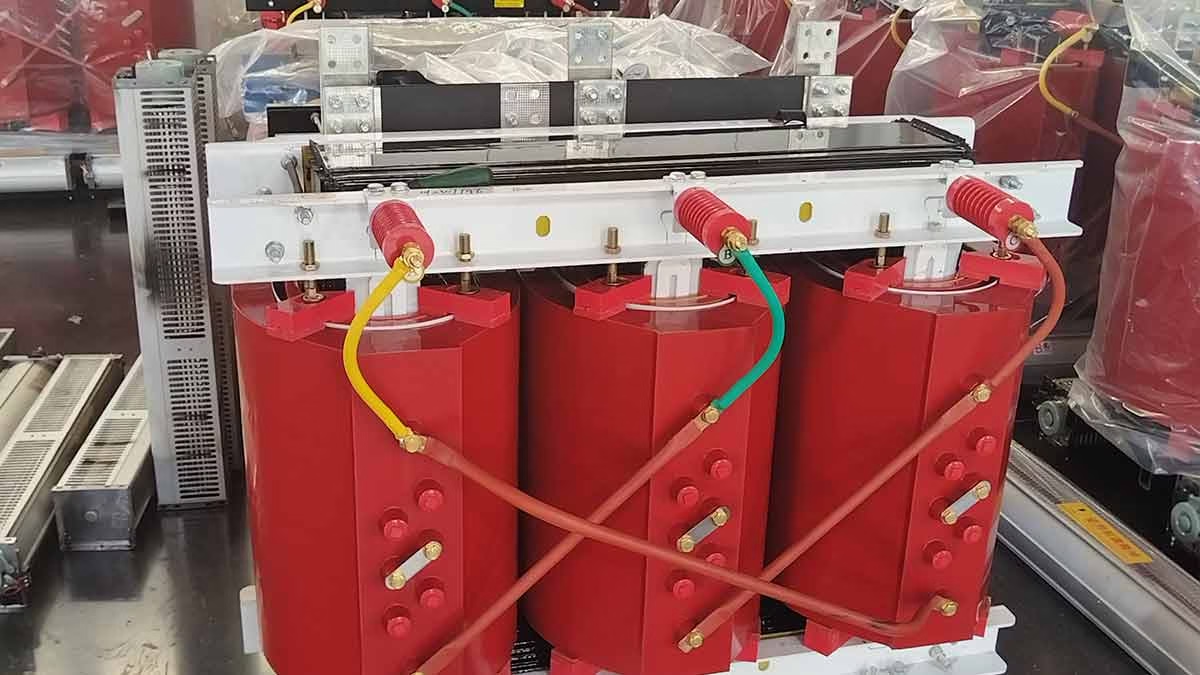
The rapid evolution of power distribution technology is pushing dry type transformer efficiency to new heights. From smart sensors to advanced materials, cutting-edge innovations are redefining performance, reliability, and integration capabilities.
These technologies don’t just reduce energy losses—they create transformers that are more adaptable, longer-lasting, and better integrated with modern smart grids.
Key Technological Advancements
Technology | Efficiency Gain | Implementation Complexity |
Advanced Sensor Networks | 2-5% | Moderate |
AI-Driven Control Systems | 5-10% | High |
Novel Materials | 10-20% | Very High |
Smart Sensing: Real-Time Visibility
Modern transformers leverage sophisticated sensor networks:
- Fiber optic temperature sensors for precise winding temperature monitoring
- Acoustic sensors for early detection of partial discharges
- Power quality monitors tracking voltage, current, and harmonic distortion
AI & Machine Learning: Intelligent Operation
Artificial intelligence is transforming transformer performance:
- Predictive maintenance algorithms that identify issues before failure
- Dynamic efficiency optimization adjusting to real-time conditions
- Adaptive voltage regulation for consistent power quality
Next-Generation Materials
Innovative materials are breaking physical limits:
- High-temperature superconducting windings for minimal resistive loss
- Nanomaterial-enhanced insulation improving thermal performance
- Biomimetic cooling systems inspired by natural heat dissipation
Case Study: Smart City Transformer Network
We partnered with a smart city initiative to develop an advanced transformer system that would serve as the backbone of their sustainable power grid. The goal was to create a network that was not just efficient, but intelligent and adaptable to the city’s evolving needs.
Our integrated solution included:
- A comprehensive sensor suite with fiber optic temperature monitoring and acoustic partial discharge detection
- An AI-driven control platform that analyzed real-time data to optimize efficiency, predict maintenance needs, and adapt to load changes
- High-temperature superconducting materials in critical winding sections, reducing resistive losses by 40%
- Nanomaterial-enhanced insulation improves heat dissipation while maintaining dielectric strength
- A biomimetic micro-channel cooling system, inspired by biological circulatory systems, for superior heat removal
The results set a new standard for transformer performance:
- 30% higher efficiency compared to top-tier conventional dry type transformers
- Near-elimination of unplanned downtime through predictive maintenance
- Seamless integration with the city’s smart grid management system
- Rich operational data that informed broader urban energy planning
This project highlighted that the future of transformer technology lies in integrated, intelligent systems—not just component upgrades. By combining multiple innovations, we created a solution that delivered exponential efficiency gains.
Green Regulations: Turning Compliance into Competitive Advantage
As global energy efficiency standards tighten, many manufacturers view regulations as a burden. In reality, these requirements are powerful drivers of innovation—creating opportunities for cost savings, market differentiation, and long-term sustainability.
Modern efficiency standards push transformer design forward, resulting in products that meet environmental goals while delivering tangible economic benefits. Compliance isn’t just mandatory—it’s a strategic investment.
Global Efficiency Standards Landscape
Key regulatory frameworks shaping the industry include:
- U.S. Department of Energy (DOE) efficiency levels
- EU Ecodesign Directive (2019/1781)
- Minimum Energy Performance Standards (MEPS) adopted by over 40 countries
- International Electrotechnical Commission (IEC) 60076-11 efficiency classes
These standards are increasingly harmonized, creating a global market for high-efficiency transformers.
Beyond Compliance: Strategic Efficiency
Forward-thinking organizations are exceeding minimum requirements to gain competitive edge:
- Investing in advanced material research to push efficiency boundaries
- Adopting lifecycle-based design approaches that optimize long-term performance
- Integrating future-proofing features to adapt to upcoming regulatory changes
Economic Benefits of Compliance
Efficiency Tier | Energy Savings | Cost Premium | Payback Period |
Standard Compliance | Baseline | Baseline | N/A |
High Efficiency (Tier 1) | 20-30% | 10-15% | 3-5 years |
Ultra-High Efficiency (Tier 2) | 30-40% | 20-25% | 2-4 years |
Case Study: Industrial Fleet Upgrade
A large industrial client was initially hesitant to upgrade their transformer fleet to meet new EU Ecodesign requirements, viewing the investment as unjustified. Our team conducted a comprehensive lifecycle analysis to demonstrate the true value of compliance.
We proposed a tiered upgrade strategy:
- Critical production lines received ultra-high efficiency transformers exceeding Tier 2 standards
- Secondary systems were equipped with high-efficiency models meeting Tier 1 requirements
- All units included modular components for future upgrades as standards evolve
We also identified utility rebates and tax incentives that offset 30% of the initial investment. The financial analysis revealed:
- 25% reduction in annual transformer energy losses
- 12% decrease in facility cooling costs due to lower heat output
- Extended transformer lifespan (15+ years vs. 10 years for legacy units)
- Improved power quality reducing equipment maintenance costs
The project’s payback period was just 2.8 years for ultra-high efficiency units and 3.7 years for high-efficiency models—well below the client’s 5-year threshold. The unexpected operational benefits, including reduced downtime and improved process stability, further justified the investment.
This case demonstrated that regulations aren’t just compliance hurdles—they’re catalysts for strategic upgrades that deliver long-term financial and operational benefits.
Conclusion
Dry type transformers represent the future of energy-efficient power distribution, offering a multifaceted approach to reducing losses and enhancing sustainability. Through advanced cooling technologies, innovative core designs, intelligent load management, cutting-edge materials, and proactive compliance with global standards, these transformers deliver exceptional value across their entire lifecycle.
For facility managers, engineers, and utility providers, the path to improved efficiency is clear: prioritize total ownership cost over upfront price, embrace technological innovation, and view regulatory compliance as an opportunity for differentiation. By integrating these principles, organizations can reduce operational expenses, minimize environmental impact, and build more resilient power systems capable of meeting the demands of the modern world.
As power grids grow increasingly complex and sustainability becomes a business imperative, dry type transformers stand as a proven solution—delivering efficiency, reliability, and value that conventional designs simply can’t match.