
Dry-type transformers are the backbone of power distribution across industrial, urban, infrastructure, and residential sectors—with tailored applications in the USA, Europe, and the Middle East. Their design, capacity, and functionality adapt to regional regulations, environmental challenges, and energy priorities, from America’s high-tech manufacturing to Europe’s sustainable urban planning and the Middle East’s extreme-climate mega-projects.
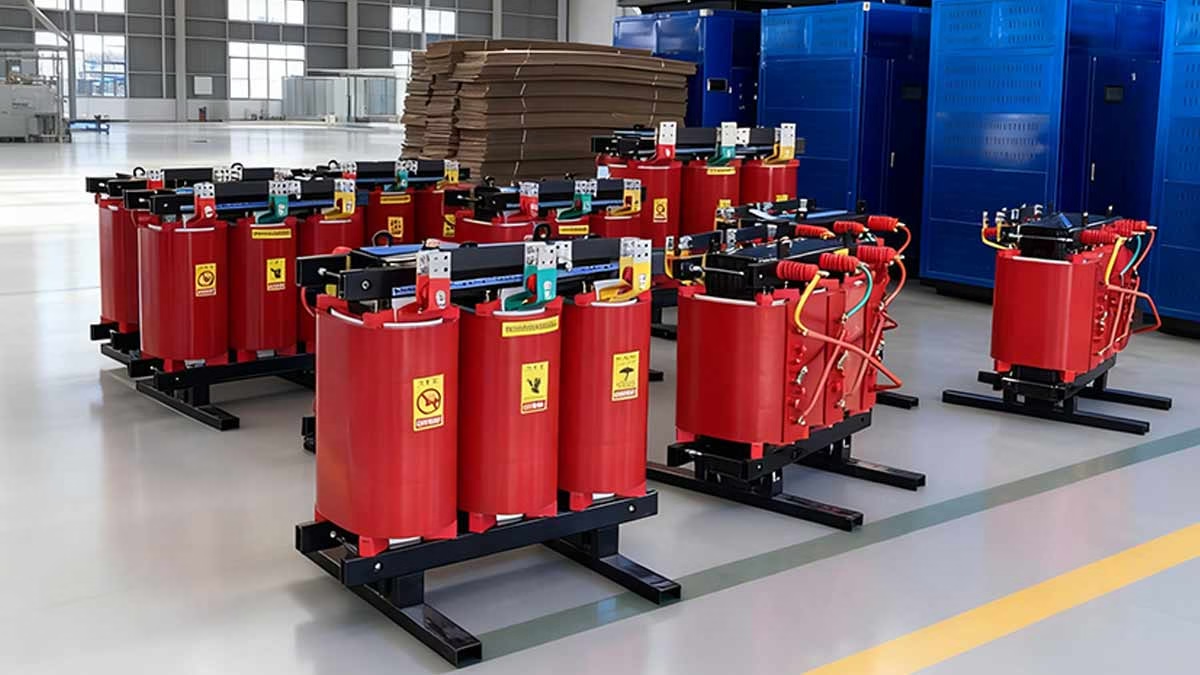
Drawing on decades of engineering and project experience across these markets, we break down how dry-type transformers solve unique regional challenges, power critical infrastructure, and enable innovation across industries.
Contents
hide
Industrial Applications: Powering Manufacturing & Heavy Industry Across Regions
Dry-type transformers are the workhorses of industrial operations, customized to handle each region’s core industries and environmental constraints. From precision power for tech manufacturing to heat-resistant designs for oil fields, their versatility drives productivity and reliability.
USA: High-Tech Precision & Automotive Innovation
- Automotive Manufacturing: Compact, low-noise dry-type transformers (500kVA–5MVA) power robotic assembly lines and battery testing facilities in Michigan and Ohio. A recent project for a Detroit auto plant integrated transformers with harmonic mitigation to protect sensitive automation equipment, reducing production downtime by 12%.
- Semiconductor & Aerospace: Cleanroom-compatible transformers (IP54-rated) deliver stable voltage for silicon wafer fabrication in Silicon Valley. For a Seattle aerospace facility, we engineered 2MVA dry-type units to power CNC machines and aircraft component testing—with vibration-dampening designs to maintain precision.
- Key Focus: Power quality, compact footprints, and integration with smart manufacturing systems.
Europe: Energy Efficiency & Heavy Industry Sustainability
- Steel & Chemical Processing: High-efficiency dry-type transformers (10MVA–30MVA) with low no-load losses support Germany’s steel mills and France’s chemical plants. A German arc furnace project used transformers with energy recovery capabilities, cutting CO₂ emissions by 18% while handling 25MVA peak loads.
- Automotive Electrification: Swedish and Polish auto plants rely on transformers (1MVA–8MVA) integrated with on-site solar arrays. A Stockholm facility’s 5MVA units balance grid power and renewable input, reducing energy costs by 22%.
- Key Focus: Eco-design compliance (EU EcoDesign Directive), carbon reduction, and corrosion resistance for harsh industrial environments.
Middle East: Extreme-Condition Oil & Gas Solutions
- Oil Refineries & Petrochemicals: Heat and dust-resistant dry-type transformers (5MVA–20MVA) operate in Saudi Arabian and Kuwaiti refineries, with epoxy resin insulation rated for 55°C ambient temperatures. A Riyadh refinery project used units with sand-filtering enclosures, extending maintenance intervals by 2 years.
- Offshore Platforms: Compact, marine-grade transformers (2MVA–10MVA) power Persian Gulf offshore facilities, with salt-spray resistant coatings and shock-absorbing mounts. These units withstand humidity levels up to 95% while fitting in space-constrained platforms.
- Key Focus: High-temperature operation, explosion-proof designs (ATEX Zone 1 certified), and corrosion resistance.
| Regional Focus | Core Industries | Transformer Specs | Key Advantages |
|---|---|---|---|
| USA | Automotive, Semiconductor | 500kVA–5MVA, Harmonic Mitigation | Precision power for sensitive equipment |
| Europe | Steel, Chemicals | 10MVA–30MVA, High-Efficiency Cores | Energy savings, CO₂ reduction |
| Middle East | Oil & Gas, Petrochemicals | 5MVA–20MVA, Heat/Dust/Corrosion Resistant | Reliability in extreme environments |
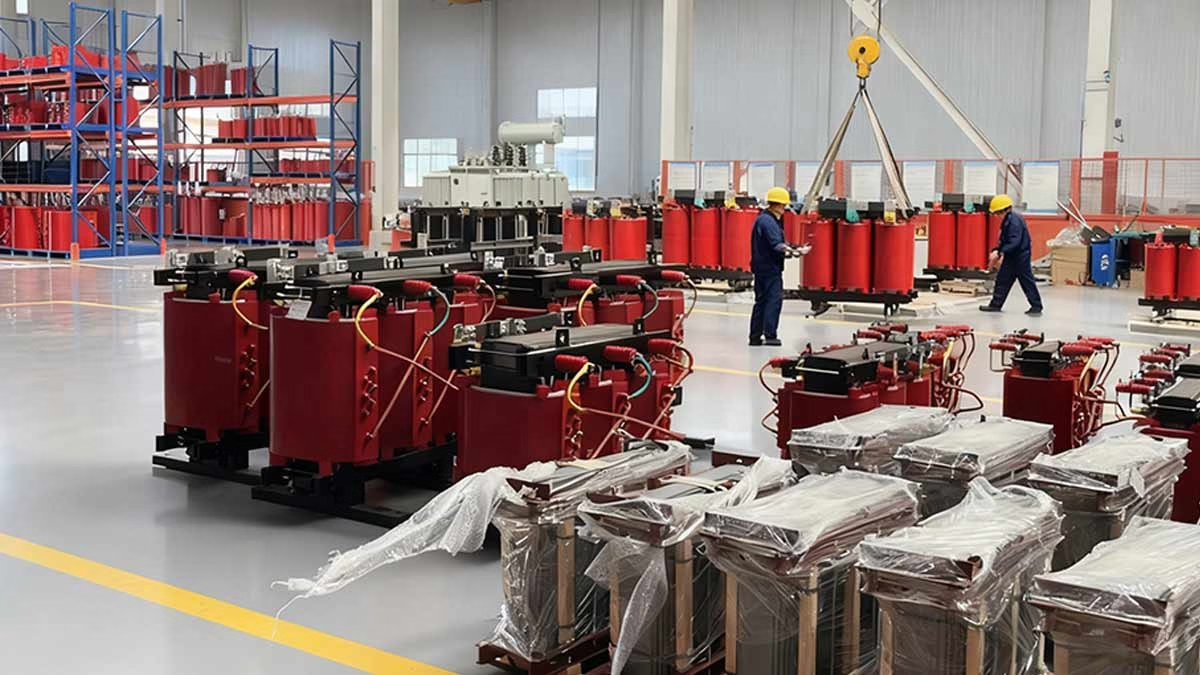
Urban Infrastructure: Shaping Modern Cities & Smart Networks
Dry-type transformers are integral to urban development, addressing each region’s unique urban challenges—from America’s vertical skylines to Europe’s historic districts and the Middle East’s rapid new-city builds.
USA: Skyscrapers, Subways & Smart Grids
- High-Rise Buildings: Vertical power distribution systems use stacked dry-type transformers (1MVA–3MVA) in New York and Chicago skyscrapers. A 70-story Manhattan tower integrated 2MVA units every 20 floors, saving 30% of electrical room space compared to traditional designs.
- Public Transportation: Flood-resistant transformers (IP67-rated) power Boston and San Francisco subway networks. Boston’s Red Line upgrade used units with waterproof enclosures, ensuring operation during coastal storms.
- Smart City Initiatives: IoT-enabled dry-type transformers in San Francisco’s tech district provide real-time load data, optimizing grid responsiveness and reducing energy waste by 15%.
- Key Focus: Space efficiency, flood resistance, and smart grid integration.
Europe: Historical Preservation & Sustainable Urbanism
- Historic District Renovations: Ultra-compact dry-type transformers (250kVA–1MVA) fit into Rome’s 16th-century buildings and London’s Victorian warehouses. A Parisian heritage project used slim-profile units (60cm depth) to preserve architectural integrity while modernizing power systems.
- Public Transit Hubs: LEED-certified transformers (500kVA–2MVA) power Amsterdam’s train stations and EV charging hubs. A Berlin Hauptbahnhof upgrade integrated 1.5MVA units with solar-powered cooling, cutting carbon footprint by 20%.
- Green Buildings: High-efficiency transformers (IE3-rated) support net-zero office complexes in Frankfurt, with 99.2% efficiency reducing lifecycle energy costs by 25%.
- Key Focus: Low noise (≤50dB), historic compatibility, and renewable integration.
Middle East: Mega-Projects & Extreme Climate Adaptation
- New City Developments: Large-scale dry-type transformers (3MVA–15MVA) power Dubai’s Expo City and Abu Dhabi’s Masdar City. These units feature advanced cooling systems to operate in 50°C heat, with sand-proof enclosures for desert environments.
- Desalination Plants: Corrosion-resistant transformers (5MVA–10MVA) in coastal facilities handle salt air exposure. An Abu Dhabi plant’s 8MVA units integrate with solar farms, powering reverse osmosis systems while reducing water treatment costs by 18%.
- Indoor Mega-Structures: High-capacity transformers (10MVA–20MVA) power Dubai’s indoor ski resorts and Doha’s theme parks, managing climate control and attraction loads. Units include integrated cooling to handle 24/7 high-demand operation.
- Key Focus: Heat management, water conservation integration, and scalability for mega-projects.
Renewable Energy Integration: Enabling Solar & Wind Power Globally
Dry-type transformers are critical to the green energy transition, addressing the unique demands of renewable systems—variable output, harsh installation environments, and grid compatibility—across regions.
USA: Utility-Scale Solar & Onshore Wind
- Solar Farms: Step-up dry-type transformers (1MVA–10MVA) connect 500MW+ solar arrays in Arizona and California to the grid. A Phoenix-area project used 7.5MVA units with DC insulation, handling variable solar input while maintaining 99% efficiency.
- Onshore Wind: Nacelle-mounted transformers (1.5MVA–3MVA) power Texas and Iowa wind farms, with vibration-resistant designs to withstand turbine motion. These units convert generator voltage (690V) to grid-compatible levels (34.5kV) efficiently.
- Microgrids: Bi-directional dry-type transformers (500kVA–2MVA) integrate solar, storage, and grid power in California microgrids. A Sonoma County project used smart units to balance load during wildfire-related outages, ensuring 24/7 power for critical facilities.
Europe: Offshore Wind & Distributed Solar
- Offshore Wind: Marine-grade dry-type transformers (5MVA–15MVA) power North Sea floating wind farms. A Scottish project’s 10MVA units feature corrosion-resistant coatings and hermetic sealing, withstanding salt spray and wave motion for 25-year lifespans.
- Urban Rooftop Solar: Compact, low-noise transformers (250kVA–1MVA) integrate with Berlin and Madrid’s building solar arrays. Units meet EU noise standards (≤45dB) and fit in rooftop electrical closets, avoiding visual impact.
- Hybrid Systems: Transform ers (2MVA–8MVA) in Scotland’s wind-solar-pumped storage projects handle variable inputs, with load-balancing technology that reduces grid reliance by 30%.
Middle East: Desert Solar & Sustainable Desalination
- Utility-Scale Desert Solar: Heat-resistant dry-type transformers (5MVA–20MVA) power Saudi Arabia’s NEOM and UAE’s Masdar solar farms. Units include sand filters and forced-air cooling, operating at 55°C while maintaining efficiency.
- Solar-Desalination Hybrid: 8MVA–15MVA transformers link solar farms to Abu Dhabi and Qatar desalination plants. These corrosion-resistant units handle variable solar output, powering reverse osmosis systems that produce 100M+ gallons of fresh water daily.
- Emerging Wind: Low-wind-speed optimized transformers (1.5MVA–3MVA) support Oman’s first major wind farm, with designs tailored to the region’s unique wind patterns and high temperatures.
| Renewable Focus | Regional Specialty | Transformer Features | Environmental Impact |
|---|---|---|---|
| USA | Utility-Scale Solar/Wind | Step-up voltage, DC insulation | 500MW+ clean energy integration |
| Europe | Offshore Wind | Marine-grade corrosion resistance | 15MVA+ offshore power delivery |
| Middle East | Desert Solar-Desalination | Heat/dust resistance, hybrid system integration | 100M+ gallons/day solar-powered water |
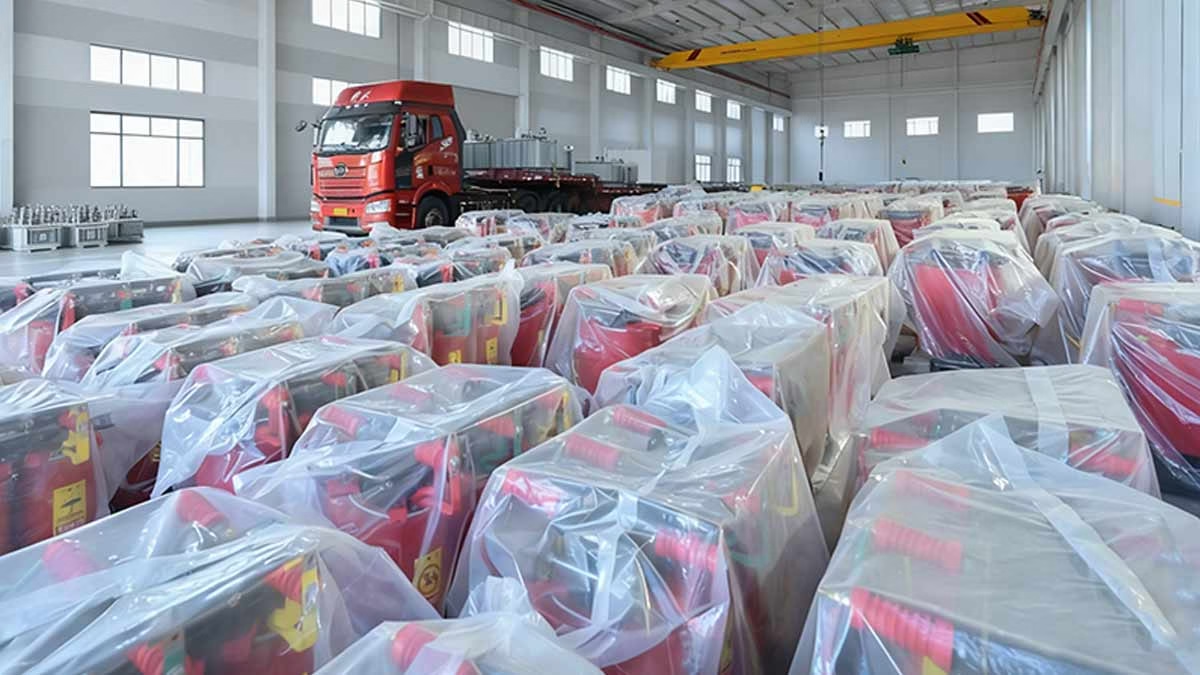
Commercial & Residential Buildings: Powering Spaces with Efficiency & Compliance
Dry-type transformers adapt to building needs—from America’s skyscrapers to Europe’s mixed-use developments and the Middle East’s luxury towers—prioritizing safety, space savings, and energy efficiency.
USA: Skyscrapers, Malls & Data Centers
- High-Rise Offices: Vertical power distribution uses 1MVA–3MVA dry-type transformers in Chicago and Los Angeles skyscrapers. A 60-story Chicago tower integrated units on every 15 floors, reducing energy losses by 10% compared to ground-level transformers.
- Shopping Malls: Smart transformers (500kVA–2MVA) in LA and Miami malls optimize load during peak hours. Units adjust output for retail, food courts, and entertainment zones, cutting energy costs by 18%.
- Building-Integrated Data Centers: Redundant 2MVA–5MVA transformers power NYC and Dallas colocation facilities, with N+1 redundancy ensuring 99.99% uptime for critical servers.
Europe: Mixed-Use, Historic & Eco-Friendly Buildings
- Sustainable Office Parks: IE3-rated dry-type transformers (500kVA–1.5MVA) support Frankfurt and Amsterdam’s BREEAM-certified complexes. Units integrate with solar/geothermal systems, reducing building carbon footprints by 25%.
- Historic Conversions: Slim-profile 250kVA–1MVA transformers fit London’s warehouse-to-apartment conversions and Paris’s 19th-century building upgrades. Low-noise designs (≤45dB) preserve living comfort.
- Residential Blocks: Compact transformers in Berlin and Madrid apartment complexes power 100+ units, with load-balancing for EV chargers and heat pumps—critical for Europe’s building electrification push.
Middle East: Luxury Towers & Indoor Mega-Structures
- Luxury Residential Towers: 2MVA–5MVA dry-type transformers in Dubai and Abu Dhabi towers handle massive AC loads. Units include advanced cooling to operate in 45°C ambient temperatures, powering 200+ luxury units with zero downtime.
- Hotel Resorts: 1MVA–3MVA transformers in beachfront Abu Dhabi and Doha resorts integrate with desalination and pool systems. Redundant designs ensure uninterrupted power for guest services.
- Indoor Theme Parks: 10MVA–15MVA high-capacity transformers power Dubai’s indoor ski resorts and Qatar’s entertainment complexes, managing climate control and attraction loads with 98.5% efficiency.
Specialized Applications: Unique Regional Use Cases
Beyond standard applications, dry-type transformers solve niche challenges—from mobile power to high-speed rail—showcasing their adaptability across industries and regions.
USA: Mobile & Transportation Innovations
- Mobile Data Centers: Containerized 500kVA–1.5MVA dry-type transformers power disaster relief and military deployments. Units are shock-resistant and rapidly deployable, providing stable power for emergency communication systems.
- EV Charging Networks: 250kVA–1MVA transformers support highway fast-charging hubs in California and Texas. Units handle simultaneous charging for 4–8 EVs, with grid-integration technology to avoid overloads.
- Aerospace Testing: Ultra-stable 1MVA–2MVA transformers power NASA’s propulsion testing facilities, with voltage regulation within ±0.5% to protect sensitive equipment.
Europe: Advanced Transportation & Research
- High-Speed Rail: 500kVA–2MVA trackside transformers power Spain’s AVE and France’s TGV networks. Units recover energy from regenerative braking, cutting rail energy costs by 20%.
- Underground Research Facilities: Low-EMI dry-type transformers (250kVA–1MVA) support CERN and Alpine particle physics labs. Electromagnetic shielding prevents interference with delicate experiments.
- Floating Wind Platforms: 5MVA–10MVA transformers for Scotland’s floating wind farms withstand constant motion and salt exposure, with remote monitoring for offshore maintenance.
Middle East: Extreme-Environment Critical Infrastructure
- Oil Field Electrification: ATEX Zone 1-certified 2MVA–5MVA transformers power Kuwaiti and Saudi oil fields. Explosion-proof designs and dust resistance ensure safety in hazardous environments.
- Large-Scale Desalination: 8MVA–15MVA transformers for Saudi Arabia’s Jubail desalination plant handle corrosive coastal conditions, powering the world’s largest reverse osmosis facility.
- Indoor Leisure Facilities: 10MVA–20MVA transformers for Dubai’s indoor ski resorts manage snow-making and climate control, operating 24/7 in 50°C external temperatures.
Conclusion
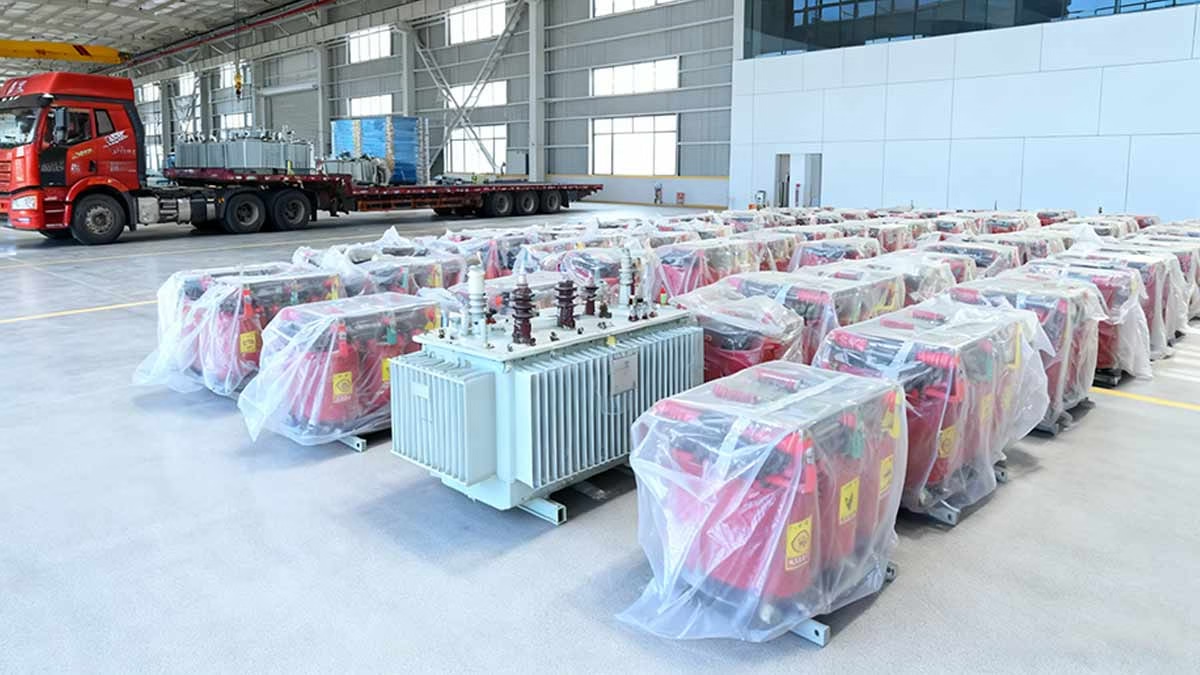
Dry-type transformers are more than power distribution components—they’re tailored solutions for regional challenges, industry needs, and environmental constraints. From America’s precision manufacturing to Europe’s sustainable urbanism and the Middle East’s extreme-climate mega-projects, their adaptability, efficiency, and reliability make them indispensable across sectors.
As the world shifts to electrification, renewable energy, and smart infrastructure, dry-type transformers will continue to evolve—with custom designs, enhanced efficiency, and region-specific innovations. Whether you need a compact unit for a historic building or a heat-resistant transformer for a desert solar farm, the right dry-type solution aligns with your project’s unique demands.