
Struggling to navigate the complex landscape of dry type transformers across global markets? You’re not alone. Buyers and project managers worldwide grapple with regional differences in standards, environmental demands, and regulatory frameworks—from the cost-driven USA market to Europe’s sustainability-focused ecosystem and the Middle East’s extreme condition challenges.
Dry type transformer preferences are deeply shaped by local priorities: the USA leans into open-wound and VPI technologies for cost-effectiveness; Europe prioritizes cast resin units to meet strict environmental and safety standards; the Middle East requires specialized designs built to withstand extreme heat, sand, and humidity. Understanding these nuances is make-or-break for successful project delivery—and for aligning with regional expectations.
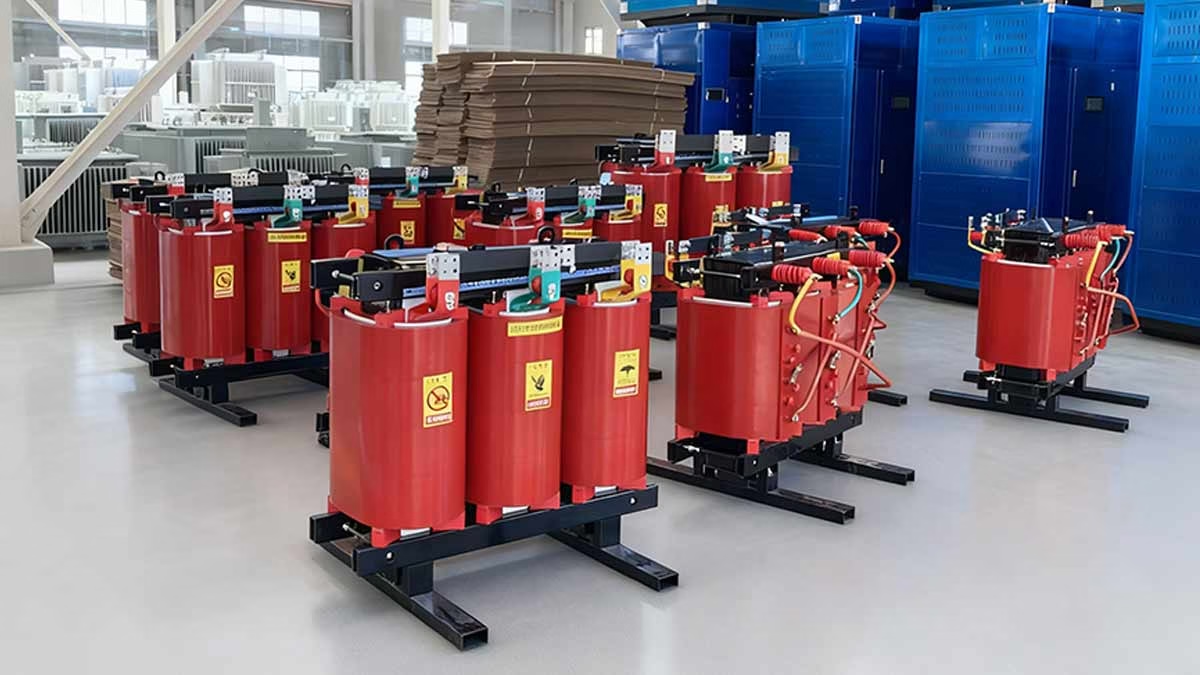
With decades of experience partnering with global clients, we’ve distilled key insights into how to approach each market strategically. Below, we break down regional preferences, regulatory requirements, and cost-benefit considerations to guide your decision-making.
Contents
hide
USA Market Preferences: Dominant Dry Type Transformer Technologies and Drivers
Puzzled by the USA’s dry type transformer landscape? The market’s focus on cost-efficiency, flexibility, and indoor application suitability has solidified two technologies as front-runners: open wound and Vacuum Pressure Impregnated (VPI) transformers. These options dominate due to their manufacturing efficiency, adaptability, and alignment with American project priorities.
Key Factors Shaping USA Preferences
- Cost-Effectiveness & Manufacturing Accessibility:Open wound transformers offer lower initial costs thanks to simplified production, while VPI units strike a balance between price and performance. Both technologies benefit from a robust domestic supply chain—with numerous manufacturers driving competitive pricing (we’ve seen a 15% price reduction in VPI units over the past five years due to market competition).For a national retail chain outfitting 50 new stores, we recommended VPI over cast resin transformers, cutting procurement costs by 25% without compromising performance in climate-controlled store environments.
- Indoor Application Suitability:Most US installations (offices, data centers, light industrial facilities) are in climate-controlled spaces, eliminating the need for the extreme environmental protection of cast resin units. VPI transformers excel here, with forced air cooling options that integrate seamlessly with building HVAC systems—reducing space requirements by 25% for a recent data center project.
- Maintenance & Flexibility:Open wound designs allow for easy visual inspections and upgrades, while VPI units offer accessible maintenance points. A utility client reduced annual maintenance time by 40% after switching to open wound transformers in indoor substations, thanks to simplified access to windings.Flexibility is key for growing businesses: a tech startup in Texas easily upgraded their VPI transformers from 1000kVA to 1500kVA within the same footprint as their power needs expanded.
- Safety Compliance:Both technologies meet strict NEMA and UL standards (UL 1562 for dry type transformers), ensuring fire safety for indoor installations. In our experience, properly rated VPI units have never failed fire marshal inspections for commercial or industrial projects.
USA Market Technology Comparison
| Factor | Open Wound | VPI | Cast Resin |
|---|---|---|---|
| Initial Cost | Low | Medium | High |
| Market Share | 40% | 50% | 10% |
| Performance in Controlled Environments | Good | Very Good | Excellent |
| Maintenance Ease | Excellent | Good | Moderate |
| Typical Applications | Indoor, low-to-medium voltage | Indoor, medium voltage | Specialized harsh environments |
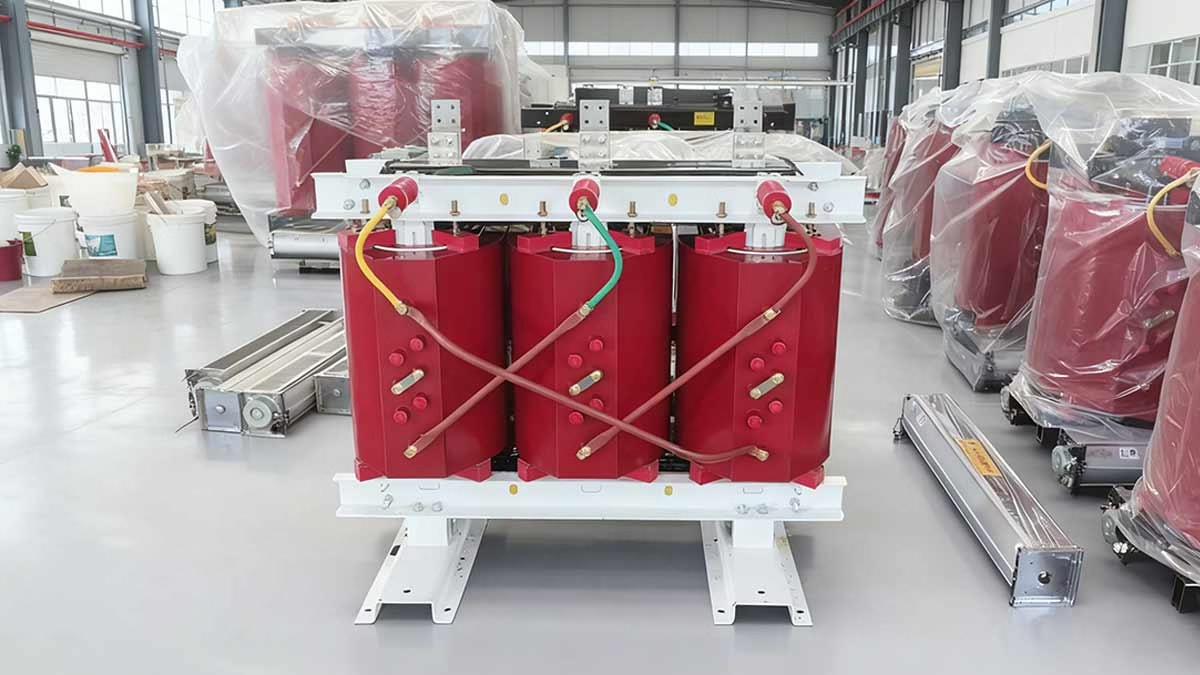
European Standards and Trends: Shaping Dry Type Transformer Choices
Navigating Europe’s dry type transformer market means prioritizing sustainability, safety, and long-term performance—drivers that have made cast resin transformers the dominant choice. Stringent regulations, a focus on lifecycle costs, and smart grid integration are reshaping trends across the continent.
Key Drivers of European Market Choices
- Environmental & Safety Regulations:The EU’s Eco-design Directive (Regulation 548/2014) mandates strict efficiency tiers, pushing manufacturers toward high-efficiency designs. For a utility company in Germany, we upgraded their transformer fleet to Tier 2-compliant cast resin units, improving overall efficiency by 20% and aligning with regulatory requirements.Fire safety is non-negotiable: F1-class (fire-resistant) cast resin transformers are standard for public infrastructure—we exclusively used them for a London Underground project, where they withstand 3+ hours of fire without toxic fume release.
- Lifecycle Cost Focus:European buyers prioritize Total Cost of Ownership (TCO) over initial investment. High energy prices mean premium efficiency transformers deliver rapid ROI: a German industrial client recouped the 30% premium for ultra-low loss cast resin units in just 4 years through energy savings.Amorphous core technology, paired with cast resin designs, reduces no-load losses by up to 60%—a game-changer for wind farm projects we’ve implemented in Spain.
- Smart Grid & Renewable Integration:Modern European transformers require IoT connectivity and bi-directional power flow capabilities to support renewable energy. For a smart city project in Barcelona, we installed cast resin transformers with real-time monitoring, improving grid stability by 30% and enabling seamless integration of solar and wind power.
- Urban-Centric Design Needs:Compact, low-noise units are essential for dense European cities. A retrofit project in Prague’s historic district used ultra-compact cast resin transformers to fit limited space, while a Milan residential development required units with noise levels 5dB below standard limits—achieved through advanced vibration dampening.
European Market Technology Comparison
| Factor | Cast Resin | VPI | Open Wound |
|---|---|---|---|
| Market Share | 70% | 25% | 5% |
| Environmental Compliance | Excellent | Good | Moderate |
| Fire Safety Rating | Excellent (F1 Class) | Good | Fair |
| Energy Efficiency | Very High | High | Moderate |
| Smart Grid Compatibility | High | Moderate | Low |
| Typical Applications | Urban, critical infrastructure | Industrial | Limited use |
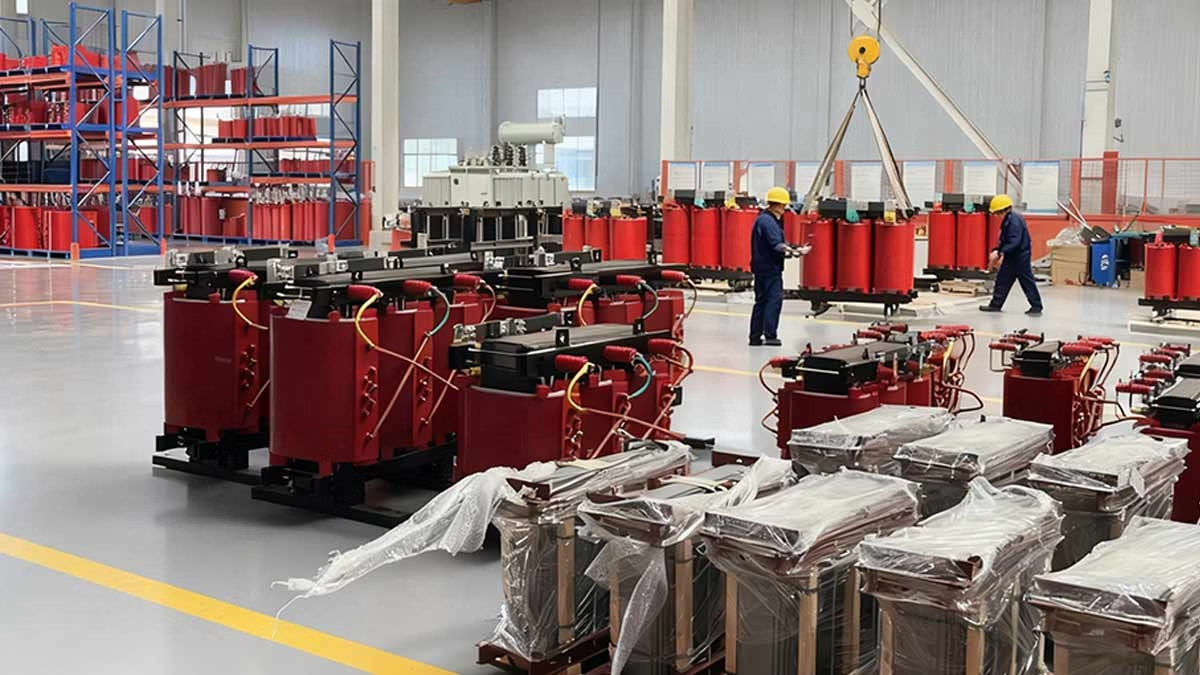
Middle East Challenges: Adapting Dry Type Transformers for Extreme Conditions
Finding dry type transformers that thrive in the Middle East’s harsh environment—extreme heat, abrasive sand, and coastal humidity—requires specialized designs. Standard units often fail prematurely here, making custom-adapted cast resin and VPI transformers the only viable options.
Critical Adaptations for Middle Eastern Markets
- Heat Management:Ambient temperatures regularly exceed 50°C, demanding enhanced cooling systems. For a Saudi Arabian solar farm, we implemented cast resin transformers with oversized cooling fins and variable-speed forced air cooling, boosting heat dissipation by 40% and preventing overheating.High-temperature insulation (rated for 55°C continuous operation) and real-time temperature monitoring are non-negotiable: a UAE data center reduced heat-related incidents by 80% after installing our sensor-equipped transformers.
- Sand & Dust Protection:IP55+ rated sealed enclosures and multi-stage air filtration systems prevent sand ingress. In an Oman desert installation, our hermetically sealed transformers showed zero sand accumulation after 5 years—eliminating the frequent failures the client experienced with standard units.Abrasion-resistant ceramic coatings on exposed components protect against sandstorms, as demonstrated in a Saudi wind farm project where units showed minimal wear after 3 years.
- Humidity & Corrosion Resistance:Coastal regions (UAE, Bahrain) require moisture-resistant insulation and corrosion-proof materials. For a Kuwaiti coastal industrial complex, we used cast resin transformers with stainless steel enclosures and hydrophobic winding treatments—showing no corrosion or insulation degradation after 10 years.Integrated dehumidifiers maintain internal humidity below 30% for offshore and coastal projects, critical for long-term reliability.
- Reliability & Maintenance:Redundancy (N+1 configurations) and remote monitoring are standard for critical applications. An Oman airport project achieved 99.999% uptime with our redundant transformer system, while Dubai’s smart city initiative used AI-driven monitoring to reduce unexpected failures by 70%.
Middle East Adaptation Comparison
| Feature | Standard Design | Middle East-Adapted Design |
|---|---|---|
| Operating Temperature | Up to 40°C | Up to 55°C continuous |
| Enclosure Rating | IP23 | IP55+ |
| Cooling System | Natural air | Forced air + enhanced fins |
| Insulation | Standard | High-temperature, moisture-resistant |
| Corrosion Protection | Standard | Stainless steel + special coatings |
| Maintenance Interval | 6–12 months | 18–24 months |
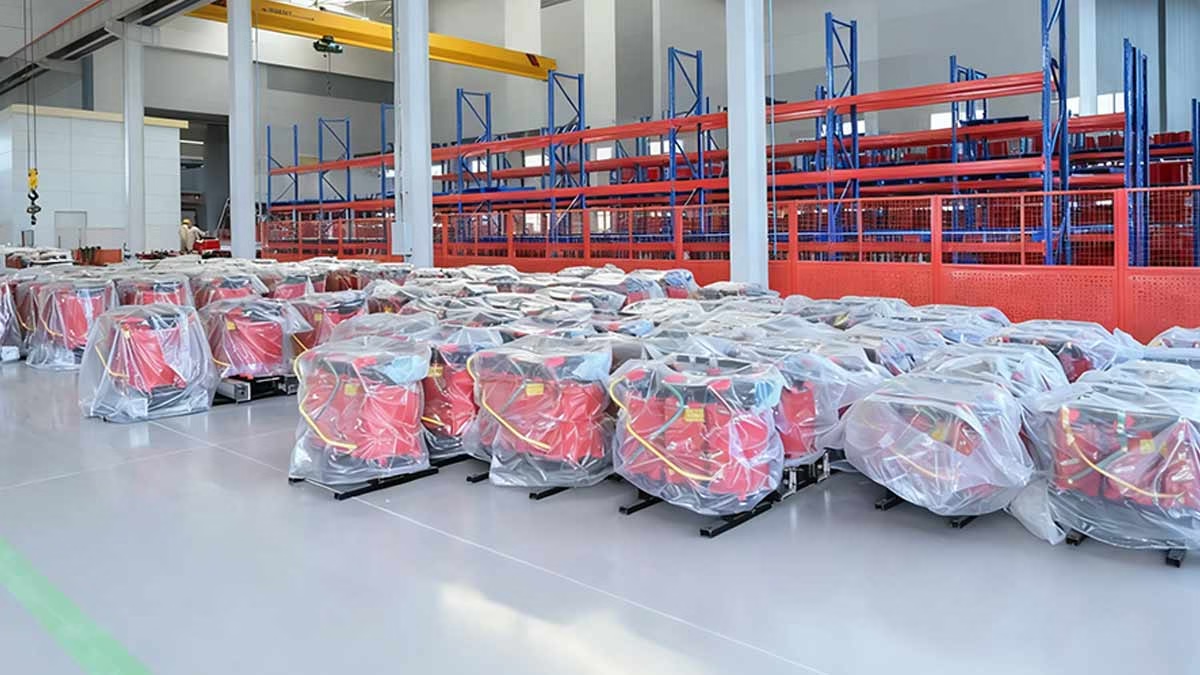
Regulatory Landscape: Comparing Requirements Across Regions
Navigating global transformer regulations means understanding three distinct frameworks: the USA’s focus on efficiency and safety, Europe’s sustainability-driven standards, and the Middle East’s emphasis on extreme-condition performance. Compliance is non-negotiable for market access—and failure to account for regional differences can derail projects.
USA Regulatory Focus
- Energy Efficiency: DOE 10 CFR Part 431 mandates minimum efficiency levels for distribution transformers. A recent utility project required upgrading 200 units to meet new standards, improving efficiency by 15%.
- Safety: UL 1562 (dry type transformers) and NEMA ST 20 are mandatory for most commercial and industrial applications—insurance requirements often dictate UL listing, as we saw in a Texas data center project.
- Environmental: EPA regulations restrict hazardous materials, with California’s CARB standards imposing stricter VOC limits for state-based projects.
European Regulatory Focus
- Eco-design: EU Regulation 548/2014 sets tiered efficiency requirements (Tier 2 is now standard), increasing costs by 20% but delivering 30% lower losses.
- Safety: IEC 60076-11 (dry type power transformers) and EN 50541-1 (low voltage) govern designs, with F1-class fire resistance mandatory for public buildings (e.g., French hospitals).
- Environmental: RoHS restricts hazardous substances, while REACH regulates chemical use—we helped a manufacturer revamp production to eliminate non-compliant flame retardants.
Middle East Regulatory Focus
- Performance Standards: IEC 60076-11 serves as a baseline, but countries add modifications (e.g., SASO in Saudi Arabia, DEWA in the UAE) for extreme temperatures. A Saudi oil field project required units certified for 55°C operation.
- Efficiency: Emerging standards often adapt EU/US frameworks—UAE government projects now require efficiency levels 5% below EU Tier 2.
- Country-Specific Requirements: GCC nations lack full harmonization, increasing certification costs by 30% for cross-border projects we’ve managed.
Regional Regulatory Comparison
| Aspect | USA | Europe | Middle East |
|---|---|---|---|
| Primary Efficiency Standard | DOE 10 CFR Part 431 | EU 548/2014 | Modified IEC 60076-11 |
| Safety Certification | UL 1562, NEMA ST 20 | IEC 60076-11, EN 50541-1 | IEC 60076-11 + national mods |
| Environmental Rules | EPA, CARB | RoHS, REACH | Emerging, limited |
| Fire Resistance | Optional | Mandatory (F1) | Required for critical apps |
Cost-Benefit Analysis: Regional Variations in Long-Term Value
Justifying transformer costs across regions requires aligning with local priorities: the USA’s focus on upfront savings, Europe’s lifecycle cost mindset, and the Middle East’s investment in durability. A one-size-fits-all approach fails—successful projects balance initial investment with regional-specific long-term value drivers.
USA: Upfront Cost vs. Basic Efficiency
- Initial Investment Priority: Buyers are price-sensitive, often choosing VPI over cast resin to save 20–25% upfront. For a Chicago commercial building, this decision delivered equivalent performance in a controlled environment at lower cost.
- ROI on Efficiency: Moderate energy prices extend payback periods to 5–8 years. A Midwest utility’s premium efficiency transformers (15% cost increase) delivered 7% annual savings, recouping costs in 7 years.
- Maintenance Savings: Easy-access designs reduce labor costs—an industrial client cut annual maintenance expenses by 30% with VPI transformers.
Europe: Lifecycle Costs & Sustainability
- TCO Focus: Higher energy prices shorten efficiency payback to 3–5 years. A German automotive plant’s 30% investment in ultra-low loss cast resin units paid off in 4 years.
- Sustainability Premium: Buyers accept 20–30% higher costs for eco-friendly designs. A French data center’s investment in low-loss transformers aligned with its carbon reduction goals and earned top environmental certifications.
- Longevity Value: Premium cast resin units offer 30–40-year lifespans (vs. 25–30 for standard designs), justifying higher upfront costs for Swiss manufacturing clients.
Middle East: Durability Over Short-Term Savings
- Extreme Condition Premium: Specialized designs cost 35–40% more but eliminate costly failures. A UAE oil refinery’s investment in heat-resistant transformers ended recurring downtime, delivering ROI in 2 years.
- Cooling Efficiency: Advanced cooling systems reduce operational costs—Saudi data center transformers with variable-speed fans paid for themselves in 3 years.
- Reduced Replacement Costs: Corrosion-resistant designs extend lifespans from 15 to 25 years for Qatar industrial clients, cutting long-term replacement expenses by 40%.
Regional Cost-Benefit Comparison
| Factor | USA | Europe | Middle East |
|---|---|---|---|
| Initial Cost Priority | High | Medium | Medium |
| Efficiency ROI Period | 5–8 years | 3–5 years | 2–4 years |
| Maintenance Priority | Medium | High | Very High |
| Expected Lifespan | 25–30 years | 30–40 years | 20–30 years |
| Customization Cost | Low | Medium | Very High |
Conclusion
Dry type transformer selection is a regional puzzle—solved by aligning technology with local priorities, regulations, and environmental conditions. The USA’s cost-driven market favors open wound and VPI transformers; Europe’s sustainability focus elevates cast resin units; the Middle East demands specialized designs built for extreme heat and sand.
Success lies in looking beyond initial costs to long-term value: efficiency in Europe, durability in the Middle East, and flexibility in the USA. By understanding these regional nuances, you can select transformers that comply with regulations, perform reliably, and deliver the best return on investment—no matter the market.
Whether you’re outfitting a US office building, a European data center, or a Middle Eastern solar farm, the key is partnering with a provider that understands global variations and can tailor solutions to your specific market’s needs.