
Wondering why we use dry type transformers? Dry type transformer stands as a cornerstone of modern electrical infrastructure, delivering unmatched fire safety compliance through their inherently non-flammable construction, robust high-temperature tolerance, and strict alignment with NFPA and IEC standards. Unlike oil-filled alternatives, they eliminate the catastrophic fire risks posed by flammable liquid leaks and ignition, making them the definitive choice for indoor installations, high-risk facilities such as data centers and hospitals, and urban environments where safety is non-negotiable.
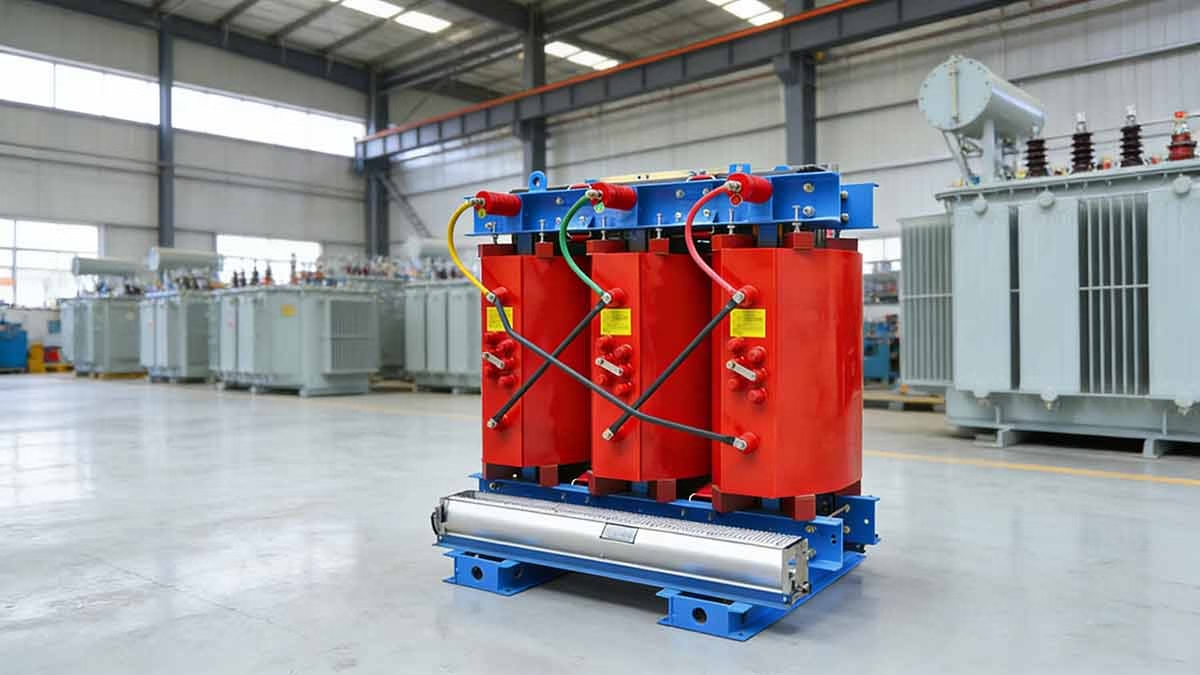
With decades of experience advising facilities on upgrading electrical systems to meet stringent fire safety benchmarks, I’m here to unpack why dry-type transformers are the linchpin of exceeding fire safety standards—while also optimizing operational costs and long-term reliability.
Contents
hide
Fire Ratings and Pad Mounted Transformers: NFPA 70’s Critical Role in Selection
Ever wondered why certain transformers are permitted in occupied buildings while others face strict installation restrictions? The answer hinges on fire safety ratings, and NFPA 70—the National Electrical Code (NEC)—sets the definitive guidelines for transformer deployment across all facility types.
Fire ratings are far more than a regulatory checkbox; they dictate where transformers can be safely installed, what protective measures are mandatory, and how much you’ll invest in installation and ongoing maintenance. NFPA 70 explicitly outlines that transformers with superior fire ratings qualify for broader installation flexibility, reducing the need for costly fire suppression systems and specialized ventilation, while simultaneously boosting overall site safety.
NFPA 70 Core Requirements for Transformers
These regulations form the foundation of electrical fire safety for all transformer types:
- Location Restrictions: Units rated below 35kV are eligible for indoor installation when paired with appropriate fire safety ratings, while transformers exceeding 35kV typically require outdoor or vault-mounted setups to mitigate risks. Industry experts regularly witness clients cutting millions in construction costs by selecting properly rated dry-type transformers for indoor use.
- Ventilation Needs: Higher fire-rated transformers drastically reduce ventilation requirements. This translates to substantial HVAC cost savings for large facilities, as there’s no need to accommodate the extensive airflow needed to cool or disperse fumes from lower-rated alternatives.
- Fire Suppression Mandates: Low-fire-rated transformers often demand complex, expensive suppression systems. In contrast, premium dry-type units with top-tier ratings rarely require additional protective equipment, streamlining both installation and maintenance.
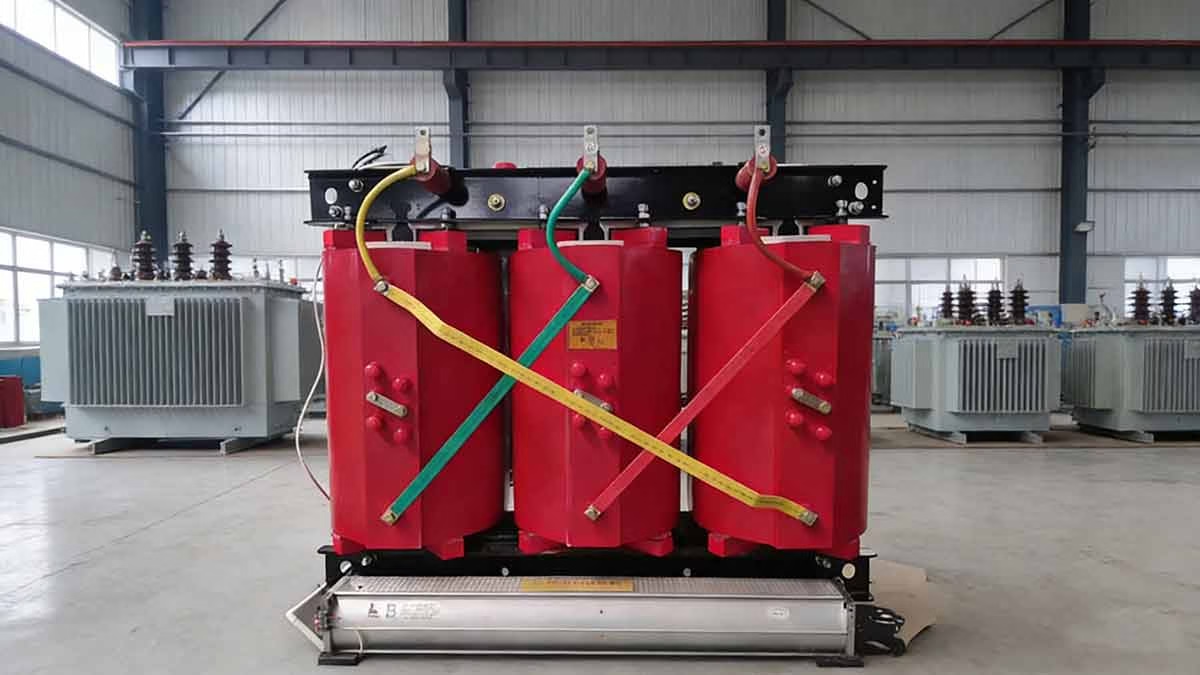
The table below breaks down NFPA 70 installation requirements for common transformer types:
| Transformer Type | Indoor Installation Eligibility | Ventilation Demand | Fire Suppression Requirement |
|---|---|---|---|
| Oil-Filled (<35kV) | Restricted (vault or barrier required) | Extensive | Mandatory |
| Dry-Type (Class 155) | Fully Allowed | Moderate | Usually Not Required |
| Dry-Type (Class 220) | Widely Permitted | Minimal | Typically Not Required |
How Fire Ratings Shape Facility Design for Pad Mounted Transformers
Fire safety ratings don’t just impact transformer placement—they redefine entire facility design strategies:
- Space Utilization: High-rated dry-type transformers can be positioned in closer proximity to other electrical equipment, eliminating the need for dedicated, isolated transformer rooms. Many facilities have reclaimed up to 30% of their electrical room space by upgrading to these units.
- Construction Material Costs: Low-fire-rated transformers often require fire-resistant walls, floors, and ceilings to contain potential blazes, adding significant expenses to new builds or renovations. High-rated units, by contrast, work with standard construction materials.
- Emergency Planning Simplification: Fire ratings directly influence evacuation route design and fire response protocols. Selecting the right transformer reduces the complexity of emergency plans, as there’s less risk of fire spread or toxic fume emissions to account for.
The following comparison highlights how fire ratings impact facility design outcomes:
| Design Aspect | Low Fire Rating Impact | High Fire Rating Impact |
|---|---|---|
| Space Requirements | Large, dedicated isolation zones | Compact, multi-use electrical spaces |
| Construction Expenses | Elevated (fire-proof materials mandatory) | Reduced (standard materials suffice) |
| Emergency Plan Complexity | Highly complex | Streamlined and easy to execute |
Insurance and Compliance Benefits of Fire-Rated Transformers
The financial advantages of prioritizing fire ratings extend far beyond installation costs:
- Premium Reductions: Facilities using high-fire-rated dry-type transformers often see property insurance premiums drop by 10–15%, as insurers recognize the reduced risk of fire-related claims.
- Liability Coverage Enhancements: Top-tier transformers can increase liability coverage limits, a critical advantage for high-value facilities such as manufacturing plants or data centers where a single incident could lead to massive financial losses.
- Long-Term Cost Stability: Properly rated transformers minimize the likelihood of fire-related claims, which helps maintain favorable insurance terms over the lifespan of the facility.
Dry Type vs. Oil-Filled Transformers: Safety Advantages of Pad Mounted Units in Fire Incidents
Why are more and more facilities phasing out traditional oil-filled transformers in favor of dry-type models? The answer lies in hard data and real-world safety performance: dry-type transformers are 30% safer than oil-filled alternatives in fire incidents.
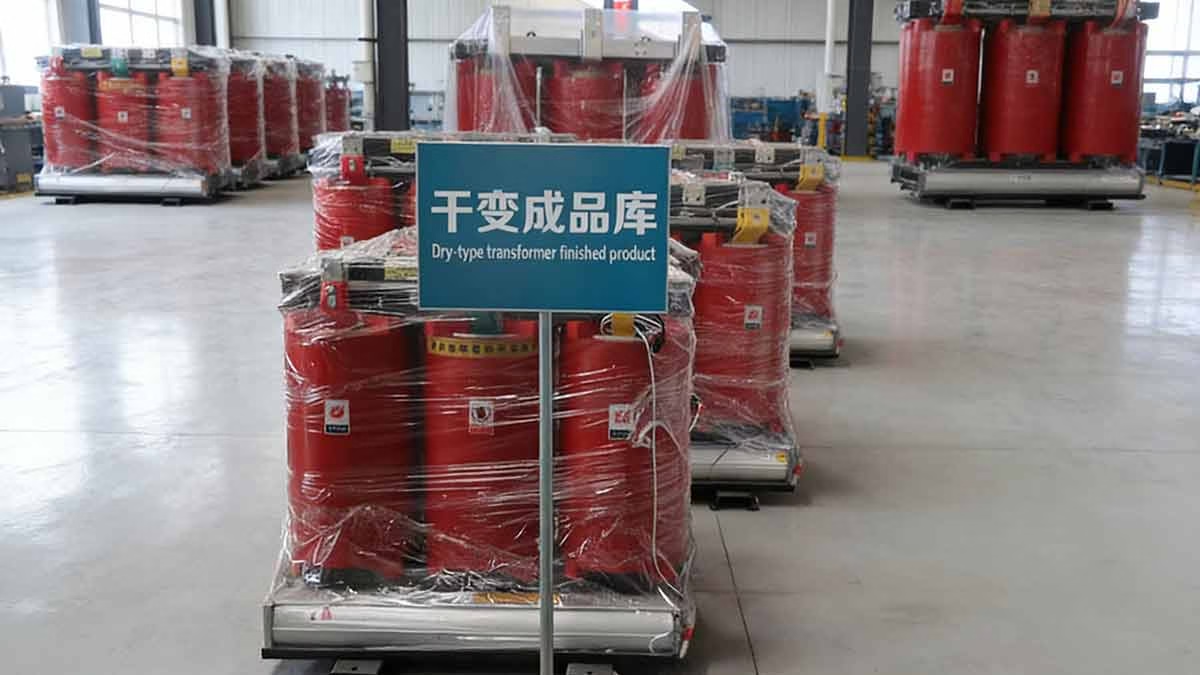
This safety margin stems from three key factors: the elimination of flammable oil, superior high-temperature resistance, and reduced emission of smoke and toxic gases during electrical faults. The result is slower fire spread, easier containment, and dramatically lower property damage and personnel risk.
Fire Initiation Risk: Eliminating the Fuel Source
The most significant safety gap between dry-type and oil-filled transformers lies in their susceptibility to ignition:
- Flammable Material Presence: Oil-filled transformers contain thousands of liters of flammable oil, which can ignite at temperatures as low as 160°C. Dry-type units use no flammable liquids, delivering a 100% reduction in fuel-related fire risk. Field experience shows that oil transformer fires spread rapidly, while dry-type incidents remain localized to the unit itself.
- Overload Tolerance: Dry-type transformers withstand far higher temperatures—exceeding 300°C—without ignition, providing a critical safety buffer during temporary overloads or electrical faults. Oil-filled units have limited tolerance for temperature spikes, increasing failure risks.
Fire Propagation: Limiting Blaze Spread and Duration
When an electrical fault occurs, the behavior of the resulting fire determines the scale of damage:
- Fire Intensity and Duration: Oil fires burn intensely and can sustain themselves for 2–6 hours, requiring specialized foam suppression agents to extinguish. Dry-type transformer fires are less severe, typically burning out in under an hour, and often self-extinguish without external intervention.
- Area of Impact: Oil transformer fires can engulf over 100 m² of surrounding space, damaging equipment and infrastructure. Dry-type incidents rarely affect more than 20 m², keeping damage contained to the immediate vicinity of the unit.
Smoke and Toxic Emissions: Protecting Personnel and the Environment
The hidden danger of transformer fires isn’t just the blaze—it’s the byproducts of combustion:
- Smoke Density: Oil fires produce thick, black smoke that obscures evacuation routes and endangers respiratory health. Dry-type fires generate 60% less smoke, improving visibility for emergency responders and personnel evacuations.
- Toxic Gas Production: Burning transformer oil releases harmful fumes that pose long-term health risks. Dry-type transformers emit minimal toxic gases, reducing both immediate and long-term hazards.
- Environmental Impact: Oil spills and fire runoff can cause lasting soil and water contamination. Dry-type transformer fires leave no hazardous residue, eliminating environmental cleanup costs.
Fire Fighting and Containment: Simplifying Emergency Response
The ease of extinguishing a transformer fire directly impacts the speed of containment and recovery:
- Extinguishing Methods: Oil fires require specialized foam agents to smother the blaze; using water can cause explosive splattering. Dry-type fires can be safely doused with standard water-based systems; no specialized equipment is needed.
- Response Time: Oil transformer fires take 30–60 minutes to contain. Dry-type incidents can be brought under control in 5–15 minutes, minimizing downtime and damage.
Long-Term Safety: Maintenance and Aging Considerations
Safety isn’t just about preventing fires—it’s about sustaining low risk over time:
- Maintenance Risks: Oil-filled transformers require regular oil testing and replacement, creating opportunities for human error or leaks. Dry-type units have minimal maintenance needs, reducing risk points over their operational life.
- Aging and Degradation: Transformer oil degrades over time, increasing fire risks as the unit ages. Dry-type materials maintain their fire resistance properties for decades, ensuring consistent safety performance.
Critical NFPA Standards for Pad Mounted Transformers and Facility Safety
Facility managers often feel overwhelmed by the maze of fire safety regulations governing electrical systems. However, mastering five core NFPA standards can turn compliance from a burden into a strategic advantage—especially when deploying pad mounted and dry-type transformers.
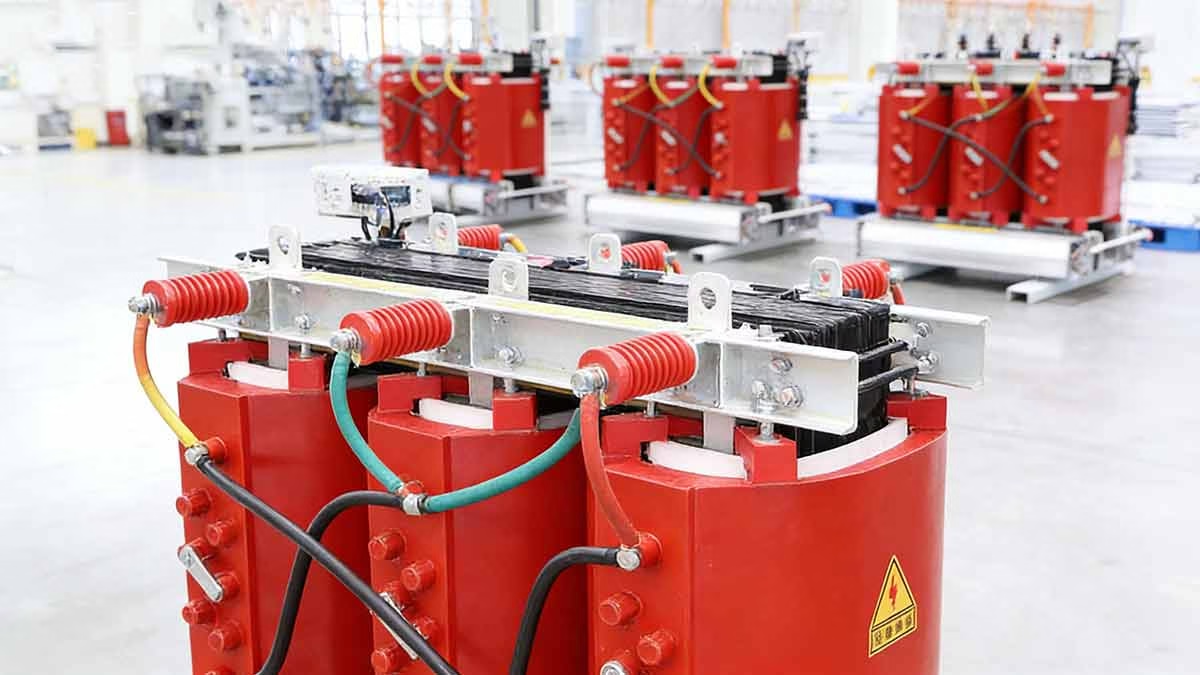
These foundational standards are NFPA 70 (National Electrical Code), NFPA 101 (Life Safety Code), NFPA 13 (Standard for Sprinkler Systems), NFPA 72 (National Fire Alarm and Signaling Code), and NFPA 25 (Standard for Inspection, Testing, and Maintenance of Water-Based Fire Protection Systems). Together, they create a comprehensive framework for safe, compliant transformer installations.
NFPA 70 (National Electrical Code): The Backbone of Transformer Safety
NFPA 70 sets the universal requirements for electrical installations in all commercial and industrial facilities, with specific provisions for pad mounted and dry-type transformers. It dictates installation rules based on voltage class and transformer type, including ventilation needs and fire protection measures. For facility managers, understanding NFPA 70 is non-negotiable—it ensures electrical systems are safe, reliable, and compliant with local and national codes, avoiding costly fines and failed inspections.
NFPA 101 (Life Safety Code): Protecting Occupants Above All
NFPA 101 prioritizes the safety of building occupants during emergencies, with strict rules for egress routes, fire barriers, and emergency power systems. For transformers, this means ensuring installation locations do not block evacuation paths, and that transformer rooms are constructed to prevent fire and smoke from spreading to occupied areas. By aligning transformer placement with NFPA 101 guidelines, facilities can avoid compromising life safety for operational needs.
NFPA 13 (Standard for Sprinkler Systems): Suppression Tailored to Transformer Type
NFPA 13 outlines the design and installation requirements for automatic sprinkler systems, with critical distinctions for spaces housing electrical equipment. Oil-filled transformers demand specialized deluge or pre-action sprinkler systems with high water density (0.3 gpm/ft²) and oil containment measures. Dry-type transformers, by contrast, work with standard wet-pipe systems and lower water density (0.1 gpm/ft²), eliminating the need for specialized suppression infrastructure.
NFPA 72 (National Fire Alarm and Signaling Code): Early Detection Saves Lives
NFPA 72 governs fire detection, alarm systems, and emergency communications—key components of rapid response to transformer incidents. For pad mounted and indoor dry-type transformers, this standard mandates the strategic placement of heat and smoke detectors, with alarm systems integrated into building management systems (BMS) for real-time monitoring. Early detection of electrical faults can prevent small issues from escalating into full-scale fires.
NFPA 25 (Water-Based Fire Protection Maintenance): Sustaining Compliance Over Time
NFPA 25 focuses on the ongoing inspection, testing, and maintenance of water-based fire protection systems—an often-overlooked aspect of long-term transformer safety. For transformer rooms, this means weekly visual inspections of sprinklers, quarterly testing of water flow alarms, and annual calibration of control valves. Proper maintenance ensures that fire suppression systems work when needed, preserving the safety of both transformers and facility occupants.
Meeting Fire Codes During Pad Mounted Transformers and Dry-Type Unit Installation
Planning a transformer installation and feeling overwhelmed by fire code requirements? You’re not alone. Navigating local and national fire regulations can be complex, but a structured, five-step approach ensures your pad mounted or dry-type transformer installation is safe, compliant, and cost-effective.
The core steps to fire code compliance are: selecting the right transformer type for your location, ensuring proper clearances and ventilation, installing fire-rated barriers, deploying appropriate suppression systems, and designing unobstructed emergency access routes. Always consult local fire codes in addition to national standards, as regional requirements may include stricter provisions.
Step 1: Select the Right Transformer for Your Installation Location
The foundation of code compliance is choosing a transformer that matches your facility’s needs:
- Assess Indoor vs. Outdoor Needs: Dry-type transformers are the preferred choice for indoor installations, especially in occupied buildings. Pad mounted dry-type units are ideal for outdoor deployments, offering weather resistance and easy access for maintenance. Oil-filled transformers may be permitted outdoors but require strict containment measures.
- Evaluate Occupancy and Risk Level: High-risk facilities (hospitals, data centers, schools) should prioritize dry-type transformers with Class 220 fire ratings to minimize hazard potential. For lower-risk outdoor applications, standard pad mounted units may suffice.
- Balance Power and Safety: Higher kVA ratings often come with stricter fire code requirements. Work with electrical engineers to select a transformer that meets your power needs without compromising safety or compliance.
Step 2: Prioritize Proper Clearances and Ventilation
Inadequate space and airflow are leading causes of transformer overheating and fire risks:
- Clearance Requirements: Follow NFPA 70 guidelines for minimum distances from walls, equipment, and evacuation routes. While the minimum front clearance is 4 feet, best practice is 6 feet to accommodate maintenance and emergency access. Side and rear clearances should be 2 feet (vs. the 1-foot minimum) for optimal airflow.
- Ventilation Design: Calculate ventilation needs based on transformer heat output—aim for 150 CFM per kVA (vs. the 100 CFM minimum) to prevent overheating. Install temperature sensors with real-time alerts to monitor operational temperatures and catch anomalies early.
Step 3: Install Fire-Rated Barriers to Contain Risks
Fire barriers are critical for preventing the spread of flames and smoke from transformer rooms to occupied areas:
- Wall and Ceiling Ratings: Transformer rooms should have walls with a minimum 2-hour fire rating (3-hour rating is recommended for high-risk facilities), extending from the floor to the roof deck to eliminate gaps for smoke spread.
- Fire Doors: Install self-closing, latching fire doors with a 90-minute minimum rating (120-minute recommended) to isolate transformer rooms during emergencies. Ensure doors are sealed to prevent smoke leakage.
- Penetration Sealing: Use fire-stop materials to seal all cable and conduit penetrations in walls and floors. These small gaps are common points of failure in fire containment, so double-check all penetrations during installation.
Step 4: Deploy Fire Suppression Systems Tailored to Transformer Type
The right suppression system depends on the transformer type and installation location:
- Water Sprinklers: Standard wet-pipe sprinkler systems are sufficient for dry-type transformer rooms, offering cost-effective suppression with minimal maintenance. Oil-filled transformers require specialized deluge systems with foam additives.
- Clean Agent Systems: For sensitive areas like data centers, clean agent suppression systems (e.g., FM-200) provide fire control without water damage to electrical equipment.
- Containment for Outdoor Units: Pad mounted transformers should be installed with spill containment basins if using oil-filled models. Dry-type pad mounted units eliminate this requirement, simplifying installation.
Step 5: Design Unobstructed Emergency Access Routes
Emergency responders need quick, easy access to transformer units to minimize damage during incidents:
- Access Pathways: Ensure routes to transformers are at least 4 feet wide, clear of obstacles, and clearly marked with reflective signage. Avoid blocking access with storage or other equipment.
- Emergency Shutoffs: Install clearly labeled, illuminated power disconnects within sight of the transformer—best practice is to add secondary shutoffs at building exits for easy access during evacuations.
- Lighting: Equip transformer rooms and pad mounted unit locations with battery-backed emergency lighting to ensure visibility during power outages.
Bonus Step: Document Everything for Inspections
Compliance isn’t just about installation—it’s about proving compliance during inspections:
- Maintain Installation Records: Keep detailed documentation of transformer specifications, fire code citations, and inspection reports in a digital archive for easy access.
- Schedule Routine Inspections: Conduct quarterly checks of fire barriers and emergency access routes, and annual reviews of all compliance documentation to ensure alignment with updated codes.
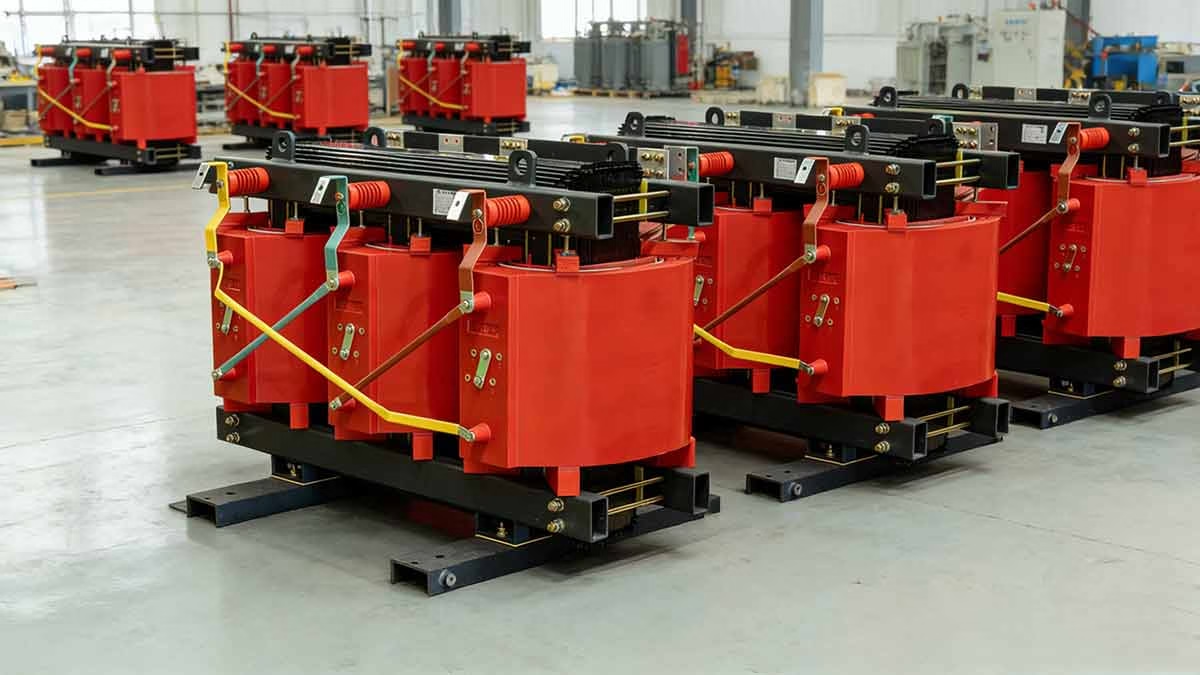
Conclusion
Dry-type transformers—including pad mounted models—are the gold standard for modern electrical systems, offering unrivaled fire safety compliance, cost efficiency, and operational reliability. By aligning transformer selection and installation with key NFPA standards, facility managers can create an electrical infrastructure that protects lives, reduces costs, and meets the strictest regulatory requirements.
The advantages of dry-type transformers extend far beyond fire safety: they streamline installation, lower maintenance costs, and improve long-term facility resilience. When planning your next electrical upgrade, remember that fire codes aren’t just hurdles to overcome—they’re guidelines that help you build a safer, more efficient facility.
Always partner with licensed electrical engineers and fire safety consultants to ensure your transformer installation meets both national standards and local regulations. With the right approach, your dry-type transformer will be a cornerstone of your facility’s safety and success for decades to come.
More FAQ About Why We Use Dry Type Transformer
Q: What is the core safety reason for using dry type transformers?
A: The primary safety advantage of dry type transformers lies in their oil-free design, which eliminates the fire and explosion risks associated with oil-immersed transformers. Unlike oil-filled units that use flammable mineral oil, dry type transformers adopt air or solid insulation materials such as epoxy resin for cooling and insulation, with epoxy resin having an ignition point as high as 380℃, far exceeding the normal operating temperature (≤100℃). This inherent fire safety complies with international standards such as IEC 60076-11 and UL 1561, making it the preferred choice for indoor installations and fire-sensitive areas where even minor oil leaks could lead to catastrophic consequences.
Q: What makes dry type transformers suitable for indoor applications?
A: Dry type transformers are uniquely suited for indoor use due to their compact structure, fire safety, and low pollution characteristics. They do not require special containment structures like oil pits or accident oil pools, saving valuable indoor space. Additionally, their low smoke emission and self-extinguishing insulation properties minimize risks in enclosed spaces such as commercial buildings, hospitals, and data centers . The absence of oil leaks also eliminates indoor environmental pollution, ensuring compliance with indoor air quality standards and fire codes for personnel-intensive areas.
Q: Why do dry type transformers reduce long-term operational costs?
A: Dry type transformers offer significant long-term cost advantages through minimal maintenance requirements. Unlike oil-immersed units that need regular oil level monitoring, oil testing, and oil replacement every 5-8 years, dry type transformers only require routine dust removal and fastener inspection, reducing annual maintenance costs by over 50%. A 100MW photovoltaic power station case showed that using dry type transformers saved 120,000 yuan in annual maintenance labor costs. Their extended service life of up to 30 years (1.5 times that of oil-immersed transformers) further lowers lifecycle costs.
Q: What advantages make dry type transformers better than oil-immersed ones in fire-sensitive areas?
A: In fire-sensitive areas such as subway tunnels, airports, and high-rise buildings, dry type transformers outperform oil-immersed units in three key aspects: no flammable oil eliminates fire ignition sources; flame-retardant insulation materials (Class F/H) withstand high temperatures up to 180℃; and sealed structures can withstand internal pressure surges during short circuits without bursting. A case study of Qinghai PV base showed no transformer-related fires in 5 years of dry type operation, while adjacent oil-immersed stations had 3 oil leak-induced fires. These features ensure compliance with strict fire codes like GB 50053 for indoor power distribution.
Q: Why do dry type transformers meet high energy efficiency requirements?
A: Dry type transformers achieve excellent energy efficiency through advanced material and structural design. High-conductivity copper windings reduce load loss by 40% compared to aluminum windings, while amorphous alloy cores lower no-load loss by up to 75%. They comply with GB 20052-2024 energy efficiency standards, with Class 1 units offering the highest efficiency, reducing annual power consumption significantly. A 630kVA Class 1 dry type transformer saves approximately 800 kWh annually in no-load loss compared to Class 3 units, translating to long-term electricity cost savings. This efficiency is crucial for 24/7 operating facilities like data centers.
Q: Why are dry type transformers preferred for high-rise building power distribution?
A: High-rise buildings prioritize dry type transformers for their fire safety, space efficiency, and reliability. Fire safety is paramount in vertical structures where fires spread rapidly, and dry type transformers’ oil-free design eliminates vertical fire propagation risks. Their compact size allows installation near load centers (e.g., floor electrical rooms), reducing voltage drop and cable costs. Additionally, their resistance to moisture and dust, combined with low noise operation (≤50dB with natural cooling), makes them suitable for high-rise environments with strict comfort and safety requirements.
Q: What makes dry type transformers indispensable for data centers?
A: Data centers rely on dry type transformers due to their 24/7 reliability, fire safety, and low environmental impact. The continuous operation of data centers demands transformers with minimal downtime; dry type units’ maintenance-free design (10 years typical) and intelligent monitoring capabilities (temperature, partial discharge) ensure uninterrupted power supply. Their fire-retardant properties protect critical IT infrastructure from fire risks, while low smoke emissions prevent equipment damage in enclosed server rooms. Energy-efficient models also reduce power consumption, supporting data centers’ sustainability goals.
Q: What installation advantages drive the use of dry type transformers?
A: Dry type transformers offer significant installation benefits, including lightweight design, modularity, and flexible placement. Compared to oil-immersed units, they are 40% lighter, allowing transportation with ordinary forklifts instead of heavy cranes, which is critical for complex terrain installations like mountainous PV stations. Standard container-sized designs enable quick modular installation, reducing construction time by 60% in some cases. The absence of required oil containment infrastructure also saves foundation construction costs; a coastal PV project reduced earthworks by 3,000 m³ using dry type transformers.
Q: Why do dry type transformers minimize downtime in critical applications?
A: Dry type transformers reduce downtime through reliable operation and advanced monitoring. Their solid insulation systems (epoxy resin, NOMEX paper) have low partial discharge levels (≤5pC for 10kV units), minimizing insulation breakdown risks. Integrated intelligent monitoring systems track temperature, current, and partial discharge in real-time, providing early fault warnings and reducing unplanned outages. Unlike oil-immersed transformers that require a periodic power cut for oil testing, dry type units only need occasional inspection, reducing planned downtime by up to 80%.
Q: Why are dry type transformers cost-effective for long-term projects?
A: While dry type transformers may have higher initial costs, their lifecycle cost advantage drives adoption in long-term projects. A 25-year operational analysis of a 10MW PV station showed that dry type transformers had 23% lower total costs than oil-immersed units, considering maintenance savings, energy efficiency, and longer service life. Reduced downtime also translates to revenue preservation; a 300MW PV project using dry type transformers was commissioned 17 days early, generating additional revenue of 1.53 million yuan. For 24/7 operations like data centers, these savings are even more pronounced.
Q: What makes dry type transformers the choice for noise-sensitive areas?
A: Dry type transformers operate at low noise levels, making them suitable for noise-sensitive areas such as residential zones, hospitals, and schools. Advanced core design (45° fully stepped joints, resin coating) minimizes magnetic noise, while natural cooling systems eliminate fan noise. Newer models with natural cooling technology achieve noise levels below 50dB, complying with strict environmental noise standards. In contrast, oil-immersed transformers often require additional noise reduction measures, increasing costs and complexity.
Q: What advantages do dry type transformers offer in temporary power applications?
A: For temporary power needs (construction sites, emergency response), dry type transformers are ideal due to their portability, quick installation, and low maintenance. Their lightweight and compact design allows easy transportation and deployment without specialized equipment. The absence of oil eliminates spill risks during transportation and installation, ensuring compliance with temporary site safety regulations. Additionally, their robust construction withstands the vibrations and environmental variations common in temporary applications.