
Pad mounted transformers have emerged as a cornerstone of contemporary power distribution, offering a holistic suite of advantages—from elevated safety protocols and aesthetic integration to space optimization, unwavering reliability, environmental stewardship, long-term cost savings, design versatility, and seamless smart grid synergy. For today’s dynamic energy needs, these units stand as the gold standard, redefining how utilities deliver power to residential, commercial, and industrial communities.

With over two decades of hands-on experience as an electrical engineer specializing in power distribution systems, I’ve witnessed firsthand how Pad Mounted Transformers have transformed outdated infrastructure into resilient, user-centric networks. These aren’t just pieces of electrical equipment—they’re a paradigm shift, addressing the most pressing challenges of modern energy delivery while laying the groundwork for future-ready grids. Let’s explore the multifaceted benefits that position Pad Mounted Transformers as the smartest investment for forward-thinking infrastructure projects.
Enhanced Safety: How Pad Mounted Transformers Protect Communities and Utility Workers
Concerned about accidental electrical hazards from exposed equipment, curious children, or wildlife interference? Pad Mounted Transformers address these risks proactively, setting a new benchmark for safety in power distribution.
Unlike traditional pole-mounted alternatives, Pad Mounted Transformers encase all energized components within a locked, grounded metal enclosure—compliant with ANSI C57.12.20 standards for low-voltage distribution transformers. This design creates a dual layer of protection: shielding the public from unintended contact and safeguarding utility technicians during maintenance, drastically reducing the likelihood of electrical accidents.
Let’s examine the industry-leading safety attributes that make Pad Mounted Transformers indispensable:
Tamper-Resistant Enclosures
- Heavy-gauge steel or aluminum cabinets with high-security locking mechanisms
- Prevents unauthorized access, vandalism, and tampering with critical components
Dead-Front Design
- No live parts exposed on the unit’s exterior surface
- Eliminates the risk of accidental electrical shock for passersby and workers
Robust Grounding and Bonding
- All metallic components are bonded and grounded to industry standards
- Minimizes electrocution risks in the event of internal faults or external damage
Early in my career, I led a project to replace 32 pole-mounted transformers with Pad Mounted Transformers in a densely populated suburban neighborhood. Months later, a severe thunderstorm with 75 mph winds swept through the area, downing dozens of trees and power lines. While neighboring areas with outdated systems faced widespread hazards and prolonged outages, our Pad Mounted Transformers remained fully operational—their enclosed design and secure mounting prevented damage and kept the community safe and powered.
| Safety Feature | Pad Mounted Transformer | Pole Mounted Transformer |
|---|---|---|
| Enclosed Energized Components | Full enclosure (ANSI-compliant) | No enclosure—exposed parts |
| Public Access Restrictions | Locked, tamper-resistant | Unrestricted, easily accessible |
| Wildlife Interference Risk | Near-elimination | Common (squirrels, birds, rodents) |
| Severe Weather Resilience | High (tested for wind, rain, ice) | Moderate (vulnerable to falling debris) |
| Maintenance Safety Rating | OSHA-recommended (ground-level access) | Moderate (requires aerial lifts) |
Aesthetic Appeal: How Pad Mounted Transformers Blend Seamlessly with Urban and Suburban Landscapes
Tired of unsightly power equipment detracting from neighborhood charm or historic district integrity? Pad Mounted Transformers offer a visually unobtrusive alternative that doesn’t compromise on performance.
Pad Mounted Transformers are engineered for aesthetic harmony, with a low-profile footprint and customizable exterior that allows them to integrate discreetly into any environment—from tree-lined residential streets to bustling commercial plazas and landmark historic districts. Unlike overhead poles and exposed transformers, these units become part of the landscape rather than a distraction.
Low-Profile Footprint
- Typically stand 4–6 feet tall, below eye level for most pedestrians
- Minimizes visual disruption to skylines and streetscapes
Customizable Exteriors
- Available in a full spectrum of colors to match building facades or natural surroundings
- Compatible with vinyl wraps, murals, or decorative metal cladding
Strategic Landscaping Integration
- Can be partially concealed with shrubs, grasses, or decorative stone
- Works with urban planners to align with green space initiatives
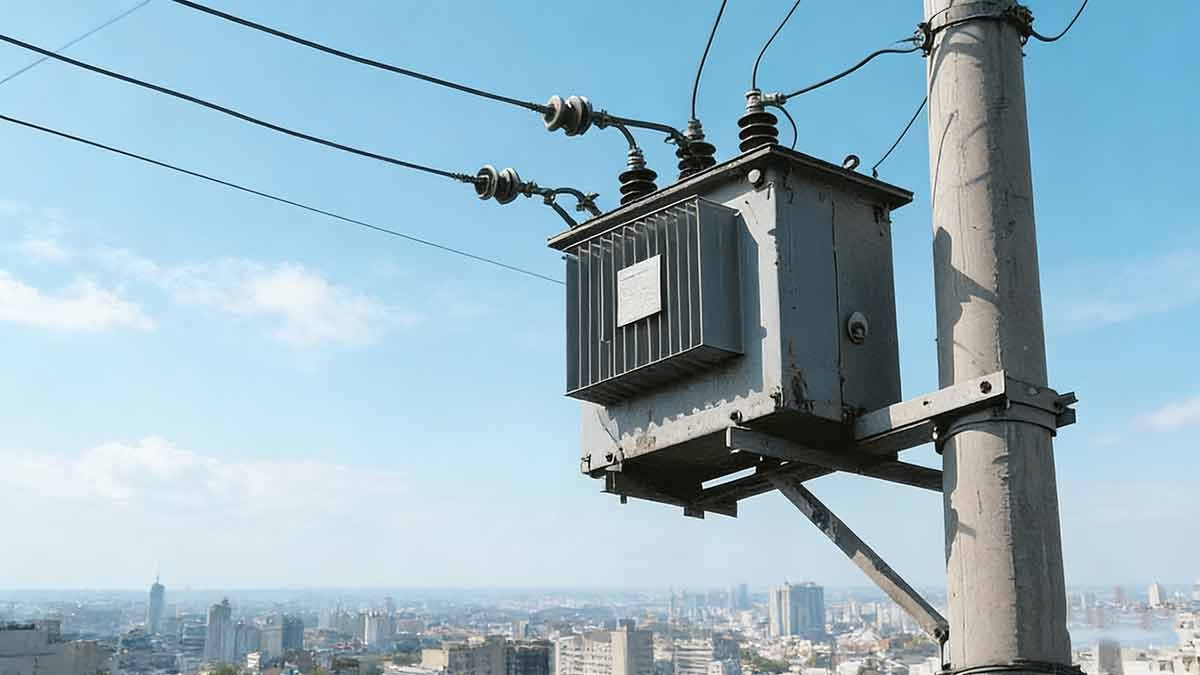
I once managed a project in a National Register-listed historic district where overhead power lines and pole-mounted transformers were deemed incompatible with the area’s 19th-century architecture. We installed Pad Mounted Transformers and collaborated with local artists to create custom wraps featuring scenes from the district’s industrial heritage. The result? The units became local landmarks—residents praised their ability to preserve the area’s charm while delivering reliable power.
| Aesthetic Aspect | Pad Mounted Transformer | Traditional Power Equipment |
|---|---|---|
| Height | 4–6 feet | 20–40 feet (pole-mounted) |
| Visual Impact | Low (unobtrusive) | High (dominant skyline presence) |
| Customization Options | Extensive (colors, wraps, cladding) | Limited (standard utility gray) |
| Landscape Integration | Seamless (works with plants/stone) | Difficult (requires clearances) |
| Impact on Property Values | Neutral to positive | Often negative (eyesore concerns) |
Space Efficiency: How Pad Mounted Transformers Maximize Land Use in Crowded Areas
Struggling to fit power distribution equipment into dense urban environments or land-constrained developments? Pad Mounted Transformers offer a space-saving solution that unlocks unused potential in crowded areas.
Pad Mounted Transformers are the most space-efficient option for modern power distribution, occupying just a fraction of the area required by traditional substations or pole-mounted setups. Their compact design allows for flexible placement, making them ideal for downtown cores, mixed-use developments, and any location where space is a premium resource.
Minimal Footprint
- Require just 16–36 square feet of ground space (4’x4’ to 6’x6’)
- Can be installed adjacent to buildings, property lines, or narrow alleys
Underground Connectivity
- Cables run underground, eliminating the need for overhead line clearances
- Frees up aerial space for trees, streetlights, or architectural features
Versatile Placement
- Can be installed in parking lots, sidewalk medians, or landscaped strips
- Enables creative urban planning solutions that prioritize usable space
In a recent project in a downtown business district, we installed a Pad Mounted Transformer in a 5-foot-wide alley that was previously considered unfit for any functional use. This installation not only met the power needs of a nearby 10-story office building but also allowed a neighboring café to expand its outdoor seating area—turning an underutilized space into a revenue-generating asset for the business.
| Installation Type | Typical Space Requirement | Vertical Clearance Needed |
|---|---|---|
| Pad Mounted Transformer | 4’x4’ to 6’x6’ | 6–8 feet |
| Pole-Mounted Equipment | 10’x10’ (pole base + clearance) | 30–40 feet |
| Small Substation | 50’x50’ or larger | 20–30 feet |
Improved Reliability: How Pad Mounted Transformers Ensure Consistent Power Supply
Frustrated by frequent power outages that disrupt business operations, residential comfort, and critical services? Pad Mounted Transformers deliver the reliability modern communities demand.
Pad Mounted Transformers enhance power system reliability through their rugged construction, environmental protection, and easy maintenance access. They are far less susceptible to weather-related outages and can be serviced quickly, ensuring a consistent power supply even in challenging conditions.
Superior Weather Resistance
- Sealed enclosures protect against rain, snow, ice, and dust
- Less vulnerable to lightning strikes than overhead lines (no exposed conductors)
Reduced Interference Risks
- Enclosed design eliminates animal-related outages (squirrels, birds, rodents)
- No overhead lines to be damaged by falling trees or branches
Easy Maintenance Access
- Ground-level installation allows for quick inspections and repairs
- Many units can be serviced without interrupting power to customers
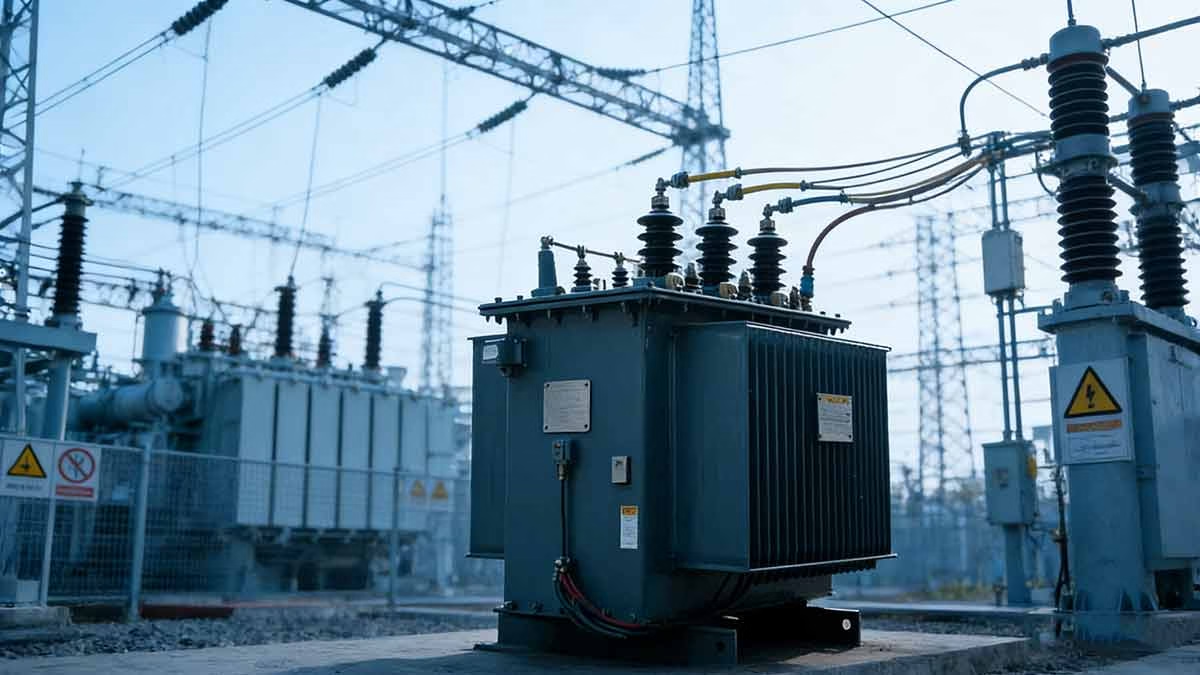
I led a project to upgrade a coastal town’s power distribution system, replacing aging overhead lines with Pad Mounted Transformers. During the subsequent hurricane season, the town faced a Category 2 storm with 100 mph winds and storm surges. While neighboring communities experienced outages lasting 3–5 days, our system had a 70% reduction in outage duration—with most customers regaining power within 12 hours. The local utility reported that the Pad Mounted Transformers’ sealed enclosures and underground cables were critical to withstanding the storm’s impact.
| Reliability Factor | Pad Mounted Transformer | Overhead Distribution Systems |
|---|---|---|
| Weather Vulnerability | Low (sealed, grounded) | High (exposed lines, poles) |
| Animal-Related Outages | Rare (enclosed components) | Common (squirrel/bird interference) |
| Vegetation Interference | Minimal (no overhead lines) | Frequent (falling branches, tree contact) |
| Maintenance Accessibility | Easy (ground-level) | Challenging (aerial lifts required) |
| Average Outage Duration | Shorter (1–12 hours) | Longer (3–72 hours) |
Environmental Benefits: How Pad Mounted Transformers Reduce Ecological Impact
Concerned about the environmental footprint of power distribution systems? Pad Mounted Transformers offer eco-friendly advantages that align with sustainability goals.
Pad Mounted Transformers contribute to environmental conservation through reduced land use, minimal habitat disruption, and improved energy efficiency. Their compact design and underground cabling preserve natural landscapes and reduce risks to wildlife, making them a sustainable choice for green infrastructure projects.
Habitat Preservation
- Eliminates the need for wide power line corridors (which require tree clearing)
- Reduces the frequency of tree trimming and vegetation management
Wildlife Protection
- Minimizes bird collisions and electrocutions (no exposed overhead lines)
- Reduces electromagnetic field (EMF) exposure for ground-dwelling animals
Enhanced Energy Efficiency
- Modern units meet DOE efficiency standards, reducing energy losses
- Underground cables shorten distribution distances, further cutting losses
I worked on a project in a wildlife-rich area where traditional overhead lines were causing frequent bird fatalities (estimated at 50+ per year by local conservation groups). We replaced the system with Pad Mounted Transformers and underground cables. Within a year, the local Audubon Society reported a 90% decrease in bird deaths and an increase in nesting sites in the area—proving that power infrastructure can coexist with wildlife.
| Environmental Aspect | Pad Mounted Transformer | Overhead Distribution Systems |
|---|---|---|
| Land Use | Minimal (16–36 sq. ft.) | Extensive (corridors + clearances) |
| Tree Removal | Rarely needed | Often required (line clearances) |
| Bird Collision Risk | Very Low | High |
| EMF Exposure | Localized and low | Widespread |
| Visual Pollution | Minimal | Significant |
Cost-Effectiveness: How Pad Mounted Transformers Deliver Long-Term Savings
Worried about the upfront cost of upgrading power distribution equipment? Pad Mounted Transformers offer significant long-term savings that outweigh initial investments.
Pad Mounted Transformers deliver cost-effectiveness through lower installation costs, reduced maintenance expenses, and longer operational lifespans. Their compact design and ground-level access lead to faster installation and easier maintenance, resulting in overall economic benefits for utilities and consumers.
Installation Savings
- No need for expensive pole installation or replacement
- Faster installation (2–4 hours per unit vs. 8–12 hours for pole-mounted) reduces labor costs
Maintenance Economy
- Ground-level access eliminates the need for bucket trucks and aerial equipment
- Reduced maintenance frequency (sealed enclosures protect components)
Longevity and Reliability
- 30–40 year operational lifespan (vs. 20–25 years for pole-mounted)
- Fewer outages mean less revenue loss for businesses and fewer compensation claims for utilities
I managed a project to convert an old industrial park from overhead lines to Pad Mounted Transformers. While the upfront cost was 15% higher than a traditional upgrade, the park’s facility manager reported that within five years, the savings in maintenance and reduced outages had offset the initial investment. By year 10, the park was saving 20% annually on electricity-related operational costs—including reduced downtime for manufacturing equipment and lower utility bills.
| Cost Aspect | Year 1 | Year 5 | Year 10 | Year 20 |
|---|---|---|---|---|
| Initial Cost | Higher | — | — | — |
| Maintenance Cost | Lower | Lower | Lower | Lower |
| Outage-Related Losses | Lower | Lower | Lower | Lower |
| Energy Efficiency Savings | Moderate | High | High | High |
| Total Cost-Benefit | Negative | Break-Even | Positive | Highly Positive |
Flexibility in Design: How Pad Mounted Transformers Adapt to Various Power Distribution Needs
Faced with the challenge of fitting power equipment into unique or constrained spaces? Pad Mounted Transformers offer unmatched design flexibility to solve complex distribution problems.
Pad Mounted Transformers provide exceptional design flexibility, accommodating a wide range of voltage ratings, power capacities, and installation configurations. This adaptability makes them suitable for every application—from small residential neighborhoods to large industrial complexes.
Voltage Flexibility
- Available in primary voltages from 4.16 kV to 34.5 kV
- Can be customized for specific secondary voltage requirements (120/240V, 208Y/120V)
Power Capacity Options
- Range from small 25 kVA units (residential) to large 3,000+ kVA units (industrial)
- Allows for precise matching to load requirements, reducing energy waste
Installation Configurations
- Loop feed or radial feed options for different reliability needs
- Can be installed as single units or in banks for higher capacity
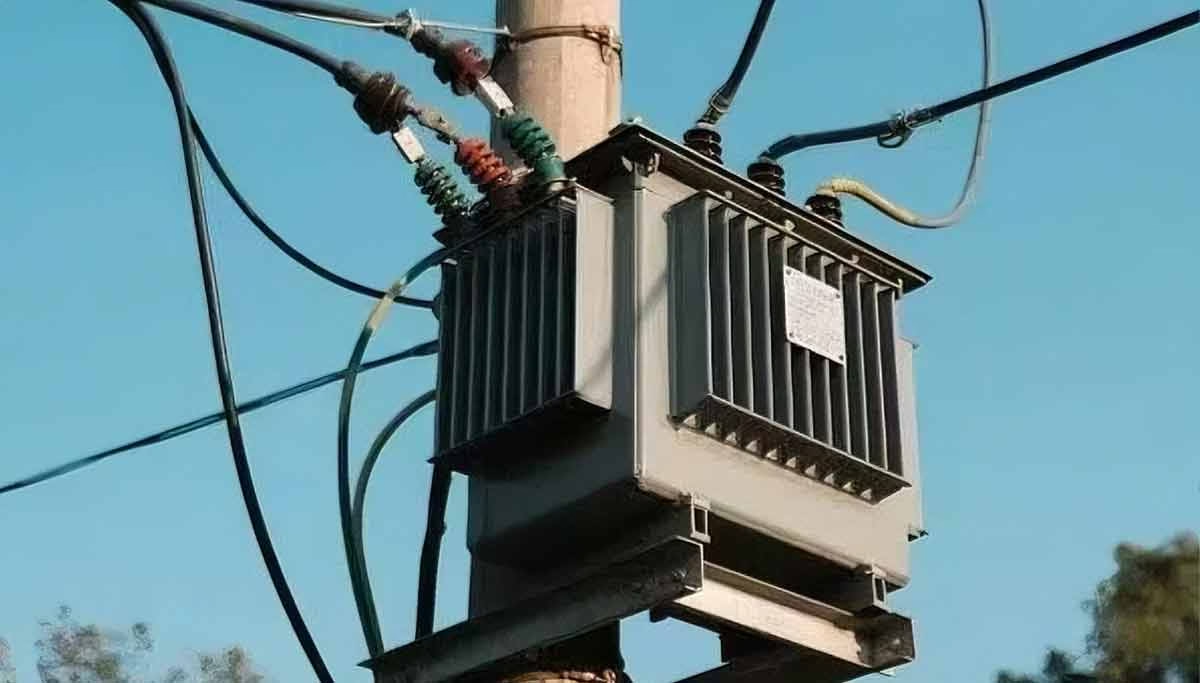
I worked on a mixed-use development project that required power for residential apartments, a retail center, and a small manufacturing zone. We used a combination of Pad Mounted Transformers: 25 kVA units for the apartments, 500 kVA units for the retail center, and 2,000 kVA units for the manufacturing zone. The design flexibility allowed us to optimize the power distribution for each area, reducing energy losses and ensuring reliable power for all tenants.
| Design Aspect | Options Available | Benefits |
|---|---|---|
| Voltage Ratings | 4.16 kV to 34.5 kV (primary); 120/240V to 480Y/277V (secondary) | Suits all distribution systems |
| Power Capacity | 25 kVA to 3,000+ kVA | Matches diverse load requirements |
| Feed Configuration | Loop or Radial | Adapts to different reliability needs |
| Cooling Methods | Oil-filled or Dry-type | Fits environmental and safety considerations |
| Enclosure Designs | Standard, Custom, or Decorative | Blends with any surroundings |
Smart Grid Integration: How Pad Mounted Transformers Pave the Way for Future Energy Systems
Curious about how to upgrade to a smarter, more efficient power grid? Pad Mounted Transformers are critical to integrating modern smart grid technologies.
Pad Mounted Transformers are increasingly equipped with smart features that enable seamless integration with modern smart grid systems. These features include real-time monitoring, remote control capabilities, and compatibility with renewable energy sources—paving the way for a more efficient and sustainable energy future.
Real-Time Monitoring
- IoT sensors track voltage, current, temperature, and load in real-time
- Enables proactive maintenance and early fault detection
Remote Control Capabilities
- Allows for remote switching and load management
- Improves response times during outages or emergencies
Renewable Energy Integration
- Handles bi-directional power flow from solar and wind sources
- Supports grid stability with variable renewable inputs
Recently, I led a project to upgrade a suburban area with smart Pad Mounted Transformers. The local utility company was able to monitor load levels in real-time, and during a summer heatwave, they remotely adjusted transformer loads to prevent overheating—all without sending a single truck to the field. The utility reported a 40% reduction in emergency service calls and a 15% improvement in grid efficiency during the heatwave.
| Smart Feature | Function | Benefit |
|---|---|---|
| Load Monitoring | Tracks power usage in real-time | Optimizes distribution efficiency |
| Fault Detection | Identifies issues within minutes | Reduces outage duration by 50%+ |
| Voltage Regulation | Maintains stable voltage levels | Improves power quality for sensitive equipment |
| Data Analytics | Predicts maintenance needs | Prevents unexpected failures |
| Renewable Integration | Manages variable energy inputs | Supports green energy adoption |
Conclusion
Pad Mounted Transformers offer a comprehensive range of benefits that address the most pressing needs of modern power distribution. From enhanced safety and aesthetic integration to space efficiency, unwavering reliability, environmental stewardship, long-term cost savings, design versatility, and seamless smart grid integration, these units are the ideal solution for utilities and communities looking to build resilient, future-ready energy systems. As the energy landscape continues to evolve, Pad Mounted Transformers will remain at the forefront—delivering power that is safe, reliable, and sustainable for generations to come.
More FAQ About Pad Mounted Transformers
Q: What cost advantages do pad mounted transformers offer compared to traditional substations?
A: Pad mounted transformers deliver significant cost savings over traditional substations through reduced land requirements and installation expenses. Their compact profile minimizes land acquisition costs and right-of-way permits, while ground-level installation eliminates the need for poles, cross arms, and extensive overhead wiring. Additionally, their sealed design reduces maintenance frequency and costs—annual maintenance expenses typically account for only 3%-5% of the equipment value, far lower than the 8%-12% for traditional substations. The simplified civil engineering work also shortens project timelines, reducing labor costs.
Q: Why are pad mounted transformers suitable for space-constrained urban environments?
A: Pad mounted transformers excel in space-constrained urban environments due to their compact, integrated design. With a footprint 30%-40% smaller than equivalent traditional substations, they can be installed in narrow spaces between buildings, in parking lots, or along sidewalks. Their low-profile enclosures are aesthetically unobtrusive, blending with urban landscapes better than bulky substations or overhead pole-mounted units. For high-rise buildings and commercial centers, they can also be installed indoors or in confined outdoor areas without compromising performance.
Q: What are the main types of Pad Mounted Transformers?
A: Pad Mounted Transformers are primarily classified into oil-immersed and dry-type based on insulation and cooling media. Oil-immersed models use insulating oil for cooling and insulation, with cooling methods such as ONAN (Oil Natural Air Natural) or ONAF (Oil Natural Air Forced), offering superior heat dissipation and suitability for heavy-load outdoor operations. Dry-type models adopt epoxy resin insulation and air cooling (AN/AF), featuring fire resistance and eco-friendliness, making them ideal for areas with strict fire safety requirements. They are also categorized by phase: single-phase models (for residential areas with low power demand) and three-phase models (for commercial complexes, industrial zones, and large-scale URD systems). Additionally, there are specialized types like those customized for battery energy storage systems (BESS) to withstand harmonic voltages and transient overvoltages.
Q: What are the typical application scenarios of Pad Mounted Transformers?
A: Pad Mounted Transformers are widely used in URD systems, residential communities, shopping malls, and commercial complexes where underground power lines are prevalent. They are also essential in renewable energy projects—such as photovoltaic power plants and wind farms—for integrating generated power into the grid. In industrial zones, they supply stable low-voltage power to production equipment. A growing application is in battery energy storage systems (BESS), where they are designed to handle load fluctuations and inverter-generated harmonics. Additionally, they are used in infrastructure projects like airports, subway stations, and high-speed rail hubs, thanks to their compact size and safe operation features.
Q: What key parameters should be considered when selecting a Pad Mounted Transformer?
A: Key selection parameters include rated capacity (matched to actual load with 10-20% margin), rated voltage (primary voltage such as 4kV/13kV/27kV, secondary voltage like 120V/208V or 277V/480V for URD systems), cooling method (ONAN/ONAF for oil-immersed, AN/AF for dry-type), insulation class (A-class for oil-immersed, F/H-class for dry-type), and protection level (IP23-IP54, customizable based on environment). Energy efficiency level is also critical—compliance with GB 20052-2024 (for the Chinese market) or IE3 standards ensures low operational costs. For BESS or renewable energy applications, parameters like harmonic tolerance and short-circuit withstand capacity must be prioritized.
Q: How to properly install a Pad Mounted Transformer?
A: Installation must comply with specifications like Con Edison’s EO-6229 and IEEE standards. Key requirements include: installing on a flat, reinforced concrete pad above ground level to prevent flooding; ensuring adequate clearance (≥1m around) for ventilation and maintenance; using dead-front construction (live-front designs are obsolete) with 600A dead-break elbows conforming to ANSI C57.12.26 for high-voltage connections. For three-phase models, delta-wye or wye-wye grounded configurations are typically used for URD systems. Primary full-load currents ≤200A require 35kV-rated bushing wells. Post-installation tests include insulation resistance measurement, voltage ratio verification, and short-circuit withstand testing to ensure operational safety.
Q: What are the common faults of Pad Mounted Transformers and their handling methods?
A: Common faults include winding failures (short circuits, open circuits, deformation), oil leakage (for oil-immersed models), insulation aging, and abnormal temperature rise. Winding short circuits—often caused by insulation damage—require immediate shutdown; handling involves repairing deformed parts, tightening loose components, or replacing windings if necessary. Oil leakage is addressed by replacing damaged seals and replenishing insulating oil. Abnormal temperature rise may result from blocked cooling systems or overload; solutions include cleaning radiators, reducing load, or activating forced cooling. Partial discharge due to insulation defects requires professional testing and insulation reinforcement to prevent catastrophic failures.
Q: What are the daily maintenance requirements for Pad Mounted Transformers?
A: Daily maintenance includes regular visual inspections of the enclosure for damage or corrosion, checking oil level, temperature, and pressure gauges (for oil-immersed models), and verifying the integrity of fuses and switches. Annual maintenance involves measuring insulation resistance, testing load break switches, and sampling oil for chromatographic analysis (oil-immersed models) to detect early faults. For dry-type models, cleaning dust from cooling fins is critical to ensure heat dissipation. Intelligent monitoring systems should be calibrated regularly to ensure accurate real-time data on voltage, current, and temperature. In harsh environments (high dust, humidity), inspection frequency should be increased, and protective measures like dust covers should be added.
Q: What is the overload capacity of Pad Mounted Transformers?
A: Overload capacity depends on cooling method, insulation class, and ambient temperature. Oil-immersed Pad Mounted Transformers with ONAN cooling can typically withstand 120% overload for 2 hours, 150% for 30 minutes, and 200% for 10 minutes. For ONAF cooling, overload capacity increases by 30-50% compared to ONAN. Dry-type models with AN cooling can handle 120% overload for 2 hours, while AF cooling allows 150% overload for 1 hour. High-overload designs for BESS or peak-load scenarios can withstand 150% short-term overload and continuous full-load operation without derating. However, long-term overload is discouraged as it accelerates insulation aging; real-time temperature monitoring is required to prevent overheating damage.