
Oil‑immersed transformers form the backbone of medium and high‑voltage power systems across the globe. One of their most defining characteristics is that internal windings and cores are fully submerged in specialized insulating oil. Many engineers, facility managers, and procurement professionals ask: Why are transformers submerged in oil rather than using air, solid materials, or other cooling media?
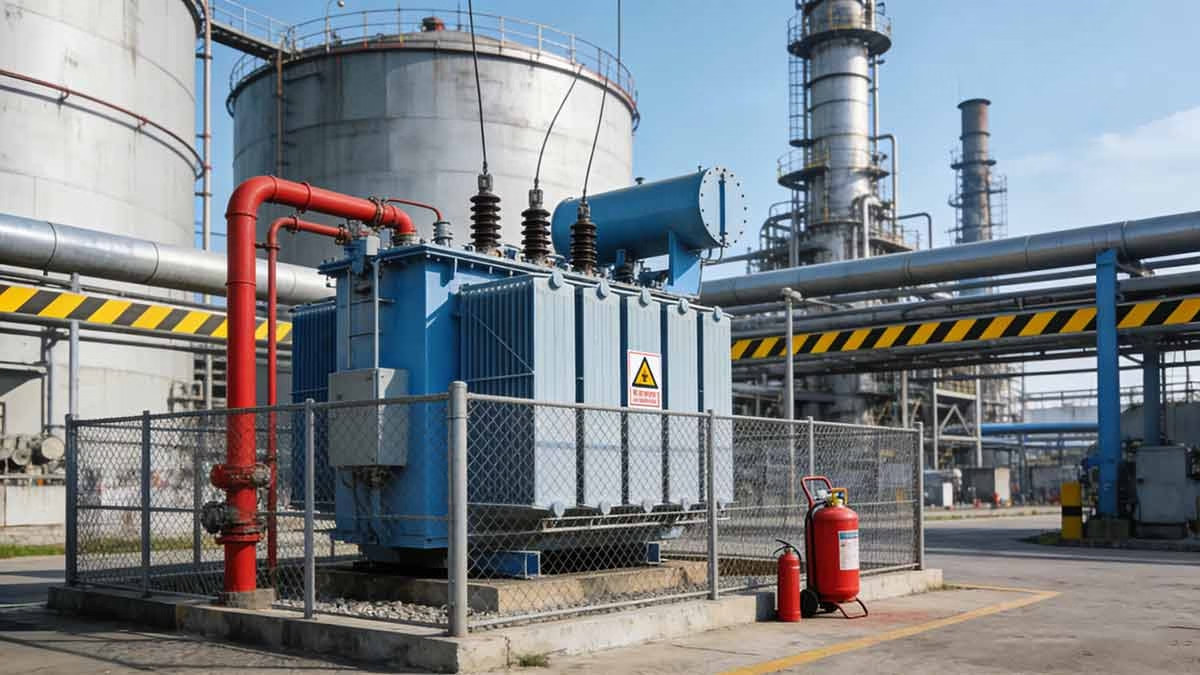
This article explains the science, engineering, and practical advantages behind oil immersion. We cover insulation performance, thermal management, contamination control, service life extension, environmental safety, and best maintenance practices to help you understand why oil remains the industry standard for reliable, long‑lasting transformer operation.
Contents
hide
Understanding Transformer Oil: Purpose and Common Types
Before exploring why transformers are submerged in oil, it is essential to define what transformer oil is and which varieties are used in modern power equipment.
What Is Transformer Oil?
Transformer oil is a specially refined dielectric fluid designed for high‑voltage electrical equipment.
It supports three non‑negotiable functions:
- High‑performance electrical insulation
- Efficient heat transfer and cooling
- Protection against moisture, oxidation, and internal discharges
Without a stable oil medium, transformers would quickly overheat, suffer insulation failure, and pose serious fire and safety risks.
Main Categories of Transformer Oil
Different oil bases support distinct operating environments, safety standards, and environmental regulations.
| Oil Type | Base Material | Key Application Strength |
|---|---|---|
| Mineral Oil | Petroleum distillates | Cost‑effective, widely used in outdoor substations |
| Natural Ester Oil | Plant‑based oils | Biodegradable, high fire point, eco‑sensitive areas |
| Synthetic Ester Oil | Man‑made esters | High thermal stability, long service life |
| Silicone Oil | Polydimethylsiloxane | Extreme fire resistance, indoor or confined spaces |
Each type is selected based on voltage level, load profile, location, and local environmental rules.
How Oil Delivers High‑Level Electrical Insulation
The first and most critical answer to why transformers are submerged in oil is electrical insulation.
Dielectric Strength Superiority
Transformer oil has significantly higher dielectric strength than air.
It fills tiny gaps between windings, layers, and core components to prevent flashovers and short circuits.
Key advantages:
- Prevents ionization and corona discharge under high voltage
- Maintains stable insulation even at elevated operating temperatures
- Works alongside cellulose insulation to create a reinforced dielectric system
Arc Suppression and Fault Prevention
Oil actively suppresses electric arcs that can occur during switching, surges, or internal faults.
This protects windings, stops breakdown propagation, and improves overall grid stability.
Insulation Performance Comparison
| Medium | Dielectric Behavior | Suitability for HV Transformers |
|---|---|---|
| Transformer Oil | High breakdown voltage, stable | Excellent |
| Air | Low breakdown, prone to ionization | Poor |
| Dry Solid Insulation | Limited gap filling, risk of voids | Limited to dry‑type units |
This structural advantage directly explains why transformers are submerged in oil for high‑voltage duty.
The Critical Cooling Role of Transformer Oil
Another major reason why transformers are submerged in oil is advanced thermal management.
How Oil Removes Operational Heat
Transformers generate continuous heat from copper losses and core losses.
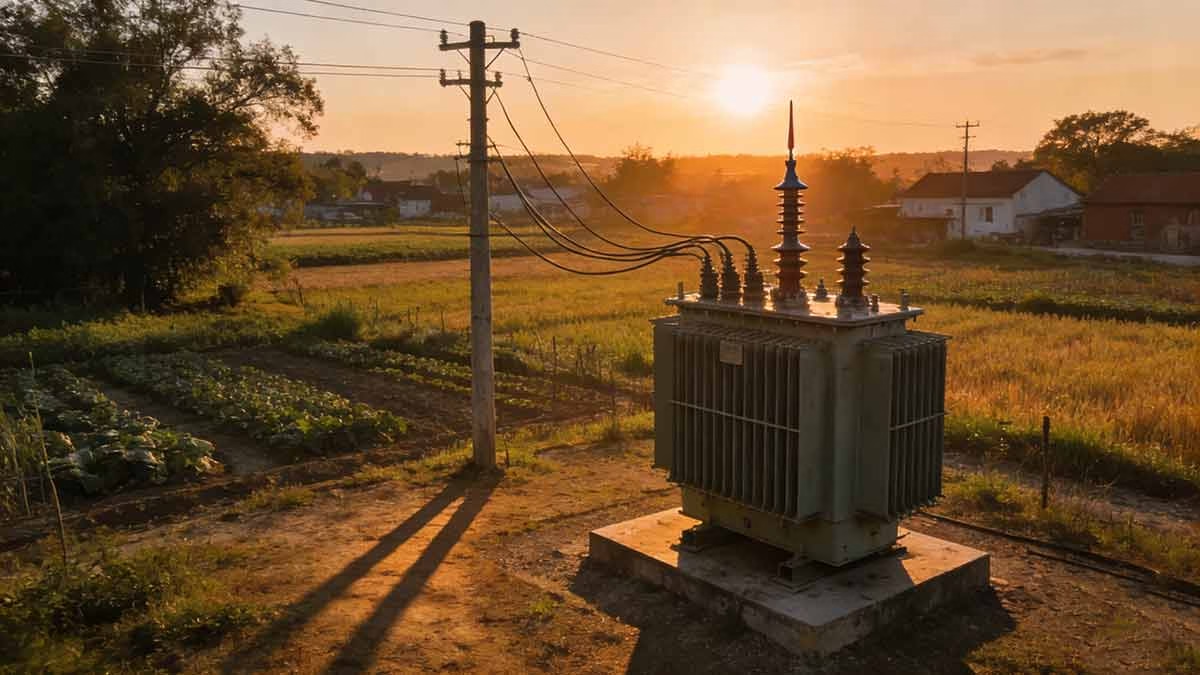
Oil absorbs this heat through direct contact and circulates it to external radiators.
This natural or forced convection cycle:
- Maintains safe winding and core temperatures
- Slows thermal aging of insulation materials
- Allows transformers to operate at rated load continuously
Common Oil Cooling Methods
Modern oil‑immersed units use several cooling designs:
- ONAN: Natural oil, natural air
- ONAF: Natural oil, forced air
- OFAF: Forced oil, forced air
- OFWF: Forced oil, forced water
Each system improves heat dissipation for larger, higher‑capacity units.
Thermal Benefits of Oil Immersion
Consistent cooling preserves dielectric properties, reduces resistance losses, and improves energy efficiency.
This is especially important for heavy‑duty industrial and utility transformers.
How Oil Protects Against Moisture and Contamination
A frequently overlooked but vital reason why transformers are submerged in oil is environmental protection.
Moisture Barrier Function
Moisture severely weakens insulation and accelerates paper degradation.
Oil acts as a hydrophobic barrier that repels water and limits moisture absorption.
Contamination Control
Oil suspends small particles and degradation byproducts, which can then be removed via filtration.
This keeps internal components clean and extends operational reliability.
Sealed System Components
Oil‑immersed transformers often include:
- Conservator tanks
- Silica gel breathers
- Diaphragm or bladder seals
These components prevent humid air from entering the tank and preserve oil quality.
How Oil Immersion Extends Transformer Service Life
For asset managers, why are transformers submerged in oil also related to lifetime and return on investment?
Insulation Preservation
The single largest factor in transformer lifespan is the solid insulation condition.
Oil reduces heat, moisture, oxidation, and electrical stress—all of which extend insulation life.
Temperature and Aging Relationship
Industry guidelines show that reducing operating temperature can double or triple insulation life.
Oil’s cooling effect directly delivers this benefit.
Longevity Through Maintenance
With regular oil testing, filtration, and reconditioning:
- Dielectric performance remains high
- Thermal efficiency stays consistent
- Service life can reach 30–40 years or longer
Well‑maintained oil systems drastically reduce replacement costs.
Environmental and Safety Considerations
While oil provides massive benefits, understanding safety and environmental impacts helps answer why transformers are submerged in oil responsibly.
Fire Safety Differences
Mineral oil has a lower fire point, while ester and silicone oils offer exceptional fire resistance.
Modern standards encourage high‑fire‑point fluids in urban, indoor, and densely populated areas.
Environmental Impact
Mineral oil is non‑biodegradable and can harm ecosystems if spilled.
Ester‑based oils break down naturally and reduce environmental risk.
Safe Handling and Disposal
Best practices include:
- Secondary containment bunds
- Regular leak inspection
- Certified waste oil recycling
- PCB testing for older units
Responsible oil management ensures safety and regulatory compliance.
Maintenance Best Practices for Oil‑Immersed Transformers
To fully benefit from the advantages that answer why are transformers submerged in oil, consistent maintenance is essential.
Routine Oil Testing
Key diagnostic tests include:
- Breakdown Voltage (BDV)
- Moisture content
- Dissolved Gas Analysis (DGA)
- Acidity and interfacial tension
These tests detect early faults before failure occurs.
Oil Reconditioning
Over time, oil degrades due to heat, oxygen, and contamination.
Vacuum dehydration, filtration, and reclamation restore performance at a fraction of replacement cost.
Predictive Maintenance
Modern monitoring tools track:
- Oil temperature
- Level and flow
- Leakage
- Gas formation
This supports safe, reliable, and cost‑effective operation.
Conclusion
To sum up the question Why are transformers submerged in oil:
Oil delivers unmatched electrical insulation, efficient cooling, moisture and contamination protection, and significant service life extension. It remains the most reliable, proven, and practical solution for medium and high‑voltage power transformers worldwide.
While environmental and safety considerations require responsible design and maintenance, advances in biodegradable and fire‑resistant oils continue to improve performance and sustainability.
Understanding these principles helps engineers, operators, and buyers make informed decisions about transformer selection, application, and long‑term reliability.