
Power and distribution transformers aren’t just components of the electrical grid—they’re the lifeline of modern society. These devices enable the seamless, efficient flow of electricity from power plants to homes, businesses, and critical infrastructure, bridging the gap between high-voltage transmission and safe end-use. As a veteran in the transformer manufacturing industry with over two decades of engineering and field experience, I’ve witnessed firsthand how these workhorses sustain daily life, prevent blackouts, and adapt to evolving energy demands. Let’s dive into their indispensable role, technical distinctions, and the cutting-edge innovations shaping their future.
Contents
hide
The Dual Backbone of Electrical Grids: Power vs. Distribution Transformers Explained
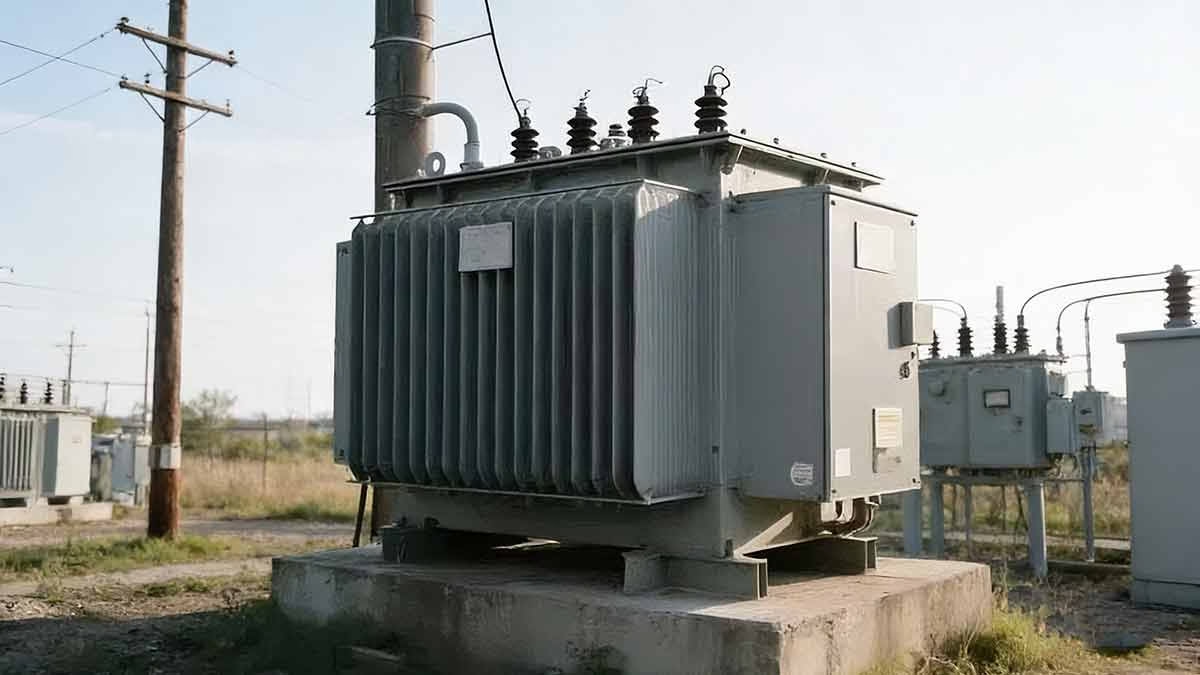
If you’ve ever passed a sprawling substation or spotted a compact green box on a neighborhood pole, you’ve seen the two pillars of transformer technology. While they share the core function of voltage conversion, power and distribution transformers are engineered for vastly different roles—each critical to keeping the grid operational.
Power Transformers: The High-Voltage Workhorses
Power transformers are the heavyweights of the energy ecosystem, designed to handle massive power loads and extreme voltages at the transmission stage. Unlike their smaller counterparts, they operate where electricity is generated (e.g., coal, solar, wind farms) or at major substations, stepping up voltage to minimize energy loss during long-distance transport.
Key Characteristics (Backed by Real-World Application):
- Voltage Range: Typically 69 kV and above, with ultra-high-voltage (UHV) models reaching 1,100 kV for cross-continental transmission.
- Capacity: Ranging from 50 MVA to over 1,500 MVA—one unit can power an entire mid-sized city.
- Design Focus: Robust insulation systems (often using vacuum-dried paper and mineral oil) to withstand voltage stress, and advanced cooling systems (forced oil-air or water-cooled) for thermal management.
In one recent project, our team engineered a 600 MVA power transformer for an offshore wind farm in the North Sea. Measuring over 12 meters long and weighing 250 tons, it steps up the wind turbines’ 33 kV output to 220 kV for efficient transmission to the mainland—cutting energy losses by 30% compared to older models.
Distribution Transformers: The Local Power Deliverers
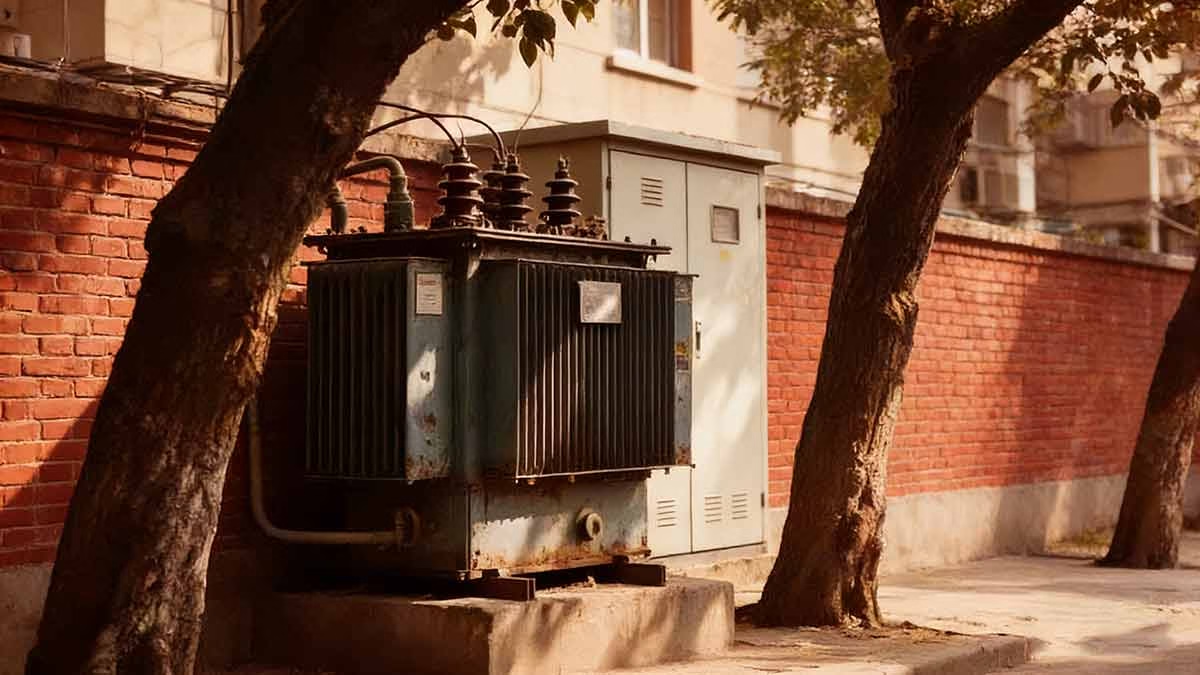
Distribution transformers are the final link in the energy chain, bringing electricity directly to end-users. These compact, versatile units step down high-voltage power (from transmission lines) to safe, usable levels (e.g., 240/120 V for homes, 480 V for commercial buildings).
Key Specifications (With On-the-Ground Examples):
| Feature | Typical Range | Real-World Application |
|---|---|---|
| Voltage | 34.5 kV and below | 12 kV input → 240/120 V output for residential neighborhoods |
| Capacity | 10 kVA to 2,500 kVA | 500 kVA units powering small shopping centers or industrial facilities |
| Location | Poles, underground vaults, or compact substations | 20+ units installed in a mixed-use development (residential + retail) serving 15-20 properties each |
A standout project involved retrofitting 50+ distribution transformers in a historic urban district. We used low-noise, corrosion-resistant models with sealed enclosures to comply with heritage preservation guidelines—all while improving voltage stability for aging buildings with sensitive electrical systems.
Core Design & Maintenance Differences
The distinct roles of these transformers drive fundamental design choices:
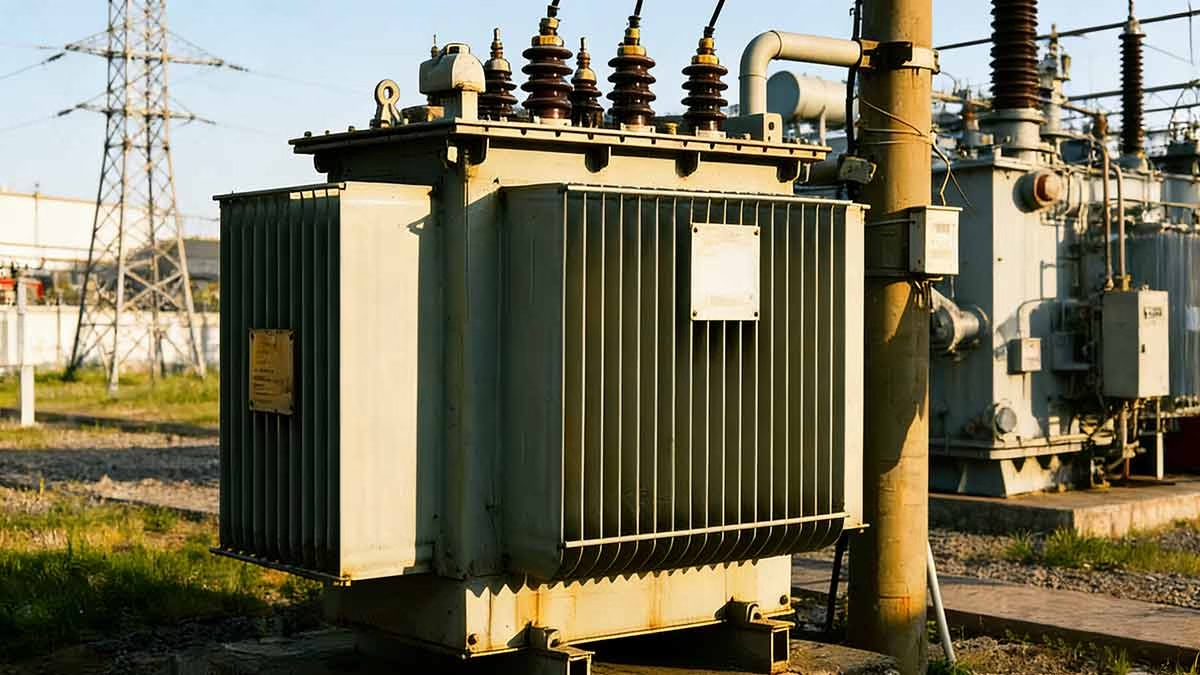
- Cooling: Power transformers rely on oil-filled tanks with external radiators (or cooling fans) to dissipate heat from high loads; distribution transformers use self-cooling (air-natural) designs for efficiency in low-load scenarios.
- Insulation: Power transformers require thicker, more durable insulation (e.g., nomex paper) to handle voltage spikes; distribution transformers use cost-effective cellulose insulation optimized for lower voltages.
- Maintenance: Power transformers demand annual inspections (dissolved gas analysis, oil testing, and OLTC calibration) and have a 30-40 year lifespan; distribution transformers need bi-annual visual checks and last 20-30 years with minimal upkeep.
I once led a maintenance team on a 35-year-old power transformer at a coal-fired plant. Replacing its on-load tap changer (OLTC)—a complex component that adjusts voltage without interrupting power—took three days and required specialized lifting equipment. In contrast, a distribution transformer maintenance call typically involves checking for corrosion or loose connections and takes under an hour.
Grid Stability: How Transformers Keep Electricity Reliable
Have you ever wondered why your lights stay on when a nearby factory fires up its machinery, or during peak usage hours (e.g., evening cooking, summer air conditioning)? Transformers are the silent stabilizers that prevent voltage fluctuations, balance loads, and shield the grid from disruptions.
Voltage Regulation: Precision in Real Time
Transformers maintain consistent voltage through two key technologies:
- On-Load Tap Changers (OLTCs): Modern OLTCs (equipped with microprocessors) adjust voltage ratios 50+ times per minute, responding to load changes instantaneously. In a recent smart grid upgrade, we integrated AI-powered OLTCs that learned usage patterns—reducing voltage deviations by 40% during peak hours.
- Automatic Voltage Regulators (AVRs): Paired with distribution transformers, AVRs counteract voltage drops caused by long feeder lines. For a rural community with sprawling power lines, AVR-equipped transformers eliminated flickering lights and equipment damage from unstable voltage.
Load Balancing: Avoiding Overloads & Blackouts
Transformers ensure power is distributed evenly across the grid:
- Phase Balancing: Three-phase transformers split loads across A/B/C phases to prevent single-phase overloads (a common cause of residential outages).
- Parallel Operation: Multiple transformers work in tandem to share high loads (e.g., during a heatwave). We implemented this in a hospital campus, where three 1,000 kVA transformers automatically adjust their load share to maintain critical power for operating rooms.
- Dynamic Load Shifting: Smart transformers (connected to IoT sensors) redirect power from low-demand to high-demand areas. In a university town, this technology shifted power from dormitories (low usage during class hours) to research labs (high energy needs for equipment).
Fault Current Limitation: Stopping Outages in Their Tracks
Transformers act as “grid firewalls” by limiting the spread of electrical faults:
- Impedance Design: The internal winding resistance of transformers restricts fault currents (e.g., from a downed power line) to safe levels, preventing damage to other grid components.
- Differential Protection Relays: These devices detect internal faults (e.g., winding short circuits) and isolate the transformer in milliseconds. During a severe thunderstorm in the Midwest, this technology prevented a single transformer fault from cascading into a regional blackout.
- Grounding Transformers: In ungrounded systems (common in industrial settings), these transformers provide a safe path for fault currents, reducing the risk of electric shock and equipment damage.
Harmonic Mitigation: Cleaning Up Power Quality
Modern electronics (e.g., LEDs, EV chargers, data center servers) generate harmonics—distortions in the electrical waveform that degrade power quality. Transformers address this with specialized designs:
- K-Rated Transformers: Engineered to handle non-linear loads (e.g., data centers), these transformers reduce harmonic distortion by up to 60%. We installed 20 K-rated transformers in a cloud computing facility, eliminating equipment overheating caused by harmonic buildup.
- Phase-Shifting Transformers: These units cancel out specific harmonic frequencies (e.g., 5th, 7th harmonics) by shifting the voltage phase. For a manufacturing plant with robotic assembly lines, this technology improved machine precision and reduced energy waste.
Transformer Resilience: Preventing System-Wide Failures Under Pressure
The grid faces constant threats—extreme weather, equipment aging, and unexpected demand spikes. Transformers are designed to withstand these pressures, preventing small issues from escalating into widespread outages.
Robust Construction for Extreme Conditions
Transformers are built to endure the harshest environments:
- Overload Capacity: Most power transformers can handle 110-120% of their rated load for short periods (e.g., during a heatwave). A 500 MVA transformer we supplied to a desert region regularly operates at 115% load during summer—thanks to its enhanced cooling system.
- Seismic & Mechanical Strength: Transformers in earthquake-prone areas (e.g., California, Japan) comply with IEEE 693 standards, featuring reinforced tanks, flexible bushings, and base isolators. We tested one such transformer to withstand a magnitude 8.0 earthquake—its core remained intact, and oil leaks were prevented.
- Thermal Resilience: Advanced insulation materials (e.g., aramid fibers) resist degradation from high temperatures, extending lifespan even in hot climates.
Advanced Protection Systems: Layered Defense
Modern transformers are equipped with multi-layered protection to detect and respond to threats:
| Protection Type | Function | Real-World Impact |
|---|---|---|
| Buchholz Relays | Detect gas buildup in oil (a sign of internal faults) | Triggered an alert for a 200 MVA transformer, allowing us to repair a minor winding issue before it caused a failure |
| Thermal Monitoring | Fiber-optic sensors track winding temperature in real time | Prevented overheating in a distribution transformer serving a restaurant district during a holiday weekend |
| Lightning Arresters | Divert surge currents from lightning strikes | Protected 30+ rural transformers during a severe thunderstorm season, with zero failures reported |
Redundancy & Rapid Recovery
Strategic design ensures the grid stays operational even if a transformer fails:
- N-1/N-2 Redundancy: Critical infrastructure (e.g., hospitals, data centers) uses redundant transformers—so if one fails, another immediately takes over. We implemented N-2 redundancy for a nuclear power plant, ensuring power continuity even if two transformers go offline.
- Mobile Transformer Units: These truck-mounted transformers can be deployed within hours to replace failed units. During an ice storm in Canada, we dispatched three mobile transformers to restore power to a small town within 6 hours—while permanent repairs took two weeks.
- Modular Designs: Modern transformers feature modular components (e.g., replaceable OLTCs, cooling systems) that reduce downtime. A modular distribution transformer we supplied to a city reduced repair time from 3 days to 8 hours.
Self-Healing Capabilities: Predictive Maintenance
The latest transformers leverage smart technology to prevent failures:
- Predictive Analytics: IoT sensors monitor oil quality, vibration, and temperature, feeding data into AI algorithms that predict maintenance needs. For a utility client, this technology identified a potential winding failure 6 months in advance—saving millions in downtime costs.
- Automatic Fault Isolation: Smart transformers communicate with grid management systems to isolate faults and reroute power. In a smart city project, this feature contained a fault to a single block, avoiding a neighborhood-wide outage.
Modern Transformer Technologies: Minimizing Energy Losses for a Sustainable Future
Energy efficiency is no longer an afterthought—it’s a critical requirement for reducing carbon emissions and lowering operational costs. Modern transformer technologies have cut energy losses by 50% or more compared to units built 20 years ago.
Advanced Core Materials: The Foundation of Efficiency
The transformer core is where most energy loss occurs (no-load losses). Innovations in core materials have revolutionized efficiency:
- Amorphous Metal Cores: These non-crystalline alloys (e.g., iron-nickel-phosphorus) reduce no-load losses by 60-70% compared to traditional silicon steel. A utility client replaced 100+ old transformers with amorphous core units, saving 12 GWh of electricity annually—enough to power 1,000 homes.
- High-Grade Grain-Oriented (HGO) Steel: HGO steel has a refined crystal structure that minimizes hysteresis losses. We used this material in transformers for a solar farm, where low no-load losses are critical (solar panels generate power intermittently, and transformers remain idle for hours).
- Laser-Scribed Cores: Laser etching reduces eddy current losses by breaking up magnetic domains in the core. This technology is standard in our high-efficiency distribution transformers, improving overall efficiency by 2-3%.
Innovative Winding Designs: Reducing Load Losses
Load losses (caused by current flowing through windings) are addressed through advanced winding techniques:
- Foil Windings: Thin, wide copper foil replaces traditional round wire, reducing resistance and eddy current losses. We used foil windings in transformers for a data center, cutting load losses by 15% and improving heat dissipation.
- Continuously Transposed Conductors (CTCs): These conductors are twisted and insulated to minimize circulating currents, a major source of load losses. CTCs are standard in our power transformers rated above 100 MVA.
- Optimal End-Insulation: Precision-engineered insulation reduces stray losses (energy wasted as heat in the transformer tank). For a wind farm project, this design tweak improved efficiency by 1.8%—a small gain that translates to significant long-term savings.
Smart Monitoring & Control: Optimizing Real-Time Performance
Efficiency isn’t just about design—it’s about ongoing optimization:
- Online Dissolved Gas Analysis (DGA): Sensors monitor gas levels in transformer oil, detecting overheating or arcing before it leads to inefficiency. We integrated DGA into 50 transformers for a utility, reducing unplanned downtime by 35%.
- Load Management Systems: AI-powered software analyzes usage patterns to ensure transformers operate at their efficiency sweet spot (typically 60-80% of rated load). For a manufacturing client, this system reduced energy costs by 8% by shifting non-critical loads to off-peak hours.
- Remote Cooling Control: Smart cooling systems adjust fan speed or oil flow based on real-time load, reducing energy consumption by 10-15%. This feature is standard in our transformers for warm climates, where cooling demand is high.
Eco-Friendly Cooling Solutions
Modern transformers prioritize sustainability in cooling:
- Ester-Based Cooling Fluids: These plant-derived fluids replace mineral oil, offering better heat dissipation and biodegradability. We used ester fluids in transformers for a national park, ensuring environmental safety in case of a leak.
- Immersive Cooling: For high-density applications (e.g., urban substations), immersive cooling submerges windings in dielectric fluid, improving efficiency by 5-7% compared to air-cooled designs.
- Advanced Radiator Designs: Optimized fin spacing and airflow patterns enhance heat exchange, reducing cooling energy requirements. Our latest power transformers feature aerodynamic radiators that cut cooling losses by 20%.
Disaster-Proofing Energy Networks: Transformers for Crisis Resilience
Natural disasters—hurricanes, earthquakes, floods, and wildfires—pose existential threats to the electrical grid. Transformers are at the forefront of disaster-proofing, with designs and strategies that ensure power continuity when it’s needed most.
Resilient Design for Extreme Weather
Transformers are engineered to withstand nature’s fury:
- Seismic-Resistant Transformers: Compliant with IEEE 693, these units feature reinforced tanks, flexible bushings, and base isolators. We supplied seismic-rated transformers for a hospital in Mexico City, which remained operational during a magnitude 7.1 earthquake.
- Flood-Resistant Enclosures: Watertight tanks, elevated mounting, and corrosion-resistant materials protect transformers in flood-prone areas. For a coastal city in Florida, we installed transformers on 6-foot concrete platforms, with sealed bushings and waterproof wiring—they survived Hurricane Ian without damage.
- Wind-Resistant Structures: Reinforced radiators, guy wires, and impact-resistant glass protect transformers in hurricane or tornado zones. Our wind-resistant transformers have withstood wind speeds of up to 150 mph (Category 4 hurricanes).
Redundancy & Rapid Deployment
Disaster recovery depends on redundant systems and quick action:
- N-1/N-2 Redundancy: Critical facilities (hospitals, emergency response centers) use multiple transformers so power remains intact if one or two fail. We implemented N-2 redundancy for a regional hospital, ensuring operating rooms and intensive care units never lose power.
- Mobile Transformer Units: These self-contained units can be transported by truck or helicopter, providing temporary power within hours. During a wildfire in California, we deployed two mobile transformers to restore power to a rural clinic and fire station—critical for emergency response.
- Modular Components: Replaceable parts (e.g., windings, OLTCs) reduce repair time. A modular distribution transformer we supplied to a flood-affected town was repaired in 12 hours, compared to 3 days for a traditional unit.
Smart Grid Integration for Crisis Response
Smart technology enhances disaster resilience:
- Self-Healing Grids: Transformers communicate with grid management systems to isolate damaged areas and reroute power. In a wildfire-prone region, this technology automatically cut power to high-risk areas, preventing the fire from spreading through power lines—while maintaining service to safe zones.
- Remote Monitoring: IoT sensors allow operators to monitor transformers during disasters, even if access is restricted. During a flood in Texas, we used remote monitoring to confirm that elevated transformers were operational, avoiding unnecessary (and dangerous) site visits.
- Predictive Maintenance for Disasters: AI algorithms analyze weather data to predict potential transformer failures. For a hurricane season, we proactively inspected and reinforced 20 transformers in high-risk areas—none failed during the storms.
Strategic Placement & Hardening
Where and how transformers are installed is critical for disaster resilience:
- Elevated Installations: In flood zones, transformers are mounted on platforms or poles above projected water levels. We elevated 30 transformers in a riverfront city, which remained operational during a 100-year flood.
- Fireproof Barriers: In wildfire zones, transformers are surrounded by fire-resistant materials (e.g., concrete, metal) to prevent ignition. For a project in California’s wine country, we installed fireproof enclosures that protected transformers during a wildfire.
- Underground Deployments: In storm-prone urban areas, underground transformers avoid wind, hail, and falling debris. We installed 15 underground transformers in a city center, which survived a major tornado without damage.
Conclusion
Power and distribution transformers are the unsung heroes of modern energy infrastructure—enabling efficient transmission, ensuring grid stability, withstanding extreme conditions, and driving sustainability. As the world transitions to renewable energy, electrifies transportation, and builds smarter cities, the role of transformers will only grow more critical.
At our manufacturing facility, we’ve dedicated decades to engineering transformers that balance reliability, efficiency, and resilience—from ultra-high-voltage power transformers for wind farms to compact, smart distribution transformers for urban neighborhoods. Every unit is rigorously tested to meet global standards (IEC, IEEE, ANSI) and tailored to the unique needs of our clients, whether they’re powering a remote village or a sprawling data center.
In a world where energy reliability is non-negotiable, transformers aren’t just equipment—they’re the foundation of progress. By investing in modern transformer technologies and resilient grid design, we can build an energy system that’s not only efficient and sustainable but also capable of withstanding whatever challenges the future holds.