
Many urban planners and power industry professionals often ask: How do 3 phase distribution transformers shape the future of smart cities? As a veteran with over a decade of experience in the power distribution sector, I’ve witnessed firsthand how these critical devices are redefining urban energy landscapes. Unlike traditional power equipment, 3 phase distribution transformers serve as the backbone of efficient, reliable, and sustainable energy networks, seamlessly integrating with cutting-edge grid technologies to meet the evolving demands of modern cities. In this article, we’ll address common questions about 3 phase distribution transformers, explore their core functionalities, and explain why they’re indispensable for building resilient smart urban power systems.
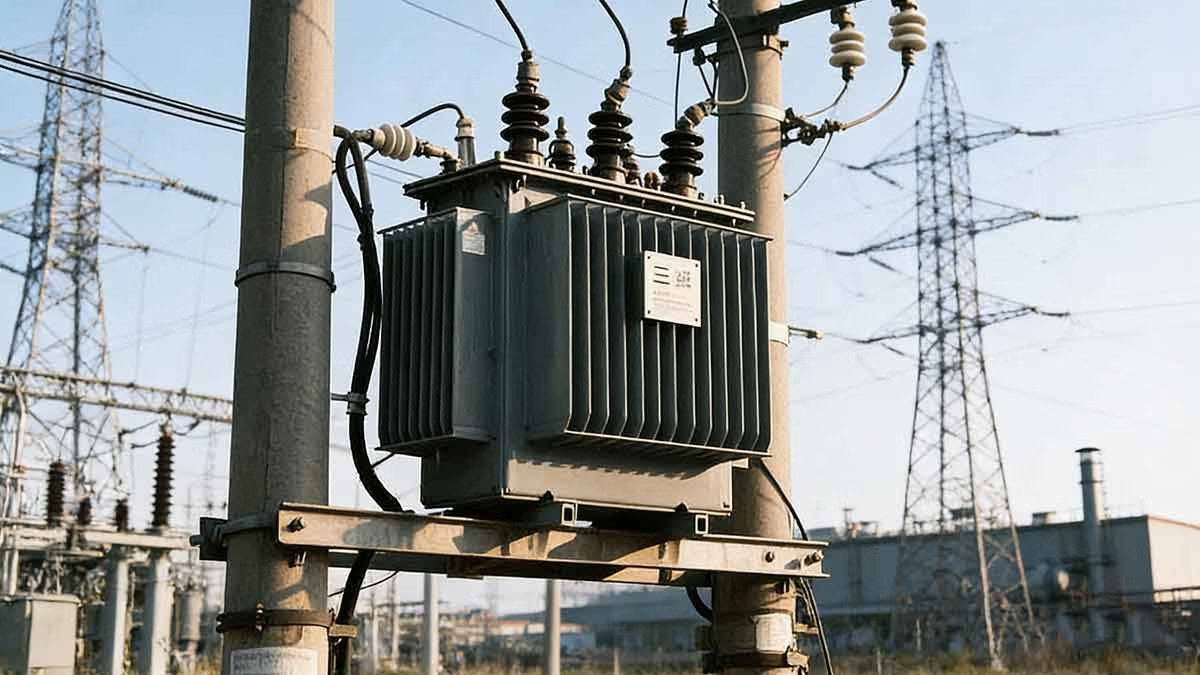
Before diving into the details, it’s essential to clarify: What makes 3 phase distribution transformers stand out in urban power infrastructure? Unlike single-phase alternatives, these transformers leverage three alternating current (AC) waveforms that are 120 degrees out of phase, enabling more balanced power transmission, lower energy losses, and higher capacity utilization. This unique design makes them ideal for powering high-density urban areas, where energy demands are concentrated, and power quality is non-negotiable for commercial, industrial, and residential applications. Now, let’s explore the key aspects of 3 phase distribution transformers that make them a cornerstone of smart city development.
How Can 3 Phase Distribution Transformers Boost Urban Energy Efficiency in Power Distribution?
In the global pursuit of sustainable urban development, energy efficiency has become a top priority for city administrators and utility companies. A common question arises: How exactly do 3 phase distribution transformers enhance energy efficiency in urban power distribution? The answer lies in their inherent design advantages and advanced technological integrations, which work together to minimize energy waste, optimize resource utilization, and reduce operational costs.
3 phase distribution transformers outperform single-phase units in urban settings by delivering balanced load distribution, minimizing power losses during transmission, and maximizing capacity utilization—all critical factors for efficient energy management in densely populated areas. Let’s break down these efficiency-boosting mechanisms with practical insights and industry observations:
Balanced Load Distribution: The Foundation of Efficient Urban Power Networks
One of the primary advantages of 3 phase distribution transformers is their ability to distribute electrical loads evenly across three phases. In urban environments, where power demands come from diverse sources—from high-rise residential buildings and commercial malls to industrial facilities and smart infrastructure—unbalanced loads can lead to overheating, increased energy loss, and premature equipment failure. 3 phase transformers eliminate this issue by ensuring uniform load distribution:
- They split electrical loads across three separate phases, preventing any single phase from being overburdened.
- This balanced distribution reduces strain on the entire power system, extending the lifespan of transformers and other grid components.
- It also enables more efficient use of available capacity, allowing utilities to serve more customers without investing in additional infrastructure.
Minimized Power Losses: Driving Long-Term Energy Savings
Energy loss during transmission and distribution is a major concern for urban utilities, as it directly impacts operational costs and sustainability goals. 3 phase distribution transformers address this challenge by minimizing power losses through their design and operational characteristics:
- Compared to single-phase systems, 3 phase distribution transformers have significantly lower line losses. This is because three-phase power transmission requires less conductor material to carry the same amount of power, reducing resistance and heat generation.
- Advanced core materials and winding designs in modern 3 phase transformers further reduce iron and copper losses, enhancing overall efficiency. For instance, transformers using grain-oriented electrical steel cores can achieve efficiency ratings of 99% or higher, even under varying load conditions.
- Over time, these losses translate to substantial energy savings. A case study from a mid-sized European city found that replacing single-phase transformers with 3 phase units reduced annual distribution losses by 18%, equivalent to powering 12,000 households.
High Capacity Utilization: Optimizing Space in Urban Environments
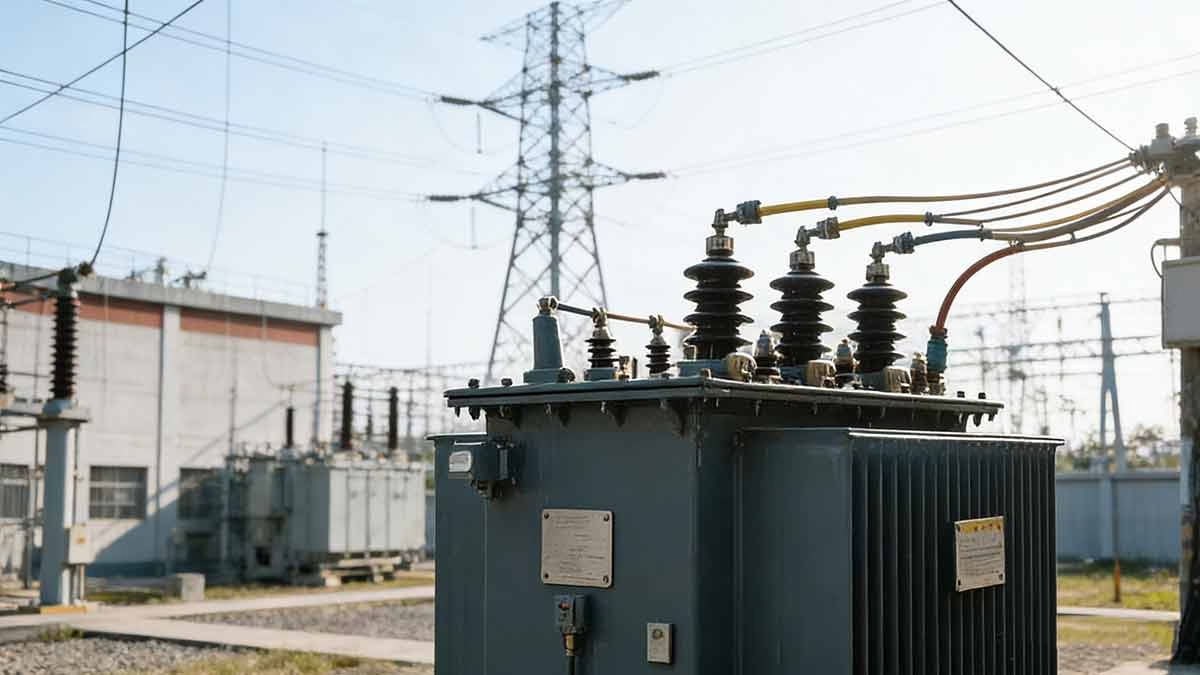
Space is a premium in urban areas, making compact, high-capacity power equipment essential. 3 phase distribution transformers excel in this regard by delivering more power in a smaller footprint:
- They have a higher power-to-volume ratio than single-phase transformers, allowing utilities to install them in tight spaces such as underground vaults, building basements, and small utility yards.
- This compact design is particularly beneficial for retrofitting older urban areas, where existing infrastructure may not have space for large power equipment. For example, in a historic district in Tokyo, 3 phase transformers were installed in narrow underground tunnels to avoid disrupting the area’s architectural heritage.
- High capacity utilization also reduces the need for multiple transformers, simplifying grid design and maintenance. A utility in Chicago reported that switching to 3 phase distribution transformers reduced the number of transformers needed in a downtown area by 40%, lowering maintenance costs and improving grid reliability.
Enhanced Power Quality: Supporting Modern Urban Equipment
Modern urban environments rely heavily on sensitive electronic equipment, from smart building management systems and medical devices to industrial automation tools. These devices require stable, high-quality power to operate effectively—and 3 phase distribution transformers deliver just that:
- Three-phase power systems provide smoother power delivery, reducing voltage fluctuations and harmonic distortions. This stability is critical for preventing equipment malfunctions and data loss.
- Advanced 3 phase transformers with built-in voltage regulation capabilities can further improve power quality by adjusting to changes in load demand. For instance, in a tech park in Singapore, 3 phase transformers with on-load tap changers maintained voltage stability within ±1% even during peak usage hours, ensuring uninterrupted operation of sensitive IT equipment.
- Poor power quality can cost urban businesses millions of dollars annually in equipment repairs and downtime. A study by the IEEE found that businesses in urban areas experience an average of 15% fewer power-related disruptions after upgrading to 3 phase distribution transformers.
Smart Grid Compatibility: Future-Proofing Urban Power Systems
As cities evolve into smart cities, their power grids must integrate with advanced technologies such as IoT sensors, real-time monitoring systems, and renewable energy sources. 3 phase distribution transformers are designed to support this integration, making them a key component of future-proof urban power infrastructure:
- They easily connect with smart grid management platforms, enabling utilities to monitor transformer performance in real time. This includes tracking voltage levels, load distribution, temperature, and other critical parameters.
- Smart 3 phase transformers can also support predictive maintenance, where AI algorithms analyze performance data to identify potential issues before they cause failures. A utility in Toronto implemented this technology and reduced unplanned transformer outages by 65%.
- Additionally, 3 phase distribution transformers facilitate the integration of renewable energy sources such as solar and wind power into urban grids. Their ability to handle variable power inputs makes them ideal for supporting distributed generation systems, which are becoming increasingly common in smart cities.
Key Features of 3 Phase Distribution Transformer | Core Benefit | Urban Impact |
|---|---|---|
Balanced Load Distribution | Reduced system strain and extended equipment lifespan | Stable grid operation even under high, diverse loads |
Minimized Power Losses | Lower energy waste and operational costs | Improved sustainability and reduced carbon footprint |
High Capacity Utilization | More power in a smaller footprint | Efficient use of urban space and reduced infrastructure needs |
Enhanced Power Quality | Stable voltage and reduced harmonic distortions | Reliable operation of sensitive electronic equipment |
Smart Grid Compatibility | Seamless integration with advanced grid technologies | Future-proof power systems that support smart city growth |
What Makes 3 Phase Distribution Transformers Reliable for Smart Grid Operations?
Reliability is the backbone of any urban power system. For smart grids— which are designed to be more interconnected, dynamic, and responsive—reliability becomes even more critical. Urban residents, businesses, and critical services (such as hospitals and emergency response centers) depend on an uninterrupted power supply, making the reliability of 3 phase distribution transformers a top priority for utilities. But what specific features of these transformers make them so reliable for smart grid operations? Let’s explore the advanced capabilities that set 3 phase distribution transformers apart in terms of reliability.
Real-Time Monitoring: Proactive Issue Detection
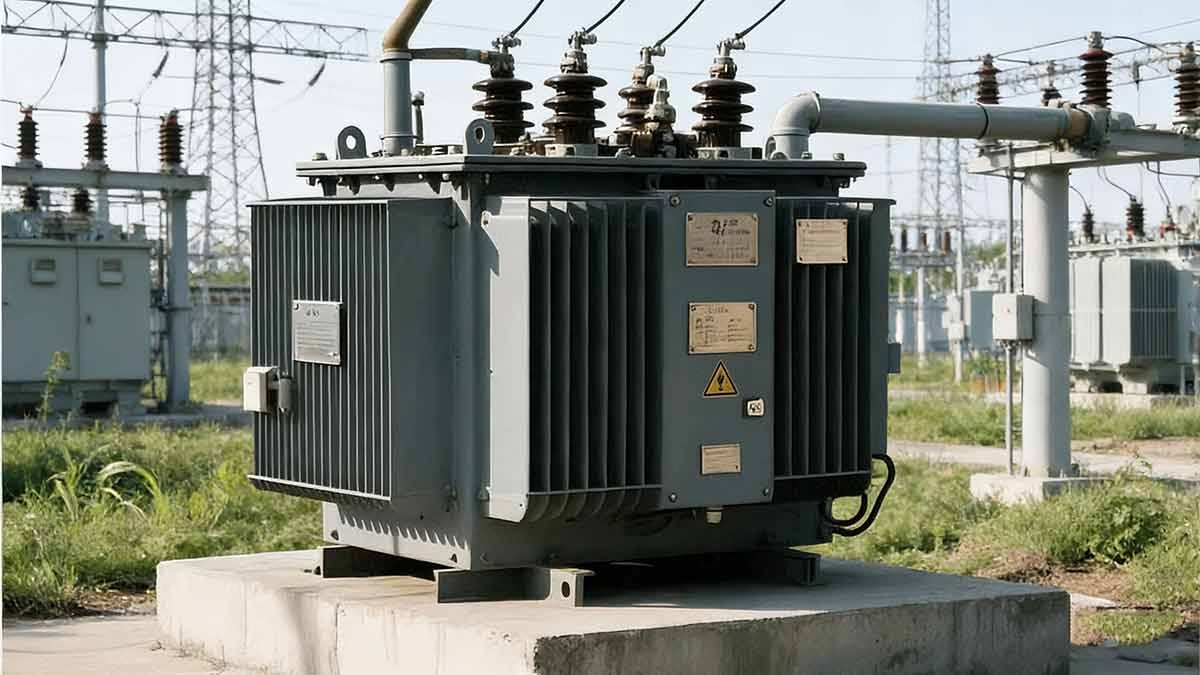
Modern 3 phase distribution transformers are equipped with advanced sensor technology that enables real-time monitoring of key performance metrics. This continuous monitoring is a game-changer for smart grid reliability, as it allows utilities to detect and address issues before they escalate into outages:
- Sensors embedded in the transformer track voltage, current, temperature, oil level (for oil-immersed transformers), and other critical parameters. This data is transmitted wirelessly to a central control center, where it is analyzed in real time.
- If any parameter falls outside the normal range—such as a sudden increase in temperature or a drop in oil level—the system triggers an alert, allowing maintenance teams to respond quickly. For example, in a smart grid project in Amsterdam, real-time monitoring of 3 phase transformers detected a faulty winding before it caused a failure, preventing a potential outage that could have affected 5,000 customers.
- Real-time monitoring also provides utilities with valuable insights into load patterns, enabling them to optimize transformer operation and reduce stress on the system. This proactive approach to grid management significantly improves overall reliability.
Predictive Maintenance: Preventing Failures Before They Occur
Traditional maintenance practices for transformers are often reactive—utilities repair or replace equipment only after it fails. This approach is costly and can lead to extended outages. 3 phase distribution transformers for smart grids address this issue with predictive maintenance capabilities, powered by AI and machine learning:
- AI algorithms analyze historical and real-time performance data to identify patterns that indicate potential failures. For example, a gradual increase in temperature or a slight change in vibration patterns may signal an impending issue with the transformer’s core or windings.
- Based on these insights, utilities can schedule maintenance proactively, replacing worn components or addressing issues before they cause a breakdown. A study by the Electric Power Research Institute (EPRI) found that predictive maintenance for 3 phase distribution transformers reduces unplanned outages by up to 70% and lowers maintenance costs by 25%.
- In a practical application, a utility in Australia used predictive maintenance for its 3 phase distribution transformers to identify and replace a faulty bearing before it failed. This not only avoided an outage but also saved the utility over $100,000 in repair costs and lost revenue.
Self-Healing Capabilities: Rapid Recovery from Faults
Smart grids require equipment that can recover quickly from faults to minimize downtime. 3 phase distribution transformers with self-healing capabilities are designed to do just that, enabling the grid to restore power automatically in many cases:
- These transformers can detect faults (such as short circuits) and isolate the affected section of the grid automatically. This prevents the fault from spreading to other parts of the system, limiting the scope of the outage.
- Once the faulty section is isolated, the transformer can reroute power through alternative paths, restoring service to unaffected customers. For example, in a smart city pilot in Barcelona, 3 phase transformers with self-healing capabilities restored power to 90% of customers within 30 seconds of a fault, compared to an average restoration time of 2 hours with traditional transformers.
- Self-healing capabilities are particularly valuable for critical urban areas, such as financial districts and hospital campuses, where even short outages can have severe consequences. A bank in London reported that the self-healing transformers in its area prevented a potential data loss incident during a grid fault, saving the bank millions of dollars in potential losses.
Dynamic Load Management: Adapting to Changing Urban Demands
Urban power demands are constantly changing—peaking during morning and evening hours, and fluctuating based on weather conditions, special events, and economic activity. 3 phase distribution transformers with dynamic load management capabilities can adapt to these changes, ensuring stable power supply even during peak demand periods:
- These transformers use advanced control systems to adjust to real-time load fluctuations. For example, during a heatwave, when air conditioning use spikes, the transformer can redistribute loads across phases to prevent overloading.
- They can also handle sudden load changes—such as those caused by the startup of large industrial equipment—without tripping or causing voltage drops. This stability is critical for maintaining a reliable power supply in industrial zones and commercial areas.
- A utility in Phoenix, Arizona, implemented 3 phase transformers with dynamic load management during the summer months. The result was a 90% reduction in brownouts caused by peak air conditioning demand, significantly improving customer satisfaction.
Enhanced Overload Capacity: Handling Surges in Demand
Occasional surges in power demand—such as during major events, extreme weather, or equipment startup—can put stress on transformers. 3 phase distribution transformers are designed with enhanced overload capacity to handle these surges, reducing the need for oversized infrastructure:
- Advanced cooling systems—such as forced air cooling or liquid cooling—allow 3 phase transformers to operate at higher loads for short periods. This temporary overload capacity is crucial for managing unexpected demand spikes.
- For example, during a major sports event in a large city, the demand for power in the stadium area can double in a short period. 3 phase transformers with enhanced overload capacity can handle this surge without failing, ensuring uninterrupted power for the event and surrounding areas.
- This capability also reduces the need for utilities to invest in oversized transformers that would be underutilized most of the time. A cost-benefit analysis by a utility in New York found that using 3 phase transformers with enhanced overload capacity reduced infrastructure costs by 30% compared to installing oversized single-phase transformers.
Reliability Feature of 3 Phase Distribution Transformer | Reliability Benefit | Smart Grid Impact |
|---|---|---|
Real-Time Monitoring | Immediate detection of performance anomalies | Proactive grid management and reduced outage risk |
Predictive Maintenance | Reduced unplanned outages and lower maintenance costs | Optimized maintenance schedules and improved grid efficiency |
Self-Healing Capabilities | Rapid fault isolation and power restoration | Enhanced grid resilience and minimal downtime |
Dynamic Load Management | Stable power supply during fluctuating demand | Efficient resource utilization and improved customer satisfaction |
Enhanced Overload Capacity | Ability to handle sudden demand spikes | Flexible grid operation and reduced infrastructure costs |
How Do 3 Phase Distribution Transformers Integrate with Smart City Ecosystems?
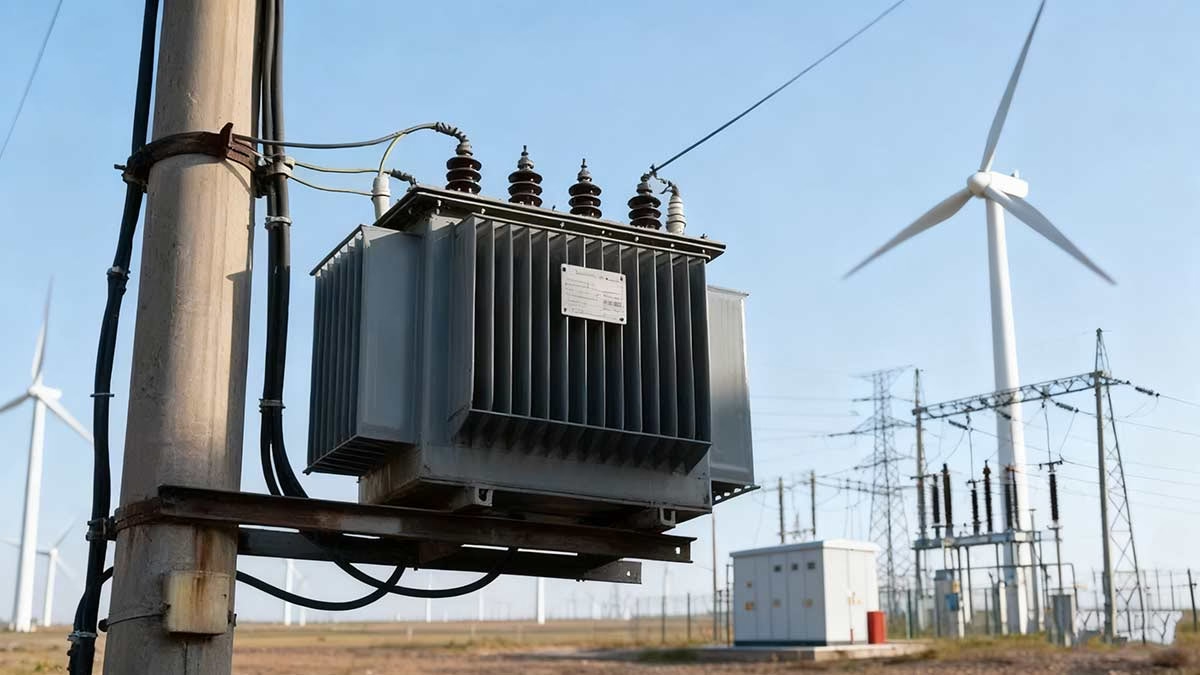
Smart cities are complex ecosystems where various technologies—including smart buildings, IoT devices, electric vehicle (EV) charging stations, renewable energy systems, and traffic management tools—work together to improve quality of life, enhance sustainability, and boost efficiency. For these ecosystems to function effectively, there must be seamless integration between different components—and 3 phase distribution transformers play a critical role in this integration. But how exactly do these transformers fit into the smart city puzzle? Let’s explore their role as intelligent nodes in the urban power network and how they enable collaboration between different smart city technologies.
Data Hub Functionality: Powering Informed Urban Decision-Making
Modern 3 phase distribution transformers are more than just power distribution devices—they act as data hubs, collecting and transmitting valuable information about energy usage, grid performance, and environmental conditions. This data is essential for city planners and utility companies to make informed decisions about urban development and energy management:
- Transformers collect real-time data on power consumption patterns, voltage levels, and load distribution. This data is shared with city-wide management platforms, where it is integrated with data from other sources (such as smart meters, weather sensors, and traffic cameras).
- By analyzing this integrated data, city planners can identify trends and optimize urban services. For example, in a smart city project in Copenhagen, data from 3 phase distribution transformers was used to correlate energy usage with traffic patterns and weather conditions. This insight allowed the city to adjust public transport routes and traffic light timings to reduce energy consumption during peak hours.
- Data from transformers also supports long-term urban planning. For instance, if a particular neighborhood shows a steady increase in energy demand, city planners can use this information to plan for future infrastructure upgrades, such as additional EV charging stations or renewable energy installations.
IoT Connectivity: Creating a Comprehensive Energy Network
The Internet of Things (IoT) is a key enabler of smart cities, connecting millions of devices to create a seamless, interconnected network. 3 phase distribution transformers are designed to integrate with IoT devices, enabling two-way communication and enhancing the overall efficiency of the smart city ecosystem:
- Transformers communicate with smart meters installed in homes and businesses, providing real-time information about energy usage and enabling demand response programs. For example, during peak demand periods, utilities can send signals to smart meters (via transformers) to reduce non-essential energy usage, helping to balance the grid.
- They also integrate with smart building management systems, allowing buildings to adjust their energy consumption based on grid conditions. For instance, a smart office building can reduce its HVAC usage when the grid is under stress, based on signals received from the 3 phase distribution transformer.
- This IoT connectivity creates a comprehensive network of energy awareness, where every component of the smart city ecosystem works together to optimize energy usage. A study by Gartner found that cities with integrated IoT and 3 phase distribution transformer systems reduce their overall energy consumption by 15-20%.
Supporting Smart Traffic and Lighting Systems
Smart traffic and lighting systems are critical components of smart cities, improving mobility, reducing energy usage, and enhancing safety. These systems rely on stable, reliable power, and 3 phase distribution transformers are essential for delivering that power:
- Transformers power adaptive traffic light systems, which adjust signal timings based on real-time traffic conditions. These systems require consistent power to operate their sensors and communication devices, and 3 phase transformers ensure that power is delivered without interruptions.
- They also enable smart street lighting, which uses sensors to adjust brightness based on pedestrian and vehicle traffic. Smart street lights can reduce energy usage by up to 70% compared to traditional lights, but they require stable power to function effectively. 3 phase distribution transformers provide that stability, ensuring that the lights operate reliably even during peak demand periods.
- In a practical example, the city of Los Angeles upgraded its street lighting system to smart lights, powered by 3 phase distribution transformers. The result was a 65% reduction in energy usage for street lighting and a 40% reduction in maintenance costs, thanks to the transformers’ reliable power delivery and remote monitoring capabilities.
Enabling Electric Vehicle (EV) Charging Infrastructure
As cities strive to reduce their carbon footprint, the adoption of electric vehicles (EVs) is growing rapidly. This growth requires a robust EV charging infrastructure—and 3 phase distribution transformers are critical for supporting this infrastructure. EV charging stations require high levels of power, and 3 phase transformers are uniquely suited to deliver that power efficiently:
- 3 phase distribution transformers power fast-charging stations, which can charge an EV in 30 minutes or less. These stations require high power levels (up to 350 kW), and 3 phase transformers can deliver this power without straining the grid.
- They also manage the increased load from growing EV adoption, ensuring that the grid remains stable as more EVs are charged. For example, in a residential area with multiple EV charging stations, the 3 phase distribution transformer can balance the load across phases to prevent overloading.
- Transformers with smart capabilities can also optimize EV charging based on grid conditions. For instance, they can prioritize charging during off-peak hours when energy demand is low, reducing strain on the grid and lowering charging costs for EV owners.
- The city of Oslo, Norway—one of the leading cities in EV adoption—relies heavily on 3 phase distribution transformers to support its EV charging infrastructure. The transformers have enabled the city to install over 1,500 fast-charging stations, making EV ownership convenient for residents and reducing the city’s carbon emissions by 25%.
Integrating with Emergency Response Systems
In times of crisis—such as natural disasters or power outages—reliable power is critical for emergency response. 3 phase distribution transformers integrate with emergency response systems to ensure that essential services have access to power when they need it most:
- Transformers provide critical data to emergency response teams during crises, such as information about power outages, fault locations, and available power sources. This data helps teams prioritize their response and allocate resources effectively.
- They support priority power routing to essential services, such as hospitals, fire stations, and emergency shelters. During an outage, the transformer can reroute power to these facilities, ensuring that they remain operational.
- In a case study from Hurricane Sandy in 2012, 3 phase distribution transformers with emergency response integration helped restore power to critical facilities in New York City within hours of the storm passing, while other areas remained without power for days. This rapid restoration saved lives and reduced the impact of the disaster.
Integration Aspect of 3 Phase Distribution Transformer | Smart City Benefit | Transformer Role |
|---|---|---|
Data Hub Functionality | Informed urban planning and energy management | Collection and transmission of real-time power data |
IoT Connectivity | Comprehensive energy awareness and optimized usage | Two-way communication with smart devices and systems |
Smart Traffic & Lighting Support | Improved mobility, reduced energy usage, and enhanced safety | Reliable power delivery to adaptive systems |
EV Charging Infrastructure | Sustainable transportation and reduced carbon emissions | High-power delivery and load management for charging stations |
Emergency Response Integration | Enhanced urban safety and rapid crisis response | Priority power routing and critical data provision |
How Can 3 Phase Distribution Transformers Master Urban Load Management?
Urban energy demands are dynamic and unpredictable, influenced by factors such as population growth, economic activity, weather conditions, and technological advancements. Managing these loads effectively is a major challenge for utilities, as unbalanced or excessive loads can lead to outages, equipment failure, and increased energy loss. 3 phase distribution transformers are designed to master this complex load management challenge, using advanced techniques to balance demand, adjust capacity, and respond to grid conditions. But how exactly do these transformers achieve load management mastery in urban environments? Let’s explore the key strategies and capabilities that make them essential for balancing urban energy demands.
Advanced Load Balancing: Ensuring Equilibrium Across the Grid
Load balancing is the foundation of effective urban load management, and 3 phase distribution transformers excel in this area. Unlike single-phase transformers, which can struggle with unbalanced loads, 3 phase units are designed to distribute loads evenly across three phases, ensuring that no single phase is overburdened:
- Advanced 3 phase transformers use automatic load balancing mechanisms to adjust to changes in demand. For example, if a large industrial facility in one part of the city suddenly increases its power usage, the transformer can redistribute the load across the three phases to prevent overloading.
- This balanced distribution not only prevents outages but also improves the efficiency of the entire grid. Unbalanced loads can increase energy loss by up to 30%, but 3 phase transformers reduce this loss by ensuring that each phase is operating at optimal capacity.
- In a practical application, a utility in Mumbai upgraded its distribution network with 3 phase transformers and automatic load balancing technology. The result was a 25% reduction in load-related outages and a 12% decrease in energy loss, significantly improving the reliability and efficiency of the grid.
Dynamic Capacity Adjustment: Adapting to Real-Time Demand
Urban energy demands fluctuate throughout the day, with peak periods occurring during morning and evening hours. To handle these fluctuations, 3 phase distribution transformers are equipped with dynamic capacity adjustment capabilities, allowing them to adjust their output based on real-time demand:
- One of the key technologies enabling dynamic capacity adjustment is the on-load tap changer (OLTC). OLTCs allow the transformer to adjust its voltage ratio without interrupting power supply, enabling it to optimize voltage levels based on load conditions. For example, during peak demand, the OLTC can increase the transformer’s output to maintain stable voltage levels.
- Dynamic capacity adjustment also allows utilities to use their existing infrastructure more efficiently. Instead of installing additional transformers to handle peak demand, utilities can rely on 3 phase units with dynamic capacity to adjust to changing needs. This reduces infrastructure costs and saves valuable urban space.
- A case study from a utility in Toronto found that using 3 phase transformers with OLTCs reduced the need for additional peak capacity infrastructure by 40%, saving the utility over $2 million in capital costs.
Intelligent Demand Response: Collaborating with Consumers to Balance the Grid
Demand response is a critical component of modern load management, enabling utilities to work with consumers to reduce energy usage during peak periods. 3 phase distribution transformers play a key role in facilitating demand response programs, acting as a bridge between utilities and consumers:
- Smart 3 phase transformers can communicate with smart meters and home automation systems to send signals to consumers about peak demand periods. Consumers can then reduce non-essential energy usage—such as turning off unused appliances or adjusting HVAC settings—in response to these signals.
- Some advanced transformers can even automate demand response, reducing load on the grid without requiring consumer intervention. For example, a transformer can temporarily reduce power to non-critical loads (such as street lighting or commercial refrigeration) during peak demand, then restore power once demand decreases.
- Demand response programs supported by 3 phase transformers have been shown to reduce peak demand by 10-15%, significantly reducing the risk of outages. A utility in California reported that its demand response program, enabled by smart 3 phase transformers, reduced peak demand by 12% during a heatwave, preventing widespread brownouts.
Predictive Load Management: Forecasting and Preparing for Demand Changes
To stay ahead of changing energy demands, utilities need to predict future load patterns—and 3 phase distribution transformers with predictive load management capabilities can help. Using AI and machine learning algorithms, these transformers can forecast demand changes and prepare the grid accordingly:
- AI algorithms analyze historical load data, weather forecasts, and other relevant factors (such as upcoming events or economic activity) to predict future demand. For example, the algorithm can forecast a surge in demand during an upcoming music festival or a heatwave.
- Based on these forecasts, the transformer can adjust its operation in advance—such as increasing capacity or activating demand response programs—to ensure that the grid is prepared for the expected demand surge.
- Predictive load management not only improves grid stability but also reduces energy loss. By preparing for demand changes in advance, the transformer can operate at optimal efficiency, avoiding the inefficiencies associated with sudden load changes.
- In a pilot project in Singapore, 3 phase transformers with predictive load management reduced peak demand-related energy loss by 18% and improved grid stability during high-demand periods.
Microgrid Support: Enabling Localized Load Management
Microgrids—localized power networks that can operate independently of the main grid—are becoming increasingly common in smart cities. These microgrids provide enhanced resilience and allow for the optimal use of local renewable energy sources. 3 phase distribution transformers are essential for supporting microgrid operations, enabling seamless integration between the microgrid and the main grid:
- Transformers facilitate seamless switching between grid-connected and islanded modes. During normal operation, the microgrid is connected to the main grid, and the transformer balances the load between the two. If the main grid experiences an outage, the transformer can disconnect the microgrid and switch to islanded mode, allowing the microgrid to continue supplying power to local customers.
- They also manage the integration of local renewable energy sources, such as solar panels or wind turbines, into the microgrid. The transformer balances the variable power input from these sources with the local load, ensuring a stable power supply.
- A microgrid project in a residential neighborhood in Berlin used 3 phase distribution transformers to integrate solar power and battery storage. The result was a 50% reduction in the neighborhood’s reliance on the main grid and a 30% reduction in energy costs for residents. During a main grid outage, the microgrid continued to supply power to all homes in the neighborhood for 72 hours.
Load Management Feature of 3 Phase Distribution Transformer | Urban Benefit | Transformer Capability |
|---|---|---|
Advanced Load Balancing | Stable power supply and reduced outages | Automatic phase adjustment and load redistribution |
Dynamic Capacity Adjustment | Efficient use of existing infrastructure and reduced costs | On-load tap changing for real-time voltage optimization |
Intelligent Demand Response | Reduced peak demand and improved grid stability | Communication with smart devices to manage consumer load |
Predictive Load Management | Proactive grid preparation and reduced energy loss | AI-driven demand forecasting and pre-emptive adjustments |
Microgrid Support | Enhanced resilience and local energy independence | Seamless switching between grid and islanded modes |
 What Is the Synergy Between 3 Phase Distribution Transformers and Renewable Energy in Urban Areas?
 What Is the Synergy Between 3 Phase Distribution Transformers and Renewable Energy in Urban Areas?
Sustainability is a core goal of smart city development, and renewable energy sources—such as solar, wind, and hydro power—are key to achieving this goal. However, integrating renewable energy into urban power grids presents unique challenges, including variable power inputs, bi-directional power flow, and the need for energy storage. 3 phase distribution transformers play a critical role in addressing these challenges, creating a synergy between renewable energy and urban power systems that enables a sustainable, reliable power supply. But what exactly is this synergy, and how does it benefit smart cities? Let’s explore the ways in which 3 phase distribution transformers support renewable energy integration and drive urban sustainability.
Managing Variable Renewable Energy Inputs
One of the biggest challenges of integrating renewable energy into urban grids is the variable nature of these sources. Solar power output depends on sunlight, wind power depends on wind speed, and both can fluctuate dramatically throughout the day. 3 phase distribution transformers are designed to handle these variable inputs, ensuring a stable power supply even as renewable energy output changes:
- Advanced voltage regulation capabilities allow 3 phase transformers to maintain a stable output voltage despite fluctuations in renewable energy input. For example, if solar power output drops suddenly due to cloud cover, the transformer can adjust its voltage ratio to compensate, preventing voltage drops in the grid.
- Transformers with built-in harmonic filters can also reduce the impact of harmonic distortions caused by renewable energy inverters. These distortions can affect power quality, but 3 phase transformers mitigate this issue, ensuring that the grid remains stable.
- A case study from a solar-powered smart city project in Dubai found that 3 phase distribution transformers with advanced voltage regulation reduced voltage fluctuations by 80% compared to traditional transformers, enabling the city to integrate a 40% renewable energy mix without compromising power quality.
Enabling Bi-Directional Power Flow
Unlike traditional power grids, which operate in a single direction (from power plants to consumers), smart grids with renewable energy sources require bi-directional power flow. This is because distributed renewable energy systems—such as rooftop solar panels—can generate excess power that is fed back into the grid. 3 phase distribution transformers support this bi-directional flow, enabling the growth of urban renewable energy installations:
- They are designed to handle power flow in both directions, allowing excess renewable energy to be fed back into the grid without damaging the transformer or other grid components.
- This bi-directional flow enables the growth of “prosumers”—consumers who both use and generate energy. Prosumers play a key role in urban sustainability, as they reduce the need for centralized power generation and lower carbon emissions.
- In a residential area in San Francisco with high rooftop solar adoption, 3 phase distribution transformers enabled bi-directional power flow, allowing residents to feed excess solar power back into the grid. This not only reduced the area’s carbon footprint but also generated revenue for residents through net metering programs.
Integrating Energy Storage Systems
Energy storage systems—such as batteries—are essential for maximizing the value of renewable energy in urban grids. They store excess renewable energy during periods of high output and release it during periods of high demand. 3 phase distribution transformers work seamlessly with these storage systems, enabling efficient charge and discharge management:
- Transformers manage the charging of energy storage systems during periods of excess renewable energy output. They ensure that the storage systems are charged efficiently, without straining the grid.
- During periods of high demand or low renewable energy output, the transformer manages the discharge of stored energy, feeding it back into the grid to balance demand. This improves the overall efficiency and reliability of the renewable energy system.
- A smart grid project in Seoul integrated 3 phase distribution transformers with battery storage systems and solar panels. The result was a 35% reduction in peak demand and a 25% increase in renewable energy utilization, as the storage systems allowed the city to use more of the solar energy generated during the day.
Coordinating with Smart Inverters
Smart inverters are critical components of renewable energy systems, converting direct current (DC) from solar panels or wind turbines into alternating current (AC) for use in the grid. 3 phase distribution transformers coordinate with these smart inverters to optimize renewable energy conversion and improve grid stability:
- They communicate with smart inverters to adjust power factor and voltage support, ensuring that the inverter output is compatible with the grid. This coordination reduces the risk of grid instability and improves the efficiency of renewable energy conversion.
- Smart inverters and 3 phase transformers work together to provide grid services, such as frequency regulation and voltage support. These services are essential for maintaining grid stability as renewable energy penetration increases.
- A study by the National Renewable Energy Laboratory (NREL) found that coordinated operation between 3 phase distribution transformers and smart inverters can increase the maximum renewable energy penetration in urban grids by 20-30%.
Supporting Urban Microgrids with Renewable Energy
As mentioned earlier, microgrids are becoming increasingly common in smart cities, and many of these microgrids rely on renewable energy sources. 3 phase distribution transformers are essential for supporting these renewable-powered microgrids, enabling them to operate independently or in conjunction with the main grid:
- They facilitate the integration of renewable energy sources into the microgrid, balancing variable inputs with local load demand.
- Transformers enable seamless switching between grid-connected and islanded modes, ensuring that the microgrid can continue to supply power to local customers even if the main grid is down. This enhances resilience and reduces reliance on centralized power generation.
- An eco-district in Paris uses a renewable-powered microgrid supported by 3 phase distribution transformers. The microgrid integrates solar panels, wind turbines, and battery storage, and the transformers ensure a stable power supply for the district’s residents and businesses. During a main grid outage in 2023, the microgrid remained operational, supplying power to 2,000 households for 5 days.
Renewable Energy Synergy Aspect | Urban Sustainability Benefit | Transformer Role |
|---|---|---|
Variable Input Management | Higher renewable energy adoption without compromising power quality | Advanced voltage regulation and harmonic filtering |
Bi-Directional Power Flow | Growth of prosumers and reduced carbon emissions | Handling reverse power flow safely and efficiently |
Energy Storage Integration | Improved renewable energy utilization and grid stability | Managing charge and discharge of storage systems |
Smart Inverter Coordination | Higher renewable energy penetration and optimized conversion | Power factor correction and voltage support coordination |
Microgrid Support | Enhanced resilience and local energy independence | Seamless mode switching and load balancing for microgrids |
Why Are 3 Phase Distribution Transformers Indispensable for Smart Cities?
After exploring the various capabilities and benefits of 3 phase distribution transformers, it’s clear that these devices are indispensable for building smart cities. They are not just power distribution equipment—they are the backbone of efficient, reliable, and sustainable urban power systems. Let’s summarize the key reasons why 3 phase distribution transformers are critical for smart city development:
- Enhanced Energy Efficiency: 3 phase distribution transformers minimize energy loss, optimize capacity utilization, and reduce operational costs, making them essential for achieving urban sustainability goals.
- Unmatched Reliability: With real-time monitoring, predictive maintenance, and self-healing capabilities, these transformers ensure an uninterrupted power supply, which is critical for urban residents, businesses, and critical services.
- Seamless Ecosystem Integration: They act as intelligent nodes in the smart city ecosystem, integrating with IoT devices, EV charging stations, smart buildings, and emergency response systems to create a cohesive, efficient network.
- Masterful Load Management: Advanced load balancing, dynamic capacity adjustment, and predictive load management enable these transformers to handle the dynamic energy demands of urban areas, ensuring grid stability even during peak periods.
- Renewable Energy Enablement: By managing variable inputs, enabling bi-directional power flow, and integrating energy storage, 3 phase distribution transformers support the growth of renewable energy in urban areas, driving the transition to a low-carbon future.
As cities continue to grow and evolve into smart cities, the demand for reliable, efficient, and sustainable power systems will only increase. 3 phase distribution transformers are uniquely positioned to meet this demand, providing the foundation for the smart cities of tomorrow. Whether it’s powering EV charging stations, integrating solar panels, or ensuring stable power for smart buildings, these transformers play a critical role in shaping the future of urban energy.