
Contents
hide
Fundamental Principles of Transformer Color Determination
The color of transformer is never a random aesthetic choice, but a carefully engineered decision that integrates electrical performance, material science, environmental compatibility, safety protocols, and industrial regulatory requirements. For transformer manufacturers, grid operators, and end-users, the selection of transformer color directly affects the equipment’s operational stability, service lifespan, maintenance cost, and compliance with regional norms.
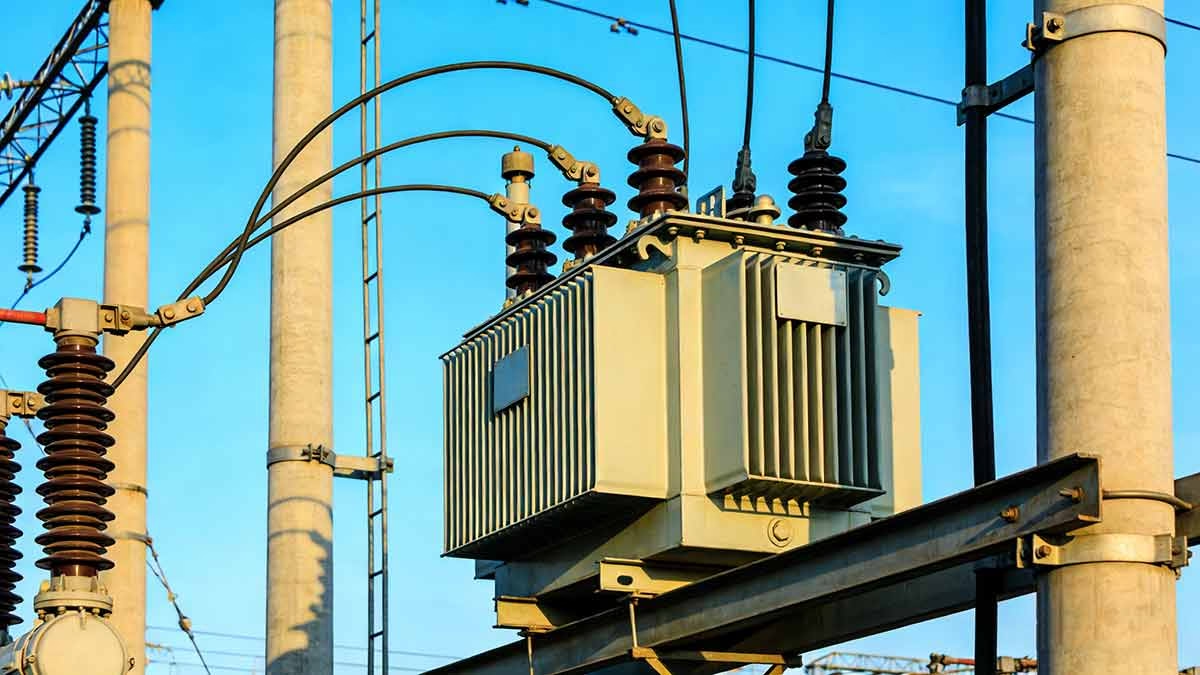
Unlike ordinary industrial products, transformers undertake core tasks in power transmission and distribution systems, operating continuously in diverse environments ranging from urban residential areas, industrial parks, desert regions, to coastal zones. Each color applied to a transformer carries specific functional objectives, from regulating surface temperature to resisting environmental erosion, from blending into the surroundings to enhancing operational safety.
This article systematically deconstructs the technical logic, application scenarios, global standards, and practical value behind the color of transformer, providing authoritative and comprehensive answers to the core confusions faced by industry practitioners in color selection, procurement, and application.
Commonly Adopted Transformer Colors and Their Functional Applications
Transformer colors are classified based on application scenarios, regional standards, and functional demands, with each color matching a set of clear technical indicators and usage scenarios. The following is a detailed classification of mainstream transformer colors, their corresponding coding standards, and core application fields, presented in a structured table for intuitive reading.
| Transformer Color | Standard Color Code | Primary Application Scenarios | Core Functional Objectives |
|---|---|---|---|
| Utility Olive Green | RAL 6003, RAL 6005, Munsell 7GY 3.29/1.5 | Outdoor pole-mounted transformers, pad-mounted distribution transformers, and small and medium-sized power transformers in residential and commercial zones | Environmental integration, moderate heat absorption, compliance with municipal aesthetic regulations, UV resistance |
| Light Industrial Gray | ANSI 70, RAL 7035, RAL 7032 | High-voltage (HV) and extra-high-voltage (EHV) power transformers, substation transformers, indoor dry-type transformers, and industrial zone distribution equipment | High solar reflectivity, optimized thermal management, clean industrial appearance, global standardization |
| Dark Neutral Gray | RAL 7012, RAL 7024 | Urban enclosed substations, GIS hybrid switchgear stations, transformer yards supporting industrial control buildings | Aesthetic consistency with supporting equipment, concealment of surface contaminants, and adaptation to urban industrial environments |
| Desert Beige & Sand Tone | RAL 1001, RAL 1015 | Transformers in Middle Eastern deserts, North African utility stations, coastal desert substations, and high-irradiation plateau areas | Extreme solar reflectivity, low heat accumulation, integration with desert landscapes, UV degradation resistance |
| Safety Red & Orange | No unified standard (epoxy coating matching) | Indoor dry-type transformers, transformers in commercial buildings, data centers, hospitals, underground substations, and traffic tunnels | High-voltage hazard warning, enhanced inspection visibility, and matching with fire-retardant epoxy resin materials |
| Regional Utility Blue | RAL 5015, RAL 5017 | Public utility pad-mounted transformers, distribution networks with unified corporate branding | Regional identity recognition, standardized fleet management, and compliance with local utility specifications |
| Custom Corporate Colors | Custom RAL/Pantone codes | Large utility groups, EPC projects, forest area transformers, special industrial projects | Corporate brand identity, adaptive integration with special environments, and project-specific functional requirements |
Beyond the above categories, transformer colors are further divided by equipment type: oil-immersed transformers mostly adopt neutral light colors to adapt to long-term outdoor operation, while dry-type transformers tend to use safety-oriented colors or industrial neutral tones to meet indoor environmental and fire protection requirements. This differentiation is rooted in the fundamental differences in operating conditions and protection mechanisms between the two transformer types.
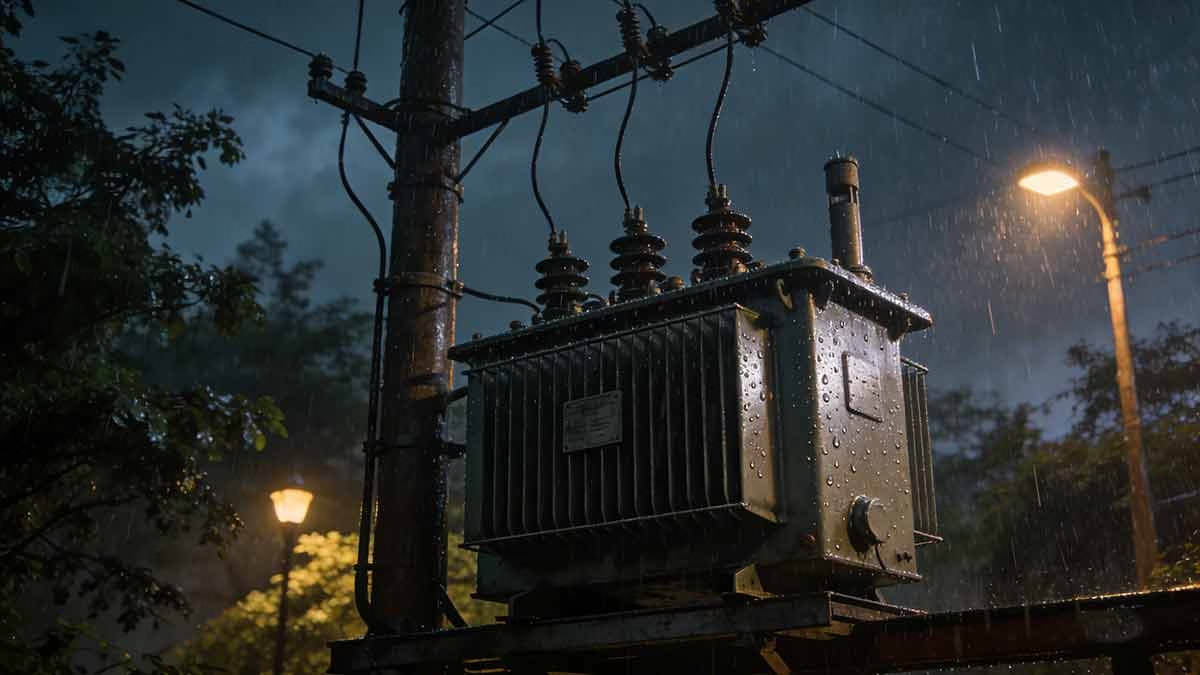
Thermal Influence: How Transformer Color Affects Heat Dissipation & Service Life
Thermal performance is the most critical technical factor determining the color of transformer, as transformer temperature directly determines the aging rate of insulation materials, oil stability, and overall operational efficiency. The physical principle of solar radiation absorption and reflection forms the core basis for color selection, and the impact mechanism is elaborated in the following key points.
- Solar Reflectivity and Surface Temperature Control
Light-colored transformers (light gray, beige, light green) have a solar reflectivity rate of 60%-80%, which can reflect most ultraviolet and infrared radiation in sunlight. In contrast, dark-colored transformers have a solar reflectivity rate of only 20%-35%, absorbing a large amount of solar heat and causing the surface temperature to rise by 10-35°C under strong summer sunlight. This temperature difference directly affects the internal operating environment of the transformer.
For oil-immersed transformers, high surface temperature will accelerate the oxidation of insulating oil, reduce the insulation performance of oil paper, and increase the risk of oil expansion exceeding safety limits. For dry-type transformers, excessive surface temperature will increase the brittleness of epoxy resin insulation, reduce the current-carrying capacity of the equipment, and shorten the service life of the winding insulation system.
- Thermal Cycling and Component Durability
The color of transformer determines the degree of thermal cycling (periodic expansion and contraction of metal materials caused by temperature changes). Light colors maintain a stable surface temperature, reducing the amplitude of thermal cycling of the transformer tank, gasket, and sealing components. This effectively avoids micro-cracks in the paint film, loosening of sealing structures, and fatigue damage of metal parts.
Darker colors aggravate thermal cycling due to large temperature fluctuations between day and night, accelerating the aging of gaskets and seals, increasing the probability of oil leakage in oil-immersed transformers, and raising the maintenance frequency of the equipment. Industry test data shows that transformers using light standard colors can reduce thermal cycling-related failure rates by 30%-40% compared with dark-colored transformers in the same environment.
- Cooling System Load Optimization
The thermal performance brought by transformer color directly affects the configuration and operating load of the cooling system. Transformers coated with light colors can maintain safe operating temperatures through natural convection cooling in most cases, reducing the dependence on forced-air cooling systems and radiator expansion.
Dark-colored transformers often require larger radiators, enhanced forced-air cooling devices, and higher-grade insulation materials to compensate for the heat accumulation caused by color, which not only increases the manufacturing cost of transformers by 10%-15%, but also increases energy consumption during operation and reduces the overall energy efficiency ratio of the equipment.
- Insulation Life and Temperature Exponential Relationship
The insulation life of transformers follows the Van’t Hoff-Arrhenius exponential law: for every 6-8°C increase in the operating hot spot temperature, the insulation life of the transformer is reduced by half. The color of transformer is a key external factor affecting hot spot temperature, making light color selection a core measure to extend insulation life.
Utilities and transformer manufacturers worldwide prioritize light gray and olive green as standard colors, precisely because these colors can effectively control temperature rise, slow down the aging rate of cellulose and resin insulation, and extend the overall service life of transformers from 25-30 years to 35-40 years under the same coating and maintenance conditions.
Environmental & Scenario-Based Color Matching for Transformers
The color of transformer is closely related to its installation environment, and different application scenarios have clear color matching principles to balance functional performance and environmental adaptability. This section classifies and explains according to indoor and outdoor environments, urban and rural areas, and special application scenarios.
Outdoor Transformer Color Configuration
Outdoor transformers are exposed to sunlight, wind, rain, and natural landscapes all year round, and their color selection focuses on thermal performance, environmental integration, and weather resistance.
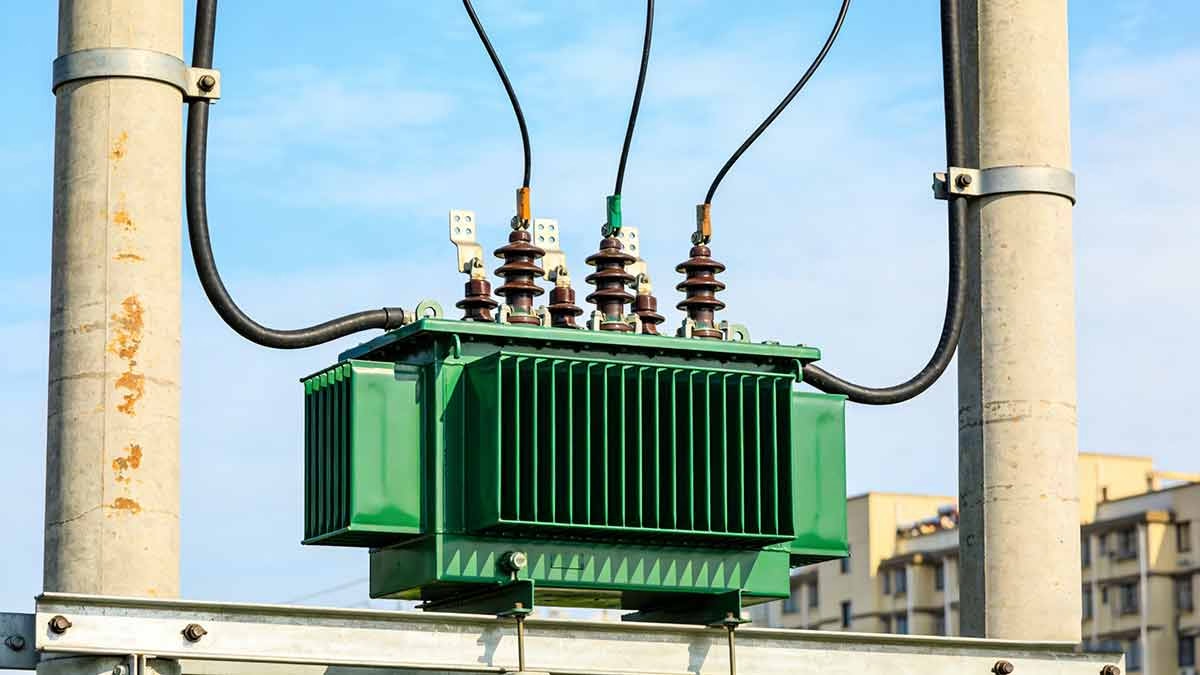
- Residential and Commercial Zones: Olive green (RAL 6003/6005) is the preferred choice, which can blend with lawns, green belts, and roadside vegetation, reduce visual impact, and meet the aesthetic requirements of municipal planning for public infrastructure.
- Industrial Zones and Substations: Light gray (ANSI 70/RAL 7035) is adopted, which matches concrete and metal structures of industrial facilities, facilitates equipment identification and inspection, and maintains a unified industrial style.
- Desert and High-Irradiation Areas: Beige and sand tones (RAL 1001/1015) are used, which have ultra-high solar reflectivity to adapt to extreme sunlight, and integrate with desert geological features to avoid obvious equipment traces.
- Forest and Mountainous Areas: Dark green or brown custom colors are selected, which integrate with forest vegetation and reduce the impact on the ecological landscape, while ensuring sufficient UV resistance and corrosion protection.
Indoor Transformer Color Configuration
Indoor transformers are mainly dry-type, operating in closed environments with relatively stable temperature and humidity, and their color selection focuses on safety warning, fire protection coordination, and indoor aesthetic matching.
- Commercial Buildings and Data Centers: Light gray or off-white is commonly used, keeping the indoor environment clean and tidy, and facilitating the identification of equipment faults and oil leakage (for small oil-immersed indoor transformers).
- Hospitals and Underground Substations: Safety orange or red is adopted, which serves as a high-voltage hazard warning, improves the visibility of equipment in low-light environments, and matches the fire-retardant characteristics of epoxy coatings.
- Industrial Workshops: Dark gray or medium gray is selected, which conceals dust and pollutants generated in industrial production, reduces the frequency of surface cleaning, and maintains the durability of the paint film.
Corrosion Resistance and Color Selection Under Varied Climatic Conditions
Corrosion is one of the main threats to transformer service life, and the color of transformer is closely linked to the performance of anti-corrosion coatings. Different climatic environments have specific requirements for color and coating systems, and the matching logic is as follows.
Coastal and Marine Environments
Coastal areas have high salt spray, humidity, and chloride ion content, which pose severe corrosion challenges to transformer metal tanks. The preferred colors are light gray (RAL 7035) and light olive green, with the following advantages:
- Light colors reduce heat accumulation, avoiding coating blistering and delamination caused by thermal expansion under salt spray erosion.
- These color systems are compatible with high-performance anti-corrosion coatings (zinc-rich epoxy primer + polyurethane topcoat), meeting the ISO 12944 C5-M high corrosion protection grade.
- Light colors can slow down the fading and chalking of coatings under the combined action of salt spray and UV, maintaining the integrity of the anti-corrosion system for 20-25 years.
Industrial and Polluted Urban Environments
Industrial areas and densely populated cities have high concentrations of SO₂, NOₓ, and chemical vapors, which accelerate coating degradation. Light gray and medium gray are the optimal color choices:
- These colors have strong hiding power for soot, dust, and chemical contaminants, keeping the equipment’s appearance tidy.
- The pigment components of gray coatings have high chemical stability, resisting acid and alkali corrosion and reducing the rate of coating aging.
- Matching with ISO 12944 C3-C4 corrosion protection standards, ensuring long-term anti-corrosion effect in polluted environments.
Cold and Alpine Environments
Cold regions are characterized by low temperature, snow cover, and frost, with relatively low UV intensity but high humidity in winter. Medium gray and forest green are suitable colors:
- They form a clear contrast with snow and ice, facilitating equipment inspection and emergency maintenance in winter.
- The coating materials of these colors have good low-temperature flexibility, avoiding cracking and peeling of the paint film under extremely low temperatures.
- Stable thermal performance reduces the impact of low-temperature thermal shock on the transformer tank and internal components.
High-Altitude and Strong UV Environments
High-altitude areas have a thin atmosphere and strong UV radiation, which accelerates coating photodegradation. Light gray, beige, and light green are the only recommended colors:
- These colors have high UV reflectivity, reducing the photochemical reaction of coating pigments and extending the service life of the paint film.
- Special UV stabilizers are added to the coating formula of these colors, adapting to the strong radiation environment of high altitudes.
- Effective temperature control avoids overheating of transformers under high-altitude, strong sunlight, ensuring stable operation of the equipment.
Global Industry Standards and Regulatory Norms for Transformer Colors
Although there is no unified global mandatory standard for the color of a transformer, the industry has formed a set of recognized normative systems based on regional grid requirements, international coating standards, and safety regulations, which guide the color selection of transformer manufacturers and users.
North American Standards (ANSI/NEMA)
The United States and Canada adopt ANSI/NEMA standards as the core reference for transformer color:
- ANSI 70 Light Gray: Defined as the standard color for HV/EHV transformers, substation equipment, and switchgear, specifying glossiness, UV resistance, and color stability indicators.
- Utility Olive Green: The specified color for pad-mounted distribution transformers, complying with municipal aesthetic and grid management norms, is widely used in residential and commercial power distribution systems.
These standards are not mandatory laws, but are adopted by more than 90% of North American utilities and transformer manufacturers, forming a de facto industry unified specification.
European and International Standards (IEC/ISO/RAL)
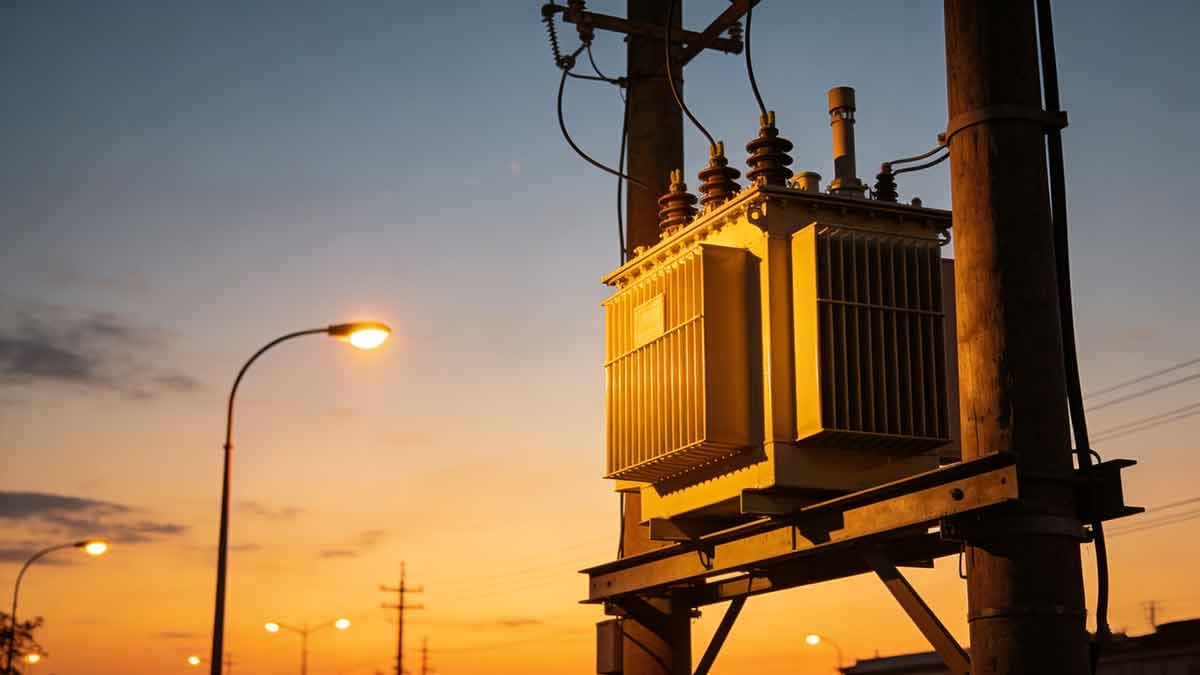
European countries and most regions in the world follow IEC and ISO standards, with RAL as the color coding system:
- IEC Standards: Focus on the performance of transformer coatings rather than specific colors, requiring compliance with ISO 12944 corrosion protection grades and UV resistance indicators.
- RAL 7035 Light Gray: The universal standard color for European transformers, applicable to distribution transformers, substation transformers, and medium-voltage equipment, with unified coating performance and color consistency.
- ISO 12944: A global anti-corrosion standard that classifies corrosive environments from C1 to CX, and recommends light gray and green as preferred colors for high-corrosion environments to ensure coating durability.
Regional and Municipal Regulatory Requirements
Many countries and regions have formulated local regulatory requirements for the color of transformer:
- Middle East and North Africa: Mandate beige and sand tones for transformers in desert areas to adapt to the geographical environment and reduce heat absorption.
- European Union Countries: Some countries legislate that outdoor distribution transformers in residential areas use olive green to control visual pollution of public spaces.
- Asian Markets: Adopt a hybrid standard of ANSI and RAL, with light gray for substations and green for residential distribution transformers, adjusted according to the requirements of local grid companies.
Custom Color Solutions for Specialized Transformer Projects
For large-scale EPC projects, corporate utility groups, and special application scenarios, customized color solutions for transformers have become an important choice, which combines functional performance with personalized needs.
Corporate Branding Custom Colors
Large international utility groups and energy companies often customize transformer colors to match corporate VI systems, such as dark green with yellow warning stripes, blue-gray combinations, etc. These custom colors need to meet the following conditions:
- Comply with thermal performance and anti-corrosion technical indicators, without affecting the operational safety of transformers.
- Match the standard coating system, ensuring the same durability as standard colors.
- Approved by local regulatory authorities to meet regional aesthetic and safety requirements.
Special Engineering Project Custom Colors
In special engineering projects such as rail transit, mining, and offshore platforms, transformers adopt customized colors for functional needs:
- Rail transit transformers: Use yellow or orange custom colors to improve visibility in tunnel and station environments and meet traffic safety warning requirements.
- Mining transformers: Adopt high-visibility custom colors to adapt to harsh mining environments and facilitate equipment positioning and maintenance.
- Offshore platform transformers: Customize light gray with anti-corrosion coating, meeting the ultra-high corrosion protection requirements of marine environments.
Ecological Protection Area Custom Colors
In nature reserves, scenic spots, and ecological protection areas, transformers use custom colors that integrate with the ecological environment, such as brown in forest areas, light green in wetland areas, etc. These colors not only meet the requirements of ecological protection but also maintain the necessary technical performance of transformers, achieving a balance between engineering construction and ecological protection.
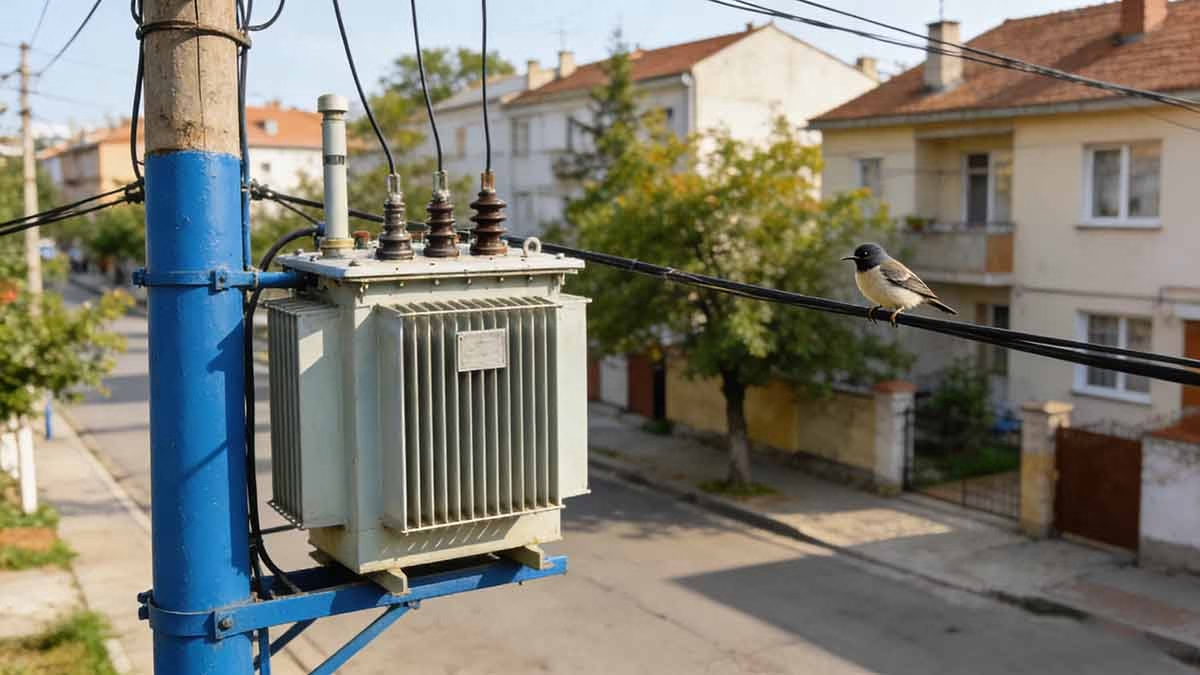
The Role of Color in Transformer Safety & Maintenance Efficiency
The color of transformer plays an indispensable role in equipment safety and daily maintenance, which is often overlooked but directly related to the stable operation of the power system.
Safety Warning and Hazard Identification
Neutral colors (gray, green) provide a high-contrast background for safety warning signs, high-voltage markings, and equipment serial numbers, ensuring that warning information is clearly visible under sunlight and weak light. Safety colors (red, orange) directly mark high-voltage equipment, reminding operators and passers-by of potential risks and reducing the probability of safety accidents.
Fault and Damage Inspection
Light and neutral colors make it easier to detect equipment abnormalities, such as rust spots, oil leakage, paint film chalking, and mechanical damage. Compared with dark-colored transformers, light-colored transformers can reduce the missed detection rate of minor faults by 40%-50%, enabling maintenance personnel to find and deal with problems in a timely manner and avoid the expansion of faults.
Maintenance Cycle and Cost Control
Standard colors (light gray, olive green) have mature coating formulations and supply chains, reducing the difficulty of color matching during repainting and maintenance. The durable performance of these colors extends the maintenance cycle, reducing the frequency of repainting and component replacement, and ultimately reducing the full-life cycle maintenance cost of transformers by 20%-25%.
Conclusion
The color of transformer is a comprehensive embodiment of engineering technology, industrial standards, environmental adaptability, and safety requirements, far beyond the category of simple aesthetic design. From thermal management and corrosion protection to regional compliance and maintenance efficiency, each color choice is based on rigorous technical testing and industrial practice.
Light gray and olive green, as the most widely used standard colors globally, have established their leading position in the industry by virtue of excellent thermal performance, high environmental compatibility, and reliable anti-corrosion effect. Custom colors, on the other hand, meet the personalized needs of special projects while ensuring technical compliance, enriching the color system of transformers.
For transformer manufacturers, adhering to industry standards and combining scenario-based functional requirements for color selection is the key to ensuring product quality. For grid operators and end-users, understanding the technical logic behind the color of transformer helps to make reasonable procurement and maintenance decisions, ensuring the long-term stable operation of power equipment and maximizing the value of the investment.
Frequently Asked Questions
Q1: Why are most outdoor transformers green or light gray?
Most outdoor transformers use green or light gray because these two colors balance environmental integration, thermal management, and corrosion resistance. Olive green blends with natural landscapes to reduce visual impact, while light gray has high solar reflectivity to control temperature rise. Both colors comply with global industry standards and have excellent weather and UV resistance, making them suitable for long-term outdoor operation.
Q2: Does the color of transformer affect its electrical performance?
Yes, the color of the transformer indirectly affects electrical performance by influencing operating temperature. Light colors reduce heat absorption, lower the hot spot temperature of windings, slow down insulation aging, and maintain stable insulation performance and energy efficiency. Dark colors increase temperature rise, accelerate insulation degradation, and may reduce the current-carrying capacity and service life of the transformer.
Q3: Are there any mandatory international laws for transformer color?
There is no single mandatory global law regulating transformer color, but regional standards (ANSI, IEC, RAL) and local municipal regulations form de facto binding norms. North America follows ANSI 70 and utility green standards, Europe adopts RAL 7035 light gray, and many regions have legal requirements for outdoor transformer colors to meet aesthetic and environmental protection needs.
Q4: Can customers specify custom colors for transformers?
Yes, customers can specify custom colors for transformers, provided that the colors meet thermal performance, anti-corrosion, and safety technical indicators. Manufacturers can adjust coating formulations to match RAL or Pantone custom codes, while ensuring that the custom color does not compromise the operational safety and service life of the transformer and complies with local regulatory requirements.
Q5: How long does the standard transformer color coating last?
Standard transformer colors (light gray, olive green) use high-performance epoxy-polyurethane coating systems, which can maintain good anti-corrosion and appearance performance for 20-30 years in conventional environments. In harsh environments such as coasts and deserts, with enhanced coating configurations, the service life can reach 25-35 years, depending on daily maintenance and environmental conditions.