
A power transformer stands as the critical linchpin in energy distribution, seamlessly adjusting voltage levels between electrical circuits to enable efficient long-distance transmission and safe usage in homes, businesses, and industrial facilities. These robust devices are the quiet architects of a reliable, stable electrical grid—powering modern life without fanfare.
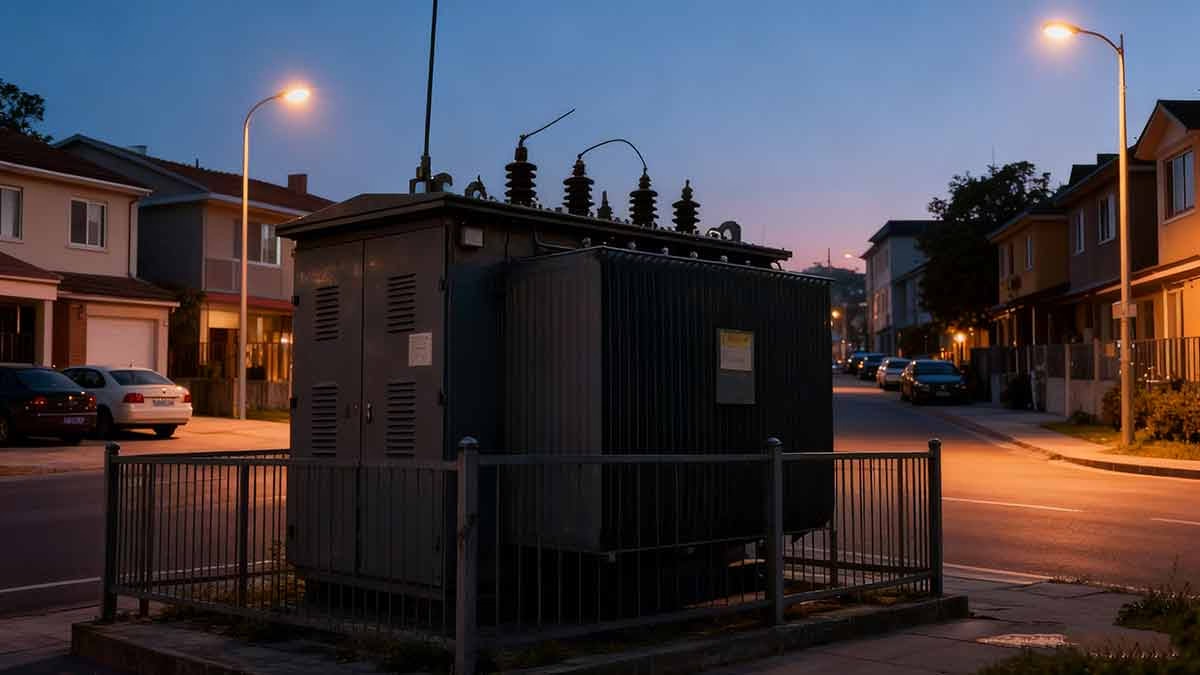
Having spent decades immersed in the power industry, I’ve witnessed firsthand how transformers underpin every aspect of our electrified world. They convert raw energy from power plants into usable electricity, adapt to diverse load demands, and bridge the gap between traditional and renewable energy sources. Let’s explore the inner workings, types, and indispensable role of power transformers in keeping our world running.
Contents
hide
How Does a Power Transformer Convert High Voltage to Home-Friendly Electricity?
Imagine connecting a smartphone directly to a high-voltage power line—disastrous, right? Power transformers solve this critical problem by taming overwhelming voltage, making electricity safe and usable for everyday devices.
At their core, power transformers operate on the principle of electromagnetic induction, using two or more wire coils wrapped around an iron core to transfer energy between circuits without direct electrical contact. This elegant design allows them to step down (or up) voltage with remarkable efficiency, turning the “fire hose” of power plant electricity into the “gentle stream” needed for homes and offices.
The Science Behind the Transformation
A transformer’s operation hinges on two fundamental electromagnetic principles:
- A changing magnetic field induces an electric current in a conductor.
- An electric current flowing through a wire generates a magnetic field around it.
Here’s how these principles translate to real-world voltage conversion:
- Primary Coil: High-voltage electricity from the grid enters this coil, creating a fluctuating magnetic field.
- Iron Core: The core amplifies and channels this magnetic field, ensuring efficient energy transfer.
- Secondary Coil: The changing magnetic field induces a current in this coil—with voltage determined by the ratio of turns between the primary and secondary windings.
For example:
| Coil Type | Number of Turns | Voltage |
|---|---|---|
| Primary | 1,500 | 15,000V |
| Secondary | 150 | 1,500V |
In this scenario, the secondary coil’s 1:10 turn ratio reduces voltage to 10% of the input—converting transmission-level power to a distribution-friendly level.
Efficiency and Heat Management
Modern power transformers boast efficiency ratings exceeding 99%, meaning almost all energy input is delivered as usable output. Even so, the tiny fraction of energy lost generates significant heat—especially in large-scale units. To address this, transformers incorporate specialized cooling systems:
- Cooling Fins: Passive heat dissipation for medium-sized units.
- Oil Baths: Insulating oil circulates to absorb and dissipate heat in large transformers.
- Forced Air/Water Cooling: Active systems for high-load or compact installations.
I once led a project upgrading a substation’s cooling infrastructure for 300MVA transformers. The upgrade—switching from passive oil cooling to a hybrid air-water system—reduced operating temperatures by 18°C, extending the transformers’ lifespan by an estimated 15 years.
Transformers may appear simple, but they’re the result of over a century of engineering refinement—balancing physics, materials science, and practical design to deliver the reliable voltage conversion our world depends on.
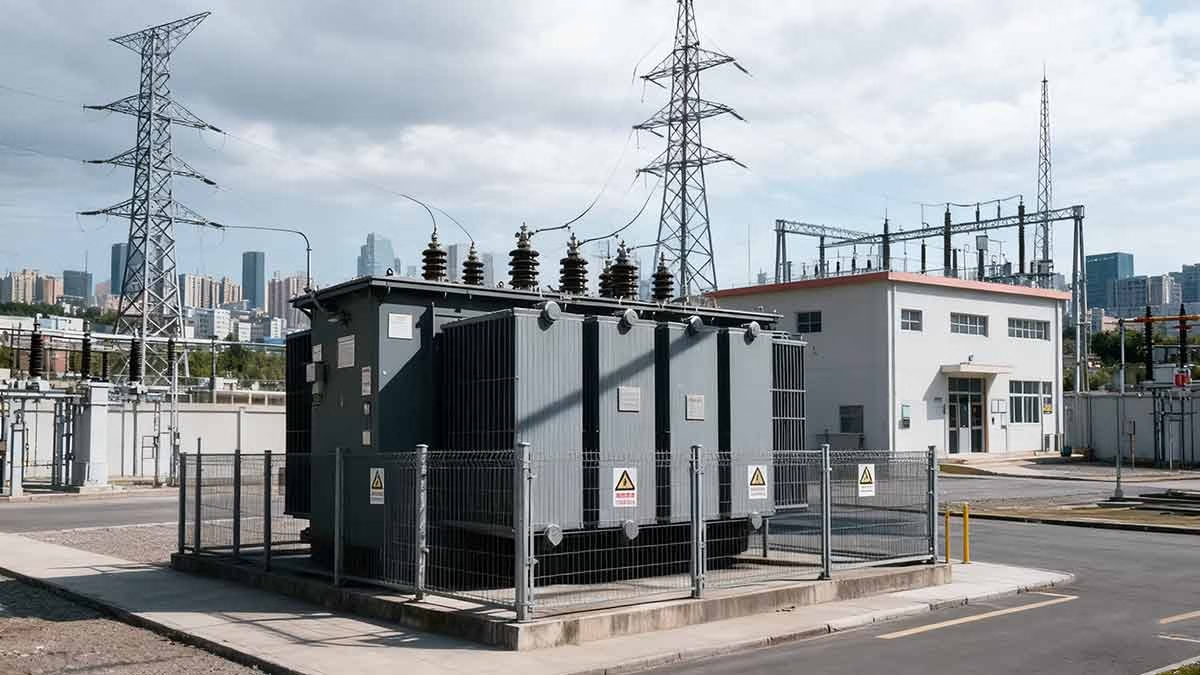
Why Transformers Are the Superheroes of the Electrical Grid
Have you ever traced the journey of electricity from a power plant to your laptop charger? It’s a complex odyssey spanning hundreds of miles, and transformers are the unsung heroes guiding every step. Without them, efficient long-distance power transmission would be impossible, and our electrical grid would collapse.
Transformers enable the grid to function by addressing two critical challenges: minimizing energy loss during transmission and ensuring safe, usable voltage for end-users. They step up voltage for long hauls (reducing current and heat loss) and step it down at distribution points—creating a seamless flow from power plant to plug.
The Journey of Electricity: Transformers at Every Stage
Electricity’s path from generation to consumption relies on transformers at four key stages:
| Stage | Transformer Role | Function |
|---|---|---|
| Generation | Step-Up | Increases voltage from power plant (20kV) to transmission levels (115kV–765kV) |
| Transmission | — | No transformation—high voltage minimizes loss over hundreds of miles |
| Distribution | Step-Down | Reduces voltage to local grid levels (4kV–35kV) for neighborhood distribution |
| Consumption | Step-Down | Lowers voltage to safe levels (120V/240V) for homes, offices, and businesses |
Why High Voltage Matters for Transmission
The logic behind stepping up voltage is simple yet powerful: For a given amount of power, higher voltage equals lower current. Since energy loss in wires is proportional to the square of current (Ohm’s Law), reducing current drastically cuts transmission losses.
Consider this: A 1,000MW power plant transmitting at 20kV would lose 30% of its energy over 100 miles. Stepping up to 500kV reduces that loss to less than 1%—making cross-country power transmission economically and environmentally viable.
I once visited a 765kV transmission line corridor in the American Midwest. The hum of electricity was faint but constant, a reminder that transformers had tamed that immense voltage from a nearby nuclear plant—turning it into a form that could travel 300 miles to power Chicago’s skyscrapers and suburban homes.
Beyond Voltage Conversion: Transformers’ Hidden Roles
Transformers do more than adjust voltage—they enhance grid resilience and safety:
- Circuit Isolation: Create a barrier between grid segments, containing faults (e.g., lightning strikes) to prevent widespread outages.
- Load Balancing: Distribute power evenly across three-phase systems, ensuring stable supply for industrial machinery and residential appliances.
- Voltage Regulation: Compensate for fluctuations in supply or demand (e.g., peak AC usage on hot days) to maintain consistent voltage.
During a project installing a new substation in a rapidly growing city, we deployed transformers with on-load tap changers—devices that adjust voltage without interrupting power. This ensured stable supply as the area’s population (and energy demand) doubled over five years.
Transformers are the silent workhorses of the grid, operating 24/7 for decades. Next time you charge your phone, heat your home, or power your business, remember: none of it would be possible without these remarkable devices.
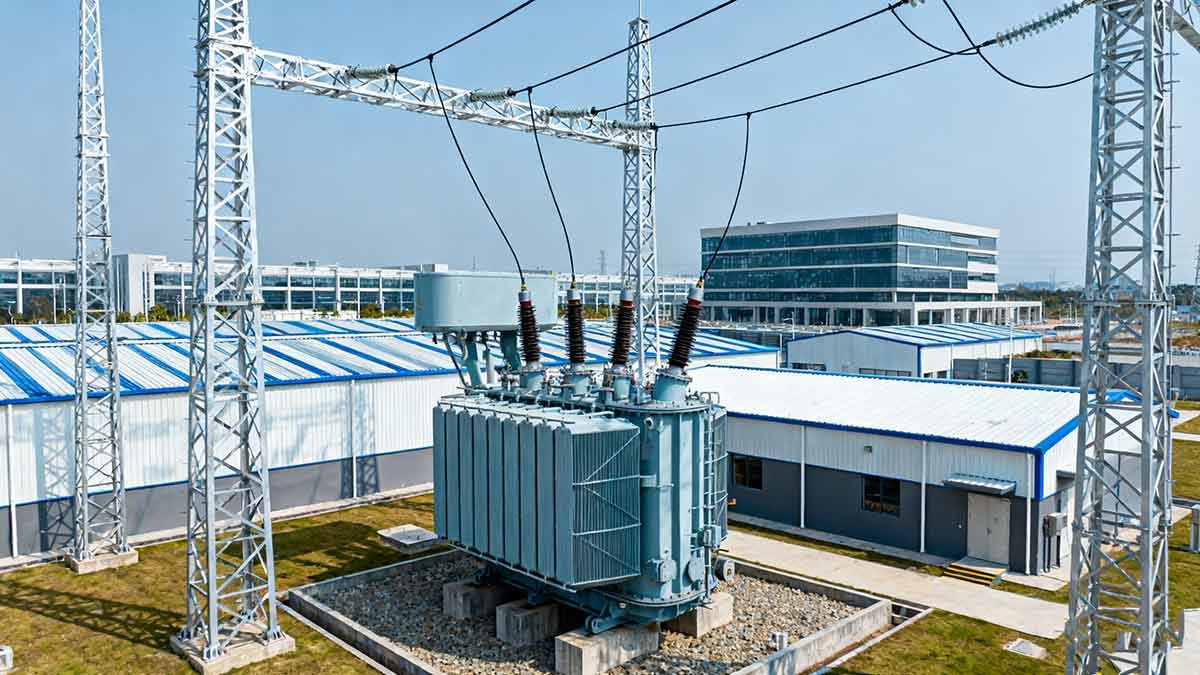
Transformer Types: From Tiny to Titan—Designed for Every Need
When you hear “transformer,” you might picture the green pad-mounted boxes in your neighborhood or the massive grey units in substations. But transformers come in a staggering range of sizes and designs—from thumbnail-sized components in phone chargers to house-sized giants in power plants—each engineered for a specific purpose.
The diversity of transformers reflects the complexity of our electrical systems: they must handle everything from millivolts in electronics to hundreds of kilovolts in transmission grids. Below, we break down the key types, their features, and their real-world applications.
Power Transformers: The Heavy Lifters
These are the giants of the transformer world, built for high-voltage, high-capacity energy transfer in power plants and substations.
Key Features:
- Capacity: 50MVA–1,000MVA (or larger for utility-scale projects)
- Voltage: 69kV–765kV (primary)
- Cooling: Oil-immersed (most common) or gas-insulated (for compact, high-voltage applications)
Applications:
- Step-up voltage from power plants to transmission lines.
- Step-down voltage at regional substations for distribution.
I once supervised the installation of a 500MVA power transformer at a hydroelectric plant. It weighed 400 tons, required a custom-built transport trailer, and took three days to position in the substation—testament to the engineering feats needed to power large regions.
Distribution Transformers: Bringing Power to Your Doorstep
These are the transformers you encounter daily, designed to deliver safe voltage to neighborhoods, businesses, and industrial parks.
Key Features:
- Capacity: 5kVA–5MVA
- Voltage: 4kV–35kV (primary), 120V/240V or 208Y/120V (secondary)
- Types: Pad-mounted (ground-level), pole-mounted (residential areas), or vault-type (underground in urban centers)
Applications:
- Powering small towns, apartment complexes, and retail centers.
- Supplying voltage to light industrial facilities (e.g., workshops, warehouses).
Instrument Transformers: Precision Measurement Tools
These compact, high-accuracy transformers are used to measure voltage (potential transformers) and current (current transformers) in power systems—critical for monitoring and safety.
Key Features:
- High precision (error margins <0.1%)
- Isolate measurement equipment from high voltage
- Output standardized signals (e.g., 120V for voltage, 5A for current)
Applications:
- Utility metering (tracking energy consumption for billing).
- Protective relays (triggering circuit breakers during faults).
Specialized Transformers: Tailored for Unique Needs
Many applications require transformers with custom designs to address specific challenges:
| Type | Application | Special Features |
|---|---|---|
| Autotransformers | Voltage adjustment (e.g., industrial machinery) | Single winding (more compact, cost-effective) |
| Isolation Transformers | Medical equipment, sensitive electronics | Galvanic isolation (prevents electric shock) |
| Rectifier Transformers | EV charging stations, industrial DC systems | Designed for high harmonic currents |
| Traction Transformers | Electric trains, light rail | Compact, vibration-resistant, lightweight |
Cooling Methods: Managing Heat Across Sizes
Heat management is critical to transformer performance—different cooling systems suit different sizes and environments:
- Dry-Type: Air-cooled, no insulating oil—ideal for indoor installations (hospitals, data centers) where fire risk is a concern.
- Oil-Immersed: Oil circulates to dissipate heat—common for large power and distribution transformers.
- Gas-Insulated: Uses sulfur hexafluoride (SF₆) gas for insulation—compact, suitable for urban substations with space constraints.
In a recent hospital renovation, we replaced aging oil-filled transformers with dry-type units. The switch eliminated fire hazards, reduced maintenance, and aligned with the facility’s strict safety protocols.
Smart Transformers: The Future of Grid Technology
Modern transformers are evolving into “smart” devices with integrated sensors and communication capabilities:
- Real-time health monitoring (temperature, oil quality, load levels).
- Automatic voltage adjustment to adapt to renewable energy fluctuations.
- Integration with grid management systems for predictive maintenance.
These innovations are revolutionizing grid efficiency—one project I worked on used smart transformers to reduce outages by 22% in a city with high solar panel adoption.
From the tiny transformer in your laptop charger to the massive units powering cities, each type plays a vital role in our electrical ecosystem. Their diversity is a testament to engineering ingenuity—adapting to the unique needs of every corner of the energy grid.
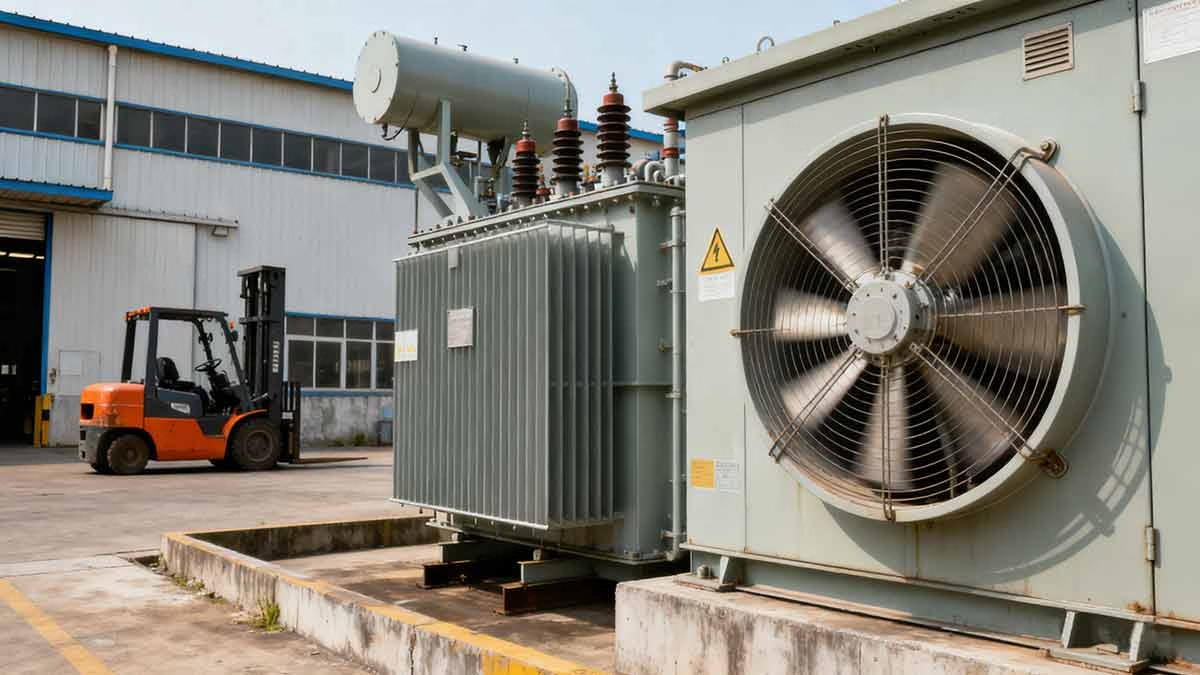
How Transformers Keep Your Lights On and Appliances Running
We’ve all experienced the frustration of a power outage: lights go out, fridges stop cooling, and our digital lives grind to a halt. What most people don’t realize is that transformers are the primary reason these disruptions are rare. They work tirelessly to regulate voltage, balance loads, and isolate faults—ensuring a stable, reliable power supply for homes and businesses.
Transformers are the grid’s “stabilizers,” adapting to changing demand (e.g., morning coffee makers, evening EV charging) and protecting appliances from voltage spikes or dips. Their ability to maintain consistent power not only keeps our daily routines on track but also extends the lifespan of electrical devices.
Voltage Regulation: The Perfect Power “Recipe”
Every electrical appliance is designed to operate at a specific voltage (e.g., 120V in North America, 230V in Europe). Too much voltage can burn out motors or circuits; too little can cause appliances to malfunction (e.g., dim lights, slow refrigerators).
Transformers solve this with tap changers—adjustable windings that fine-tune output voltage:
- Manual Tap Changers: Used in stable, low-load environments (e.g., rural areas).
- Automatic Tap Changers: Respond in real-time to voltage fluctuations, common in urban centers with variable demand.
During a heatwave in Phoenix, I monitored transformers with automatic tap changers as air conditioner usage spiked. The devices adjusted voltage 12 times in 24 hours, maintaining a steady 120V supply despite a 40% increase in load—preventing widespread appliance damage.
Load Management: Balancing Supply and Demand
Transformers ensure the grid doesn’t become overloaded by distributing power evenly across neighborhoods and adjusting to peak demand:
| Time of Day | Typical Load Profile | Transformer Response |
|---|---|---|
| 2–6 AM | Low (sleeping households) | Operates at reduced capacity, minimizes energy loss |
| 7–9 AM | Rising (coffee makers, showers, commuter EVs) | Increases output, shifts load to underutilized units |
| 12–3 PM | Moderate (businesses, residential AC) | Maintains steady output, engages cooling systems if needed |
| 6–9 PM | Peak (cooking, TV, evening EV charging) | Runs at maximum capacity, allows short-term overloads (up to 125% for 30 minutes) |
This dynamic balancing act prevents individual transformers from being overwhelmed—ensuring no single neighborhood loses power because of a surge in demand.
Fault Isolation: Containing Problems Before They Spread
Transformers act as “firewalls” for the grid, isolating faults (e.g., downed power lines, lightning strikes) to prevent widespread outages. If a fault occurs in one area:
- The local transformer detects abnormal current or voltage.
- It triggers protective relays to disconnect the faulty segment.
- Other transformers in the network compensate by picking up the load.
I once investigated a lightning strike that hit a residential power line. The pole-mounted transformer isolated the fault, cutting power to just 12 homes instead of an entire neighborhood. Repairs took two hours—far less than the 8+ hours a widespread outage would have required.
Efficiency and Longevity: Keeping Costs Low
Modern transformers are engineered for durability and efficiency:
- Low Energy Losses: High-efficiency models (e.g., DOE Tier 2/3 compliant) reduce “no-load” losses (energy wasted when idle) by up to 40%.
- Long Lifespan: A well-maintained transformer can operate for 30–40 years—outlasting most other grid components.
- Predictive Maintenance: Smart transformers send data on temperature, oil quality, and load levels, allowing utilities to address issues before they cause failures.
For homeowners, this translates to lower electricity bills and fewer disruptions. For utilities, it means reduced operational costs and a more resilient grid.
Transformers are the unsung guardians of our daily lives—working behind the scenes to ensure we never have to think about the complex physics of electricity. Next time you flip a switch or charge your phone, take a moment to appreciate the transformer that made it possible.
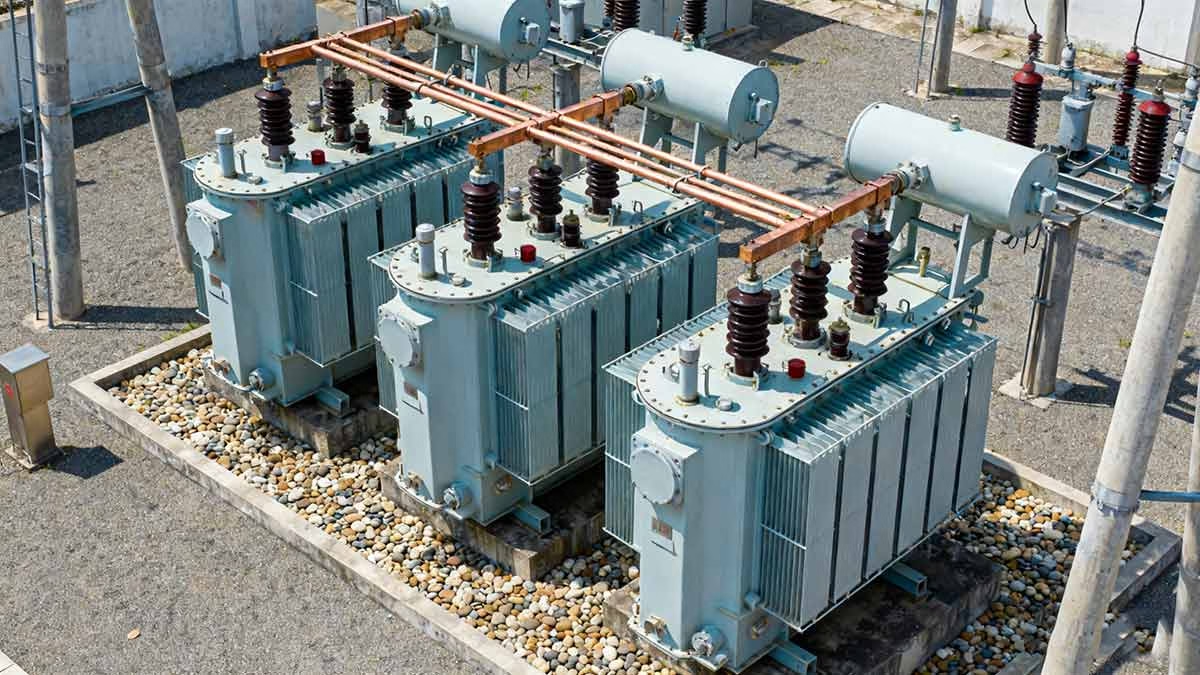
How Transformers Enable Solar and Wind Power to Power Your Home
Renewable energy—solar, wind, hydro—is the future of sustainable power, but none of it would reach your home without transformers. These devices solve the unique challenges of green energy: managing variable output (sunlight/wind fluctuations), converting voltage for long-distance transmission, and integrating with existing grids. In short, transformers are renewable energy’s most essential partner.
As the world shifts to cleaner power sources, transformers have evolved to handle bidirectional power flow, harmonic distortions, and remote installation environments. They bridge the gap between renewable generators (e.g., solar panels, wind turbines) and the grid—turning intermittent green energy into reliable electricity for homes and businesses.
Taming Variable Renewable Output
The biggest challenge with solar and wind power is their variability: clouds block the sun, wind speeds drop, and output fluctuates minute by minute. Transformers address this with specialized features:
- Voltage Smoothing: On-load tap changers adjust output in real-time to compensate for solar/wind dips.
- Power Factor Correction: Mitigates reactive power from inverters (used to convert DC solar power to AC), ensuring grid stability.
- Frequency Regulation: Advanced transformers help maintain grid frequency (60Hz in North America, 50Hz globally) despite variable input.
I led a project for a 50MW solar farm in California where we installed transformers with dynamic voltage regulation. These units adjusted output 20+ times per hour, smoothing out fluctuations from passing clouds and keeping the farm’s power compatible with the grid.
Step-Up Transformers: Sending Renewable Energy Long Distances
Most renewable energy projects are located far from population centers—wind farms on rural plains, solar farms in deserts, offshore wind turbines miles from shore. To get this power to cities, transformers step up voltage to transmission levels:
| Renewable Source | Generator Voltage | Step-Up Transformer Output | Transmission Distance |
|---|---|---|---|
| Solar Panels | 600V–1kV | 35kV–115kV | 10–100 miles |
| Wind Turbines | 690V | 34.5kV–69kV | 50–300 miles |
| Offshore Wind | 33kV | 138kV–230kV | 50–100 miles (to shore) |
Higher voltage reduces current, minimizing energy loss during transmission. For example, a wind farm transmitting power at 34.5kV loses 15% of its energy over 100 miles; stepping up to 138kV cuts that loss to 1.5%.
I visited an offshore wind farm in the North Sea where transformers were mounted on dedicated platforms. These units stepped up voltage from 33kV (turbine output) to 230kV, sending power 80 miles to shore with minimal loss—powering 200,000 homes in London.
Transformers in Solar and Wind Farm Design
Renewable energy projects use transformers at multiple stages to optimize power flow:
| Location in Project | Transformer Type | Function |
|---|---|---|
| Solar Inverter | Small Step-Up | Converts DC-to-AC and boosts voltage from panels (600V) to farm collection grid (35kV) |
| Wind Turbine Nacelle | Compact Step-Up | Increases voltage from turbine generator (690V) to wind farm grid (34.5kV) |
| Collection Substation | Medium Step-Up | Combines output from multiple turbines/panels and boosts to transmission voltage |
| Grid Interconnection | Large Step-Up | Matches renewable project voltage to regional transmission grid (115kV–765kV) |
Smart Transformers for the Renewable Grid
As renewable adoption grows, smart transformers are becoming indispensable:
- Bidirectional Power Flow: Handle energy flowing from the grid to homes and back (e.g., excess solar power from rooftop panels feeding the grid).
- Real-Time Monitoring: Track power quality, harmonic distortion, and transformer health—critical for integrating variable renewables.
- Grid Integration: Communicate with utility management systems to adjust output based on grid demand (e.g., storing excess solar power in batteries).
In a neighborhood with 30% rooftop solar adoption, we installed smart transformers that managed bidirectional flow. During midday, when solar output exceeded home demand, the transformers fed excess power to the grid; in the evening, they drew power from the grid to meet residential needs—maintaining stable voltage throughout.
Overcoming Renewable-Specific Challenges
Transformers for renewables face unique hurdles that require specialized designs:
- Harmonics: Inverters generate non-linear currents that cause overheating. K-rated transformers with reinforced windings handle these harmonics.
- Remote Environments: Offshore wind and desert solar transformers must withstand extreme conditions (salt spray, high temperatures, dust).
- Intermittency: Transformers must ramp up/down quickly as renewable output changes—requiring robust cooling and winding materials.
The Future of Transformers in Renewable Energy
As the world pursues net-zero emissions, transformers are evolving to meet new demands:
- Higher Efficiency: Amorphous steel cores and advanced insulation reduce energy losses by up to 50%.
- Compact Designs: Smaller, lighter transformers for urban solar installations and offshore wind platforms.
- Battery Integration: Transformers designed to work seamlessly with large-scale battery storage, storing excess renewable energy for peak demand.
I’m currently working on a project combining transformers with utility-scale batteries and solar farms. This “hybrid” system stores excess solar power during the day and releases it in the evening—reducing reliance on fossil fuel peaker plants and making renewable energy a 24/7 resource.
Transformers may not be the face of the renewable energy revolution, but they’re its backbone. They turn the promise of clean power into a reality, ensuring solar and wind energy can reliably power our homes, businesses, and cities. As we build a greener future, transformers will continue to evolve—proving that even century-old technology can be the key to tomorrow’s energy solutions.
Conclusion
Power transformers are the unsung heroes of our electrical grid—enabling efficient energy transmission, safe voltage conversion, and the integration of renewable energy sources. From the massive units in power plants to the compact transformers in neighborhood substations, these devices work tirelessly to keep our lights on, appliances running, and cities thriving.
As the world shifts to cleaner, more sustainable energy systems, transformers are evolving to meet new challenges: managing variable renewable output, enabling bidirectional power flow, and integrating with smart grid technologies. Their adaptability and reliability make them indispensable to the future of energy—proving that even the most foundational technologies can drive innovation.
Whether you’re a homeowner, business owner, or energy professional, understanding the role of transformers helps us appreciate the complex, interconnected system that powers modern life. As we continue to electrify our world and combat climate change, transformers will remain the quiet force ensuring our energy future is stable, efficient, and sustainable.