
In the global electrical system, power transformers and distribution transformers are two unsung heroes that keep electricity flowing from power plants to our homes, offices, and factories. Without these devices, the high-voltage electricity generated at power stations would be unusable—either too strong to power our phones and refrigerators or too weak to travel hundreds of miles without wasting energy.
While both transformers share the core job of transferring electrical energy between circuits using electromagnetic induction, they are designed for entirely different stages of the power supply chain. In this guide, we’ll break down what each transformer does, how they work, their key types, and the critical differences between them—all in simple, easy-to-understand language.
What Is a Distribution Transformer?
A distribution transformer is the final “bridge” between the electrical grid and end-users (you, your neighborhood, or local businesses). Its main job is to take the medium-voltage electricity from distribution lines (usually 11kV to 33kV) and “step it down” to low voltages that are safe for everyday use—typically 120V or 240V in homes, or 480V in small commercial buildings.
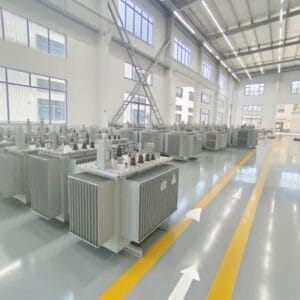
Think of it this way: If the electrical grid were a water system, distribution transformers would be the small valves on your street that reduce high water pressure from the main pipe to a level that won’t burst your home’s faucets.
Key Features of Distribution Transformers
- Step-Down Functionality
The most defining trait of distribution transformers is their ability to lower voltage. High voltage is great for moving electricity over short distances (like from a local substation to your street) because it reduces energy loss, but it’s dangerous for appliances. Distribution transformers fix this by using two sets of copper coils wrapped around an iron core:
- The primary coilconnects to the medium-voltage distribution line and has more turns of wire.
- The secondary coilconnects to your home/business and has fewer turns.
The difference in the number of turns (called the “turns ratio”) determines how much the voltage is reduced—more turns on the primary mean a bigger voltage drop.
- Compact Size & Flexible Installation
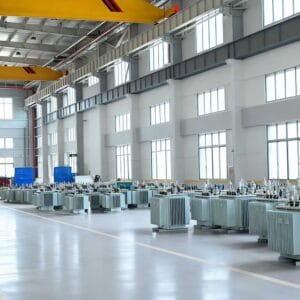
Unlike large power transformers, distribution transformers are small enough to be installed in tight spaces. You’ve probably seen them dozens of times without realizing it:
- Pole-mounted: The most common type in residential areas—these are the metal boxes you see perched on utility poles. They’re easy to access for maintenance and work well in neighborhoods with overhead lines.
- Pad-mounted: Found in busy areas (like shopping malls, apartment complexes, or downtowns) where pole-mounted units would be in the way. They sit on concrete pads at ground level, often enclosed in metal cases for safety, and are sometimes painted to blend with surroundings.
- Underground: Used in cities or neighborhoods where overhead lines are banned (for aesthetics or safety). These are sealed in waterproof casings to protect against moisture and corrosion.
- Designed for Variable Loads
Distribution transformers handle unpredictable demand. One minute, your street might use little electricity (e.g., 3 AM), and the next, everyone might be running ACs, ovens, and TVs (e.g., 7 PM). These transformers are built to handle these quick changes without overheating or failing.
- Low Iron Losses
Since distribution transformers are often left running 24/7 (even when load is low), they’re designed to minimize “iron losses” (energy wasted as heat in the iron core). Unlike power transformers, they have no moving parts, and their small size means they generate less heat overall.
- Distinct from Distribution Feeder Lines
It’s easy to mix up distribution transformers with feeder lines, but they serve different roles:
- Feeder lines: These are the cables that carry medium-voltage electricity from a substation to an entire area (e.g., a neighborhood or industrial park). They connect multiple buildings at once.
- Distribution transformers: Each unit connects to one or a small set of buildings(e.g., a single apartment complex or 5-10 homes). They “split” the feeder line’s power into usable low voltage for individual users.
Types of Distribution Transformers (By Application)
Distribution transformers are categorized based on the power systems they serve and their installation location. Here are the four most common types:
1. Single-Phase Distribution Transformers
- What they are: Designed for single-phase power systems, which are used in most homes and small businesses (since most appliances—fridges, TVs, lights—run on single-phase power).
- How they work: The primary coil connects to a 3-phase supply line (the main grid) via three separate terminals, but only uses one phase. The secondary coil has one output (120V or 240V) that connects directly to the user’s electrical panel.
- Best for: Residential homes, small shops, streetlights, and small appliances (e.g., washing machines, microwaves).
2. Three-Phase Distribution Transformers
- What they are: Built for three-phase power systems, which deliver more consistent, high-power electricity—ideal for equipment that needs lots of energy (e.g., industrial motors, large AC units, factories).
- How they work: They have three primary coils (one for each phase of the grid) and three secondary coils. The secondary coils are usually connected in a “delta” configuration (a triangle shape) with a shared neutral wire (ground) for safety. Each secondary coil produces a voltage that’s 120 degrees out of phase with the others, creating a steady flow of power.
- Example: A three-phase transformer in a factory might supply 480V to run a conveyor belt motor, while also stepping down some power to 240V for office lights.
- Best for: Factories, warehouses, large commercial buildings (e.g., malls), and industrial equipment.
3. Pad-Mounted Distribution Transformers
- What they are: Enclosed in a weatherproof metal box and installed on a concrete pad at ground level. They’re often locked to prevent tampering and have safety labels to warn of high voltage.
- Key benefits: Safe for high-foot-traffic areas, quiet (since they’re enclosed), and easy to maintain (technicians can access them without climbing poles).
- Best for: Apartment complexes, downtown business districts, schools, and areas where overhead poles are not allowed.
4. Pole-Mounted Distribution Transformers
- What they are: Mounted 10-20 feet above the ground on utility poles. They’re usually cylindrical or box-shaped and have exposed terminals (covered with insulation) that connect to overhead lines.
- Key benefits: Cheap to install, don’t take up ground space, and are easy to repair (technicians use bucket trucks to reach them).
- Extra features: Many include surge arrestors (to protect against lightning strikes) and bushings (insulated connectors that attach to power lines).
- Best for: Suburban neighborhoods, rural areas, and locations with low foot traffic.
What Is a Power Transformer?
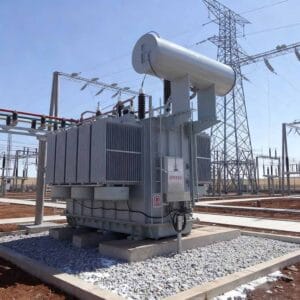
A power transformer is a heavy-duty device that operates early in the electrical supply chain—between power plants and local substations. Its job is to either “step up” the voltage of electricity generated at power plants (so it can travel long distances with minimal energy loss) or “step down” high-voltage electricity when it reaches a substation (before sending it to distribution lines).
Going back to the water system analogy: Power transformers are the large pumps and valves at the water treatment plant that boost water pressure so it can flow to distant neighborhoods. Without them, most of the electricity generated at a power plant would be lost as heat before it reaches any users.
Key Features of Power Transformers
- High Voltage Handling
Power transformers are built to work with extremely high voltages—ranging from 11kV all the way up to 1,200kV (for ultra-long-distance transmission). For example:
- A coal-fired power plant generates electricity at 11kV. A power transformer steps this up to 220kV or 500kV so it can travel 100+ miles to a city.
- When the electricity reaches the city’s substation, another power transformer steps it down to 33kV or 11kV—this is the voltage that goes to distribution lines.
- Robust Insulation
High voltage means a high risk of electrical arcing (sparks that jump between wires), so power transformers use thick, high-quality insulation materials:
- Mineral oil: Most power transformers are filled with mineral oil, which acts as both an insulator and a coolant (it absorbs heat and transfers it to radiators on the outside of the unit).
- Solid insulation: Some modern units use epoxy resin or paper insulation (soaked in oil) to prevent arcing between coils.
These materials let power transformers withstand voltages well above their rated capacity and protect against short circuits.
- Large Size & Fixed Installation
Power transformers are massive—some weigh tens of tons and are the size of a small truck. They’re never moved once installed and are always placed in dedicated substations (fenced, secure areas) to protect against damage and unauthorized access.
- High Short-Circuit Resistance
If a power line is damaged (e.g., a tree falls on it), a “short circuit” can occur—sending a surge of current through the transformer. Power transformers are designed to handle these surges (up to several hundred amperes) for short periods without breaking down. Distribution transformers, by contrast, can only handle tens of amperes of short-circuit current.
- Iron & Copper Losses
Power transformers lose energy as heat, but these losses are different from those in distribution transformers:
- Iron losses: Caused by “eddy currents” (tiny currents in the iron core) and “hysteresis” (the core’s resistance to magnetic field changes). These losses are constant, even when the transformer is not carrying much load.
- Copper losses: Caused by resistance in the copper coils. These increase with the amount of current flowing through the transformer (so they’re higher when the transformer is under heavy load).
Because power transformers are large, their total losses are higher than distribution transformers—but their efficiency is still impressive (see below).
- High Efficiency
Despite their size, power transformers are very efficient. Most have an efficiency rating of 97% to 99%—meaning only 1% to 3% of the energy they handle is lost as heat. This is critical because they process massive amounts of electricity (sometimes gigawatts) every day; even a 1% loss would waste millions of dollars in energy each year.

Common Types of Power Transformers (By Voltage & Use)
Power transformers are classified by their voltage rating and the role they play in the grid. Here are the most important types:
1. Step-Up Power Transformers
- Job: Increase the voltage of electricity from power plants (11kV to 33kV) to high transmission voltages (132kV, 220kV, 500kV, or 765kV).
- Why it matters: High voltage reduces “I²R loss” (energy lost as heat in power lines). For example, doubling the voltage cuts the current in half, which reduces energy loss by 75%. This lets electricity travel 100+ miles from a power plant to a city without wasting too much energy.
- Where they’re used: At power plants (coal, natural gas, nuclear, wind, or solar) right after electricity is generated.
2. Step-Down Power Transformers
- Job: Reduce high transmission voltages (e.g., 500kV) to medium voltages (e.g., 33kV or 11kV) that distribution lines can handle.
- Where they’re used: At regional substations (located on the edge of cities or towns). After stepping down, the electricity is sent to local distribution lines and then to distribution transformers.
3. 220kV Power Transformers
- What they are: A popular mid-range power transformer used for both short and medium-distance transmission (50-200 miles). They balance efficiency, size, and cost—making them ideal for connecting small power plants (e.g., wind farms) to the main grid.
- Key features: Low cost per kilowatt (kW), lightweight relative to their capacity, small volume, and easy maintenance. They also operate quietly and perform reliably even when under partial load (e.g., when wind speeds are low at a wind farm).
4. Ultra-High-Voltage (UHV) Power Transformers
- What they are: Designed for voltages above 800kV (e.g., 1,000kV). They’re used for ultra-long-distance transmission (500+ miles) and are critical for connecting large power sources (e.g., hydroelectric dams in remote areas) to populous cities.
- Challenges: Building UHV transformers requires advanced engineering—they need thicker insulation, more robust cooling systems, and precise manufacturing to avoid arcing. Only a few companies (like CHH Power) specialize in UHV transformers.
Part 3: Power Transformer vs. Distribution Transformer—Key Differences
While both transformers use electromagnetic induction, their designs, roles, and capabilities are worlds apart. To make it easy, we’ve broken down the critical differences in the table below:
Feature | Power Transformer | Distribution Transformer |
Primary Role | Transfers electricity between power plants and substations (transmission phase). | Transfers electricity between substations and end-users (distribution phase). |
Voltage Rating | 11kV to 1,200kV (handles high/ultra-high voltage). | Below 1kV (steps down to 120V/240V/480V for use). |
Size & Weight | Large (truck-sized) and heavy (tens of tons). | Compact (box/pole-mounted) and light (hundreds of pounds). |
Installation Location | Dedicated substations (fenced, secure areas). | Utility poles, concrete pads, or underground (near users). |
Short-Circuit Resistance | Handles up to several hundred amperes. | Handles up to tens of amperes. |
Losses | Higher iron and copper losses (due to size). | Lower iron losses (designed for 24/7 use); lower copper losses (smaller coils). |
Efficiency | 97%–99% (high, despite large losses). | 90%–95% (lower, but sufficient for small-scale use). |
Load Variability | Handles stable, consistent loads (power plants run 24/7). | Handles variable loads (peaks at morning/evening, dips at night). |
Insulation Material | Mineral oil, epoxy resin, or oil-soaked paper (heavy-duty). | Smaller insulation (e.g., plastic, rubber) for low voltage. |
Lifespan | 25–40 years (built for heavy, long-term use). | 15–25 years (replaced more often due to exposure to weather/use). |
Real-World Example: How They Work Together
Let’s walk through a typical electricity journey to see how power and distribution transformers collaborate:
- A wind farm generates electricity at 33kV.
- A step-up power transformerat the wind farm boosts the voltage to 220kV so it can travel 150 miles to a city.
- When the 220kV electricity reaches the city’s substation, a step-down power transformerreduces it to 11kV.
- The 11kV electricity is sent through distribution feeder lines to neighborhoods.
- A pole-mounted distribution transformeron your street steps the 11kV down to 240V.
- The 240V electricity goes to your home’s electrical panel, powering your lights, TV, and fridge.
Top-Quality Transformer Solutions from CHH Power
When it comes to reliable power and distribution transformers, CHH Power is a trusted global brand with decades of experience in electrical engineering. CHH Power’s transformers are designed for safety, durability, and efficiency—whether you need a small pole-mounted unit for a neighborhood or a 220kV power transformer for a wind farm.
Here’s a closer look at CHH Power’s most popular transformer lines:
1. CHH Power Distribution Transformers (Up to 35kV)
CHH Power’s distribution transformers are built to handle the demands of residential, commercial, and light industrial use. Key features include:
- High Security: Enclosed designs (for pad-mounted units) and surge arrestors protect against tampering, lightning, and voltage spikes.
- Mechanical Strength: Heavy-duty metal casings resist weather damage (rain, snow, wind) and corrosion (ideal for coastal areas).
- Thermal Stability: Coolant systems prevent overheating during peak load times (e.g., summer AC use).
- Moisture Resistance: Sealed casings for underground units keep water out, extending lifespan.
- Long Service Life: High-quality copper coils and iron cores reduce wear and tear—many units last 20+ years.
Best for: Suburban neighborhoods, apartment complexes, small factories, and shopping centers.
2. CHH Power 220kV Power Transformers
CHH Power’s 220kV power transformers are a top choice for medium-distance transmission (50-200 miles) and are used in wind farms, solar parks, and regional substations. Key features include:
- Cost-Effective: Low cost per kW—ideal for projects on a budget.
- Space-Saving: Small volume per kW capacity, so they fit in compact substations.
- Easy Maintenance: Simple design with accessible parts (technicians can service them quickly).
- Quiet Operation: Low noise levels (important for substations near residential areas).
- Reliable Partial-Load Performance: Works efficiently even when power demand is low (e.g., cloudy days at a solar park).
How it works: Uses a magnetic core to transfer energy between primary (220kV) and secondary (33kV/11kV) coils—no moving parts, so it requires minimal upkeep.
Conclusion
Power transformers and distribution transformers are both essential to the electrical grid, but they serve distinct roles:
- Power transformershandle the “long haul” of electricity—stepping up voltage for transmission and stepping it down at substations. They’re big, efficient, and built for stability.
- Distribution transformershandle the “last mile”—delivering safe, low-voltage electricity to your home or business. They’re small, flexible, and built for variable use.
When choosing a transformer, the key is to match it to your needs:
If you’re a utility company building a substation, a CHH Power 220kV power transformer is a reliable choice.
If you’re a developer building an apartment complex, a CHH Power pad-mounted distribution transformer will keep residents safe and powered.
With brands like CHH Power, you can trust that your transformer will be built to last—with rigorous testing to ensure safety and efficiency. Whether you’re powering a single home or an entire city, the right transformer makes all the difference in keeping electricity flowing smoothly.