
An electric transformer is far more than a voltage-adjusting device—it’s the unsung backbone of modern electricity, enabling efficient power transmission, safe usage, and seamless energy flow from power plants to everyday devices. By leveraging electromagnetic induction to transfer energy across circuits, transformers bridge the gap between high-voltage power generation and the low-voltage needs of homes, businesses, and industries.
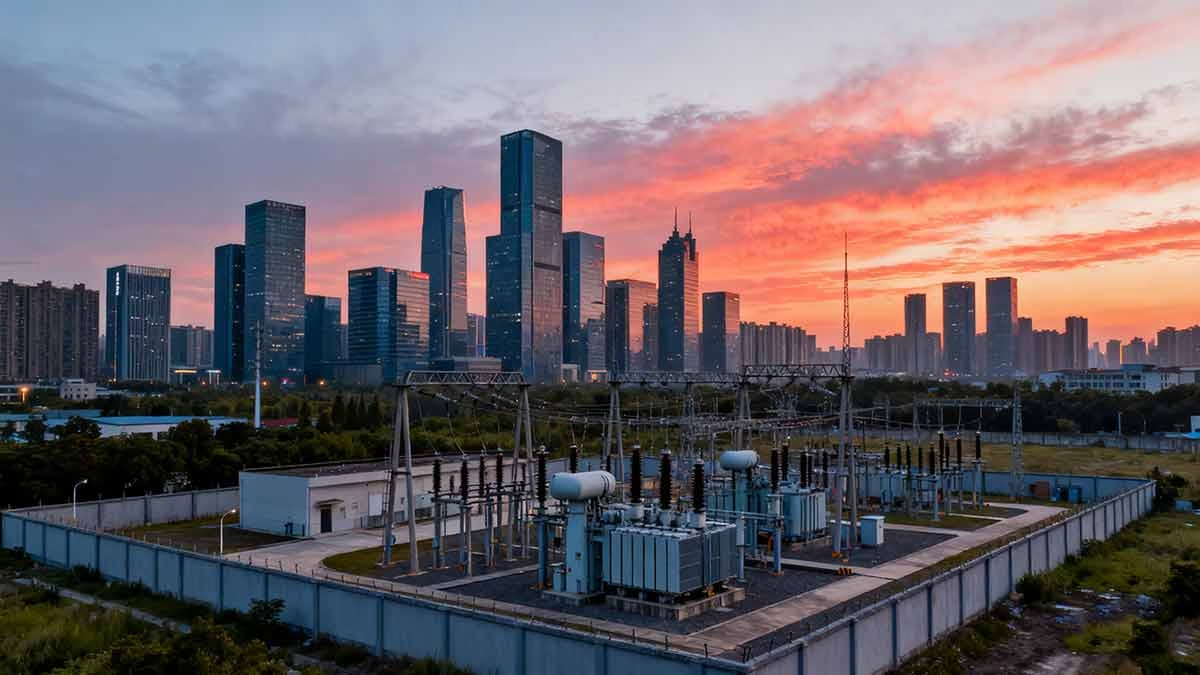
With decades of engineering expertise in the power sector, we’ve witnessed firsthand how transformers shape reliable electrical systems. Below, we demystify their functionality, journey, and critical role in powering our world—from utility grids to household gadgets.
Contents
hide
The Basics of Electric Transformers: Power Conversion Demystified
Imagine trying to channel a river through a garden hose: that’s the challenge of using raw power plant electricity directly. Transformers solve this by “scaling” voltage to match specific needs—making electricity safe, efficient, and usable.
At their core, electric transformers convert power by adjusting voltage levels while preserving frequency and overall energy. Through electromagnetic induction, they either step up voltage for long-distance transmission (minimizing losses) or step down voltage for safe local use—all without altering the fundamental power output.
Core Components & How They Work
Every transformer relies on three foundational components, refined through industry innovation:
- Primary Coil: Receives incoming voltage (e.g., 25kV from a substation).
- Secondary Coil: Delivers transformed voltage (e.g., 120V for residential use).
- Iron Core: Concentrates magnetic flux between coils—CHH Power’s transformers use high-grade silicon steel cores to reduce energy loss by up to 15% compared to standard designs.
The Science of Electromagnetic Induction
The magic of transformers lies in this fundamental principle:
- Alternating current (AC) flowing through the primary coil creates a dynamic magnetic field.
- The iron core amplifies and directs this field toward the secondary coil.
- The changing magnetic field induces an AC voltage in the secondary coil—with the voltage ratio determined by the number of coil turns.
The Transformer Equation: Turning Turns Into Voltage
The relationship between coil turns and voltage is defined by a simple yet powerful formula:
Vs/Vp = Ns/Np
- Vs: Secondary voltage (output)
- Vp: Primary voltage (input)
- Ns: Number of turns in the secondary coil
- Np: Number of turns in the primary coil
For example: A step-up transformer with 10x more turns in the secondary coil (Ns/Np = 10) will increase voltage 10x (e.g., 25kV → 250kV). A step-down transformer with 1/10th the turns in the secondary (Ns/Np = 0.1) reduces voltage to 1/10th (e.g., 12kV → 1.2kV).
Two Key Types of Power Conversion
| Conversion Type | Voltage Change | Current Change | Real-World Application |
|---|---|---|---|
| Step-Up | Increases | Decreases | Power plants to transmission lines (25kV → 765kV) |
| Step-Down | Decreases | Increases | Substations to homes (12kV → 120/240V) |
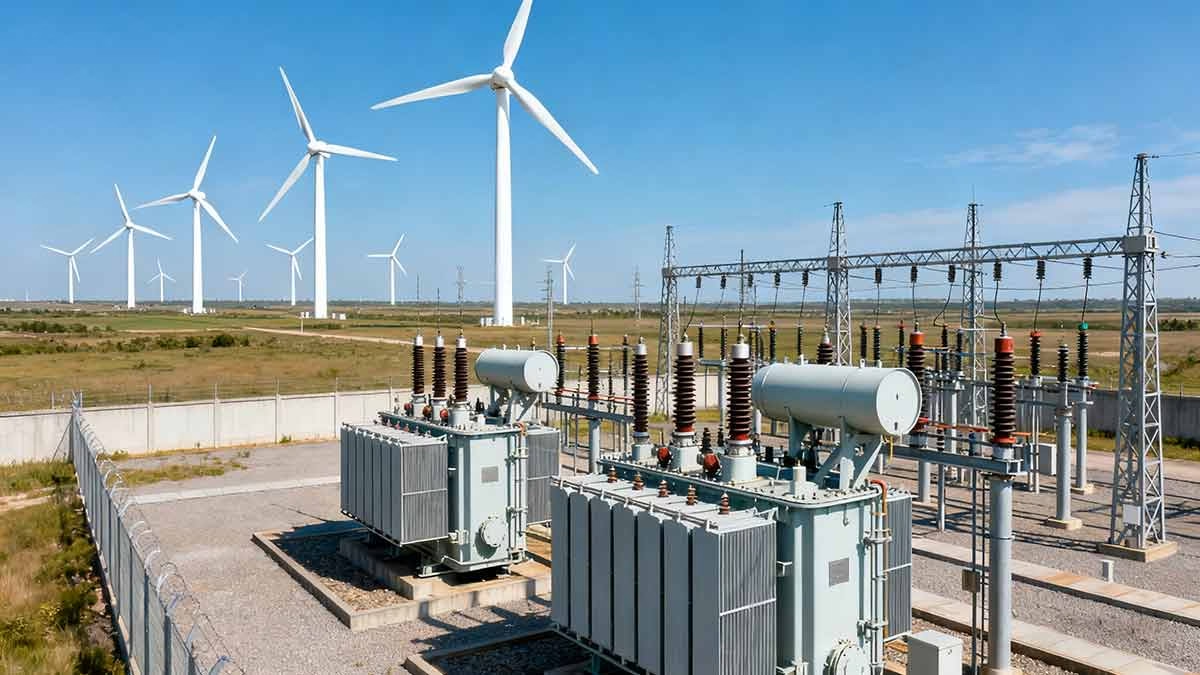
In our work designing transformers for industrial clients, we’ve seen how this precision conversion enables global power grids. For a wind farm in Texas, we engineered step-up transformers that convert 34.5kV turbine output to 345kV—cutting transmission losses by 60% over 200 miles of lines.
From Megawatts to Milliwatts: Transformers in Power Generation & Transmission
How does 1,000 megawatts of power from a hydroelectric dam become the 5 watts needed to charge your phone? The answer is a network of transformers working in tandem to navigate the “power highway” from generation to end use.
Transformers are critical at every stage of energy transmission: they boost voltage for efficient long-distance travel, adjust levels between grid segments, and ensure power arrives intact—even across hundreds of miles.
The Journey of Electricity: Transformer by Transformer
- Power Generation & Step-Up:
- Electricity is generated at 11kV–25kV (e.g., coal, solar, or wind farms).
- Step-up transformers (often 3-phase, oil-cooled) boost voltage to 155kV–765kV. This reduces current, minimizing heat loss (I²R loss) during transmission—critical for distances over 50 miles.
- High-Voltage Transmission:
- Power travels via overhead lines or underground cables.
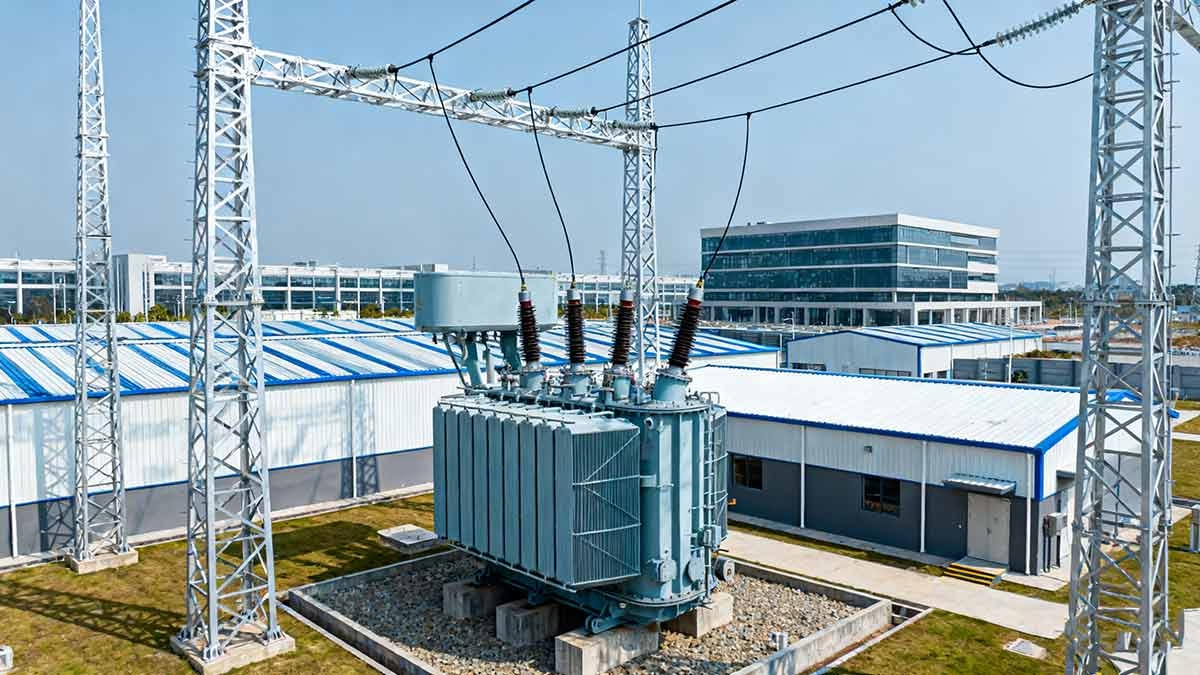
- Substation transformers adjust voltage between grid segments (e.g., 765kV → 345kV) to match regional demand.
- HVDC (High-Voltage Direct Current) transformers handle cross-country or undersea transmission, converting AC to DC and back for minimal losses.
- Sub-Transmission: Preparing for Local Delivery:
- Voltage is stepped down to 33kV–155kV via substation transformers.
- This “medium voltage” balances efficiency and safety for distribution to urban or rural areas.
Transformer Types for Generation & Transmission
| Stage | Transformer Type | Voltage Range | Key Function |
|---|---|---|---|
| Generation | Step-Up (Power Plant) | 25kV → 765kV | Enable long-distance transmission |
| Transmission | Interconnecting | 155kV → 765kV | Balance grid voltage across regions |
| Sub-Transmission | Step-Down | 765kV → 33kV | Prepare power for local distribution |
Industry Challenges & Innovations
In our decades of engineering, we’ve tackled unique hurdles in transmission transformers:
- Efficiency: Modern designs (e.g., CHH Power’s amorphous core transformers) achieve 99.7% efficiency, cutting annual energy loss by 30% for utility clients.
- Reliability: Transformers must operate 24/7 for 25+ years—our units use double-sealed oil systems to prevent leaks and extend lifespan.
- Smart Integration: New transformers include IoT sensors that monitor temperature, oil quality, and load—alerting utilities to issues before outages occur.
For a cross-border transmission project between the U.S. and Canada, we designed transformers that handle 500kV AC/DC conversion—reducing losses by 40% compared to traditional designs and supporting renewable energy sharing between grids.
The Neighborhood Power Hub: Distribution Transformers & Local Grids
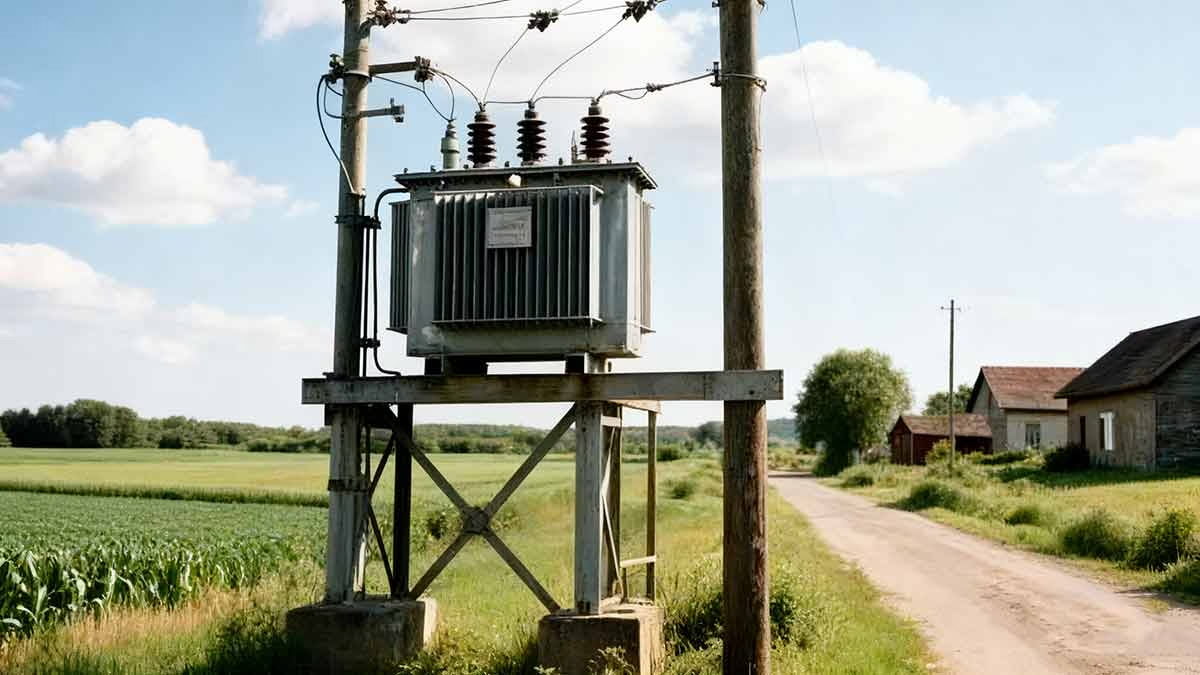
Those green metal boxes on sidewalks or cylindrical units on utility poles? They’re distribution transformers—your neighborhood’s final “power translator,” turning medium-voltage grid power into safe, usable electricity for homes and businesses.
Distribution transformers are the last link in the power chain, stepping down 4kV–33kV distribution line voltage to 120/240V (residential) or 208Y/120V (commercial). They’re engineered for durability, efficiency, and seamless integration into local grids.
Core Roles of Distribution Transformers
- Voltage Step-Down: The primary function—converting grid voltage to levels safe for appliances, lighting, and electronics.
- Isolation: Electrically separating the grid from end-users, preventing fault propagation (e.g., a short circuit in a home won’t affect the entire neighborhood).
- Load Balancing: Distributing power across homes to avoid overloading—critical during peak hours (e.g., evening EV charging or morning coffee maker use).
Two Common Types of Distribution Transformers
| Aspect | Pole-Mounted Transformers | Pad-Mounted Transformers |
|---|---|---|
| Location | Mounted on utility poles | Ground-level concrete pads |
| Capacity | 5kVA–100kVA | 75kVA–5,000kVA |
| Use Case | Rural/suburban homes (1–5 households) | Urban areas, commercial buildings, underground grids |
| Aesthetics | Visible but compact | Low-profile (often landscaped or fenced) |
| Maintenance | Easy access for repairs | More secure (tamper-resistant enclosures) |
The Local Grid Structure
- Primary Distribution Lines: Carry 4kV–33kV power along streets (overhead or underground).
- Distribution Transformers: Step down voltage to 120/240V.
- Secondary Lines: Deliver power from transformers to building service entrances.
- Service Drop: The final connection (often overhead or underground) to individual homes/businesses.
Overcoming Local Distribution Challenges
In urban and rural projects alike, we’ve addressed unique distribution hurdles:
- Urban Density: For a downtown Chicago high-rise, we installed pad-mounted transformers in the basement—saving space and reducing noise (≤55dB) for residents.
- Rural Reach: In remote Wyoming, pole-mounted transformers with extreme-temperature insulation (-40°F to 120°F) ensure reliable power for ranches.
- Upgrades: Replacing 30-year-old transformers with modern, high-efficiency models for a Florida neighborhood cut energy waste by 25% and supported 3x more EV chargers.
Transformers at Home: Powering Everyday Devices
Transformers aren’t just utility-scale—they’re hidden in nearly every device you use. From your smartphone charger to your refrigerator, these tiny (or not-so-tiny) components convert standard outlet voltage to the precise levels needed for safe, efficient operation.
Home transformers adapt 120/240V wall power to the low voltages (often 5V–48V) required by electronics, appliances, and smart home systems. They’re the reason your laptop doesn’t fry when you plug it in—and why your doorbell chimes without a spark.
Common Household Transformers & Their Roles
- Smartphone/Laptop Chargers: Convert 120V AC to 5V–20V DC (e.g., USB-C chargers use compact step-down transformers).
- Doorbell Transformers: Reduce 120V to 16V AC—powering chimes and video doorbells without risk of shock.
- HVAC Systems: Large transformers (50VA–200VA) power control boards, thermostats, and fan motors—ensuring precise temperature regulation.
- LED Lighting: Driver transformers convert 120V AC to 12V–24V DC, extending bulb life and reducing energy use.
- EV Chargers: Level 2 home chargers use transformers to convert 240V AC to the high-voltage DC needed for vehicle batteries (200V–400V).
Types of Transformers in Home Devices
- Step-Down Transformers: The most common—reduce voltage for electronics (e.g., phone chargers).
- Isolation Transformers: Found in sensitive devices (e.g., medical equipment, audio systems)—prevent electric shock by separating input and output circuits.
- Autotransformers: Used in appliances (e.g., refrigerators) for small voltage adjustments—more compact and efficient than traditional transformers.
A Day in the Life: Transformers at Work
| Time | Activity | Transformer Role |
|---|---|---|
| 7:00 AM | Brew coffee | Powers the coffee maker’s heating element (120V → 24V control circuit) |
| 8:30 AM | Charge laptop | Converts 120V AC to 19V DC in the charger |
| 12:00 PM | Microwave lunch | Boosts 120V to 4kV for the magnetron (cooking component) |
| 6:00 PM | Turn on smart lights | Driver transformers convert 120V to 12V DC for LED strips |
| 10:00 PM | Charge EV | Transformer in Level 2 charger converts 240V to 350V DC |
Safety & Efficiency in Home Transformers
Modern home transformers prioritize two key features:
- Overload Protection: Built-in fuses or circuit breakers prevent overheating (e.g., if a charger is shorted).
- Energy Efficiency: ENERGY STAR®-certified transformers (e.g., in LED drivers) use <0.5W of standby power—saving homeowners $5–$10 annually per device.
The future of home transformers is smart: we’re developing models that integrate with home automation systems, adjusting power flow based on usage (e.g., reducing standby power when devices are idle) and syncing with solar panels for off-grid charging.
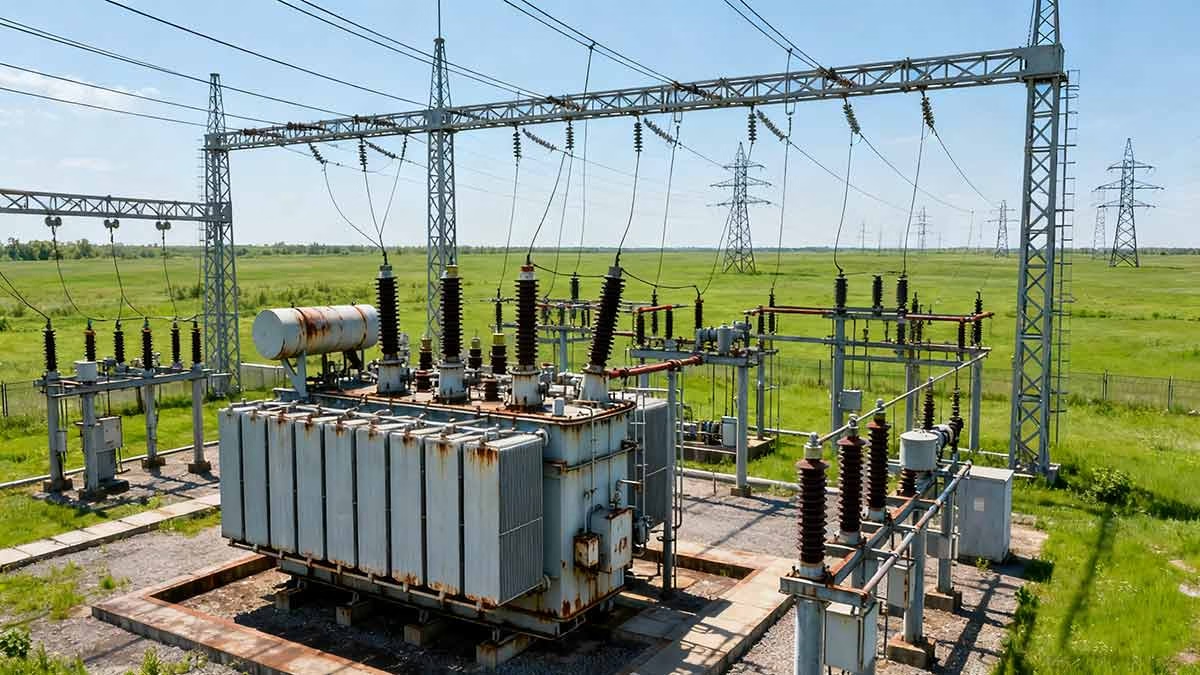
The Invisible Guardian: How Transformers Ensure Safe & Efficient Power
Behind every reliable electrical system is a transformer acting as a silent guardian—regulating voltage, preventing hazards, and optimizing energy flow. Transformers don’t just “convert” power—they protect grids, devices, and people while maximizing efficiency.
From isolating faulty circuits to reducing transmission losses, their role is critical to maintaining a stable, safe power supply—even as demand fluctuates or grid conditions change.
Safety: Protecting Grids & Users
Transformers are engineered to mitigate risks at every level:
- Voltage Regulation: Step-down transformers ensure end-users never encounter dangerous high voltages—preventing electric shock or device damage.
- Circuit Isolation: If a fault occurs (e.g., a downed power line), transformers isolate the affected segment, stopping the fault from spreading to the entire grid.
- Grounding: Most transformers include a grounded neutral wire—providing a safe path for excess current and enabling GFCI (Ground Fault Circuit Interrupter) protection in homes.
- Fault Detection: Industrial and utility transformers include protective relays that detect overloads, short circuits, or oil leaks—automatically shutting down to prevent fires or explosions.
Efficiency: Minimizing Waste, Maximizing Output
Transformers are among the most efficient electrical devices, with modern designs achieving 97–99.7% efficiency. Key efficiency features include:
- Low-Loss Cores: Silicon steel or amorphous metal cores reduce “iron losses” (energy wasted as heat when the transformer is idle).
- High-Conductivity Windings: Copper windings minimize “copper losses” (heat from current flow) during operation.
- Load Matching: Transformers optimize power flow to match demand—avoiding overloading (which wastes energy) or underloading (which reduces efficiency).
Reliability: Keeping the Lights On
Transformers are built for longevity (25–40 years) and resilience:
- Overload Capacity: Most transformers handle 110–125% of rated load for short periods (e.g., during peak evening demand)—preventing outages.
- Voltage Stability: Tap-changing transformers (common in utilities) adjust voltage in real time—ensuring lights don’t dim when a large appliance turns on.
- Fault Containment: Pad-mounted and vault transformers use fire-resistant enclosures (e.g., fiberglass or steel) to contain hazards in urban areas.
Smart Transformers: The Future of Grid Guardianship
Modern transformers are evolving into “smart” devices with IoT integration:
- Real-Time Monitoring: Sensors track temperature, oil quality, and load—alerting utilities to issues before failures occur.
- Grid Communication: Transformers sync with smart grids, adjusting power flow based on renewable energy output (e.g., increasing capacity when solar panels are generating) or demand spikes.
- Adaptable Voltage: Smart transformers can adjust output voltage remotely—ideal for neighborhoods adding EV chargers or solar panels.
The Impact of Transformers: Quantified
| Aspect | Without Transformers | With Modern Transformers |
|---|---|---|
| Transmission Losses | 30–40% of generated power | 5–10% of generated power |
| Voltage Stability | Unpredictable (dimming/flickering) | Consistent (±1% of rated voltage) |
| Fault Spread | Widespread outages from small faults | Isolated issues (affects <5% of users) |
| Safety Risks | High (exposed high voltages) | Low (regulated, isolated power) |
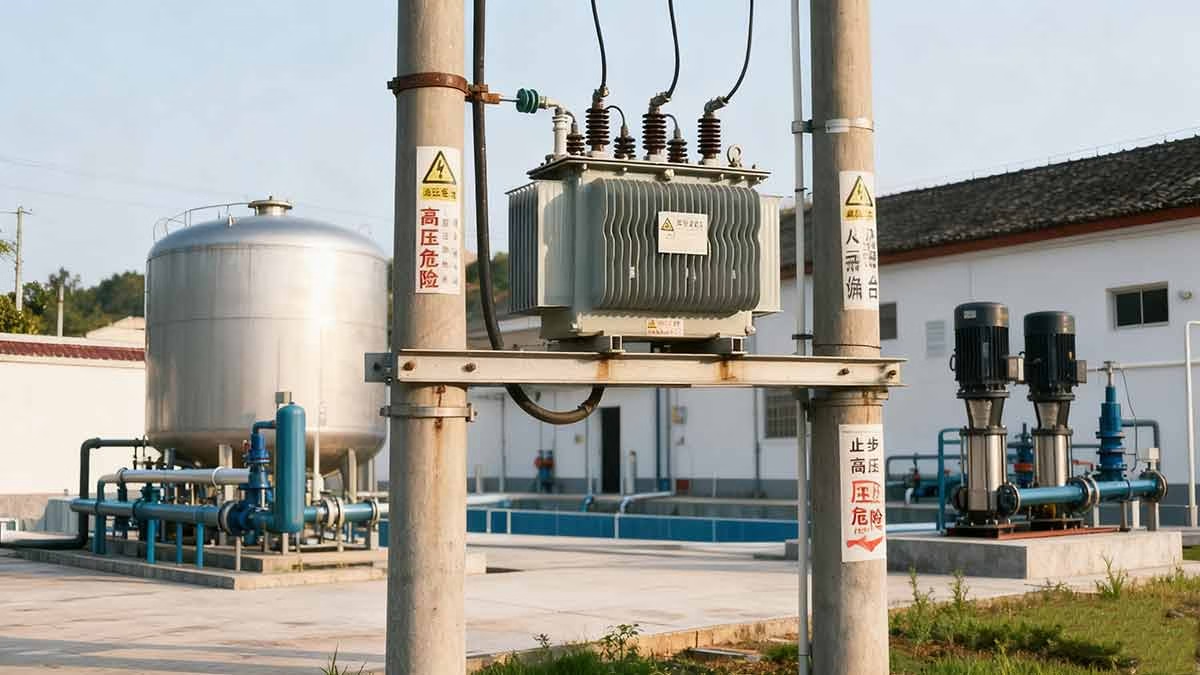
In our work with utility clients, we’ve seen transformers prevent catastrophic failures. For a midwestern U.S. utility, smart transformers detected a voltage spike caused by a lightning strike—automatically adjusting to protect 10,000 homes from damage.
Conclusion
Electric transformers are the unsung heroes of modern life—enabling everything from cross-country power transmission to charging your smartphone. Their ability to convert voltage, isolate circuits, and optimize energy flow makes them irreplaceable in electrical systems, big and small.
We’ve explored their fundamental science (electromagnetic induction), their journey from power plants to homes, their role in neighborhood grids, their presence in everyday devices, and their critical function as safety and efficiency guardians. As the world shifts toward renewable energy and smart grids, transformers will evolve further—becoming more connected, efficient, and adaptable to meet changing demands.
From wind farms to living rooms, transformers remain the backbone of reliable, safe electricity. Their continued innovation will be key to building a sustainable, resilient energy future—powering progress for decades to come.
Whether you’re a utility engineer, a homeowner, or a business owner, understanding transformers helps you appreciate the complex, invisible system that keeps our world running. And as technology advances, one thing remains certain: transformers will continue to be at the heart of how we generate, transmit, and use electricity.