
Ever glanced up at the cylindrical units perched on telephone poles and wondered what role they play in your daily life? These unassuming devices are far more than just grid accessories—they’re critical to delivering safe, usable electricity to every home, shop, and office. Yet, most people rarely think about them until the lights flicker.
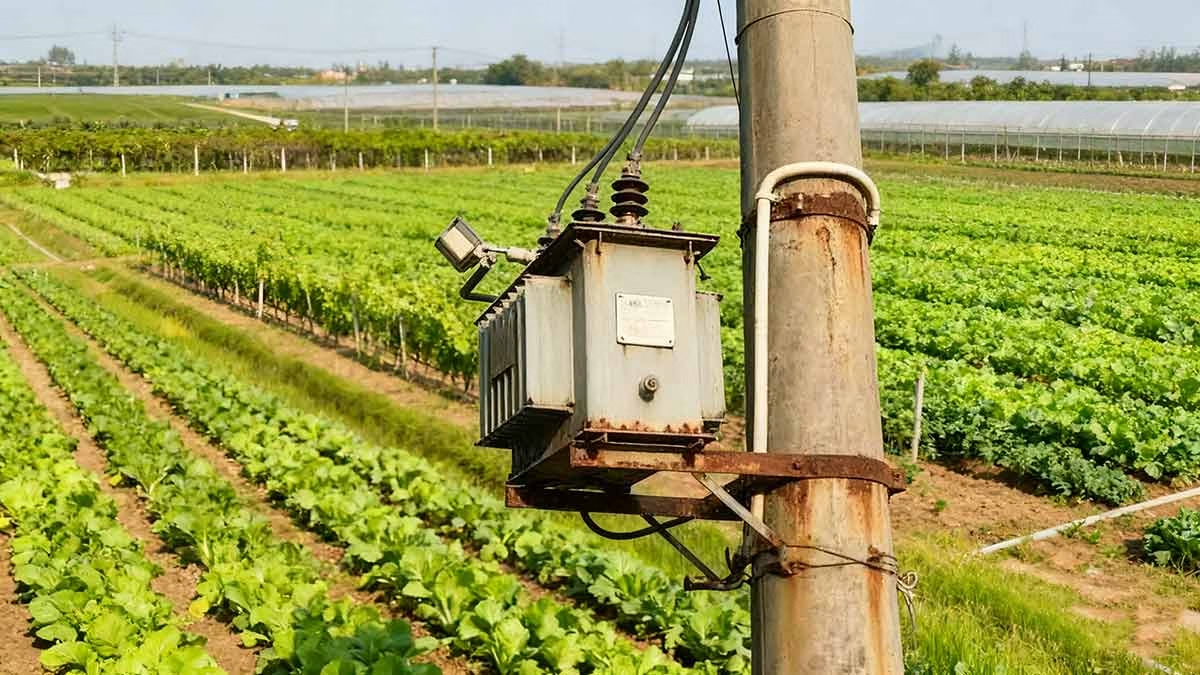
A pole-mounted transformer is a precision-engineered device that converts high-voltage electricity from transmission lines into lower, safer levels suitable for residential and commercial use. It acts as the vital bridge between the bulk power grid and end-users, ensuring the electricity that travels miles through power lines becomes compatible with your phone charger, refrigerator, and industrial machinery.
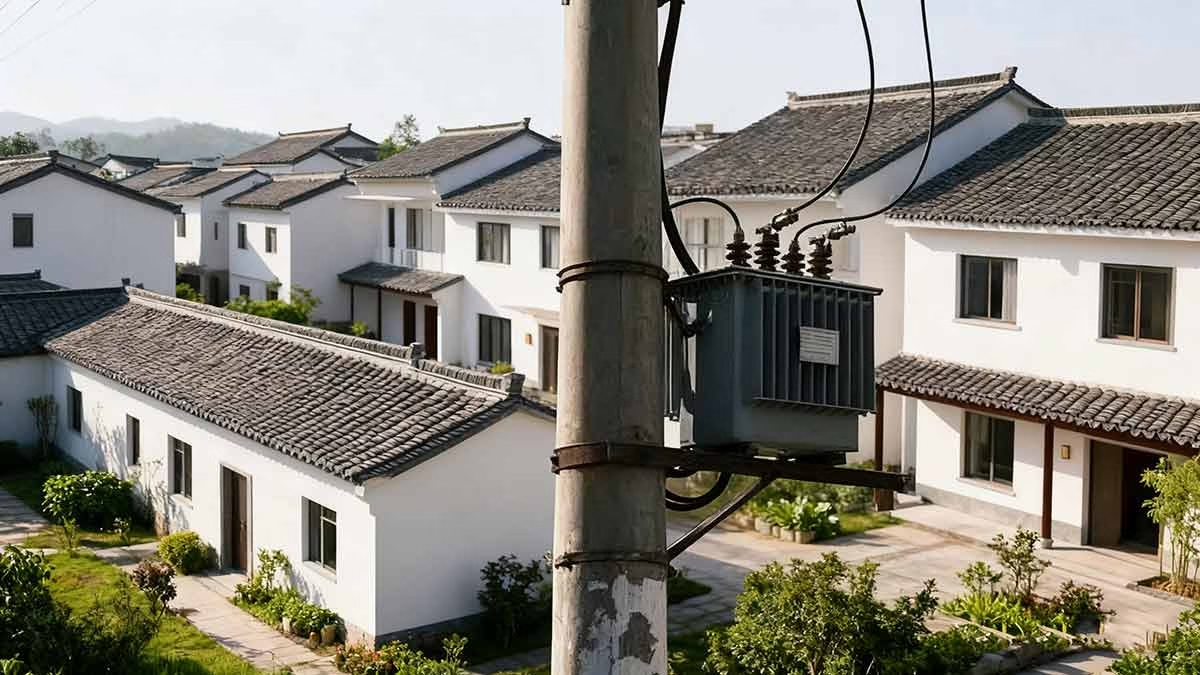
In this guide, we’ll demystify pole-mounted transformers: their core functions, inner workings, voltage transformation process, diverse types, and essential safety practices. Whether you’re a curious homeowner, a facility manager, or an industry professional, this resource will deepen your understanding of one of the power grid’s most indispensable components.
Contents
hide
The Basics of Pole-Mounted Transformers: Function and Importance in Power Distribution
Why do we need those bulky cylinders atop telephone poles? They’re not just passive fixtures—they’re workhorses that keep the modern power grid running efficiently and safely. Without them, the high-voltage electricity that travels long distances across transmission lines would be too dangerous and impractical for everyday use.
Pole-mounted transformers serve four non-negotiable roles in power distribution: they step down voltage to usable levels, distribute power to localized areas, provide critical electrical isolation, and manage fluctuating loads. Together, these functions ensure reliable, safe electricity delivery even as demand shifts throughout the day.
Core Roles in the Power Grid
- Voltage Reduction: Power plants generate electricity at 155,000–765,000 volts to minimize energy loss during long-distance transmission. Pole-mounted transformers reduce this to 120/240 volts (residential) or 480 volts (commercial)—levels that won’t damage appliances or pose safety risks.
- Localized Distribution: These transformers act as neighborhood hubs, splitting power from main lines into smaller feeders that serve individual buildings. For a growing suburban area, upgrading to higher-capacity pole transformers can eliminate frequent outages caused by overloaded grids.
- Electrical Isolation: They create a barrier between the high-voltage grid and consumer premises, shielding homes and businesses from power surges or grid faults that could destroy electronics or cause accidents.
- Load Balancing: Utility companies adjust transformer settings to handle peak demand (e.g., morning coffee rushes, evening EV charging) and off-peak lulls, ensuring consistent voltage and preventing grid strain.
| Stage of Power Flow | Voltage Level | Key Purpose |
|---|---|---|
| Generation | 155,000–765,000 V | Minimize transmission energy loss |
| Long-Distance Transmission | 155,000–765,000 V | Deliver power across regions |
| Regional Subtransmission | 69,000–138,000 V | Distribute power to local grids |
| Local Distribution | 4,000–34,500 V | Feed power to neighborhood transformers |
| End-User Delivery | 120/240–480 V | Safe, usable power for homes/businesses |
As energy needs evolve—with more EVs, smart homes, and renewable energy sources—pole-mounted transformers are becoming even more critical. They must now handle bidirectional power flow (e.g., excess solar energy fed back to the grid) and higher load densities, making their role in modern grid resilience indispensable.
Anatomy of a Pole-Mounted Transformer: Key Components and How They Work
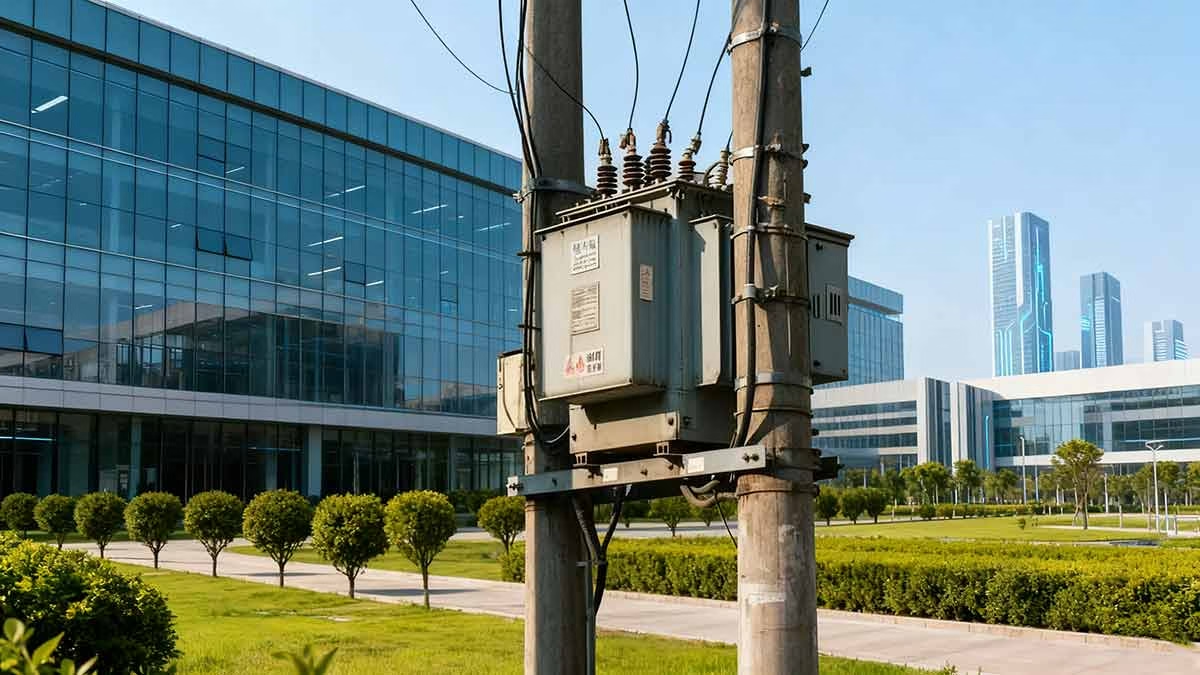
What lies inside those cylindrical steel enclosures? A pole-mounted transformer’s design is elegant in its simplicity, with each component working in harmony to transform and deliver power efficiently. Every part—from the core to the insulating oil—serves a specific purpose that directly impacts performance and longevity.
At its core, a pole-mounted transformer consists of five essential components: a laminated steel core, primary and secondary windings, insulating oil, a protective tank, and insulated bushings. These parts work together to transfer electrical energy via electromagnetic induction, the principle that powers all transformers.
Breaking Down the Core Components
- Laminated Steel Core: The “backbone” of the transformer, made of thin silicon steel sheets stacked to minimize energy loss. It provides a path for the magnetic field that transfers energy between windings. The laminated design reduces eddy currents (wasteful electrical currents) that would otherwise heat the core and reduce efficiency.
- Primary & Secondary Windings: Coils of insulated copper or aluminum wire wrapped around the core. The primary winding connects to high-voltage transmission lines, while the secondary winding links to low-voltage distribution lines. The number of turns in each winding determines the voltage transformation ratio—more turns = higher voltage.
- Insulating Oil: Fills the transformer tank to serve two critical roles: cooling and insulation. It absorbs heat from the core and windings (dissipating it through the tank walls) and prevents electrical arcing between components. High-quality oil is essential—degraded oil can lead to overheating and premature failure.
- Steel Tank: A weather-resistant enclosure that protects internal components from rain, dust, and physical damage. It’s designed to withstand extreme temperatures, corrosion, and even minor impacts from debris.
- Insulated Bushings: Porcelain or polymer sleeves that act as safe passageways for wires entering and exiting the tank. They prevent electrical current from leaking to the tank (which is grounded) and ensure secure, insulated connections.
| Component | Core Function | Impact on Performance |
|---|---|---|
| Laminated Steel Core | Guides magnetic field transfer | Reduces energy loss; boosts efficiency |
| Primary Winding | Receives high-voltage input | Determines how much voltage is stepped down |
| Secondary Winding | Delivers low-voltage output | Must match local power needs (e.g., 120/240V) |
| Insulating Oil | Cools components; insulates | Prevents overheating; extends lifespan |
| Steel Tank | Protects internal parts | Shields against environmental damage |
| Insulated Bushings | Safeguards wire connections | Prevents leaks and electrical hazards |
In practice, even small component issues can disrupt performance. For example, a transformer with degraded insulating oil may overheat during peak demand, leading to voltage fluctuations or shutdowns. Regular oil testing and replacement are therefore critical to maintaining reliability.
From High to Low: How Pole Transformers Step Down Voltage for Home Use
How does electricity go from 7,200 volts (or higher) in power lines to the 120 volts that charge your phone? The answer lies in electromagnetic induction—a fundamental principle that allows pole transformers to reduce voltage without moving parts or wasting significant energy.
The voltage step-down process is elegant and efficient: high-voltage current in the primary winding creates a magnetic field, which induces a lower voltage in the secondary winding. The difference in the number of turns between the two windings determines the final voltage—fewer turns in the secondary = lower voltage.
The Step-Down Process in 5 Simple Stages
- High-Voltage Input: Electricity from local distribution lines (typically 7,200–14,400 volts) flows into the transformer’s primary winding.
- Magnetic Field Generation: The current in the primary winding creates a rapidly changing magnetic field, which is concentrated in the laminated steel core.
- Electromagnetic Induction: The changing magnetic field cuts through the secondary winding, inducing an electric current. This is Faraday’s Law in action—no physical contact between windings, just energy transferred via magnetism.
- Voltage Reduction: The secondary winding has far fewer turns than the primary (e.g., 33 turns vs. 1,000 turns). Using the formula VsVp=NsNp (voltage ratio = turn ratio), the voltage drops proportionally. For example, 7,200 volts in the primary (1,000 turns) becomes 240 volts in the secondary (33 turns).
- Safe Output: The low-voltage electricity (120/240V for homes) exits the secondary winding, travels through distribution lines, and enters buildings via service entrances.
A Practical Example
| Aspect | Primary Winding | Secondary Winding |
|---|---|---|
| Voltage | 7,200 V | 240 V |
| Number of Turns | 1,000 | 33 |
| Transformation Ratio | 30:1 | 30:1 |
Modern pole transformers achieve efficiencies of 98–99%, meaning very little energy is lost during this process. The small amount of waste heat is dissipated through the tank walls and carried away by air flow—no fans or active cooling required for most residential applications.
In older neighborhoods, outdated transformers may struggle with modern loads (e.g., EV chargers, heat pumps). Upgrading to transformers with optimized turn ratios and higher efficiency can eliminate flickering lights, appliance damage, and voltage dips—common issues when old units can’t keep up with demand.
Types and Applications: Different Pole-Mounted Transformers in Electrical Systems
Not all pole-mounted transformers are the same. They’re engineered in distinct types to meet specific voltage requirements, load capacities, and installation environments. From powering a single neighborhood to supporting industrial machinery, the right transformer type ensures efficient, reliable power delivery.
The four main types of pole-mounted (and related) transformers are single-phase, three-phase, autotransformers, and pad-mounted units. Each is designed for unique use cases, with variations in voltage handling, load capacity, and physical design.
Key Transformer Types & Their Uses
- Single-Phase Transformers: The most common type for residential areas and small businesses. They’re compact, cost-effective, and designed to handle lower loads. Typically, they step down 7,200–14,400V to 120/240V, making them ideal for powering homes, small retail stores, and offices. A single unit can serve 10–15 homes, depending on usage patterns.
- Three-Phase Transformers: Built for commercial and industrial applications with high power demands. They deliver more efficient power distribution for large loads (e.g., manufacturing equipment, HVAC systems, shopping centers) and step down higher voltages (12,470V+) to 480V or 208V. Three-phase power is smoother and more powerful than single-phase, making it essential for machinery that requires consistent torque.
- Autotransformers: Used for small voltage adjustments rather than large step-downs. They’re more efficient than traditional transformers for applications like voltage regulation (e.g., boosting voltage in long rural lines that lose power over distance). Autotransformers are less common in residential areas but critical for maintaining consistent voltage in remote or sprawling grids.
- Pad-Mounted Transformers: A ground-level alternative to pole-mounted units. They’re enclosed in weatherproof cabinets installed on concrete pads, making them ideal for urban areas, new developments, and historic districts where pole-mounted units are aesthetically unappealing. They offer the same functionality as pole-mounted transformers but with easier maintenance access and better protection from vandalism.
| Type | Voltage Range | Primary Applications | Key Advantages |
|---|---|---|---|
| Single-Phase | 7,200–14,400V → 120/240V | Residential areas, small businesses | Compact, cost-effective, easy to install |
| Three-Phase | 12,470–34,500V → 480/208V | Factories, shopping centers, large offices | High efficiency, handles heavy loads |
| Autotransformer | Various (small adjustments) | Voltage regulation, rural lines | Energy-efficient, compact |
| Pad-Mounted | Similar to pole-mounted | Urban areas, historic districts | Aesthetic, weather-resistant, low maintenance |
Choosing the right type depends on three factors: current load requirements, future growth, and infrastructure compatibility. For example, a growing suburban area might start with single-phase transformers but install three-phase units in commercial zones to accommodate future retail or office development.
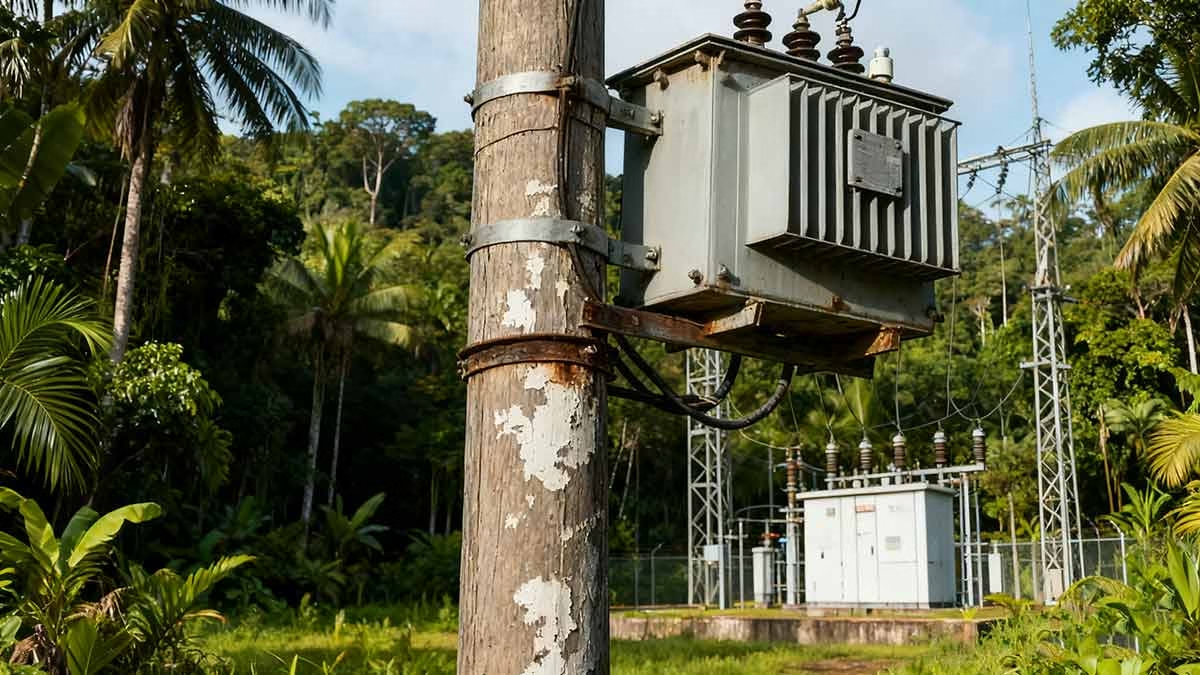
In coastal regions, transformers with corrosion-resistant tanks and bushings are essential to withstand salt air. In storm-prone areas, reinforced mounting brackets and surge protection help prevent damage from high winds or lightning.
Safety and Maintenance: Caring for Pole-Mounted Transformers in Your Neighborhood
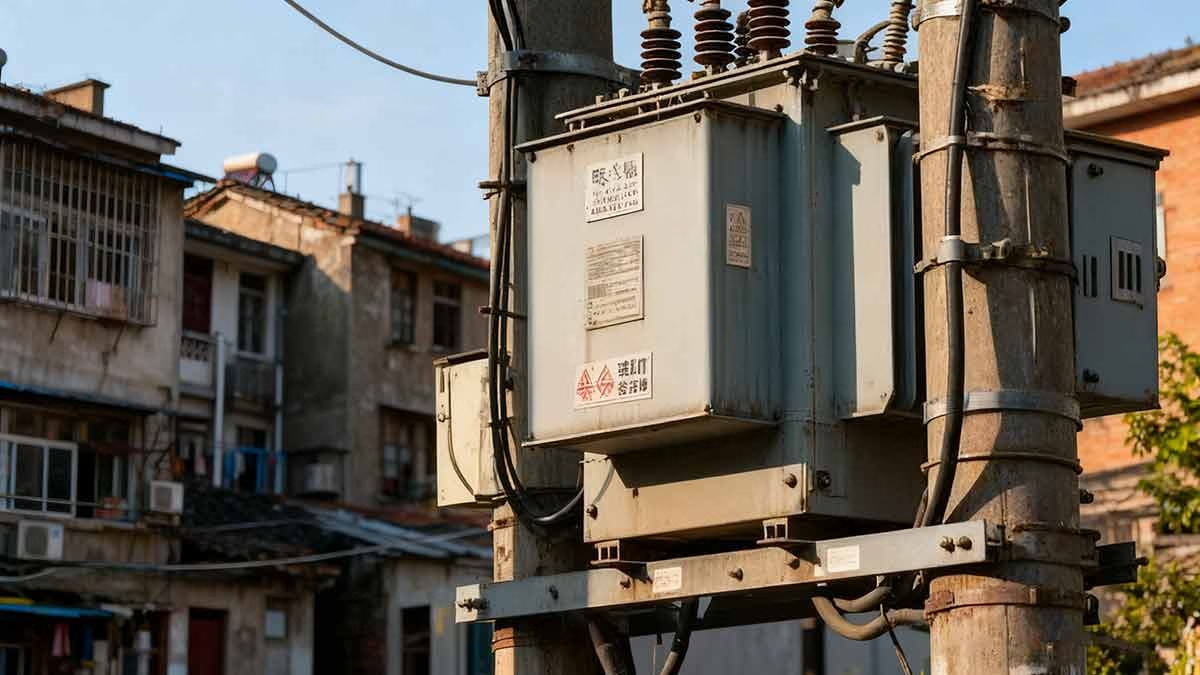
Pole-mounted transformers are designed to be safe and low-maintenance, but they still require proper care to protect communities and ensure longevity. Safety starts with respecting the equipment, while maintenance relies on proactive inspections and timely repairs by trained professionals.
For communities, safety means keeping a safe distance and reporting issues. For utility companies, maintenance involves regular checks, oil testing, and load monitoring. Together, these practices prevent hazards and keep the power flowing.
Community Safety Guidelines
- Respect Clearances: Never climb telephone poles, tamper with transformers, or attach objects to them. Maintain a 10-foot clearance around ground-mounted equipment (e.g., pad-mounted units) and avoid planting trees or building structures near poles—overgrown branches can damage wires or cause outages.
- Report Issues Promptly: Contact your utility company if you notice oil leaks, physical damage, unusual noises (e.g., buzzing, humming louder than normal), or burning smells. These signs indicate potential failures that could lead to outages or safety hazards.
- Emergency Response: In case of fire, severe damage, or a fallen transformer, call 911 and keep others away. Never touch a fallen transformer or power line—even if it appears inactive.
Professional Maintenance Practices
Utility companies follow strict maintenance schedules to keep transformers in good condition:
- Visual Inspections: Monthly checks for damage, leaks, corrosion, or debris buildup.
- Oil Testing: Annual sampling to assess insulation quality and detect contamination. Degraded oil is replaced to prevent overheating.
- Thermal Imaging: Quarterly scans to identify hot spots in windings or connections—early signs of overloading or loose wires.
- Load Monitoring: Ongoing tracking of power usage to prevent overloading. If a transformer consistently operates at 80%+ capacity, it may be upgraded to a higher-capacity unit.
| Maintenance Task | Frequency | Purpose |
|---|---|---|
| Visual Inspection | Monthly | Detect visible damage or leaks |
| Oil Testing | Annually | Ensure insulation and cooling efficiency |
| Thermal Imaging | Quarterly | Identify overheating components |
| Load Assessment | Ongoing | Prevent overloading |
Weather-Related Maintenance Challenges
Different climates pose unique risks:
- Hot Climates: Increased risk of overheating—more frequent oil checks and thermal scans.
- Cold Climates: Risk of oil freezing (in extreme temperatures) and ice buildup—insulation checks and de-icing protocols.
- Coastal Areas: Salt air causes corrosion—special coatings and more frequent inspections.
- Storm-Prone Regions: Lightning and high winds—surge protection and reinforced mounting.
Technology is transforming maintenance: smart sensors now monitor temperature, oil quality, and load in real time, alerting utilities to issues before they cause failures. Drones are used to inspect hard-to-reach units, reducing worker risk and improving inspection frequency.
Conclusion
Pole-mounted transformers are the unsung backbone of the power grid, quietly converting high-voltage electricity into the safe, usable power that fuels our daily lives. From their precision-engineered components to their diverse types and applications, these devices are designed to be efficient, reliable, and safe.
Understanding their role—voltage step-down, power distribution, isolation, and load management—helps us appreciate the complexity of the infrastructure that keeps our lights on. By following safety guidelines and supporting regular maintenance, communities can ensure these critical components continue to serve reliably for decades.
As the grid evolves to accommodate renewable energy, EVs, and smart technology, pole-mounted transformers will adapt too—becoming more efficient, connected, and resilient. They may remain out of sight for most, but their importance to modern life is impossible to overstate.