
Single phase power transformer demand varies dramatically across the USA, Europe, and Southeast Asia—shaped by distinct infrastructure priorities, regulatory frameworks, and economic development stages. The USA drives growth through grid modernization, Europe leads with renewable energy integration and efficiency mandates, while Southeast Asia’s expansion is fueled by rapid electrification and urbanization. For manufacturers, buyers, and procurement professionals, decoding these regional nuances isn’t just helpful—it’s critical to building successful global strategies.
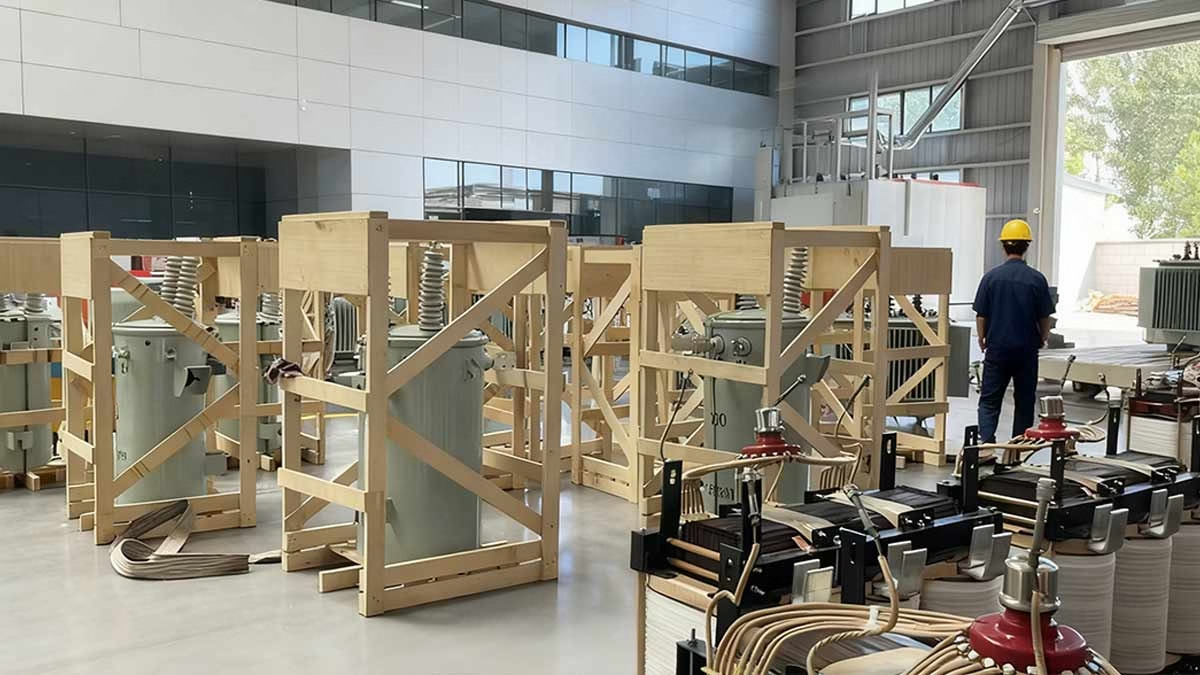
With over two decades in the power transformer industry, I’ve witnessed how misaligning products with regional needs can derail projects. Below is a refined breakdown of what you need to know about these dynamic markets.
Contents
hide
Market Trends: Single Phase Power Transformer Demand Across Key Regions
Keeping pace with shifting single phase power transformer demand patterns across regions is no small feat. Each market—USA, Europe, and Southeast Asia—evolves in response to unique drivers, creating distinct opportunities and challenges for industry stakeholders.
USA: Grid Modernization and Renewable Integration
The U.S. market is anchored by two powerful trends: upgrading aging infrastructure and integrating distributed renewable energy. Utilities across the country are replacing decades-old transformers with smarter, more resilient models—driving a 30% surge in orders for IoT-enabled units in recent grid upgrade projects. These smart transformers offer real-time monitoring and automated load balancing, critical for managing the variable output of solar and wind installations.
California’s community solar projects, for example, rely on specialized single phase transformers with bi-directional power flow capabilities to handle fluctuations from hundreds of rooftop panels. Meanwhile, the Northeast’s utility companies are embarking on decade-long replacement programs, targeting 40% of their legacy transformer fleets—creating steady demand for high-efficiency, long-lasting units.
Europe: Efficiency Mandates and Green Energy Leadership
Europe’s demand is defined by strict energy efficiency regulations and a relentless focus on renewable integration. The EU’s Ecodesign Directive has rewritten the rules for transformer performance, pushing demand for amorphous core models—requests for these high-efficiency units have jumped 50% in the past year alone. Offshore wind projects in the North Sea have also created a niche for marine-grade single phase transformers, engineered to withstand harsh saltwater environments while maintaining peak efficiency.
Smart grid adoption further differentiates the European market. Germany’s smart city initiatives, for instance, require transformers with real-time data transmission capabilities, setting a regional standard for connectivity. Urban solar installations, constrained by space, have also boosted demand for compact, low-profile designs that fit seamlessly into dense cityscapes.
Southeast Asia: Electrification and Industrial Growth
Southeast Asia’s transformer market is the fastest-growing of the three regions, driven by a dual push: rural electrification and industrialization. Vietnam’s manufacturing boom has spurred a 40% year-on-year increase in demand for transformers, as new industrial zones require reliable power distribution for factories and workshops. Indonesia’s rural electrification programs, meanwhile, have deployed over 1,000 small-capacity single phase transformers—prioritizing cost-effectiveness and durability for remote, hard-to-maintain locations.
Urban centers like Singapore are charting a different course, with smart city projects driving a 25% rise in demand for compact, IoT-enabled transformers. These units fit into high-rise developments and dense commercial areas, balancing space efficiency with the city’s push toward digitalized power management.
| Key Demand Driver | USA | Europe | Southeast Asia |
|---|---|---|---|
| Primary Focus | Grid Modernization | Energy Efficiency | Rapid Electrification |
| Renewable Impact | High | Very High | Moderate |
| Replacement Market | Significant | Moderate | Low |
| Demand Hotspots | Suburban/Rural Grid | Urban Renewables | Industrial Zones/Rural Areas |
| Typical Capacity Range | Medium-High | Medium | Low-Medium |
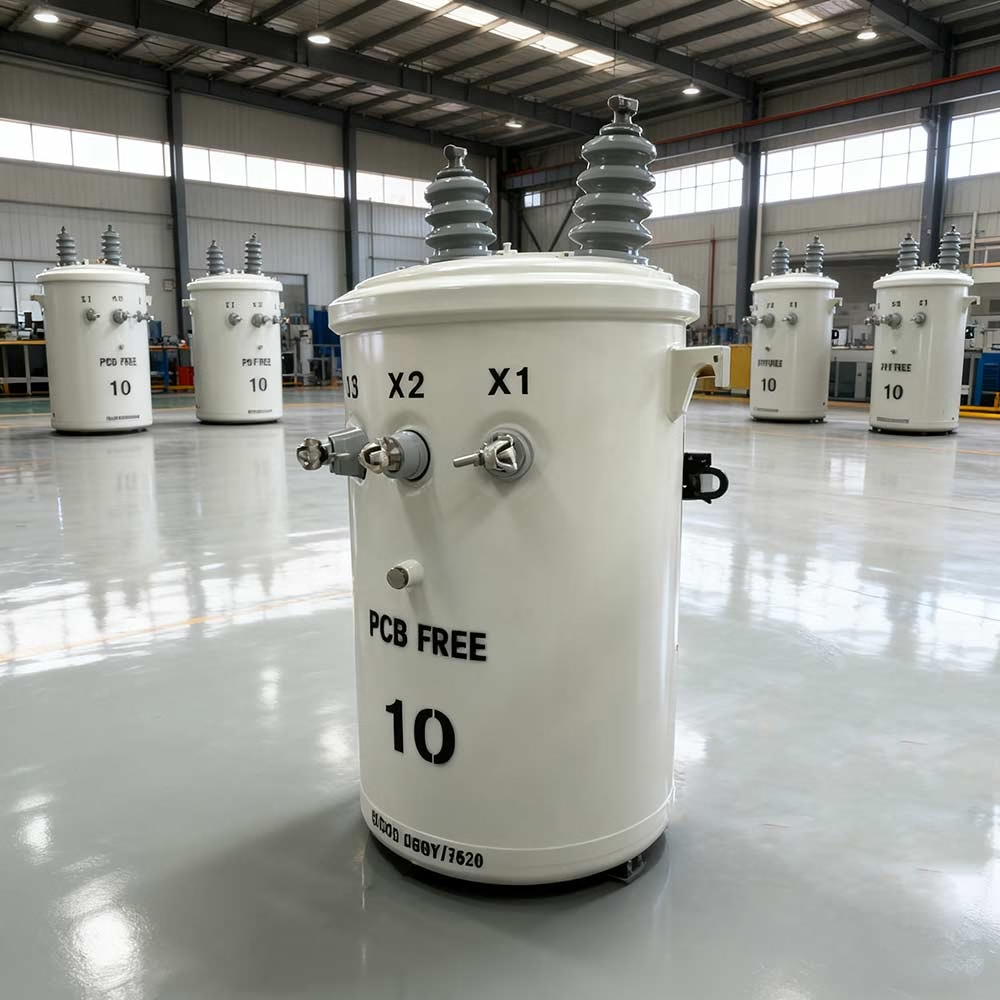
Regulatory Landscape: How Regional Policies Shape Requirements
Navigating the regulatory maze for single phase transformers is a critical step in market entry and procurement. Each region’s policies—from efficiency standards to environmental mandates—directly influence transformer specifications, compliance costs, and product design.
USA: Federal and State-Level Efficiency Mandates
The U.S. regulatory framework is led by the Department of Energy (DOE), whose mandatory efficiency standards for distribution transformers drive continuous product innovation. In 2021, these standards were updated to require a 15% efficiency boost for many single phase models—forcing manufacturers to redesign core materials and winding configurations. Complementing federal rules, industry guidelines like NEMA TP 1-2002 (for premium efficiency) are often adopted as de facto requirements for utility projects.
State-level regulations add another layer of complexity. California’s Title 24, for example, imposes stricter efficiency thresholds than federal standards—one utility client required units exceeding DOE benchmarks by 10% to comply with local building codes. Non-compliance carries heavy penalties, making regulatory alignment a top priority for U.S. buyers.
Europe: EU-Wide Directives and Country-Specific Rules
Europe’s regulatory landscape is dominated by the EU’s Ecodesign Directive, a phased framework that has raised efficiency standards incrementally. The 2021 rollout of Tier 2 requirements forced a complete overhaul of European transformer lines, with manufacturers prioritizing low-loss designs and sustainable materials. Complementary standards like EN 50588-1 set strict rules for energy performance and environmental impact, influencing everything from core materials to cooling systems.
Country-specific add-ons further refine requirements. France, for instance, mandates noise levels 5dB below EU averages for urban installations—requiring specialized core materials and acoustic insulation. These granular rules mean a transformer compliant in Germany may need modifications to meet French or Italian standards.
Southeast Asia: Diverse, Evolving Standards
Southeast Asia’s regulatory environment is fragmented but increasingly aligned with international benchmarks. Singapore has fully adopted IEC standards, mirroring European requirements for efficiency and safety, while Indonesia maintains a mix of local and global rules. Most countries in the region are moving toward stricter efficiency standards—Malaysia, for example, requires units meeting standards 5% below EU levels, balancing performance with affordability.
Environmental and safety regulations are also evolving. Thailand recently implemented new rules for transformer oil handling and disposal, while Vietnam has strengthened safety standards for industrial transformers. For buyers, this means navigating a patchwork of requirements—often requiring local partnerships to ensure compliance.
| Regulatory Aspect | USA | Europe | Southeast Asia |
|---|---|---|---|
| Primary Authority | Department of Energy (DOE) | European Commission | National Governments |
| Core Standard | DOE 10 CFR Part 431 | EU Ecodesign Directive | IEC + Local Adaptations |
| Update Frequency | 5–7 Years | Phased Rollouts | Irregular, Evolving |
| Environmental Focus | Moderate | High | Emerging |
| Non-Compliance Penalty | High | Very High | Moderate/Variable |
Application Diversity: Sector-Specific Usage Across Regions
Single phase transformers aren’t one-size-fits-all—their applications vary dramatically by region, reflecting local economic structures and infrastructure needs. From residential distribution to industrial automation, understanding sector-specific demands is key to selecting the right product.
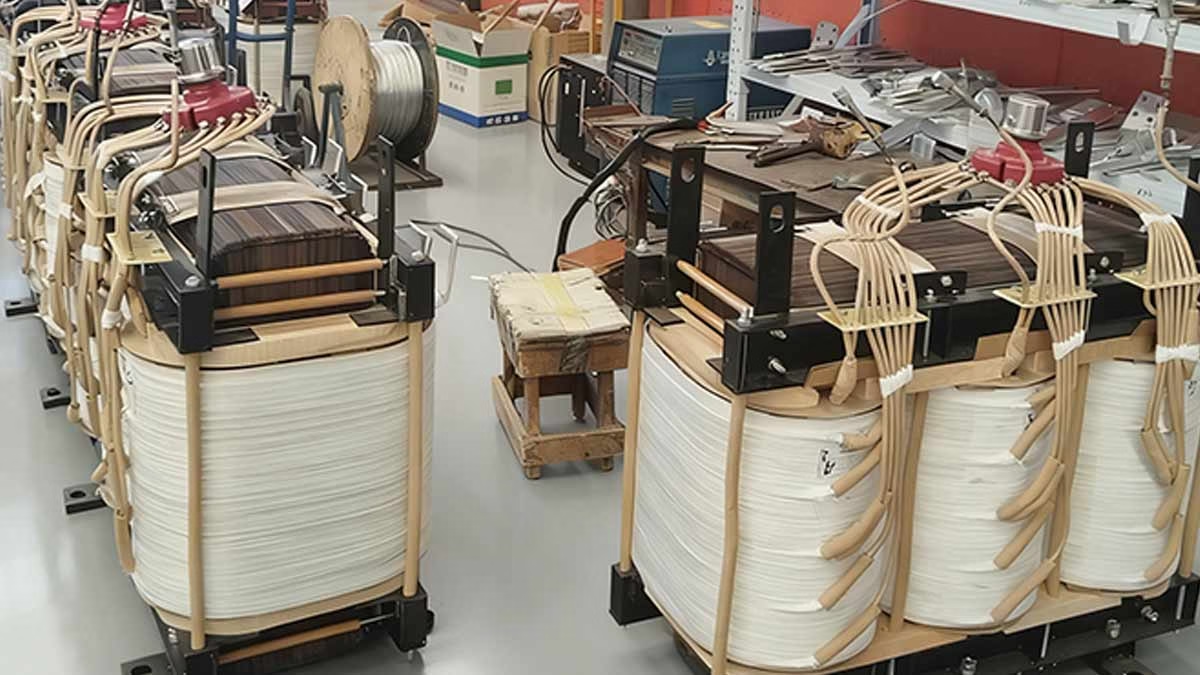
USA: Residential, Renewable, and Commercial Use
Residential power distribution remains the largest application for single phase transformers in the USA, with suburban developments relying on units that serve 4–6 homes each. A recent project in a growing Texas suburb required over 500 such transformers—prioritizing reliability and a 30-year lifespan to align with utility infrastructure plans.
Renewable integration is a fast-growing segment. Community solar projects, in particular, demand transformers with bi-directional flow capabilities to manage variable output from rooftop arrays. Commercial applications—strip malls, small factories, and data centers—favor compact, energy-efficient dry-type transformers, which meet strict fire safety codes for indoor installations.
Europe: Industrial and Smart Grid Applications
Europe’s single phase transformers are heavily concentrated in industrial and smart grid sectors. German automotive plants, for example, use units with advanced harmonic mitigation to ensure precision power for manufacturing equipment—one project required 50 transformers with ±0.5% voltage stability. Smart grid initiatives in Denmark have deployed 100+ IoT-enabled transformers, turning them into active nodes for real-time load management and predictive maintenance.
Renewable energy farms—both wind and solar—require robust, outdoor-rated transformers. Offshore wind projects in the North Sea use marine-grade units designed to withstand saltwater corrosion and extreme weather, while urban solar installations prioritize compact designs that fit in limited spaces.
Southeast Asia: Rural Electrification and Urban Growth
Southeast Asia’s applications split sharply between rural and urban needs. Rural electrification projects, like Indonesia’s village power programs, use 1,000+ small-capacity transformers—engineered for ruggedness and low maintenance, as they operate in remote areas with limited service access. These units feature simplified cooling systems and corrosion-resistant coatings to handle high humidity.
Urban centers drive demand for compact, versatile transformers. Singapore’s high-rise developments use one transformer per five floors—requiring custom designs 30% smaller than standard models. Vietnam’s industrial parks supply small and medium enterprises (SMEs) with cost-effective, reliable units—200 transformers for a single park catered to workshops, shops, and small factories.
| Sector | USA | Europe | Southeast Asia |
|---|---|---|---|
| Residential | Very High | Moderate | High (Urban) |
| Commercial | High | Moderate | High |
| Industrial | Moderate | Very High | Moderate |
| Renewable Energy | High | Very High | Emerging |
| Smart Grid | Emerging | High | Low |
| Rural Electrification | Low | Very Low | Very High |
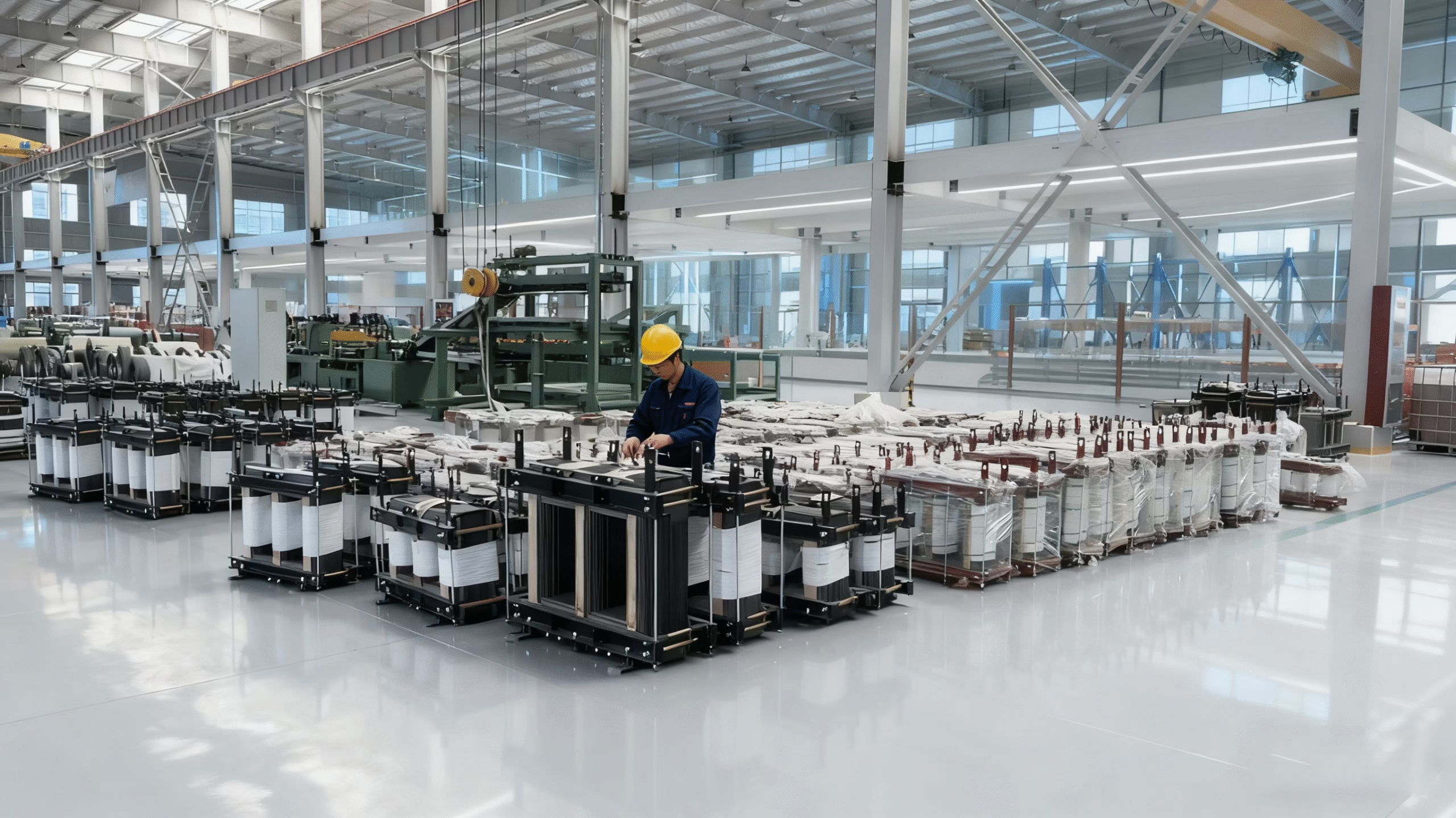
Technological Preferences: Regional Design and Feature Trends
Technological choices for single phase transformers are deeply influenced by regional priorities—from efficiency and sustainability to cost and durability. What works in Europe may not suit Southeast Asia’s climate or the USA’s grid needs.
USA: Reliability Meets Smart Innovation
The U.S. market favors oil-filled transformers for outdoor utility applications—valued for their long lifespan (40+ years) and reliability. A recent utility project deployed 100 such units with advanced oil preservation systems, ensuring consistent performance in harsh weather. For indoor use (data centers, commercial buildings), dry-type transformers dominate, chosen for their fire safety and low environmental impact.
Smart technology adoption is accelerating, especially in urban grid modernization. California utilities have retrofitted 50+ existing transformers with IoT monitoring systems, tracking load patterns, oil temperature, and fault risks in real time. These upgrades extend equipment life by 15–20% and reduce unplanned outages.
Europe: Eco-Friendly, High-Efficiency Designs
Europe’s technological focus is laser-sharp on sustainability and efficiency. Amorphous core transformers—with 70% lower core losses than traditional models—have become standard, driven by Ecodesign mandates. A German utility replaced 200 legacy units with amorphous core transformers, recouping the 15% upfront cost premium in 6–7 years via energy savings.
Biodegradable ester fluids are another key trend, particularly in environmentally sensitive areas. A project near France’s Loire Valley used these fluids to eliminate contamination risks, aligning with strict environmental regulations. Urban installations prioritize low-noise designs—London’s dense neighborhoods now use units that reduce sound levels by 15dB compared to standard models.
Southeast Asia: Durability and Cost-Effectiveness
Southeast Asia’s technology choices are shaped by climate and budget constraints. Tropical design transformers—engineered for high humidity and temperature—are ubiquitous. Indonesia’s coastal projects use 500+ units with special corrosion-resistant coatings and sealed enclosures to prevent moisture ingress.
Cost optimization is critical for rural and industrial applications. Vietnam’s rural electrification projects use simplified-design transformers that cut costs by 25% without sacrificing core performance. Urban areas, however, are adopting dry-type transformers—Singapore’s commercial complexes use 30+ compact units that save 40% space versus oil-filled alternatives, a necessity in dense cityscapes.
| Technological Feature | USA | Europe | Southeast Asia |
|---|---|---|---|
| Outdoor Preferred Type | Oil-Filled | Oil-Filled (Biodegradable) | Oil-Filled (Tropical) |
| Indoor Preferred Type | Dry-Type | Dry-Type | Mixed |
| Core Material | Silicon Steel | Amorphous Metal | Silicon Steel (Shifting to Amorphous) |
| Smart Features | High Adoption | Very High Adoption | Emerging |
| Eco-Friendly Design | Moderate Priority | Very High Priority | Low-Moderate Priority |
| Cost vs. Performance | Performance-Focused | Balanced | Cost-Focused |
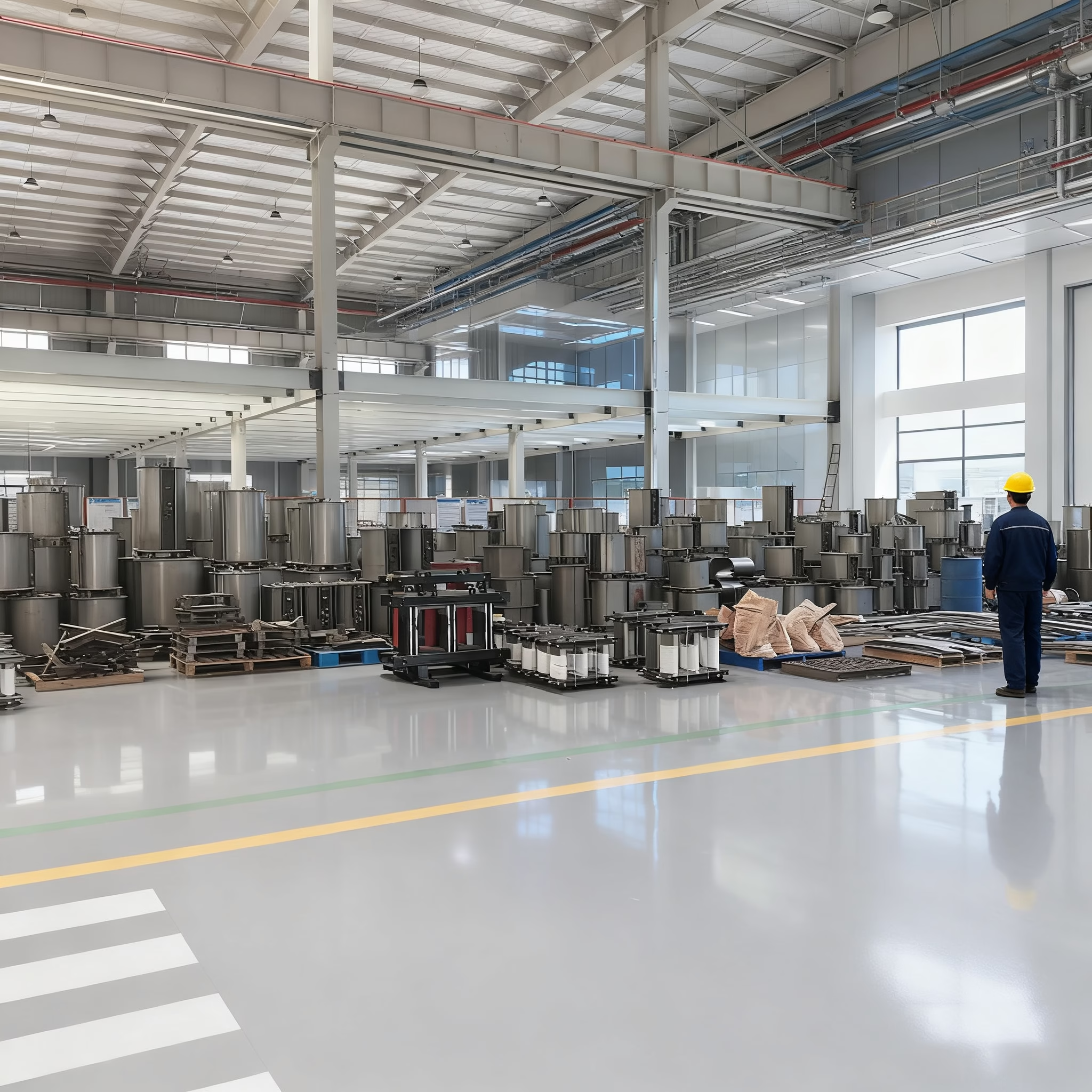
Supply Chain Dynamics: Navigating Global Procurement Challenges
Procuring single phase transformers globally requires navigating a complex web of regional supply chain strengths, weaknesses, and risks. From lead times and quality control to raw material shortages, each market presents unique hurdles—with global factors adding another layer of complexity.
USA: Domestic Production and Raw Material Volatility
The U.S. supply chain prioritizes domestic manufacturing, especially for utility and government projects. A recent grid upgrade sourced 70% of transformers from U.S. factories, ensuring compliance with local standards but requiring 16–20 week lead times. This long timeline demands early procurement planning to avoid project delays.
Raw material challenges persist—2022’s electrical steel shortage drove a 15% price increase, prompting manufacturers to explore alternatives like aluminum windings. Trade policies also impact costs: tariffs on imported transformers added 10% to project budgets for one industrial client, pushing many to prioritize domestic sourcing despite longer lead times.
Europe: Quality-Focused, Eco-Certified Supply Chains
Europe’s supply chain is defined by premium quality and strict environmental certifications. German manufacturers, for example, produce high-efficiency transformers that cost 25% more than standard models but deliver 40% lower losses. Sustainable sourcing is non-negotiable—Swedish projects require units with 30% recycled materials, adding 10% to costs but aligning with green building standards.
Logistics within Europe present unique challenges: cross-border certification variations can extend lead times by 4–6 weeks. A multi-country project recently faced delays due to differing noise and safety requirements across France, Germany, and Italy—highlighting the need for region-specific customization.
Southeast Asia: Cost-Effective, Agile Production
Southeast Asia’s supply chain offers competitive pricing and rapid production. A Vietnamese manufacturer reduced procurement costs by 30% for a rural electrification project, delivering 1,000 transformers within budget. Lead times are significantly shorter (8–12 weeks) than Western markets, and suppliers offer high customization flexibility—Malaysian factories delivered 500 custom units in 8 weeks for a time-sensitive urban project.
Quality consistency is a key consideration. A Thai supplier initially had a 5% defect rate, which dropped to 1% after implementing a joint quality assurance program. Raw material sourcing is diverse and cost-driven, though global shortages (like 2023’s silicon steel surge) still impact pricing—leading to occasional 20% cost spikes.
Global Supply Chain Risks
All regions face shared challenges: raw material shortages (copper, electrical steel), shipping disruptions (port congestion, rising freight costs), and geopolitical tensions. Recent Asia-to-USA shipping delays added 4–6 weeks to lead times, while trade disputes increased European sourcing costs by 15% for Asia-reliant manufacturers. Mitigation strategies—diversified sourcing, flexible designs, and built-in lead time buffers—have become essential for successful global procurement.
| Supply Chain Aspect | USA | Europe | Southeast Asia |
|---|---|---|---|
| Production Focus | Domestic | Quality/Eco-Focused | Cost-Effective |
| Lead Times | 16–20 Weeks | 12–16 Weeks | 8–12 Weeks |
| Quality Consistency | High | Very High | Variable (Improving) |
| Cost Profile | High | Very High | Low-Moderate |
| Customization Flexibility | Moderate | High | Very High |
Conclusion
Single phase transformer demand across the USA, Europe, and Southeast Asia is defined by regional priorities—grid modernization, efficiency, and electrification, respectively. Navigating these markets requires more than just technical expertise; it demands an understanding of how regulations, applications, and supply chains shape product needs.
For manufacturers, success lies in regional customization—adapting designs to meet Europe’s eco-mandates, Southeast Asia’s durability needs, or the USA’s smart grid requirements. For buyers and procurement teams, the key is balancing cost, quality, and compliance while mitigating global supply chain risks.
In an increasingly interconnected world, the ability to decode regional nuances isn’t just a competitive advantage—it’s the foundation of successful global transformer strategies. By aligning products with local needs and staying agile in the face of market shifts, stakeholders can thrive in these dynamic, growing markets.