
Struggling to navigate the options for types of pad mounted transformers? You’re not alone. Deciding between oil-filled and dry type, or single vs double compartment designs, can feel overwhelming—especially when every choice impacts performance, safety, and long-term costs.
Pad mounted transformers are engineered to meet diverse needs: oil-filled and dry type each offer unique advantages, while single and double compartment designs cater to different safety and accessibility requirements. The right selection hinges on your environment, maintenance capabilities, application demands, and budget.
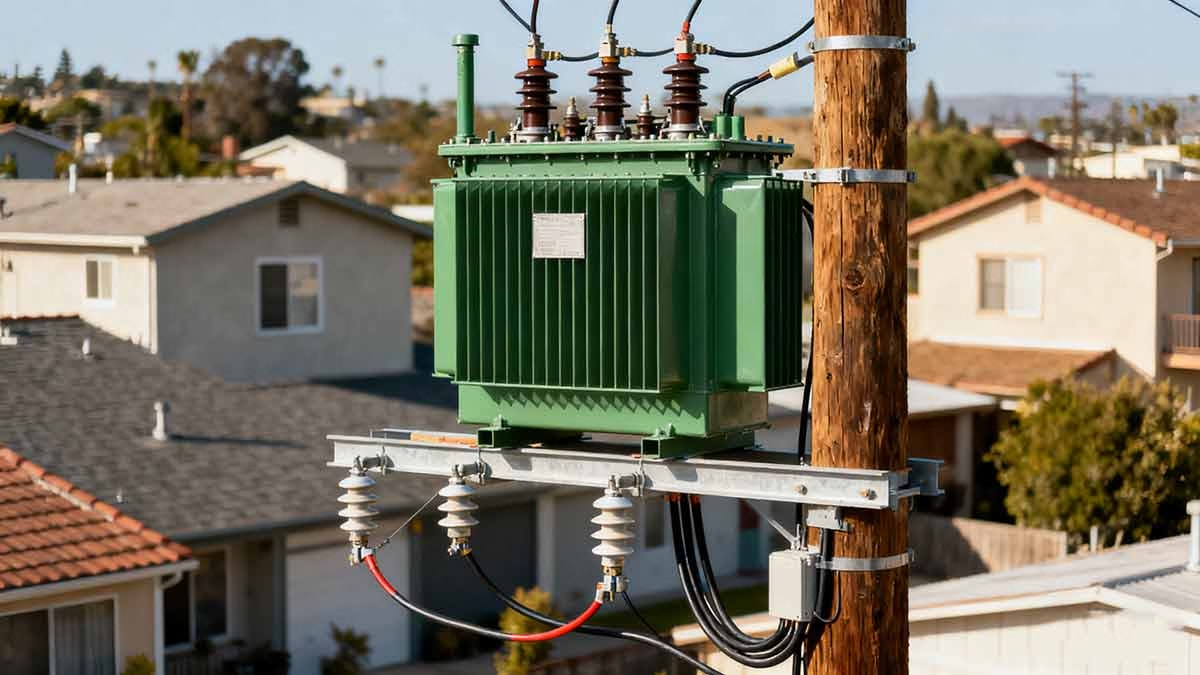
With years of industry expertise, we’ve simplified the decision-making process. Below, we break down key differences, real-world applications, and critical factors to help you choose confidently.
Contents
hide
Oil-Filled vs Dry Type Transformers: Performance, Maintenance, and Environmental Impact
Torn between oil-filled and dry type pad mounted transformers? This choice shapes everything from operational efficiency to safety compliance—and the wrong call can lead to unexpected costs down the line.
Oil-filled transformers excel at heat dissipation and cost-effectiveness for high-capacity needs, while dry type units prioritize fire safety and low maintenance. Environmental impact varies too: modern biodegradable oils minimize risks for oil-filled models, while dry type transformers eliminate leakage concerns entirely.
Core Comparisons That Matter
Performance Metrics
- Cooling Efficiency: Oil-filled units use oil as both insulator and coolant, making them ideal for high-capacity applications (over 2500 kVA) where heat management is critical. Dry type transformers rely on air cooling, limiting their capacity to typically under 500 kVA for optimal performance.
- Power Ratings: Dry type transformers are the go-to for small to medium loads (<500 kVA), while oil-filled units dominate for heavy-duty needs (>2500 kVA). The 500–2500 kVA range offers flexibility for either type, depending on other factors.
- Noise Levels: Oil-filled transformers operate quieter, especially at higher ratings—making them preferable for urban or noise-sensitive areas. Dry type units can produce more audible hum under heavy loads.
Maintenance Requirements
- Oil-Filled: Require routine oil testing (for moisture, contamination, and dielectric strength) and occasional oil changes. With proper care, they boast a 30–40 year lifespan.
- Dry Type: Minimal maintenance is needed—mostly periodic cleaning and visual inspections to prevent dust buildup. Their lifespan ranges from 25–30 years, with fewer service interruptions.
Environmental & Safety Considerations
- Fire Safety: Dry type transformers are inherently safer for indoor installations, hospitals, data centers, or fire-sensitive areas—they don’t use flammable oil, eliminating fire and leakage risks. Oil-filled units require additional safety measures (like spill containment tanks) for such settings.
- Eco-Friendliness: Traditional oil-filled transformers pose environmental risks if leaked, but modern models use biodegradable, plant-based oils that reduce ecological impact. Dry type units avoid oil entirely but may use materials that are harder to recycle.
Cost Breakdown
- Initial Investment: Dry type transformers cost 15–30% more upfront than oil-filled units of the same capacity.
- Long-Term Expenses: Oil-filled units have higher maintenance costs (oil testing, replacements), while dry type transformers offer savings through reduced service needs.
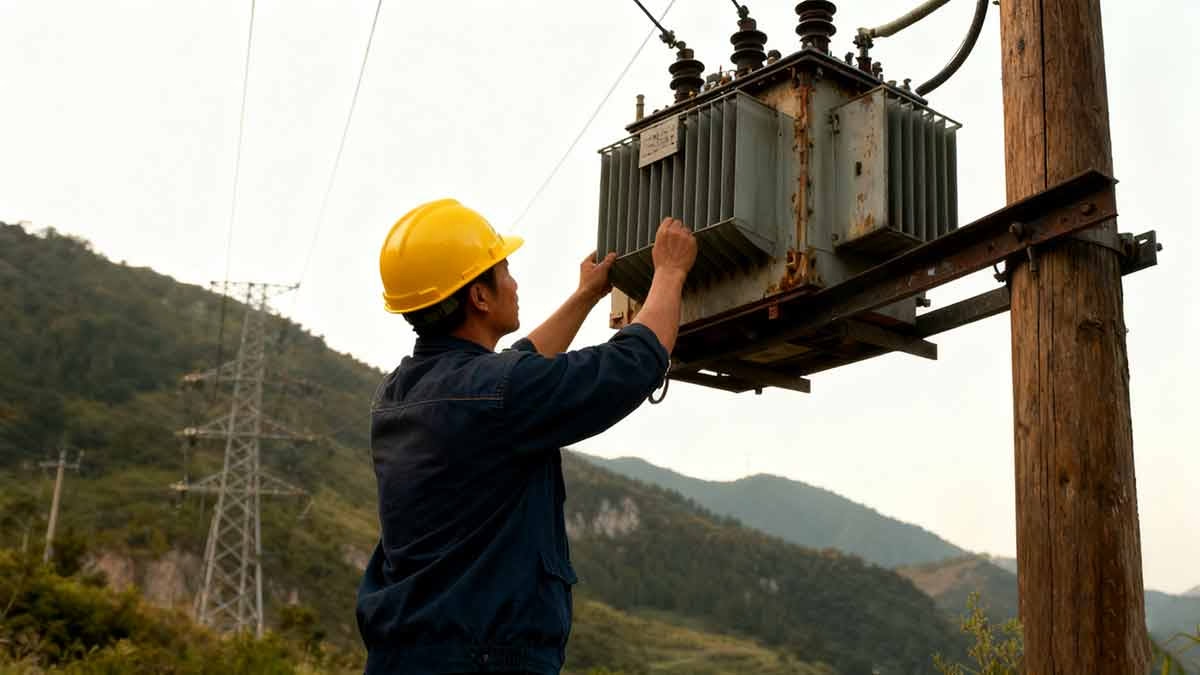
Real-World Application Example
For a hospital expansion project, we recommended dry type transformers despite the higher initial cost. Fire safety was non-negotiable in a healthcare setting, and the low-maintenance design minimized disruptions to patient care—proving that prioritizing specific needs over upfront savings leads to better outcomes.
Single vs Double Compartment Designs: Safety and Accessibility
Unsure whether a single or double compartment pad mounted transformer fits your needs? This design choice directly impacts safety protocols, maintenance efficiency, and installation flexibility—yet it’s often overlooked.
Single compartment transformers offer simplicity and cost savings but lack physical separation between high and low voltage components. Double compartment designs add a protective barrier, enhancing safety and enabling targeted maintenance—at the cost of a larger footprint and higher initial investment.
Key Design Differences
Safety Features
- Electrical Isolation: Single compartment units house all components in one space, increasing the risk of arc flash spreading. Double compartment models use a physical barrier to separate high and low voltage sections, limiting hazards.
- Access Control: Single compartment transformers have one access point—meaning full de-energization for any maintenance. Double compartment designs allow separate access to low voltage components, enabling safer, partial shutdowns.
- Arc Flash Protection: Compartmentalization in double units reduces the risk of arc flash affecting the entire transformer, a critical advantage in high-traffic or public areas.
Maintenance Accessibility
- Single Compartment: The simplified layout makes basic inspections easy, but most maintenance requires full power shutdowns—extending downtime.
- Double Compartment: Targeted access to specific sections cuts maintenance time and risk. For example, low voltage wiring adjustments can be made without disrupting the entire system.
Space & Installation
- Footprint: Single compartment transformers are more compact, making them ideal for space-constrained sites (e.g., urban sidewalks or tight industrial yards).
- Installation Complexity: Single compartment units are easier to install and require fewer customization. Double compartment models need more planning for placement but offer greater flexibility for future modifications.
Cost Implications
- Initial Cost: Single compartment transformers are 10–20% more affordable upfront.
- Long-Term Savings: Double compartment designs reduce maintenance downtime and safety risks, leading to potential cost savings over the transformer’s lifespan—especially for high-usage or hard-to-access sites.
Real-World Application Example
For a university campus, we opted for double compartment transformers. The high foot traffic (students, staff, visitors) demanded enhanced safety, and the ability to perform low voltage maintenance without full shutdowns was a game-changer for facility managers. The larger footprint was manageable in the campus layout, and the long-term safety benefits justified the initial investment.
| Feature | Single Compartment | Double Compartment |
|---|---|---|
| Safety Level | Basic | Enhanced |
| Maintenance Access | Full shutdown required | Partial access permitted |
| Footprint | Smaller | Larger |
| Initial Cost | Lower | Higher |
| Long-Term Cost | Variable (higher downtime) | Potentially lower |
| Complexity | Simpler | More flexible |
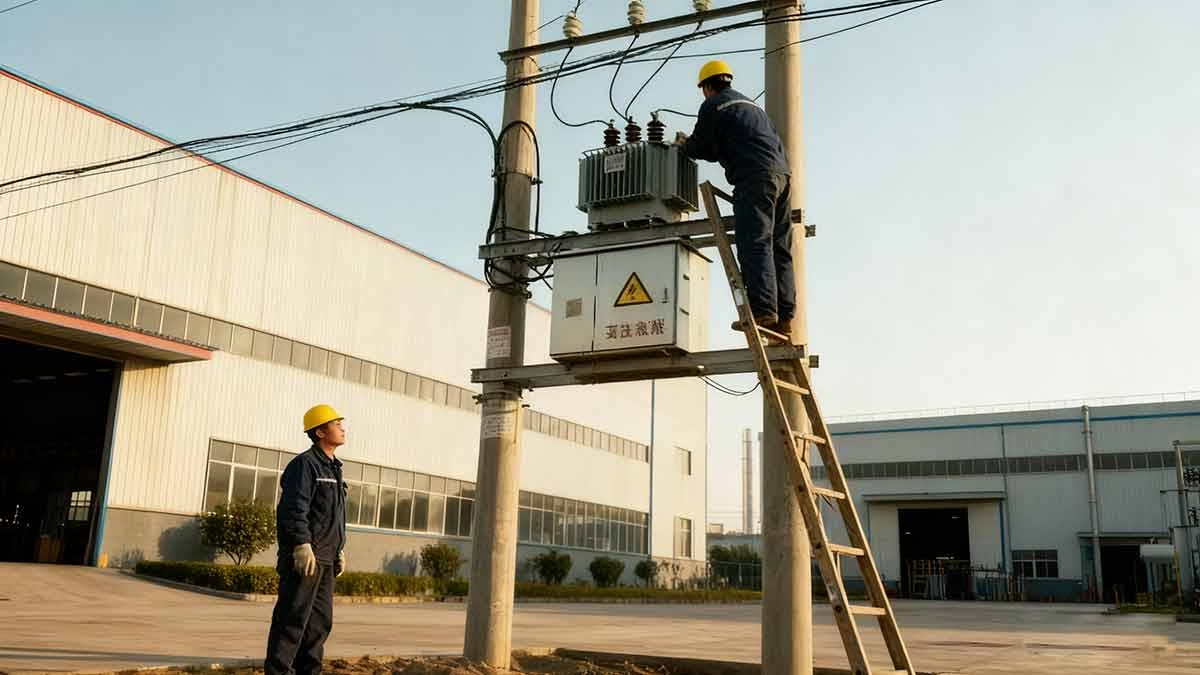
Application-Specific Choices: Matching Transformers to Environmental Conditions
Choosing a pad mounted transformer without considering your environment is a recipe for premature failure. Temperature extremes, humidity, altitude, and pollution all impact performance—so selecting a unit engineered for your specific conditions is critical.
Oil-filled transformers thrive in extreme temperatures and high altitudes, while dry type models excel in indoor or environmentally sensitive areas. Below, we break down how to align transformer type with environmental challenges.
Environmental Factor Breakdown
Temperature Extremes
- Cold Climates (-20°C and below): Oil-filled transformers are preferred—special low-viscosity oils prevent freezing, and their superior heat retention ensures reliable startup. Dry type units may require additional heating systems, increasing costs and complexity.
- Hot Climates (40°C and above): Oil-filled transformers dissipate heat efficiently, but oil degradation can occur over time—regular testing is essential. Dry type units work well for moderate heat but may need forced-air cooling for extreme temperatures.
Humidity & Moisture
- High Humidity/Tropical Regions: Oil-filled transformers resist moisture ingress better, but require sealed enclosures to prevent condensation. Dry type units are more susceptible to moisture absorption, which can damage windings—though they’re easier to dry out if affected.
- Flood-Prone Areas: Both types can be installed with elevated pads, but oil-filled units need robust containment to prevent leakage during flooding.
Altitude
- Below 1000m: Standard designs work for both transformer types.
- 1000–3000m: Oil-filled transformers require minor derating to compensate for reduced air density (which impacts cooling). Dry type units face significant derating—often 1% per 300m above 1000m.
- Above 3000m: Oil-filled transformers with specialized cooling systems are recommended. Dry type units are rarely suitable due to severe cooling limitations.
Pollution & Contamination
- Coastal Areas (Salt Spray): Oil-filled transformers with corrosion-resistant enclosures (hot-dip galvanized steel) are ideal. Dry type units may need special coatings to prevent salt buildup on windings.
- Industrial Zones (Chemical Pollutants): Dry type transformers are less affected by airborne chemicals, but surface contamination can reduce insulation effectiveness—regular cleaning is needed. Oil-filled units may require more frequent oil changes if pollutants seep into the system.
- Seismic Zones: Both types can be seismic-rated, but oil-filled transformers need reinforced enclosures and spill containment to mitigate leakage risks during earthquakes.
Quick Selection Guide
| Environment | Recommended Transformer Type | Key Considerations |
|---|---|---|
| Arctic/Cold Climates | Oil-filled (low-viscosity oil) | Freeze resistance, no additional heating |
| Tropical/High Humidity | Oil-filled (sealed) or dry type | Moisture protection, cooling upgrades |
| Coastal/Salt Spray | Oil-filled (corrosion-resistant) | Anti-corrosion coatings, sealed enclosures |
| High Altitude (>1000m) | Oil-filled (derated) | Cooling efficiency at reduced air density |
| Indoor/Urban | Dry type | Fire safety, noise reduction |
| Industrial/Chemical | Dry type or oil-filled (filtered) | Contamination resistance, easy maintenance |
Real-World Application Example
For a remote arctic mining facility, we specified oil-filled transformers with low-temperature oil and reinforced enclosures. The units operated reliably in -35°C temperatures without additional heating, outperforming dry type alternatives that would have required costly climate control systems.
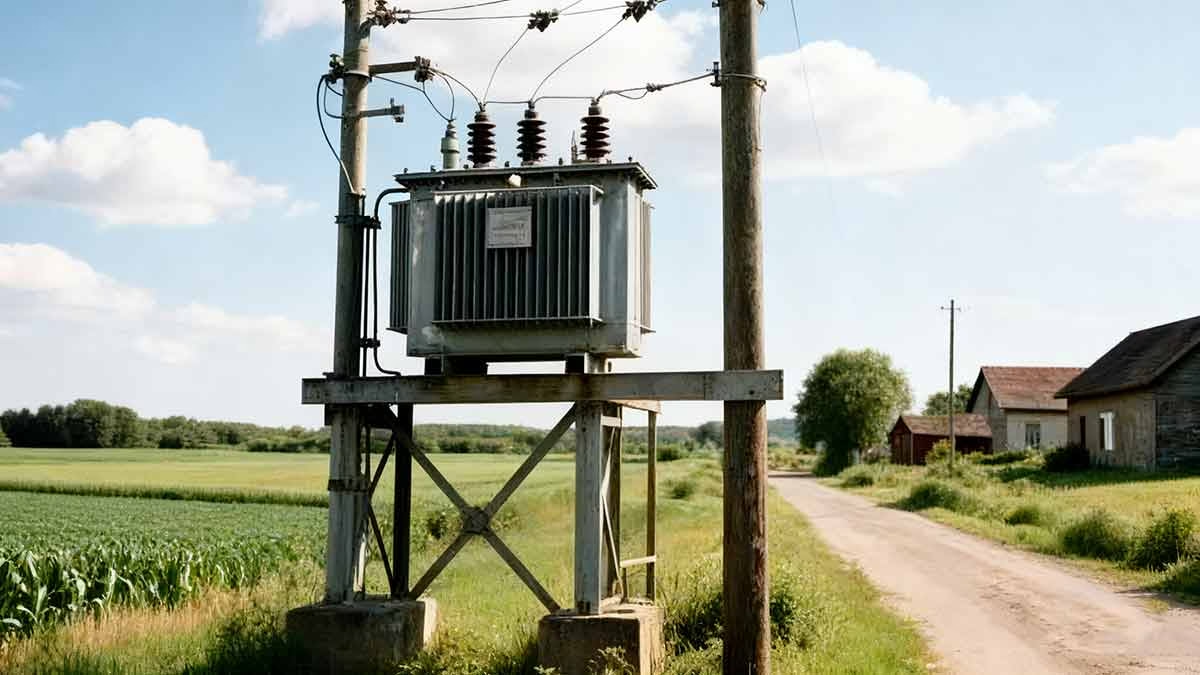
Cost Analysis: Initial Investment vs Long-Term Operational Expenses
Focusing solely on upfront cost when choosing a pad mounted transformer can lead to significant long-term expenses. Total Cost of Ownership (TCO)—including initial purchase, installation, energy losses, maintenance, and disposal—reveals the true value of your investment.
Dry type transformers typically cost 15–30% more upfront than oil-filled units. However, lower maintenance costs, reduced downtime, and safety benefits often offset this difference over the transformer’s lifespan. Below, we break down the critical cost factors to consider.
Cost Breakdown by Category
Initial Investment
| Transformer Type | Relative Purchase Price | Installation Costs |
|---|---|---|
| Oil-Filled | Baseline (100%) | Higher (oil handling, containment, permits) |
| Dry Type | 115–130% | Lower (simpler setup, no oil-related steps) |
| Single Compartment | Baseline (100%) | Lower (simpler wiring, smaller footprint) |
| Double Compartment | 110–120% | Higher (complex installation, larger space) |
Long-Term Operational Costs
- Energy Losses: Oil-filled transformers have lower core and load losses, especially at capacities above 500 kVA. For a 1000 kVA unit, this translates to ~$700 annual savings in energy costs compared to dry type models (based on average U.S. electricity prices).
Capacity Annual Energy Loss (Oil-Filled) Annual Energy Loss (Dry Type) 500 kVA ~$2,000 ~$2,500 1000 kVA ~$3,500 ~$4,200 2000 kVA ~$6,000 ~$7,500 - Maintenance Costs: Oil-filled transformers require regular oil testing ($300–$800/year) and occasional oil changes ($1,000–$3,000 every 5–10 years), totaling $500–$2,000 annually. Dry type units need only periodic cleaning and inspections, costing $200–$800 per year.
- Lifespan & Disposal: Oil-filled transformers last 30–40 years, with disposal costs of ~$5,000 (oil recycling, metal disposal). Dry type units have a 25–30 year lifespan and cost ~$2,000 to dispose of (material recycling).
TCO Example: 1000 kVA Transformer (20-Year Lifespan)
| Cost Factor | Oil-Filled | Dry Type |
|---|---|---|
| Initial Purchase | $30,000 | $38,000 |
| Installation | $8,000 | $6,000 |
| Energy Losses (20 years) | $70,000 | $84,000 |
| Maintenance (20 years) | $30,000 | $12,000 |
| Disposal | $5,000 | $2,000 |
| Total 20-Year TCO | $143,000 | $142,000 |
Surprisingly, the TCO for both types is nearly identical over 20 years—proving that upfront cost alone is a poor indicator of value.
Key Factors Influencing TCO
- Load Profile: High, continuous loads amplify the efficiency advantage of oil-filled transformers.
- Energy Costs: Regions with high electricity prices (e.g., coastal U.S. states) see greater savings from oil-filled units’ lower energy losses.
- Environmental Regulations: Strict spill containment or fire safety rules can increase costs for oil-filled transformers.
- Accessibility: Hard-to-reach sites (e.g., remote industrial areas) raise maintenance costs for oil-filled units, favoring dry type models.
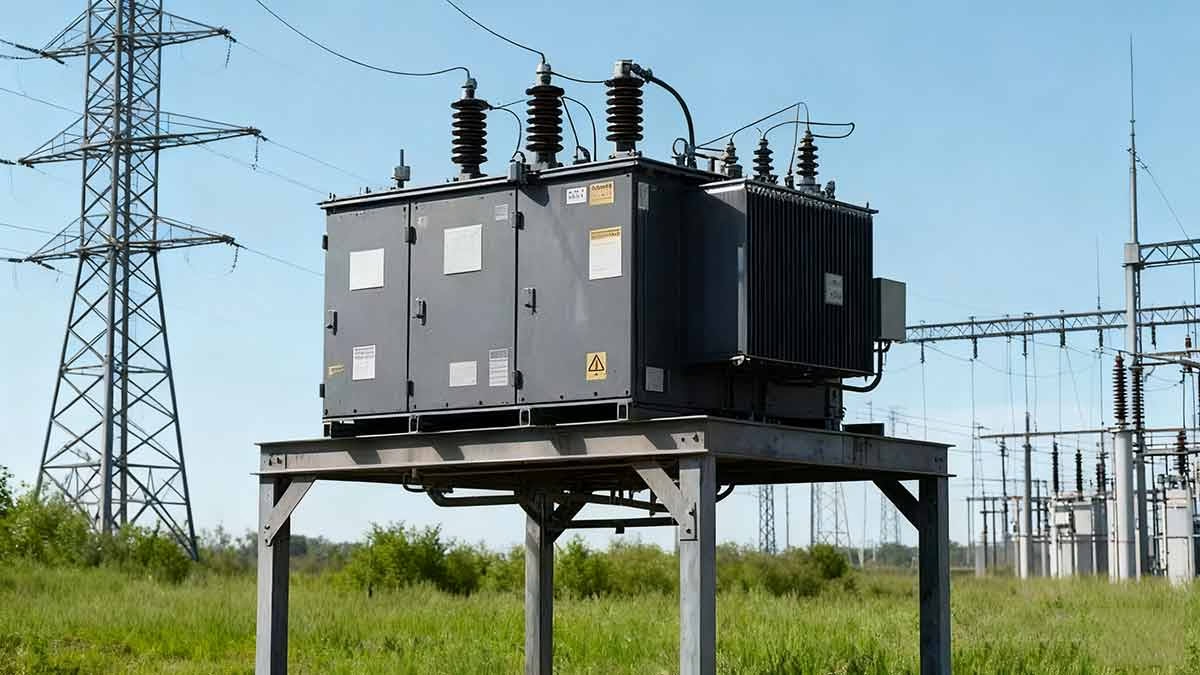
Future Trends: Innovations Shaping Pad Mounted Transformer Design
Will your pad mounted transformer choice remain relevant as technology evolves? The industry is rapidly advancing, with innovations focused on efficiency, sustainability, and smart grid integration. Understanding these trends helps you select a future-proof solution that adapts to changing needs.
Key emerging trends include smart monitoring systems, eco-friendly materials, compact modular designs, and seamless renewable energy integration. These innovations are transforming transformers from passive power distributors to intelligent, adaptable grid components.
Game-Changing Innovations
Smart Monitoring & Diagnostics
- Real-Time Data Tracking: Advanced sensors monitor temperature, load, oil quality (for oil-filled units), and insulation health—sending data to cloud-based platforms.
- AI-Powered Predictive Maintenance: Machine learning algorithms analyze data to predict failures (e.g., oil degradation, winding damage) before they occur, reducing unplanned downtime by up to 50%.
- Remote Management: Operators can adjust settings, troubleshoot issues, and schedule maintenance remotely—critical for hard-to-access sites.
Eco-Friendly Materials
- Biodegradable Insulating Fluids: Plant-based oils replace traditional mineral oils in oil-filled transformers, eliminating environmental risks from leaks.
- Recyclable & Sustainable Components: Manufacturers are using more recyclable metals and low-impact materials, with designs optimized for easy disassembly at end-of-life.
- High-Efficiency Cores: Amorphous metal and nanocrystalline cores reduce energy losses by 15–20% compared to traditional silicon steel cores, pushing efficiency above 99.5%.
Compact & Modular Designs
- Solid-State Technology: Emerging solid-state transformers (SSTs) use power electronics to reduce size and weight by 30–40% while increasing power density.
- Modular Construction: Plug-and-play components allow easy capacity upgrades (e.g., expanding from 500 kVA to 1000 kVA) without replacing the entire unit—ideal for growing businesses.
Renewable Energy Integration
- Bi-Directional Power Flow: Modern transformers handle power from rooftop solar, wind turbines, and energy storage systems—feeding excess energy back to the grid.
- Storage Integration: Built-in battery compartments enable load balancing, reducing peak demand charges and improving grid stability.
Current vs Future Technology Comparison
| Feature | Current Technology | Future Technology |
|---|---|---|
| Monitoring | Manual, periodic checks | AI-powered real-time diagnostics |
| Environmental Impact | Mineral oils, limited recycling | Biodegradable fluids, fully recyclable designs |
| Size & Weight | Standardized, bulky | Compact, high-density configurations |
| Grid Integration | Basic power distribution | Smart grid connectivity, bidirectional flow |
| Efficiency | 98–99% | >99.5% with advanced cores |
| Maintenance | Scheduled, reactive | Predictive, data-driven |
Real-World Application of Emerging Tech
For a new urban mixed-use development, we installed smart, modular pad mounted transformers with biodegradable oil and integrated storage. The results were impressive:
- 30% smaller footprint than traditional units, fitting in tight urban spaces.
- 15% lower energy losses, cutting utility costs for tenants.
- Seamless integration with rooftop solar panels, reducing carbon emissions by 22%.
- Predictive maintenance alerts that eliminated unplanned downtime.
Preparing for the Future
To avoid obsolescence, consider these steps:
- Choose transformers with upgradeable components (e.g., add-on smart monitoring kits).
- Prioritize models compatible with renewable energy and storage systems.
- Train maintenance teams on new technologies (e.g., AI diagnostics, remote management).
- Partner with manufacturers that invest in R&D and offer firmware/software updates.
Key Trends to Watch
- Quantum Sensors: Ultra-precise sensors for early detection of insulation degradation.
- Transformer-Integrated Microgrids: Units that power small, self-sufficient grid sections—critical for resilience during outages.
- Autonomous Grid Management: AI systems that optimize power flow without human intervention, maximizing efficiency.
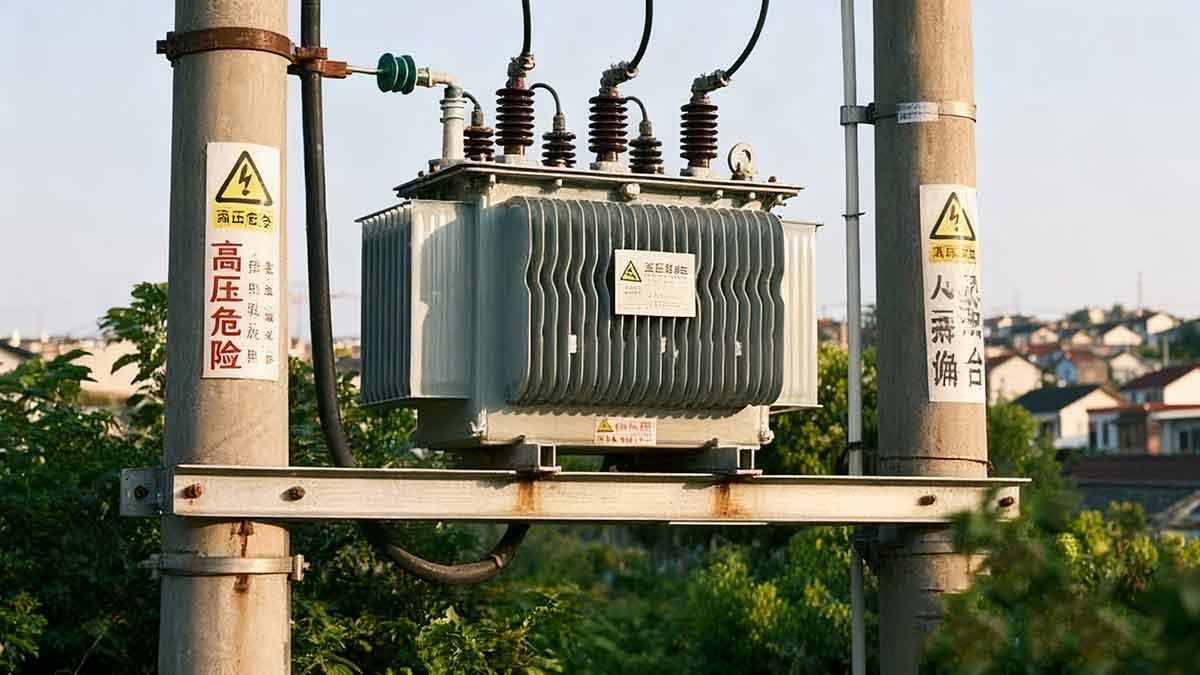
Conclusion
Choosing the right pad mounted transformer requires balancing technical needs, environmental conditions, safety requirements, and long-term costs. Oil-filled units excel at high capacity and efficiency, while dry type models prioritize safety and low maintenance. Single compartment designs offer simplicity and cost savings, while double compartment units enhance safety and accessibility.
By considering TCO (not just upfront cost) and aligning your choice with emerging trends, you’ll select a transformer that delivers reliable performance for decades—adapting to growing loads, renewable energy integration, and evolving grid demands.
Every project is unique, but focusing on your specific needs (load, environment, maintenance capabilities) will guide you to the optimal solution. When in doubt, partner with a trusted manufacturer to customize a transformer that fits your exact requirements.