
Transformer for electrical stands as an indispensable pillar of modern power infrastructure, especially in Africa’s rapidly expanding energy landscape. As the continent experiences unprecedented growth in urbanization, industrialization, and renewable energy adoption, these devices play a pivotal role in adjusting voltage levels—enabling cost-effective long-distance power transport and safe electricity delivery to homes, businesses, and industries. In a region where reliable power is critical for economic development and quality of life, transformer for electrical ensures grids remain resilient, adaptable, and efficient amid rising energy demands.
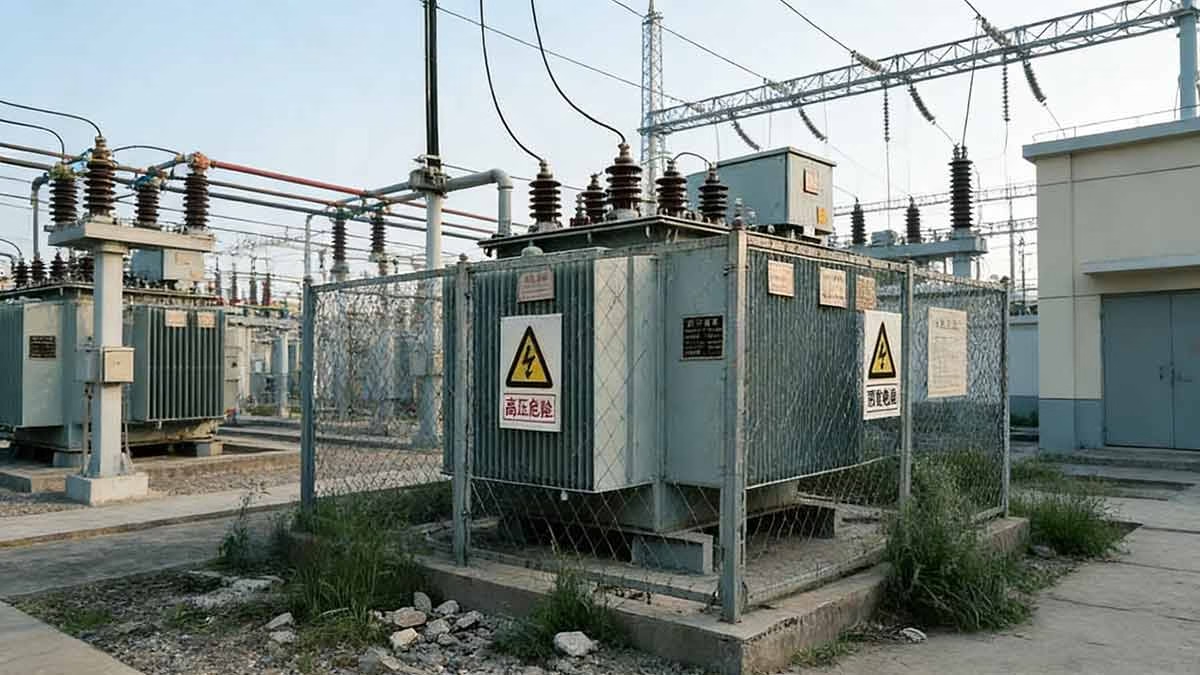
For over a decade in the power sector, I’ve witnessed firsthand how transformer for electrical shapes Africa’s energy narrative. Far beyond metal enclosures, they are the cornerstone of connecting remote power plants to bustling cities, rural communities to national grids, and renewable energy sources to existing infrastructure. Let’s explore the multifaceted role of transformer for electrical systems, its impact on Africa’s power systems, and the innovations driving its evolution.
Contents
hide
What Critical Roles Does Transformer for Electrical Play in African Power Transmission & Distribution Networks?
Africa’s power grid is uniquely challenged by vast geographical distances, diverse terrain, and varying levels of infrastructure development. Transformer for electrical addresses these hurdles by performing three core functions that keep the continent’s lights on and industries running.
Voltage Transformation: Bridging Distance and Demand
The ability to adjust voltage is the defining strength of transformer for electrical, tailored to Africa’s need for long-distance transmission across remote areas:
- Step-Up Transformers for Electrical: At power plants—whether hydroelectric in Ethiopia, thermal in South Africa, or wind farms in Kenya—these transformers boost voltage from 10–30 kV to 132–765 kV. This reduction in current minimizes energy loss during transmission over hundreds of kilometers, a critical advantage for Africa’s sprawling landscapes.
- Step-Down Transformers for Electrical: Located in regional substations, they lower high transmission voltages to 33–66 kV, making power suitable for distribution to urban centers and industrial zones.
- Distribution Transformers for Electrical: The final link in the chain, these compact units (often pole-mounted or ground-installed) reduce voltage to 220–240 V, the standard for residential and small commercial use across most African nations.
A standout project: We supplied step-up transformers for a wind farm in Tanzania, increasing output from 20 kV to 400 kV. This enabled power to be transmitted 400 km to Dar es Salaam, cutting transmission losses by 40% and powering 300,000 households—previously reliant on diesel generators.
Grid Stability and Load Balancing in Dynamic African Markets
Africa’s power demand fluctuates sharply between urban and rural areas, peak industrial hours, and seasonal variations (e.g., agricultural pumping in Nigeria or cooling needs in Egypt). Transformer for electrical ensures stability through:
- On-Load Tap Changers (OLTCs): Adjust voltage dynamically without interrupting supply, critical for regions with inconsistent demand.
- Phase-Shifting Transformers for Electrical: Regulate power flow between grid segments, preventing overloads in congested urban networks (e.g., Johannesburg or Lagos).
- Voltage Regulators: Maintain consistent voltage in rural areas with sparse load distribution, reducing equipment damage and blackouts.
| Transformer for Electrical Type | Core Function | Key Location in Africa |
|---|---|---|
| Step-Up | Boost voltage for long-distance transmission | Power plants (hydro, wind, thermal) |
| Step-Down | Reduce voltage for regional distribution | Urban/rural substations |
| Distribution | Final voltage adjustment for end-users | Neighborhoods, villages, small businesses |
| Voltage Regulator | Stabilize voltage in variable load areas | Rural electrification projects |
Isolation and Protection: Safeguarding Africa’s Grids
Transformer for electrical provides critical insulation and fault containment, a necessity in regions prone to extreme weather (e.g., tropical storms in West Africa) and grid faults:
- Galvanic Isolation: Prevents DC currents from damaging sensitive equipment, vital for integrating solar PV systems (a fast-growing sector in Africa).
- Fault Current Limitation: Contains electrical faults to specific grid segments, avoiding widespread outages—such as during lightning strikes in East Africa’s highlands.
- Harmonic Filtering: Reduces voltage distortions caused by modern electronics and renewable energy inverters, ensuring power quality for industrial users.
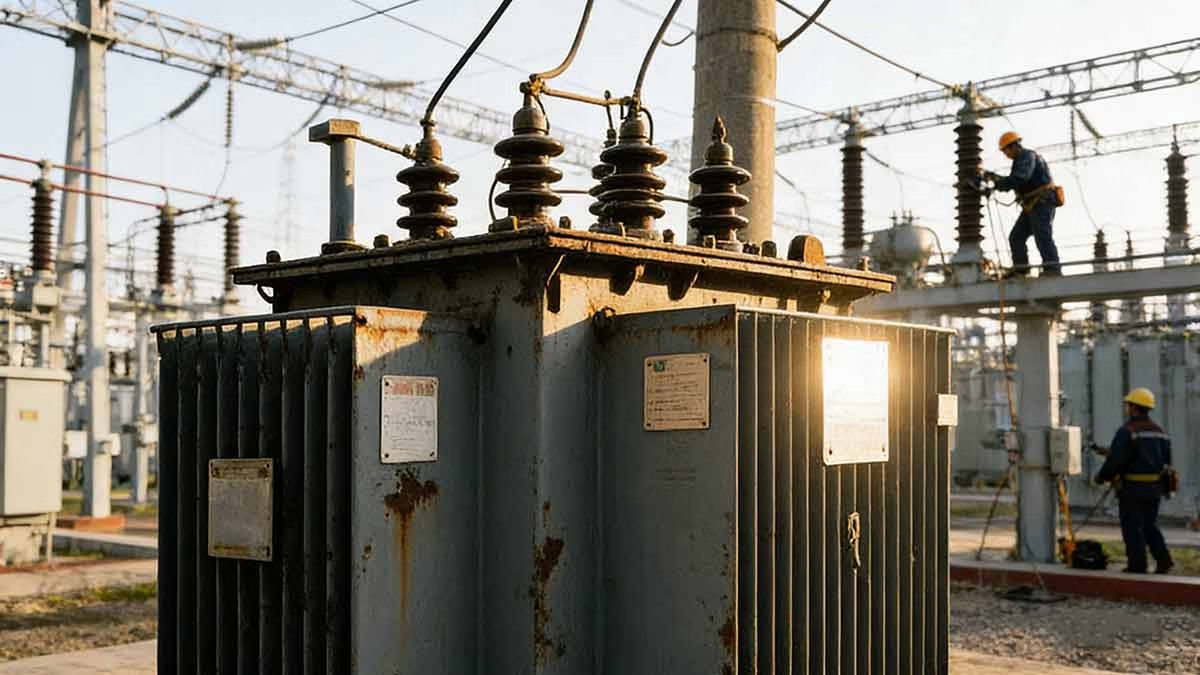
In a recent project in Ghana, a transformer’s isolation feature contained a fault in Accra’s central substation, limiting the outage to just two neighborhoods and saving local businesses an estimated $500,000 in lost productivity.
How Does Transformer for Electrical Enhance Efficiency and Reliability in Africa’s Power Grids?
Africa’s power sector faces significant efficiency gaps—traditional grids lose up to 25% of electricity during transmission, compared to 8–10% in developed nations. Transformer for electrical addresses this while boosting reliability, a key driver for attracting investment and supporting economic growth.
Cutting Transmission Losses for Cost-Effective Energy
High-voltage transmission, enabled by transformer for electrical, is the most effective way to reduce energy waste:
- Optimized Voltage Ratios: For Africa’s long-distance grids (e.g., the East African Power Pool connecting Kenya, Tanzania, and Uganda), transformers operate at 400–765 kV to minimize I²R losses.
- Low-Loss Core Materials: Modern transformers use grain-oriented electrical steel and amorphous metal cores, reducing no-load losses by up to 70% compared to older models.
- Efficient Cooling Systems: Oil-immersed and dry-type transformers with advanced cooling (e.g., forced air or water) maintain performance in Africa’s high-temperature environments.
In a 2023 project in Senegal, we upgraded transformers in the Dakar grid with amorphous cores and optimized cooling. The result: a 32% reduction in transmission losses, equivalent to powering 150,000 additional homes annually.
Voltage Regulation and Power Quality for Diverse Users
From small-scale farmers in Malawi to manufacturing plants in Morocco, transformer for electrical ensures consistent power quality:
- Smart OLTCs: Adjust voltage in real time to accommodate variable loads, such as peak industrial demand in Lagos or evening residential use in Cape Town.
- Power Factor Correction: Some transformers improve system efficiency by reducing reactive power, a common issue in grids with high motor loads (e.g., mining operations in Zambia).
| Aspect | Without Modern Transformer for Electrical | With Advanced Transformer for Electrical |
|---|---|---|
| Voltage Stability | Erratic (frequent brownouts/blackouts) | Consistent (±2% voltage variation) |
| Transmission Efficiency | 75–80% (high losses) | 92–98% (minimal waste) |
| Power Quality | Poor (voltage sags, harmonics) | High (clean, stable output) |
| System Flexibility | Limited (fixed voltage ratios) | Adaptive (adjusts to demand/renewables) |
Reliability Through Redundancy and Rapid Response
Africa’s grids often lack redundancy, making quick recovery from outages critical. Transformer for electrical enhances reliability via:
- Parallel Operation: Multiple transformers share loads, ensuring supply continues if one unit fails (e.g., in Nairobi’s central business district).
- Mobile Transformers: Deployable units for emergency replacements—vital for rural areas with limited access to spare parts (e.g., rural Mozambique).
- Condition Monitoring: Sensors track temperature, oil quality, and load levels, enabling predictive maintenance to avoid unplanned outages.
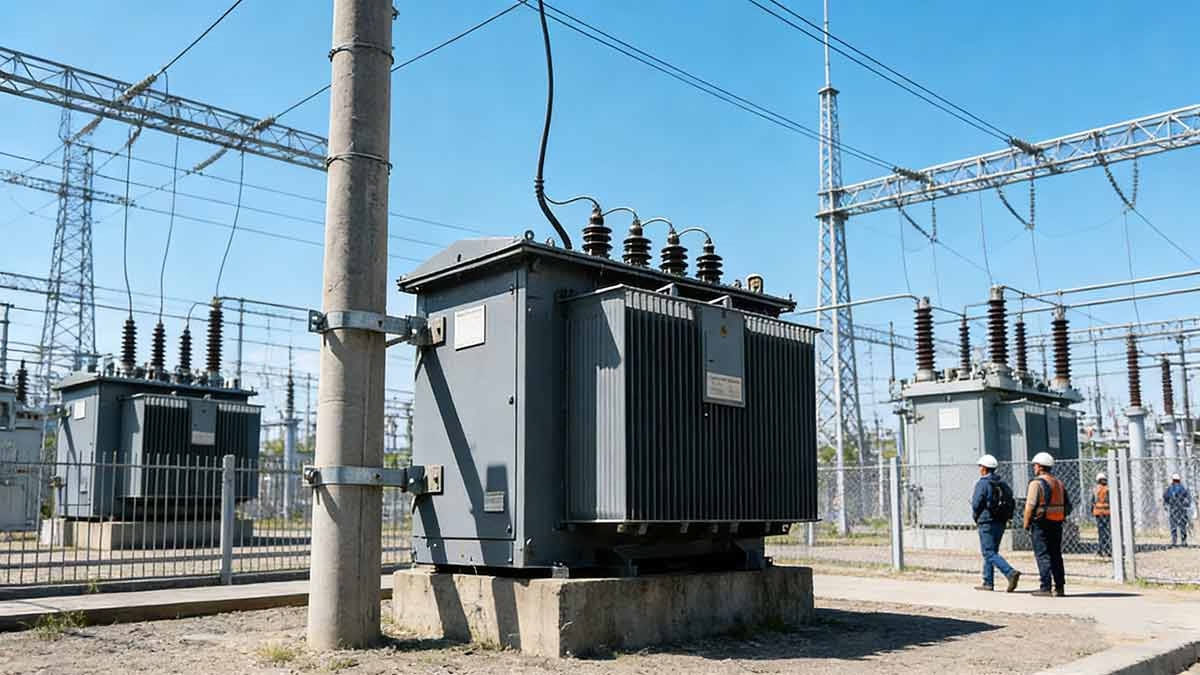
In Kenya’s Rift Valley, we implemented a condition monitoring system for 50 distribution transformers. By identifying potential issues early, we reduced unplanned outages by 55% over two years.
Environmental Sustainability for Africa’s Green Transition
As Africa embraces renewable energy (targeting 300 GW of clean power by 2030), transformer for electrical is evolving to support low-carbon grids:
- Eco-Friendly Insulating Oils: Biodegradable vegetable-based oils replace traditional mineral oils, reducing environmental risk in remote areas (e.g., wildlife reserves in Botswana).
- Energy-Efficient Designs: IE3/IE4-rated transformers cut energy waste, aligning with Kenya’s and South Africa’s carbon reduction goals.
- Compact, Transportable Models: Lightweight transformers ease delivery to remote renewable projects (e.g., solar farms in the Sahara).
What Types of Transformer for Electrical Are Deployed Across Africa’s Power Grid Stages?
Africa’s power grid spans three key stages—generation, transmission, and distribution—each requiring specialized transformer for electrical power tailored to local conditions.
Step-Up Transformers for Electrical: Power Plant Workhorses
Located at generation sites, these heavy-duty transformers are built to withstand Africa’s harsh operating environments:
- Function: Convert low-voltage power (10–30 kV) from generators to high-voltage (132–765 kV) for long-distance transmission.
- Key Features: Large capacity (50–500 MVA), robust cooling systems, and resistance to dust, humidity, and temperature extremes.
- African Application: Used in major projects like Ethiopia’s Grand Renaissance Dam (supplying 6,450 MW) and South Africa’s Medupi Thermal Power Station.
Transmission Transformers for Electrical: Long-Distance Connectors
These transformers maintain voltage stability across Africa’s intercountry grids:
- Function: Regulate high voltages (132–765 kV) between substations, ensuring efficient power flow over hundreds of kilometers.
- Key Features: Equipped with OLTCs for voltage adjustment, and designed for outdoor installation in remote areas.
- African Application: Critical for regional power pools like the Southern African Power Pool (SAPP) and the West African Power Pool (WAPP).
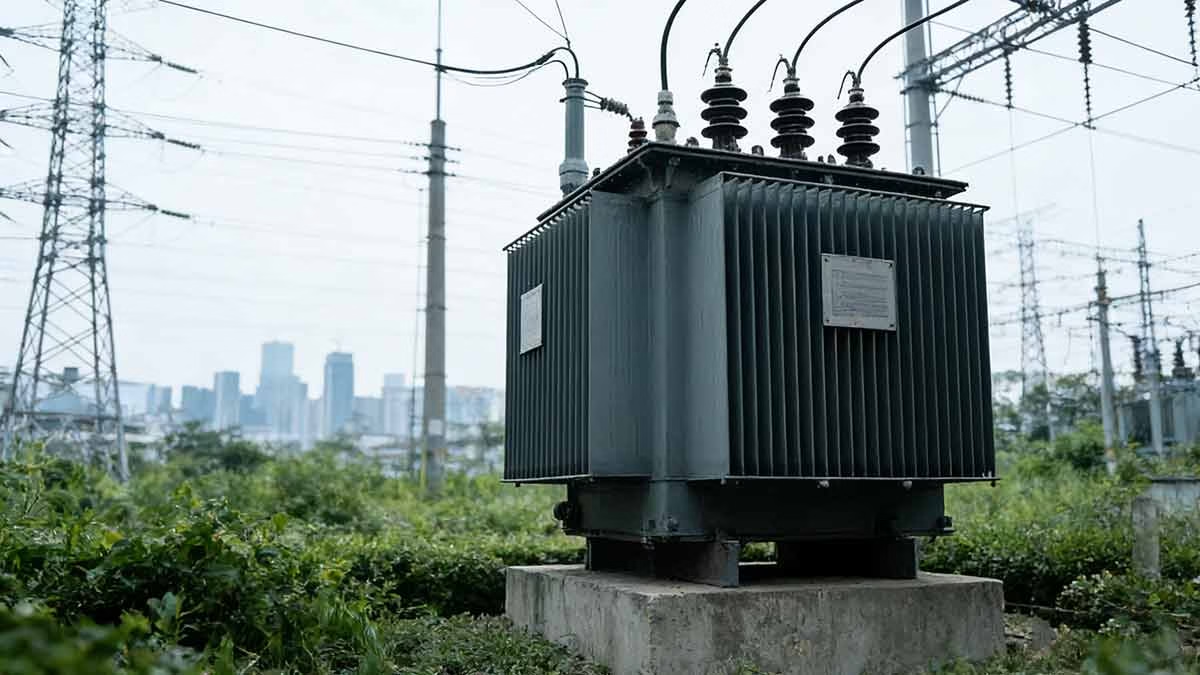
Substation Transformers for Electrical: Regional Voltage Hubs
Found in substations across cities and towns, these transformers bridge transmission and distribution:
- Function: Step down high transmission voltages (132–400 kV) to medium voltages (22–66 kV) for local distribution.
- Key Features: Compact design for urban substations, and compatibility with smart grid systems.
- African Application: Deployed in major cities like Cairo, Lagos, and Johannesburg to supply industrial zones and residential areas.
Distribution Transformers for Electrical: Last-Mile Power Delivery
The most visible type in Africa, these transformers bring electricity to end-users:
- Function: Reduce medium voltage (22–66 kV) to low voltage (220–240 V) for homes, shops, and small businesses.
- Types: Pole-mounted (for rural areas), ground-mounted (for urban neighborhoods), and compact units (for dense cities).
- African Application: Central to rural electrification projects, such as Nigeria’s Rural Electrification Agency (REA) initiative to power 5 million rural homes.
Specialized Transformers for Electrical: Tailored Solutions
Africa’s unique energy needs demand specialized transformers, including:
- Isolation Transformers: Used in sensitive applications like hospitals and data centers (e.g., in Nairobi’s tech hubs).
- Instrument Transformers: Measure voltage/current in high-voltage systems, critical for grid monitoring in countries like Ghana.
- Autotransformers: Provide small voltage adjustments, ideal for integrating renewable energy projects (e.g., solar farms in Tunisia).
How Is Transformer for Electrical Evolution to support Africa’s Renewable Energy Integration?
Africa is home to 60% of the world’s best solar resources and significant wind potential, but integrating these variable energy sources requires advanced transformer for electrical.
Handling Variable Renewable Inputs
Solar and wind power fluctuate with weather conditions—transformer for electrical now adapts to these changes:
- Wide Input Voltage Ranges: Accommodate the variable output of solar PV panels (e.g., in South Africa’s Northern Cape) and wind turbines (e.g., in Senegal’s Taiba N’Diaye Wind Farm).
- Rapid Response Time: Adjust voltage in milliseconds to avoid grid instability during sudden changes in generation.
Bidirectional Power Flow for Distributed Energy
As more African households and businesses install solar panels (e.g., Kenya’s “pay-as-you-go” solar market), transformer for electrical must manage power flowing both to and from the grid:
- Reverse Power Handling: Safely route excess solar power from homes back to the grid, as seen in Tanzania’s Zanzibar Solar Project.
- Smart Switching: Automatically detect power flow direction and adjust operations to maintain stability.
Renewable-Specific Design Features
Transformers for renewable projects in Africa include:
- Low-Loss Operation: Minimize energy waste when renewable generation is low (e.g., nighttime for solar).
- Harmonic Mitigation: Reduce voltage distortions caused by solar inverters, ensuring compatibility with existing grids.
- Modular Design: Scalable units that grow with renewable installations (e.g., Uganda’s solar mini-grids for rural communities).
In a 2022 project, we supplied bidirectional transformers for a 100 MW solar farm in Rwanda. The transformers enabled the farm to feed excess power into the national grid, supporting Rwanda’s goal of 100% renewable electricity by 2050.
What Innovations in Transformer for Electrical Are Shaping Africa’s Smart Grids?
Smart grids—equipped with digital technology, real-time monitoring, and automation—are transforming Africa’s power sector. Transformer for electrical is at the forefront of this revolution, with innovations tailored to the continent’s needs.
Digital Twin Technology for Transformer for Electrical
Digital twins are virtual replicas of physical transformers, enabling:
- Remote Monitoring: Track performance from control centers, reducing the need for on-site inspections in remote areas (e.g., rural Namibia).
- Predictive Analysis: Simulate scenarios like load spikes or extreme weather to anticipate issues before they occur.
- Optimization: Fine-tune transformer settings to maximize efficiency, as implemented in Cape Town’s smart grid pilot.
Solid-State Transformers (SSTs): The Future of Power Distribution
SSTs replace traditional iron cores and copper windings with power electronics, offering:
- Faster Response: Adjust voltage in microseconds, ideal for stabilizing grids with high renewable penetration.
- Compact Size: 70% smaller and lighter than traditional transformers, perfect for dense urban areas (e.g., Lagos Island) and remote mini-grids.
- Enhanced Power Quality: Eliminate harmonics and voltage sags, critical for sensitive industries like manufacturing and IT.
AI-Driven Transformer Management
Artificial intelligence (AI) is revolutionizing how Africa manages its transformers:
- Predictive Maintenance: AI algorithms analyze sensor data to predict failures (e.g., oil leaks, core overheating) weeks in advance, as used in Kenya Power’s transformer fleet.
- Load Forecasting: Anticipate demand patterns (e.g., agricultural pumping seasons in Mali) to optimize transformer loading.
- Autonomous Operation: Smart transformers make real-time decisions without human intervention, improving grid resilience during outages.
| Feature | Traditional Transformers | Smart Transformer for Electrical |
|---|---|---|
| Monitoring | Manual, periodic checks | Real-time digital monitoring |
| Maintenance | Reactive (fix after failure) | Predictive (prevent failures) |
| Decision-Making | Human-led | AI-assisted or autonomous |
| Data Utilization | Limited | Big data analysis for optimization |
Cybersecurity for Connected Transformers
As transformers become more digital, protecting them from cyber threats is critical:
- Encrypted Communications: Secure data transfer between transformers and control centers, preventing unauthorized access.
- Intrusion Detection: Real-time alerts for suspicious activity, as implemented in South Africa’s Eskom grid.
- Secure Firmware Updates: Authenticated updates to patch vulnerabilities, ensuring long-term security.
Sustainable Materials and Designs
Innovations in transformer materials align with Africa’s commitment to sustainability:
- Nanocomposite Cores: Reduce energy losses by 20–30% compared to traditional steel cores.
- Biodegradable Oils: Vegetable-based oils that are non-toxic and environmentally friendly, used in Botswana’s wildlife-sensitive areas.
- Recycled Components: Transformers built with recycled steel and copper, lowering carbon footprints.
Conclusion
Transformer for electrical is more than a component of Africa’s power grid—it is the driving force behind the continent’s energy transition, economic growth, and universal access to electricity. From enabling long-distance transmission across vast landscapes to integrating renewable energy sources and powering smart grids, these devices are evolving to meet Africa’s unique challenges and opportunities.
As Africa continues to invest in power infrastructure—with projects like the African Continental Free Trade Area (AfCFTA) requiring reliable electricity for cross-border trade—transformer for electrical will remain central to building resilient, efficient, and sustainable grids. By embracing innovations like digital twins, solid-state technology, and AI-driven management, African nations can unlock their energy potential, reduce reliance on fossil fuels, and ensure every community has access to the power it needs to thrive.
For transformer manufacturers, the African market demands solutions that are durable, efficient, and tailored to local conditions—whether for a remote solar mini-grid in Madagascar or a large-scale substation in Johannesburg. Transformer for electrical is not just shaping Africa’s present—it is laying the foundation for a brighter, more electrified future.