
Transformer electricity lies at the heart of electrical power systems, enabling safe, efficient voltage conversion across every sector of modern life. From powering cities to integrating renewable energy, transformers are indispensable—yet their complexity often goes unnoticed. With decades of expertise in power infrastructure, this guide demystifies transformer technology, exploring types, key differences, industry applications, and emerging innovations that are shaping the future of energy distribution.
Contents
hide
Transformer Fundamentals: Types & Core Operating Principles
Have you ever questioned how electricity travels from power plants to your home at a usable voltage? The answer hinges on transformers, whose operation is rooted in a simple yet powerful scientific principle—one that has revolutionized global energy systems.
Transformers operate on electromagnetic induction, converting voltage levels while preserving overall power (minus minimal losses). By manipulating magnetic flux between two coils, they adjust voltage and current to match specific application needs. Below, we break down the core components, types, and design elements that define transformer functionality.
The Science of Electromagnetic Induction
At every transformer’s core lies three essential components, working in harmony to transfer energy:
- Primary Coil: The “input” side where high or low-voltage electricity enters.
- Magnetic Core: Typically constructed from laminated steel, this component channels magnetic flux—reducing energy waste and maximizing efficiency.
- Secondary Coil: The “output” side where converted voltage exits, with the turn ratio between primary and secondary coils dictating voltage change (e.g., 10:1 turns ratio = 10x voltage increase).
When alternating current (AC) flows through the primary coil, it creates a fluctuating magnetic field. This field induces a voltage in the secondary coil, enabling voltage step-up or step-down without direct electrical contact.
Transformer Types by Voltage Function
Transformers are categorized by their voltage-changing role, each serving a distinct link in the power chain:
- Step-Up Transformers: Increase voltage (and decrease current) for long-distance transmission. Critical for power plants, where they boost generator output (e.g., 11kV → 400kV) to minimize line losses.
- Step-Down Transformers: Reduce voltage to safe, usable levels for end-users. Found in substations and utility poles, they convert high transmission voltages (e.g., 11kV → 415V) for homes, offices, and factories.
- Isolation Transformers: Maintain voltage levels while electrically separating circuits. Ideal for sensitive equipment (e.g., medical devices, data centers) to protect against electrical noise and surges.
Key Design Elements: Core Types & Cooling Methods
Transformer performance is shaped by two critical design choices:
- Core Designs:
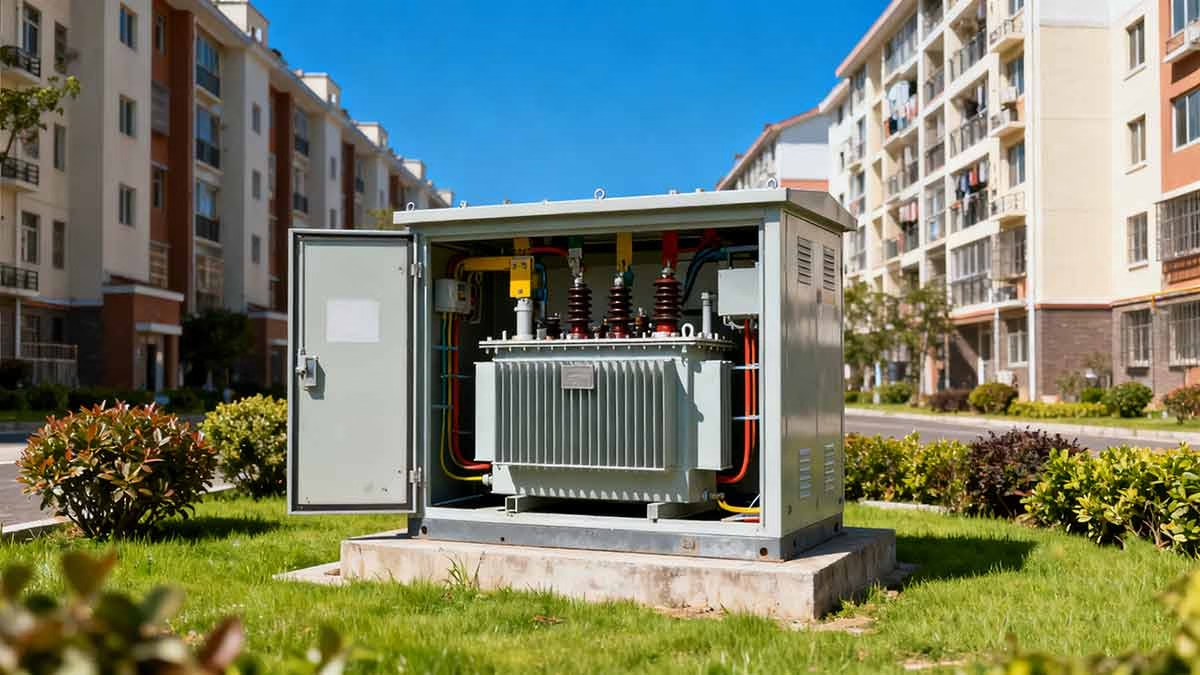
- Core-Type: Windings wrap around the core’s limbs—compact and cost-effective for distribution transformers in urban areas.
- Shell-Type: The core encloses the windings—superior for high-voltage applications (e.g., transmission) due to enhanced flux control.
- Cooling Systems:
- Oil-Cooled: Uses mineral oil for insulation and heat dissipation—common in large power transformers, as oil efficiently transfers heat even in extreme conditions.
- Air-Cooled (Dry-Type): Relies on natural or forced air circulation—ideal for indoor installations (e.g., data centers, hospitals) where fire safety is paramount.
| Transformer Type | Voltage Function | Typical Core Design | Cooling Method | Primary Applications |
|---|---|---|---|---|
| Step-Up | Increases | Shell-Type | Oil-Cooled | Power plants, transmission networks |
| Step-Down | Decreases | Core-Type | Oil or Air-Cooled | Substations, residential/business supply |
| Isolation | No change | Either | Air-Cooled | Sensitive electronics, medical equipment |
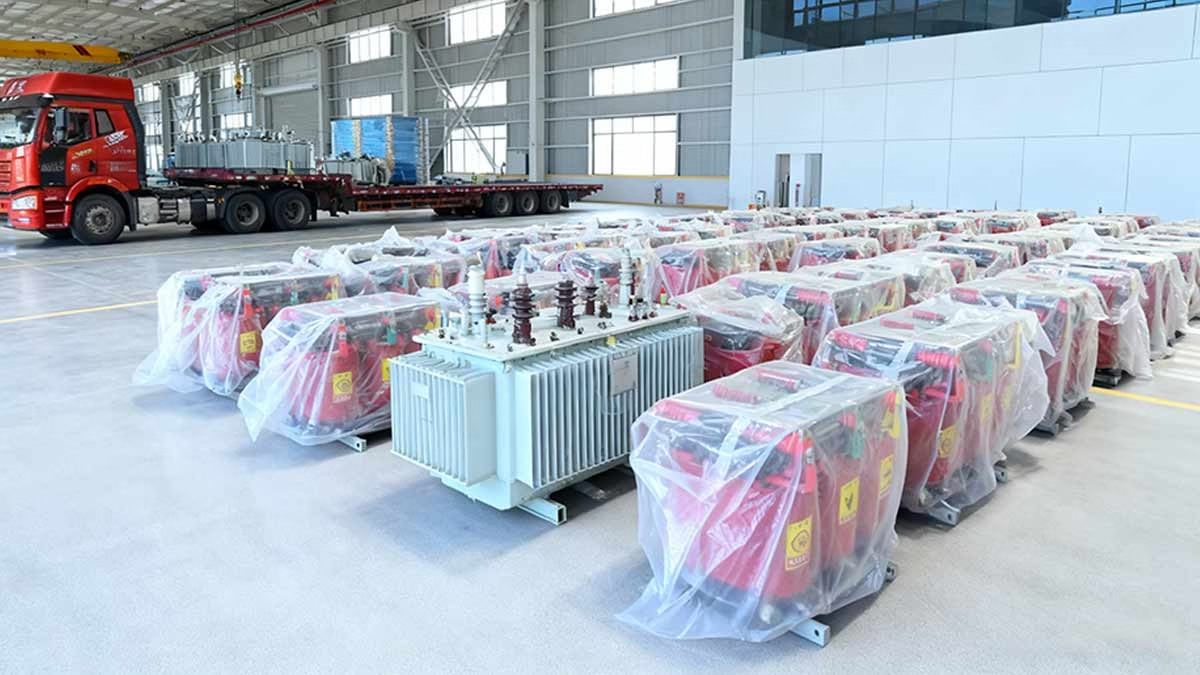
Transformer design is never one-size-fits-all. For a recent industrial project with space constraints, we custom-engineered a hybrid core-type transformer that balanced compactness with high-voltage performance—proving that flexibility is key to solving unique infrastructure challenges. Modern transformers also prioritize efficiency, with top-tier models achieving 99%+ efficiency—small gains that translate to millions in energy savings over a unit’s lifespan.
Power vs. Distribution Transformers: Key Distinctions & Use Cases
Confused about whether to specify a power transformer or distribution transformer for your project? The choice hinges on voltage needs, capacity, and placement in the power chain—and selecting the wrong type can lead to inefficiency, downtime, or system failure.
Power transformers handle high-voltage, large-capacity energy transfer between power plants and substations. Distribution transformers, by contrast, deliver lower-voltage power directly to end-users. Below, we explore their defining characteristics and applications.
Power Transformers: The Grid’s Heavy Lifters
Power transformers are the backbone of long-distance energy transmission, designed to handle extreme voltages and capacities:
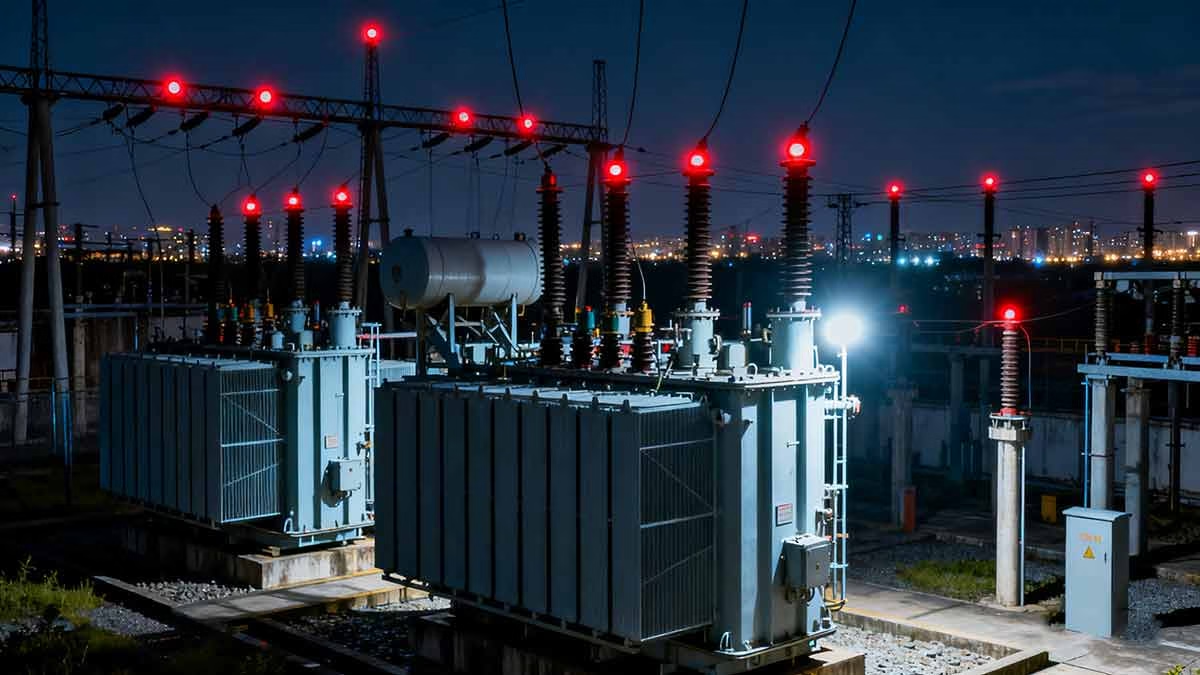
- Voltage Range: 69kV and above (often 220kV–765kV for major transmission networks).
- Capacity: 10 MVA and higher—we’ve installed units up to 500 MVA at hydroelectric plants, where massive power outputs demand robust performance.
- Applications: Power generation facilities, transmission substations, and intergrid connections.
- Key Features:
- Cooling: Forced oil and forced air (OFAF) systems to manage heat from high-capacity operation.
- Load Profile: Designed for steady, constant loads—critical for maintaining grid stability.
- Protection: Complex systems (e.g., differential relays, dissolved gas analysis) to safeguard against faults in critical infrastructure.
Distribution Transformers: Delivering Power to End-Users
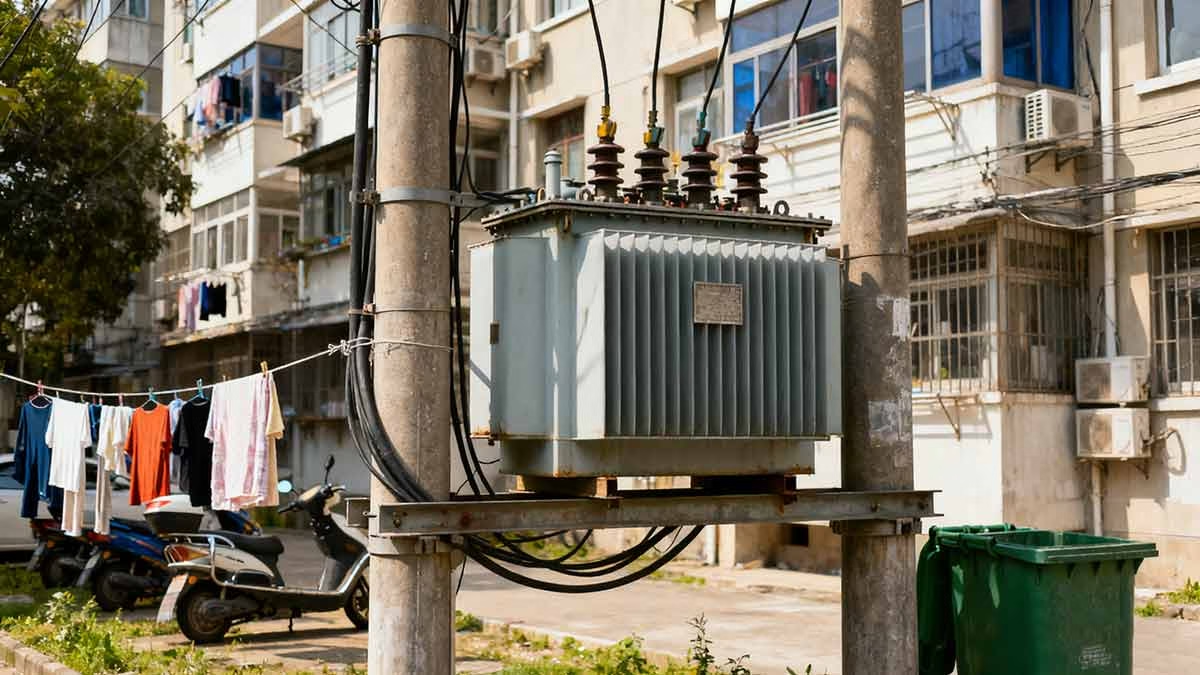
Distribution transformers are the final link in the power chain, tailored for local, variable loads:
- Voltage Range: Below 69kV (typically 11kV input, 415V/240V output for residential/commercial use).
- Capacity: Below 10 MVA—common sizes range from 25 kVA (small neighborhoods) to 2,500 kVA (industrial parks).
- Applications: Utility poles, local substations, and on-site industrial/business installations.
- Key Features:
- Cooling: Natural oil and air (ONAN) systems—sufficient for variable, lower-capacity loads.
- Load Profile: Engineered to handle daily fluctuations (e.g., 300% peaks in residential areas during evening hours).
- Protection: Simplified overcurrent and earth fault protection—cost-effective for widespread deployment.
| Characteristic | Power Transformers | Distribution Transformers |
|---|---|---|
| Voltage Levels | ≥69kV | ≤69kV |
| Capacity | ≥10 MVA | ≤10 MVA |
| Core Application | Power plants, transmission substations | Local distribution, end-user supply |
| Cooling Method | OFAF (Forced Oil/Air) | ONAN (Natural Oil/Air) |
| Load Stability | Constant, steady loads | Highly variable daily loads |
| Protection Systems | Complex (differential, DGA monitoring) | Simplified (overcurrent, earth fault) |
| Efficiency Focus | Critical for large power volumes | Strict standards to reduce system-wide losses |
The line between these types can blur for specialized applications. For a steel mill project, we installed a 40 MVA transformer that combined power transformer capacity with distribution transformer flexibility—adapting to the facility’s fluctuating industrial loads while connecting to the high-voltage grid. Maintenance also differs: power transformers require sophisticated monitoring (e.g., online DGA for oil condition), while distribution transformers rely on periodic visual inspections and load checks.
Dry-Type vs. Oil-Filled Transformers: Choosing the Right Solution
Deciding between dry-type and oil-filled transformers is a critical choice that impacts safety, efficiency, and long-term costs. The selection hinges on installation location, capacity needs, environmental risks, and regulatory requirements—each type offering distinct advantages for specific scenarios.
Dry-Type Transformers: Safety & Simplicity for Indoor Use
Dry-type transformers use air and solid insulation (e.g., epoxy resin) instead of oil, making them ideal for indoor or populated environments:
- Core Advantages:
- Fire Safety: No flammable oil—essential for hospitals, data centers, and shopping malls where fire risk is a top concern.
- Environmental Friendliness: Zero risk of oil leaks or spills—perfect for eco-sensitive areas (e.g., near water sources) or urban settings.
- Low Maintenance: No oil testing or containment requirements—reducing operational costs over time.
- Capacity & Voltage: Typically up to 35 MVA and 35 kV—most common sizes range from 500 kVA to 2,500 kVA for commercial/light industrial use.
- Best For: Indoor installations, sensitive environments, and projects with strict environmental regulations.
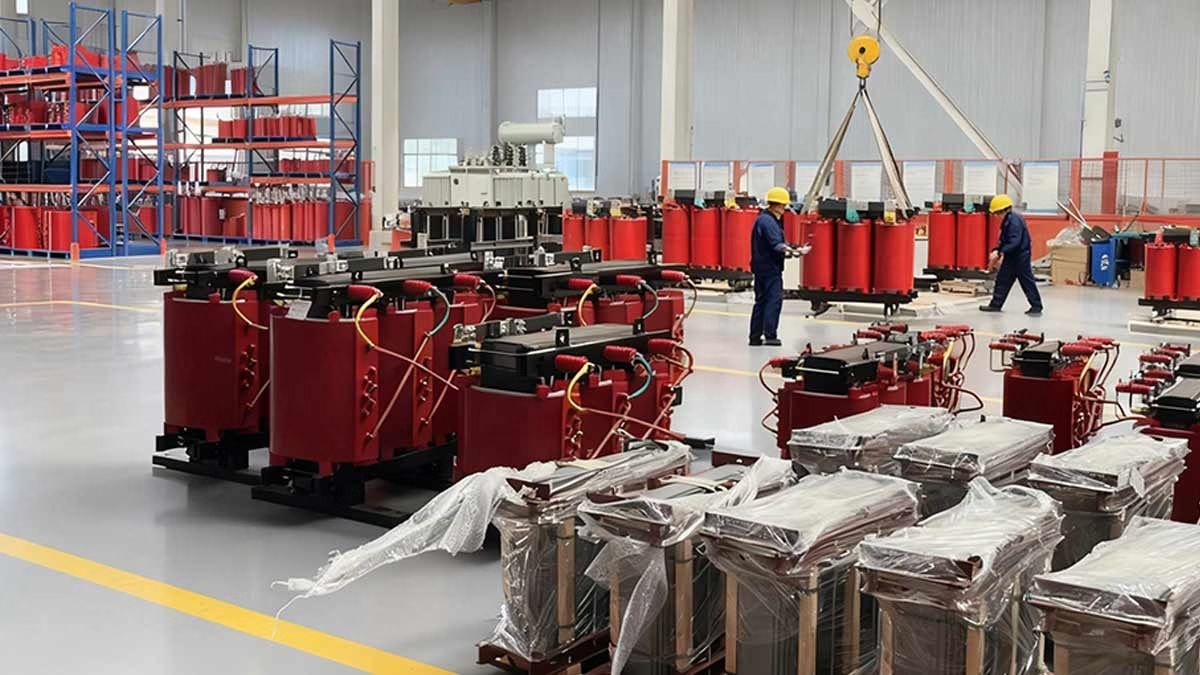
We specified dry-type transformers for a downtown data center project, where their compact size and fire safety compliance aligned with the facility’s dense layout and strict building codes. The units required minimal maintenance, reducing downtime for the 24/7 operation.
Oil-Filled Transformers: Capacity & Efficiency for Outdoor Use
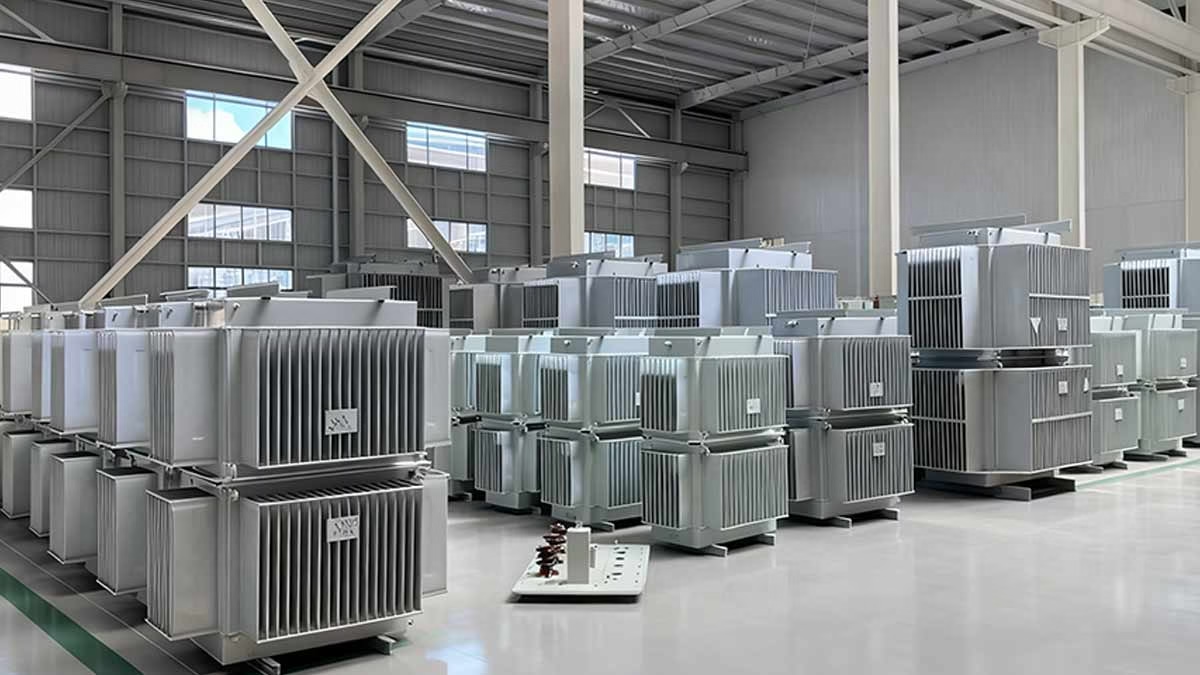
Oil-filled transformers use mineral oil (or biodegradable ester fluids) for insulation and cooling, offering superior heat dissipation for high-capacity applications:
- Core Advantages:
- High Capacity: Handles up to 1,000+ MVA and 765 kV—critical for power transmission and heavy industrial use.
- Thermal Efficiency: Oil transfers heat more effectively than air—enabling reliable operation in extreme temperatures (e.g., deserts or cold climates).
- Long Lifespan: 30–50+ years with proper maintenance—we restored a 50-year-old oil-filled transformer for a utility client, extending its service life at a fraction of replacement cost.
- Key Considerations:
- Maintenance: Requires regular oil testing (e.g., dielectric strength, moisture content) and containment systems to prevent spills.
- Installation: Best for outdoor or isolated locations (e.g., substations, industrial yards) due to fire risk and space needs.
Critical Selection Factors
To choose the right type, evaluate these key criteria:
| Factor | Dry-Type Transformers | Oil-Filled Transformers |
|---|---|---|
| Installation Location | Indoor, populated areas | Outdoor, isolated sites |
| Capacity Range | Up to 35 MVA | Up to 1,000+ MVA |
| Fire Risk | Very Low | Moderate (requires containment) |
| Environmental Impact | Minimal (no oil) | Low with proper containment; biodegradable oil options available |
| Maintenance Needs | Low (air filter checks, visual inspections) | Moderate (oil testing, leak checks) |
| Noise Level | Slightly higher (air cooling) | Quieter (oil dampens vibration) |
| Initial Cost | Higher | Lower |
| Lifespan | 20–30 years | 30–50+ years |
Hybrid solutions are emerging for niche applications. For a coastal industrial facility, we used oil-filled transformers with biodegradable ester fluids—combining high capacity with environmental safety to meet coastal regulations. Ambient conditions also matter: dry-type transformers in tropical climates may need dehumidification systems, while oil-filled units in cold regions require heating to maintain oil viscosity.
Transformer Applications Across Industries
Transformers are the unsung heroes of modern infrastructure, powering everything from utility grids to renewable energy systems, industrial processes, and daily life. Their adaptability—from compact residential units to massive industrial transformers—makes them indispensable across sectors. Below, we explore key applications and tailored transformer solutions.
Power Utilities: The Backbone of Energy Distribution
Utilities rely on transformers at every stage of power delivery:
- Generation: Step-up transformers boost generator output (e.g., 15kV → 400kV) for long-distance transmission, minimizing energy loss.
- Transmission: Autotransformers adjust voltage between grid segments (e.g., 400kV ↔ 220kV) to maintain stability.
- Distribution: Step-down transformers convert high voltage to end-user levels (e.g., 11kV → 415V) for neighborhoods and businesses.
For a national utility project, we installed 200 MVA autotransformers to interconnect regional grids—improving reliability and enabling power sharing during peak demand.
Industrial Manufacturing
Heavy industry demands specialized transformers to handle extreme loads and harsh conditions:
- Steel Mills: Arc furnace transformers (50–300 MVA) supply massive currents (up to 200,000A) for metal melting.
- Chemical/Electrolysis Plants: Rectifier transformers convert AC to DC for processes like aluminum smelting or chlorine production.
- Mining: Rugged, dust-resistant transformers power remote operations—we designed high-altitude units for a mountain mining site, with enhanced cooling to withstand thin air.
Renewable Energy Integration
Transformers are critical to unlocking green energy’s potential, bridging variable renewable sources with the grid:
- Wind Farms: Step-up transformers (1–4 MVA) in turbine nacelles convert low generator voltage to grid-compatible levels. Offshore wind projects use marine-grade units resistant to saltwater corrosion.
- Solar Farms: Inverter transformers convert DC solar output to AC, then step up voltage (e.g., 480V → 11kV) for grid connection. A 100 MW solar project we supported used 40+ 2.5 MVA inverter transformers.
- Hydroelectric: Generator step-up transformers (10–300 MVA) connect small and large hydro plants to the transmission grid.
Transportation & Mobility
Electrified transportation relies on transformers for efficient power delivery:
- Railways: 25 kV trackside transformers power high-speed trains, with units placed every 50 km to maintain consistent voltage.
- EV Charging: Compact 500 kVA dry-type transformers support fast-charging networks—we installed units for a city-wide EV program, balancing charging loads with residential demand.
- Airports: 400 Hz transformers supply ground power to aircraft, replacing noisy jet engines during maintenance.
Commercial & Residential Buildings
Transformers adapt power for daily use in homes, offices, and public spaces:
- High-Rises: Multiple dry-type transformers (2–5 MVA) distribute power across floors, avoiding single-point failures.
- Hospitals: Isolation transformers (10 kVA–1 MVA) protect sensitive medical equipment from electrical noise.
- Data Centers: High-efficiency transformers (99.5%+) reduce energy waste—critical for 24/7 operations with massive power demands.

The Future of Transformers: Emerging Technologies & Innovations
Transformer technology is evolving rapidly, driven by the need for smarter grids, higher efficiency, and seamless renewable integration. From solid-state designs to AI-powered intelligence, emerging innovations are redefining what transformers can do—making power systems more flexible, sustainable, and resilient.
Solid-State Transformers (SSTs): The Digital Revolution
Solid-state transformers replace traditional magnetic cores with power electronics (e.g., silicon carbide semiconductors), enabling unprecedented control:
- Key Capabilities: Bidirectional power flow (critical for solar/wind integration), AC/DC conversion, and real-time voltage/frequency adjustment.
- Advantages: 50% smaller and lighter than conventional transformers—ideal for microgrids, EV charging, and urban substations with space constraints.
- Pilot Applications: We’re testing SSTs in a university microgrid, where they seamlessly balance solar, battery storage, and campus loads.
- Challenges: Higher upfront costs and ruggedization needs for outdoor use—ongoing advancements are driving down prices.
High-Temperature Superconducting (HTS) Transformers
HTS transformers use superconducting materials (cooled by liquid nitrogen) to eliminate electrical resistance:
- Benefits: Near-zero energy loss (99.7%+ efficiency), compact size (30–50% smaller than conventional units), and lower cooling requirements than legacy superconductors.
- Use Cases: Urban substations and ships—we monitored a 5 MVA HTS trial in a city center, where its small footprint fit in a repurposed utility vault.
- Roadblocks: Cost of superconducting materials and complex cooling systems—scaling production will drive affordability.
AI-Driven Smart Transformers
Intelligent transformers integrate sensors, IoT connectivity, and AI to enable predictive maintenance and adaptive operation:
- Features: Real-time monitoring of temperature, load, and insulation health; AI algorithms predict failures with 95% accuracy.
- Advantages: Reduced outage times (30%+ in utility trials), optimized load balancing, and integration with smart grids.
- Deployment: A large utility client deployed AI-driven transformers across their network, cutting maintenance costs by 25% through targeted repairs.
- Considerations: Cybersecurity is critical—we’re developing encrypted communication protocols to protect against grid attacks.
Nanocrystalline Core Transformers
Advanced core materials are pushing efficiency boundaries:
- Technology: Nanocrystalline alloys replace traditional silicon steel, reducing core losses by 30–40%.
- Applications: Data centers and renewable energy systems—we installed these transformers for a cloud provider, cutting annual energy costs by 15%.
- Future Potential: Combining nanocrystalline cores with AI monitoring creates “ultra-efficient” transformers that adapt to load conditions in real time.
| Emerging Technology | Key Advantages | Primary Applications | Current Challenges |
|---|---|---|---|
| Solid-State Transformers | Compact, bidirectional, AC/DC compatible | Microgrids, EV charging | Cost, outdoor ruggedization |
| HTS Transformers | Ultra-high efficiency, small footprint | Urban substations, ships | Material costs, cooling complexity |
| AI-Driven Smart Transformers | Predictive maintenance, adaptive control | Smart grids, utilities | Cybersecurity, legacy integration |
| Nanocrystalline Core Transformers | Reduced core losses, energy savings | Data centers, renewables | Manufacturing complexity |
The future of transformers lies in system integration: combining SSTs with HTS materials and AI creates a new generation of “all-in-one” power management solutions. We’re also exploring modular designs that enable scalable capacity—critical for growing cities and evolving renewable portfolios. Sustainability is another focus: biodegradable insulation fluids, recyclable components, and low-carbon manufacturing processes are becoming standard for forward-thinking projects.
Conclusion
Transformers are the invisible backbone of modern energy systems, enabling safe, efficient power delivery across utilities, industry, transportation, and daily life. From traditional oil-filled units to cutting-edge solid-state designs, their adaptability makes them indispensable as the world transitions to renewable energy and smart grids.
Choosing the right transformer—whether power vs. distribution, dry-type vs. oil-filled—requires a deep understanding of your project’s voltage needs, environment, and long-term goals. As technology evolves, transformers will become even more intelligent, efficient, and flexible—playing a pivotal role in building sustainable, resilient energy infrastructure for the future.
Whether you’re upgrading an industrial facility, integrating renewable energy, or designing a smart city grid, the right transformer solution balances performance, safety, and cost—ensuring reliable power for years to come.