
Discover the top benefits of using electronic transformers for industrial & consumer electronics—enhanced efficiency, reliable power conversion, and compact design. Electronic transformers have redefined power conversion in both industrial and consumer sectors, offering unmatched efficiency, compact design, and enhanced performance. Their ability to deliver precise voltage regulation, minimize electromagnetic interference (EMI), and improve safety has made them indispensable for applications ranging from smart factories to smartphones.
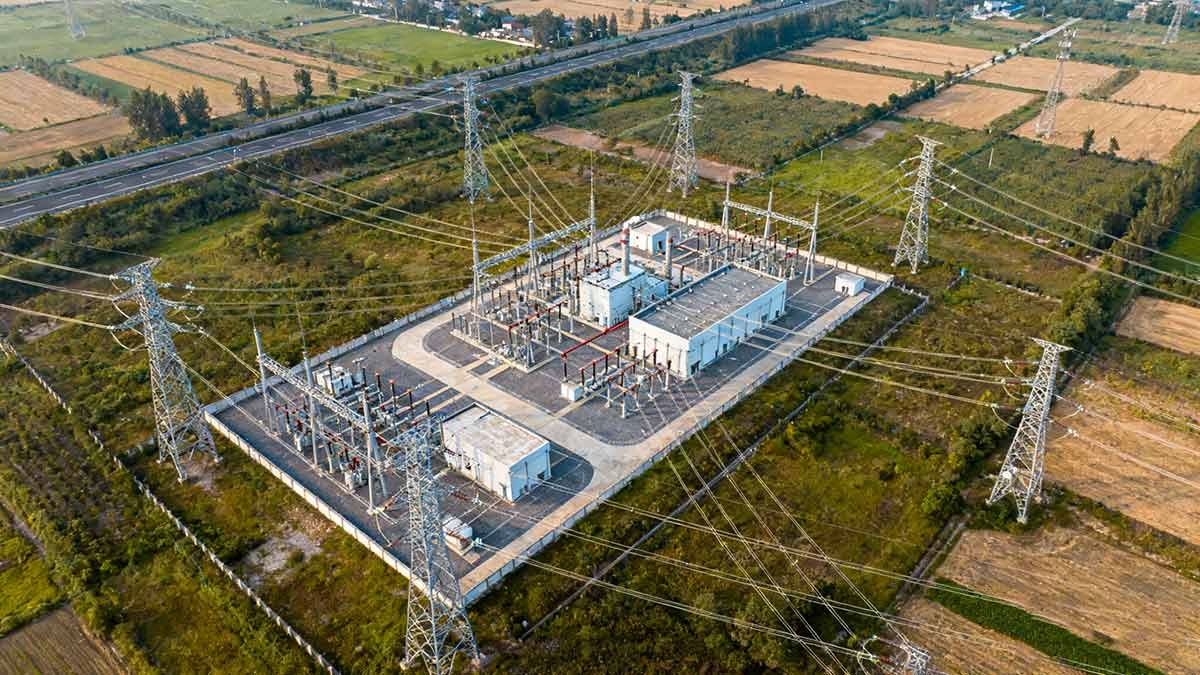
With over two decades of experience working with electronic transformers, I’ve witnessed their transformative impact across industries. Below, we explore the key benefits that make electronic transformers a cornerstone of modern technology—from boosting industrial productivity to enabling sleek, energy-efficient consumer devices.
Contents
hide
Efficiency and Performance: Transforming Industrial Operations
Struggling with inefficient power conversion that’s slowing down your industrial processes? Electronic transformers are the solution to unlocking higher productivity, lower energy costs, and more reliable operations.
These advanced transformers elevate industrial equipment performance through superior efficiency, dynamic voltage control, and reduced power losses. They enable precise automation, seamless integration with smart manufacturing systems, and protection for sensitive industrial machinery—delivering tangible ROI for factories, plants, and production facilities.
Key Performance Advantages for Industry
- Next-Level Efficiency:
Electronic transformers cut energy waste with 95–99% efficiency, outperforming traditional iron-core transformers (80–95%). By reducing core losses by up to 60% and copper losses by 40%, they deliver significant cost savings. For example, a manufacturing plant I worked with reduced annual energy bills by 15% simply by upgrading to electronic transformers in their power distribution system.
- Precision Voltage Regulation:
With ±1% voltage stability (vs. ±3–5% for traditional models), electronic transformers adapt to load changes in milliseconds. This precision was game-changing for a semiconductor fabrication plant, where voltage fluctuations previously caused costly defects—after upgrading, defect rates dropped by 30%.
- Enhanced Power Quality:
Built-in harmonic filtration and power factor correction (PFC) protect sensitive equipment. In an automotive plant, harmonic suppression extended robotic arm lifespan by 25%, while PFC reduced reactive power charges by 40% for a steel mill client.
Industrial Electronic vs. Traditional Transformers: A Comparison
| Feature | Electronic Transformers | Traditional Transformers |
|---|---|---|
| Efficiency | 95–99% | 80–95% |
| Size/Weight | 50–70% smaller/lighter | Bulky, space-consuming |
| Voltage Regulation | ±1% or better | ±3–5% |
| Response Time | Milliseconds | Cycles (slower) |
| Harmonic Handling | Built-in filtration | Requires additional equipment |
| Smart Integration | IoT-ready, programmable | Limited connectivity |
In practice, the benefits extend beyond metrics. For a smart factory project, we integrated electronic transformers with IoT monitoring—enabling real-time power tracking and predictive maintenance that reduced unplanned downtime by 40%. Their compact design also freed up 30% of floor space, which the client used to expand production capacity.
For a steel mill upgrade, electronic transformers delivered consistent voltage to electric arc furnaces, improving steel quality consistency by 5%. While upfront costs were higher, the client recouped their investment in just 2.5 years through energy savings and reduced waste.
Enhancing Consumer Electronics: Powering the Devices We Love
Ever wondered why modern chargers, laptops, and wearables are so much smaller and faster than their predecessors? Electronic transformers are the unsung hero behind these innovations—enabling the miniaturization, efficiency, and functionality that define today’s consumer tech.
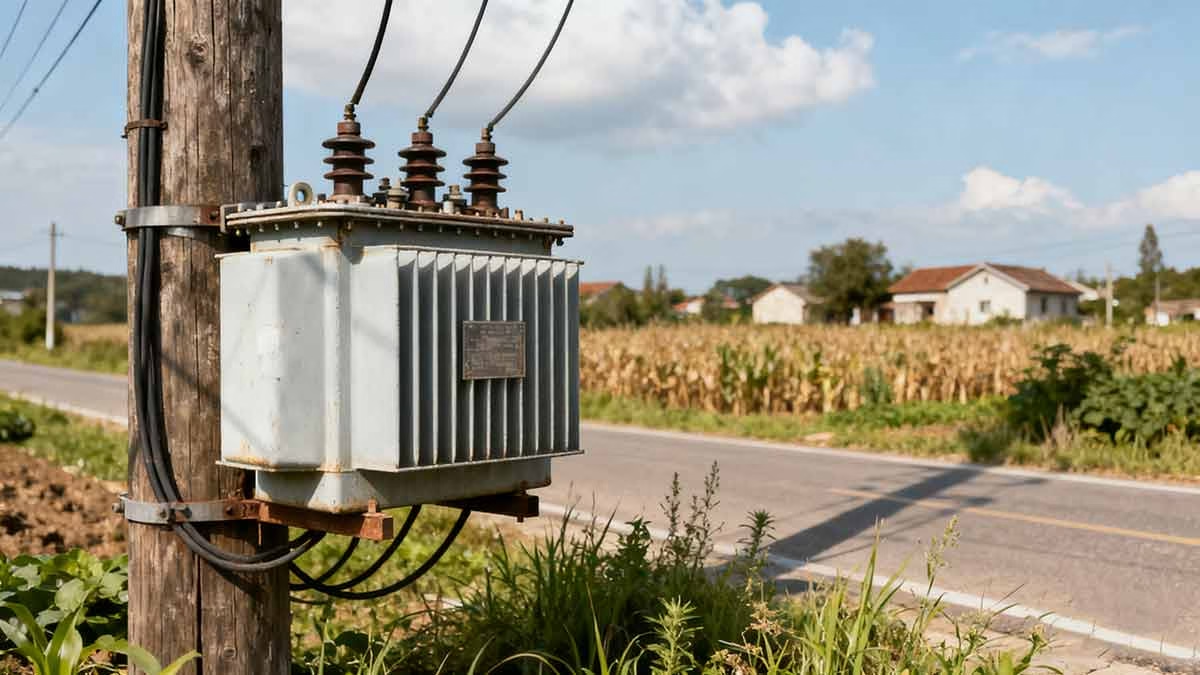
From fast-charging smartphones to ultra-slim laptops, electronic transformers make it possible to pack more power into smaller devices. They optimize battery life, reduce standby power consumption, and support advanced features like wireless charging—elevating user experiences while lowering environmental impact.
How Electronic Transformers Revolutionize Consumer Devices
- Ultra-Compact Design:
Electronic transformers are up to 90% smaller and 80% lighter than traditional models, allowing for sleeker device designs. For a laptop charger project, we reduced size by 70% using advanced electronic transformer technology—creating a portable, travel-friendly accessory without sacrificing power.
- Maximized Battery Life:
With 90–95% conversion efficiency (vs. 70–80% for traditional chargers), electronic transformers extend device runtime. In a smartphone design, this translated to 2 extra hours of battery life, while a smart TV project achieved 90% lower standby power consumption.
- Fast Charging & Smart Features:
Electronic transformers enable high-power, efficient charging—like a smartphone that reaches 50% charge in 15 minutes. They also provide stable power for sensitive components (e.g., gaming laptop processors) and reduce EMI, ensuring accurate sensor readings in medical wearables.
Impact on Consumer Device Design
| Feature | With Electronic Transformers | Traditional Approach |
|---|---|---|
| Charger Size | Ultra-compact | Bulky, heavy |
| Charging Speed | 50% charge in 15 mins | Hours for full charge |
| Device Weight | Significantly reduced | Heavier |
| Standby Power | Near-zero | High consumption |
| EMI | Built-in suppression | Requires extra shielding |
For wireless earbuds, we integrated a tiny electronic transformer directly onto the main circuit board—achieving the compact form factor while extending battery life by 25%. In a smart home hub project, the transformer’s multi-output capability powered sensors, communication modules, and a display from a single unit, simplifying design and improving reliability.
Safety and Reliability: Protecting People and Equipment
Safety and reliability are non-negotiable in both industrial and consumer applications—and electronic transformers set a new standard for both. Their advanced design features minimize risks, detect faults rapidly, and ensure consistent performance in harsh or everyday environments.
From preventing electric shocks in consumer devices to stopping industrial accidents before they occur, electronic transformers prioritize protection without compromising functionality. This makes them ideal for high-stakes applications like medical equipment, industrial control systems, and household appliances.
Core Safety & Reliability Features
- Superior Electrical Isolation:
High-frequency and galvanic isolation reduce leakage current to minimal levels, lowering electric shock risks. For medical equipment (e.g., patient monitors), this isolation is critical for patient safety—we integrated it into a wearable device design, achieving top safety ratings.
- Rapid Fault Response:
Electronic transformers detect overcurrents, overheating, and voltage spikes in microseconds. A data center project benefited from this feature when a short circuit triggered an immediate shutdown, preventing a potential fire. In industrial settings, thermal shutdown capabilities protected a motor drive system from costly damage.
- Durable Solid-State Design:
Without moving parts, electronic transformers have 50% higher mean time between failures (MTBF) than traditional models. They withstand vibration, temperature extremes, and mechanical stress—making them reliable for outdoor signage, military electronics, and rugged industrial environments.
Safety/Reliability Comparison
| Feature | Electronic Transformers | Traditional Transformers |
|---|---|---|
| Isolation | High-frequency, superior | Basic |
| Fault Response | Microseconds | Milliseconds to seconds |
| Leakage Current | Minimal | Higher |
| Self-Diagnostics | Often included | Rarely available |
| Temperature Range | Wide (-40°C to 85°C) | Limited |
In a chemical plant upgrade, replacing traditional transformers with electronic models reduced electrical safety incidents by 70% in the first year. For a line of kitchen appliances, advanced safety features cut warranty claims related to electrical failures by 40%, boosting customer satisfaction.
Energy Conservation and Environmental Impact: A Sustainable Choice
As sustainability becomes a global priority, electronic transformers emerge as a key solution for reducing energy waste and carbon footprints. Their high efficiency, compact design, and long lifespan minimize environmental impact across their entire lifecycle—from manufacturing to disposal.
Whether in industrial facilities or consumer devices, electronic transformers help organizations meet sustainability goals while cutting costs. They reduce energy consumption, conserve materials, and eliminate hazardous substances like oil, making them an eco-friendly alternative to traditional transformers.
Sustainable Benefits
- Energy Savings:
Lower core losses (up to 70% reduction) and near-zero standby power translate to significant carbon reductions. A data center I consulted for cut annual CO2 emissions by 200 tons by switching to electronic transformers—equivalent to removing 76 cars from the road.
- Material Conservation:
Their compact size reduces plastic, copper, and steel usage by up to 80%. For a laptop charger project, this meant 60% less plastic consumption. With a 15–20 year lifespan (vs. 10–15 years for traditional models), they also reduce replacement frequency and electronic waste.
- Eco-Friendly Design:
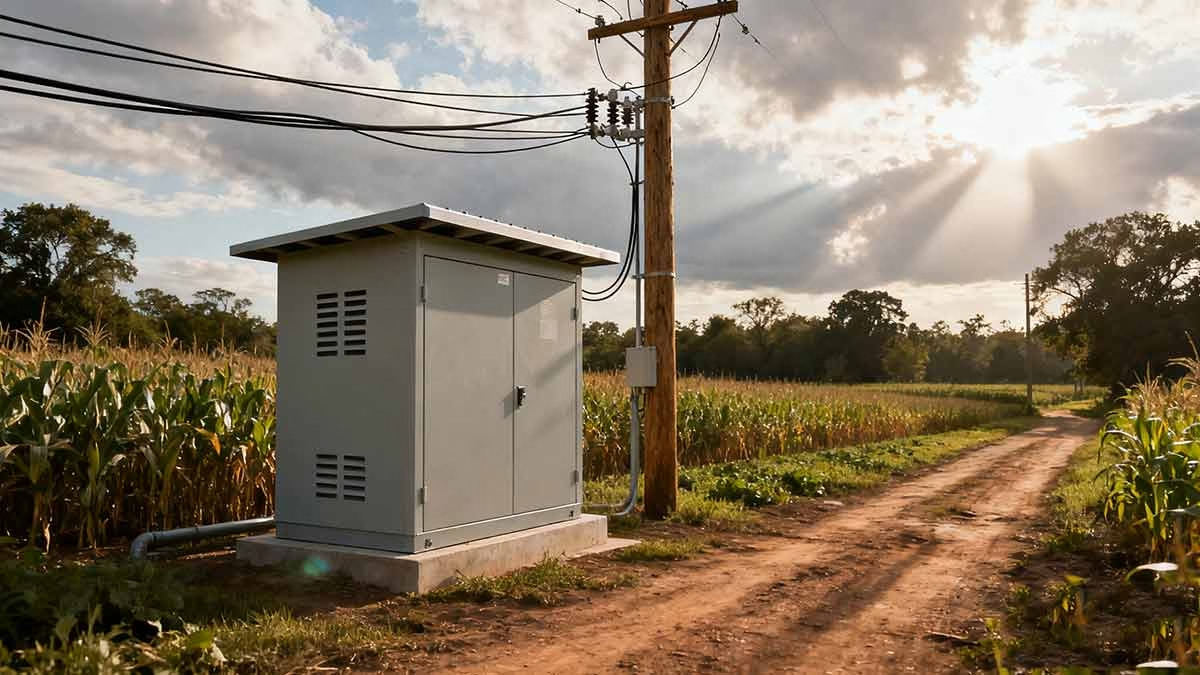
Electronic transformers use no oil or hazardous materials, making them safe for environmentally sensitive applications (e.g., offshore wind farms). Many are 90% recyclable, further reducing their environmental footprint.
Environmental Impact Comparison
| Aspect | Electronic Transformers | Traditional Transformers |
|---|---|---|
| Energy Efficiency | 95–99% | 80–95% |
| Lifespan | 15–20 years | 10–15 years |
| Material Usage | Minimal | Higher |
| Standby Power | Near-zero | Significant |
| Hazardous Materials | None | Oil (in some types) |
| Recyclability | High | Lower |
In a large industrial retrofit, 50 electronic transformers replaced older models, saving 500,000 kWh annually and 350 metric tons of CO2. For a smartphone manufacturer, efficient chargers saved enough energy to power 100,000 homes yearly—proving that small components can drive big environmental change.
Design Flexibility and Innovation: Enabling Next-Gen Technologies
Stuck with outdated power components that limit your design innovation? Electronic transformers offer unprecedented flexibility, empowering engineers to create breakthrough products in industrial automation, IoT, wearable tech, and beyond.
Their compact size, programmable features, and seamless integration with digital systems are pushing the boundaries of what’s possible. From curved transformers for EV charging stations to fingernail-sized units for medical wearables, electronic transformers adapt to unique design needs while delivering high performance.
Innovation-Driving Features
- Customizable Form Factors:
Electronic transformers can be miniaturized (up to 90% smaller than traditional models), shaped into curves, or designed as ultra-thin planar units. For smart glasses, we created a transformer no larger than a fingernail, fitting seamlessly into the frame without compromising comfort.
- Programmable Functionality:
Software-controlled voltage, multi-output capabilities, and adjustable frequency enable dynamic power management. In a smart home system, this allowed adaptive power distribution based on real-time usage—reducing energy waste by 15%. For a universal power supply, frequency adjustability ensured compatibility with global voltage standards.
- Digital Integration:
IoT-ready designs with built-in communication interfaces enable remote monitoring and predictive maintenance. In a factory automation project, this integration reduced downtime by 25% and optimized power usage across production lines.
Design Flexibility Comparison
| Feature | Electronic Transformers | Traditional Transformers |
|---|---|---|
| Size Flexibility | Highly customizable (mini, curved, planar) | Limited by core shape |
| Programmability | Software-controlled parameters | Fixed settings |
| Digital Integration | Seamless (IoT, microcontrollers) | Limited or none |
| Multi-Output | Single unit powers multiple components | Requires multiple transformers |
| Frequency Range | Wide (adjustable) | Narrow, fixed |
In a next-gen robotic manufacturing system, electronic transformers with multi-output capabilities reduced component count by 40% and enabled decentralized power distribution—simplifying design and improving reliability. For a solar inverter project, adaptive transformers boosted energy harvest by 15% by adjusting to variable solar output.
Conclusion
Electronic transformers are more than just power components—they’re catalysts for efficiency, safety, sustainability, and innovation. Across industries, they deliver tangible benefits: lower energy costs, smaller product designs, enhanced reliability, and reduced environmental impact.
Whether you’re upgrading industrial equipment, designing a consumer device, or developing next-gen technology, electronic transformers offer the performance and flexibility to turn your vision into reality. As technology evolves, these versatile components will remain at the forefront—powering the innovations that shape our future.