
Three phase transformer applications vary dramatically across the USA, Middle East, and Southeast Asia—shaped by distinct industrial priorities, environmental conditions, and regulatory frameworks. The USA leans into grid modernization and renewable energy integration; the Middle East prioritizes rugged solutions for oil and gas operations and extreme heat; and Southeast Asia focuses on cost-effective, space-efficient designs to support rapid industrialization and urban growth.
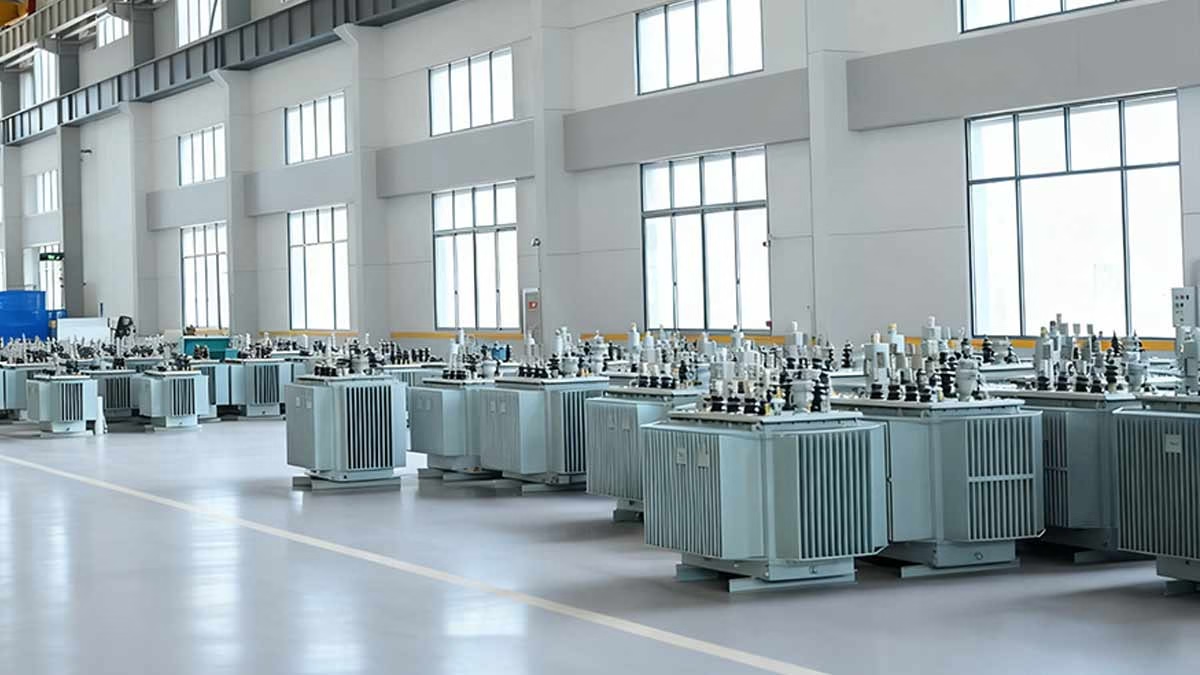
With over two decades of experience delivering transformer solutions across these markets, I’ve witnessed firsthand how local needs drive design, deployment, and performance requirements. Below, we break down the unique applications, challenges, and innovations that define three-phase transformer use in each region.
Contents
hide
Industrial Power Distribution: Regional Differences in Manufacturing Sectors
The same three-phase transformer may serve entirely different purposes in factories worldwide—all thanks to the unique industrial landscapes of each region. From efficiency-focused smart integration in the USA to harsh-environment resilience in the Middle East, and flexible scalability in Southeast Asia, transformer designs are tailored to solve local manufacturing challenges.
USA: Efficiency, Smart Integration, and Renewable Synergy
US manufacturing prioritizes energy efficiency and seamless smart grid connectivity, driven by stringent regulations and high energy costs.
- High-Efficiency Core Designs: Amorphous core transformers are standard, cutting energy losses by up to 30% compared to traditional silicon steel models. In a recent automotive plant upgrade in Michigan, we replaced aging units with these high-efficiency transformers, delivering annual energy savings of $75,000 for the facility.
- Smart Grid Compatibility: Transformers come equipped with real-time monitoring sensors and IoT connectivity, integrating with energy management systems to optimize demand response. A California food processing plant used these smart features to reduce peak demand charges by 20%, aligning production schedules with grid load fluctuations.
- On-Site Renewable Integration: Bidirectional power flow capabilities are non-negotiable, as manufacturers increasingly adopt rooftop solar and small-scale wind. A aerospace components factory in Washington required specialized transformers to balance variable solar inputs with consistent production power needs—ensuring no disruption to precision machinery.
Middle East: Harsh Environment Resilience for Heavy Industry
Middle Eastern manufacturing operates in some of the world’s toughest conditions, demanding transformers that withstand extreme heat, corrosion, and hazardous environments.
- Extreme Temperature Ratings: Units are engineered to operate efficiently at ambient temperatures exceeding 55°C. For a steel mill in Saudi Arabia, we specified transformers with advanced forced-oil cooling systems, maintaining performance even during 60°C summer peaks.
- Corrosion and Dust Protection: Coastal and desert facilities require marine-grade coatings and sealed enclosures to resist salt-laden air and sand ingress. A petrochemical plant in the UAE used transformers with double-sealed tanks and anti-corrosion linings, extending service life by 50% in the corrosive coastal environment.
- Oil and Gas Specializations: Explosion-proof designs (certified for Zone 1 hazardous areas) and compatibility with large motor drives are critical. A natural gas processing facility in Qatar relied on our flameproof transformers to power pumps and compressors, meeting strict safety standards for volatile environments.
Southeast Asia: Cost-Effective Flexibility for Rapid Growth
Southeast Asia’s booming manufacturing sector prioritizes affordability, scalability, and adaptability—supporting fast-paced expansion and variable production demands.
- Modular, Scalable Designs: Factories need transformers that grow with their operations. A Vietnamese textile mill implemented our modular transformer system, easily upgrading from 50kVA to 100kVA as they added production lines—avoiding costly full replacements.
- Load Swing Resilience: On-load tap changers and enhanced overload capacity handle 30%+ load fluctuations during shift changes. An electronics plant in Malaysia benefited from this feature, maintaining stable voltage for sensitive circuit board production even as equipment usage spiked.
- Space-Saving Configurations: Compact cast resin transformers maximize floor space in dense urban factories. A high-tech manufacturing facility in Singapore used our ultra-slim units, freeing up 20% more space for production equipment while delivering reliable power.
| Feature | USA | Middle East | Southeast Asia |
|---|---|---|---|
| Primary Focus | Energy efficiency & smart integration | Environmental resilience | Cost-effectiveness & flexibility |
| Key Challenge | Renewable variability | Extreme heat/corrosion | Rapid load changes |
| Typical Sizes | Medium to large (50–500kVA) | Large (100–1000kVA) | Small to medium (25–200kVA) |
| Common Types | Amorphous core, smart IoT-enabled | Oil-filled, sealed, explosion-proof | Dry-type, modular |
| Voltage Levels | Medium (480V–13.8kV) | High (13.8kV–34.5kV) | Low to medium (220V–4.16kV) |
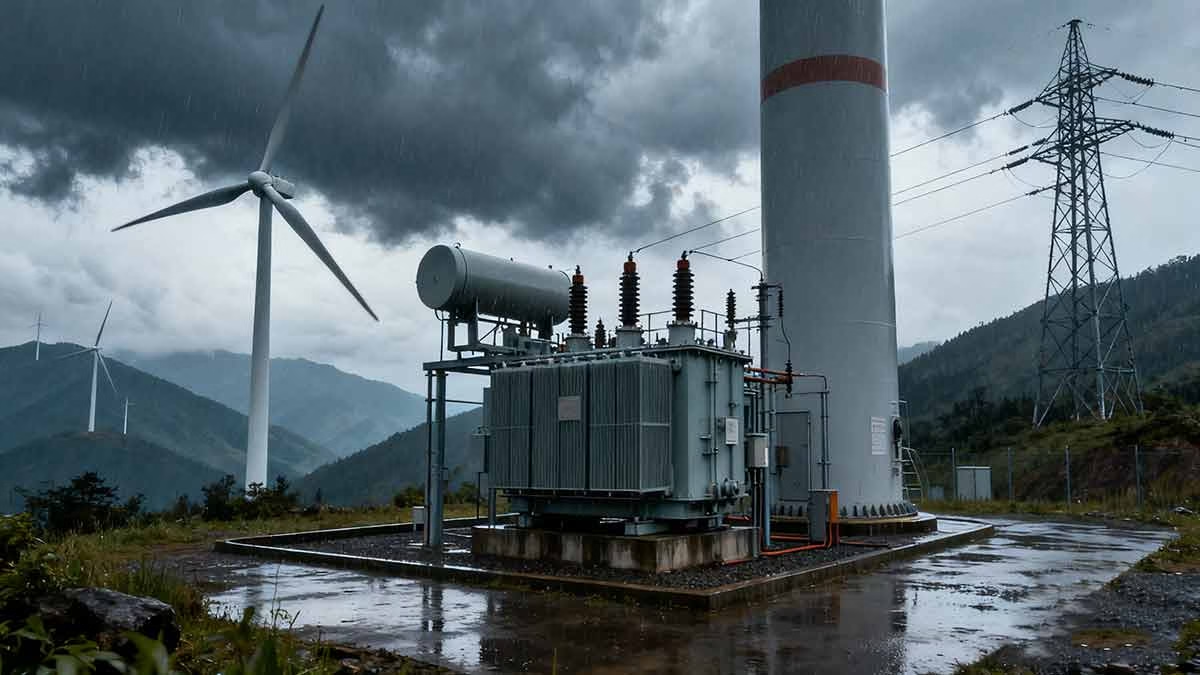
Renewable Energy Integration: Regional Challenges for Solar and Wind Projects
Integrating three-phase transformers into renewable energy projects comes with unique hurdles—from variable load management in the USA to extreme heat in the Middle East, and tropical climate resilience in Southeast Asia. Each region’s renewable landscape demands specialized designs to maximize efficiency and reliability.
USA: Smart Grid Alignment and Variability Management
US renewable projects (dominated by large-scale solar and wind farms) require transformers that bridge variable generation with a complex, interconnected grid.
- Smart Grid Synchronization: Transformers feature advanced control systems to manage power quality and grid stability. A 500MW solar farm in California used our units with real-time harmonic monitoring, ensuring compliance with utility standards despite fluctuating solar output.
- Load Variability Handling: On-load tap changers and robust winding designs accommodate 0–100% load swings. A Texas wind farm relied on these features to manage sudden drops in wind speed, preventing voltage dips that could disrupt nearby communities.
- Long-Distance Transmission: High-voltage (HV) and HVDC converter transformers connect remote renewable sites to urban centers. A project linking a Wyoming wind farm to Las Vegas used our HVDC transformers, transmitting power 500+ miles with just 3% energy loss—far below industry averages.
Middle East: Extreme Environment Hardening for Solar Dominance
The Middle East’s renewable sector is centered on massive solar farms, requiring transformers that thrive in desert heat, dust, and coastal salinity.
- Desert Heat Resistance: Units are rated for 55°C+ ambient temperatures, with innovative cooling systems (e.g., phase-change materials) to avoid overheating. A 1GW solar farm in the UAE used our transformers with passive cooling technology, reducing energy consumption for cooling by 60%.
- Dust and Sand Protection: Enhanced filtration and sealed enclosures prevent sand accumulation on critical components. A Saudi Arabian solar project’s transformers featured self-cleaning radiator fins, cutting maintenance frequency by 50% in sandstorm-prone areas.
- Coastal Corrosion Defense: Offshore wind projects (emerging in the Persian Gulf) use marine-grade materials and anti-fouling coatings. Our transformers for a UAE offshore wind farm withstood constant salt spray, maintaining 99% efficiency after five years of operation.
Southeast Asia: Tropical Resilience and Space Efficiency
Southeast Asia’s renewable projects (rooftop solar, small wind, and emerging offshore wind) face humidity, monsoons, and space constraints—demanding compact, weather-resistant transformers.
- Moisture and Monsoon Protection: Sealed windings and IP67-rated enclosures prevent water ingress. A Malaysian solar farm used our moisture-resistant transformers, operating seamlessly through monsoon seasons with zero downtime.
- Space-Efficient Designs: Ultra-compact units maximize solar panel coverage in urban areas. A Singapore rooftop solar project utilized our slim-line transformers, fitting 30% more panels by reducing transformer footprint by half.
- Typhoon and Storm Resilience: Reinforced enclosures and robust anchoring systems withstand extreme winds. Transformers for a Philippines wind farm were tested to endure 280km/h typhoon winds, ensuring continuity during severe weather events.
| Challenge | USA | Middle East | Southeast Asia |
|---|---|---|---|
| Primary Environmental Factor | Variable climate | Extreme heat/dust | High humidity/monsoons |
| Key Technical Challenge | Load variability | Sand/dust protection | Space constraints |
| Grid Integration Focus | Smart grid compatibility | Standalone farm systems | Emerging smart grids |
| Typical Project Scale | Large (100MW+) | Very large (500MW+) | Small to medium (10–100MW) |
| Common Transformer Types | Pad-mounted, HVDC converter | Oil-filled, sealed | Dry-type, compact |
Smart City Initiatives: Transformer Roles in Urban Power Systems
Three-phase transformers are the backbone of smart city infrastructure— but their design and application vary widely based on urban priorities: grid resilience in the USA, energy efficiency in the Middle East, and space optimization in Southeast Asia.
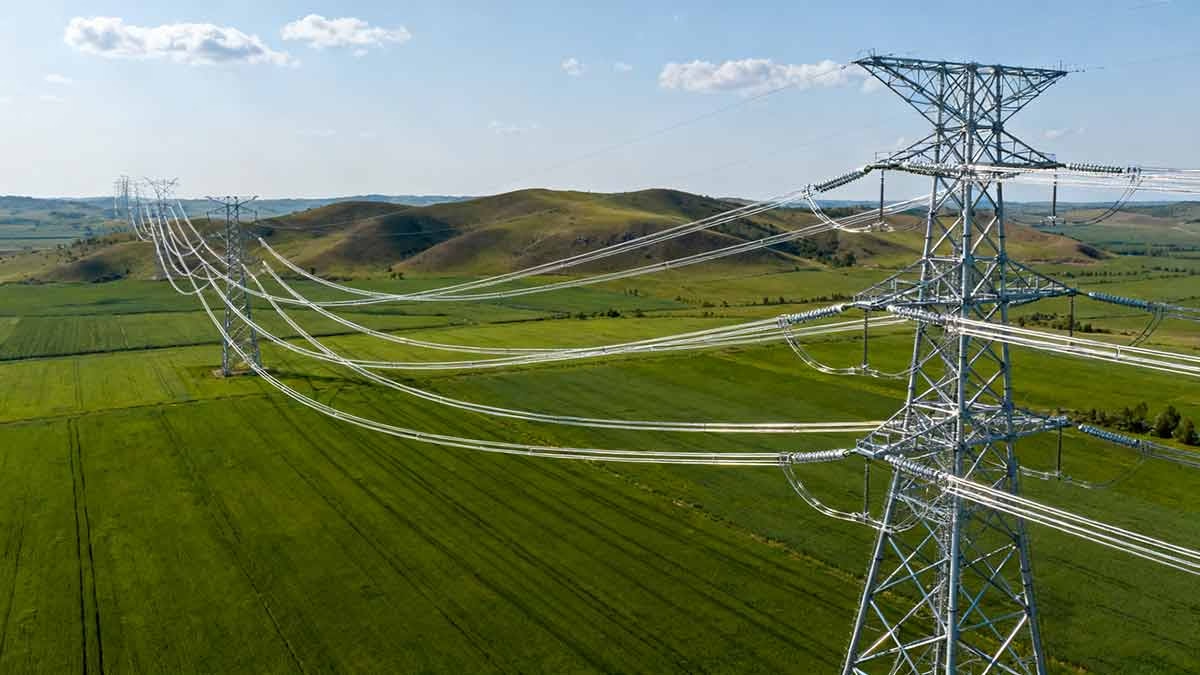
USA: Grid Resilience and Electric Mobility Support
US smart cities prioritize reliable power, EV integration, and distributed renewable adoption—demanding transformers that enable flexible, resilient urban grids.
- Self-Healing Grid Capabilities: Smart transformers with fault-detection sensors and automated rerouting reduce outage times. A New York City smart grid project used our units to cut downtime by 40%, isolating faults and restoring power to unaffected areas within minutes.
- EV Charging Infrastructure: High-capacity transformers power ultra-fast (350kW) charging stations, with load management to balance EV demand with residential/commercial use. A Los Angeles charging network relied on our units to support 50+ fast chargers without overloading the local grid.
- Distributed Energy Management: Bidirectional transformers integrate rooftop solar and building wind turbines. San Francisco’s mixed-use developments used these units to share excess solar power between buildings, reducing reliance on the main grid by 25%.
Middle East: Energy Efficiency in Extreme Urban Climates
Middle Eastern smart cities (e.g., Dubai, Abu Dhabi) focus on reducing energy consumption in extreme heat—with transformers playing a key role in cooling systems and smart buildings.
- Smart Building Integration: Transformers sync with building automation systems to optimize power use. A Dubai smart tower used our units to adjust power distribution based on occupancy and temperature data, cutting building energy use by 30%.
- District Cooling Support: High-capacity transformers power centralized cooling plants, the backbone of Middle Eastern urban comfort. An Abu Dhabi district cooling project relied on our efficient transformers to serve 20+ skyscrapers, reducing cooling-related energy loss by 18%.
- AI-Driven Water Management: Corrosion-resistant transformers power smart desalination and distribution systems. A Qatar project used our units to support an AI-controlled water network, reducing waste by 30% through real-time flow monitoring.
Southeast Asia: Compact, Climate-Resilient Urban Solutions
Southeast Asia’s dense, flood-prone cities require transformers that save space, withstand natural disasters, and support public transit electrification.
- Compact Urban Substations: Integrated, space-saving transformers fit in narrow streets and high-rises. Singapore’s downtown area used our modular substation designs, reducing footprint by 50% compared to traditional setups.
- Flood-Resistant Installations: Elevated platforms and waterproof enclosures protect against monsoon flooding. A Bangkok smart city project installed our transformers 1.5m above ground level, ensuring operation even during severe floods.
- Public Transit Electrification: Transformers power electric bus depots and light rail systems. Kuala Lumpur’s electric bus network used our units to support fast-charging stations at key stops, enabling 24/7 transit operation with minimal grid impact.
| Application | USA | Middle East | Southeast Asia |
|---|---|---|---|
| Primary Focus | Grid resilience | Energy efficiency | Space optimization |
| Key Challenge | EV charging integration | Extreme heat | Flood resistance |
| Urban Mobility Link | EV fast-charging networks | District cooling systems | Electric bus/light rail |
| Renewable Integration | Distributed rooftop solar | Building-integrated solar | Limited urban renewables |
| Typical Installation | Pad-mounted, street-level | Building-integrated | Compact/elevated |
Oil and Gas Industry: Specialized Transformer Solutions in the Middle East
The Middle East’s oil and gas sector demands three-phase transformers that far exceed standard industrial requirements—built to withstand extreme heat, hazardous environments, and massive operational scales. These specialized designs set the region apart from other oil-producing markets (e.g., North Sea, Gulf of Mexico).
Extreme Environment Hardening
- Ultra-High Temperature Ratings: Transformers operate reliably at 60°C+ ambient temperatures. For a Saudi Arabian oil field, we engineered units with heat-resistant insulation and synthetic ester fluids, maintaining 98% efficiency even in summer heatwaves.
- Sand and Dust Immunity: Sealed tanks, air filtration systems, and non-stick coatings prevent sand accumulation. A Kuwaiti oil facility used our transformers with automated dust-cleaning radiators, reducing maintenance by 60% in sandstorm-prone areas.
- Coastal Corrosion Protection: Offshore platforms and coastal refineries use marine-grade stainless steel and double-sealed enclosures. Our transformers for a Qatari offshore platform withstood constant salt spray, requiring no corrosion-related maintenance for seven years.
Hazardous Area Compliance
- Explosion-Proof Designs: Zone 1/2-certified units feature pressure-resistant enclosures and flame-arresting vents. A UAE gas processing plant relied on our explosion-proof transformers to operate safely in volatile hydrocarbon environments.
- Fire-Resistant Insulation: Ester-based fluids (with high flash points) replace traditional mineral oil, reducing fire risk. An Omani refinery used these units to meet strict safety standards for near-pipeline operations.
- Gas Leak Detection: Integrated sensors trigger automatic shutdowns if hazardous gases are detected. A Saudi Aramco facility used this feature to prevent a potential incident during a minor gas leak, enhancing site safety.
Specialized Operational Needs
- High-Capacity Motor Drives: Transformers power 10,000+ HP pumps and compressors, handling high inrush currents. An Iraqi oil field used our units to support large extraction pumps, ensuring smooth startup without voltage dips.
- Offshore Space Efficiency: Compact, high-power-density transformers fit on space-constrained platforms. A Persian Gulf offshore project used our 50MVA units—delivering full capacity in a footprint 40% smaller than standard designs.
- Rapid-Deployment Modular Systems: Containerized transformers enable quick setup in remote desert sites. A UAE exploration project assembled our modular substation in 48 hours, accelerating production timelines by three months.
| Feature | Middle East | Other Oil-Producing Regions |
|---|---|---|
| Temperature Rating | Up to 60°C ambient | Up to 40°C ambient |
| Dust/Sand Protection | Critical (specialized filtration) | Minimal |
| Corrosion Resistance | Extreme (saltwater/sand) | Moderate (location-dependent) |
| Explosion-Proof Standards | Stringent (Zone 1 certified) | Variable (often Zone 2) |
| Typical Capacity | Higher (50–500MVA) | Wider range (10–300MVA) |
| Mobile Solutions | Common (remote desert sites) | Rare |
Grid Modernization: Transformer Deployments Across Regions
Grid modernization efforts—from upgrading aging infrastructure to integrating new technologies—see vastly different transformer deployment strategies across the USA, Middle East, and Southeast Asia. Each region’s priorities (smart connectivity, capacity, resilience) drive distinct design and implementation choices.
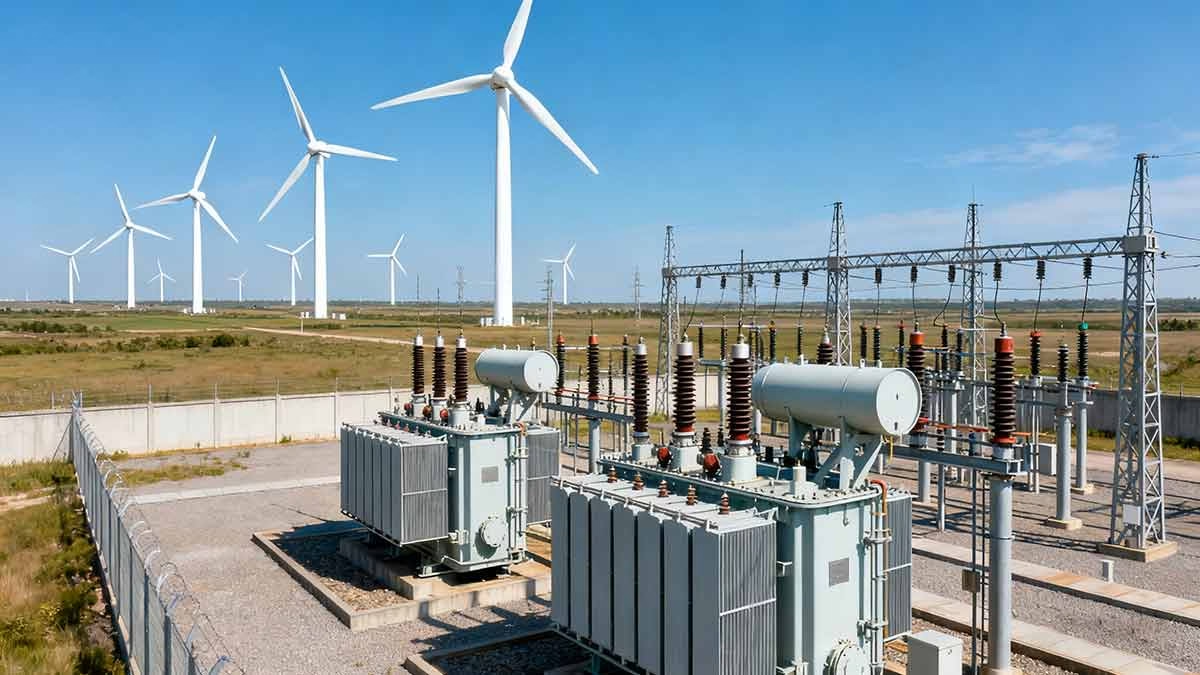
USA: Smart, Renewable-Ready Grids
US grid modernization centers on making networks more responsive, secure, and compatible with renewable energy.
- IoT-Enabled Monitoring: Transformers with built-in sensors feed data to advanced distribution management systems (ADMS). A California grid upgrade used these units to reduce outage response times by 60%, identifying issues before they impact customers.
- Bidirectional Power Flow: Transformers handle energy from rooftop solar and wind, feeding excess power back to the grid. A New York state project used our units to manage 40% solar penetration in residential areas, maintaining voltage stability.
- Cybersecurity Integration: Encrypted communication and intrusion-detection systems protect critical grid data. A Texas critical infrastructure upgrade used our cyber-hardened transformers, safeguarding against digital threats.
Middle East: High-Capacity, Heat-Efficient Grids
Middle Eastern grid modernization supports rapid urban growth and extreme climate operations—requiring transformers that deliver high capacity and low losses in harsh conditions.
- Scalable Urban Capacity: Modular transformers grow with city expansion. Dubai’s grid upgrade used our units, easily upgrading from 40MVA to 60MVA as new neighborhoods and skyscrapers were added.
- Extreme Heat Efficiency: Advanced cooling systems and heat-resistant materials reduce energy loss. A Saudi Arabian grid project used our transformers with phase-change cooling, maintaining 99% efficiency at 55°C ambient temperature.
- Amorphous Core Technology: High-efficiency cores cut energy losses by 40%. A Qatar district upgrade used these units to reduce grid-wide energy waste, aligning with the country’s sustainability goals.
Southeast Asia: Compact, Disaster-Resilient Grids
Southeast Asia’s grid modernization addresses space constraints and natural disaster risks—prioritizing compact, durable transformers.
- Space-Saving Designs: Integrated transformers combine multiple functions (voltage conversion, protection, monitoring) to reduce substation footprint. Singapore’s grid upgrade used our units to cut space requirements by 30%.
- Flood and Storm Resilience: Elevated installations and quick-disconnect features ensure continuity. A Bangkok project installed our transformers on raised platforms, operating through monsoon floods without interruption.
- Tropical Climate Adaptations: Humidity-resistant insulation and corrosion coatings extend service life. A Philippine coastal grid used our units with specialized coatings, doubling service life compared to standard transformers.
| Aspect | USA | Middle East | Southeast Asia |
|---|---|---|---|
| Primary Focus | Smart grid integration | Capacity & efficiency | Resilience & space savings |
| Key Challenge | Renewable variability | Extreme heat | Natural disasters |
| Core Innovation | IoT monitoring, cybersecurity | Advanced cooling systems | Compact/modular designs |
| Efficiency Priority | High | Very high | High |
| Deployment Speed | Gradual (phased upgrades) | Rapid (urban expansion) | Variable (country-dependent) |
Conclusion
Three-phase transformer applications are a reflection of regional needs—whether it’s smart grid connectivity in the USA, extreme environment resilience in the Middle East, or space-efficient scalability in Southeast Asia. Each market demands specialized designs that balance performance, durability, and local priorities, from renewable integration to disaster resilience.
As global energy systems evolve—with growing electrification, renewable adoption, and urbanization—transformers will remain critical to reliable power distribution. Understanding these regional differences is key to delivering solutions that drive efficiency, safety, and growth. For manufacturers, utilities, and project managers, aligning transformer designs with local conditions isn’t just a technical choice—it’s a strategic one that ensures long-term success.