
Three phase power transformer stands as the backbone of modern electrical infrastructure, enabling the seamless transfer of electricity from generation facilities to end-users worldwide. As global energy demand surges—projected to grow by 50% by 2050 according to the International Energy Agency (IEA)—these transformers play an irreplaceable role in converting high-voltage power from power plants into usable low-voltage electricity for residential, commercial, and industrial use. Beyond mere voltage conversion, they ensure grid stability, minimize energy losses, and support the integration of renewable energy sources, making them critical to sustainable power distribution.
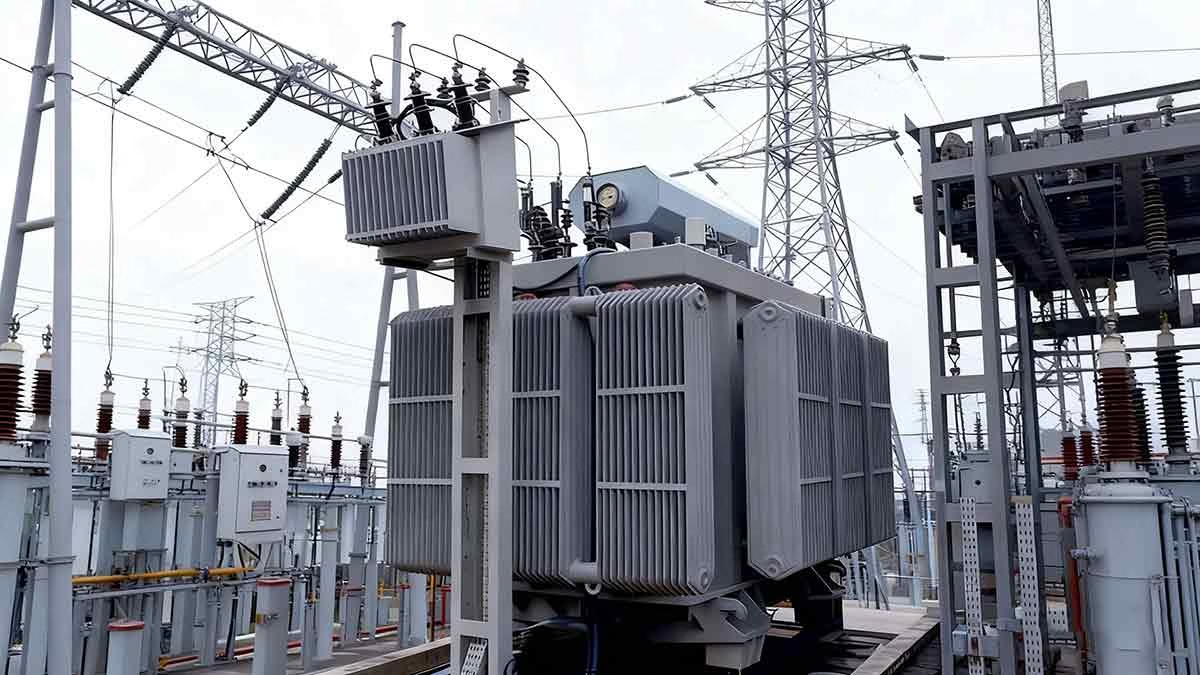
In this comprehensive guide, we draw on decades of hands-on experience in transformer engineering and power system design to explore the core principles, design nuances, key components, real-world applications, and efficiency benefits of three-phase power transformers. Whether you’re an electrical engineer, utility professional, or industry decision-maker, this resource offers actionable insights to understand and leverage these vital assets.
Contents
hide
How Do Three Phase Power Transformers Work? Core Operational Principles
The functionality of three-phase power transformers hinges on proven electromagnetic principles, refined through a century of electrical engineering innovation. Unlike simpler electrical devices, their design is optimized to handle large-scale power transfer with minimal waste, making them indispensable for modern grids.
The Foundation: Electromagnetic Induction
At the core of every three-phase transformer lies electromagnetic induction—a phenomenon first quantified by Michael Faraday in 1831, now codified in ANSI/IEEE C57.12.00 standards for power transformer design. Here’s how it translates to real-world operation:
- Primary Windings: These insulated coils connect directly to the power source (e.g., a power plant generator), receiving high-voltage alternating current (AC).
- Magnetic Core: Constructed from laminated high-grade silicon steel (typically 3% silicon content) to minimize eddy current and hysteresis losses, the core provides a low-reluctance path for magnetic flux.
- Secondary Windings: Positioned around the magnetic core, these coils induce a voltage as the alternating magnetic field from the primary windings fluctuates.
When AC flows through the primary windings, it generates a dynamic magnetic field that oscillates at the system frequency (50Hz or 60Hz globally). This oscillating field cuts through the secondary windings, inducing an electromotive force (EMF) and producing a secondary voltage—all without physical contact between the windings.
The Three-Phase Advantage
Three-phase systems differ from single-phase setups by using three alternating currents, each offset by 120 electrical degrees. This configuration delivers three key benefits that make it ideal for large-scale power applications:
| Advantage | Technical Explanation | Real-World Impact |
|---|---|---|
| Constant Power Delivery | The sum of the three phase currents remains consistent, eliminating power dips | Ensures uninterrupted operation for industrial machinery and critical infrastructure |
| Higher Power Density | Transmits up to 1.732x more power than single-phase systems with the same conductor size | Reduces material costs and installation footprint for transmission lines |
| Balanced Load Distribution | Distributes electrical load evenly across three phases, reducing stress on generators and motors | Extends equipment lifespan and minimizes maintenance requirements |
Voltage Transformation Ratio
The relationship between primary and secondary voltage is governed by the turns ratio of the windings, expressed mathematically as:
Vs/Vp = Ns/Np
Where:
- Vs = Secondary voltage (output)
- Vp = Primary voltage (input)
- Ns = Number of turns in the secondary windings
- Np = Number of turns in the primary windings
This ratio allows engineers to design transformers for specific applications: step-up transformers (Ns > Np) increase voltage for long-distance transmission, while step-down transformers (Ns < Np) reduce voltage for end-user applications. For example, a power plant might use a 20kV/230kV step-up transformer to send power across hundreds of miles, while a distribution substation uses a 230kV/12.47kV step-down transformer to supply an industrial park.
Three-Phase vs. Single-Phase Transformers: Design & Functional Differences
While both three-phase and single-phase transformers operate on electromagnetic induction, their design, capacity, and use cases diverge significantly. Understanding these differences is critical for selecting the right equipment for a given application.
Core Design: Efficiency and Material Usage
The core design is one of the most distinctive differences between the two types:
- Three-Phase Core: Typically features a three-limb or five-limb configuration. The three-limb design—most common in medium-to-large transformers—uses a shared magnetic path that optimizes material efficiency, reducing core losses by 15-20% compared to equivalent single-phase units. Five-limb cores are reserved for large transformers (50MVA+) or applications with unbalanced loads, as they provide improved flux distribution.
- Single-Phase Core: Utilizes a simple two-limb design with a top and bottom yoke. While cheaper to manufacture, this design is less material-efficient, as each phase requires a separate core when scaling to high power levels.
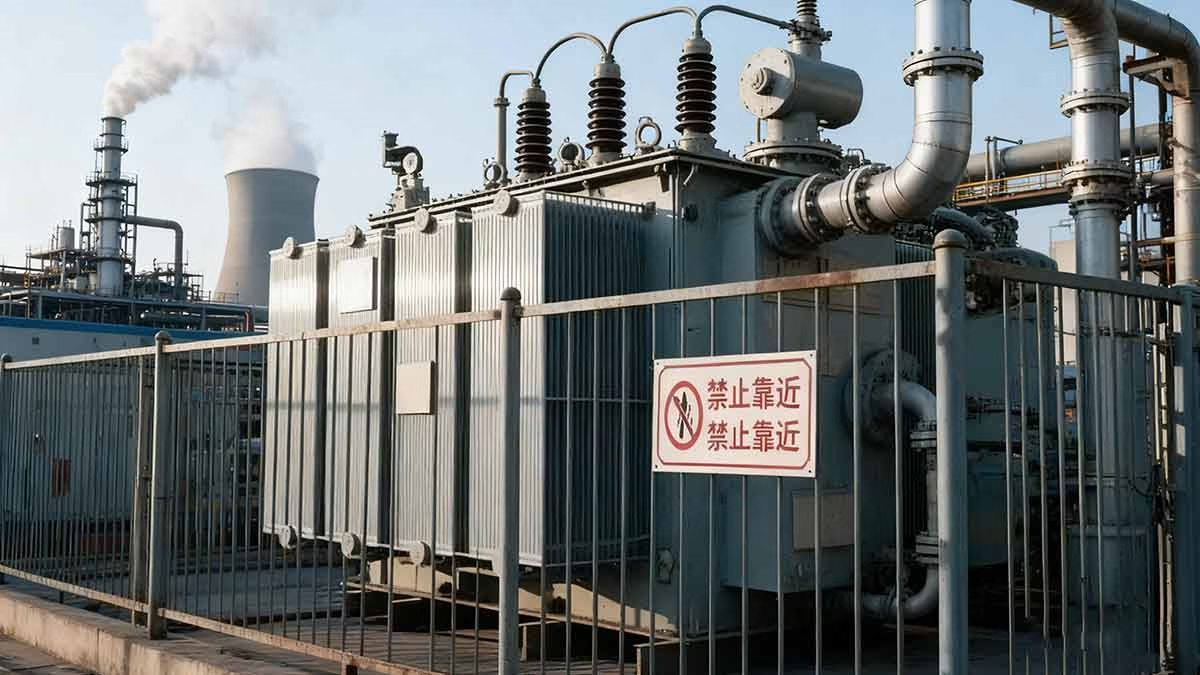
In a recent project for a manufacturing facility, we replaced three 100kVA single-phase transformers with a single 300kVA three-phase unit, reducing core losses by 22% and cutting installation space by 40%.
Winding Configuration: Flexibility and Capacity
Winding design directly impacts voltage regulation and power handling:
| Three-Phase Transformers | Single-Phase Transformers |
|---|---|
| Three sets of primary/secondary windings (one per phase) | One set of primary/secondary windings |
| Configurable in delta (Δ) or wye (Y) connections for flexible voltage ratios | Limited to basic series/parallel connections |
| Supports voltage combinations like 12.47kV Δ / 480Y/277V for industrial use | Typically restricted to fixed ratios (e.g., 240/120V for residential) |
| Designed for 50kVA to 1000MVA+ power ratings | Optimized for 1kVA to 50kVA applications |
Delta-wye connections are particularly common in utility transformers, as they provide isolation between primary and secondary circuits and allow for neutral grounding in the secondary.
Power Handling and Efficiency
Three-phase transformers outperform single-phase units in high-power scenarios:
- Power Capacity: Three-phase transformers efficiently handle loads above 50kVA, making them the standard for industrial plants, data centers, and utility grids. Single-phase units are limited to low-power applications like residential homes or small offices.
- Efficiency: Three-phase transformers achieve efficiency ratings of 98-99.5% (per IEEE C57.12.90 standards) for large units, compared to 95-97% for single-phase transformers of similar power. This difference stems from better core material utilization and balanced flux distribution.
- Size and Cost: For the same power rating, a three-phase transformer is 20-30% smaller and 15-25% more cost-effective than three single-phase units. This is a key consideration for urban substations and industrial facilities with limited space.
Key Components of Three-Phase Power Transformers: Roles and Specifications
Every component of a three-phase power transformer is engineered to work in harmony, ensuring reliable operation, safety, and efficiency. Below is a detailed breakdown of critical components and their functional roles:
Magnetic Core: The Flux Path
The core is the transformer’s magnetic backbone, designed to minimize energy losses while maximizing flux transfer:
- Material: High-permeability silicon steel laminations (0.35-0.5mm thick) coated with insulation to reduce eddy current losses. Advanced designs use grain-oriented silicon steel for even lower hysteresis losses.
- Types:
- Three-limb core: Most common for 50kVA-500MVA transformers, featuring a central limb and two outer limbs for each phase.
- Five-limb core: Used for transformers above 500MVA or those operating under unbalanced loads, with two additional limbs to improve flux distribution and reduce noise.
- Function: Provides a low-reluctance path for magnetic flux, ensuring efficient energy transfer between primary and secondary windings.
Windings: Voltage Transformation
Windings are conductive coils that convert voltage through electromagnetic induction:
- Materials: Copper (Cu) or aluminum (Al) conductors. Copper offers lower resistance (reducing I²R losses) but is more expensive; aluminum is cost-effective and lighter, making it suitable for large transformers.
- Design:
- Primary Windings: Wound with thinner wire and more turns for step-up transformers (e.g., 20kV primary) or thicker wire with fewer turns for step-down transformers.
- Secondary Windings: Configured to match the desired output voltage (e.g., 480V for industrial motors).
- Insulation: Wound withNomex® or kraft paper insulation, impregnated with oil or epoxy resin to prevent short circuits and withstand high voltages.
Insulation System: Safety and Reliability
Insulation is critical to preventing arcing and ensuring long-term operation:
- Types:
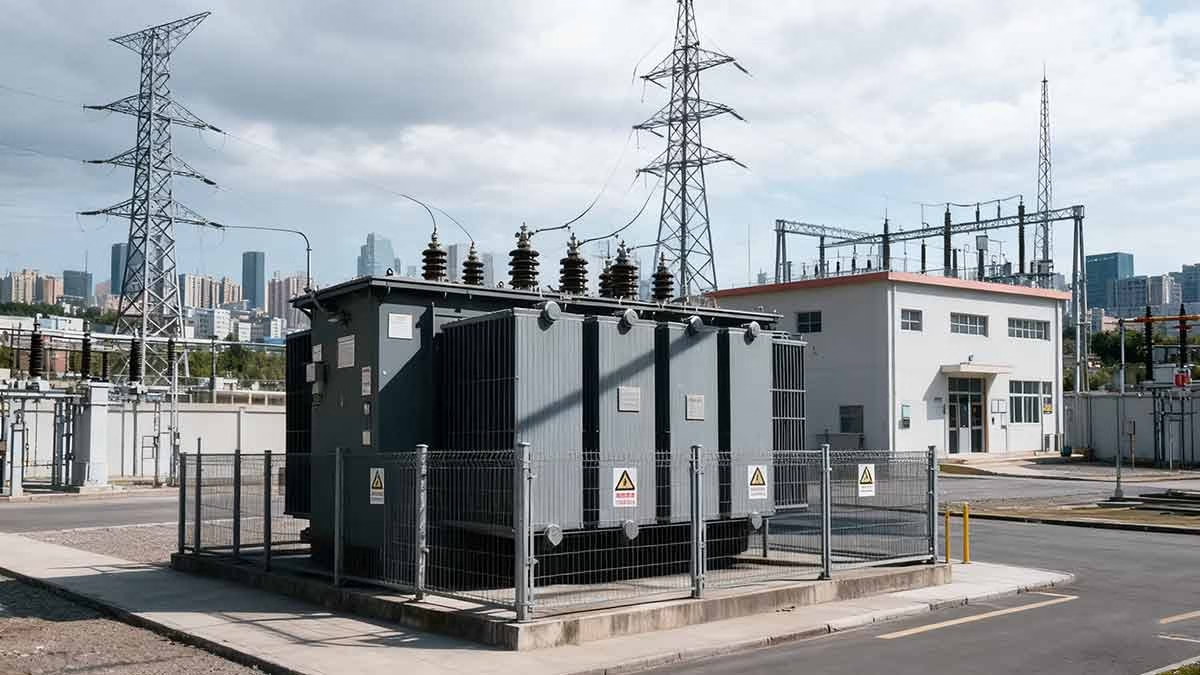
- Oil-Immersed Insulation: Used in 90% of utility and industrial transformers. Mineral oil or natural ester fluid acts as both insulator and coolant, with fire-resistant variants (e.g., FR3™) for indoor applications.
- Dry-Type Insulation: Utilizes epoxy resin, vacuum pressure impregnation (VPI), or cast resin to insulate windings. Ideal for indoor settings (e.g., data centers, high-rise buildings) where oil leakage is a concern.
- Key Components: Winding insulation, barrier insulation between phases, and bushing insulation (to connect windings to external circuits).
Cooling System: Thermal Management
Transformers generate heat during operation—cooling systems prevent overheating and extend lifespan:
| Transformer Type | Cooling Methods | Applications |
|---|---|---|
| Oil-Immersed | ONAN (Oil Natural Air Natural): Passive cooling for small units (≤10MVA) ONAF (Oil Natural Air Forced): Air fans for medium units (10-50MVA) OFAF (Oil Forced Air Forced): Oil pumps + fans for large units (50MVA+) | Utility substations, industrial plants |
| Dry-Type | AN (Air Natural): Passive cooling for ≤25kVA AF (Air Forced): Blowers for 25kVA-500kVA AN/AF Hybrid: Switchable cooling for variable loads | Data centers, commercial buildings, and indoor industrial use |
Tap Changers: Voltage Regulation
Tap changers adjust the number of winding turns to maintain a stable output voltage despite grid fluctuations:
- Types:
- On-Load Tap Changers (OLTC): Adjust taps while the transformer is energized, enabling real-time voltage regulation (common in utility transformers and industrial applications requiring precise voltage control).
- Off-Load Tap Changers: Require de-energization to change taps, used in applications with stable load conditions (e.g., small commercial transformers).
- Function: Compensate for voltage drops in transmission lines (typically ±10% of nominal voltage) and maintain consistent output for sensitive equipment like motors or electronics.
Real-World Applications of Three-Phase Power Transformers
Three-phase power transformers are ubiquitous across energy infrastructure, supporting diverse sectors from power generation to renewable energy integration. Below are their most common use cases:
Power Generation Plants
Power plants rely on three-phase transformers to prepare electricity for grid distribution:
- Step-Up Transformers: Installed at the generator output, these transformers boost voltage from 10-30kV (generator output) to 115- 765kV for long-distance transmission. For example, a 600MW coal-fired plant might use two 300MVA 22kV/500kV step-up transformers.
- Auxiliary Transformers: Step down high-voltage power to 480V or 240V to power plant equipment (e.g., pumps, fans, control systems).
Transmission and Distribution Substations
Substations act as grid hubs, using transformers to manage voltage levels:
- Transmission Substations: House large step-up/step-down transformers (50MVA-1000MVA) to transfer power between high-voltage transmission lines (230kV-765kV) and medium-voltage distribution lines (12kV-34.5kV).
- Distribution Substations: Use smaller transformers (10MVA-50MVA) to reduce medium voltage to low voltage (480V/277V or 240V/120V) for commercial, industrial, and residential use.
Industrial Facilities
Heavy industry depends on three-phase transformers to power machinery and processes:
- Manufacturing Plants: Steel mills, chemical refineries, and automotive factories use 50kVA-500MVA transformers to supply power to motors, furnaces, and assembly lines. For example, an aluminum smelter requires specialized arc furnace transformers capable of handling 100kA+ currents.
- Data Centers: Modern data centers use dry-type three-phase transformers (25kVA-200kVA) to provide stable power to servers and cooling systems, with redundancy features to prevent downtime.
- EV Charging Infrastructure: Large-scale EV charging stations (e.g., highway rest stops) use three-phase transformers to convert grid power to DC for fast charging, supporting multiple vehicles simultaneously.
Renewable Energy Integration
As renewable energy capacity grows, three-phase transformers play a key role in grid integration:
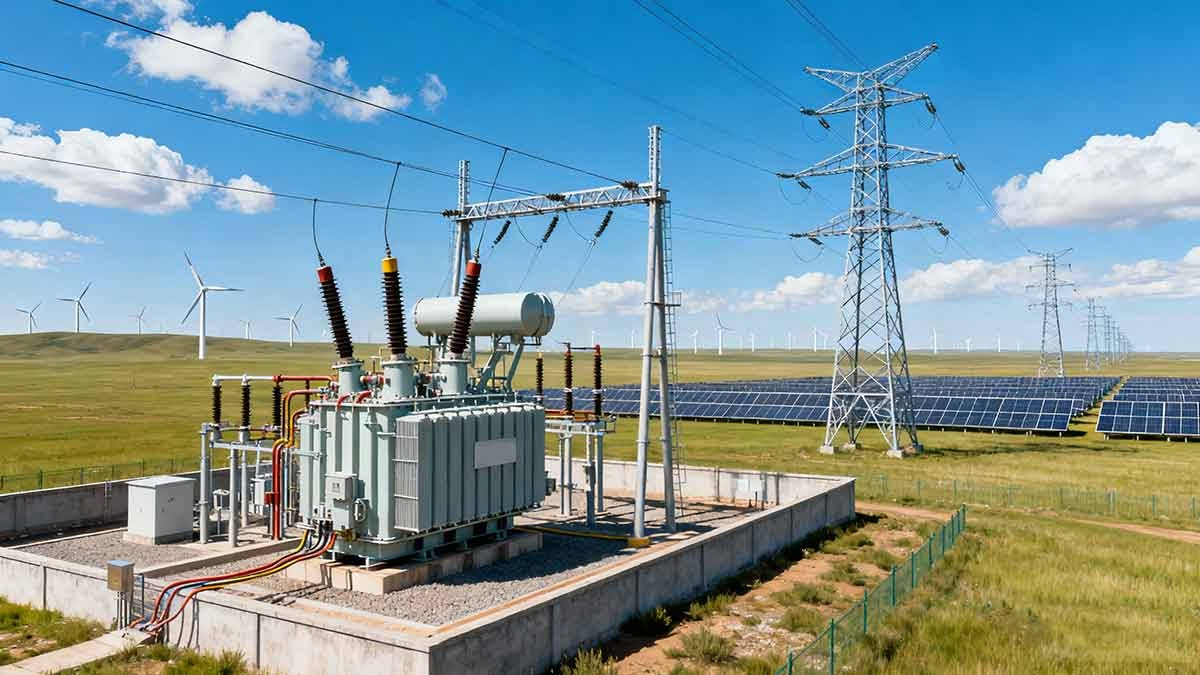
- Wind Farms: Each wind turbine uses a 1.5MW-5MW step-up transformer to convert 690V generator output to 34.5kV for collection and transmission. Wind farm substations use larger transformers (100MVA+) to connect to the grid.
- Solar Power Plants: Utility-scale solar farms use transformers to convert DC power from inverters to AC (typically 12kV-34.5kV) and step up voltage for grid connection.
- Energy Storage Systems (ESS): Battery storage facilities use bidirectional three-phase transformers to charge batteries from the grid and discharge power during peak demand, supporting grid stability.
How Three-Phase Power Transformers Enhance Grid Efficiency
Three-phase power transformers are engineered to minimize energy waste and maximize grid performance, contributing to global sustainability goals. Here’s how they drive efficiency:
Reduced Transmission Losses
Transmission losses (I²R losses) are a major challenge in power systems—three-phase transformers address this by:
- Lowering Current: For the same power output, three-phase systems carry 1/√3 (≈57.7%) of the current required by single-phase systems. This reduces losses in transmission lines by up to 66% (since losses are proportional to current squared).
- Balanced Loads: Even distribution of load across three phases eliminates unbalanced currents, which cause additional losses in neutral conductors and transformers.
In a 2023 project for a regional utility, upgrading to three-phase transformers reduced transmission losses on a 100-mile line by 28%, saving over 3GWh of energy annually.
Enabling High-Voltage Transmission
High-voltage transmission is the most efficient way to transfer power over long distances, and three-phase transformers make this possible:
- Voltage Scaling: Step-up transformers increase voltage to 230kV-765kV, reducing current and losses. For example, transmitting 1GW of power at 765kV results in 90% lower losses than transmitting the same power at 115kV.
- Grid Capacity: High-voltage transformers allow utilities to maximize the capacity of existing transmission lines, deferring costly infrastructure upgrades.
Improving Power Quality
Three-phase transformers enhance grid reliability by maintaining stable voltage and reducing distortions:
- Voltage Regulation: OLTC-equipped transformers adjust taps in real-time to compensate for voltage fluctuations, ensuring end-users receive power within ANSI/IEEE voltage tolerance limits (±5% for commercial/industrial use).
- Harmonic Mitigation: Specialized transformers (e.g., zig-zag or phase-shifting transformers) reduce harmonic distortion caused by non-linear loads (e.g., variable frequency drives, LED lighting), improving efficiency and protecting equipment.
- Phase Balancing: Three-phase systems naturally balance loads, reducing voltage unbalance and extending the lifespan of motors and other equipment.
Optimizing Substation Design
Three-phase transformers streamline substation design, reducing costs and environmental impact:
- Compact Footprint: A single three-phase transformer occupies 30-50% less space than three equivalent single-phase units, minimizing land use and construction costs.
- Simplified Maintenance: Fewer components mean fewer points of failure, reducing maintenance time and costs. Oil-immersed three-phase transformers typically require maintenance every 2-5 years, compared to annual maintenance for multiple single-phase units.
- Eco-Friendly Design: Modern three-phase transformers use low-loss core materials and biodegradable coolants, reducing their carbon footprint. For example, transformers using natural ester oil have a 30% lower environmental impact than those using mineral oil.
Future Trends in Three-Phase Power Transformer Technology
As the energy sector evolves, three-phase power transformers are adapting to meet new challenges and opportunities:
- Smart Transformers: Equipped with sensors and digital monitoring systems, smart transformers provide real-time data on temperature, load, and insulation condition, enabling predictive maintenance and grid optimization.
- High-Efficiency Designs: Compliance with IE3/IE4 efficiency standards (as mandated by the EU and US) is driving the development of transformers with ultra-low core and load losses, further reducing energy waste.
- Renewable Integration: Transformers are being designed to handle the variable output of wind and solar farms, with features like low-voltage ride-through (LVRT) and bidirectional power flow capabilities.
- Digitalization: Advanced monitoring platforms (e.g., SCADA integration) allow utilities to remotely control transformers, improving grid resilience and reducing downtime.
Conclusion
Three-phase power transformers are the unsung heroes of modern energy systems, enabling efficient, reliable, and sustainable power distribution across the globe. From their foundational electromagnetic principles to their diverse industrial and utility applications, these transformers play a critical role in powering our homes, businesses, and industries.
By understanding their design, components, and efficiency benefits, engineers, utilities, and industrial operators can make informed decisions to optimize their power systems, reduce costs, and support global energy transition goals. As technology advances, three-phase transformers will continue to evolve—integrating smart features, improving efficiency, and enabling the seamless integration of renewable energy sources—solidifying their position as a cornerstone of the future grid.
Whether you’re upgrading an existing system, designing a new facility, or exploring renewable energy integration, partnering with an experienced transformer manufacturer ensures you get the right solution tailored to your specific needs. With the right three-phase power transformer, you can build a more efficient, reliable, and sustainable power infrastructure for years to come.
More FAQ About Three Phase Power Transformer
Q: What is a three-phase power transformer and its core function?
A: A three-phase power transformer is an electrical device operating in a three-phase AC system, primarily used to step up or step down voltage levels during power generation, transmission, and distribution. It consists of six windings (three primary and three secondary) wound on a magnetic core, and its core function lies in efficient energy transfer through electromagnetic induction while maintaining the three-phase balance. As a cornerstone of modern power grids, it enables long-distance high-voltage transmission to reduce power loss and ensure safe voltage reduction for industrial and residential use, bridging the gap between power generation and end-user requirements.
Q: How does a three-phase power transformer work?
A: The working principle of a three-phase power transformer is based on electromagnetic induction. When three-phase AC voltage is applied to the primary windings, it generates three alternating magnetic fluxes with equal amplitude and 120° phase difference in the core. These fluxes couple through the magnetic core to the secondary windings, inducing three-phase electromotive forces in the secondary windings according to Faraday’s law of electromagnetic induction (e = -N dΦ/dt). Under symmetric operation, the voltage and current of each phase are symmetric, allowing analysis based on a single phase, and the analysis methods of single-phase transformers are fully applicable. The voltage transformation ratio is determined by the turns ratio of the primary and secondary windings.
Q: What are the main types of three-phase power transformers by structure?
A: Three-phase power transformers are mainly divided into two structural types: three-phase transformer bank and three-phase core-type transformers. A three-phase transformer bank consists of three independent single-phase transformers, with each having its own core and windings, and their magnetic circuits are independent of each other. It offers advantages such as easy transportation and small standby capacity, suitable for ultra-high voltage and large-capacity applications. A three-phase core-type transformer has a shared core with three core columns and upper/lower yokes, with three windings wound on the core columns, and their magnetic circuits are interrelated. It saves materials, requires less maintenance, and occupies less space, making it widely used in general power systems.
Q: What are the common connection groups of three-phase power transformers?
A: The common connection groups of three-phase power transformers are determined by the winding connection methods (star Y or delta Δ) and phase relationships. National standards specify five standard connection groups: Y,yn0; YN,y0; Y,y0; Y,d11; YN,d11. Y,yn0 can draw a neutral line for a three-phase four-wire system, suitable for distribution transformers supplying both power and lighting loads. YN,y0 is used when the neutral point of the high-voltage side needs grounding. Y,d11 is applied for low-voltage above 400V and high-voltage below 35kV. YN,d11 is mainly used in high-voltage transmission lines above 110kV to enable high-voltage side grounding. Different connection groups ensure compatible phase relationships for parallel operation and system coordination.
Q: What is the application of three-phase power transformers in power transmission?
A: In power transmission, three-phase step-up transformers play a crucial role in power plants (thermal, hydro, nuclear, wind, and large photovoltaic). Generators typically output low voltage (10-35kV), and step-up transformers boost it to high or ultra-high voltage (110kV, 220kV, 500kV, etc.) to reduce transmission current and power loss significantly during long-distance transmission. When the high-voltage power reaches load centers, three-phase step-down transformers in substations gradually reduce the voltage to medium (10kV/20kV) and low (400V/230V) levels for distribution, forming a complete transmission-distribution chain.
Q: Why are three-phase power transformers essential for industrial applications?
A: Most industrial equipment (pumps, compressors, fans, machine tools) relies on high-efficiency, high-power three-phase motors that require a three-phase power supply. Three-phase power transformers are indispensable for industrial power supply: factories usually receive medium-voltage power (10kV/35kV) and use dedicated transformers to step it down to 400V/690V for direct use by three-phase motors. Special industrial equipment, like arc furnaces and electrolyzers, uses rectifier transformers (a type of three-phase transformer) to convert AC to DC. Without three-phase transformers, industrial production would face issues of mismatched voltage levels and unstable power supply.
Q: What precautions should be taken before operating a three-phase power transformer?
A: Pre-operation inspection is critical for safe operation: first, check the appearance for mechanical damage, rust, and ensure normal oil level (for oil-immersed type) with no leakage. Second, test insulation resistance between windings and to ground using a megohmmeter, and conduct tanδ and absorption ratio tests for new or overhauled transformers. Third, verify the integrity and correct setting of protective devices (gas relay, pressure relief valve, thermometer). Fourth, inspect the cooling system (oil pump, fan) and tap changer (position accuracy, flexible operation). Finally, confirm reliable grounding of the shell, neutral point, and core with qualified grounding resistance.
Q: What are the key requirements for parallel operation of three-phase power transformers?
A: Parallel operation of three-phase power transformers requires four core conditions to ensure safe and efficient operation: 1) Same connection group (to avoid phase difference causing circulating current); 2) Equal voltage ratio (allowable deviation ±0.5%, preventing circulating current due to voltage difference); 3) Similar short-circuit impedance (deviation ≤10%, ensuring load distribution proportional to capacity); 4) Consistent phase sequence (matching the order of three-phase voltage peaks). Before parallel operation, phase verification tests must be conducted to confirm compliance with all conditions.
Q: What are the common faults of three-phase power transformers and their diagnostic methods?
A: Common faults include winding short circuits/opens, core faults, oil quality deterioration, and tap changer malfunctions. Diagnostic methods: oil chromatography analysis (abnormal increase in characteristic gases indicates internal faults like partial discharge or overheating); sound detection (uneven hum or discharge sounds suggest faults); temperature rise (abnormal overheating may indicate winding short circuits or poor cooling); insulation resistance testing (decreased insulation indicates insulation degradation); and partial discharge monitoring (identifying insulation deterioration early).
Q: What is the difference between oil-immersed and dry-type three-phase power transformers?
A: Oil-immersed three-phase transformers use dielectric oil for insulation, cooling, and moisture prevention, with advantages of high capacity, good heat dissipation, and low cost, widely used in power grids and industrial plants. Dry-type transformers (e.g., cast resin type) use solid insulation materials, are flame-retardant, non-toxic, and require less maintenance, suitable for indoor applications (buildings, data centers) with strict fire safety requirements. Oil-immersed types have higher capacity limits (up to hundreds of MVA) while dry-type ones are typically up to 25MVA with rated voltage up to 36kV.
Q: How to maintain a three-phase power transformer properly?
A: Proper maintenance includes: regular preventive tests (insulation resistance, winding DC resistance, turns ratio tests); replacing breather silica gel to maintain dryness; oil treatment (filtering or changing oil when breakdown voltage <30kV or water content >30ppm); regular cleaning of the shell, bushings, and radiators (especially in polluted areas); checking and tightening connection bolts; inspecting lightning arresters and grounding systems before thunderstorm seasons; and taking moisture-proof measures for out-of-service transformers (positive pressure for oil-immersed type, heating devices for dry type).
Q: How to select a suitable three-phase power transformer?
A: Selection criteria include: 1) Rated capacity (matching actual load with 10-20% margin); 2) Voltage level (matching input/output voltage requirements of the power system); 3) Connection group (compatible with existing system); 4) Cooling method (oil-immersed for large capacity/outdoor, dry-type for indoor/fire-prone areas); 5) Short-circuit impedance (meeting parallel operation requirements); 6) Environmental conditions (adapting to temperature, humidity, altitude); 7) Compliance with standards (IEEE, IEC) and reliability requirements. Special applications (renewable energy, industrial rectification) require customized parameters.
Q: What factors affect the service life of three-phase power transformers?
A: Key factors affecting service life: 1) Insulation aging (caused by long-term high temperature, overloading, and moisture); 2) Oil quality degradation (oxidation, moisture absorption, contamination affecting insulation and cooling); 3) Overvoltage impacts (lightning, switching overvoltage damaging windings); 4) Tap changer wear (frequent operation leading to poor contact); 5) Core faults (eddy current loss due to poor grounding); 6) Environmental factors (high temperature, humidity, corrosive gases). Proper maintenance, load control, and overvoltage protection can extend service life significantly.
Q: How to handle abnormal conditions of three-phase power transformers?
A: Abnormal conditions (light gas action, abnormal temperature rise, rapid oil level change, abnormal sound) require immediate response: first, strengthen monitoring and record key parameters (temperature, current, voltage, gas volume); second, analyze the cause (e.g., light gas may be due to oil decomposition from minor overheating, while heavy gas indicates severe internal faults); third, take targeted measures (reducing load for overheating, stopping operation for oil leakage); fourth, for serious faults (short circuit, fire), activate protective tripping, use fire-fighting equipment (dry powder, CO₂ for oil-immersed type), and implement emergency plans to avoid accident expansion.