
The cost of three-phase power transformers in 2025 is shaped by a dynamic mix of market forces, technological progress, regulatory shifts, and project-specific needs. From volatile raw material markets and smart technology integration to evolving global manufacturing trends and customization demands, each factor interacts to determine final pricing—making it critical for buyers and industry professionals to understand these dynamics for informed decision-making.
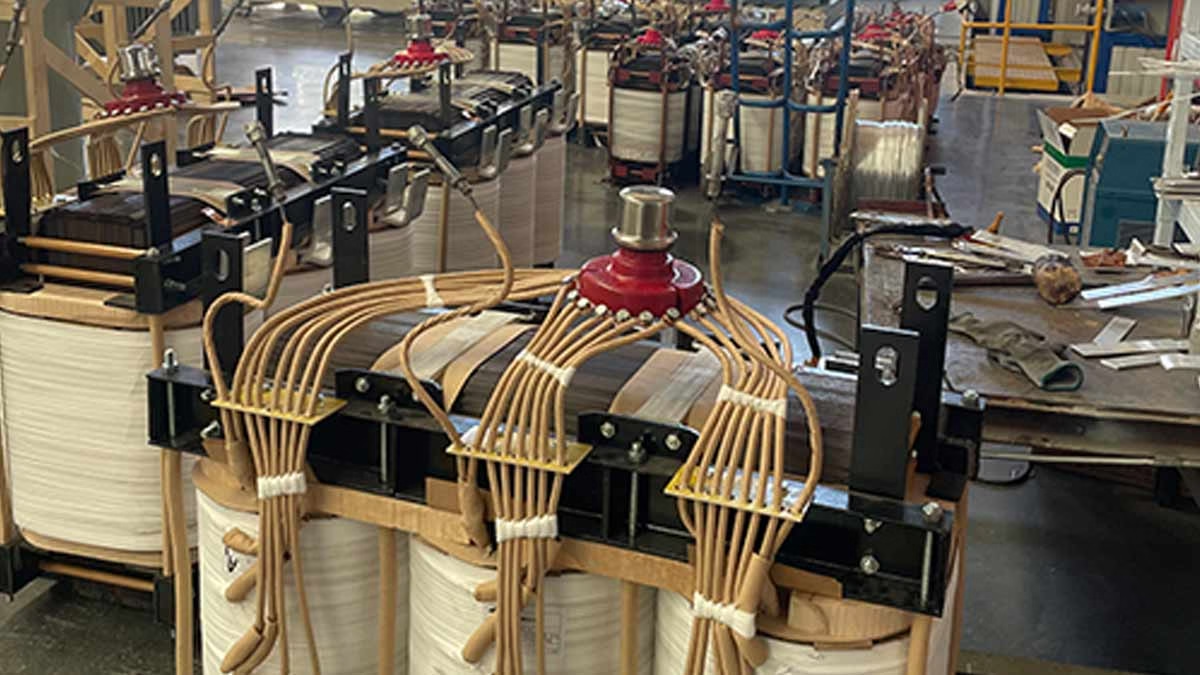
Drawing on decades of experience in transformer design, manufacturing, and global procurement, we break down the critical elements driving 2025 pricing, with actionable insights for navigating cost fluctuations and optimizing value.
Contents
hide
Raw Material Costs: Copper, Steel & the 2025 Market Volatility
Raw materials—particularly copper and electrical steel—remain the single largest cost driver for three-phase transformers, accounting for 55–65% of total pricing in 2025. Fluctuations in these commodities, fueled by global demand (especially from renewable energy and EV sectors) and supply chain constraints, directly impact transformer costs.
Copper: The High-Stakes Conductor
Copper prices in 2025 are tied to the exponential growth of green energy projects—wind farms, solar installations, and EV charging networks all rely heavily on copper windings for efficient power transfer. A 10% surge in copper prices (common in 2024 due to mine supply shortages in Chile and Peru) translates to a 3–5% increase in transformer costs. For example, a 1000kVA transformer with 800kg of copper windings saw a $2,400 price hike when copper jumped from $9,000 to $10,500 per metric ton in Q1 2025.
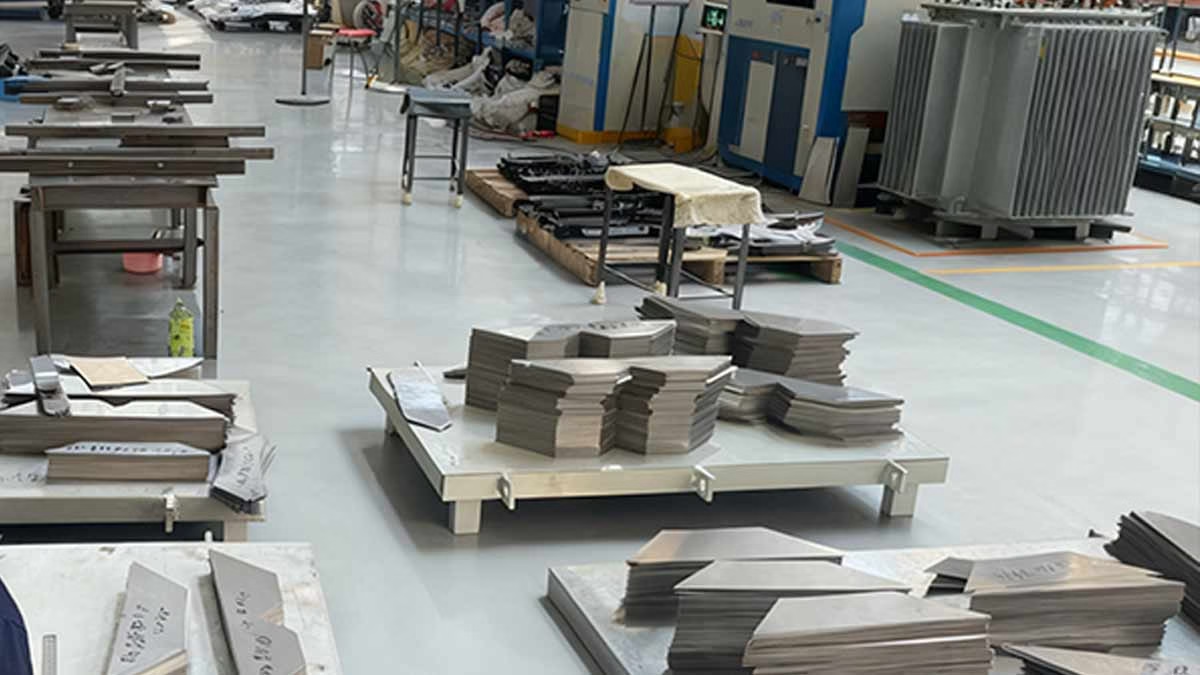
Alternatives like aluminum offer cost savings (10–15% lower material costs) but require design adjustments—such as thicker windings to compensate for aluminum’s lower conductivity. In 2025, we’ve seen budget-focused industrial projects adopt aluminum-wound transformers for non-critical applications, though copper remains the standard for high-efficiency and long-lifespan requirements.
Electrical Steel: Core Efficiency & Supply Constraints
Grain-oriented electrical steel (GOES) makes up 20–25% of transformer costs, with 2025 prices influenced by limited global production capacity (only 12 major manufacturers worldwide) and rising demand for high-efficiency cores. Premium-grade GOES (used in amorphous and nanocrystalline cores) costs 25–30% more than standard steel but reduces no-load losses by 40–50%. For a utility client’s 2025 grid modernization project, opting for premium GOES increased upfront costs by 18% but will deliver $300,000 in energy savings over the transformer’s 25-year lifespan.
Other Material Impacts
- Insulation: Bio-based oils (growing in popularity for environmental compliance) cost 15–20% more than mineral oil but offer price stability amid volatile petroleum markets.
- Structural Steel: Corrosion-resistant alloys (critical for coastal or industrial installations) add 25–30% to structural costs but extend maintenance intervals by 50%.
| Material | % of Total Cost | 2025 Price Volatility | Impact on Transformer Price |
|---|---|---|---|
| Copper | 35–45% | Very High (15–20% YoY) | 3–5% per 10% copper price shift |
| Grain-Oriented Steel | 20–25% | Moderate (8–12% YoY) | 2–3% per 10% steel price shift |
| Insulation Materials | 10–15% | Low (3–5% YoY) | 1–2% per 10% insulation price shift |
| Structural Components | 5–10% | Moderate (7–9% YoY) | 0.5–1% per 10% steel price shift |
Technological Advancements: Smart Features & Efficiency Upgrades
2025 transformer pricing reflects a growing shift toward “intelligent, efficient” designs—with smart technology and advanced materials driving 15–30% higher upfront costs but delivering substantial long-term value. These advancements are no longer niche; they’re becoming table stakes for grid compatibility and sustainability goals.
Smart Monitoring & Predictive Maintenance
IoT-enabled sensors, AI-driven diagnostics, and digital twin technology are standard in mid-to-high-end transformers in 2025. A 750kVA transformer with real-time load monitoring, temperature tracking, and fault prediction adds 12–15% to costs but cuts annual maintenance expenses by 30%. For a data center client in 2025, these features prevented two unplanned outages (saving $400,000 in downtime costs) and extended the transformer’s lifespan by 20%.
Digital twin integration—virtual replicas that simulate performance and predict wear—adds 5–8% to costs but has become critical for large-scale projects. A utility’s 2025 substation upgrade used digital twins to optimize load distribution, reducing energy losses by 8% within the first year.
Efficiency-Driven Materials & Designs
Amorphous and nanocrystalline cores are gaining traction in 2025, replacing traditional steel cores in high-efficiency applications. Amorphous cores cost 20–30% more but reduce no-load losses by 70–80%. For a LEED-certified commercial building project, we specified amorphous-core transformers—though upfront costs were 22% higher, the client will recoup the investment in 6 years via energy savings.
Advanced winding techniques (optimized via computational fluid dynamics) and high-temperature insulation materials add 7–10% to costs but boost load capacity by 10–15% without increasing footprint—critical for space-constrained urban installations.
Smart Grid Compatibility
2025’s push for grid modernization demands transformers with bidirectional power flow, voltage regulation, and cybersecurity features. On-load tap changers (OLTCs) for dynamic voltage control add 15–20% to costs but are mandatory for integrating renewable energy. Cybersecurity enhancements (encrypted communication, intrusion detection) cost 5–7% more but are non-negotiable for critical infrastructure projects, per 2025 NERC CIP standards.
| Technological Feature | 2025 Cost Increase | Key 2025 Benefit | ROI Timeframe |
|---|---|---|---|
| AI-Powered Monitoring | 12–15% | 30% lower maintenance + 20% longer lifespan | 3–4 years |
| Amorphous Core | 20–30% | 70–80% reduced no-load losses | 5–6 years |
| Smart Grid Compatibility | 15–20% | Seamless renewable integration | 4–5 years |
| Cybersecurity Upgrades | 5–7% | Compliance with NERC CIP 2025 standards | Immediate |
Regulatory Compliance: 2025 Standards Shaping Costs
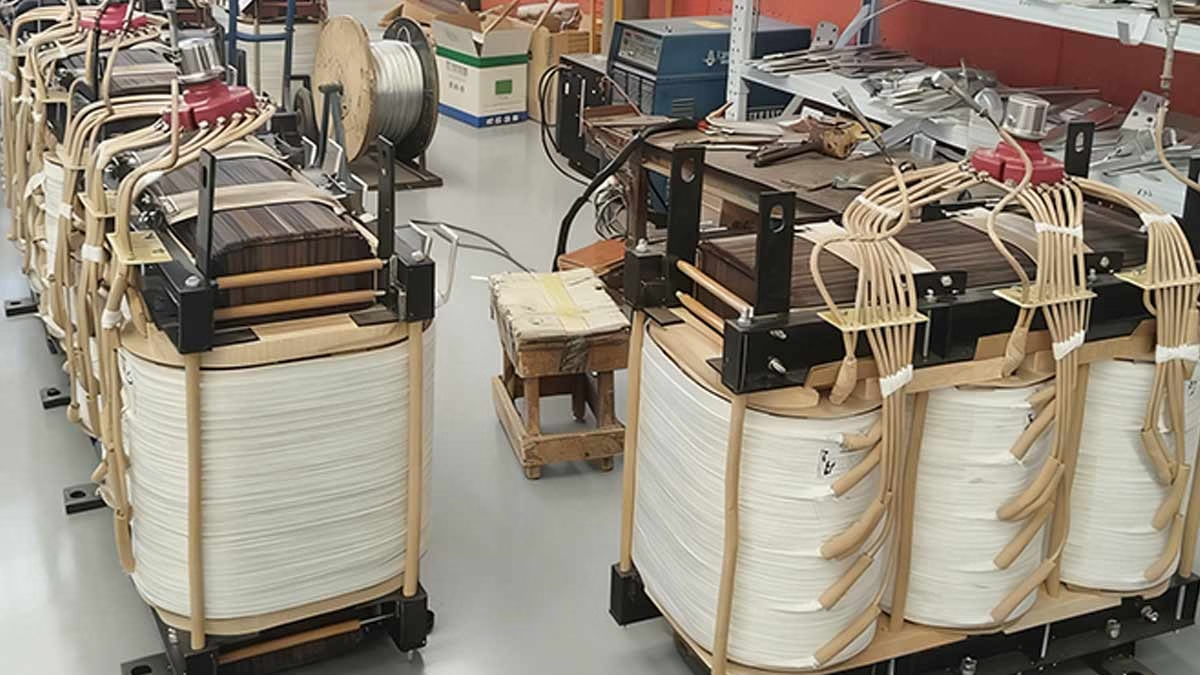
Evolving global regulations—focused on efficiency, sustainability, and safety—are a major cost driver in 2025, adding 10–20% to transformer pricing. Compliance is no longer optional; it’s a prerequisite for market access, particularly in the EU, North America, and Asia-Pacific.
Efficiency Mandates
The 2025 update to IEC 60076-11 (global transformer efficiency standard) requires no-load loss reductions of 15–20% compared to 2020 levels. Meeting these standards necessitates premium materials (e.g., amorphous cores) and optimized designs—adding 15–18% to costs for standard transformers. In the EU, the new EcoDesign Directive (2025/XX) goes further, mandating lifecycle carbon footprint reporting, which has pushed manufacturers to adopt recyclable materials (adding 8–10% to production costs).
Environmental Regulations
2025 has seen a crackdown on hazardous substances: mineral oil insulation is being phased out in the EU and California, replaced by bio-based or synthetic oils (15–20% more expensive). Lead-free components and recyclable structural materials add 5–7% to costs but are required for CE and UL certifications.
Noise pollution standards have also tightened—urban transformers must now operate at ≤55dB (down from 65dB in 2020). Acoustic insulation and low-vibration designs add 10–12% to costs, as seen in a 2025 New York City substation project.
Safety & Cybersecurity Rules
Seismic resistance requirements (updated in 2025 for earthquake-prone regions like California and Japan) demand reinforced tank designs and specialized mounting systems—adding 12–15% to costs. For critical infrastructure (hospitals, data centers), 2025 NERC CIP standards mandate cybersecurity features (e.g., secure firmware updates, access controls), which increase costs by 5–8%.
| Regulatory Area | 2025 Cost Impact | Compliance Requirement | Market Relevance |
|---|---|---|---|
| Efficiency (IEC 60076-11) | 15–18% | 15–20% lower no-load losses | Global |
| Environmental (EcoDesign) | 8–12% | Bio-based oils, recyclable materials | EU, California |
| Safety (Seismic) | 12–15% | Reinforced structures for earthquake zones | West Coast, Japan |
| Cybersecurity (NERC CIP) | 5–8% | Encrypted communication, intrusion detection | Critical Infrastructure |
Manufacturing & Labor Costs: 2025 Global Economic Shifts
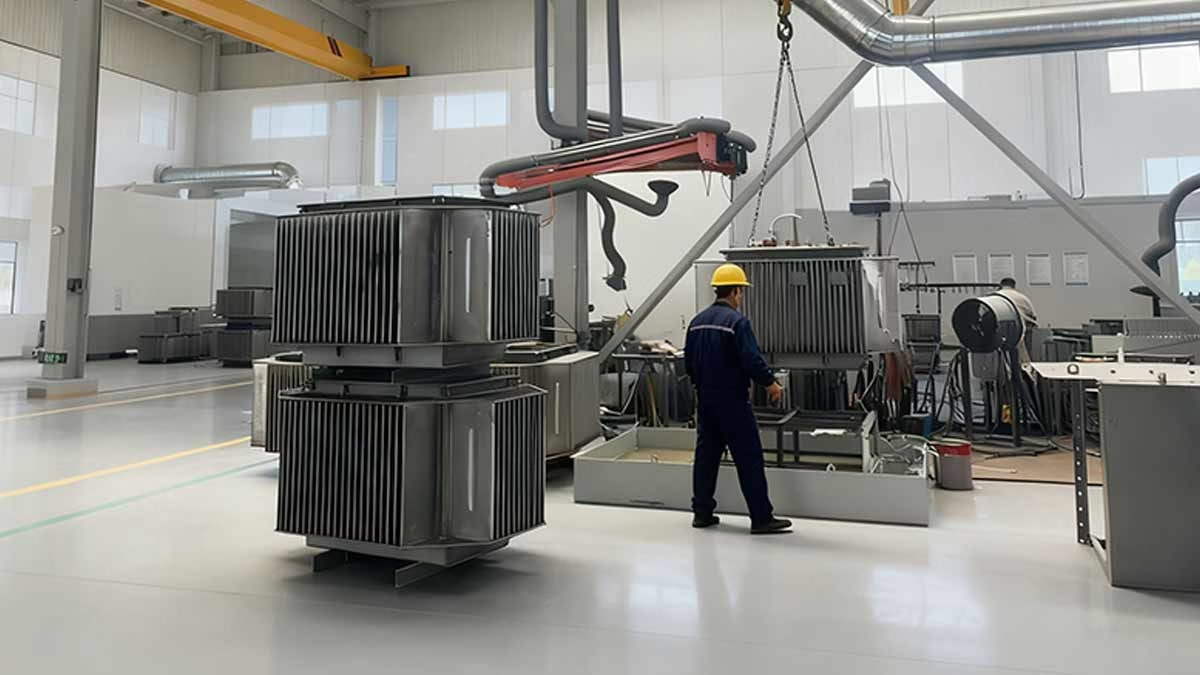
Global economic trends—regionalization of supply chains, labor market shifts, and energy price volatility—are reshaping transformer production costs in 2025. Manufacturers are adapting to these dynamics, with costs varying significantly by production location and operational strategy.
Currency & Supply Chain Regionalization
2025 has seen a move away from single-source manufacturing, with companies establishing regional production hubs to mitigate geopolitical risks. A 10% fluctuation in major currencies (e.g., USD vs. CNY, EUR) now impacts transformer prices by 3–5%, down from 7–8% in 2020, thanks to localized sourcing. For example, a European manufacturer’s Mexican plant reduced costs by 10% for North American clients by avoiding import tariffs and currency swings.
Labor Market Dynamics
Skilled labor shortages persist in 2025, driving up wages in traditional manufacturing hubs (China, Europe, US) by 8–10% YoY. To offset this, manufacturers are investing in automation: robotic winding lines and AI-powered quality control reduce labor costs by 15–20% but require upfront investments (adding 2–3% to transformer prices in 2025). In India and Vietnam, emerging manufacturing hubs offer 25–30% lower labor costs, but quality control and certification expenses can negate 10–15% of these savings.
Energy & Production Efficiency
Electricity costs—critical for energy-intensive transformer manufacturing—have risen 12–15% globally since 2023. Manufacturers are responding with on-site renewable energy: a Chinese factory’s 2025 solar installation reduced energy costs by 18%, while a German plant’s geothermal cooling cut operational expenses by 12%. These investments add 3–5% to initial production costs but stabilize long-term pricing.
Trade Policies & Tariffs
2025 trade dynamics remain complex: US tariffs on Chinese transformers (25%) and EU carbon border taxes (CBAM) add 10–15% to cross-border costs. Local content requirements (e.g., 50% in the Middle East, 60% in Brazil) push manufacturers to source materials regionally, increasing costs by 8–10% but unlocking government contracts.
| Global Economic Factor | 2025 Cost Impact | Mitigation Strategy |
|---|---|---|
| Currency Fluctuations | 3–5% | Regional production hubs, localized sourcing |
| Labor Shortages | 8–10% | Automation, training programs |
| Energy Prices | 3–5% | On-site renewables, energy-efficient processes |
| Tariffs & Local Content | 8–15% | Regional manufacturing, compliance planning |
Customization vs. Standardization: 2025 Value Tradeoffs
In 2025, the choice between customized and standardized transformers hinges on project needs, timeline, and total cost of ownership. Custom designs command 20–50% higher prices but deliver optimized performance, while standard models offer cost savings and speed—with modular solutions bridging the gap.
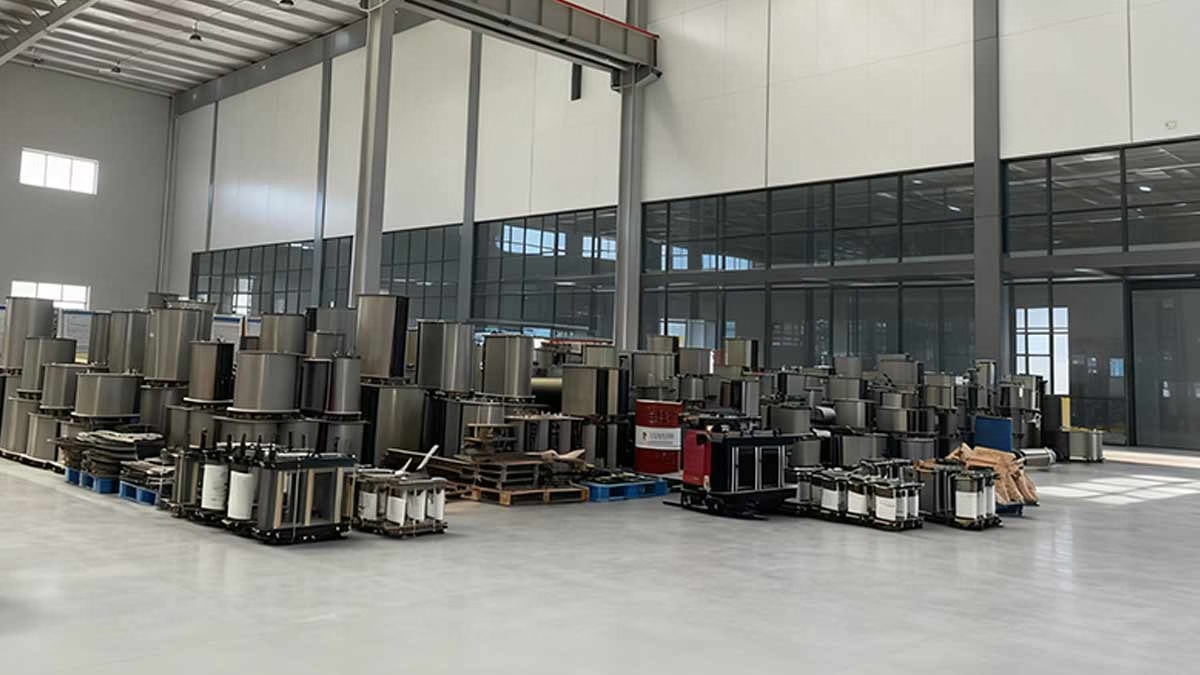
Customization: Premium for Precision
Custom transformers are essential for 2025’s most complex projects:
- Specialized Environments: Coastal installations requiring corrosion-resistant materials (20–25% cost premium) or high-altitude designs (10–15% more) for mountainous regions.
- Unique Load Profiles: Data centers needing harmonic mitigation or EV charging hubs requiring bidirectional power flow (25–30% cost increase).
- Space Constraints: Urban substations with compact footprints—we designed a custom 500kVA transformer for a Tokyo high-rise in 2025, which cost 35% more than standard but fit in 40% less space.
Customization costs stem from engineering hours (15–25% higher than standard), specialized tooling, and unique component sourcing. Testing and certification add another 30–50% to quality control expenses, as custom designs lack pre-existing regulatory approvals.
Standardization: Scale & Speed
Standardized transformers (available in 50–2500kVA, 480–13.8kV) dominate 2025’s mainstream market, offering:
- Economies of Scale: Mass production reduces per-unit costs by 15–20%—a utility’s 2025 order of 50 standard 750kVA transformers cost 18% less than a batch of 10 custom units.
- Faster Delivery: Stock models ship in 6–8 weeks (vs. 12–24 for custom), critical for urgent replacements or fast-track projects.
- Simplified Maintenance: Common components and pre-tested designs reduce repair costs by 25–30% over the transformer’s lifespan.
Modular Solutions: The 2025 Middle Ground
Modular transformers—standard core designs with customizable features (e.g., winding voltage, monitoring tools)—are gaining traction in 2025. They offer 70% standardization (keeping costs within 10–15% of fully standard models) while addressing specific needs. For a 2025 industrial park project, modular transformers allowed us to adjust voltage outputs for different tenants without full customization—saving 20% compared to bespoke designs.
| Aspect | Customization | Standardization | Modular (2025 Trend) |
|---|---|---|---|
| Upfront Cost | 20–50% Higher | Baseline | 10–15% Higher |
| Delivery Time | 12–24 Weeks | 6–8 Weeks | 8–12 Weeks |
| Performance Fit | Perfect | Moderate | High |
| Maintenance Costs | Higher (Unique Parts) | Lower (Common Parts) | Moderate-Lower |
| Best For | Complex, Niche Needs | Routine, Large-Scale | Mixed-Use, Flexible Projects |
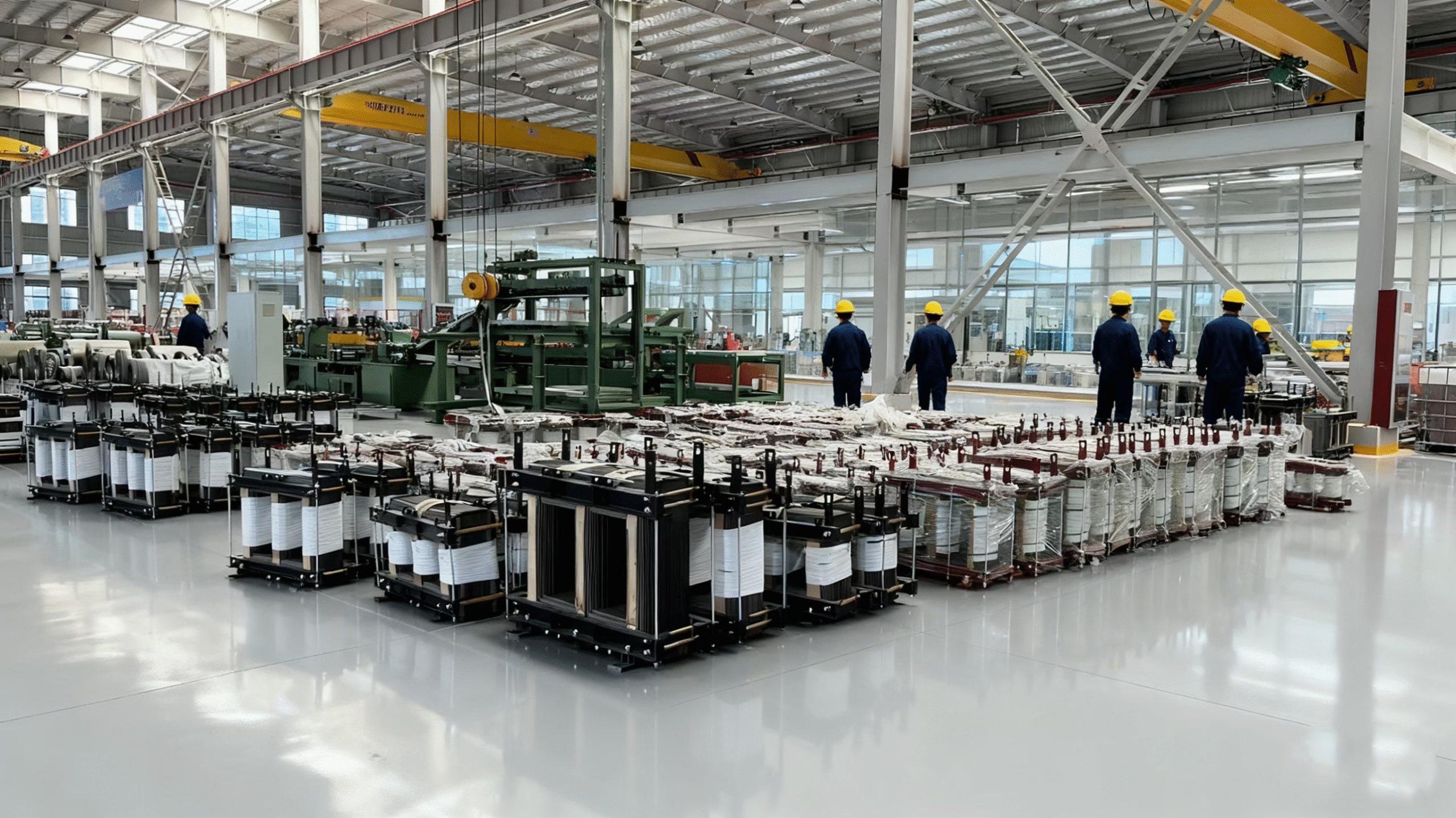
Conclusion
2025 three-phase transformer pricing is a balancing act of raw material volatility, technological innovation, regulatory compliance, global economic shifts, and project-specific needs. For buyers, the key is to look beyond upfront costs and evaluate total ownership value—considering energy savings from efficient designs, reduced downtime from smart features, and longevity from compliant materials.
Standardized models remain the cost-effective choice for routine applications, while customization is justified for complex, high-stakes projects. Modular solutions, the fastest-growing segment in 2025, offer the best of both worlds. By partnering with manufacturers who understand these dynamics, you can navigate 2025’s pricing landscape to secure transformers that meet your performance goals, budget constraints, and future-proofing needs.