
For electrical engineers, utility providers, and infrastructure developers, three phase pad mounted transformers are far more than just unassuming outdoor enclosures—they’re the critical link between high-voltage power transmission and the reliable electricity that powers homes, commercial buildings, and industrial facilities worldwide. By converting high-voltage currents into safe, usable levels, these compact, weather-resistant units enable efficient large-scale power distribution, supporting the demands of modern life while adhering to strict safety and performance standards.
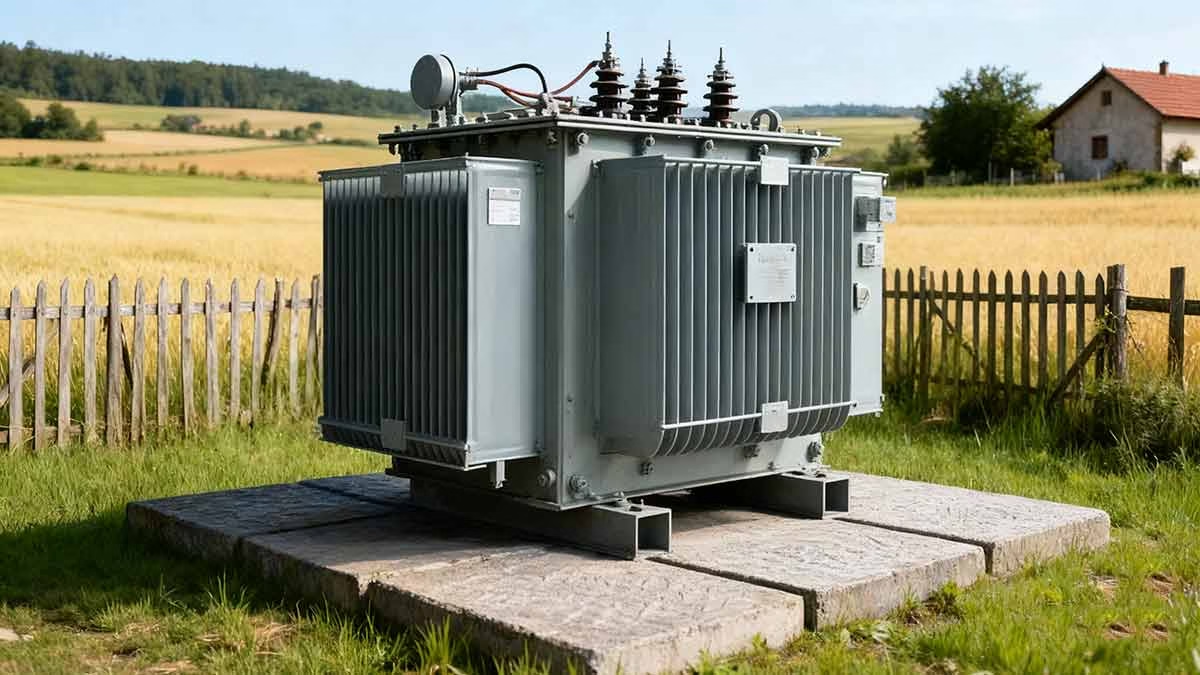
Let’s explore the technology, applications, and future of these indispensable power grid components—demystifying their role in keeping our world connected.
Contents
hide
How Three Phase Pad Mounted Transformers Work: Core Mechanics Unveiled
If you’ve ever passed a green or gray metal box in a neighborhood, commercial park, or industrial zone, you’ve encountered a three phase pad mounted transformer. Beyond their unobtrusive design lies a sophisticated system built on the principle of electromagnetic induction, optimized for balanced power delivery.
Unlike single-phase transformers, which rely on a single set of windings, three phase units use three pairs of primary and secondary windings—each offset by 120 electrical degrees—to handle three-phase power. This configuration allows them to step down high voltages (typically 4.16kV to 34.5kV, as specified by ANSI C57.12.28 standards) to practical levels (120/208V for residential use or 277/480V for commercial/industrial applications) with minimal energy loss.
Key Components & Their Critical Functions
Every three phase pad mounted transformer is engineered with precision components, each playing a vital role in performance and longevity:
- Core: Constructed from 0.35–0.5mm laminated silicon steel (chosen for its low magnetic hysteresis loss), the core provides a concentrated pathway for magnetic flux. Its three-legged or five-legged design ensures balanced energy transfer across all three phases.
- Windings: Primary windings (connected to high-voltage lines) and secondary windings (delivering low-voltage output) are typically made of high-conductivity copper (or aluminum for cost-sensitive applications), wound in a way that minimizes resistance and heat generation.
- Insulation System: An oil-filled tank (using mineral oil or biodegradable ester oil) serves dual purposes: cooling the windings and providing electrical insulation. Paper insulation (impregnated with oil) wraps the windings to prevent arcing and short circuits, meeting IEC 60422 insulation class requirements.
- Bushings: Porcelain or polymer bushings act as insulated connectors, linking internal windings to external power lines. High-voltage bushings (on the primary side) are designed to withstand voltage surges, while low-voltage bushings prioritize current-carrying capacity.
- Tap Changer: A mechanical or electronic component that adjusts the number of winding turns, allowing voltage regulation (±5% or ±10% of nominal voltage) to compensate for grid fluctuations and maintain consistent output.
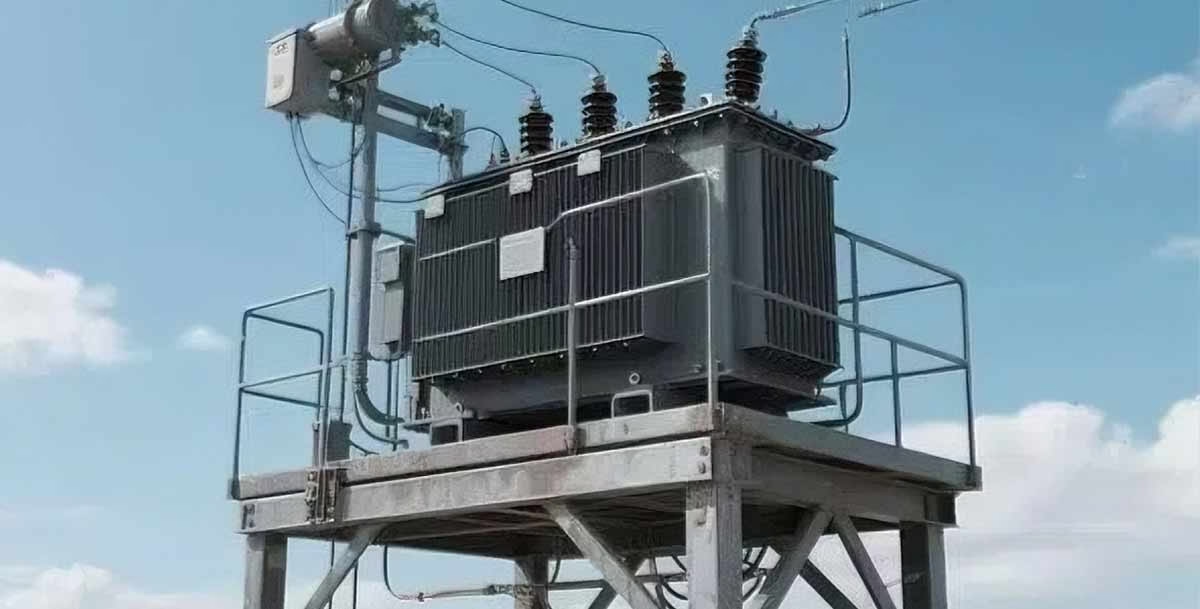
One of the most notable advantages of these transformers is their passive cooling system: the insulating oil circulates naturally, absorbing heat from the windings and dissipating it through the tank’s exterior fins. This design eliminates the need for noisy fans or pumps, making them ideal for residential and urban settings where quiet operation is essential.
Real-World Applications: Where Three Phase Pad Mounted Transformers Shine
Three phase pad mounted transformers are the workhorses of power distribution, tailored to meet the unique demands of diverse environments. Their compact footprint, weather resistance, and high load capacity make them indispensable in:
Residential Communities
In sprawling suburban developments or high-rise apartment complexes, these transformers efficiently power hundreds of homes simultaneously. For example, a 750 kVA three phase unit can support 200+ residential units, delivering balanced power for electric vehicles (EVs), smart home systems, and high-wattage appliances (e.g., heat pumps, induction cooktops) without voltage drops.
Commercial & Mixed-Use Developments
Shopping malls, office parks, and mixed-use districts rely on three phase transformers to handle the heavy power demands of HVAC systems, elevators, retail equipment, and data centers. A 2000 kVA unit, for instance, can power a 10-story office building with 50,000 sq. ft. of space, ensuring consistent performance during peak hours.
Industrial Parks & Manufacturing Facilities
Factories, warehouses, and industrial plants require three phase power for heavy machinery (e.g., motors, compressors, assembly lines) that operates more efficiently with balanced three-phase current. Transformers ranging from 500 kVA to 5000 kVA are common here, with specialized designs (e.g., corrosion-resistant enclosures for coastal industrial zones) to withstand harsh conditions.
Institutional & Critical Infrastructure
Hospitals, universities, and government facilities depend on three phase pad mounted transformers for uninterrupted power. In a hospital setting, for example, a 1250 kVA unit paired with a backup generator ensures life-saving equipment (e.g., MRI machines, ventilators) remains operational during grid outages.
Renewable Energy Integration
Solar farms, wind parks, and battery storage facilities use three phase pad mounted transformers to convert DC power (from solar panels or batteries) into AC power compatible with the grid. Their compact design and high efficiency make them ideal for utility-scale renewable projects, where space and energy loss are critical considerations.
Three Phase vs. Single Phase Pad Mounted Transformers: Which Is Right for Your Project?
The choice between three phase and single phase pad mounted transformers hinges on load capacity, efficiency requirements, and application type. Here’s a detailed comparison to guide decision-making:
Power Capacity & Efficiency
- Three Phase: Designed for high loads, with ratings ranging from 75 kVA to 5000 kVA. According to IEEE 1159 standards, they achieve 98–99% efficiency for large loads, thanks to balanced current flow that minimizes copper loss and heat generation.
- Single Phase: Limited to smaller loads (up to 167 kVA), with efficiency ratings of 97–98%. They’re more prone to energy loss when powering high-demand equipment.
Voltage Stability
- Three Phase: Delivers consistent voltage even with fluctuating loads, making them ideal for sensitive equipment (e.g., industrial machinery, data center servers) that requires stable power.
- Single Phase: Voltage fluctuations are more common, especially in areas with varying residential demand (e.g., peak hours for air conditioning).
Application Suitability
- Three Phase: Best for commercial, industrial, and large residential projects (50+ units), as well as renewable energy and smart grid applications.
- Single Phase: Cost-effective for small residential developments (fewer than 50 units), rural areas with low power demand, or standalone structures (e.g., small offices, garages).
Cost Considerations
- Three Phase: Higher initial cost (20–40% more than single phase), but lower long-term expenses due to reduced infrastructure needs (fewer transformers required for large loads) and lower energy loss.
- Single Phase: Lower upfront cost, but less cost-effective for high-demand applications—requiring multiple units to match the capacity of a single three phase transformer.
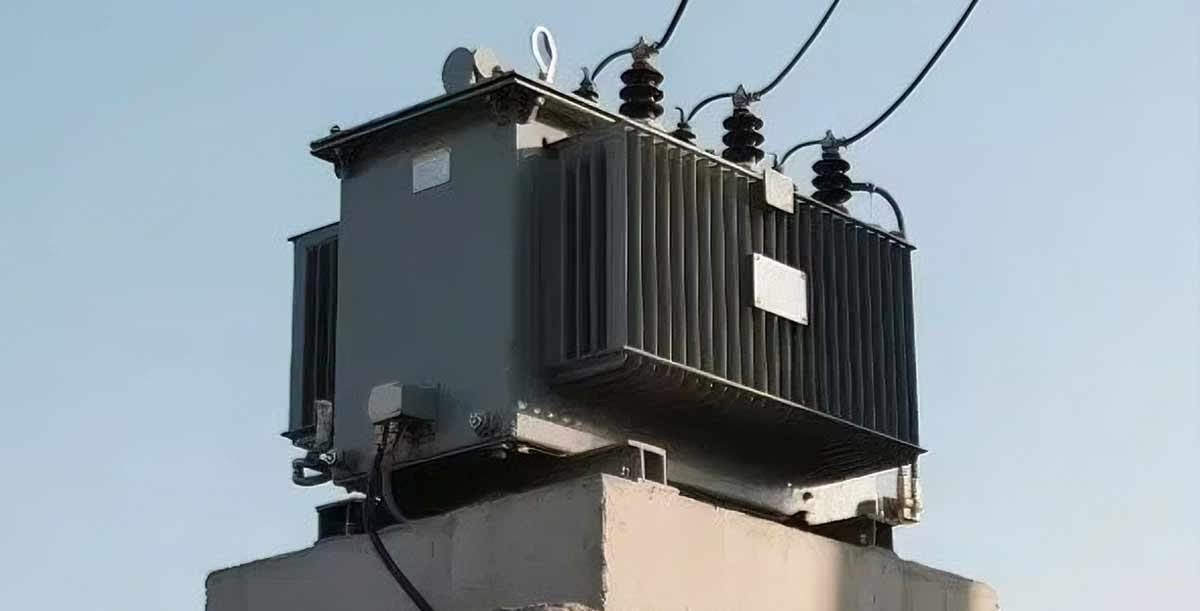
A real-world example: A mid-sized manufacturing plant in Ohio recently replaced 12 single phase transformers (each 150 kVA) with 3 three phase units (each 600 kVA). The switch reduced energy costs by 18% annually, cut maintenance requirements by 50%, and freed up 30% of the plant’s outdoor space.
Optimizing Performance: Selection & Maintenance Best Practices
To maximize the lifespan (typically 25–30 years) and efficiency of three phase pad mounted transformers, careful selection and proactive maintenance are essential. Here’s a framework for success:
Key Selection Criteria
- Load Assessment: Calculate current and future power needs (accounting for 10–20% growth) to choose the right kVA rating. Over-sizing leads to unnecessary energy loss; under-sizing causes overheating and premature failure.
- Voltage Compatibility: Match primary (high-voltage) and secondary (low-voltage) ratings to your grid and end-user requirements. Ensure the tap changer range (e.g., ±5%) aligns with local voltage fluctuations.
- Environmental Factors: For harsh conditions (coastal areas, deserts, industrial zones), select transformers with corrosion-resistant enclosures (e.g., hot-dipped galvanized steel), sealed tanks to prevent moisture ingress, and temperature-rated windings (up to 115°C).
- Safety & Compliance: Verify compliance with local standards (e.g., NEC, IEC, ANSI) for grounding, fault current handling, and fire safety. Look for units with pressure relief valves and fault detection systems.
Proactive Maintenance Guidelines
Regular maintenance can extend a transformer’s lifespan by 30% and improve efficiency by 2–3%. Follow these industry best practices:
- Oil Testing: Conduct annual dissolved gas analysis (DGA) and moisture testing (per IEC 60422) to detect insulation degradation, arcing, or overheating. Replace oil if moisture content exceeds 30 ppm or acidity levels rise above 0.1 mg KOH/g.
- Thermal Imaging: Perform semi-annual thermal scans (using infrared cameras) to identify hot spots in windings, bushings, or connections—early indicators of loose terminals or internal faults.
- Load Monitoring: Use smart meters to track load levels monthly. Avoid operating transformers above 80% of their rated capacity for extended periods to prevent overheating.
- Bushing Inspection: Check bushings quarterly for cracks, leaks, or contamination. Clean with dielectric fluid if needed to maintain insulation integrity.
- Acoustic Emission Testing: Conduct bi-annual AE testing to detect partial discharges (tiny electrical arcs) inside the tank—an early warning sign of insulation failure that’s undetectable by visual or thermal inspections.
In a coastal utility project in Florida, implementing this maintenance schedule reduced transformer failures by 85% over five years, despite high humidity and salt exposure.
Smart Grid Integration: Challenges & Innovations Shaping the Future
As the global power grid evolves toward smarter, more sustainable systems, three phase pad mounted transformers are emerging as critical enablers of this transition. Their integration with smart grid technology unlocks new capabilities—while addressing unique challenges.
Key Opportunities in Smart Grid Integration
- Real-Time Monitoring: Equipping transformers with IoT sensors (for temperature, load, oil quality, and vibration) enables utility providers to monitor performance remotely. This data supports predictive maintenance, reducing unplanned outages by 40% (per a 2023 IEEE study).
- Automated Voltage Regulation: Smart tap changers (controlled by AI algorithms) adjust voltage in real time, compensating for fluctuations from EV charging, solar/wind generation, and peak demand. This improves voltage stability by 15% and reduces energy loss.
- Bidirectional Power Flow: Modern three phase transformers support two-way power flow, critical for integrating distributed energy resources (DERs) like rooftop solar panels and residential battery storage. This allows excess energy from homes to feed back into the grid, reducing reliance on fossil fuels.
- EV Charging Support: High-capacity three phase transformers (2000+ kVA) power fast-charging stations (50kW+), addressing the growing demand for electric vehicle infrastructure. Smart load management ensures EV charging doesn’t overload the grid during peak hours.
Critical Challenges to Address
- Cybersecurity: Connecting transformers to digital networks increases vulnerability to cyberattacks. Utilities must implement end-to-end encryption, secure communication protocols (e.g., IEC 62351), and regular penetration testing to protect critical infrastructure.
- Cost of Smart Components: IoT sensors, AI controllers, and smart tap changers add 15–25% to the initial cost of transformers. However, the long-term savings from reduced maintenance and improved efficiency often offset this investment within 3–5 years.
- Interoperability: Ensuring smart transformers work seamlessly with existing grid management systems requires adherence to open standards (e.g., OpenADR, DNP3). This avoids vendor lock-in and enables scalable integration.
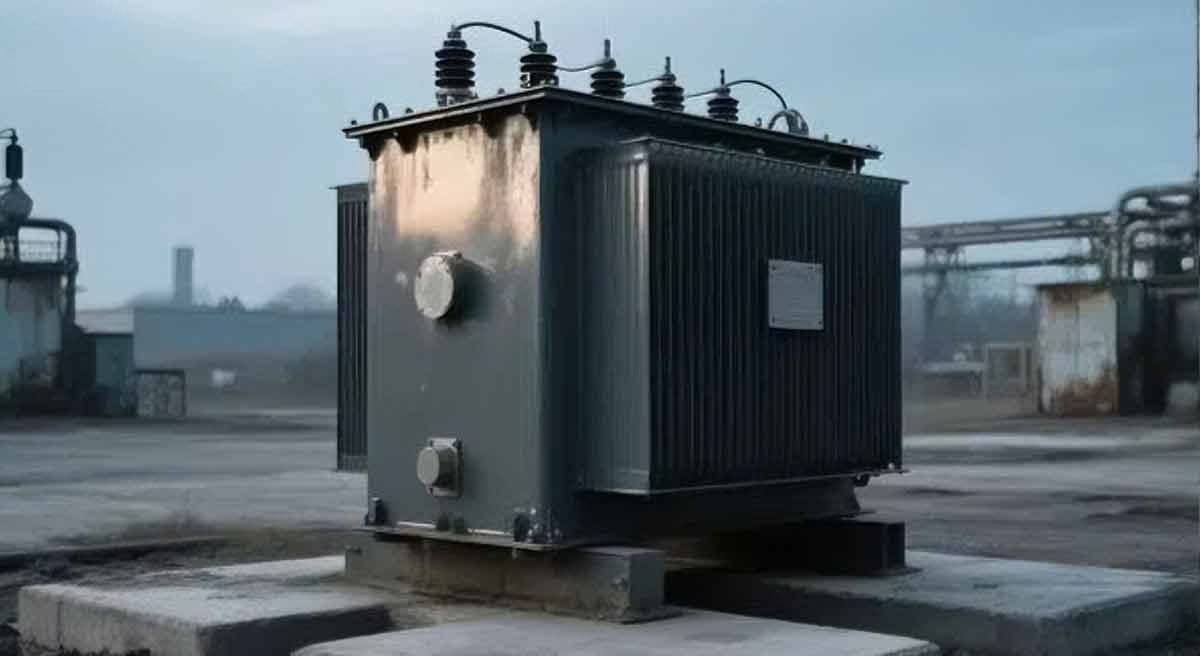
A standout example: In Copenhagen’s smart grid project, 200 three phase pad mounted transformers were upgraded with IoT sensors and AI-driven control systems. The result? A 30% increase in renewable energy integration, a 25% reduction in peak load stress, and a 12% drop in overall grid operating costs.
Conclusion
Three phase pad mounted transformers are the unsung heroes of modern power distribution—combining efficiency, reliability, and adaptability to meet the evolving needs of our electrified world. From powering residential neighborhoods to enabling industrial growth and renewable energy integration, these units play a pivotal role in building resilient, sustainable infrastructure.
As technology advances, their role will only expand: AI-driven predictive maintenance, enhanced cybersecurity, and compatibility with next-generation cooling systems (e.g., hydrogen-based fluids) will make them even more critical to the transition toward net-zero emissions. For utility providers, engineers, and project developers, investing in high-quality three phase pad mounted transformers—paired with careful selection and proactive maintenance—is not just a practical choice, but a strategic one for building a more reliable, efficient, and sustainable power grid.
Whether you’re designing a new development, upgrading existing infrastructure, or integrating renewable energy, three phase pad mounted transformers remain the backbone of safe, efficient power distribution—proving that sometimes the most critical innovations are the ones working quietly behind the scenes.
More FAQ About Three Phase Pad Mounted Transformer
Q: What is a three-phase pad-mounted transformer?
A: A three-phase pad-mounted transformer is a ground-mounted distribution transformer designed to handle three-phase alternating current power. It is enclosed in a tamper-resistant metal cabinet and installed on a concrete pad, making it suitable for outdoor use in public areas, commercial districts, and industrial zones. Unlike pole-mounted transformers, it operates at ground level and is widely used to step down high-voltage electricity from transmission lines to lower voltages suitable for residential, commercial, and industrial applications.
Q: What are the typical applications of three-phase pad-mounted transformers?
A: They have versatile applications including public infrastructure (powering public lighting and traffic signals), commercial buildings (office buildings, shopping malls, business centers), industrial facilities (heavy machinery plants, industrial parks), data centers (supporting sensitive IT infrastructure),high-density residential communities, renewable energy systems (solar and wind power distribution) and emerging fields like EV charging stations and battery energy storage systems (BESS).
Q: What are the key features of three-phase pad-mounted transformers?
A: Key features include a compact design that fits narrow spaces,tamper-resistant and weatherproof metal enclosures for outdoor safety, stable three-phase power output with balanced load capacity, low maintenance requirements, and long service life. Most models adopt fully sealed and insulated designs, equipped with accessories like temperature gauges, pressure release valves, and tap changers. They also comply with international standards to ensure reliable operation in various environments.
Q: How to select the right kVA rating for a three-phase pad-mounted transformer?
A: The kVA rating selection depends on the total power demand of connected loads. First, calculate the sum of active power (kW) of all equipment, then divide by the expected power factor (usually 0.8-0.9 for industrial and commercial applications) to get the required apparent power (kVA) . Typical ratings range from 45 kVA to 12,000 kVA.For example,225 kVA models are suitable for small commercial buildings, while 1500-3000 kVA models are used in industrial parks and large-scale renewable energy projects. It’s also necessary to consider future load expansion and overload capacity.
Q: What are the common faults of three-phase pad-mounted transformers, and how to solved?
A: Common faults include oil leakage, overheating, bushing failures, and internal short circuits. Oil leakage can be solved by replacing damaged seals and tightening bolts. Overheating may be caused by overload or poor heat dissipation, requiring load reduction and cleaning of cooling systems. Bushing failures need immediate replacement to avoid discharge hazards. Internal faults detected by DGA or abnormal noise require professional maintenance or winding repair. All fault handling should be performed by qualified personnel following safety guidelines to prevent injury or further damage.
Q: How to ensure the safety of three-phase pad-mounted transformers during operation?
A: Safety measures include tamper-resistant locked enclosures to prevent unauthorized access, reliable grounding systems for the tank, core, and neutral point, installation of overcurrent and short-circuit protection devices, and pressure release valves for oil-immersed models. Operators must wear insulating protective equipment and follow lockout/tagout procedures during maintenance. Safety signs should be posted around the installation site to warn pedestrians and prevent accidental contact. Compliance with ANSI and IEC safety standards is fundamental to ensuring operational safety.
Q: How to choose between three-phase pad-mounted and pole-mounted transformers?
A: The choice depends on installation space, power demand, and environment. Three-phase pad-mounted transformers are suitable for areas with underground power lines, limited overhead space, or high power demand (industrial, commercial,high-density residential). They offer higher capacity and better protection but require a concrete pad. Pole-mounted transformers are used for low to medium-capacity applications in rural or suburban areas with overhead power lines. They save ground space but have lower capacity and are more exposed to weather conditions . Three-phase pad-mounted models are preferred for three-phase power supply, while pole-mounted models are often single-phase.