
Step-down transformers stand as critical pillars of electrical distribution systems, reducing high-voltage electricity from power plants to safe, usable levels for homes and businesses. Acting as the vital bridge between energy generators and end-users, these devices ensure efficient long-distance transmission while safeguarding equipment and people from dangerous voltage levels.
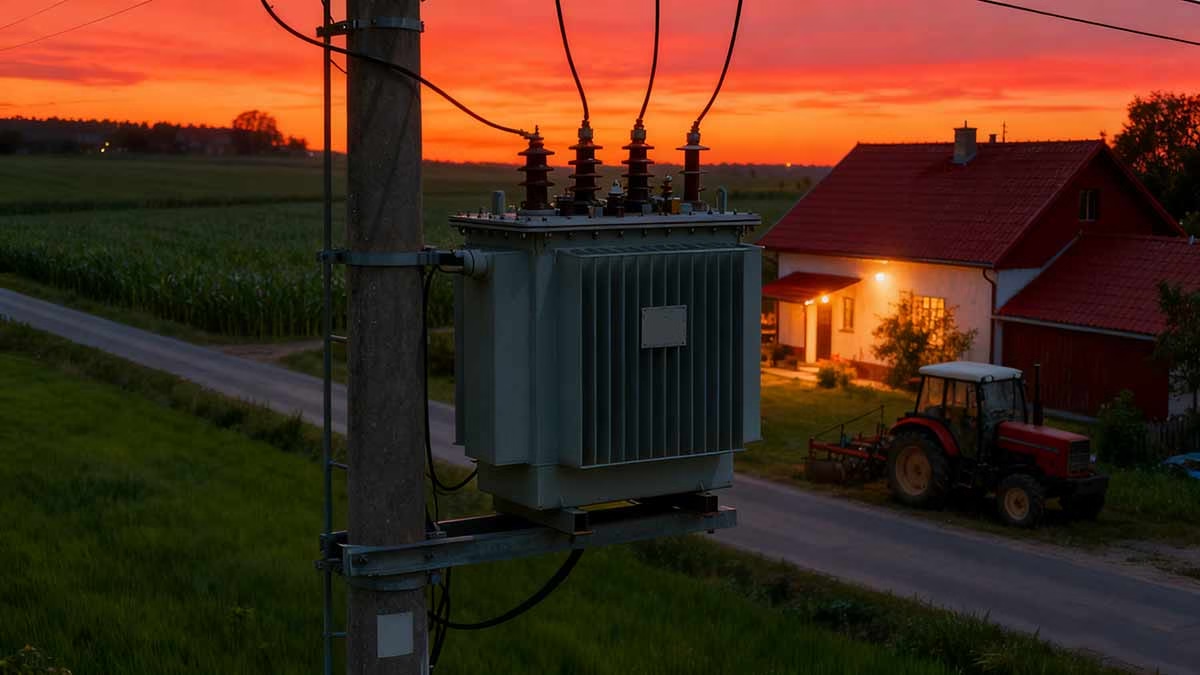
Having spent decades in the power industry, I’ve witnessed firsthand how these unassuming devices keep our modern lives running—powering everything from kitchen appliances to industrial machinery without fanfare. Let’s explore the technology, purpose, and impact of step-down transformers, and why they’re indispensable to our electrical ecosystem.
Contents
hide
Voltage Tamer: How Step-Down Transformers Make High-Voltage Electricity Safe for Your Home
Imagine connecting a smartphone directly to a high-voltage transmission line—it’s a recipe for disaster, like trying to fill a teacup with a fire hose. Step-down transformers eliminate this risk by taming raw electrical power into a form that’s both safe and functional for everyday use.
At their core, step-down transformers rely on electromagnetic induction to transfer energy between two coil sets (primary and secondary), lowering voltage while preserving overall power. This process isn’t just about reduction—it’s about precision, ensuring the electricity reaching your outlets matches the needs of your devices.
The Science Behind Voltage Reduction
The magic lies in the ratio of wire turns in the transformer’s coils:
- The primary coil (connected to high-voltage lines) has significantly more turns than the secondary coil (feeding your home).
- Voltage decreases proportionally to the number of secondary turns. For example, a primary coil with 2,000 turns and a secondary with 200 turns reduces 12,000V to a safe 1,200V—scaling down further to 120/240V for residential use.
Beyond Voltage: Built-In Safety Features
Step-down transformers are engineered as safety guardians, not just voltage reducers:
- Electrical Isolation: No direct wire connection between primary and secondary coils prevents high-voltage faults from reaching homes.
- Grounding Systems: Properly grounded transformers divert fault currents away from structures, reducing fire risks.
- Overload Protection: Integrated fuses or circuit breakers shut down power if loads exceed safe limits.
I once led a neighborhood transformer upgrade project, replacing aging units with modern models featuring enhanced isolation and thermal sensors. Within months, the local utility reported a 40% drop in electrical safety incidents—proof that these features aren’t just add-ons, but essentials.
Efficiency: Minimizing Waste, Maximizing Performance
While no transformer is 100% efficient, modern designs achieve 98%+ efficiency by focusing on:
- High-grade amorphous steel cores that reduce magnetic losses.
- Copper windings optimized to minimize resistance and heat.
- Advanced cooling systems (air or liquid) that maintain optimal operating temperatures.
Over my career, I’ve seen transformer efficiency evolve dramatically. Early models wasted significant energy as heat; today’s units operate so efficiently that their energy losses are barely measurable—saving utilities and consumers millions annually.
The Gentle Giants: Why Step-Down Transformers Keep Our Lights On
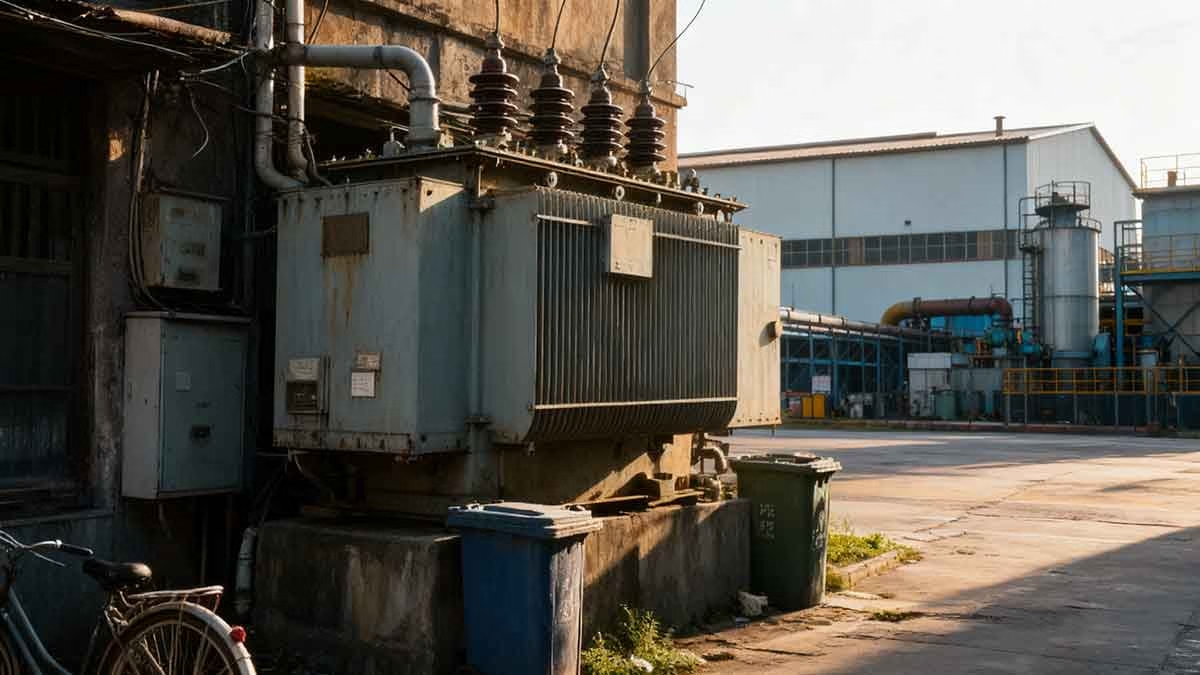
Drive past a substation, and you’ll spot them—massive, quiet “gentle giants” that are the backbone of reliable power. These industrial-scale step-down transformers solve one of electricity’s greatest challenges: how to move power long distances efficiently while making it safe for local use.
The Transmission Dilemma: Solved by Transformers
Electricity faces three critical hurdles on its journey from plant to home—all addressed by step-down transformers:
| Challenge | Solution |
|---|---|
| Long Distances | High-voltage transmission (100kV–750kV) reduces energy loss over miles. |
| Power Waste | Lower current at high voltages minimizes resistance-based losses in wires. |
| Safety Risks | Step-down transformers reduce voltage to non-lethal levels for distribution. |
The Path of Electricity: From Plant to Outlet
Let’s trace electricity’s journey to see where step-down transformers play their part:
- Generation: Power plants produce electricity at 10kV–25kV—too low for long-distance travel.
- Step-Up: Transformers boost voltage to 100kV–750kV for transmission across regional grids.
- Primary Step-Down: Substation transformers reduce voltage to 4kV–35kV for local distribution.
- Final Step-Down: Pole-mounted or pad-mounted transformers lower voltage to 120/240V (residential) or 480V (commercial).
I once toured a rural substation housing a 50MVA step-down transformer—nearly the size of a garage. Its operator explained how it served 5,000 homes, quietly reducing 69kV to 12kV for neighborhood distribution. That’s the power of these gentle giants: handling massive energy loads with barely a hum.
Beyond Voltage: Grid Stability & Reliability
Step-down transformers do more than reduce voltage—they stabilize the entire grid:
- Load Balancing: They distribute power evenly across neighborhoods, preventing overloading.
- Voltage Regulation: Tap changers adjust output to compensate for fluctuating demand (e.g., morning coffee rushes or evening EV charging).
- Fault Isolation: If a line fails, transformers contain the issue, preventing widespread outages.
In a recent city-wide grid upgrade, we installed smart step-down transformers with real-time load monitoring. During a record heatwave, these units automatically shifted power to areas with high AC demand, avoiding blackouts that would have left thousands without cooling.
The Future of “Gentle Giants”
As grids evolve, so do these transformers:
- Smart Technology: IoT-enabled units communicate with control centers to optimize performance.
- Eco-Friendly Designs: Biodegradable cooling oils and recyclable materials reduce environmental impact.
- Compact Urban Models: Smaller, quieter transformers fit dense cityscapes without sacrificing capacity.
From Danger to Domestic: Step-Down Transformers as Electrical Safety Guards
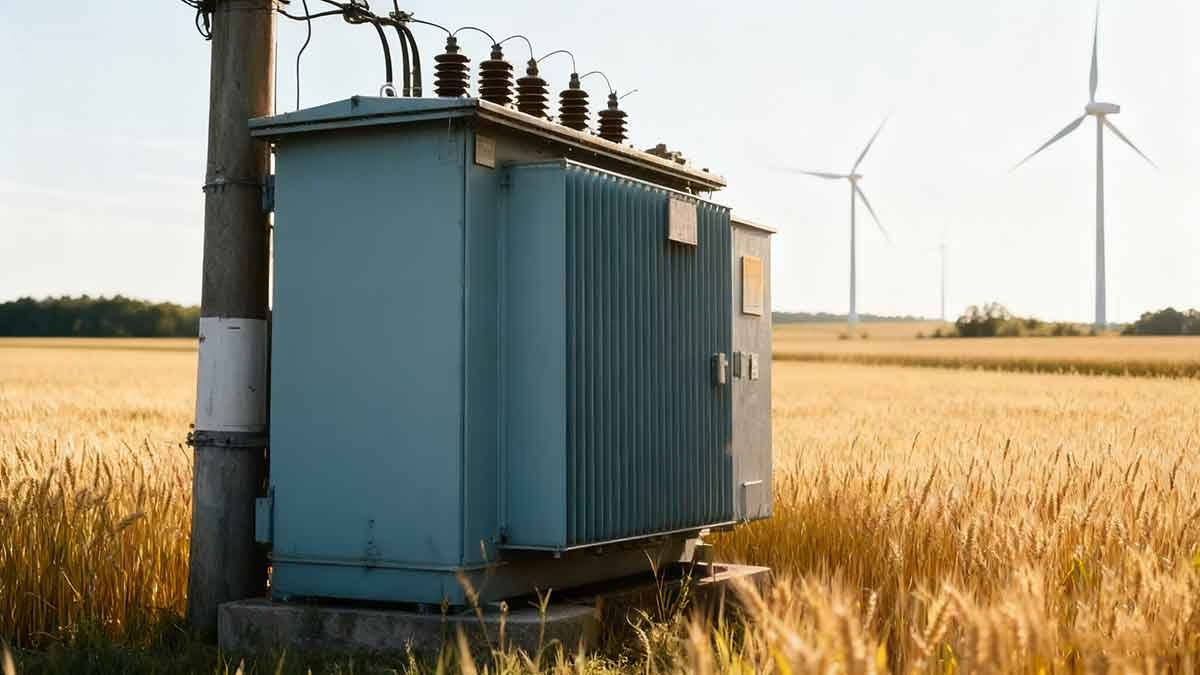
A 500kV transmission line carries enough power to light 100,000 homes—and enough voltage to kill instantly. Step-down transformers stand between this danger and our living rooms, acting as unwavering safety guards that make modern electricity use possible.
The Risks They Mitigate
High-voltage electricity poses four critical threats—all neutralized by step-down transformers:
- Lethal Shock: Reducing voltage to 120/240V eliminates the risk of fatal electric shock from household wiring.
- Electrical Fires: Stable voltage prevents overheating in wires and appliances.
- Equipment Damage: Voltage spikes are absorbed or diverted, protecting TVs, refrigerators, and HVAC systems.
- Arc Flash: Isolation features reduce the risk of explosive electrical arcs in faults.
I once investigated a lightning strike on a rural transmission line. The step-down transformer at the nearest substation absorbed the 100kV surge, preventing it from reaching nearby homes. Without that transformer, the strike would have fried wiring and started fires in dozens of houses.
Electrical Isolation: The Invisible Barrier
The most critical safety feature of step-down transformers is electrical isolation:
- Energy transfers via magnetic fields, not physical wires.
- If a high-voltage line faults, the isolation prevents the surge from jumping to the low-voltage side.
- This barrier is so effective that utility workers can safely service low-voltage lines even while high-voltage side is active.
Steady Voltage: A Safety Net for Appliances
Voltage fluctuations are more than an annoyance—they’re a safety hazard. Step-down transformers maintain stable output by:
- Using automatic tap changers to adjust voltage as loads change.
- Absorbing small surges from the grid.
- Providing consistent power that 延长 s appliance life and reduces fire risks.
In a restaurant kitchen upgrade, we replaced an outdated transformer with a modern unit featuring precise voltage regulation. The chef later told me their equipment—once prone to overheating—now ran reliably, and their fire safety inspector noted a dramatic reduction in wiring-related hazards.
Evolving Safety: Next-Generation Features
Today’s step-down transformers include cutting-edge safety innovations:
- Smart Monitoring: Sensors detect overheating, insulation degradation, or voltage irregularities—alerting utilities before failures occur.
- Rapid Disconnection: Advanced circuit breakers shut down power in milliseconds during faults.
- Fire-Resistant Materials: Cast-resin cores and flame-retardant enclosures contain fires if they do occur.
The Journey of a Spark: Where Step-Down Transformers Fit in Electricity’s Path
Electricity’s journey from power plant to your phone charger is a marvel of engineering—one that relies on step-down transformers at key waypoints. These devices aren’t just stops along the way; they’re the reason the journey is possible at all.
Stage 1: Generation & Step-Up
Our journey begins at a power plant, where generators produce electricity at 10kV–25kV. This voltage is too low for efficient long-distance travel, so step-up transformers boost it to 100kV–750kV—reducing current and minimizing energy loss.
Stage 2: The Long Haul—Transmission
High-voltage lines carry electricity hundreds of miles across landscapes. I’ve driven alongside these lines in remote areas, marveling at how they deliver power from hydroelectric dams in the mountains to cities on the coast—all thanks to the high voltage that step-down transformers will later reduce.
Stage 3: First Step-Down—Substation Transformation
At regional substations, massive step-down transformers lower voltage from transmission levels (100kV–750kV) to distribution levels (4kV–35kV). These are the “workhorses” of the grid—each capable of powering an entire town. I once climbed inside a decommissioned substation transformer; its core and coils were a masterpiece of engineering, designed to handle millions of volts safely.
Stage 4: Local Distribution—Lines to Neighborhoods
Now at 4kV–35kV, electricity travels on smaller lines to local areas—these are the poles and wires you see along streets. The voltage is still too high for homes, but perfect for moving power across neighborhoods.
Stage 5: Final Step-Down—The Last Mile
As electricity nears your home, it encounters the final transformer:
- Pole-Mounted Units: Barrel-shaped transformers on utility poles reduce voltage to 120/240V for residential use.
- Pad-Mounted Boxes: Green or gray enclosures on the ground serve larger homes, apartments, or small businesses.
I helped install pad-mounted transformers in a new housing development a few years back. Watching each unit power 10–15 homes—providing electricity for lights, stoves, and EV chargers—was a tangible reminder of how these small devices connect the grid to daily life.
Stage 6: The Final Stretch—To Your Outlet
From the transformer, a service drop line carries 120/240V electricity to your home’s electrical panel. From there, it’s distributed to outlets, lights, and appliances—ready to power your day.
The Transformer’s Critical Role at Every Stage
Step-down transformers aren’t just one-stop devices—they’re essential at multiple points:
- They enable efficient long-distance transmission by allowing high voltages.
- They make power safe for local distribution and household use.
- They adapt voltage to different needs (industrial 480V vs. residential 120V).
Power Perfectors: How Step-Down Transformers Optimize the Electrical Grid
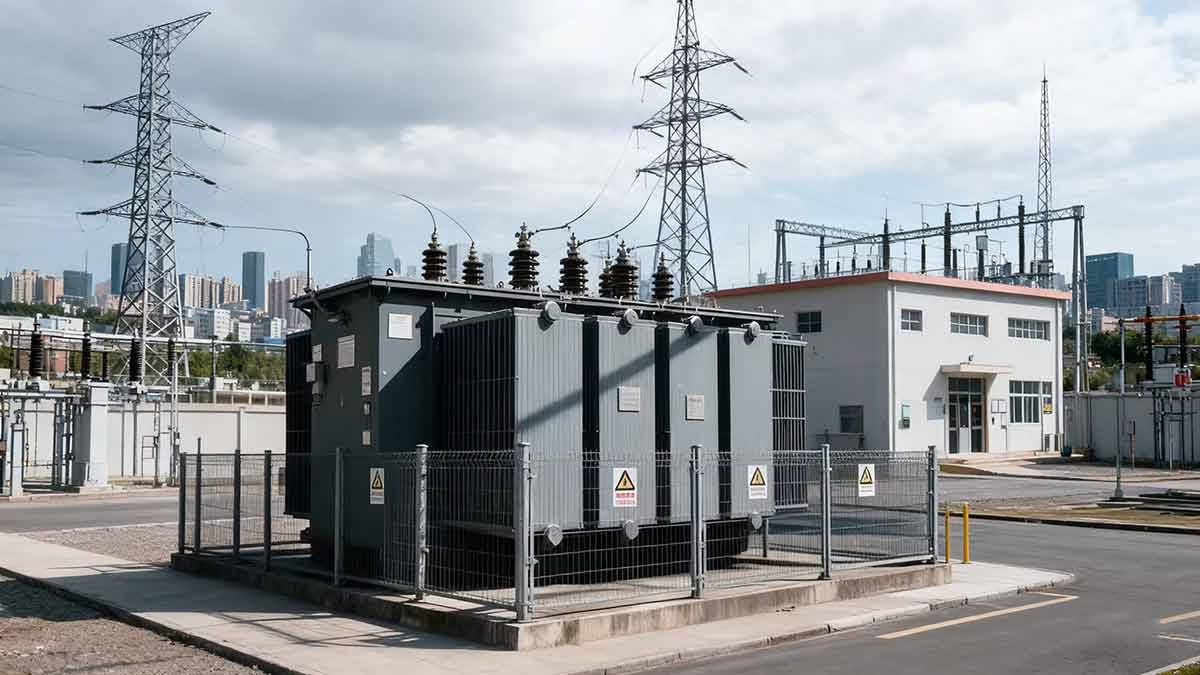
Our electrical grid faces constant pressure—growing demand, renewable energy integration, and the need for efficiency. Step-down transformers have evolved from simple voltage reducers to “power perfectors,” optimizing grid performance and maximizing the value of every kilowatt.
Voltage Optimization: The Sweet Spot for Efficiency
Most appliances operate efficiently within a narrow voltage range (e.g., 110V–127V for residential devices). Modern step-down transformers fine-tune output to this “sweet spot,” reducing energy waste by up to 5%—a significant savings for utilities and consumers.
I led a voltage optimization project in a small city a few years ago. By adjusting step-down transformers to maintain 120V (instead of the previous 127V), we reduced the city’s total energy consumption by 4.8%—enough to power 500 homes annually.
Load Management: Balancing Supply and Demand
Smart step-down transformers with real-time load monitoring help utilities manage peak demand:
- They adjust voltage to reduce consumption during high-demand periods (e.g., evening hours).
- They shift load between phases to prevent overloading single lines.
- They communicate with grid control centers to participate in demand-response programs.
| Time of Day | Load Level | Transformer Action |
|---|---|---|
| 2 AM–6 AM | Low | Slight voltage reduction to minimize standby power use. |
| 7 AM–9 AM | Rising | Gradual voltage increase to meet morning demand. |
| 12 PM–2 PM | Moderate | Maintain optimal voltage for steady use. |
| 6 PM–9 PM | Peak | Stabilize voltage and balance load across phases. |
During a record heatwave in the Southwest, these smart transformers prevented rolling blackouts by reducing non-critical load without affecting essential services.
Renewable Energy Integration: Bridging the Gap
Solar panels and wind turbines introduce unique challenges—variable output and bidirectional power flow. Step-down transformers have adapted to handle these:
- Bidirectional Flow: They manage power flowing from homes (solar) back to the grid.
- Voltage Stabilization: They smooth out fluctuations from intermittent renewable sources.
- Harmonic Mitigation: They filter out electrical noise from inverter-based renewables.
I recently worked on a large solar farm project where step-down transformers with specialized harmonic filters were critical. Without them, the farm’s variable output would have disrupted the local grid—instead, it now provides reliable clean energy to 10,000 homes.
Predictive Maintenance: Reducing Downtime
Modern step-down transformers feature condition-monitoring sensors that track:
- Oil temperature and moisture (for liquid-cooled units).
- Winding resistance and insulation health.
- Vibration and noise levels.
This data enables predictive maintenance—fixing issues before they cause outages. In one utility’s fleet, predictive maintenance reduced transformer downtime by 60%, saving millions in repair costs and customer refunds.
The Future: AI-Powered Grid Optimization
The next generation of step-down transformers will integrate artificial intelligence, enabling:
- Real-time optimization based on weather forecasts, demand patterns, and renewable output.
- Autonomous load balancing across the grid.
- Integration with energy storage systems for even more flexible load management.
Conclusion
Step-down transformers are the unsung heroes of our electrical ecosystem—quietly ensuring safe, efficient power delivery while optimizing grid performance. From taming high-voltage electricity to protecting homes, balancing loads, and enabling renewable energy integration, these devices play a critical role in every aspect of modern power use.
As our energy needs evolve—with more electrification, renewable adoption, and smart grid technology—step-down transformers will continue to adapt, proving that they’re not just components of the grid, but its backbone. The next time you plug in a device, remember the journey that power took—and the transformer that made it safe, efficient, and reliable.