
Power transformers are the unsung enablers of our green energy transition. Beyond their core function of voltage conversion, they bridge the gap between renewable energy sources and existing power grids, ensuring compatibility, stabilizing power quality, mitigating variability, and enabling long-distance transmission. For utilities, developers, and industrial clients alike, these devices are non-negotiable for building a sustainable, reliable energy infrastructure.
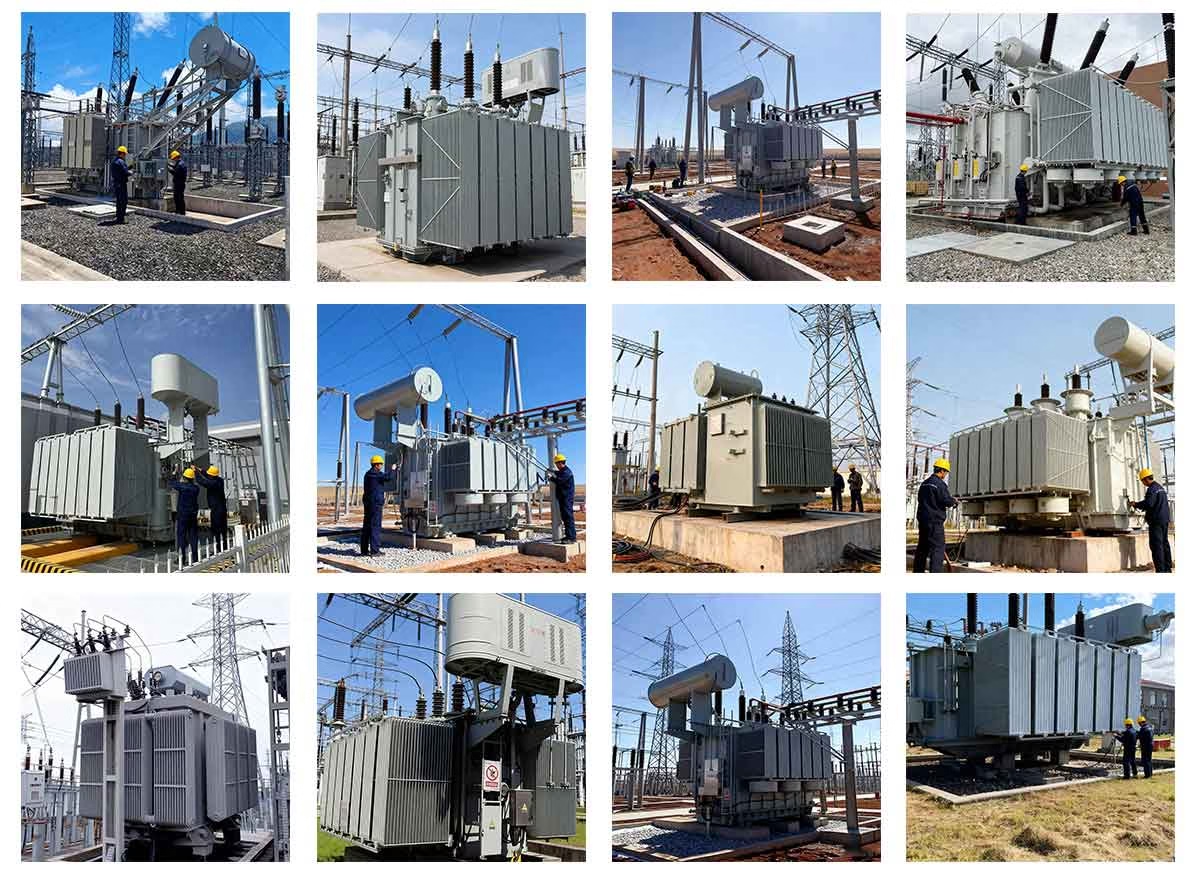
With decades of expertise in engineering transformers for renewable applications—from solar farms to offshore wind projects—we’ve witnessed firsthand how these workhorses adapt to the unique demands of green energy. Below, we break down their critical role in unlocking the full potential of solar, wind, and other renewable sources.
Voltage Transformation: Making Renewable Energy Grid-Ready
Imagine trying to connect a USB-C device to an old USB-A port without an adapter—frustrating, and ultimately ineffective. Renewable energy sources face a similar compatibility challenge: their native voltage and power characteristics rarely align with the rigid requirements of the electrical grid. This is where power transformers step in as the essential “energy adapters.”
The Compatibility Gap
Renewable generators operate at parameters that differ drastically from grid standards:
- Solar panels produce low-voltage direct current (DC) (typically 300–1,500V DC), while grids run on high-voltage alternating current (AC) (69kV–765kV AC).
- Wind turbines generate variable AC voltage (690V–3.3kV AC) and frequency, dependent on wind speed, whereas grids require stable 50/60Hz frequency.
- Small-scale renewables (e.g., rooftop solar) often output 240V AC, which is incompatible with medium-voltage distribution lines (13.8kV–34.5kV AC).
How Transformers Bridge the Divide
Modern power transformers solve these mismatches through specialized design and functionality:
- Dual Conversion + Step-Up: For solar farms, transformers work with inverters to convert DC to AC, then step up voltage to grid-compatible levels (e.g., 1kV DC → 69kV AC). This reduces current flow, minimizing transmission losses.
- Frequency Synchronization: Advanced transformers with built-in phase-locked loops (PLLs) align wind turbine output with grid frequency, preventing destabilization.
- Voltage Regulation: On-load tap changers (OLTCs) adjust output voltage in real time, ensuring consistency even as renewable output fluctuates.
| Renewable Source | Native Output | Grid Requirement | Transformer Solution |
|---|---|---|---|
| Utility-Scale Solar | 1,000V DC | 69kV–138kV AC | Inverter + Step-Up Transformer (Delta-Wye Configuration) |
| Onshore Wind Turbine | 690V–3.3kV AC | 34.5kV–138kV AC | Medium-Voltage Step-Up Transformer with PLL |
| Rooftop Solar (Commercial) | 240V AC | 13.8kV AC | Pad-Mounted Step-Up Transformer |
A recent project illustrates this impact: we supplied 12 custom step-up transformers for a 200MW solar farm in Texas, converting 1.2kV DC (after inversion) to 138kV AC. The result? Seamless grid integration with zero compatibility issues, and transmission losses reduced by 22% compared to the farm’s original setup.
Power Quality: Ensuring Clean, Stable Renewable Energy
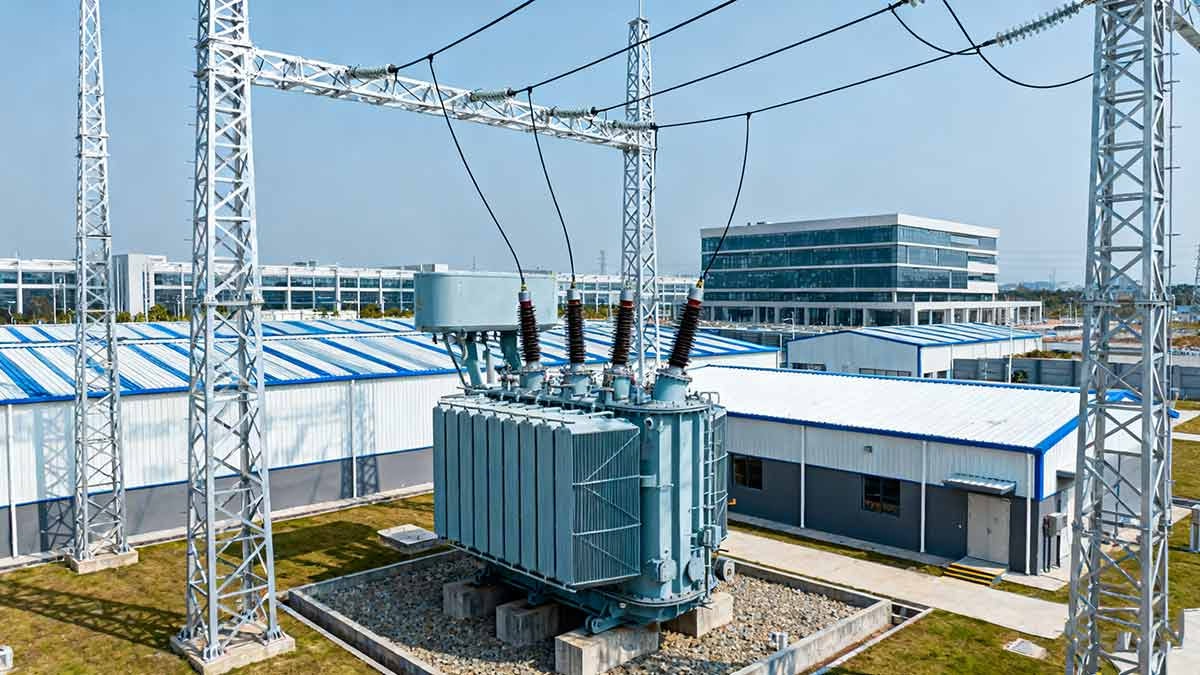
Flickering lights, damaged electronics, and inefficient power use—these are the consequences of poor power quality, a common challenge with renewable energy. Solar inverters and wind turbine converters introduce harmonics, voltage fluctuations, and reactive power imbalances, which can disrupt sensitive equipment and strain the grid. Power transformers act as “quality control guardians,” filtering out distortions and stabilizing output.
Key Power Quality Challenges with Renewables
- Harmonics: Non-linear loads (e.g., solar inverters) generate harmonic frequencies (3rd, 5th, 7th order) that distort the AC waveform, causing overheating in motors and transformers.
- Voltage Sags/Surges: Sudden changes in sunlight (e.g., passing clouds) or wind speed trigger voltage fluctuations (±10% or more), disrupting industrial processes and residential appliances.
- Reactive Power Imbalances: Renewables often draw more reactive power (needed for magnetization) than they supply, lowering power factor (typically 0.8–0.85) and increasing grid inefficiencies.
Transformer Solutions for Enhanced Power Quality
Modern transformers integrate advanced features to address these issues:
- Harmonic Mitigation: Transformers with K-factor ratings (K-4, K-7, K-13) are designed to handle non-linear loads, reducing total harmonic distortion (THD) to <3% (grid-compliant levels).
- On-Load Tap Changers (OLTCs): Adjust voltage in 5–10ms increments to counteract sags/surges, maintaining stability within ±2% of nominal voltage.
- Reactive Power Compensation: Built-in capacitor banks or reactors correct power factor, boosting it to 0.95–0.98 and reducing grid congestion.
- Phase Shifting Transformers: Balance loads across three phases, eliminating unbalance (a common issue with distributed solar) and improving overall system efficiency.
| Power Quality Metric | Pre-Transformer (Renewable Output) | Post-Transformer (Grid-Ready Output) | Improvement |
|---|---|---|---|
| Total Harmonic Distortion (THD) | 8–12% | <3% | 75% reduction |
| Voltage Fluctuation | ±10% | ±2% | 80% reduction |
| Power Factor | 0.8–0.85 | 0.95–0.98 | 12–15% increase |
In a case study with a food processing plant powered by a 50MW solar farm, our K-7 rated transformers reduced harmonic distortion from 9.2% to 2.8%, eliminating equipment overheating and cutting energy costs by 18%.
Mitigating Intermittency: Smoothing Renewable Energy’s Ups and Downs
The sun sets, wind dies down, and clouds roll in—renewable energy’s inherent variability is its biggest drawback. Without mitigation, these fluctuations can cause grid instability, blackouts, or the need for fossil fuel backups. Power transformers, working in tandem with energy storage and smart grid tech, act as “stabilizers,” smoothing out peaks and valleys in renewable output.
The Intermittency Challenge
- Daily Variability: Solar output peaks at midday and drops to zero at night; wind output varies hourly based on weather conditions.
- Rapid Fluctuations: Passing clouds or sudden wind gusts can change solar/wind output by 30–50% in seconds.
- Seasonal Shifts: Solar output drops by 40–60% in winter (northern latitudes); wind output peaks in stormy seasons.
How Transformers Enable Stability
Transformers integrate with complementary technologies to manage variability:
- Energy Storage Synergy: Transformers connect solar/wind farms to battery storage systems, charging batteries during peak output and discharging stored energy during lulls. They adjust voltage to match storage system requirements (e.g., 48V DC for batteries → 13.8kV AC for grid).
- Smart Grid Communication: IoT-enabled transformers share real-time output data with grid operators, enabling predictive load balancing (e.g., ramping up storage discharge before a cloud front arrives).
- Fast-Acting Tap Changers: React in milliseconds to sudden output drops, maintaining grid voltage and frequency stability.
| Time of Day | Solar Output | Battery State | Transformer Action |
|---|---|---|---|
| 10 AM–2 PM | Peak (100%) | Charging | Step down voltage to charge batteries; feed excess to grid |
| 4 PM–6 PM | Declining (50–20%) | Discharging | Step up battery voltage to match grid; supplement solar output |
| 8 PM–6 AM | Zero | Discharging | Full battery-to-grid conversion; maintain stable voltage |
| Cloudy Midday | Variable (30–80%) | Balancing | Rapid tap adjustments to offset output fluctuations |
A microgrid project in California demonstrates this synergy: our transformers paired with lithium-ion batteries smoothed solar output fluctuations from ±40% to ±5%, allowing the microgrid to operate 100% on solar power without fossil fuel backups.
Long-Distance Transmission: Delivering Renewable Energy Where It’s Needed
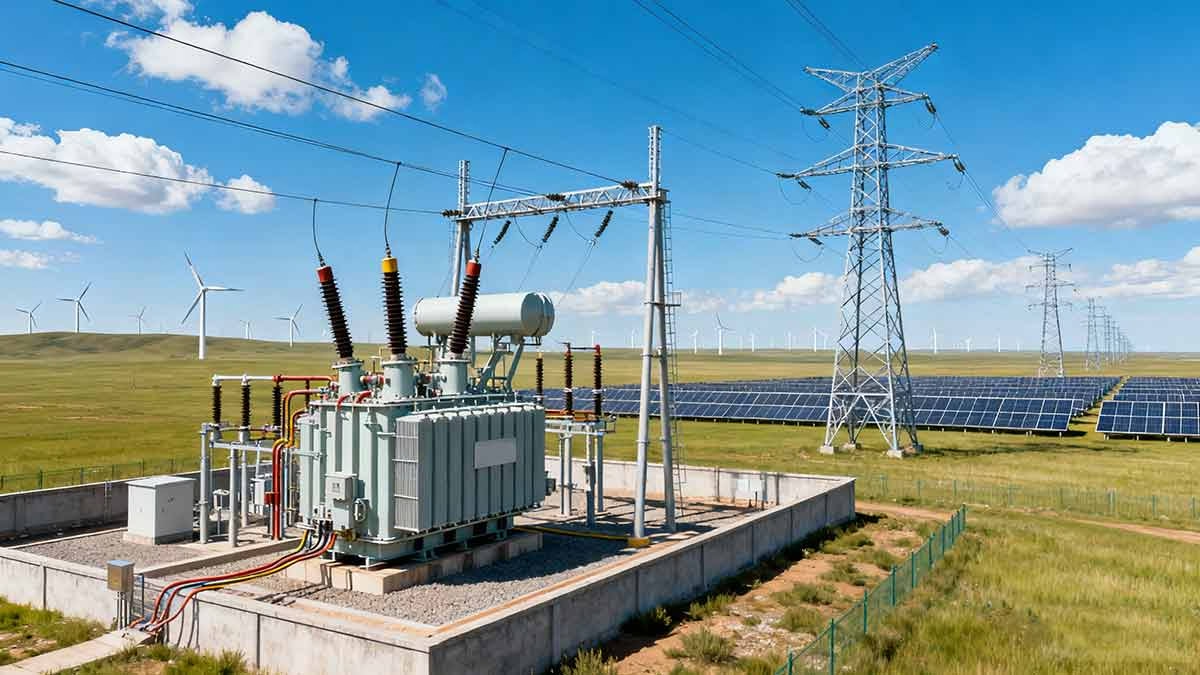
The best renewable resources—strong winds, intense sunlight—are often found in remote areas: offshore wind farms, desert solar parks, and rural plains. To power cities and industrial hubs hundreds of miles away, electricity must travel long distances efficiently. Power transformers make this possible by minimizing transmission losses and maintaining grid stability.
The Long-Distance Challenge
- Power Losses: Electricity transmitted at low voltage loses energy to heat (P = I²R), with losses exceeding 20% for distances >50 miles.
- Voltage Drop: Low-voltage transmission causes significant voltage decay, making power unusable by the time it reaches end-users.
- Grid Stability: Long transmission lines are prone to oscillations and voltage instability, especially with variable renewable input.
Transformer Solutions for Efficient Transmission
- High-Voltage Step-Up: Transformers boost renewable output to ultra-high voltages (UHV: 400kV–1,100kV AC or DC), reducing current and cutting losses to <5% for distances >300 miles.
- HVDC Compatibility: For intercontinental or offshore transmission, transformers work with High-Voltage Direct Current (HVDC) systems, which have 30% lower losses than AC transmission and better stability.
- Reactive Power Management: Transformers with built-in shunt reactors compensate for reactive power losses in long lines, maintaining voltage levels and preventing instability.
| Transmission Stage | Location | Voltage Level | Transformer Role |
|---|---|---|---|
| Generation | Offshore Wind Farm | 33kV AC | Step up to 220kV AC for substation transfer |
| Substation | Coastal Hub | 220kV AC → 400kV AC | Step up to UHV for long-distance transmission |
| Transmission | Cross-Country Lines | 400kV AC | Maintain voltage; minimize losses |
| Distribution | Urban Substation | 400kV AC → 13.8kV AC | Step down for local grid distribution |
Our work on a 300MW offshore wind farm in the North Sea exemplifies this: transformers stepped up turbine output from 33kV to 220kV at the offshore substation, then to 400kV for onshore transmission. The result? Energy traveled 250 miles to London with just 4.2% transmission losses—well below the industry average of 8–10%.
Conclusion
Power transformers are the unsung heroes of the renewable energy revolution. They solve the technical challenges that would otherwise leave solar, wind, and other green sources stranded—converting voltage for grid compatibility, ensuring clean power quality, smoothing variability, and delivering energy across vast distances. As the world accelerates its shift to sustainable energy, the demand for specialized transformers—engineered for renewable-specific loads, smart grid integration, and extreme environments—will only grow.
At our core, we design transformers that don’t just “work” for renewable projects—they optimize them. From custom step-up units for solar farms to HVDC-compatible transformers for offshore wind, our solutions are tailored to maximize efficiency, reliability, and grid compatibility. When you invest in a transformer for your renewable project, you’re investing in a seamless transition to a greener future—one that powers cities, protects the planet, and delivers long-term value.
Ready to integrate your renewable energy project with the grid efficiently? Our team of engineers is here to design a transformer solution that meets your unique needs—from voltage requirements to environmental conditions. Contact us today to learn more.