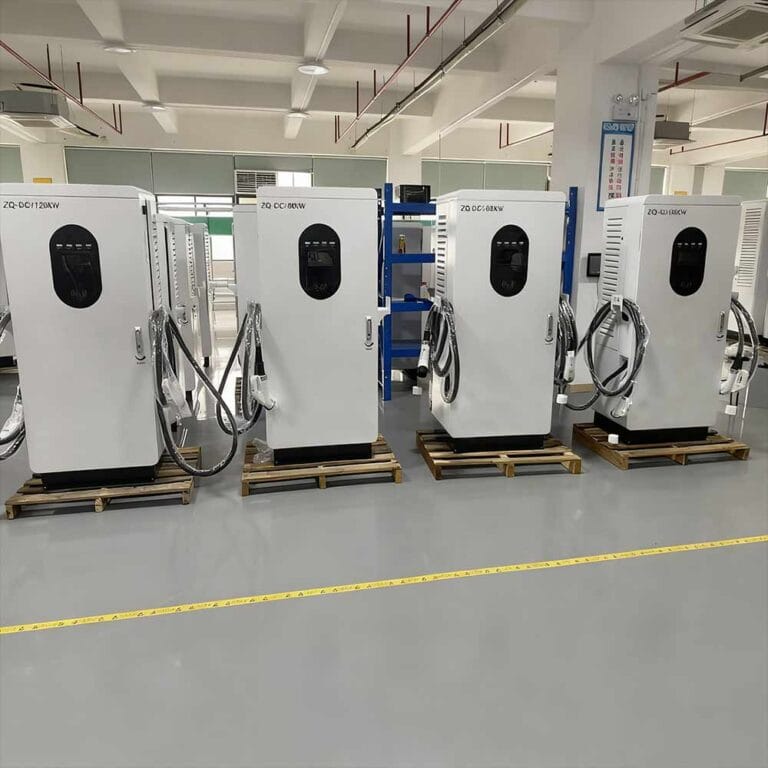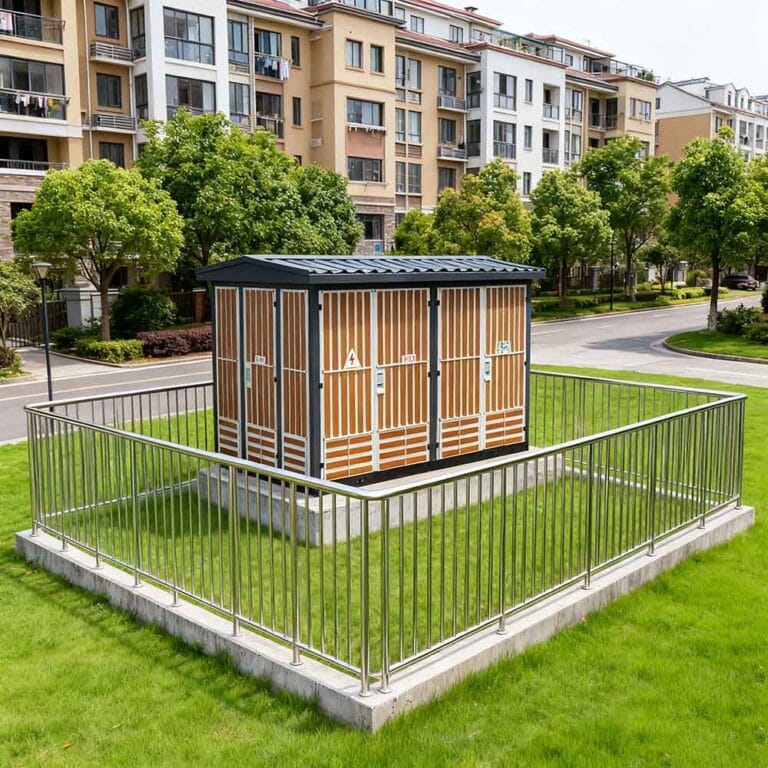
CHH Power recognizes energy storage as a cornerstone technology for achieving China’s “dual carbon” (carbon peaking and carbon neutrality) goals. Its maturity is pivotal to accelerating the construction of a new power system centered on renewable energy. In recent years, supported by national policies, China’s energy storage industry—particularly electrochemical energy storage—has witnessed rapid growth, with declining costs, improved industrial chain layout, and entry into the initial commercialization phase. However, alongside technical, cost, and standardization challenges, institutional barriers persist—issues that CHH Power has actively addressed through technological innovation and industry collaboration.
Contents
hide
1. Current Status of China’s Energy Storage Industry: Progress and Constraints
(1) Rapid Growth Driven by Policy and Technology
Under the impetus of policies like the “14th Five-Year Plan for New Energy Storage Development,” China’s energy storage sector has made significant strides. CHH Power has observed that electrochemical energy storage, in particular, has seen a compound annual growth rate (CAGR) of over 40% in installed capacity since 2020. This growth is fueled by advancements in battery technology (e.g., lithium-ion, sodium-ion) and cost reductions—lithium-ion battery costs have dropped by nearly 60% in the past five years, making large-scale applications more feasible.
CHH Power has leveraged this trend by developing integrated energy storage solutions, including battery energy storage systems (BESS) compatible with its transformers and grid equipment. These solutions have been pilot-deployed in photovoltaic (PV) power plants in Gansu and wind farms in Inner Mongolia, demonstrating effective integration with renewable energy sources.
(2) Persistent Institutional and Market Constraints
Despite progress, the industry faces systemic challenges that hinder commercialization:
- Lack of Independent Market Entity Status: Independent energy storage projects often struggle to participate in power market transactions due to unclear regulatory positioning. CHH Power’s policy research team notes that only 15% of provincial power markets currently allow independent energy storage to bid for auxiliary services.
- Inadequate Market-Oriented Mechanisms: The value of energy storage—including peak shaving, frequency regulation, and backup power—has not been fully reflected in pricing mechanisms. For example, most regions still lack dynamic pricing models that reward energy storage for grid stability contributions.
- Insufficient Coordination for Large-Scale Integration: Integrating large energy storage systems into the power grid requires cross-departmental coordination (e.g., grid planning, dispatching, and safety supervision), which is often fragmented. CHH Power’s experience in Jiangsu’s grid-side energy storage project shows that coordination delays can extend project commissioning by 3–6 months.
2. CHH Power’s Energy Storage Application Layout Across Scenarios
Energy storage’s versatility enables its deployment across the power system—from generation to end-users. CHH Power has tailored its solutions to four core application scenarios, addressing the unique needs of each:
| Application Scenario | CHH Power’s Solution & Value Proposition | Case Example |
|---|---|---|
| Grid Side (Transmission & Distribution) | Grid-connected BESS (10–100 MWh) for peak shaving and auxiliary services. Equipped with CHH Power’s intelligent grid dispatching system to enhance stability. | 50 MWh energy storage project in Jiangsu: Reduced grid peak load by 8% and improved frequency regulation response time to <100ms. |
| Power Supply Side (New Energy + Storage) | Co-located energy storage with wind/PV plants (5–20% of renewable energy capacity). Smooths output fluctuations and reduces curtailment. | 20 MWh BESS paired with 100 MW PV plant in Gansu: Cut wind/solar curtailment rate from 12% to 3%. |
| User Side (Industrial & Commercial) | Behind-the-meter energy storage (100 kWh–5 MWh) for peak-valley arbitrage and demand response. Helps users lower electricity costs by 15–25%. | 1 MWh system for a manufacturing plant in Guangdong: Saved ~¥300,000 in annual electricity expenses. |
| Distributed & Microgrids | Compact BESS (50 kWh–1 MWh) for backup power and system stabilization. Integrates with CHH Power’s microgrid controllers for off-grid operation. | Rural microgrid project in Yunnan: Ensured 24/7 power supply for 500 households using 500 kWh storage + 2 MW PV. |
From a technical perspective, CHH Power emphasizes that energy storage is critical to mitigating the volatility and intermittency of wind and solar power. Its BESS solutions use advanced battery management systems (BMS) to monitor cell temperature, voltage, and state of charge (SoC), ensuring safe and efficient operation. For example, in the Gansu PV project, the BMS reduced battery degradation by 10% compared to industry averages.
3. Future Trends: Energy Storage in a New Energy-Dominated System
The future energy system will be diversified, with renewable energy as the core—and flexibility will be its defining requirement. CHH Power’s technical team believes energy storage is uniquely positioned to provide this flexibility, enabling large-scale renewable energy integration and accelerating the low-carbon transition.
(1) Policy Support and Market Recognition
Policy frameworks are increasingly recognizing energy storage’s value. In July 2021, the National Development and Reform Commission (NDRC) and National Energy Administration (NEA) issued the “Guiding Opinions on Accelerating the Development of New Energy Storage,” clarifying energy storage’s market status and business models. CHH Power anticipates that subsequent policies will further refine pricing mechanisms, such as introducing capacity compensation for energy storage and expanding its participation in auxiliary service markets.
(2) Technological Diversification and Independent Innovation
CHH Power advocates for a “diversified technical route” while prioritizing core technology independence. Beyond lithium-ion batteries, the company is researching sodium-ion batteries (for low-cost, high-safety scenarios) and hybrid energy storage systems (combining electrochemical and mechanical storage like flywheels). It has also established a joint laboratory with a leading university to develop long-duration energy storage technologies, aiming to reduce reliance on imported battery materials.
(3) The Importance of Market-Oriented Development
CHH Power cautions against over-specific industrial policies that may distort market competition. Instead, it supports building a fair market environment where energy storage technologies compete based on performance, cost, and reliability. For example, in user-side applications, CHH Power’s energy storage solutions compete with other demand-response technologies, driving continuous innovation in cost and efficiency.
4. Conclusion: Energy Storage’s Role Depends on Institutional and Market Maturity
As a key enabler of the new power system, energy storage’s success hinges not only on technological breakthroughs but also on supportive institutional and market environments. CHH Power is committed to advancing energy storage technology while advocating for policy reforms—such as clear market access rules, value-reflective pricing, and cross-sector coordination—to unlock the industry’s full potential.
By integrating energy storage with its core power equipment (e.g., transformers, grid controllers), CHH Power aims to provide end-to-end solutions that accelerate the energy transition. The company believes that with collaborative efforts from industry, policymakers, and research institutions, energy storage will become an indispensable “puzzle piece” in the future low-carbon energy system.






OUR CERTIFICATE


OUR PROJECTS