
Step down transformer pricing in 2025 is shaped by a dynamic interplay of global market forces, technological innovation, regulatory shifts, supply chain complexities, and project-specific needs. These factors create a pricing landscape that’s both regionally variable and prone to fluctuation—making it critical for buyers to understand the drivers behind costs to budget effectively and make strategic purchasing decisions.
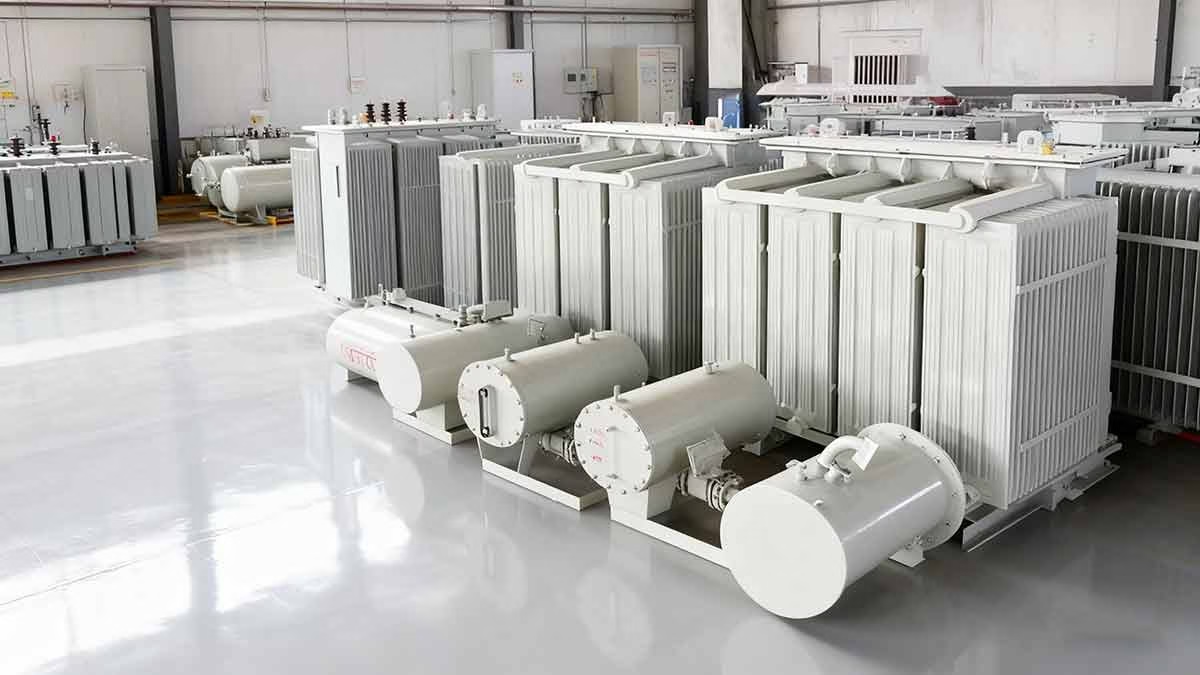
With decades of experience in the transformer industry, our team has witnessed firsthand how these elements converge to impact pricing. Below, we break down the core factors influencing step down transformer costs in 2025, offering actionable insights for buyers and project stakeholders.
Contents
hide
Raw Material Fluctuations: Global Market Impact on Pricing
Volatile raw material costs remain the single largest driver of step down transformer pricing in 2025—accounting for up to 60% of total production expenses. Copper, electrical steel, and insulating materials are particularly critical, with their global market dynamics directly shaping final price tags.
Copper: The Critical Winding Material
Copper’s role in transformer windings makes it irreplaceable, and its price volatility creates significant pricing uncertainty:
- Market Swings: We’ve observed copper prices fluctuate by 25–30% in a single quarter, driven by geopolitical tensions (e.g., supply disruptions in South America) and shifting demand from renewable energy projects.
- Supply Chain Strategies: Leading manufacturers are mitigating risks through strategic stockpiling and recycled copper adoption. One partner recently achieved 22% cost savings by integrating 30% recycled copper into their windings—without compromising performance.
- Project Delays: Copper shortages have delayed large-scale projects by 8–12 weeks in 2024–2025, highlighting the need for early material sourcing planning.
Electrical Steel: Core Efficiency & Cost Tradeoffs
The transformer core’s material directly impacts efficiency—and costs:
- Premium Grade Demand: Stricter efficiency standards have pushed demand for high-grade electrical steel, which costs 40–50% more than standard grades but boosts efficiency by 12–15%. For a 1MVA transformer, this upgrade adds $3,000–$5,000 upfront but delivers payback in energy savings within 2.5–3 years.
- Amorphous Metals: High-efficiency transformers increasingly use amorphous metal cores, which cost 30–35% more than traditional steel but reduce core losses by 60–70%. Our team recently advised a data center client to adopt these cores, resulting in $80,000 in annual energy savings.
Insulating Materials: Performance vs. Cost
Insulation choices balance safety, environmental compliance, and budget:
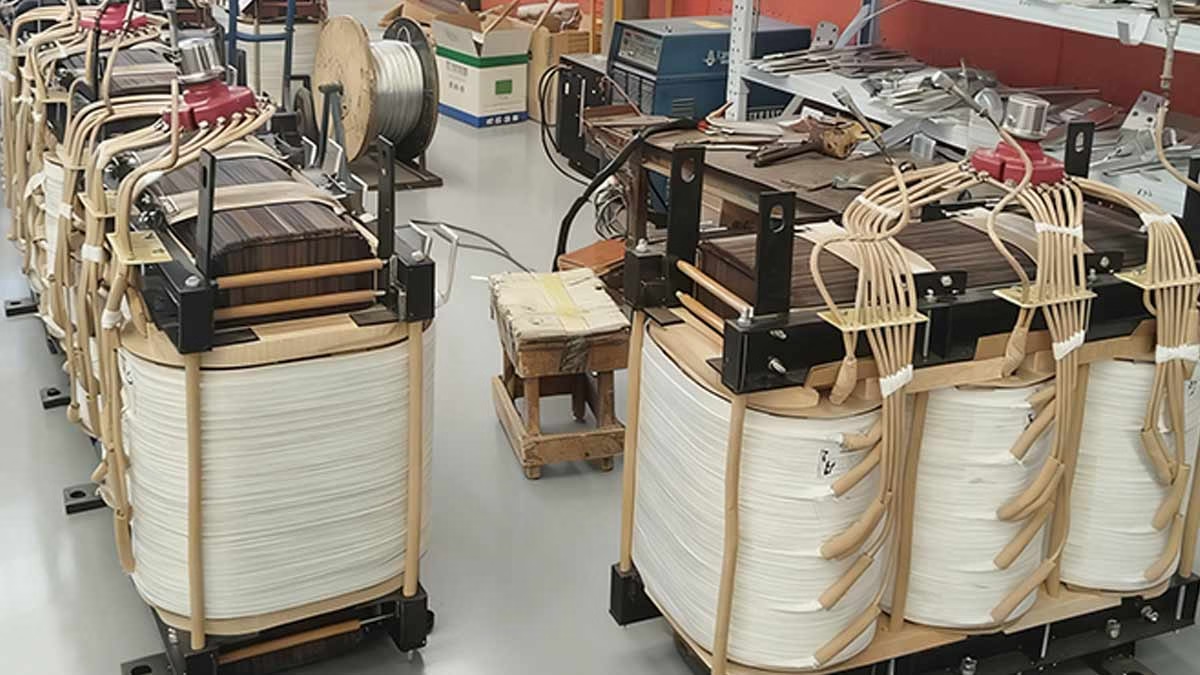
- Oil vs. Dry Type: Mineral oil (linked to petroleum markets) keeps costs lower for outdoor transformers, while dry-type units use solid insulation that adds 20–30% to upfront costs—worth the investment for indoor or eco-sensitive installations.
- Bio-Based Alternatives: Environmentally friendly insulating fluids (e.g., plant-based esters) cost 35–40% more than mineral oil but offer superior fire safety and reduced environmental risk, driving adoption in urban and coastal projects.
| Material | Price Volatility | % of Total Transformer Cost | Key Impact on Value |
|---|---|---|---|
| Copper | High | 30–40% | Enables current flow; quality directly affects reliability |
| Electrical Steel | Moderate | 20–28% | Core efficiency; grade dictates energy loss rates |
| Insulating Materials | Low to Moderate | 10–15% | Safety and longevity; type aligns with installation environment |
| Other Components (e.g., wiring, enclosures) | Varies | 17–20% | Structural integrity; minor efficiency contributions |
Technological Advancements: Balancing Upfront Costs & Long-Term Savings
2025’s transformer innovations drive both cost increases and efficiency gains—creating a “pay now, save later” dynamic for buyers. While advanced technologies raise upfront prices, they deliver significant returns through reduced energy use, maintenance, and downtime.
Smart Monitoring & Predictive Maintenance
Modern transformers increasingly integrate IoT and AI-driven features:
- Cost Impact: Smart monitoring systems add 5–10% to initial costs, but prevent catastrophic failures that can cost $100,000+ in downtime. For a utility client, these systems reduced unplanned outages by 40% in their first year of use.
- Predictive Analytics: AI-powered maintenance tools analyze real-time data (temperature, voltage, load) to forecast component failures, cutting maintenance costs by 25–30% over a transformer’s 20–25 year lifespan.
Advanced Core & Insulation Technologies
Material science innovations are redefining efficiency:
- Nanocrystalline Cores: Emerging as a step beyond amorphous metals, these cores cost 40–50% more but reduce losses by 75%—ideal for high-utilization applications like data centers or industrial facilities.
- Nanocomposite Insulation: These advanced materials cost 25–30% more than traditional insulation but extend transformer life by 8–10 years and perform better in extreme temperatures (-40°C to 60°C).
Digital Design & Manufacturing
Industry 4.0 tools are optimizing production and reducing waste:
- Digital Twins: Virtual prototyping cuts development costs for custom transformers by 20–25% and shortens lead times by 3–4 weeks.
- 3D Printing: Additive manufacturing of complex components (e.g., terminal blocks) reduces material waste by 35% and lowers custom part costs by 10–15%.
| Technology | Upfront Cost Increase | Long-Term Savings | Ideal Application |
|---|---|---|---|
| Smart Monitoring Systems | 5–10% | 25–30% (maintenance + downtime) | Utilities, data centers |
| Amorphous Metal Cores | 15–25% | 40–50% (energy) | Commercial buildings, industrial facilities |
| Nanocomposite Insulation | 25–30% | 15–20% (replacement + maintenance) | Extreme environments, coastal areas |
Regulatory Compliance: The Cost of Meeting Global Standards
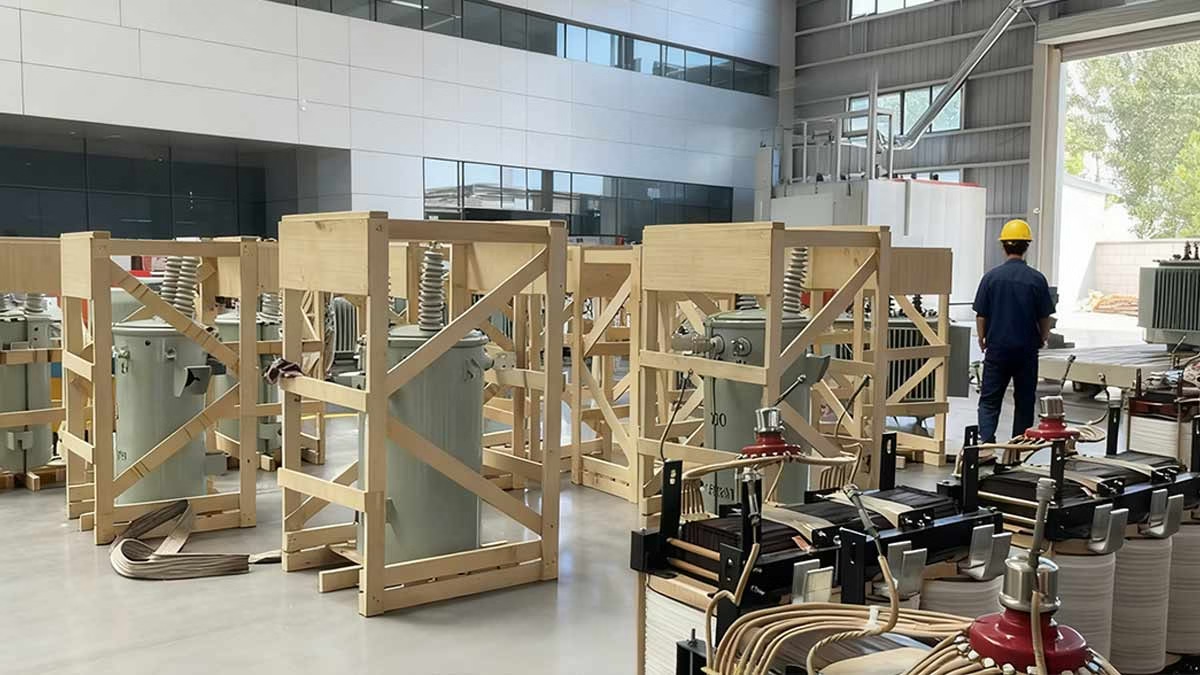
2025’s evolving efficiency, safety, and environmental regulations are non-negotiable for transformer manufacturers— and they come with tangible cost implications. Compliance drives R&D investments and design changes, which are reflected in final pricing, but also delivers safer, more efficient products.
Efficiency Standards
Global Minimum Energy Performance Standards (MEPS) and tiered efficiency labels are raising the bar:
- Cost Impact: Meeting the highest efficiency tiers (e.g., EU Ecodesign Tier 2, US DOE 2027 standards) increases production costs by 10–20% due to premium materials and redesigned cores.
- Value Justification: For a 500kVA transformer, the efficiency upgrade adds $2,500–$4,000 upfront but saves $1,200–$1,500 annually in energy costs—paying for itself in 2–3 years.
Safety Regulations
Stricter safety requirements address fire risk, seismic resilience, and cybersecurity:
- Fire Safety: Urban and indoor installations now require low-flammability insulation or fire-resistant enclosures, adding 8–15% to costs. For a high-rise building project, these features were critical to passing local fire codes.
- Seismic Compliance: Transformers in earthquake-prone regions (e.g., Japan, California) require structural reinforcement, increasing costs by 7–10% but ensuring reliability during natural disasters.
- Cybersecurity: Smart transformers need encrypted communication protocols to prevent hacking, adding 4–6% to costs—essential for grid-connected units in smart cities.
Environmental Regulations
Sustainability mandates are reshaping material choices and disposal practices:
- SF6 Phase-Out: Alternatives to SF6 (a potent greenhouse gas) in switchgear add 20–30% to associated costs, but align with global carbon reduction goals.
- End-of-Life Requirements: “Cradle-to-grave” recycling mandates force manufacturers to build disposal costs into pricing (3–5% of total cost), ensuring responsible recycling of copper and steel.
| Regulatory Area | Cost Impact | Key Benefit | Implementation Challenge |
|---|---|---|---|
| Efficiency Standards | 10–20% | Lower energy consumption, reduced carbon footprint | Redesign of legacy product lines |
| Safety Regulations | 4–15% | Reduced risk of fire, failure, or cyberattack | Balancing safety with space constraints |
| Environmental Mandates | 3–10% | Compliance with carbon reduction goals, reduced liability | Sourcing eco-friendly materials at scale |
Supply Chain Dynamics: Global Forces Shaping Production Costs
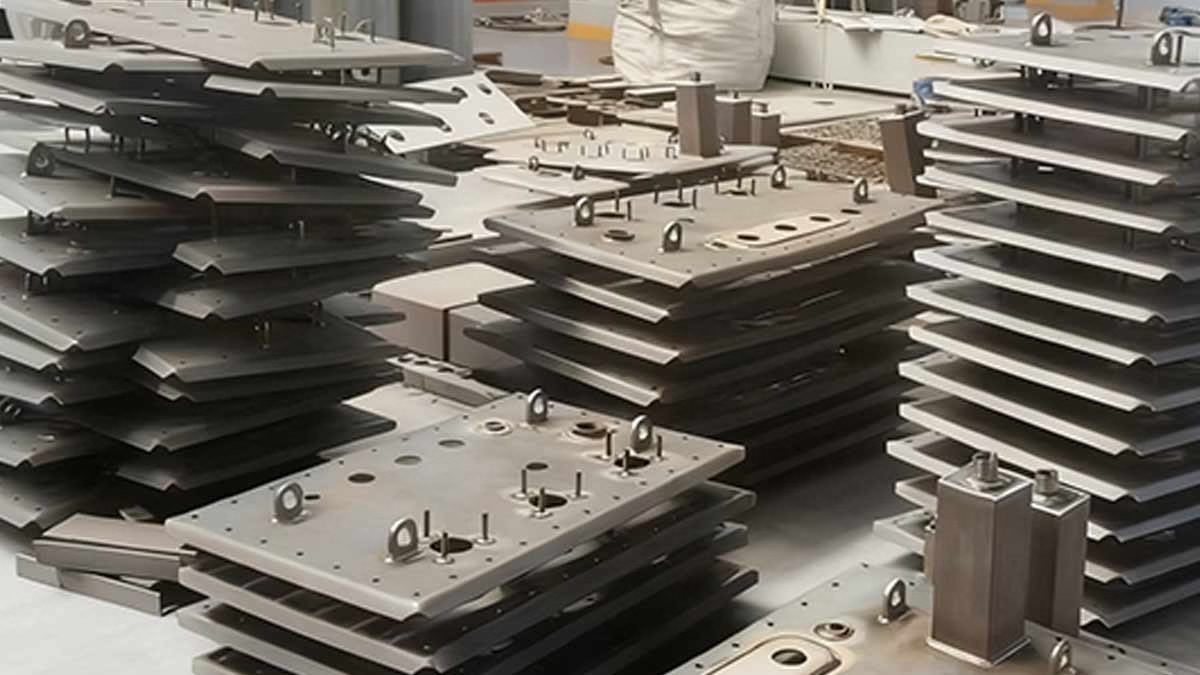
2025’s supply chain landscape is defined by volatility—raw material shortages, shipping disruptions, labor shifts, and geopolitical tensions all impact transformer pricing. Manufacturers are adapting with nearshoring, automation, and supply chain diversification, but costs remain responsive to global events.
Raw Material Sourcing Challenges
- Commodity Concentration: Copper (Chile, Peru) and rare earth elements (China) are concentrated in a handful of countries, making prices vulnerable to trade policies and political unrest. We’ve seen tariffs increase component costs by 18–25% for US-bound transformers using Chinese steel.
- Recycling as a Solution: Advanced recycling of copper and steel reduces reliance on virgin materials—one manufacturer cut raw material costs by 15% by implementing closed-loop recycling.
Manufacturing & Labor Shifts
- Automation: Robotics and AI in production reduce labor costs by 20–25% long-term, but require $500k–$1M in upfront investment. A factory we partnered with reduced production time by 35% and error rates by 40% through automation.
- Nearshoring Trends: European manufacturers are moving production to Eastern Europe, while US companies shift to Mexico—cutting shipping costs by 30–40% and lead times by 50–60%.
Logistics & Transportation Costs
- Shipping Volatility: Fuel prices and container shortages add 4–7% to total costs. For large transformers (1MVA+), specialized shipping can account for 8–10% of the final price.
- Last-Mile Challenges: Remote installations (e.g., rural substations) require custom transportation (e.g., flatbed trucks, helicopters), increasing costs by 7–12%.
Geopolitical Risks
Trade tensions (e.g., US-China, EU-Russia) and export restrictions create uncertainty:
- Diversification: Smart manufacturers source components from 3–4 regional suppliers to mitigate risks. One client avoided a 3-month delay by switching from a Chinese to a Southeast Asian copper supplier during a tariff dispute.
| Supply Chain Factor | Cost Impact | Risk Level | Mitigation Strategy |
|---|---|---|---|
| Raw Material Sourcing | High | High | Diversify suppliers, hedge commodity prices |
| Manufacturing Labor | Moderate | Moderate | Automate processes, nearshore production |
| Shipping & Logistics | Moderate | High | Multi-modal transport, regional warehouses |
| Geopolitical Tensions | Variable | High | Supply chain diversification, localize production |
Customization vs. Standardization: Cost Implications for Buyers
The choice between custom and standardized step down transformers is a critical budgetary decision in 2025. While standardized models offer lower upfront costs, custom solutions deliver tailored performance— and advanced manufacturing is narrowing the cost gap between the two.
Standardized Transformers: Cost-Effective for Routine Needs
- Pricing Advantage: Mass-produced standard models cost 20–30% less than custom units. A 75kVA standard transformer typically ranges from $8,000–$12,000, vs. $12,000–$16,000 for a custom version.
- Speed & Availability: Standard transformers are often in stock, with lead times of 4–8 weeks (vs. 12–20 weeks for custom) — critical for time-sensitive projects.
- Low Maintenance: Spare parts are readily available, cutting maintenance costs by 10–15% over the transformer’s lifespan.
Custom Transformers: Tailored for Unique Requirements
- Performance Optimization: Custom designs address specific constraints (e.g., space, load, environment). For a tight urban substation, we engineered a compact 500kVA transformer that reduced footprint by 35%—saving $50,000 in construction costs.
- Efficiency Gains: Customized windings and cores match exact load profiles, improving efficiency by 5–8% compared to standard models. For a manufacturing facility with variable loads, this translated to $30,000 in annual energy savings.
- Special Feature Integration: Custom transformers can incorporate smart monitoring, high-temperature insulation, or noise reduction—essential for data centers, hospitals, or residential areas.
2025’s “Mass Customization” Trend
Advanced manufacturing is making customization more accessible:
- Modular Design: Standardized components are combined to create semi-custom transformers, reducing the cost premium to 10–15% (vs. 20–30% historically).
- 3D Printing: On-demand production of custom parts cuts lead times by 3–4 weeks and reduces waste, making small-batch custom orders more economical.
| Factor | Standard Transformers | Custom Transformers |
|---|---|---|
| Upfront Cost | Lower ($8k–$12k for 75kVA) | Higher ($12k–$16k for 75kVA) |
| Lead Time | 4–8 weeks | 12–20 weeks |
| Energy Efficiency | Good (97–98%) | Excellent (98.5–99%) |
| Space Requirements | Fixed | Optimized for site |
| Maintenance Costs | Lower (10–15% less) | Moderate |
| Ideal For | Routine applications, standard loads | Unique environments, variable loads, space constraints |
Conclusion
2025’s step down transformer pricing is a complex equation—driven by raw material volatility, technological innovation, regulatory compliance, supply chain dynamics, and the choice between standard and custom designs. For buyers, the key to cost-effective purchasing lies in balancing upfront costs with long-term value: investing in efficiency and compliance today to avoid costly downtime, energy waste, and retrofits tomorrow.
By understanding these influencing factors and partnering with manufacturers that prioritize transparency and innovation, buyers can navigate 2025’s pricing landscape with confidence—securing transformers that meet project needs, budget constraints, and future scalability.