
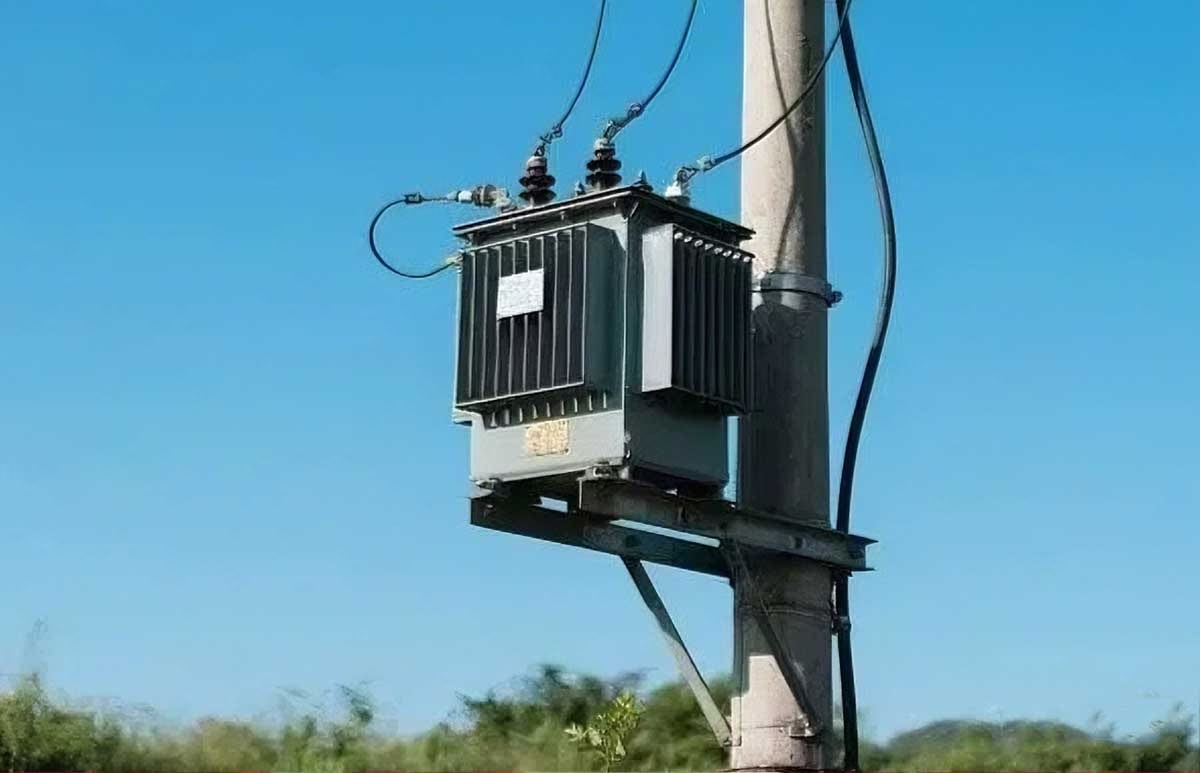
For rural communities worldwide, reliable electricity isn’t just a convenience—it’s a catalyst for economic growth, healthcare access, and quality of life. Single phase pole mounted distribution transformers stand as the unsung heroes of rural power grids, engineered to balance peak performance, cost-effectiveness, and resilience in the most challenging environments. Drawing on decades of hands-on experience in power distribution, this article explores how these transformers are redefining rural electrification, addressing unique regional challenges, and future-proofing grids for evolving energy needs.
Contents
hide
Enhancing Energy Efficiency: How Next-Gen Designs Transform Rural Power Grids?
Power waste has long plagued rural electricity systems, driving up operational costs and leaving communities with inconsistent service. Today’s single phase pole mounted transformers are rewriting the rules of efficiency, thanks to breakthrough engineering and material science that minimize losses and maximize reliability.
Amorphous Metal Cores: The Efficiency Revolution
The shift from traditional silicon steel cores to amorphous metal cores represents one of the most impactful advancements in transformer technology. Unlike rigid silicon steel, amorphous metals feature a non-crystalline structure that drastically reduces energy loss during operation. Here’s how the two core materials compare in real-world rural applications:
| Feature | Silicon Steel Core | Amorphous Metal Core |
|---|---|---|
| Standby Power Consumption | Significantly higher (50-80W) | 70-80% lower (10-25W) |
| Operational Efficiency | Moderate (95-97%) | Superior (98-99.5%) |
| Lifecycle Cost | Lower upfront, higher long-term | Higher initial investment, 30-40% savings over 15 years |
In a recent project in a remote village in Central America, we replaced aging silicon steel core transformers with amorphous metal models. Within six months, the community’s overall power loss dropped by 32%, translating to monthly savings of $400 for the local utility—funds that were reinvested in expanding grid access to neighboring hamlets.
Advanced Insulation: Durability Meets Sustainability
Modern rural transformers leverage cutting-edge insulation materials that outperform traditional mineral oil and paper systems:
- Nomex® Insulation Paper: Withstands temperatures up to 220°C, preventing breakdown in extreme heat and extending transformer lifespan by 20-25%.
- Natural Ester Fluids: Biodegradable, non-toxic alternatives to mineral oil that reduce fire risk and minimize environmental impact—critical for areas near water sources or farmland.
These materials don’t just boost efficiency; they also reduce maintenance needs, a key advantage in regions where technician access is limited.
Smart Engineering for Rural Resilience
Today’s transformers integrate design features tailored to rural realities:
- Built-in surge arresters to protect against lightning strikes (a top cause of rural outages).
- Passive cooling systems that operate without electricity are ideal for off-grid or remote areas.
- Modular components that allow partial upgrades, eliminating the need to replace entire units when demand grows.
Overcoming Rural Challenges: Designing Transformers for Extreme Environments?
Rural areas present a unique set of hurdles for power equipment: extreme temperatures, heavy rainfall, wildlife interference, and corrosive conditions. Single phase pole mounted transformers are now engineered to thrive in these environments, with adaptations that address the specific pain points of rural grids.
Weather Resilience: Battling the Elements
From scorching deserts to snow-capped mountains, rural transformers must endure harsh conditions:
- Enhanced Sealing Systems: Double-gasketed enclosures and IP67-rated casings prevent moisture ingress, a leading cause of transformer failure in humid or rainy regions.
- UV-Resistant Coatings: Polyester powder coatings shield outer casings from prolonged sun exposure, preventing cracking and fading in tropical or arid areas.
- Cold-Climate Modifications: Heated pressure relief valves and low-temperature ester fluids ensure reliable operation in regions where temperatures drop to -40°C.
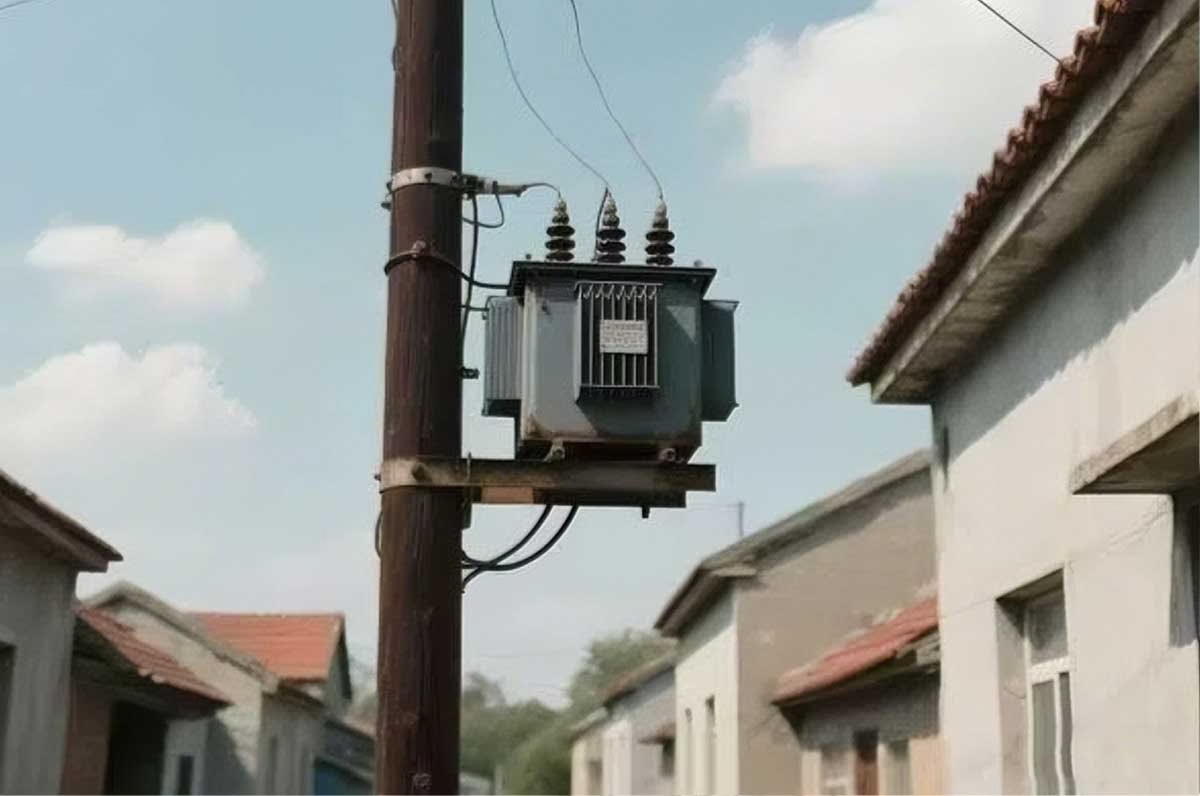
In a mountainous community in Northern Europe, our team installed transformers with ice-resistant bushings and reinforced casings. Despite annual snowfall exceeding 3 meters, the units maintained 99.8% uptime over three years—up from 85% with the previous generation of equipment.
Wildlife Protection: Coexisting with Nature
Animal interference is a surprisingly common issue in rural areas, with squirrels, birds, and rodents causing short circuits or damage. Modern transformers address this with:
- Insulated conductor shields that prevent small animals from accessing live components.
- Bird-safe bushing designs that eliminate perching spots without compromising performance.
- Low-noise operation, reducing disturbance to local wildlife and livestock.
Corrosion Resistance: Longevity in Harsh Settings
Coastal villages, agricultural areas, and industrial zones face high corrosion risks from salt air, fertilizers, or chemicals. Transformers now feature:
- Galvanized steel tanks with a 10-year anti-rust warranty.
- Stainless steel hardware and fasteners that resist degradation.
- Ceramic bushings that withstand chemical exposure better than traditional materials.
In a coastal community in Southeast Asia, corrosion-resistant transformers have extended service life from 8 years to 15+, reducing replacement costs by 60% for the local utility.
Cost-Effective Solutions: Delivering High Performance Without Breaking the Bank?
Rural electrification projects often operate on tight budgets, making cost-effectiveness a top priority. Manufacturers have responded by developing transformers that balance performance, affordability, and long-term value—proving that quality doesn’t have to come with a premium price tag.
Design Standardization: Driving Economies of Scale
Standardizing core components (windings, casings, bushings) has been a game-changer for cost reduction:
- Mass production of standardized parts lowers manufacturing costs by 15-20%.
- Simplified inventory management reduces storage and logistics expenses for utilities.
- Faster installation times (up to 30% quicker) cut labor costs, a major expense in remote areas.
In a national rural electrification program in Africa, we deployed standardized transformers across 500 villages. The program achieved a 22% cost savings compared to custom-designed units, allowing the utility to connect 30% more households within the same budget.
Material Innovations: Performance at Lower Costs
Advancements in material science have enabled manufacturers to reduce costs without sacrificing quality:
- Aluminum Windings: Lighter and 40% less expensive than copper, while maintaining comparable conductivity for rural load demands.
- Hybrid Insulation Systems: Combining Nomex paper with recycled polyester reduces material costs by 10% while retaining thermal resistance.
- Recycled Steel Casings: Up to 30% of casing materials are recycled, lowering environmental impact and raw material costs.
In a recent project in India, transformers with aluminum windings and hybrid insulation delivered the same efficiency as copper-wound units at 18% lower upfront cost—with no difference in lifespan or performance over five years of monitoring.
Total Cost of Ownership (TCO): The True Measure of Value
Smart utilities now focus on TCO rather than just purchase price, and modern transformers excel in this area:
- Lower operational costs: Reduced power losses translate to annual savings of $200-$500 per unit.
- Minimal maintenance: Durable materials and modular design cut maintenance costs by 40% over the transformer’s lifespan.
- Extended service life: Amorphous core and corrosion-resistant transformers last 15-20 years, compared to 10-12 years for traditional models.
Leveraging Technology: How Smart Features Boost Reliability in Remote Areas?
Remote rural communities often suffer from prolonged outages due to limited access to maintenance teams. Advanced technologies are transforming transformers into self-monitoring, self-regulating assets that minimize downtime and improve power quality.
Smart Monitoring Systems: Real-Time Visibility
Modern transformers are equipped with IoT sensors that track key metrics:
- Temperature and oil level (preventing overheating and leaks).
- Load capacity (alerting utilities to potential overloads).
- Voltage fluctuations (enabling proactive adjustments).
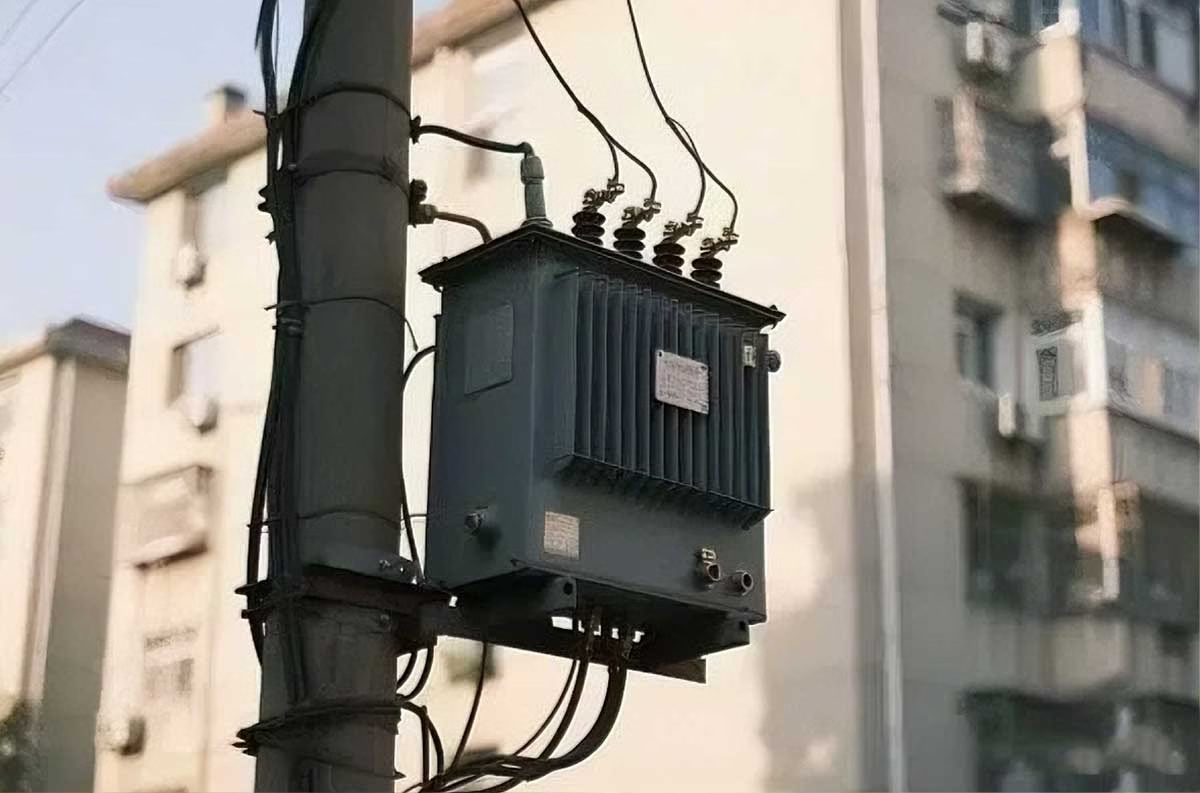
Data is transmitted via 4G/5G or satellite (for areas without cellular coverage) to a central dashboard, allowing utilities to monitor performance remotely. In a remote mountain community in South America, this technology reduced outage duration from 48 hours to 2 hours by enabling technicians to diagnose issues before dispatching teams.
Predictive Maintenance: Staying Ahead of Failures
AI-driven predictive maintenance algorithms analyze sensor data to identify potential issues before they cause failures:
- Anomaly detection: Flags unusual temperature spikes or oil level drops.
- Lifespan forecasting: Predicts when components will need replacement.
- Maintenance scheduling: Alerts utilities to perform upkeep during low-demand periods.
In a pilot program in Australia, predictive maintenance reduced unplanned outages by 45% and extended transformer lifespan by 25%.
Remote Control Capabilities: Managing Grids from Anywhere
For hard-to-reach areas, remote control features are invaluable:
- Remote switching: Isolate faulty transformers without on-site personnel.
- Automatic voltage regulation: Adjusts output to maintain stable power during peak demand.
- Load balancing: Redistributes power across the grid to prevent overloads.
These features are particularly beneficial for utilities with large rural service areas, reducing travel time and operational costs.
Future-Proofing Rural Grids: Scalable Transformers for Evolving Energy Needs?
Rural energy demands are evolving rapidly—driven by population growth, electrification of agriculture, and adoption of renewable energy. Single phase pole mounted transformers are being designed to adapt to these changes, ensuring grids remain reliable and efficient for decades to come.
Modular Scalability: Growing with Communities
Modular transformers allow utilities to scale capacity without replacing entire units:
- Add-on winding modules: Increase capacity by 50-100% as demand grows.
- Plug-and-play renewable integration: Easily connect solar panels or wind turbines.
- Upgradeable control systems: Add smart features as technology advances.
In a fast-growing rural community in Brazil, modular transformers enabled the utility to double capacity over five years without disrupting service—saving $1.2 million in replacement costs.
Renewable Energy Compatibility: Bridging Traditional and Green Grids
As rural areas adopt solar and wind power, transformers must handle bidirectional power flow:
- Bi-directional metering: Tracks energy imported from and exported to the grid.
- Voltage stabilization: Mitigates fluctuations caused by variable renewable output.
- Battery storage integration: Works with energy storage systems to ensure consistent power.
In a solar-powered village in Kenya, transformers with bi-directional capabilities enabled the community to become energy self-sufficient, reducing reliance on diesel generators by 90%.
Smart Grid Readiness: Enabling the Future of Rural Electrification
Transformers are becoming key nodes in smart rural grids, with features that support:
- Advanced metering infrastructure (AMI): Enables precise billing and demand management.
- Demand response: Adjusts power supply based on real-time demand.
- Electric vehicle (EV) charging: Prepares grids for the growing adoption of EVs in rural areas.
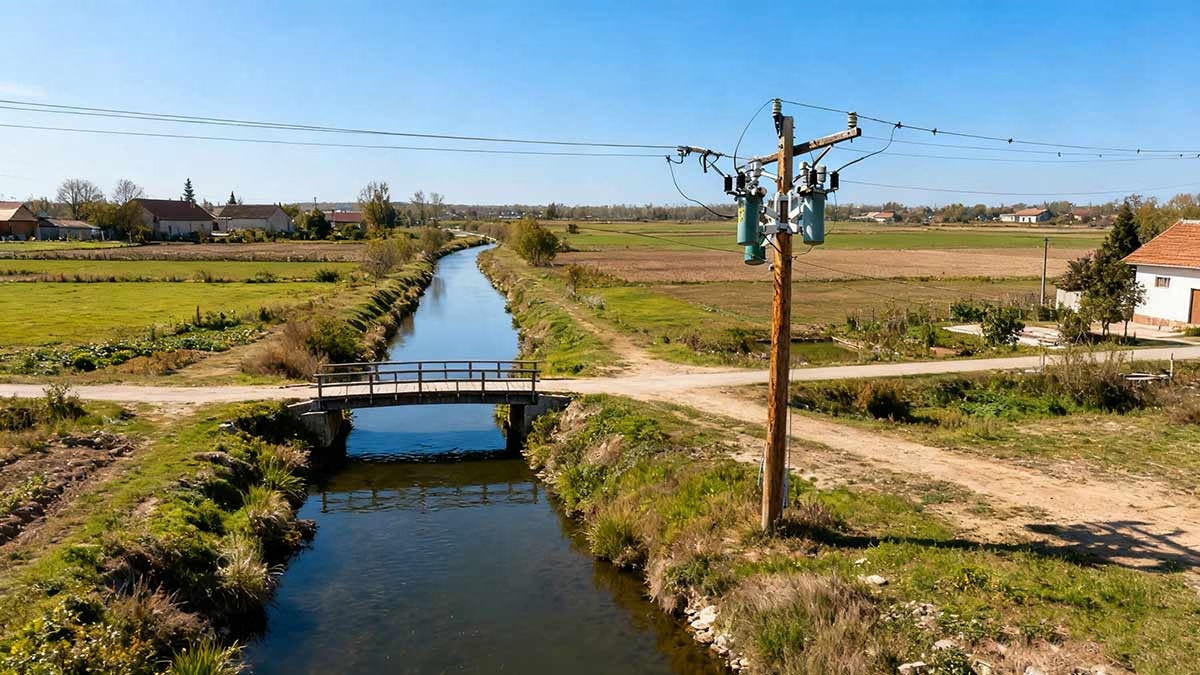
With rural electrification rates rising at 7% annually, these features ensure grids can keep pace with technological advancements.
Environmental Sustainability: Building Greener Grids
Sustainability is a core focus of modern transformer design:
- Biodegradable fluids: Ester-based oils that break down in soil and water, reducing environmental risk.
- Recyclable components: Up to 85% of transformer materials are recyclable at end-of-life.
- Low carbon footprint: Energy-efficient designs reduce greenhouse gas emissions from power generation.
Conclusion
Single phase pole mounted distribution transformers are more than just electrical equipment—they’re the backbone of rural development. By combining innovative efficiency features, environment-specific adaptations, cost-effective design, and future-ready technology, these transformers are empowering communities with reliable, affordable electricity. As rural energy needs continue to evolve, manufacturers and utilities must collaborate to push the boundaries of transformer technology—ensuring no community is left behind in the global transition to a more connected, sustainable future.
For rural areas, the right transformer isn’t just a piece of hardware—it’s a promise of progress, opportunity, and resilience.
More FAQ About Single Phase Pole Mounted Distribution Transformer
Q: What is a single-phase pole-mounted distribution transformer and its core function?
A: It’s a specialized electrical device mounted on utility poles (wooden or concrete) to step down high-voltage distribution power (e.g., 11kV-34.5kV) to low-voltage levels (120/240V or 347/600V) suitable for residential, commercial, and small industrial use. Its core function is to ensure safe and efficient power supply to end-users by matching voltage requirements, and it’s widely applied in areas where three-phase power isn’t necessary, especially in rural regions. Unlike pad-mounted transformers, its pole-mounted design reduces vandalism risks and saves ground space.
Q: What are the typical kVA ratings for single-phase pole-mounted transformers?
A: Common ratings range from 5 kVA to 500 kVA, with most utility applications focusing on 15 kVA, 25 kVA, 100 kVA, and 167 kVA models. For example, 25 kVA units are widely used in small residential areas, while 167 kVA models cater to medium-load commercial or rural community needs. Standards like CSA C2.2:25 specifically cover units rated at 167 kVA or below, and larger units up to 750 kVA are available for special vault applications.
Q: Where are single-phase pole-mounted transformers most commonly used?
A: They are predominantly used in rural and suburban areas with scattered power demand, where three-phase infrastructure is uneconomical. They’re also ideal for small residential neighborhoods, agricultural operations, remote lighting, and railway power supply. In North America, Southeast Asia, and Western countries, they’re extensively deployed to reduce low-voltage line length and line loss—some studies show they can lower line loss by over 60% compared to traditional setups. Additionally, they’re used in urban grid retrofitting projects.
Q: What key standards govern single-phase pole-mounted transformers?
A: The main international standards include ANSI/IEEE C57.12.00 and C57.12.20 (U.S.), CSA C2.2:25 and CSA C802.1 (Canada), and IEC 60076 (global). These standards specify requirements for voltage ratings, temperature rise, energy efficiency, sound levels, and test procedures. For example, CSA C2.2:25 applies to 60Hz, ONAN-cooled units on effectively grounded wye systems. The U.S. DOE also sets mandatory efficiency standards, requiring minimum efficiency of 98.95% for 25 kVA units and 99.33% for 167 kVA units.
Q: How to select the right kVA rating for a single-phase pole-mounted transformer?
A: Selection depends on total connected load (residential, commercial, or industrial), future load growth (typically 10-20% buffer), and voltage requirements. For rural households, 16-100 kVA is common; for small commercial facilities (e.g., convenience stores), 25-167 kVA is suitable. Always refer to standards like ANSI C57.12.20 and consult utility guidelines. Manufacturers like Daelim and Meta Power Solutions offer custom ratings from 15 kVA to 333 kVA to match specific needs.
Q: How to maintain a single-phase pole-mounted transformer for long service life?
A: Regular maintenance includes checking oil level (should match temperature), inspecting for leaks, monitoring oil temperature (normal rise ≤55-65°C), and testing insulation resistance. Annual oil sampling is recommended to detect moisture or carbon particles (signs of internal faults). If the oil level is too low (due to leaks), stop operation immediately and refill; if too high (due to overheating or water ingress), drain excess oil. Cooling fans (if equipped) should be tested quarterly for proper operation.
Q: What cooling methods of single phase pole mounted transformers are used, and which is the most common?
A: The most common method is ONAN (Oil Natural, Air Natural), suitable for low-to-medium loads (up to 167 kVA). ONAN uses natural oil circulation and air cooling, requiring no external power. For higher loads (250 kVA+), ONAF (Oil Natural, Air Forced) with fans may be used. All transformers complying with CSA C2.2:25 and ANSI C57.12.20 use ONAN cooling, ensuring reliability in harsh climates (extreme cold/heat).
Q: Can single-phase pole-mounted transformers be used in three-phase systems?
A: Yes—three identical single-phase units can be connected in wye or delta configuration to form a three-phase distribution system. This is cost-effective for areas where three-phase demand is low or scattered. For example, in rural industrial applications, three 100 kVA single-phase transformers can be banked to supply 300 kVA three-phase power. Manufacturers like CESTransformers offer custom banking solutions complying with ANSI and CSA standards.
Q: What are the installation requirements for single phase pole-mounted transformers?
A: Installation must comply with IEEE C57.12.31 and local utility codes. Requirements include: minimum pole height (8-10 meters), safe clearance from ground/obstacles (≥3 meters), proper mounting brackets (steel/aluminum), and correct wiring (primary/secondary connections per vector group, e.g., II0 or LI0). Installation should be performed by certified technicians to ensure safety and compliance with standards like ANSI C57.12.20.