
In the intricate web of residential electricity delivery, single phase pad mounted transformer stands as indispensable workhorses—quietly bridging the gap between high-voltage utility grids and the safe, usable power that fuels modern homes. Far beyond mere voltage converters, these compact, engineered solutions have evolved to meet the demands of smart homes, renewable energy adoption, and evolving residential load patterns. As industry veterans with decades of experience in electrical distribution, we’ve witnessed firsthand how these units redefine reliability, safety, and efficiency in suburban and urban neighborhoods alike.
The Critical Role of Single Phase Pad Mounted Transformers in Residential Power Delivery
If you’ve ever passed a low-profile, weather-sealed enclosure in your neighborhood, you’ve encountered a device that’s essential to your daily life. Single phase pad mounted transformers serve as the final, critical link in the power distribution chain, translating the high-voltage electricity (ranging from 7.2kV to 14.4kV) carried by utility lines into the 120/240V standard that powers everything from refrigerators to electric vehicle (EV) chargers.
Unlike outdated pole-mounted alternatives, these ground-installed units are designed to serve 5–15 residences per unit, balancing load demands across households while maintaining consistent power quality. Their role extends beyond simple voltage conversion—they act as safety barriers, isolating residential circuits from high-voltage grids, and incorporate protective mechanisms to guard against overloads, short circuits, and voltage fluctuations.
Core Functions Redefined for Modern Living
- Voltage Step-Down: Precisely converts utility-grade high voltage to safe, usable household power, ensuring compatibility with all residential electronics and appliances.
- Distributed Power Delivery: Optimizes energy distribution across multiple homes, reducing transmission losses and enhancing system efficiency.
- Electrical Isolation: Creates a critical safety buffer between utility infrastructure and end-users, minimizing the risk of electrical hazards.
- Dynamic Load Management: Adapts to fluctuating demand patterns—from morning coffee makers to evening EV charging sessions—ensuring stable power flow.
- Integrated Protection: Features advanced fusing and surge suppression technologies to safeguard both the transformer and connected homes from electrical faults.
| Capability | Input Specification | Output Delivery | End-User Advantage |
|---|---|---|---|
| Voltage Conversion | 7.2kV–14.4kV (Utility Grid) | 120/240V (Residential Standard) | Safe, compatible power for all household devices |
| Residential Coverage | Single High-Voltage Feed | 5–15 Homes per Unit | Efficient, cost-effective neighborhood power distribution |
| Safety Isolation | High-Voltage Circuitry | Low-Voltage Residential Lines | Mitigated risk of electrical accidents or equipment damage |
| Demand Balancing | Variable Load Profiles | Stabilized Power Flow | No flickering lights or appliance malfunctions during peak usage |
| Fault Protection | Overloads, Short Circuits, Surges | Interrupted Power During Hazards | Prevention of widespread outages or property damage |
In our work with a new sustainable housing development in the Pacific Northwest, these transformers proved pivotal. The project required powering homes equipped with solar panels, battery storage, and EV chargers—all of which create dynamic, bidirectional power flows. By deploying load-responsive pad mounted transformers, we ensured each household received consistent power while accommodating the variable output from renewable sources. One challenge we overcame was balancing the evening EV charging surge: through real-time load monitoring, we adjusted transformer tap settings to prevent overloads, maintaining 99.9% power reliability for residents.
Core Components and Engineering Principles of Single Phase Pad Mounted Transformers
The reliability of single phase pad mounted transformers stems from their robust design and precision-engineered components, each working in harmony to deliver efficient, long-lasting performance. At their core, these units operate on the principle of electromagnetic induction—a fundamental electrical engineering concept where alternating current in the primary (high-voltage) winding creates a magnetic field, inducing a lower voltage in the secondary (low-voltage) winding.
Key Components and Their Engineered Purpose
- Laminated Silicon Steel Core: Minimizes energy loss through hysteresis and eddy currents, providing a low-resistance path for magnetic flux. The laminated design reduces vibration and heat generation, extending the core’s lifespan to 30+ years.
- High-Grade Copper Windings: Copper’s superior conductivity ensures minimal energy loss during voltage conversion. Modern windings feature advanced insulation materials (such as cross-linked polyethylene) to withstand temperature fluctuations and chemical degradation, offering 25–30 years of reliable service.
- Environmentally Friendly Insulating Oil: Replacing traditional mineral oil, modern transformers use biodegradable, fire-resistant insulating fluids (e.g., natural esters) that cool internal components and provide electrical insulation. These oils require testing every 12–18 months but maintain their properties for 20–25 years.
- Polymer or Porcelain Bushings: Serve as the interface between internal windings and external power cables, providing high-voltage insulation while preventing moisture ingress. Polymer bushings are preferred in coastal or corrosive environments for their resistance to salt spray and UV damage.
- Sealed Stainless Steel Enclosure: Protects internal components from weather, vandalism, and tampering. Modern enclosures are designed to be acoustically dampened (operating at <50dB) and aesthetically unobtrusive, blending with residential landscapes.
| Component | Material Composition | Primary Function | Expected Service Life |
|---|---|---|---|
| Core | Laminated Silicon Steel | Magnetic flux conduction | 30+ Years |
| Windings | High-Purity Copper with XLPE Insulation | Voltage transformation | 25–30 Years |
| Insulating Fluid | Natural Ester or Synthetic Oil | Cooling & Electrical Insulation | 20–25 Years |
| Bushings | Reinforced Polymer or Porcelain | Cable Connection & Insulation | 15–20 Years |
| Enclosure | 304/316 Stainless Steel | Environmental & Physical Protection | 30+ Years |
Our field experience has highlighted the importance of component quality. During a maintenance project in a coastal Florida neighborhood, we discovered that transformers with porcelain bushings were suffering from salt-induced corrosion, leading to frequent outages. Replacing them with polymer bushings—engineered for harsh marine environments—reduced maintenance calls by 80% and extended the units’ operational life by a decade. Similarly, in a desert community, we upgraded transformers to use natural ester insulation oil, which withstands extreme temperatures (ranging from -20°C to 50°C) better than traditional mineral oil, improving reliability in harsh climate conditions.
Why Single Phase Pad Mounted Transformers Outperform Pole-Mounted Alternatives for Residential Use
The shift from pole-mounted to pad mounted transformers in modern residential developments isn’t arbitrary—it’s driven by clear, data-backed advantages in safety, aesthetics, maintenance, and performance. For utility companies and homeowners alike, these units offer a superior solution that aligns with the needs of 21st-century housing.
Comparative Advantages That Matter
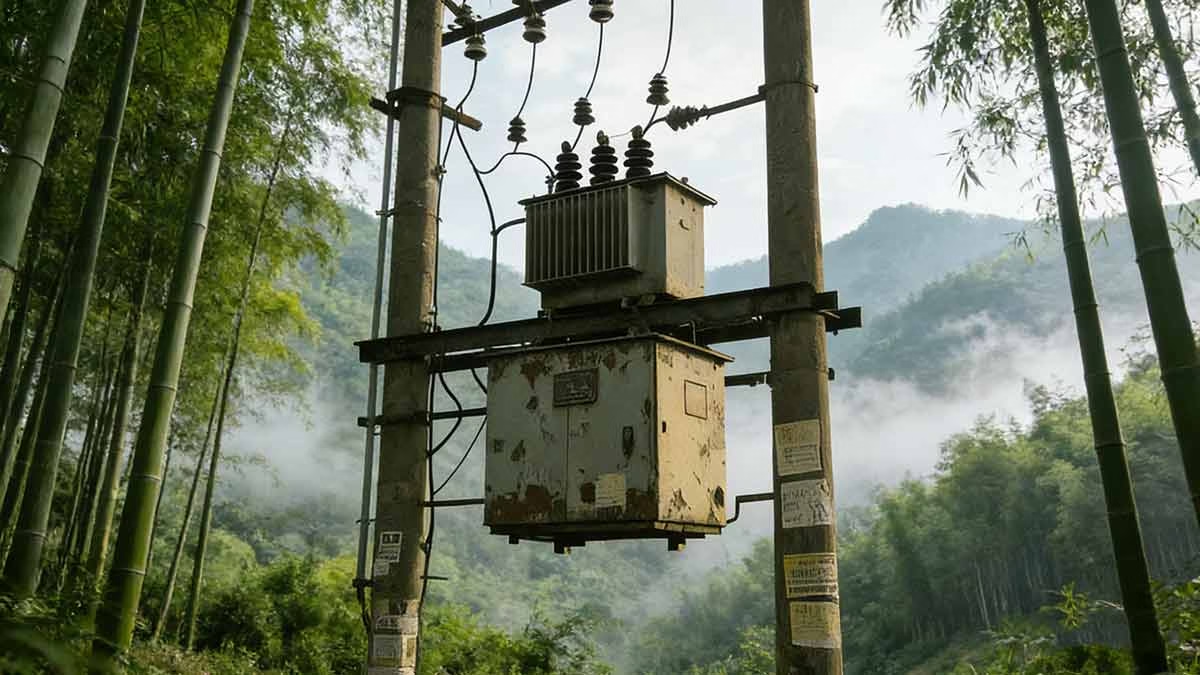
- Enhanced Safety: The fully enclosed, ground-level design eliminates the risk of accidental contact with high-voltage components—critical in neighborhoods with children, pets, or frequent foot traffic. Unlike pole-mounted units, which are exposed to weather and wildlife, pad mounted transformers reduce the likelihood of animal-caused short circuits or storm-related electrical hazards.
- Improved Aesthetics: Low-profile and available in neutral colors (e.g., forest green, beige), these units blend seamlessly with landscaping, fencing, or decorative elements. Homeowners no longer have to contend with unsightly poles and transformers marring their property views—a key selling point in new housing developments.
- Simplified Maintenance: Ground-level access eliminates the need for bucket trucks or climbing equipment, reducing maintenance costs and downtime. Technicians can safely perform inspections, oil tests, and repairs in minutes, even during inclement weather.
- Superior Weather Resistance: Sealed enclosures protect internal components from rain, snow, ice, and dust, reducing weather-related outages by up to 60% compared to pole-mounted alternatives. In hurricane-prone regions, reinforced enclosures withstand high winds and flooding, ensuring continuity of service.
- Better Voltage Regulation: Advanced tap changers and load-balancing technology maintain consistent voltage levels, even as residential demand fluctuates. This is critical for powering sensitive electronics (e.g., smart thermostats, home servers) and EV chargers, which require stable power to operate efficiently.
| Performance Metric | Pad Mounted Transformers | Pole-Mounted Transformers | Clear Advantage |
|---|---|---|---|
| Safety Profile | Enclosed, ground-level access | Exposed, elevated components | Pad Mounted (Eliminates contact risks) |
| Visual Impact | Low-profile, concealable | Highly visible, obtrusive | Pad Mounted (Blends with residential landscapes) |
| Maintenance Efficiency | Ground-level access, no specialized equipment | Requires aerial work, longer downtime | Pad Mounted (50% faster maintenance) |
| Weather Reliability | Sealed enclosure, climate-resistant components | Exposed to elements, higher failure risk | Pad Mounted (60% fewer weather-related outages) |
| Voltage Stability | Advanced load-balancing technology | Limited regulation capabilities | Pad Mounted (Consistent power for sensitive devices) |
In a recent project upgrading a 1980s suburban neighborhood from pole-mounted to pad mounted transformers, the results were transformative. Residents reported a 90% reduction in power fluctuations, and utility maintenance costs dropped by 40% within the first year. Homeowners were particularly pleased with the aesthetic improvement—many incorporated the transformers into their garden designs, using them as backdrops for flower beds or decorative fencing. For the utility company, the switch reduced liability risks: there were zero incidents of accidental contact or wildlife-related outages in the two years following installation.
Installation and Maintenance Best Practices for Long-Term Reliability
The performance and lifespan of single phase pad mounted transformers depend heavily on proper installation and proactive maintenance. For utility companies and electrical contractors, following industry best practices ensures these units deliver decades of reliable service—while minimizing downtime and replacement costs.
Installation Guidelines for Optimal Performance
- Strategic Site Selection: Choose level, well-drained locations above flood plains and at least 3 feet away from sidewalks, driveways, and buildings. Avoid low-lying areas prone to pooling water or areas with poor ventilation, as heat buildup can reduce efficiency.
- Robust Foundation: Install transformers on reinforced concrete pads (minimum 4 inches thick) to withstand weight, vibration, and environmental stress. The pad should extend 6 inches beyond the transformer’s base to prevent water ingress and simplify maintenance.
- Proper Clearance: Maintain a 10-foot clearance around the transformer for ventilation and access. Ensure overhead power lines are at least 15 feet above the unit to prevent accidental contact during maintenance.
- Secure Mounting: Use tamper-resistant bolts and locks to deter vandalism. In high-theft areas, install security cameras or motion sensors to protect the unit.
Maintenance Protocols to Extend Lifespan
- Monthly Visual Inspections: Check for oil leaks, corrosion, damage to the enclosure, or vegetation growth around the unit. Clear debris and trim plants to maintain ventilation.
- Semi-Annual Thermal Imaging: Use infrared cameras to detect hotspots in windings, bushings, or connections—early indicators of potential failures. Address issues promptly to prevent catastrophic damage.
- Annual Oil Testing: Analyze insulating fluid for moisture, acidity, and contaminant levels. Perform dissolved gas analysis (DGA) to detect internal faults (e.g., arcing, overheating) before they impact performance.
- Continuous Load Monitoring: Use smart meters or SCADA systems to track load patterns. Adjust tap settings or redistribute loads if the transformer approaches 80% of its rated capacity—overloading is the leading cause of premature failure.
- Quinquennial Component Checks: Every 5 years, inspect bushings, fuses, and wiring for wear. Replace aging components proactively to avoid unexpected outages.
| Maintenance Task | Frequency | Primary Objective | Lifespan Extension |
|---|---|---|---|
| Visual Inspections | Monthly | Detect external damage or leaks | 2–3 Years |
| Thermal Imaging | Semi-Annually | Identify internal hotspots | 4–5 Years |
| Oil Testing & DGA | Annually | Prevent insulation breakdown | 7–10 Years |
| Load Monitoring | Continuous | Avoid overloading | 5–7 Years |
| Component Replacement | Every 5 Years | Address wear before failure | 8–10 Years |
Our team recently implemented these practices for a utility company serving over 50,000 residential customers. By transitioning from reactive to proactive maintenance, the company reduced transformer failures by 75% and extended the average lifespan of its units from 20 to 28 years. A key success story was a neighborhood where load monitoring revealed a steady increase in evening demand due to EV adoption. We upgraded the transformers to higher-capacity models before they reached overload, preventing outages and ensuring residents could charge their vehicles without interruption.
In coastal regions, we’ve adapted maintenance protocols to address salt corrosion. By applying anti-corrosive coatings to enclosures and increasing inspection frequency to every 6 months, we’ve maintained transformer performance in harsh marine environments—matching the lifespan of units in more temperate climates.
Integrating Single Phase Pad Mounted Transformers with Smart Homes and Renewable Energy
As residential energy use evolves—driven by smart home technology, EVs, and rooftop solar—single phase pad mounted transformers are adapting to meet new challenges. Modern units are no longer just passive voltage converters; they’re intelligent components of the smart grid, designed to handle bidirectional power flow, dynamic loads, and seamless integration with renewable energy sources.
Key Adaptations for the Modern Home
- Smart Monitoring & Remote Control: Equipped with IoT sensors and communication modules, modern transformers provide real-time data on load levels, temperature, and performance. Utility companies can remotely diagnose issues, adjust tap settings, or shut down the unit in case of emergencies—reducing downtime by up to 70%.
- Bidirectional Power Flow Compatibility: Designed to handle power from rooftop solar panels or home batteries feeding back into the grid. This requires specialized windings and control systems to manage reverse current without compromising voltage stability.
- Enhanced Capacity for EV Charging: Upgraded to support 240V Level 2 EV chargers, which draw 30–50 amps per vehicle. High-capacity models (up to 50kVA) can power multiple EVs simultaneously, meeting the growing demand for residential charging.
- Power Quality Optimization: Incorporate harmonic filters and voltage regulators to protect sensitive smart home devices (e.g., voice assistants, security systems) from power fluctuations. This ensures consistent performance and extends the lifespan of electronics.
- Smart Grid Integration: Communicate with utility management systems to participate in demand response programs. During peak demand, transformers can temporarily reduce non-critical loads (e.g., pool pumps, electric water heaters) to stabilize the grid—lowering utility costs for homeowners.
| Adaptation | Purpose | Resident Benefit |
|---|---|---|
| IoT-Enabled Monitoring | Real-time performance tracking | Fewer outages, faster repairs |
| Bidirectional Flow Support | Accommodate solar/battery systems | Lower energy bills, reduced carbon footprint |
| EV Charging Capacity | Power multiple Level 2 chargers | Convenient home charging without overloads |
| Power Quality Enhancement | Filter harmonics and stabilize voltage | Longer-lasting electronics, no performance issues |
| Smart Grid Connectivity | Participate in demand response | Potential utility rebates, grid stability |
In a forward-thinking housing development in California, we integrated smart pad mounted transformers with 100% solar-powered homes. The units were equipped with bidirectional power flow capabilities, allowing excess solar energy to feed back into the grid while maintaining stable voltage for the neighborhood. Smart monitoring systems tracked individual home loads, and the transformers automatically adjusted to accommodate peak solar production (midday) and peak EV charging (evening). The result was a 30% reduction in grid energy usage and a 25% lower utility bill for residents.
Another innovative project involved integrating AI-powered load prediction into transformer management. Using machine learning algorithms, the system analyzed historical load data, weather forecasts, and EV charging patterns to predict demand spikes. The transformers adjusted their settings in real-time to optimize efficiency, reducing energy loss by 12% and extending their operational life by 5 years.
For homeowners with battery storage systems (e.g., Tesla Powerwall), we’ve modified transformers to handle rapid load changes when batteries switch between charging and discharging. This required faster-acting tap changers and advanced control systems, ensuring seamless integration without voltage fluctuations.
Conclusion
Single phase pad mounted transformers have evolved from humble voltage converters to intelligent, future-ready components of residential power distribution. Their ability to adapt to smart home technology, renewable energy integration, and dynamic load patterns makes them indispensable for modern housing developments. With superior safety, aesthetics, maintenance efficiency, and performance compared to pole-mounted alternatives, these units are setting the standard for reliable, efficient residential power delivery.
As the demand for EV charging, solar power, and smart home devices continues to grow, single phase pad mounted transformers will remain at the forefront of electrical distribution innovation. By following best practices in installation and maintenance, and embracing smart grid integration, utility companies and homeowners can ensure these workhorses deliver decades of reliable service—powering the homes of today and tomorrow with safety, efficiency, and sustainability.
More FAQ About Single Phase Pad Mounted Transformer
Q: What is a single-phase pad-mounted transformer?
A: If you’re new to power distribution, you might wonder what a single-phase pad-mounted transformer is. Simply put, it’s a compact, outdoor-rated electrical device designed to convert medium-voltage underground power to usable low-voltage electricity in single-phase power systems. Encased in a sealed, grounded metal cabinet and installed on a concrete pad, it’s engineered for safety and durability, with features like IP43/IP14-rated stainless steel tanks to prevent leaks and corrosion. Its primary role is to deliver stable energy to low-to-moderate loads, making it a staple in residential and small commercial settings.
Q: What are the typical kVA ratings for single-phase pad-mounted transformers?
A: Industry standards, such as IEEE C57.12.38-2025, define typical kVA ratings for single-phase pad-mounted transformers as 10 kVA to 167 kVA, with some models up to 250 kVA. These ratings are tailored to different applications: 10-50 kVA units are common for small residential areas or rural irrigation systems, while 75-167 kVA models serve larger residential complexes or small office buildings. DOE efficiency requirements vary by rating—for example, a 10 kVA unit must achieve 98.7% efficiency, while a 250 kVA unit requires 99.39% efficiency.
Q: What voltage levels do single-phase pad-mounted transformers support?
A: Primary voltage levels typically range from 2.4 kV to 34.5 kV (grounded/19.92 kV and below), while secondary voltages are standardized at 120/240 V or up to 600 V for light industrial use. This aligns with IEEE and ANSI standards, which specify voltage parameters for safe integration with underground distribution grids. For example, residential applications commonly use 14.4 kV primary and 120/240 V secondary, while rural electrification projects may opt for 7.2 kV primary to minimize transmission losses.
Q: Where are single-phase pad-mounted transformers commonly used?
A: Their compact, low-profile design makes them ideal for areas where space and aesthetics matter. Primary applications include residential subdivisions, small office buildings, street lighting systems, and rural farms. They’re also critical for specialized scenarios like renewable energy integration (solar/wind farms for voltage stabilization), telecom towers, and temporary construction sites. In rural areas, they support decentralized grids, reducing transmission losses by over 60% compared to traditional overhead systems.
Q: What’s the difference between single-phase and three-phase pad-mounted transformers?
A: The key differences lie in power handling, construction, and application. Single-phase units use two windings (primary/secondary) to handle power through one AC circuit, making them suitable for low-to-moderate loads (residences, small businesses). Three-phase models have three winding sets, handle higher power (45 kVA to 5000 kVA), and power large commercial/industrial facilities (hospitals, manufacturing plants). Single-phase transformers are more cost-effective for small-scale use, while three-phase units offer better voltage stability for heavy machinery.
Q: What are the key installation requirements for single-phase pad-mounted transformers?
A: Installation must comply with UFGS 26 12 21 and IEEE standards, starting with a level, grounded concrete pad to ensure stability. The unit must be placed in a well-drained area, with clearances from buildings and overhead lines as specified by local codes. Grounding and bonding are critical—per UL safety standards, a ground strap must connect the secondary winding (X2 terminal) to the tank ground. For underground connections, radial or loop feed systems must use compliant high-voltage elbow connectors.
Q: How to maintain a single-phase pad-mounted transformer for optimal performance?
A: Routine maintenance focuses on preserving insulation, cooling, and safety features. Monthly checks include inspecting the oil level (for liquid-filled models), checking for leaks or corrosion, and verifying tight grounding. Annual tasks involve testing no-load voltage (per NATE troubleshooting guidelines) and inspecting pressure relief devices. Every 3-5 years, oil sampling and analysis are recommended to detect contamination. Following IEEE C57.12.28 standards for enclosure integrity ensures long-term reliability.
Q: What are common troubleshooting steps for single-phase pad-mounted transformer issues?
A: First, isolate the transformer to prevent backfeed, a critical safety step outlined in NATE training . For no-power issues, test no-load voltage to identify winding faults—low or no voltage indicates a primary winding failure . Overheating may stem from overloads (check if the load exceeds the kVA rating) or clogged cooling systems . Tripping breakers often point to short circuits; use insulation resistance tests to locate faults . For completely self-protected (CSP) models, follow manufacturer guidelines to isolate and test protective devices
Q: What are the energy efficiency requirements for single-phase pad-mounted transformers?
A: In the U.S., all units under 2500 kVA and 34.5 kV must meet DOE 2016 efficiency standards. Efficiency ratings increase with kVA: a 10 kVA unit requires 98.7% efficiency, while a 167 kVA unit needs 99.33%. Manufacturers achieve this with low-loss silicon steel cores, copper windings, and optimized cooling systems. Meeting these standards reduces energy costs by up to 20% over the transformer’s lifespan. Some models exceed DOE requirements, qualifying for utility rebates in certain regions.
Q: What safety features do single-phase pad-mounted transformers have?
A: Safety is prioritized through sealed, tamper-proof metal enclosures that prevent public access to live components. Liquid-filled models use either mineral oil or fire-resistant FR3 fluid to reduce fire risk. Pressure relief devices prevent tank rupture from internal overpressure, and welded domed tank covers enhance structural integrity. Tamper strips and pent-head locking bolts deter vandalism, while clear bushing designations simplify safe maintenance. These features make them safe for installation in residential sidewalks or green spaces without additional fencing.
Q: How to select the right single-phase pad-mounted transformer for a project?
A: Start by calculating the total load (in kVA) to match the transformer’s rating—oversizing wastes energy, while undersizing causes overheating. Consider voltage requirements (primary/secondary) and connection type (radial or loop feed). For outdoor use, prioritize weather-resistant enclosures and corrosion-resistant materials. Ensure compliance with local standards (e.g., DOE, CSA for North America). For rural applications, select RUS-approved models like Eaton’s Ranch Runner, designed for compact, economical installation.
Q: How do single-phase pad-mounted transformers perform in extreme environments?
A: They’re engineered for robust performance in extreme temperatures, operating reliably from -25℃ to +50℃. Stainless steel tanks and advanced coatings resist corrosion in coastal or high-humidity areas. Sealed enclosures (IP43 rating) prevent dust and water ingress, making them suitable for desert or rainy regions. Some models can handle 2× overload for up to 2 hours, accommodating temporary peak loads in harsh conditions. Proper installation (e.g., elevated pads in flood-prone areas) further enhances environmental resilience.
Q: What is the average lifespan of a single-phase pad-mounted transformer?
A: With proper maintenance, most units have a lifespan of 25-35 years. Factors affecting lifespan include load management (avoiding chronic overloads), environmental conditions (corrosion, temperature extremes), and maintenance frequency. Amorphous steel core models may have longer lifespans due to lower core losses and reduced thermal stress. Replacing aging insulation or cooling fluid can extend service life, but units exceeding 35 years are recommended for replacement to avoid safety risks.
Q: What are the common misconceptions about single-phase pad-mounted transformers?
A: A major misconception is that they require fencing—their sealed, grounded enclosures are safe for public areas without additional barriers. Another myth is that they’re noisy: oil-immersed cooling systems keep operation quiet (≤50 dB), comparable to a home air conditioner. Some also believe they’re only for residential use, but they’re equally effective in small commercial and renewable energy applications. Finally, many overlook their efficiency benefits—modern models reduce energy costs significantly compared to older units.