
Selecting the right pad mounted transformer size is vital for streamlined power distribution. It calls for evaluating current and future power demands, mapping out load patterns, and accounting for environmental variables. The ideal size delivers peak performance, maximizes energy efficiency, and ensures cost-effectiveness across diverse distribution setups.
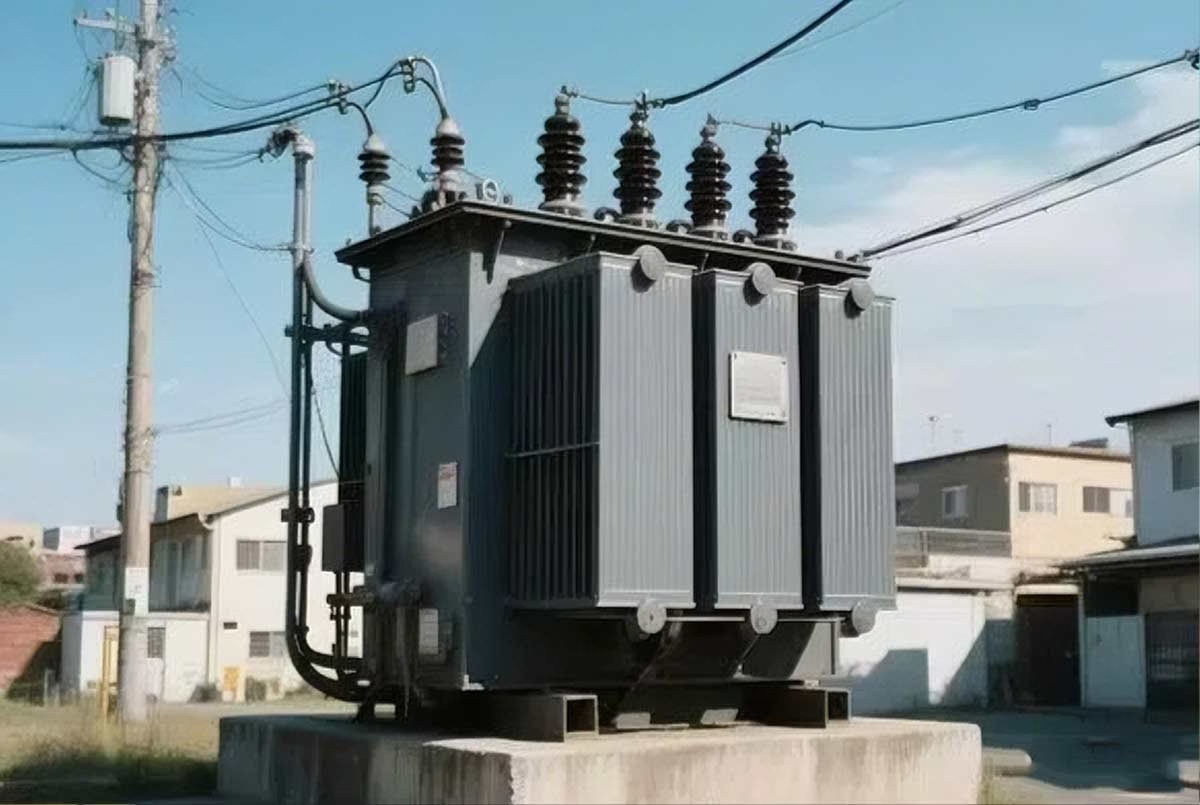
Whether you’re managing a residential community or an industrial park, understanding how to size your transformer correctly helps you avoid common mistakes and make decisions backed by actionable insights. Let’s break down the key factors and considerations to guide your selection process.
Contents
hide
Why One Size Never Fits All: The Basics of Pad Mounted Transformer Sizing
Ever tried using a “one-size-fits-all” tool for a specialized task? It rarely works well— and the same goes for transformer sizing in power distribution. Choosing a mismatched size can lead to energy waste, increased operational costs, and even critical system breakdowns.
Transformer sizing is non-negotiable because power needs vary drastically across applications. From load demands and voltage stability to future expansion plans and environmental conditions, multiple variables shape the right choice. A properly sized transformer doesn’t just perform better—it also extends the lifespan of your entire distribution system.
Let’s dig into the core reasons sizing matters and how to approach it strategically:
Load Demands: The Starting Point of Sizing
Grasping your specific load requirements is the foundational step in selecting the right transformer.
Key aspects to evaluate:
- Peak power demand periods
- Average load consumption patterns
- Load types (resistive, inductive, capacitive) and their unique impacts
Voltage Stability: Maintaining Consistent Power Flow
Proper sizing ensures voltage output remains steady, even as loads fluctuate.
Critical voltage considerations:
- Fluctuations in primary voltage supply
- Secondary voltage stability requirements for connected equipment
- Minimizing voltage drop across the distribution network
Future Expansion: Planning for Growth
A well-chosen transformer should adapt to your evolving needs without full replacement.
Growth-focused factors:
- Projected increases in power consumption
- Potential additions of new equipment or facilities
- Shifts in how power is used over time
Environmental Adaptability: Matching Transformers to Their Surroundings
The operating environment directly influences sizing decisions—ignoring it risks premature failure.
Environmental variables to consider:
- Range of ambient temperatures
- Installation altitude (affects cooling efficiency)
- Humidity levels and pollution exposure
| Sizing Factor | Impact on Selection | Common Pitfall |
|---|---|---|
| Load Demands | Defines core capacity requirements | Underestimating peak load periods |
| Voltage Stability | Shapes transformer rating specifications | Overlooking primary voltage fluctuations |
| Future Expansion | Determines necessary capacity margins | Failing to plan for long-term growth |
| Environmental Conditions | Influences cooling and insulation needs | Disregarding local climate challenges |
Early in my career, I worked on a project that highlighted the real-world consequences of poor sizing. We were tasked with powering a new commercial complex, and the client insisted on a smaller transformer to cut upfront costs—despite our recommendations. Initially, everything ran smoothly, but within months, problems emerged. During summer peak hours, when air conditioning use spiked, the transformer overheated repeatedly, causing shutdowns and unstable voltage for tenants.
This experience taught me that sizing isn’t just about meeting current needs—it’s about understanding the dynamic nature of power use. Since then, I’ve refined a holistic approach: I start with a deep dive into load analysis, not just total power requirements, but the specific characteristics of each load type. For example, inductive loads like motors place different demands than resistive heating elements.
Voltage stability is another non-negotiable factor. On one industrial project, large motor starts caused significant voltage fluctuations. By sizing the transformer appropriately and adding voltage regulation tools, we maintained consistent power—critical for sensitive manufacturing processes.
I also never skip future planning. With a recent tech company client, we sized their transformer to accommodate 30% load growth over five years. When they expanded faster than expected, the system handled the increased demand without costly infrastructure overhauls.
Environmental conditions often fly under the radar but are equally important. I once worked on a high-altitude project where thinner air reduced cooling efficiency. We needed a larger transformer than we would have used at sea level—overlooking this would have led to premature failure.
Scenario planning has become my go-to technique: I create best-case, worst-case, and most-likely load profiles to find a size that handles all possibilities without being unnecessarily large. For data center projects, I also factor in high harmonic content from computer loads, requiring transformers with higher K-factor ratings to manage additional heat.
Finally, I always discuss the trade-off between upfront costs and long-term savings with clients. A slightly larger, more efficient transformer often pays for itself in energy savings over its lifespan.
Matching Transformers to Your Space: From Residences to Industrial Facilities
Have you noticed how neighborhood transformers differ from those outside factories? It’s not just about size—it’s about aligning the transformer’s capabilities with the unique power needs of the space. A mismatched transformer can cause anything from minor inefficiencies to major outages.
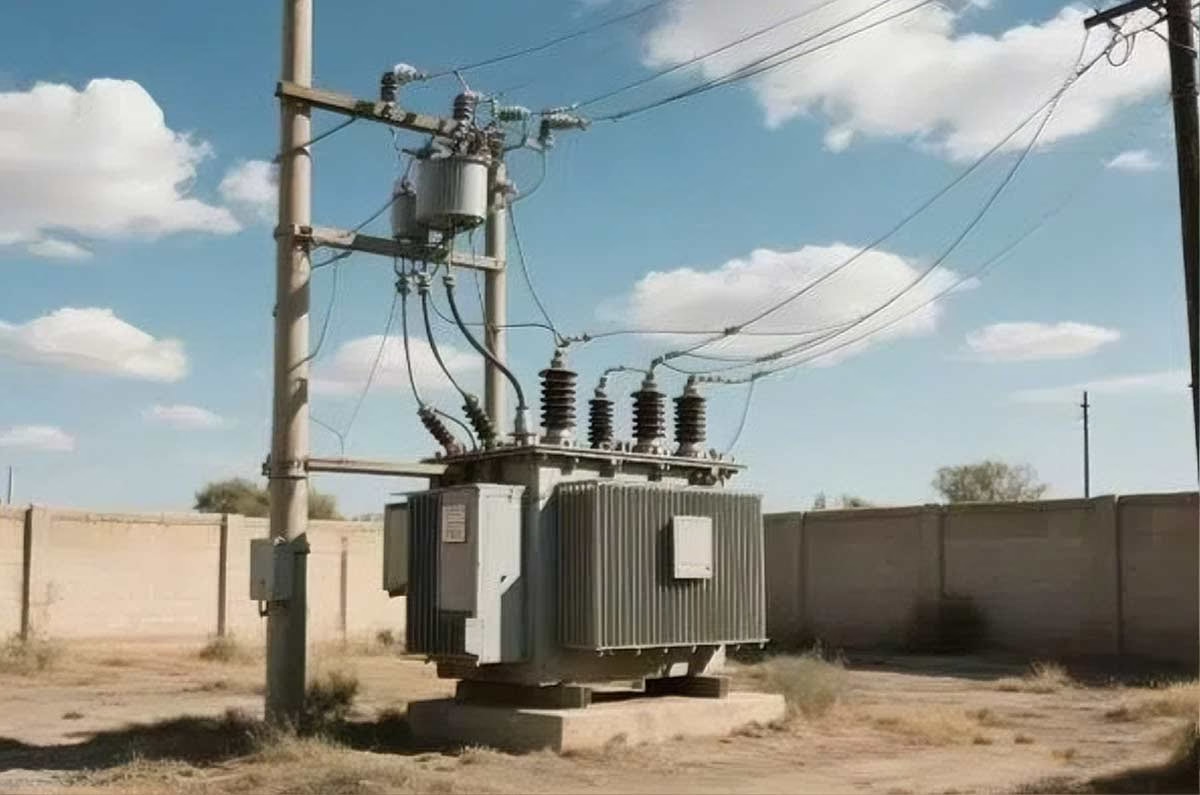
Matching sizes means understanding the distinct power requirements of each setting. Residential areas thrive with smaller, more distributed transformers, while industrial sites need high-capacity units built for heavy loads. The right match ensures efficient power delivery, minimizes energy loss, and keeps voltage stable.
| Setting | Typical Size Range | Key Considerations |
|---|---|---|
| Residential | 25-100 kVA | Load diversity, future EV charging needs |
| Commercial | 100-500 kVA | Peak load management, voltage regulation for electronics |
| Industrial | 500+ kVA | Continuous heavy-load handling, custom application needs |
| Specialized | Varies | Application-specific requirements (e.g., high reliability, harmonic mitigation) |
Let’s explore how sizing varies across common settings and why it matters:
Residential Areas: Powering Homes Efficiently
Residential transformers are designed for the consistent, moderate loads of households.
Key characteristics:
- Compact size (25-100 kVA) to fit in neighborhood spaces
- Optimized for load diversity (not all homes use max power simultaneously)
- Often serving multiple households to maximize efficiency
Commercial Zones: Supporting Business Operations
Commercial spaces have more variable loads—think retail stores with peak shopping hours or offices with computer networks.
Critical needs:
- Medium-capacity units (100-500 kVA)
- Ability to handle sudden load spikes
- Enhanced voltage regulation to protect sensitive equipment (e.g., POS systems, servers)
Industrial Facilities: Powering Heavy Machinery
Industrial sites demand transformers built for continuous, high-intensity use.
Essential requirements:
- Large capacity (500 kVA and above)
- Durability for harsh operating conditions
- Customizable to specific industrial processes (e.g., motor starting, high-heat environments)
Specialized Applications: Meeting Unique Demands
Some settings require transformers with niche capabilities to address specific challenges.
Examples of specialized needs:
- Data centers: High efficiency, harmonic mitigation, and 24/7 reliability
- Renewable energy installations: Bidirectional power flow for solar/wind integration
- Healthcare facilities: Uninterrupted power, low noise, and compliance with medical equipment standards
I recently worked on a mixed-use development project that perfectly illustrated the importance of tailored sizing. The complex included residential apartments, retail spaces, and a small manufacturing unit. The developer initially wanted a single large transformer to cut costs, but our analysis showed this would cause inefficiencies and reliability issues.
For the residential area, we installed multiple 50 kVA transformers strategically placed throughout the complex. This approach allowed for better load management—if one transformer failed, only a portion of the residences were affected—and we sized them to accommodate future EV charging stations.
The retail spaces presented a different challenge: their power use spiked during holidays and weekend shopping hours. We chose 200 kVA transformers with strong overload capacity and enhanced voltage regulation to protect sensitive electronics like cash registers and inventory systems.
The manufacturing unit was the most demanding, requiring a 750 kVA industrial-grade transformer. It needed to handle the high starting currents of large motors and had extra cooling capacity for continuous heavy loads. We also incorporated K-rated transformers in the retail and manufacturing areas to address harmonic issues from non-linear loads like LED lighting and machinery.
The results were striking: energy efficiency improved across the board, maintenance costs dropped, and each area received power optimized for its specific needs. This project reinforced that sizing isn’t just about total load—it’s about understanding how power is used in each space.
For residential areas, I now always factor in load diversity—since not all homes draw maximum power at the same time, smaller, distributed transformers are often more efficient. For commercial spaces, future expansion is a key consideration: in one shopping center project, we added 20% extra capacity, which paid off when stores upgraded to energy-intensive equipment a few years later.
Industrial settings have taught me the value of redundancy. In a recent factory project, we installed two transformers, each capable of handling 60% of the total load. This N+1 redundancy ensured production could continue even if one transformer failed.
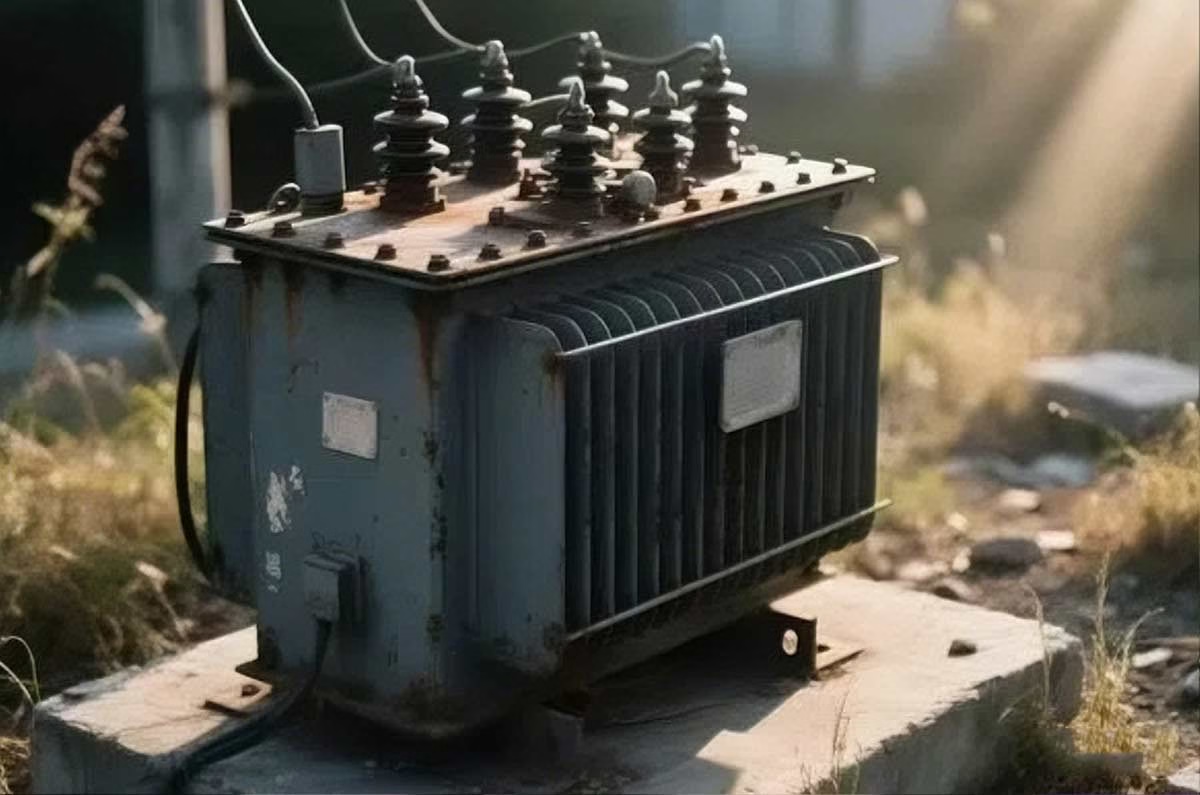
Specialized applications require creative thinking. For a data center, we used low-loss, high-efficiency transformers with advanced cooling systems— the higher upfront cost was justified by long-term energy savings and minimal downtime.
Future-Proofing Your Power: Choosing a Transformer That Grows With You
Worried about your power system becoming obsolete as your needs evolve? It’s a common concern—many businesses face costly upgrades just a few years after installation. But what if your transformer could adapt to growth instead of requiring full replacement?
Future-proofing means selecting transformers with scalable capacity, adaptable features, and compatibility with emerging technologies. A future-ready transformer ensures long-term reliability, reduces upgrade frequency, and offers flexibility as your power needs change.
| Future-Proofing Aspect | Key Benefits | Implementation Considerations |
|---|---|---|
| Scalable Capacity | Accommodates growth without full replacement | Higher initial investment but lower long-term costs |
| Smart Technology Integration | Enables remote monitoring and proactive maintenance | Requires basic IT infrastructure for connectivity |
| Renewable Energy Compatibility | Supports green energy adoption | May need additional harmonic mitigation tools |
| Enhanced Efficiency | Reduces operational costs over time | Aligns with evolving energy efficiency standards |
Let’s explore actionable strategies to choose a transformer that grows with your business:
Scalable Capacity: Building in Room to Expand
Scalability is the cornerstone of future-proofing—your transformer should handle growth without being replaced.
Scalability features to look for:
- Modular design that allows adding capacity incrementally
- Oversized cooling systems to support expanded loads
- Tap changers for easy voltage adjustment as needs change
Smart Technology Integration: Preparing for Digitalization
Modern transformers should integrate with smart grid technologies to stay relevant.
Smart features worth investing in:
- Real-time digital monitoring for performance tracking
- Remote control and diagnostic capabilities
- Compatibility with energy management systems (EMS)
Renewable Energy Readiness: Embracing Green Power
As renewable energy use grows, your transformer should handle bidirectional power flow and unique load characteristics.
Renewable-ready capabilities:
- Ability to manage power flow from solar panels or wind turbines
- Harmonic mitigation to address power quality issues from renewables
- Compatibility with energy storage systems (ESS)
Efficiency Beyond Standards: Staying Ahead of Regulations
Choosing a transformer that exceeds current efficiency standards future-proofs against stricter regulations and rising energy costs.
Efficiency-focused design elements:
- High-grade core materials (e.g., amorphous steel) to reduce no-load losses
- Low-loss winding designs for improved load efficiency
- Advanced cooling technologies to maintain performance at higher loads
I recently collaborated with a fast-growing tech startup that needed a power solution to keep up with their expansion. Initially, they wanted a standard transformer sized for their current needs, but after reviewing their growth projections—they planned to double their team and equipment in three years—we knew a short-term solution would lead to costly replacements.
Instead, we recommended a modular transformer system. We started with a base unit that met their immediate needs but could easily integrate additional modules as they grew. The cooling system was oversized from the start, designed to handle the heat of expanded capacity. We also added an advanced tap changer, allowing them to adjust voltage as their load characteristics evolved.
Smart monitoring was another key addition. The system provided real-time data on load patterns, efficiency, and performance, helping the team make informed decisions about when to add capacity. It also enabled remote diagnostics, reducing maintenance downtime.
We also ensured the transformer was renewable-ready. The startup planned to install rooftop solar panels within two years, so we included bidirectional power flow capabilities and harmonic mitigation tools. This meant when the solar system was added, the transformer seamlessly integrated it without additional upgrades.
The results spoke for themselves: over five years, the startup doubled their power needs, but instead of replacing the transformer, they simply added two modules. The smart monitoring system alerted them to peak load times, allowing them to optimize usage and reduce costs. When the solar panels were installed, the integration was smooth—no downtime or system reconfigurations needed.
This project taught me that future-proofing isn’t just about adding extra capacity—it’s about flexibility. Now, I always ask clients about their long-term plans, even if they’re unsure. Scenario planning helps: we create conservative, moderate, and aggressive growth models to design a system that adapts to any outcome.
Staying updated on emerging technologies is also critical. In a recent project, we added provisions for large-scale battery storage, anticipating the growing trend of pairing storage with renewables. For clients in regulated industries, we prioritize transformers that exceed current efficiency standards, ensuring compliance with future regulations.
The “Just Right” Transformer: Balancing Size, Performance, and Cost
Ever felt stuck between choosing a transformer that’s too small (risking overloads) or too large (wasting money and energy)? It’s like searching for the perfect fit—too much or too little, and you compromise on performance.
Finding the “just right” size means balancing current needs, future growth, efficiency, and practical constraints. It requires precise load analysis, understanding peak demand patterns, and aligning the transformer’s capabilities with your unique operational needs. The ideal size delivers optimal performance, minimizes energy waste, and keeps costs in check—now and in the future.
| Sizing Scenario | Key Risks | Potential Consequences |
|---|---|---|
| Undersized | Overheating, voltage instability | System failures, shortened lifespan, costly downtime |
| Oversized | Higher no-load losses, inefficient operation | Wasted energy, higher initial costs, poor ROI |
| Optimal | Balanced losses, peak efficiency | Lower operational costs, extended lifespan, adaptability |
Let’s break down how to apply this “Goldilocks principle” to transformer sizing:
Load Analysis: Going Beyond Total Power Needs
Accurate load analysis is the foundation of finding the right size—it’s not just about total wattage, but how power is used.
Critical analysis points:
- Average load consumption (day-to-day usage)
- Peak load periods (when demand is highest)
- Load diversity and operating patterns (e.g., do loads run simultaneously?)
Future Growth: Balancing Now and Later
The perfect size should meet current needs while leaving room for growth—without being overly large.
Growth-focused questions to ask:
- What’s the projected increase in power use over 5-10 years?
- Will new equipment or facilities be added?
- How might industry trends (e.g., EV adoption, automation) impact demand?
Efficiency Curves: Finding the Sweet Spot
Transformers have efficiency curves—they perform best at a specific load range. Understanding this helps you avoid sizing that leads to constant inefficiency.
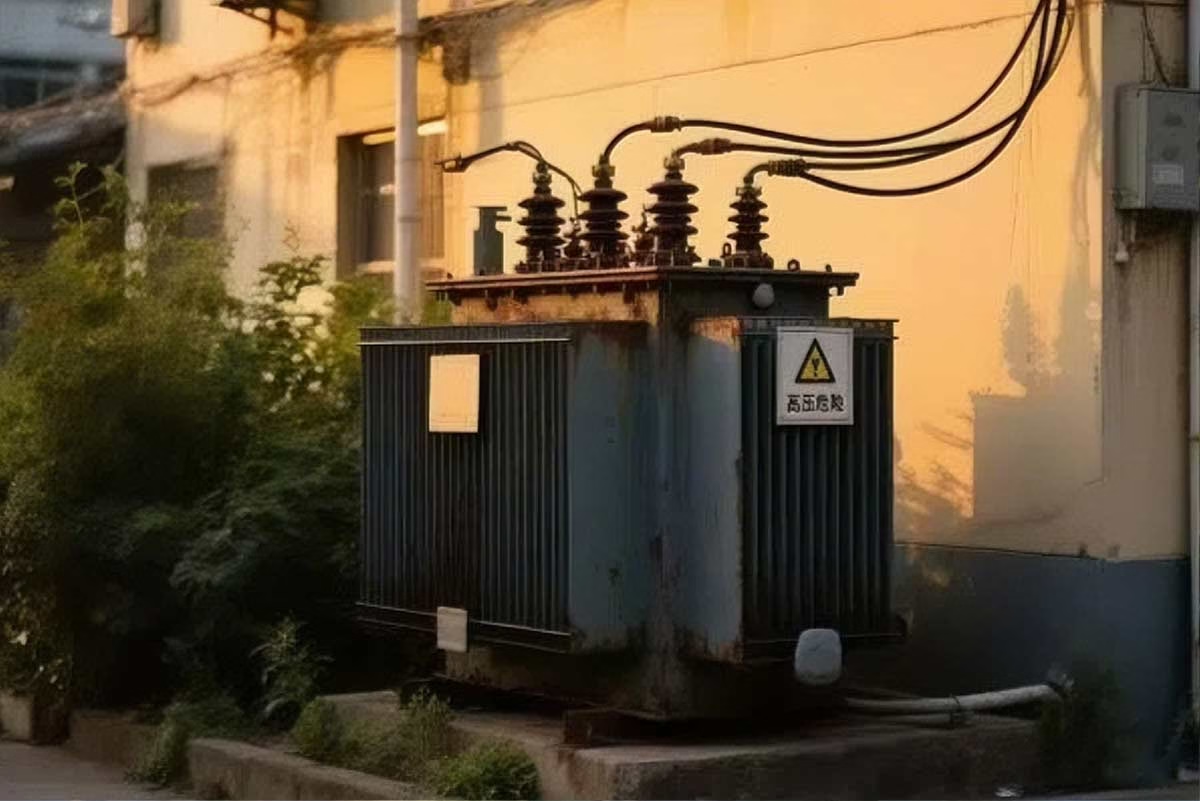
Efficiency factors to evaluate:
- Peak efficiency point (where losses are minimized)
- How efficiency holds up across different load levels
- Alignment with your typical load profile
Practical Constraints: Fitting the Transformer to Your Space
Even the best-sized transformer won’t work if it can’t fit in your installation space or handle environmental conditions.
Practical considerations:
- Available physical space (indoor vs. outdoor installation)
- Ambient temperature and cooling capabilities
- Noise and EMF restrictions (e.g., for residential or healthcare settings)
I recently worked on a challenging project that perfectly demonstrated this balance: a new office complex with standard offices, a data center, and plans for future EV charging stations. The mix of consistent loads (data center), variable loads (offices), and future needs (EV charging) made it a classic “Goldilocks” scenario.
First, we conducted a detailed load analysis. We tracked expected power use for each area, noting that the data center had a steady load while offices peaked during work hours. The wild card was the EV charging stations—they weren’t part of the initial build but were planned within 18 months.
We used modeling software to create a load profile that mapped usage throughout the day, week, and year. This showed us not just total demand, but how loads overlapped (e.g., office peak hours coincided with data center stability, but EV charging would add evening demand).
For future growth, we collaborated with the developers to confirm their 5-year plans: 20% more office occupancy, a potential data center expansion, and 10 EV charging stations. We factored in these variables to avoid sizing that would become obsolete quickly.
Efficiency curve analysis was key. We compared three transformer sizes: 1500 kVA (too small for future needs), 2500 kVA (oversized, with high no-load losses), and 2000 kVA (which aligned with our peak load projections and operated at 98% efficiency during typical use).
Practical constraints also shaped our choice. The transformer needed to fit in a basement with limited ventilation. We opted for an amorphous core design—more compact than traditional cores—with an advanced cooling system to handle the basement’s temperature constraints.
The result? A 2000 kVA transformer that handled current loads efficiently, accommodated the EV charging stations when they were added 18 months later, and still had room for the planned office expansion. It operated near its peak efficiency point 85% of the time, reducing energy waste and operational costs.
This project taught me that finding the “just right” size is a holistic process. Now, I use scenario planning for every client—creating best-case, worst-case, and most-likely load scenarios to test different sizes. For projects with uncertain future needs, I often recommend modular or dual-transformer setups (two smaller units instead of one large one) for flexibility and redundancy.
I also always calculate the total cost of ownership (TCO), not just upfront price. A slightly larger, more efficient transformer may cost more initially but saves significantly on energy bills over its 20-30 year lifespan.
Size vs. Efficiency: Debunking the “Bigger Is Better” Myth
Is a larger transformer always more efficient? Or does a smaller unit perform better for your needs? The truth is, size and efficiency have a nuanced relationship—bigger isn’t always better, and smaller can be risky. The key is matching size to your actual load profile.
Transformer size directly impacts efficiency, but the relationship isn’t linear. Oversized transformers waste energy through higher no-load losses (even when idle), while undersized units struggle with load losses (especially during peaks) and risk overheating. The optimal size aligns with your typical load, minimizing both types of losses.
Let’s unpack how size affects efficiency and how to make the right choice:
No-Load Losses: The Hidden Cost of Oversizing
Oversized transformers have larger cores and windings, which means more energy is lost even when they’re not carrying full load.
What causes no-load losses:
- Core material and size (larger cores = more magnetic losses)
- Magnetic flux density (how efficiently the core conducts magnetism)
- Operating voltage (higher voltage = slightly higher no-load losses)
Load Losses: The Risk of Undersizing
Undersized transformers work harder to meet demand, leading to increased heat and energy waste.
Key load loss factors:
- Winding resistance (smaller windings = higher resistance = more heat)
- Eddy currents (induced currents in the core that increase with load)
- Stray losses (energy lost to magnetic fields, worsened by overloading)
Efficiency Curves: Why “Just Right” Matters
Every transformer has an efficiency curve that peaks at a specific load range (typically 50-75% of rated capacity). Sizing to this range ensures you’re operating at maximum efficiency.
How to use efficiency curves:
- Identify your typical load level (e.g., do you run at 60% capacity most of the time?)
- Choose a transformer where this level aligns with the peak efficiency point
- Avoid sizes where your typical load is below 30% (oversized) or above 90% (undersized)
Long-Term Cost: Balancing Upfront and Operational Expenses
The right size impacts more than just monthly energy bills—it shapes your total cost of ownership over the transformer’s lifespan.
Cost factors to weigh:
- Upfront purchase price (larger transformers cost more initially)
- Energy costs (inefficient sizing = higher bills over 20-30 years)
- Maintenance and replacement costs (oversized units may need less maintenance, but undersized ones fail faster)
I once worked with a medium-sized manufacturing plant struggling with high energy costs. During an audit, we discovered they’d installed a significantly oversized transformer during a recent expansion—following the “bigger is better” mindset to accommodate future growth.
Our analysis revealed that the transformer operated at just 40-60% of its capacity most of the time, with no-load losses accounting for 15% of their monthly electricity bill. We conducted a load study over four weeks, tracking usage patterns and identifying that their actual peak demand was 30% lower than the transformer’s rated capacity.
Using this data, we modeled efficiency for three smaller sizes. A 700 kVA transformer (down from 1000 kVA) aligned with their typical load profile, operating at peak efficiency 75% of the time. We presented a cost-benefit analysis showing that the energy savings would recoup the cost of the new transformer in just 18 months.
The plant was skeptical at first—they worried about losing “safety margin”—but we demonstrated that the 700 kVA unit still had 10% extra capacity for peak periods and future growth. They agreed to the swap, and within a year, their energy costs related to transformer losses dropped by 18%. The new transformer ran cooler, reducing maintenance needs and extending its expected lifespan.
This project taught me to challenge the “bigger is better” myth. Now, I always emphasize to clients that efficiency comes from alignment, not size. I use load duration curves (which show how often different load levels occur) to select sizes that perform well across typical usage, not just peak demand.
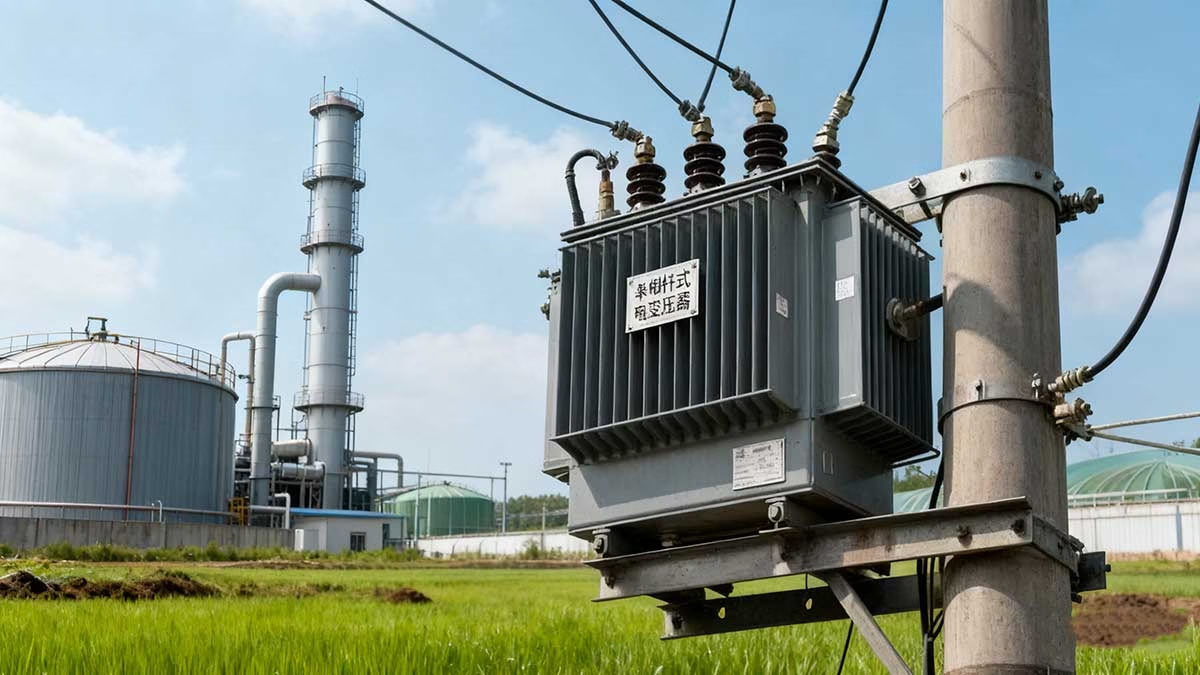
For clients with variable loads, I often recommend multiple smaller transformers instead of one large unit. This “banking” approach allows them to activate additional transformers during peaks and shut down units during low demand, minimizing no-load losses.
Smart monitoring systems are another game-changer. They provide real-time data on efficiency, allowing clients to adjust operations and catch issues early. For example, one client used monitoring data to shift non-critical loads to off-peak hours, improving transformer efficiency by 12%.
Conclusion
Choosing the right pad mounted transformer size is a critical decision that impacts efficiency, reliability, and cost-effectiveness. It requires moving beyond one-size-fits-all thinking to analyze your specific load patterns, future growth plans, efficiency needs, and environmental constraints.
The ideal transformer isn’t just the biggest or cheapest option—it’s the one that balances current performance with long-term adaptability. By focusing on load alignment, scalability, and efficiency curves, you can select a transformer that delivers optimal results for years to come, avoiding costly upgrades, energy waste, and system failures.
Whether you’re powering a residential community, commercial space, industrial facility, or specialized application, the key is to approach sizing as a holistic process—one that considers how your power needs evolve, not just what they are today.