
Regional preferences for dry type transformer types are far from universal—geography, regulations, and industry needs shape distinct preferences worldwide. The U.S. leans heavily on Vacuum Pressure Impregnated (VPI) transformers for their cost-efficiency. Europe prioritizes cast resin transformers, driven by strict fire safety and environmental rules. Asia adopts a hybrid approach: cast resin gains traction in urban centers, while VPI remains a staple in industrial settings, fueled by rapid development.
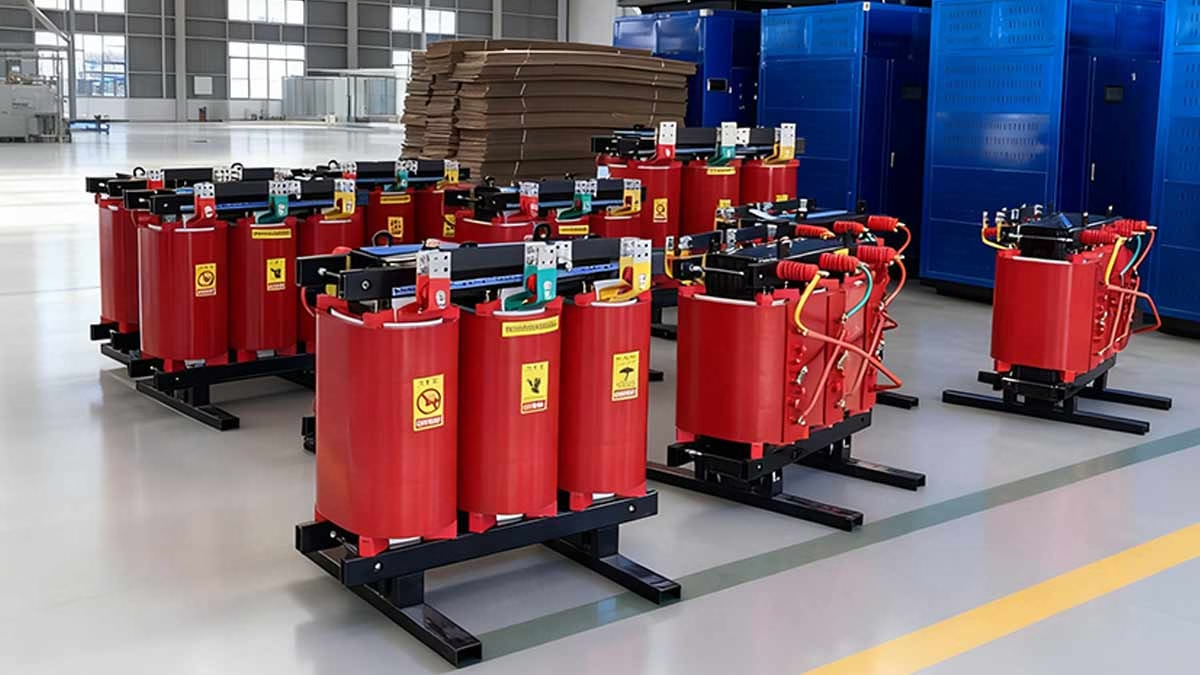
With deep expertise in global transformer markets, we break down the forces behind these regional differences—from market dynamics and regulations to climate and industry demands—providing actionable insights for infrastructure planning and product selection.
Contents
hide
Market Dynamics: Dry Type Transformer Adoption Across the USA, Europe, and Asia
Dry type transformer adoption varies dramatically by region, reflecting unique economic priorities and growth drivers. Europe leads with a 45% market share, followed by the U.S. at 35% and Asia at 30%—though Asia’s growth rate outpaces both, expanding 7–8% annually. These numbers tell a story of regional needs: Europe’s regulatory rigor, America’s urban expansion, and Asia’s industrial boom.
USA: Steady Growth Fueled by Urbanization & Tech
- Market Snapshot: Dry type transformers account for 35% of the U.S. transformer market, with VPI models dominating 60% of dry type installations. Adoption has climbed 5% over the past decade, driven by urban retrofits and data center expansion.
- Key Drivers: New York City’s skyline renovations, for example, now see 80% of new transformer installations as dry type—VPI units are favored for their balance of cost and performance in commercial high-rises. The data center sector, particularly in Silicon Valley, has boosted demand for reliable, compact dry type models.
- Challenges: Rural areas still prefer liquid-filled transformers for cost reasons, and lower population density slows dry type adoption in heartland regions.
Europe: Regulatory Leadership Drives Cast Resin Dominance
- Market Snapshot: Dry type transformers hold a 45% market share, with cast resin models capturing 70% of dry type sales. In Germany, 90% of new indoor installations opt for cast resin—an industry benchmark for safety-focused markets.
- Key Drivers: Strict fire safety rules for urban buildings and environmental mandates push demand for cast resin’s non-toxic, fire-resistant properties. Denmark’s wind farms, for instance, exclusively use cast resin transformers to withstand coastal conditions and meet sustainability goals.
- Trends: Integration with renewable energy and smart grid tech is accelerating—IoT-enabled cast resin transformers are now standard in European grid upgrades.
Asia: Rapid Expansion with Mixed Preferences
- Market Snapshot: Dry type adoption sits at 30% but grows 7–8% yearly, led by China and India. Urban projects split evenly between cast resin and VPI, while rural areas lean toward cost-effective VPI or liquid-filled models.
- Key Drivers: Shanghai’s residential developments now mandate dry type transformers, driving cast resin adoption in cities. India’s industrial parks, by contrast, favor VPI for balancing performance and budget in manufacturing settings.
- Challenges: Price sensitivity in rural markets and varied national regulations create inconsistency—for example, rural India still relies on liquid-filled transformers, while Bangalore’s tech hubs demand high-efficiency dry type units.
| Region | Dry Type Market Share | Dominant Model | Annual Growth Rate |
|---|---|---|---|
| USA | 35% | VPI (60%) | 2–3% |
| Europe | 45% | Cast Resin (70%) | 3–4% |
| Asia | 30% | Mixed (50/50) | 7–8% |
Regulatory Influences: How Regional Policies Shape Transformer Choices
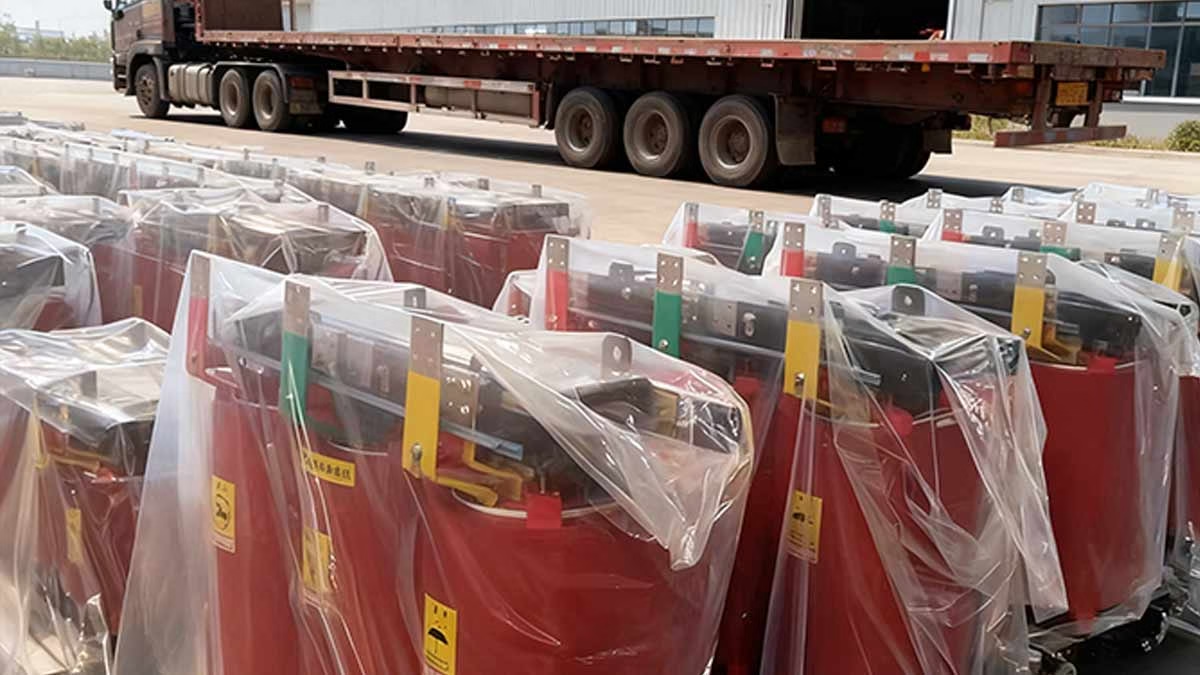
Regulations are the backbone of regional transformer preferences—setting standards for safety, efficiency, and environmental impact that directly guide selection. From U.S. energy efficiency mandates to Europe’s fire safety rules, policy dictates which transformer types thrive in each market.
USA: Efficiency & Safety as Regulatory Pillars
- DOE Energy Efficiency Standards: Mandate minimum efficiency levels that push manufacturers to optimize core materials. For a Texas commercial building project, complying with DOE standards added 15% to upfront costs but cut energy losses by 30%—a long-term win for the client.
- National Electrical Code (NEC): Shapes installation requirements, particularly for space-constrained projects. A Houston hospital renovation opted for VPI transformers due to NEC guidelines favoring compact, easy-to-install models in healthcare facilities.
- EPA Guidelines: Encourage eco-friendly materials, driving demand for VPI transformers with biodegradable insulation and low environmental impact.
Europe: Stringent Rules for Safety & Sustainability
- EU Ecodesign Directive: Sets strict efficiency thresholds that favor high-performance cast resin transformers. A Berlin grid upgrade project used cast resin units exceeding Ecodesign requirements by 10%, ensuring compliance and long-term savings.
- Fire Safety Regulations: Urban areas and public buildings mandate fire-resistant transformers—cast resin’s self-extinguishing properties make it the default. A Paris metro expansion exclusively used cast resin transformers to meet strict underground fire safety codes.
- REACH Regulations: Restrict harmful chemicals, spurring innovation in resin formulations. European manufacturers now produce REACH-compliant resins that boost thermal performance while reducing environmental risk.
Asia: Diverse Policies for Rapid Development
- China’s Energy Efficiency Standards: Align with global benchmarks but adapt to regional needs. A Shanghai industrial park saw 40% more cast resin installations after new standards prioritized efficiency and urban safety.
- India’s Bureau of Indian Standards (BIS): Balances quality, safety, and cost-effectiveness. A rural electrification project used VPI transformers to meet BIS standards without exceeding budget constraints.
- Japan’s Top Runner Program: Sets ambitious efficiency targets, driving innovations in both VPI and cast resin designs. Japanese manufacturers lead in compact, ultra-efficient models ideal for dense urban areas.
| Region | Key Regulations | Primary Focus | Transformer Preference |
|---|---|---|---|
| USA | DOE Standards, NEC | Efficiency, Installation Safety | VPI (cost + compliance) |
| Europe | Ecodesign, Fire Safety, REACH | Safety, Sustainability | Cast Resin (non-negotiable in urban settings) |
| China | National Energy Efficiency Standards | Efficiency, Urban Safety | Growing cast resin adoption |
| India | BIS Standards | Cost-Effective Quality | Mixed (VPI for rural, cast resin for urban) |
| Japan | Top Runner Program | Ultra-Efficiency | Compact VPI/cast resin hybrids |
Environmental Factors: Climate & Geography’s Role in Transformer Selection
Climate and geography dictate transformer performance requirements—from salt-laden coastal air to extreme temperatures and high altitudes. Regional environmental challenges directly influence whether VPI or cast resin transformers are the better fit.
USA: Adapting to Extreme Climate Diversity
- Coastal Regions (Florida, California): High humidity and salt spray demand corrosion-resistant designs. A Miami commercial tower project used VPI transformers with specialized marine-grade coatings to withstand hurricane conditions and salt exposure.
- Arid Southwest (Arizona, Nevada): Extreme heat (up to 50°C) and dust require enhanced cooling and filtration. A Phoenix solar farm opted for VPI transformers with sealed enclosures and upgraded cooling systems to prevent dust ingress and overheating.
- Cold Northern Regions (Alaska, Minnesota): Sub-zero temperatures (-40°C) and thermal cycling favor cast resin’s durability. An Alaskan substation upgrade used cast resin transformers to resist thermal shocks from rapid temperature changes.
Europe: Temperate Climates & Urban-Centric Needs
- Temperate Zones (Germany, France): Moderate temperatures with mild fluctuations make cast resin the go-to for stability. A Munich manufacturing plant chose cast resin transformers for consistent performance across seasons—from freezing winters to warm summers.
- Alpine Regions (Switzerland, Austria): High altitudes (2,000+ meters) and cold require specialized insulation. A Swiss ski resort installed cast resin transformers rated for thin air, ensuring full capacity at high elevations.
- Mediterranean Coastal Areas (Greece, Italy): Humidity and salt air call for moisture-resistant designs. A Greek island power project used VPI transformers with hydrophobic coatings to prevent moisture damage.
Asia: Navigating Extreme & Varied Conditions
- Tropical Southeast Asia (Singapore, Malaysia): High heat (35°C+) and humidity (80%+) demand robust cooling and moisture protection. A Singapore data center used cast resin transformers with enhanced ventilation and sealed windings to avoid humidity-related failures.
- Arid Central Asia (Kazakhstan, Uzbekistan): Extreme heat and dust require dust-tight enclosures. A Kazakhstan oil field project installed VPI transformers with HEPA filters to block industrial dust and sand.
- Himalayan Regions (Nepal, Bhutan): High altitudes and cold temperatures need altitude-compensated designs. A Nepalese hydroelectric project used cast resin transformers calibrated for reduced air density, ensuring reliable performance at 3,000+ meters.
| Region | Key Environmental Challenges | Preferred Transformer Type | Critical Features |
|---|---|---|---|
| USA Coastal | Salt spray, humidity | VPI (coated) | Corrosion resistance |
| USA Southwest | Extreme heat, dust | VPI | Enhanced cooling, dust filtration |
| Europe Alpine | High altitude, cold | Cast Resin | Altitude-rated insulation |
| Asia Tropical | Heat, humidity | Cast Resin | Sealed windings, advanced cooling |
| Asia Arid | Heat, industrial dust | VPI | Dust-tight enclosures |
| Himalayas | High altitude, cold | Cast Resin | Altitude compensation, thermal stability |
Industrial Applications: Regional Sector-Specific Transformer Usage
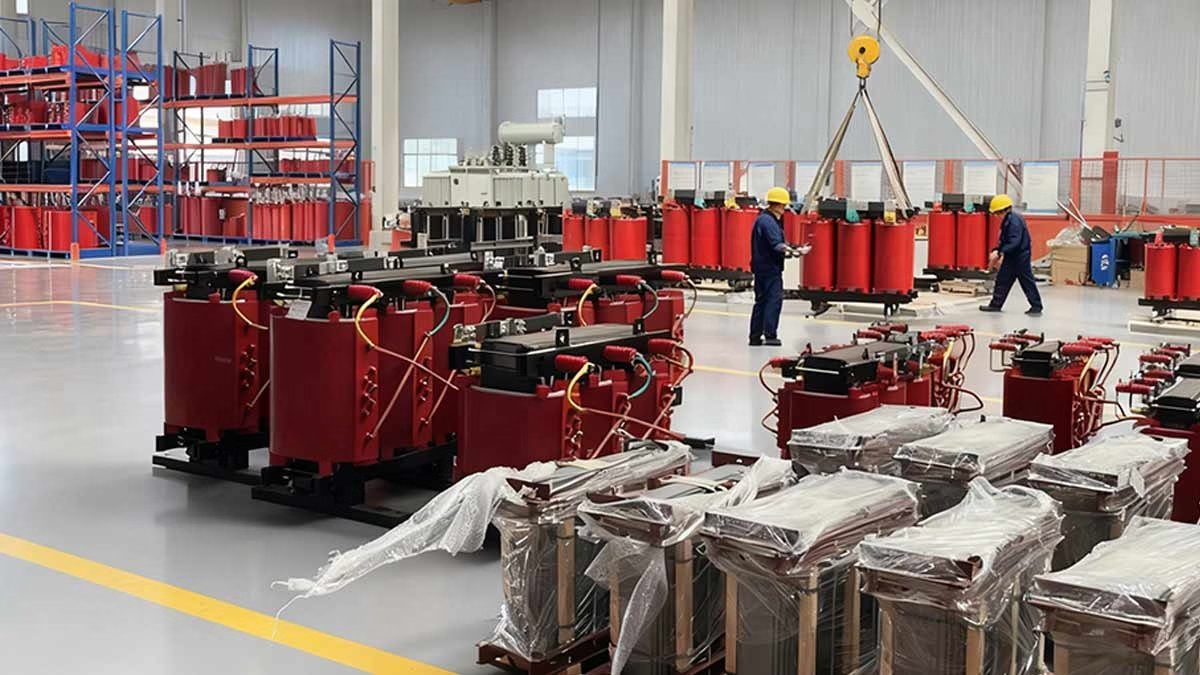
A region’s industrial focus directly shapes its transformer needs—data centers drive demand in the U.S., renewable energy in Europe, and manufacturing in Asia. Each sector prioritizes different transformer traits, from cost to safety to compactness.
USA: Commercial, Tech, & Healthcare Leadership
- Data Centers: Cast resin transformers dominate (70%) for reliability and fire safety. A Silicon Valley hyperscale data center installed modular cast resin units to support scalable computing loads and meet strict fire codes.
- Commercial Buildings: VPI transformers lead (65%) for cost-efficiency. A Chicago skyscraper used smart VPI transformers with real-time monitoring to optimize energy use in office spaces and retail outlets.
- Healthcare Facilities: Cast resin (70%) is preferred for low noise and electromagnetic interference (EMI). A Boston hospital upgrade used shielded cast resin transformers to protect MRI machines and other sensitive medical equipment.
Europe: Renewable Energy & Transportation Focus
- Wind Energy: Cast resin transformers (80%) excel in offshore environments. A North Sea wind farm used compact cast resin units designed to withstand salt spray, vibration, and limited maintenance access.
- Rail Transportation: Cast resin (75%) is favored for lightweight, compact designs. A French high-speed rail project installed ultra-slim cast resin transformers in train cars to reduce weight and boost energy efficiency.
- Industrial Automation: Mixed usage (50/50) balances precision and cost. A German automotive plant used small VPI transformers to power robotic assembly lines, leveraging their stable voltage regulation for precise operations.
Asia: Manufacturing & Urban Infrastructure Growth
- Electronics Manufacturing: Cast resin adoption is rising for stable power. A Chinese semiconductor fab used specialized cast resin transformers with ±0.5% voltage regulation to protect sensitive chip-making equipment.
- Urban Transportation: Cast resin (70%) leads for fire safety. The Bangkok Metro expansion used fire-resistant cast resin transformers in underground substations, aligning with urban safety mandates.
- Petrochemical Industry: Dry type transformers are replacing liquid-filled models. An Indian refinery upgraded to explosion-proof dry type transformers, reducing fire risk in hazardous processing areas.
| Sector | USA | Europe | Asia |
|---|---|---|---|
| Data Centers | Cast Resin (70%) | Cast Resin (60%) | VPI (55%) |
| Commercial Buildings | VPI (65%) | Cast Resin (55%) | Mixed (50/50) |
| Renewable Energy | Mixed (50/50) | Cast Resin (80%) | VPI (60%) |
| Transportation | VPI (60%) | Cast Resin (75%) | Cast Resin (70%) |
| Manufacturing | VPI (55%) | Mixed (50/50) | VPI (65%) |
| Healthcare | Cast Resin (70%) | Cast Resin (80%) | Cast Resin (60%) |
Technological Trends: Emerging Innovations & Regional Adoption
Dry type transformer technology is evolving rapidly—with smart monitoring, advanced materials, and compact designs leading the way. Regional adoption rates reflect local priorities: efficiency in the U.S., sustainability in Europe, and cost-effectiveness in Asia.
Smart Monitoring & Diagnostics
- USA: Leading adoption (70%) driven by grid modernization. A California utility integrated IoT-enabled transformers into its network, cutting unexpected outages by 30% via predictive maintenance alerts.
- Europe: Moderate adoption (50%) focused on smart grid integration. A German industrial park used AI-driven diagnostic systems to optimize transformer performance across its manufacturing facilities.
- Asia: Growing adoption (45%) in urban developments. A Shanghai smart city project installed transformers with real-time load management, helping balance power demand in dense residential areas.
High-Temperature Superconducting (HTS) Transformers
- USA: Limited commercial use (5%) but active R&D. A California research facility tested HTS transformers, achieving 40% space savings compared to conventional models—critical for urban substations.
- Europe: Pilot projects (7%) focus on urban applications. A London compact substation used HTS transformers to reduce footprint while maintaining high capacity.
- Asia: Minimal adoption (2%) but rising interest in Japan and South Korea for high-density urban areas.
Nano-Composite Materials
- Europe: Leading adoption (35%) for eco-friendly designs. A Danish wind farm used bio-based nano-composite insulation, improving thermal performance by 15% while reducing environmental impact.
- USA: Moderate use (30%) in high-tech sectors. A Texas data center used nano-composite core transformers, cutting energy losses by 20%.
- Asia: Low adoption (20%) but mass production capabilities in China, driving cost reductions for future scalability.
Solid-State Transformers
- Europe: Early adoption (12%) in EV charging. A Norwegian EV charging network tested solid-state transformers for fast response times, optimizing power delivery for rapid charging.
- USA: Pilot projects (10%) in renewable integration. An Arizona solar farm is testing solid-state transformers to handle variable solar output more efficiently.
- Asia: Minimal use (5%) but research focus on compact, high-power designs for urban industrial parks.
| Technology | USA Adoption | Europe Adoption | Asia Adoption | Key Regional Driver |
|---|---|---|---|---|
| Smart Monitoring | 70% | 50% | 45% | Grid resilience (USA), smart grids (Europe), urban demand (Asia) |
| HTS Transformers | 5% | 7% | 2% | Urban space savings (USA/Europe) |
| Nano-Composite Materials | 30% | 35% | 20% | Sustainability (Europe), efficiency (USA) |
| Solid-State Transformers | 10% | 12% | 5% | Renewable integration (USA), EV charging (Europe) |
Conclusion
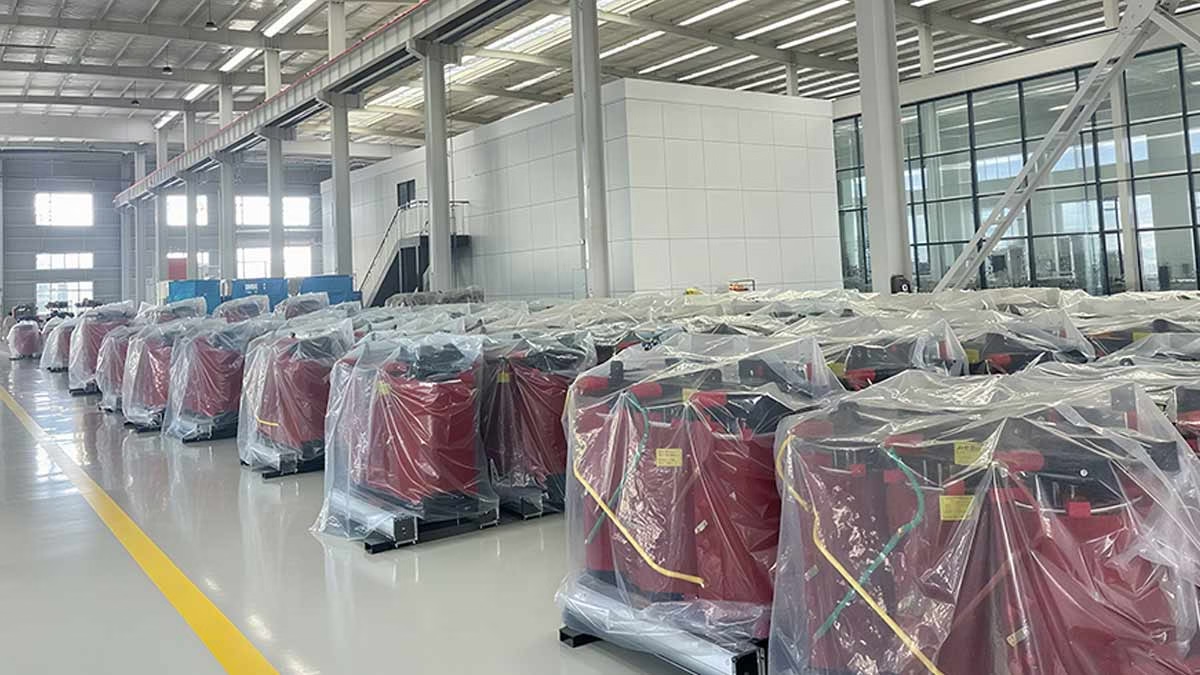
Regional preferences for dry type transformers are a product of interconnected forces—market growth, regulatory frameworks, environmental challenges, industrial needs, and technological readiness. The U.S. values cost-efficiency and efficiency in VPI transformers; Europe prioritizes safety and sustainability in cast resin models; Asia balances both to support rapid urbanization and industrialization.
Understanding these regional nuances is critical for manufacturers, engineers, and project managers alike. Whether selecting transformers for a U.S. data center, a European wind farm, or an Asian metro system, aligning choices with local priorities ensures optimal performance, compliance, and long-term value. As global energy systems evolve, these regional preferences will shift—but the core principle remains: the best transformer is the one tailored to its environment and purpose.