
As the global shift toward clean energy accelerates, power distribution transformers are undergoing a transformative shift to address the unique demands of renewable integration. Through cutting-edge voltage management, bidirectional energy flow support, and intelligent monitoring solutions, these critical grid components are now enabling seamless integration of intermittent renewables, safeguarding grid reliability, and paving the way for a sustainable energy ecosystem.
Contents
hide
Riding the Renewable Wave: Navigating Fluctuating Power Dynamics
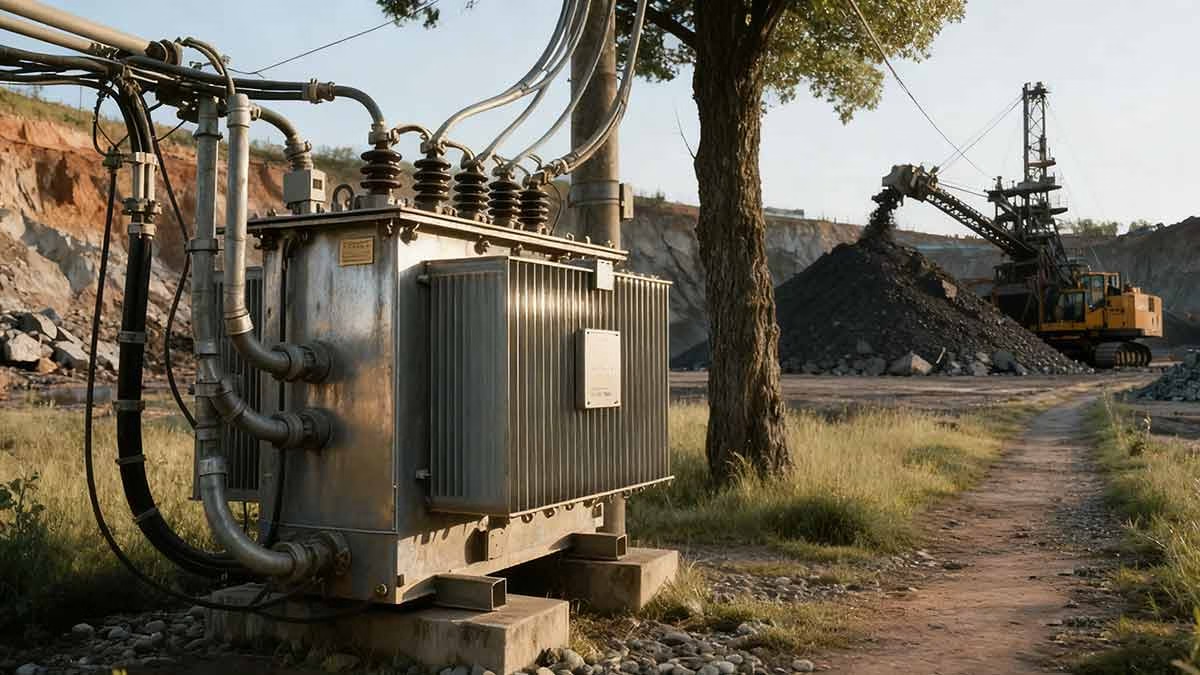
Ever pondered how our power grids maintain stability amid the unpredictable output of solar and wind energy? One moment, solar arrays are generating peak power under clear skies; the next, cloud cover or calm winds cause sudden drops. How do transformers ensure consistent electricity supply when input levels are anything but steady?
Modern transformers tackle renewable variability through three core innovations: precision voltage regulation, seamless energy storage synergy, and real-time load optimization. Leveraging advanced control logic, they balance the erratic nature of renewables with consistent power delivery—ensuring grid stability even as generation levels ebb and flow throughout the day.
Key Strategies for Taming Renewable Fluctuations
Voltage Regulation: Maintaining Steady Power Output
Renewable energy sources can trigger rapid voltage shifts, requiring transformers to respond instantaneously.
- High-speed On-Load Tap Changers (OLTC) with millisecond response times
- Static VAR compensators for reactive power management
- Dynamic voltage regulators for fine-tuned adjustments
Energy Storage Integration: Smoothing Peaks and Valleys
Transformers now work in tandem with energy storage systems to mitigate renewable intermittency:
- Lithium-ion and flow battery storage integration
- Flywheel energy storage for short-duration load balancing
- Supercapacitor technology for rapid energy discharge
Smart Load Management: Aligning Supply and Demand
Advanced algorithms enable transformers to optimize energy distribution in real time:
- Demand response program integration
- AI-powered load forecasting models
- Dynamic load shedding and shifting for non-critical applications
| Feature | Traditional Transformer | Renewable-Ready Transformer |
|---|---|---|
| Voltage Regulation | Static tap configurations | Continuous, rapid adjustment |
| Energy Storage Compatibility | None | Built-in integration capabilities |
| Load Management | Basic load handling | Predictive, algorithm-driven optimization |
To illustrate this, consider a project we undertook for a remote island community that had invested heavily in a solar farm to reduce diesel generator reliance. Initially, the community faced frequent blackouts and voltage fluctuations—especially on cloudy days—due to the limitations of their outdated transformers.
Our solution centered on deploying CHH Power’s renewable-optimized transformers equipped with high-speed OLTCs. These units adjusted voltage levels in milliseconds, counteracting the rapid changes in solar output as clouds passed. We also integrated a smart battery storage system that stored excess solar energy during peak production and released it during lulls—all managed by the transformer’s built-in control platform.
Complementing this, we implemented a predictive load management system that combined weather forecasts, historical consumption data, and real-time solar output monitoring. On days with low solar projections, the system automatically prioritized essential services by adjusting non-critical loads like street lighting and water pumping.
The results were transformative: within 30 days, voltage fluctuations and power disruptions dropped by nearly 95%, and diesel generator usage plummeted by 70%. Beyond operational improvements, the transformer’s data analytics provided actionable insights into energy usage patterns, empowering the community to optimize future renewable investments and promote energy efficiency.
This project underscored a critical truth: successful renewable integration isn’t just about generating green energy—it’s about building a flexible distribution system that adapts to renewables’ unique challenges. Transformers have evolved from passive voltage converters to active grid managers, playing a pivotal role in the energy transition.
For engineers and utility leaders, the key takeaway is to prioritize transformers with rapid voltage regulation, storage integration, and smart load management capabilities. Investing in these features delivers returns not just in improved renewable uptake, but in enhanced grid resilience and long-term cost savings.
Two-Way Street: Mastering Bidirectional Power Flow
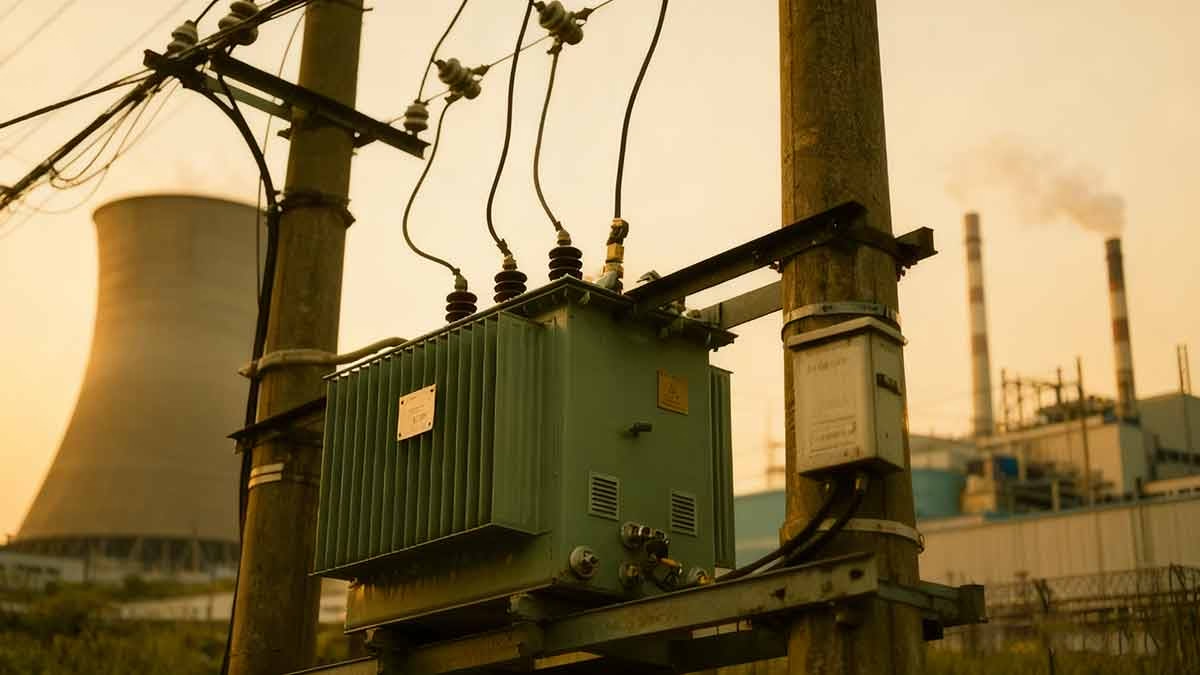
Gone are the days when electricity flowed in a single direction. With the rise of rooftop solar, home batteries, and electric vehicles (EVs), power now moves back and forth between consumers and the grid. How do transformers adapt to this bidirectional energy exchange?
Today’s transformers handle two-way power flow through advanced power electronics, adaptive control systems, and redesigned core and winding configurations. Real-time monitoring allows them to adjust operations dynamically, managing reverse power from distributed energy resources (DERs) while maintaining voltage stability and power quality for all users.
Innovations Enabling Bidirectional Flow
Redesigned for Reversibility
Traditional transformers were engineered for one-way power flow—modern units require a complete redesign:
- Symmetrical winding layouts to handle bidirectional magnetic flux
- Advanced core materials with low hysteresis losses for reverse operation
- Reinforced insulation systems to withstand reverse voltage stress
Intelligent Control: The Grid’s Traffic Managers
Bidirectional flow demands sophisticated control to prevent grid instability:
- Real-time power flow monitoring with precision sensors
- Adaptive tap changing that responds to both forward and reverse loads
- Predictive algorithms that anticipate flow shifts based on DER output and demand patterns
Power Quality Preservation
Maintaining consistent power quality in a bidirectional grid is paramount:
- Built-in harmonic filters to mitigate distortion from DERs
- Reactive power compensation for voltage stability
- Fault current limiting technologies to prevent grid disruptions
| Feature | Traditional Transformer | Bidirectional Transformer |
|---|---|---|
| Power Flow Direction | Unidirectional | Bidirectional |
| Control System | Static, rule-based | Dynamic, adaptive AI-driven |
| Core Design | Asymmetrical | Symmetrical for flux balance |
| Monitoring Capabilities | Basic voltage/current tracking | Comprehensive real-time analytics |
A suburban neighborhood project highlighted the importance of bidirectional transformer technology. The area had seen a surge in rooftop solar installations—over 40% of homes had panels—straining the existing transformers with frequent power flow reversals and voltage spikes.
Our solution involved upgrading the network with CHH Power’s bidirectional smart transformers. We redesigned the core and windings using low-loss materials and symmetrical configurations, enabling efficient operation in both directions. Each unit was equipped with multi-sensor arrays that monitored power flow, voltage levels, and harmonic distortion in real time.
The game-changing element was the transformers’ adaptive control system. Unlike traditional units that relied on fixed voltage thresholds, our platform used machine learning to predict load changes based on weather data, solar production trends, and historical usage. It preemptively adjusted taps to smooth voltage fluctuations before they occurred—even during peak reverse power flow from solar-rich homes.
We also implemented a decentralized communication network, allowing transformers to share data and coordinate operations. This peer-to-peer collaboration optimized load balancing across the grid, reducing stress on individual units and improving overall stability.
After six months, the results were clear: voltage-related complaints dropped by 40%, and the transformers reliably handled reverse power flows up to 50% of their rated capacity without performance degradation. The data collected from the transformer network also provided the utility with granular insights into local generation and consumption patterns, informing future grid upgrades and renewable energy policies.
This project demonstrated that bidirectional power flow isn’t just a technical challenge—it’s an opportunity to build a more dynamic, user-centric grid. Transformers are no longer just voltage regulators; they’re intelligent intermediaries that enable seamless energy exchange between DERs and the grid.
For utility professionals navigating the shift to distributed energy, the advice is clear: prioritize transformers designed for bidirectional operation and smart control. These technologies not only enhance grid stability but also unlock the full potential of renewable energy by enabling widespread DER adoption.
Voltage Rollercoaster: Stabilizing Grids in Renewable-Rich Environments
Ever experienced a flickering light or a device shutting down unexpectedly? Imagine that scenario scaled to an entire city. As solar and wind energy become mainstream, grids face unprecedented voltage fluctuations. How do transformers keep electricity flowing smoothly in this unpredictable landscape?
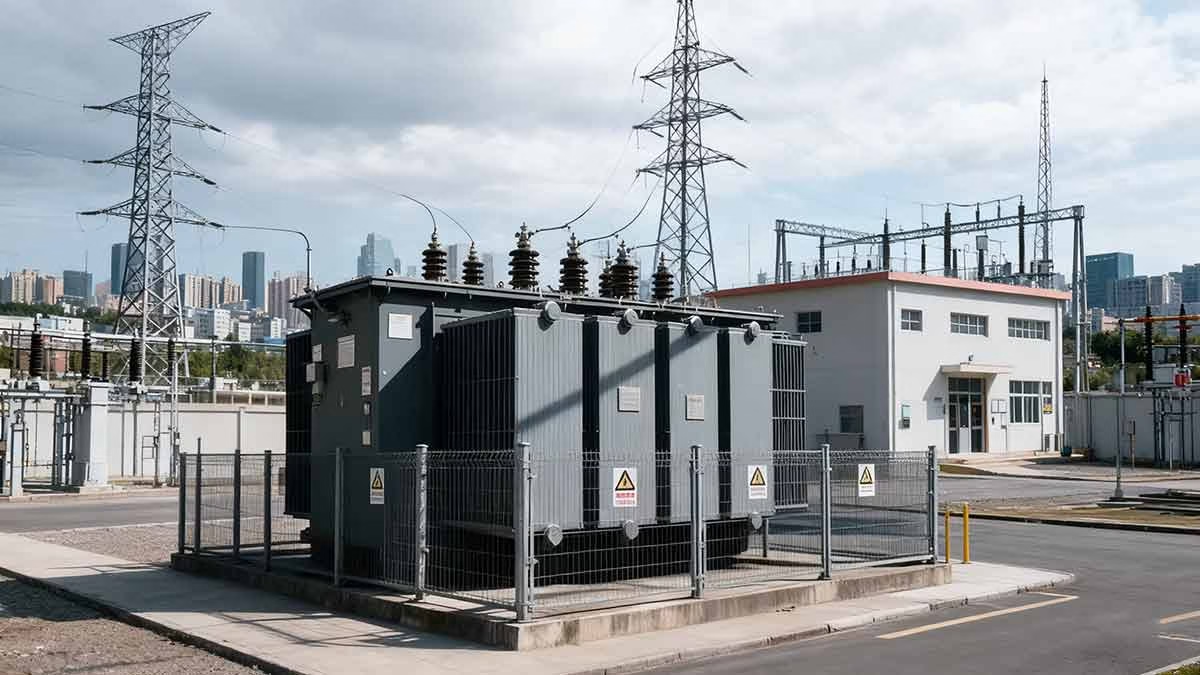
Modern transformers maintain voltage stability in renewable-heavy grids through advanced regulation techniques, real-time monitoring, and predictive control systems. They combine wide-range tap changers, reactive power compensation, and AI-driven forecasting to balance fluctuating renewable inputs with variable load demands—ensuring consistent power quality for all consumers.
The Science of Voltage Stabilization
Rapid Response Technologies
Renewable-induced voltage shifts happen in milliseconds—transformers must react just as fast:
- Ultra-fast tap changers that adjust in cycles, not seconds
- Solid-state voltage regulators for instantaneous fine-tuning
- Dynamic VAR compensators that absorb or inject reactive power on demand
Predictive Voltage Management
In a renewable-dominated grid, reactive adjustments aren’t enough—transformers need to anticipate changes:
- AI-powered forecasting models that predict load and generation patterns
- Integration with weather APIs to forecast solar/wind output
- Real-time renewable generation monitoring for immediate adjustments
Grid-Wide Coordination
Voltage stability requires collaboration across transformer networks:
- Peer-to-peer communication between transformers for unified control
- Centralized voltage optimization algorithms that analyze grid-wide data
- Adaptive droop control systems that adjust voltage support based on grid conditions
| Feature | Traditional Approach | Renewable-Ready Approach |
|---|---|---|
| Voltage Regulation | Fixed setpoints | Dynamic, load-responsive adjustment |
| Response Time | Seconds to minutes | Milliseconds |
| Forecasting Capabilities | None | AI-driven, 24-hour predictive models |
| Grid Coordination | Isolated operation | Networked, collaborative control |
A small town project perfectly illustrates these principles. With 70% of homes equipped with rooftop solar and a large wind farm nearby, the community faced chronic voltage instability—including frequent brownouts and equipment damage.
Our solution was to deploy a network of CHH Power’s adaptive transformers with advanced voltage management capabilities. Each unit featured ultra-fast tap changers that adjusted voltage in 1-2 cycles, paired with solid-state regulators for precise control. We also integrated an AI-powered forecasting system that analyzed weather data, solar/wind output, EV charging schedules, and local event calendars to predict voltage profiles up to 24 hours in advance.
This predictive capability allowed the transformers to proactively adjust settings—for example, preparing for a cloudy afternoon followed by high wind generation by pre-positioning tap changers and activating reactive power compensation. We also implemented a decentralized control scheme where transformers shared real-time voltage data and coordinated adjustments, ensuring stability across the entire grid.
The adaptive droop control system was another key innovation. During periods of high solar generation, transformers automatically shifted their operating points to absorb excess reactive power, preventing overvoltage. Conversely, during low renewable output, they injected reactive power to maintain voltage levels.
The impact was dramatic: voltage violations dropped by 95% within six months, and harmonic distortion levels fell by 60%. Most notably, the grid accommodated a 50% increase in renewable capacity without any performance degradation. The data collected from the transformer network also provided valuable insights into renewable-grid interactions, informing regional energy policies and future grid planning.
This project taught us that voltage stabilization in renewable-rich grids is about more than speed—it’s about intelligence. Transformers have evolved from passive components to active grid stabilizers that predict, adapt, and collaborate to maintain reliability.
For engineers and utility managers, the lesson is to move beyond traditional voltage control methods. By leveraging predictive analytics, real-time monitoring, and grid-wide coordination, transformers can not only stabilize voltage but also enable higher renewable penetration—accelerating the transition to a clean energy future.
Smart Transformers: The Intelligent Core of Green Energy Management
What’s the secret behind grids that seamlessly integrate renewable energy? It lies in a new generation of smart transformers—intelligent devices that combine advanced sensing, data analytics, and AI to manage the complexities of green energy. But what makes these transformers “smart,” and how are they revolutionizing renewable energy management?
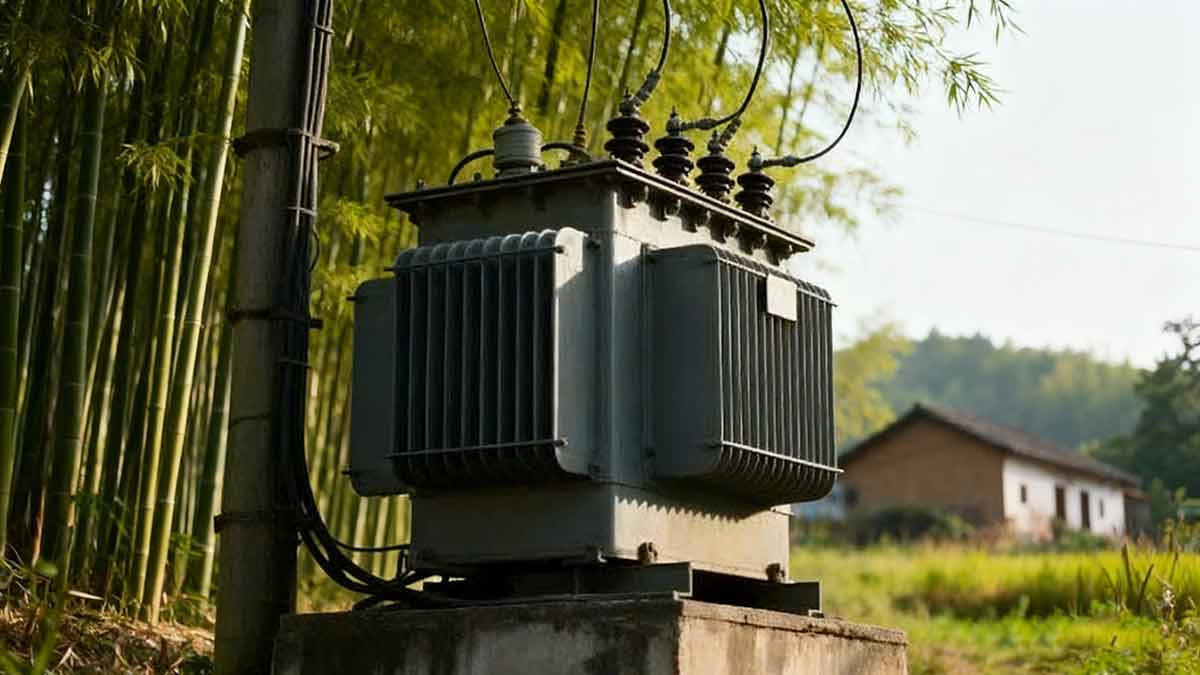
Smart transformers use cutting-edge sensors, real-time data processing, and AI-driven control systems to optimize renewable integration. They monitor power quality, predict generation/load changes, optimize energy flow, and even self-diagnose maintenance needs. This intelligence enables efficient DER integration, demand response, and grid stability in a renewable-dominated energy landscape.
The Building Blocks of Smart Transformers
Advanced Sensing: The Grid’s Eyes and Ears
Smart transformers require comprehensive visibility into grid and renewable performance:
- Real-time monitoring of power flow, voltage, frequency, and harmonic distortion
- Direct tracking of solar panel and wind turbine output
- On-board weather sensors for local condition monitoring
AI-Powered Processing: The Brain of the System
With vast amounts of data, smart transformers rely on powerful analytics:
- Predictive generation forecasting for solar and wind resources
- Adaptive grid stability algorithms that adjust to real-time conditions
- Self-learning systems that optimize efficiency over time
Seamless Integration: The Grid’s Nervous System
Smart transformers don’t operate in isolation—they’re part of a connected ecosystem:
- Integration with renewable energy management systems (REMS)
- Communication with other grid components (batteries, EV chargers, smart meters)
- Compatibility with home energy management systems (HEMS)
| Feature | Traditional Transformer | Smart Transformer |
|---|---|---|
| Monitoring | Manual, periodic checks | Continuous, automated real-time monitoring |
| Data Analysis | Offline, retrospective | Real-time, predictive analytics |
| Control System | Fixed parameters | Adaptive, AI-driven optimization |
| Renewable Integration | Limited compatibility | Seamless DER integration |
A large-scale hybrid renewable park project showcased the power of smart transformers. The park combined solar, wind, and battery storage, presenting a unique challenge: maximizing renewable utilization while ensuring stable power delivery to the grid.
Our solution centered on CHH Power’s smart transformer network. Each unit was equipped with a suite of sensors monitoring power flow, quality, and renewable output—plus on-board weather sensors for real-time environmental data. The transformers’ AI control platform processed this data using machine learning algorithms, enabling predictive generation forecasting with up to 90% accuracy 24 hours in advance.
This forecasting capability allowed the system to proactively adjust transformer settings—for example, ramping up battery charging when high solar output was predicted, or preparing for increased wind generation by adjusting voltage support. The self-learning optimization system continuously analyzed network performance, identifying patterns to improve efficiency over time—resulting in a 15% increase in overall system efficiency within the first year.
Communication was another critical component. We deployed a mesh network that allowed transformers to share data with each other, the central control system, and other park components (solar inverters, wind turbines, batteries). This peer-to-peer collaboration enabled coordinated load balancing, rapid fault response, and optimal energy flow across the entire park.
The results were remarkable: renewable energy utilization exceeded projections by 30%, voltage fluctuations dropped by 80%, and fossil fuel backup power was reduced by 95%. Beyond operational improvements, the transformer network’s data provided actionable insights for future renewable projects—optimizing everything from turbine placement to battery storage sizing.
This project demonstrated that smart transformers are the linchpin of effective green energy management. They turn passive grids into active, intelligent systems that can adapt to renewable variability, maximize efficiency, and ensure reliability.
For energy managers and engineers, the key is to embrace smart transformer technologies as part of a holistic renewable integration strategy. These systems deliver returns not just in improved renewable uptake, but in long-term grid resilience and sustainability.
Future-Proof Power: Designing Transformers for Tomorrow’s Renewable Landscape
Are today’s transformers ready for the next decade of renewable energy growth? As solar, wind, and emerging technologies like hydrogen power expand, grid infrastructure must evolve to keep pace. How are transformers being redesigned to meet the demands of a fully renewable future?
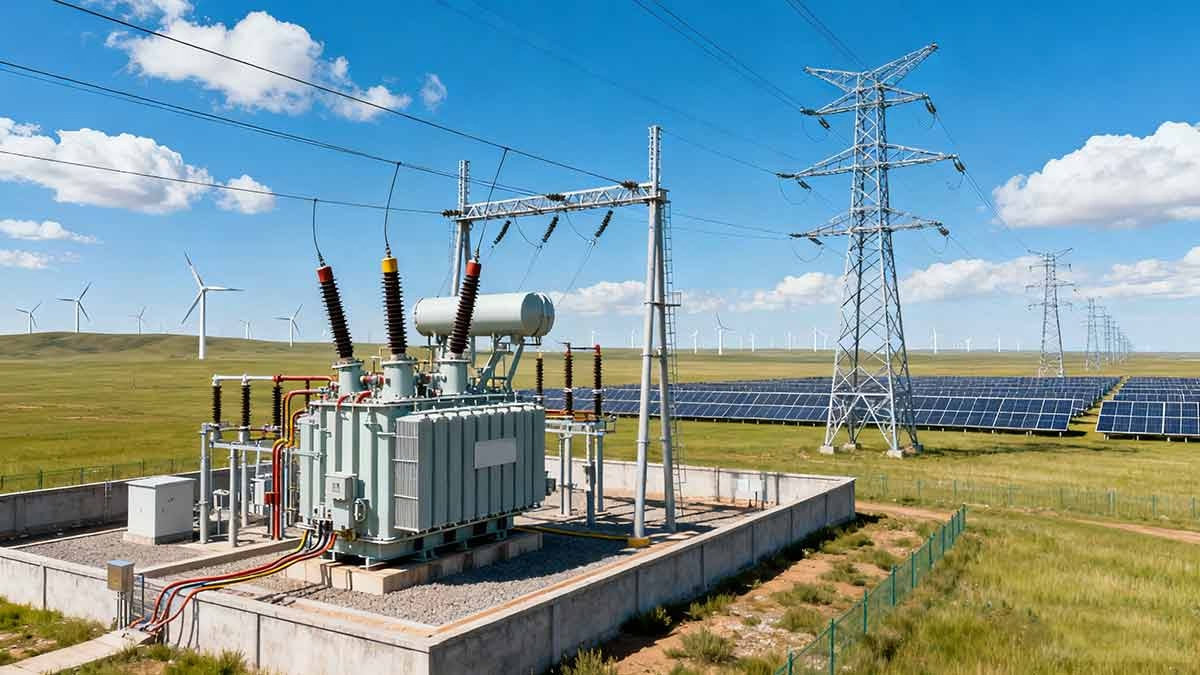
Future-proof transformers for renewable integration combine flexible designs, advanced materials, and smart grid compatibility. They feature scalable power handling, high-frequency operation for enhanced efficiency, and adaptive control systems. These units also include predictive maintenance capabilities and are engineered to integrate seamlessly with emerging renewable technologies and energy storage solutions.
The Future of Transformer Design
Flexible, Scalable Architecture
Renewable energy adoption is accelerating rapidly—transformers need to adapt without full replacement:
- Modular construction that allows easy capacity upgrades
- Wide-range power handling to accommodate variable renewable output
- Hybrid designs compatible with multiple renewable sources (solar, wind, hydrogen)
Advanced Material Innovations
New materials are pushing the boundaries of transformer efficiency and performance:
- Nanocrystalline core materials that reduce energy losses by up to 70%
- High-temperature superconducting windings for increased power density
- Bio-based insulating fluids that improve cooling and reduce environmental impact
Smart Grid Readiness
Future transformers will be active participants in the next-generation grid:
- Integrated power electronics for precise energy flow control
- Real-time data analytics and predictive modeling
- Support for vehicle-to-grid (V2G) and grid-to-vehicle (G2V) systems
| Feature | Current Transformers | Future-Proof Transformers |
|---|---|---|
| Power Handling | Fixed capacity | Scalable, multi-source compatible |
| Efficiency | Standard (5-10% losses) | Exceptional (2-3% losses with new materials) |
| Grid Role | Passive voltage converter | Active, bidirectional grid manager |
| Renewable Integration | Basic DER compatibility | Seamless integration with emerging technologies |
A forward-thinking utility project exemplifies this future-focused design. The utility planned to triple its renewable capacity over a decade and needed a transformer solution that could start with current needs but scale without major infrastructure overhauls.
Our response was to develop CHH Power’s modular, future-proof transformers. The base unit handled current renewable integration requirements, but its modular design allowed for easy capacity upgrades—additional power modules could be added as renewable adoption grew, eliminating the need to replace entire transformers.
Each module incorporated state-of-the-art materials: nanocrystalline cores for minimal energy loss, superconducting windings for high power density, and bio-based insulating fluids for eco-friendly cooling. The transformers were also engineered for bidirectional power flow, enabling integration with V2G systems and emerging renewable technologies like hydrogen fuel cells.
The smart grid integration was equally innovative. Each module featured advanced power electronics for precise control, AI-driven predictive maintenance, and real-time data analytics. The predictive maintenance system used sensor data to identify potential issues before they caused downtime—extending transformer lifespan by up to 30% and reducing maintenance costs by 25%.
Perhaps most importantly, the transformers included standardized, upgradable interfaces for renewable and storage systems. This design ensures compatibility with future technologies—whether next-generation solar panels, advanced batteries, or hydrogen electrolyzers—without requiring complete transformer replacement.
The project’s success speaks for itself: over three years, the utility tripled its renewable capacity with minimal infrastructure changes. The advanced materials and smart design resulted in 30% lower energy losses, significantly reducing the grid’s carbon footprint. The transformer network’s data also provided the utility with granular insights into renewable generation and consumption patterns, enabling data-driven decisions about future investments.
This project highlighted a critical principle: future-proofing grid infrastructure isn’t just about increasing capacity—it’s about building flexibility and intelligence into every component. Transformers are no longer static assets; they’re adaptable, scalable systems that can evolve with the energy landscape.
For utility leaders and engineers preparing for a renewable future, the advice is to prioritize modular, smart transformers with advanced materials and flexible integration capabilities. While the initial investment may be higher, the long-term benefits—adaptability, efficiency, and resilience—are invaluable in a rapidly changing energy world.
Conclusion
Power distribution transformers are undergoing a remarkable evolution to meet the demands of renewable energy integration. Through innovations in voltage regulation, bidirectional power flow support, smart monitoring, and future-proof design, these critical grid components are enabling the widespread adoption of clean energy while maintaining grid stability and efficiency.
From navigating the fluctuations of solar and wind power to managing bidirectional energy flow from distributed resources, transformers have evolved from passive voltage converters to active, intelligent grid managers. The integration of AI, advanced materials, and modular design is not just enhancing performance—it’s future-proofing our energy infrastructure for the next generation of renewable technologies.
As the world accelerates toward a sustainable energy future, transformers will remain the unsung heroes of the grid. By investing in renewable-optimized, smart, and flexible transformer solutions, utilities and engineers can unlock the full potential of clean energy, build more resilient grids, and pave the way for a greener, more efficient world.