
Suburban communities demand power solutions that balance performance, reliability, and visual harmony—and pole distribution transformer stands as the cornerstone of modern overhead power delivery. Engineered for compactness, energy efficiency, and seamless integration with residential landscapes, these transformers address the unique challenges of suburban power distribution, from growing energy demands to aesthetic expectations.
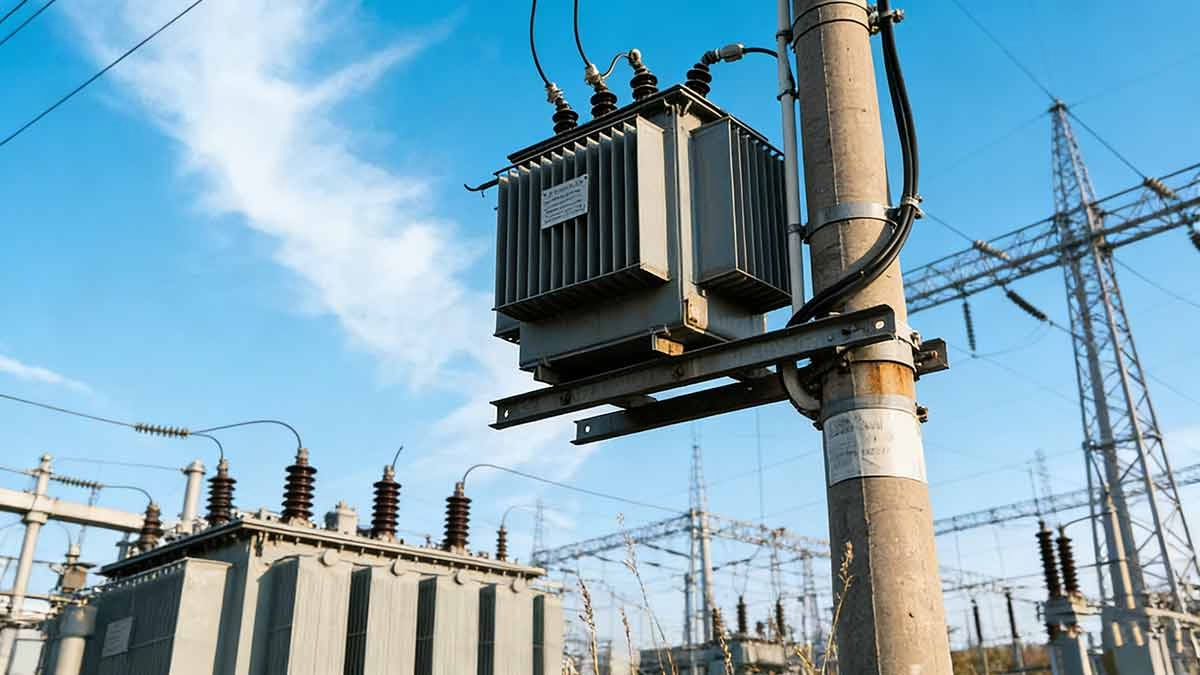
Having led dozens of suburban power infrastructure projects over the past decade, I’ve witnessed firsthand how advanced pole transformers transform outdated systems into agile, community-friendly networks. This article explores the innovations, design principles, and practical benefits that make these transformers indispensable for today’s evolving suburbs.
Contents
hide
Innovative Pole Distribution Transformer Designs: Elevating Suburban Power Efficiency
Suburban energy consumption is on the rise—driven by electric vehicles (EVs), smart homes, and renewable energy adoption—yet legacy transformers often suffer from high energy losses and poor voltage regulation. Modern pole distribution transformers resolve these pain points through cutting-edge materials, precision engineering, and adaptive technologies.
Core Materials: The Foundation of Energy Savings
The transformer core is critical to minimizing energy waste, and recent material advancements have revolutionized efficiency:
- Amorphous Metal Cores: Outperforming traditional silicon steel cores by reducing no-load losses by up to 70%, these cores are ideal for suburbs with fluctuating demand. In a project for a mid-sized suburban community outside Chicago, we replaced 12 aging transformers with amorphous core models—resulting in energy loss reductions of 62% within the first three months.
- Grain-Oriented Electrical Steel (GOES): Optimized magnetic alignment cuts eddy current losses by 15-20%, making it a cost-effective upgrade for established suburbs.
- Nanocrystalline Alloys: Emerging as a game-changer, these materials offer 30% higher efficiency than amorphous metals, with applications in high-density suburban areas where space is limited.
Advanced Winding Technologies: Conductivity Meets Durability
Transformer windings are being reimagined to enhance efficiency and practicality:
| Winding Technology | Efficiency Improvement | Key Advantages |
|---|---|---|
| Copper-Clad Aluminum (CCA) | 10-15% | 25% lighter than pure copper windings, reducing pole load and installation time |
| Continuously Transposed Cable (CTC) | 5-8% | Superior short-circuit resistance, critical for suburbs with dense power networks |
| Foil Windings | 3-5% | Enhanced heat dissipation, extending transformer lifespan in warm climates |
In a recent project for a rapidly growing suburb in Texas, we specified CCA windings for 50+ transformers. The lighter weight simplified aerial installation, while the efficiency gains translated to $14,000 in annual energy savings for the local utility.
Adaptive Voltage Regulation: Responding to Dynamic Demand
Modern suburbs require transformers that adjust to variable power flows—from rooftop solar generation to evening EV charging peaks:
- On-Load Tap Changers (OLTCs): Enable voltage adjustments without service interruptions, ensuring stable power for sensitive electronics.
- Electronic Voltage Regulators: Deliver precision control (±0.5% voltage accuracy) for neighborhoods with high renewable penetration.
- AI-Powered Adaptive Control: Machine learning algorithms predict demand fluctuations, adjusting set-points proactively. In a California suburb with 40% solar adoption, this technology reduced voltage sags by 89% compared to conventional transformers.
Next-Generation Cooling Systems
Overheating shortens transformer life and reduces efficiency—especially in warm suburban climates. Innovative cooling solutions address this:
- Vegetable-Based Insulating Oils: Offer 20% better heat transfer than mineral oils, with biodegradable properties that protect soil and waterways.
- Phase-Change Material (PCM) Modules: Absorb excess heat during peak load periods, releasing it gradually to maintain optimal operating temperatures.
- Low-Noise Active Cooling: For hot, densely populated areas, quiet fans with variable speed controls prevent overheating without disrupting residents.
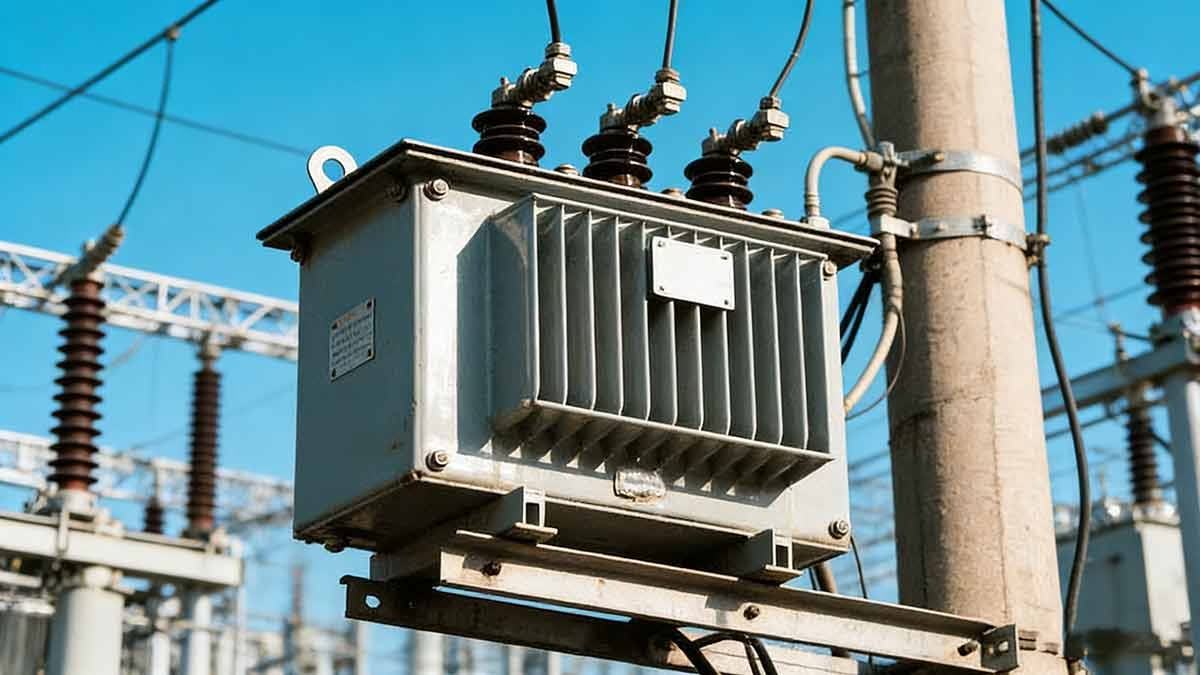
In a Phoenix suburb, we installed transformers equipped with PCM modules and vegetable oil—they maintained temperatures 12°C below industry standards during 110°F summer days, with no fan operation required.
Balancing Aesthetics and Functionality: Pole Transformers for Suburban Landscapes
Suburban residents and planners increasingly prioritize infrastructure that blends with natural and architectural surroundings. Modern pole transformers move beyond the “grey box” stereotype, integrating design elements that complement residential streetscapes.
Sleek, Low-Profile Engineering
- Low-Profile Enclosures: Shorter, streamlined designs reduce visual impact—some models are 30% shorter than legacy units, making them less noticeable on utility poles.
- Slim-Line Profiles: Narrower housings align with pole dimensions, avoiding the bulky appearance of traditional transformers.
- Soft-Edge Design: Rounded corners and smooth surfaces replace industrial sharp edges, creating a more residential-friendly aesthetic.
In a historic suburb outside Boston, we installed slim-line transformers with rounded edges and a taupe powder coating that matched local utility poles. Resident feedback highlighted that the units “blended in like they were part of the original street design.”
Customizable Finishes and Textures
Transformers now offer design flexibility to match local environments:
- Powder-Coated Finishes: Durable, weather-resistant coatings in neutral tones (beige, gray, green) or custom colors that align with HOA guidelines.
- Textured Surfaces: Matte or stone-like textures that mimic natural materials, reducing glare and visual harshness.
- Landscape-Integrated Patterns: For parks or tree-lined streets, camouflage patterns that blend with foliage (e.g., forest green with subtle leaf textures).
For a transformer adjacent to a suburban park in Oregon, we used a moss-green textured finish—visitors often mistake the unit for a decorative utility box rather than industrial equipment.
Creative Mounting Solutions
How transformers attach to poles plays a key role in their visual impact:
- Offset Side-Arm Mounts: Position transformers off-center, reducing their profile from street-level views.
- Cluster Mounting: Group smaller transformers instead of using one large unit, creating a more balanced, less obtrusive appearance.
- Decorative Brackets: Wrought-iron or aluminum brackets that complement street lighting or architectural styles, turning functional hardware into design elements.
In an upscale Dallas suburb, we paired transformers with decorative black iron brackets that matched the neighborhood’s street lamps. The result was an infrastructure that felt intentional, not intrusive.
Multi-Functional Integration
Modern transformers add value beyond power distribution, serving dual purposes that enhance community life:
- Integrated LED Street Lights: Combine power transformation and lighting, reducing pole clutter.
- Smart Signage Mounts: Host street signs, house numbers, or community notices, centralizing infrastructure.
- Public Wi-Fi Hubs: Some models include weatherproof enclosures for small cell or Wi-Fi equipment, extending connectivity in suburban areas.
In a Colorado smart suburb, we deployed transformers with integrated LED lights and Wi-Fi hotspots—they reduced pole count by 25% while providing free community internet access.
Adapting to Evolving Demands: Flexible Pole Transformers for Growing Suburbs
Suburbs are dynamic—new homes are built, energy use patterns shift, and technology advances. Flexible pole distribution transformers are designed to grow and adapt with these changes, avoiding costly replacements and ensuring long-term infrastructure relevance.
Modular, Scalable Designs
- Stackable Capacity Modules: Add incremental capacity (e.g., 25kVA, 50kVA) as neighborhoods expand, without replacing the base unit. In a Texas master-planned community, we installed stackable transformers that grew from 100kVA to 200kVA over five years, matching housing development phases.
- Plug-and-Play Upgrades: Easily add features like OLTCs or monitoring systems as needs evolve, extending transformer functionality.
- Dual-Voltage Outputs: Single transformers that deliver 120/240V for residential use and 480V for commercial loads (e.g., neighborhood retail centers), supporting mixed-use developments.
Smart Grid Compatibility
Today’s suburbs require transformers that integrate with smart grid ecosystems:
| Smart Grid Feature | Benefit for Suburbs |
|---|---|
| Two-Way Power Flow | Enables net metering for rooftop solar, allowing residents to sell excess power back to the grid |
| Real-Time Monitoring | Sends data on load, temperature, and voltage to utility control centers, enabling proactive issue resolution |
| Remote Configuration | Utilities adjust settings (e.g., voltage levels) remotely, reducing truck rolls and service disruptions |
In a Minnesota suburb, smart grid-ready transformers reduced outage duration by 65%—the utility could identify and address faults before residents reported them.
EV Charging Support
As EV adoption surges (projected to reach 30% of U.S. new car sales by 2030), transformers must handle increased load:
- High-Capacity Ratings: 250kVA+ models that support multiple Level 2 and Level 3 charging stations in neighborhoods or retail parking lots.
- Load Balancing Technology: Distributes charging demand across phases, preventing overloads during peak hours (e.g., 6-9 PM when residents return home).
- Time-of-Use Optimization: Works with utility tariffs to encourage off-peak charging, reducing strain on the grid and lowering costs for EV owners.
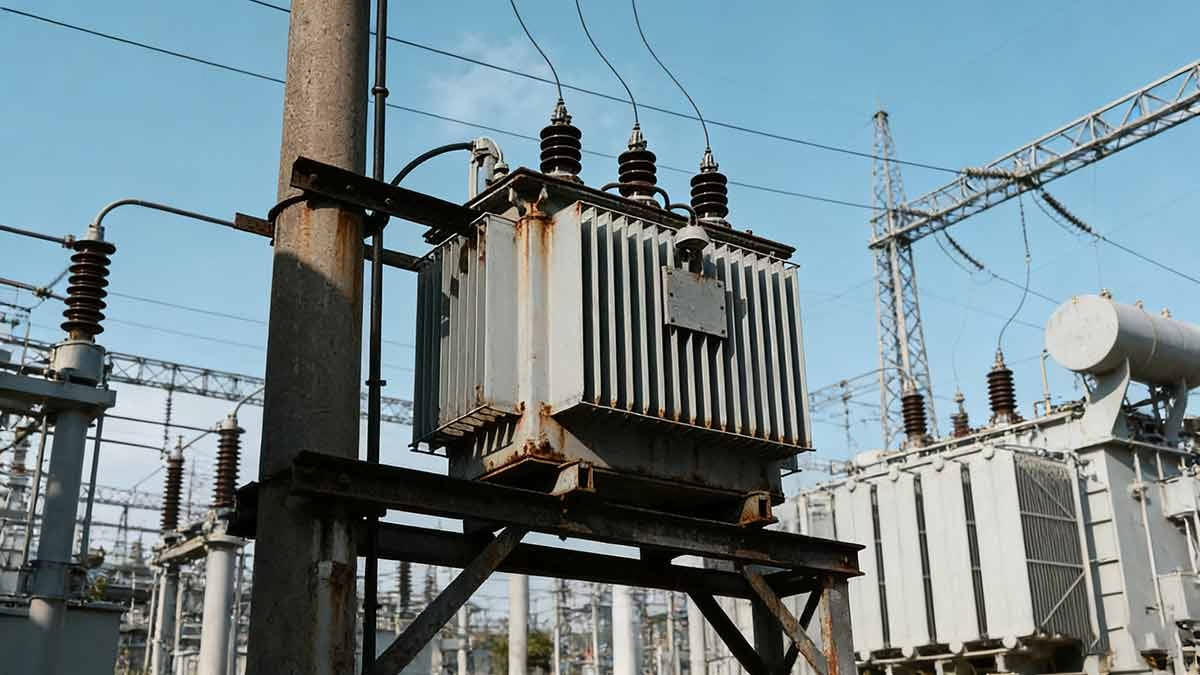
In a Florida suburb with 25% EV penetration, we installed load-balancing transformers that supported 12 community charging stations without grid upgrades—saving the utility $200,000 in infrastructure costs.
Renewable Energy Integration
Suburbs with high solar or wind adoption need transformers that handle intermittent power flows:
- Bi-Directional Power Handling: Manages energy flowing from the grid to homes and back from rooftop solar systems.
- Harmonic Filtering: Reduces electrical noise from inverters, protecting sensitive equipment like smart thermostats and home appliances.
- Voltage Ride-Through: Maintains stable power during sudden drops in renewable output (e.g., cloudy days for solar), preventing flickers or outages.
In a Vermont suburb with 50% solar adoption, our transformers with harmonic filtering improved power quality scores by 40%, eliminating complaints about flickering lights and damaged electronics.
Ensuring Reliability and Safety: Advanced Features in Suburban Pole Transformers
Suburban communities depend on uninterrupted power—and transformers must deliver both reliability and safety. Modern designs incorporate advanced technologies to prevent outages, minimize hazards, and protect the environment.
IoT-Powered Monitoring Systems
Real-time data collection is critical for proactive maintenance:
- Temperature Sensors: Track winding and oil temperatures, alerting utilities to overheating before it causes failure.
- Load Monitoring: Measures current draw to prevent overloads, especially during peak demand periods.
- Oil Condition Sensors: For liquid-filled transformers, detect moisture, contamination, or leaks—avoiding costly environmental damage.
In a North Carolina suburb, our IoT-monitored transformers identified a cooling system fault 14 days before it would have caused an outage. The utility performed a scheduled repair, avoiding a service disruption for 300 homes.
Enhanced Surge and Fault Protection
Suburbs face weather-related hazards (lightning, ice storms) and electrical faults—transformers must withstand these challenges:
| Protection Feature | Function |
|---|---|
| Metal-Oxide Varistors (MOVs) | Divert lightning-induced surges away from windings, preventing insulation damage |
| Snubber Circuits | Absorb voltage spikes from switching operations, reducing wear on components |
| Faraday Cage Enclosures | Shield sensitive electronics from electromagnetic interference (EMI) |
In a hurricane-prone coastal suburb of South Carolina, transformers equipped with MOVs and reinforced enclosures survived three Category 2 storms without damage—outperforming legacy units that required replacement after each storm.
Fail-Safe Design Elements
When faults occur, transformers must fail safely to protect people and property:
- Automatic Disconnect Switches: Isolate faulty transformers from the grid, preventing cascading outages.
- Fused Links: Limit current flow during short circuits, reducing fire risk.
- Pressure Relief Valves: Release excess pressure in liquid-filled transformers, preventing explosions.
During an ice storm in Ohio, a transformer’s pressure relief valve activated after ice damage caused internal arcing. The valve prevented an explosion, and the automatic disconnect minimized the outage range to just 12 homes instead of the entire neighborhood.
Environmental and Residential Safety
Transformers are now designed with suburban living in mind:
- Biodegradable Insulating Oils: Plant-based oils that break down naturally if leaked, avoiding soil and water contamination.
- Low-Noise Operation: Advanced core and winding designs reduce humming to <45 decibels—quieter than a residential air conditioner.
- Fire-Resistant Enclosures: Non-combustible materials that prevent fire spread, critical for transformers near homes.
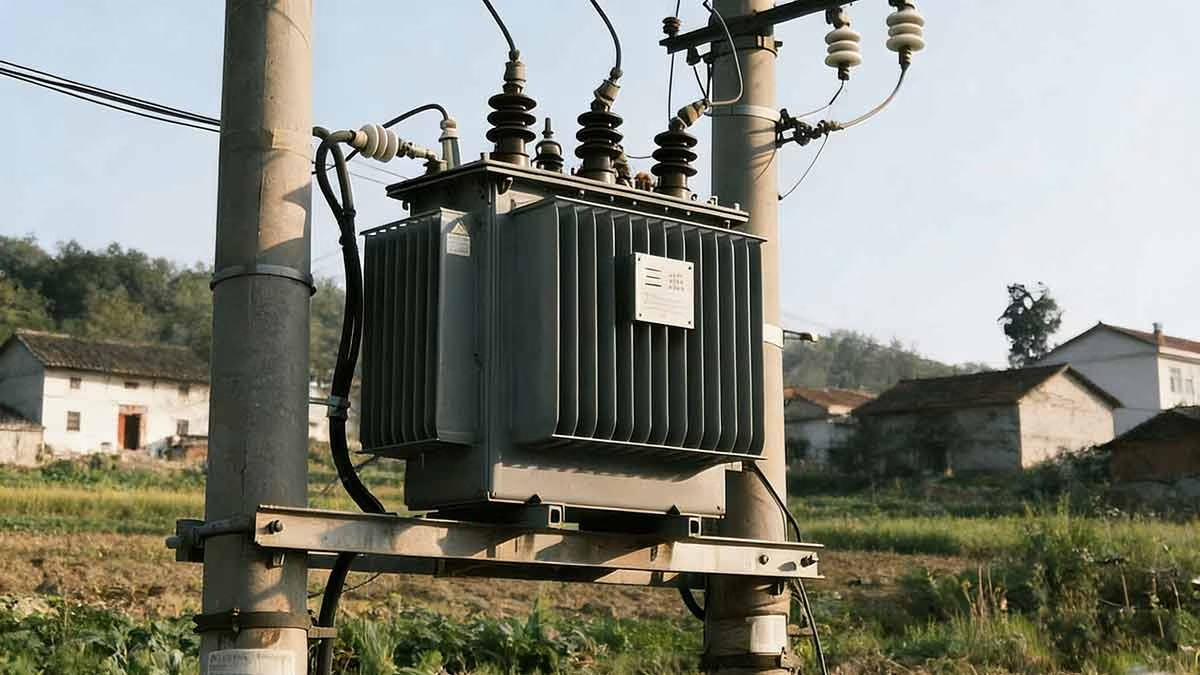
In a suburb adjacent to a wildlife preserve in Washington, we installed transformers with biodegradable oil and noise-reducing enclosures. The units met strict environmental standards and were undetectable to nearby residents.
Smart Maintenance Strategies: Optimizing Pole Transformer Performance in Suburbs
Maintaining pole transformers in suburbs is challenging—units are often in hard-to-reach locations, and unscheduled outages disrupt daily life. Smart maintenance strategies leverage technology to streamline inspections, reduce downtime, and extend transformer lifespans.
Remote Monitoring and Diagnostics
- Real-Time Data Dashboards: Utilities access live metrics (temperature, load, oil condition) via cloud-based platforms, eliminating the need for manual checks.
- Trend Analysis Algorithms: Identify gradual performance declines (e.g., increasing temperature, rising energy losses) that indicate upcoming maintenance needs.
- Automated Alerts: Notifications sent to utility teams for abnormal conditions—e.g., a sudden load spike or oil leak—enabling rapid response.
A midwestern utility implemented remote monitoring for 200 suburban transformers and reduced emergency maintenance calls by 40% in the first year, as most issues were addressed proactively.
Predictive Maintenance Powered by AI
Machine learning transforms maintenance from reactive to predictive:
| Data Input | Predictive Insight |
|---|---|
| Load History | Identifies transformers at risk of overload due to changing demand patterns |
| Temperature Trends | Flags units with cooling system degradation before overheating occurs |
| Oil Analysis Data | Predicts insulation breakdown, allowing for oil replacement or transformer retirement |
We partnered with a California utility to deploy AI-driven predictive maintenance for their suburban transformer fleet. The system accurately predicted 92% of potential failures, extending average transformer lifespan by 5 years and saving $3 million in replacement costs.
Drone-Assisted Inspections
Drones eliminate the need for bucket trucks and climbing, making inspections safer and more efficient:
- Visual Inspections: High-resolution cameras capture details of enclosures, brackets, and connections—identifying corrosion, damage, or loose parts.
- Thermal Imaging: Detects hot spots in windings or connections that indicate electrical resistance issues.
- Corona Detection: Specialized cameras identify partial discharges (corona) that precede insulation failure.
In a tree-lined suburb of Portland, drones accessed transformers hidden by foliage—something bucket trucks couldn’t do without trimming trees. The inspections identified 17 transformers with thermal issues, which were repaired before causing outages.
Mobile Apps for Field Technicians
Field teams benefit from technology that simplifies on-site work:
- AR Maintenance Guides: Augmented reality overlays step-by-step instructions on physical transformers, reducing errors for complex repairs.
- Digital Documentation: Technicians log inspections, repairs, and part replacements in real time, ensuring accurate maintenance records.
- Remote Expert Collaboration: Video calls with off-site engineers allow technicians to get guidance for unusual issues, reducing repeat visits.
A Texas utility equipped its field team with AR-enabled tablets, cutting average repair time from 2.5 hours to 45 minutes. Technicians reported a 35% reduction in errors, as the AR guides eliminated guesswork.
Conclusion
Pole distribution transformers are more than just power infrastructure—they’re a critical component of thriving, sustainable suburban communities. By combining innovative design, energy efficiency, aesthetic integration, and smart technology, these transformers meet the evolving demands of modern suburbs: from supporting renewable energy and EVs to blending with residential landscapes and ensuring reliable power.
As suburban growth continues and energy needs become more complex, the role of advanced pole transformers will only grow in importance. Utilities and communities that invest in these solutions benefit from lower energy costs, reduced outages, and infrastructure that enhances—not detracts from—suburban life.
For transformer manufacturers, the key to success lies in prioritizing flexibility, sustainability, and user-centric design. By understanding the unique challenges of suburban power delivery, we can create solutions that power communities today while adapting to the needs of tomorrow.
More FAQ About Pole Distribution Transformer
Q: What is a pole distribution transformer and its core function?
A: A pole distribution transformer is a compact electrical device mounted on utility poles to step down high-voltage electricity (typically 10 kV) from distribution networks to low-voltage power (400V for three-phase systems or 120/240V for single-phase) suitable for residential, commercial, and small industrial use. Its core function is to bridge the gap between high-efficiency long-distance power transmission and safe end-user consumption, ensuring electrical appliances and systems operate within safe voltage ranges. Without this voltage conversion, direct use of high-voltage power would cause equipment damage and severe safety hazards.
Q: How does a pole distribution transformer work?
A: It operates based on the principle of electromagnetic induction, consisting of primary and secondary windings wrapped around a magnetic core (usually laminated silicon steel or amorphous alloy). The primary winding connects to high-voltage transmission lines, generating a magnetic field when alternating current (AC) flows through it. This magnetic field induces a lower voltage in the secondary winding, with the voltage transformation ratio determined by the turn ratio of the two windings. For example, a 10 kV/0.4 kV transformer reduces high voltage to usable levels through precise winding turn matching, enabling efficient energy transfer with minimal losses.
Q: What are the main types of pole distribution transformers?
A: The primary classifications include single-phase and three-phase models: single-phase transformers (5–250 kVA) are widely used in residential and rural areas with low power demand, offering cost-effectiveness and easy maintenance. Three-phase variants handle higher loads for commercial and industrial applications, ensuring a balanced power supply for heavy machinery. Other types include oil-immersed (traditional, cost-effective for rural areas) and dry-type (environmentally friendly, suitable for urban/forested regions) transformers, as well as smart models equipped with IoT-enabled monitoring.
Q: What causes pole distribution transformer failures?
A: Common failure causes include overload operation (due to increased power demand or seasonal peaks), improper oil filling (mismatched oil types or live-line refueling), reactive power compensation mismatches leading to ferroresonance overvoltage, lightning strikes (without qualified arresters or poor grounding), secondary short circuits, and faulty tap changers. Other issues include blocked breather holes (causing internal overheating) and installation errors like incorrect phase sequence connections. Abnormal noises (e.g., “chirps” or “hissing” sounds) often indicate incipient faults.
Q: What are the routine maintenance requirements for pole distribution transformers?
A: Routine maintenance includes annual insulation testing and oil analysis, regular inspection of oil levels and bushing integrity, and clearing vegetation/obstructions to ensure airflow. Before storm seasons, grounding systems should be verified to meet resistance standards. For oil-immersed models, monitoring for leaks and maintaining proper oil quality is critical. The maintenance cost is typically around $13–14 per kVA annually, covering inspections, tests, and emergency repairs.
Q: How to select the right pole distribution transformer capacity?
A: Capacity selection should match 10–20% above peak demand to avoid overload. For residential areas, single-phase transformers (5–100 kVA) are sufficient for a few households, while three-phase models (100–500 kVA) suit commercial zones or small industrial facilities. Environmental factors must be considered: corrosion-resistant variants are recommended for coastal/humid regions, and weather-resistant designs (-30°C to +50°C operating range) for extreme climates. Compliance with IEC 60076, CE, or UL certifications ensures product reliability.
Q: How do smart technologies enhance pole distribution transformer performance?
A: Smart pole transformers integrate IoT-enabled monitoring systems to track real-time data on load, temperature, and fault alerts. Emerging technologies include on-load tap changers that adjust voltage in 1.25% increments with ≤5-second response time (complying with EN 50588-1) and reactive power compensation systems that improve power factors from 0.8 to 0.95, reducing line losses by 23%. EPRI’s 2025 research focuses on evaluating these smart monitoring technologies to optimize lifecycle management (maintenance, repair, replacement).
Q: What are the differences between pole-mounted and pad-mounted transformers?
A: Pole-mounted transformers are installed on utility poles, saving land space and reducing installation costs by eliminating concrete foundations, making them ideal for rural and hard-to-access areas. Pad-mounted transformers are ground-installed, suitable for high-load urban/commercial areas but requiring more land and higher construction costs. Pole-mounted models are typically smaller (≤500 kVA), while pad-mounted variants handle larger capacities. The elevated installation of pole-mounted transformers also reduces safety hazards from pedestrian contact.
Q: What are the key components of a pole distribution transformer?
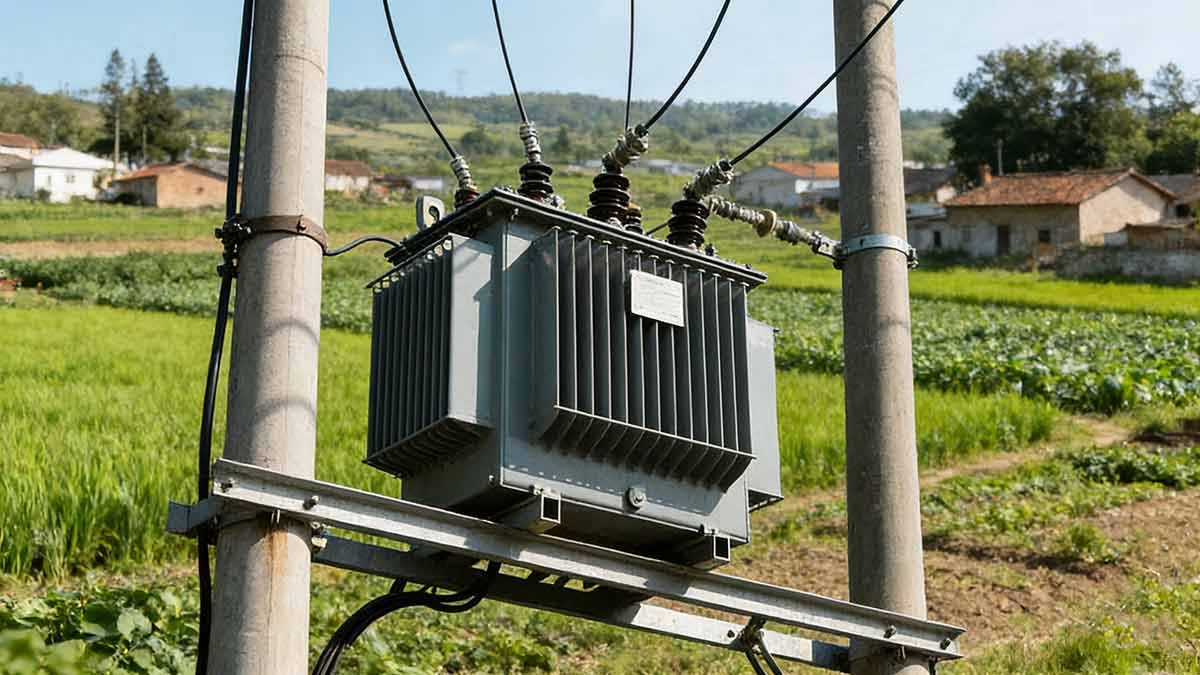
A: Core components include a tank (holding insulating oil and the core), high/low-voltage bushings (for line connections), lightning arresters (protecting against voltage spikes), fuse cutouts (acting as circuit breakers), and ground wires. The magnetic core (silicon steel or amorphous alloy) enhances induction efficiency, while tap changers allow voltage adjustment. Smart models add IoT sensors and communication modules for real-time monitoring. All components must comply with material and performance standards (e.g., IEEE C57.12.20).
Q: What is the typical lifespan of a pole distribution transformer?
A: With proper maintenance, pole distribution transformers have a typical lifespan of 20–30 years. Lifespan is influenced by factors like load intensity (overload shortens life), environmental conditions (corrosion, extreme temperatures), and maintenance quality. Aging transformers are prone to insulation breakdown and high gassing, increasing failure risks. Utilities often replace aging units proactively as part of grid modernization efforts, especially with the shift to high-efficiency and smart models.
Q: What are the environmental considerations for pole distribution transformers?
A: Traditional oil-immersed transformers pose environmental risks (oil leaks, fires, pollutant emissions), driving the shift to dry-type models using air or non-oil coolants. Amorphous alloy cores reduce energy waste, aligning with global carbon reduction goals. Proper disposal of old transformers (especially oil recycling) is mandatory to prevent soil and water contamination. Stringent environmental standards in urban and forested areas further promote the adoption of eco-friendly designs.
Q: How does the integration of renewable energy impact pole distribution transformers?
A: The growth of distributed renewable energy (solar, wind) increases demand for pole distribution transformers with enhanced voltage regulation and load-handling capabilities. These transformers must accommodate fluctuating renewable energy outputs and ensure grid stability. Smart monitoring systems help track real-time renewable energy integration, optimizing load distribution. Utilities are also evaluating advanced conductors (e.g., high-temperature low sag, HTLS) to support increased renewable energy loads in distribution networks.