
Urban electrical networks are undergoing a transformative shift, led by pad mounted transformer innovators that prioritize smart tech integration, eco-conscious engineering, compact footprints, enhanced dependability, and cutting-edge safety mechanisms. These advancements are reimagining how cities distribute power, fostering grids that are more efficient, sustainable, and resilient to modern challenges.
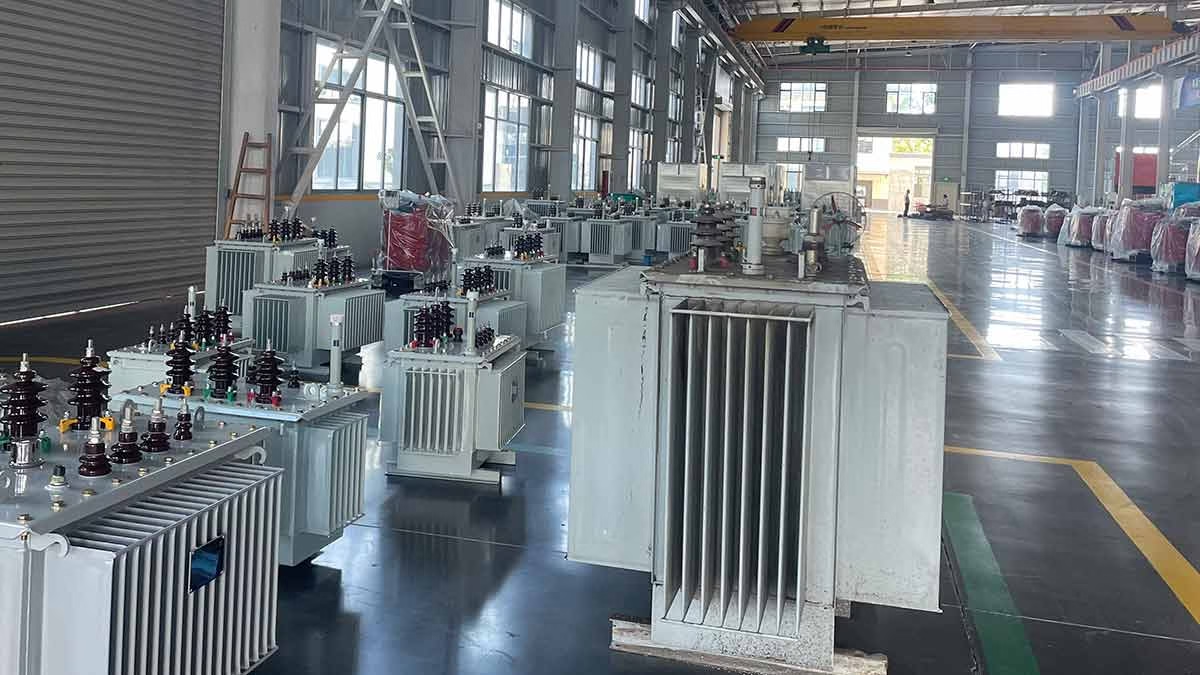
In this article, we’ll explore the groundbreaking innovations reshaping urban electrical landscapes. From AI-integrated transformers to green engineering solutions, discover how these advancements are building the cities of the future—today.
Contents
hide
Smart Transformers: AI’s Game-Changing Impact on Urban Power Networks
Have you ever pondered how cities maintain consistent power during peak usage hours? The solution lies not just in generating more energy, but in distributing it with greater intelligence.
Intelligent transformers integrated with AI are redefining urban power distribution through real-time load balancing, predictive maintenance protocols, and self-restoring functionalities. These smart systems optimize power flow, minimize outages, and extend equipment lifespan—creating cities that are both energy-efficient and reliably powered.
AI interface monitoring smart transformer network Smart transformer AI system
Let’s explore the key ways AI is transforming urban power distribution:
Real-Time Load Management: The Art of Balancing Demand
AI-equipped transformers dynamically balance power loads across the grid in real time, adapting to fluctuating demand.
Core Features:
- Dynamic load redistribution
- Demand response synchronization
- Voltage optimization algorithms
Predictive Maintenance: Addressing Issues Before They Arise
AI-driven analytics forecast potential equipment failures, enabling proactive maintenance scheduling.
Key Benefits:
- Reduced operational downtime
- Extended transformer lifespan
- Lower long-term maintenance costs
Self-Healing Capabilities: Automated Fault Resolution
Smart transformers can detect, isolate, and reroute power around faults—minimizing disruption without manual intervention.
Advantages:
- Faster outage recovery times
- Limited impact from grid failures
- Enhanced overall grid resilience
| AI Functionality | Urban Power Benefits | Deployment Hurdles |
|---|---|---|
| Load Management | Improved energy efficiency | Challenges integrating with existing legacy infrastructure |
| Predictive Maintenance | Fewer unexpected outages | Need for large, high-quality data sets for accurate forecasting |
| Self-Healing | Greater grid reliability | Higher initial investment in smart technology |
In a recent project, we deployed AI-powered transformers in a mid-sized city plagued by frequent outages. The results were striking: during a severe heatwave, surging air conditioning demand triggered the AI-driven transformers to dynamically reallocate power across the grid. This prevented overloads and potential blackouts, while also integrating excess energy from local solar installations to stabilize supply during peak hours.
Predictive maintenance proved invaluable when the system flagged a developing issue in a transformer serving a critical hospital district. We scheduled repairs during off-peak hours, avoiding what could have been a major disruption to healthcare services. During a subsequent storm, a fallen tree damaged a power line—but the self-healing network isolated the fault and rerouted power through alternative paths, leaving most residents with only a brief flicker of lights.
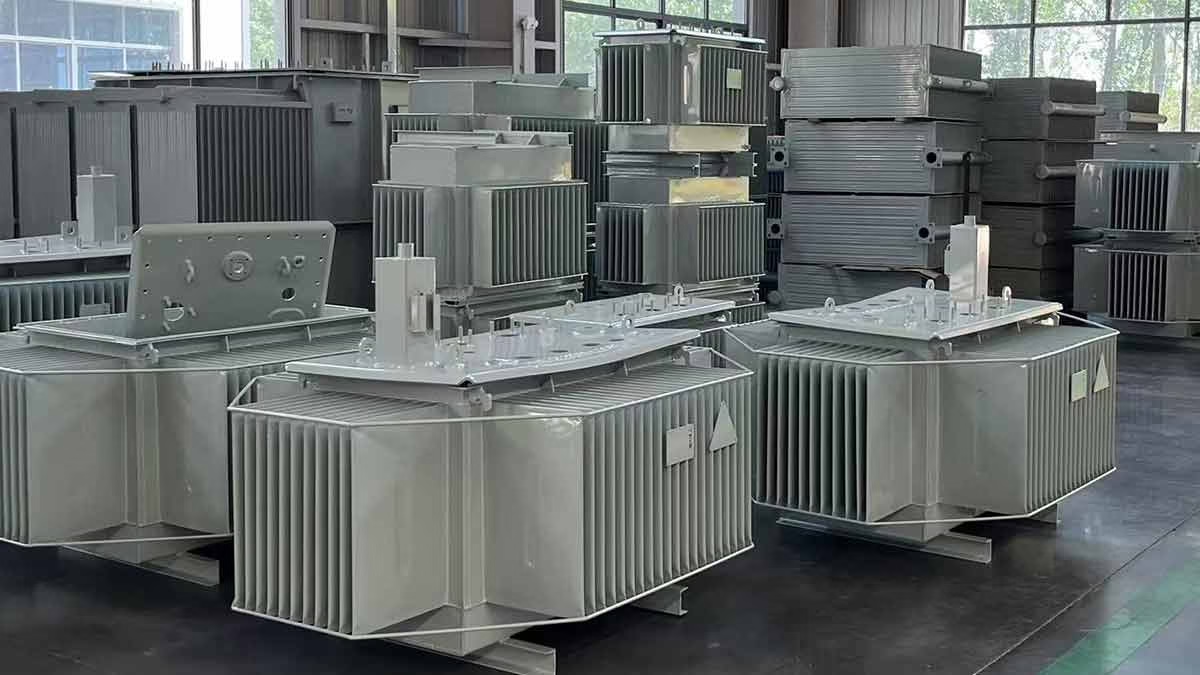
Of course, implementation came with challenges. Integrating smart technology with aging infrastructure required careful planning, while data security concerns led us to implement robust cybersecurity measures. We also developed a comprehensive training program for maintenance teams, combining classroom learning with hands-on experience to ensure proficiency with the new systems.
Six months later, the results spoke for themselves: a 40% reduction in outage duration, 25% improved grid efficiency, lower municipal energy costs, and soaring resident satisfaction. This project highlighted AI’s transformative potential—proving that smart transformers aren’t just tools, but partners in building more resilient urban power networks.
Green and Clean: Sustainable Innovations in Pad Mounted Transformer Design
Concerns about urban infrastructure’s environmental impact are growing—and transformer manufacturers are leading the charge toward greener solutions.
Sustainable advancements in pad mounted transformer engineering encompass plant-based insulating fluids, recycled componentry, energy-efficient core structures, and noise mitigation technologies. These innovations reduce environmental footprints, enhance safety, and boost the overall performance of urban electrical systems.
Eco-friendly pad mounted transformer with green features Green transformer design
Let’s dive into the key sustainable innovations reshaping transformer technology:
Biodegradable Insulating Fluids: Nature-Inspired Cooling
Plant-derived oils are replacing traditional mineral oils, offering a safer, more eco-friendly alternative.
Advantages:
- Non-toxic and fully biodegradable
- Enhanced fire safety with higher flash points
- Improved thermal conductivity for better cooling
Recycled and Sustainable Materials: Circular Economy in Action
Manufacturers are increasingly incorporating recycled materials into transformer construction, reducing reliance on virgin resources.
Applications:
- Recycled steel cores
- Reclaimed copper windings
- Eco-friendly packaging solutions
Energy-Efficient Core Designs: Minimizing Waste, Maximizing Output
Advanced core materials and engineering reduce energy losses, improving overall transformer efficiency.
Innovations:
- Amorphous metal cores
- Grain-oriented silicon steel
- Laser-scribed laminations for reduced energy leakage
Noise Reduction Technologies: Quiet, Unobtrusive Operation
Modern designs minimize the characteristic “hum” of transformers, enhancing urban livability.
Techniques:
- Vibration-dampening systems
- Sound-absorbing enclosures
- Active noise cancellation technology
| Eco-Innovation | Environmental Benefit | Performance Impact |
|---|---|---|
| Biodegradable Fluids | Reduced pollution risk from leaks | Superior cooling efficiency compared to mineral oils |
| Recycled Materials | Lower carbon footprint | Performance equivalent to new materials |
| Efficient Cores | Less energy waste | Higher overall operational efficiency |
| Noise Reduction | Improved urban soundscapes | No compromise on power capacity or reliability |
Recently, we led a project replacing aging transformers with eco-friendly models in a densely populated urban area—an experience that showcased the power of green technology in real-world settings.
Community concerns about oil leaks were top of mind, so we selected transformers filled with soybean-derived biodegradable fluid. During installation, a small spill occurred—and cleanup was completed using simple, non-toxic methods, demonstrating the fluid’s safety firsthand. Beyond environmental benefits, the higher flash point of the plant-based oil also improved fire safety for nearby residents.
The use of recycled materials was another highlight. The transformers featured cores made from recycled steel and windings from reclaimed copper, with performance indistinguishable from units built with new materials. Our calculations showed that this choice reduced the project’s carbon footprint equivalent to removing 50 cars from the road for a year.
Energy efficiency was a key priority, so we opted for transformers with amorphous metal cores—reducing energy losses by up to 70% compared to traditional silicon steel cores. The local utility reported significant energy savings, with reduced strain on the grid during peak hours.
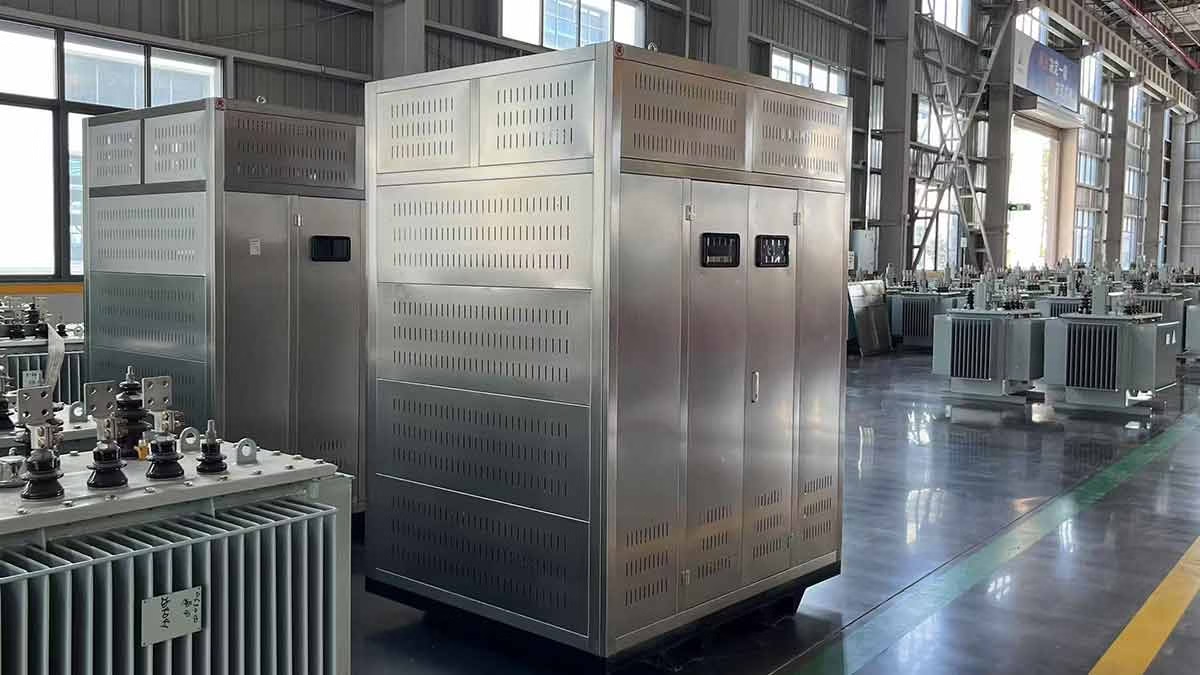
Residents noticed the biggest difference in noise levels. The old transformers’ constant hum had long been a complaint, but the new units’ vibration-dampening systems and sound-absorbing enclosures made them nearly silent. Many residents reported being able to sleep with windows open for the first time in years.
While initial costs were higher than traditional transformers, we worked with stakeholders to highlight long-term savings—lower energy bills, reduced maintenance costs, and environmental benefits. Training teams to handle the new biodegradable fluids and recycled materials was another key step in ensuring project success.
The outcome? A 30% reduction in energy losses, zero noise complaints, and a marked improvement in the area’s environmental impact assessment. The local government even featured the project as a case study for sustainable urban development—proving that green transformers aren’t just good for the planet, but for communities too.
Size Matters: Compact Transformers Redefining Urban Landscapes
Ever noticed how some cities feel more open and uncluttered than others? The answer often lies in the shrinking footprint of essential infrastructure—including the pad mounted transformers that power our daily lives.
Space-efficient transformers are redefining urban aesthetics and functionality through minimized footprints, underground installation feasibility, and seamless integration with city architecture. These compact designs free up valuable urban real estate, enhance safety, and improve visual appeal—all without compromising power capacity.
Compact transformer integrated into urban landscape Urban-friendly compact transformer
Let’s explore how these small-but-mighty designs are making a big impact:
Reduced Footprint: Maximizing Urban Space
Smaller transformers mean more efficient use of limited urban land, opening up possibilities for public spaces.
Benefits:
- Wider pedestrian walkways
- Additional green spaces and community areas
- Greater flexibility in urban planning
Underground Installation: Out of Sight, Fully Functional
Compact designs enable below-ground placement, keeping transformers hidden from view while maintaining accessibility.
Advantages:
- Improved city aesthetics
- Enhanced safety (reduced risk of vandalism or accidental damage)
- Better protection from extreme weather
Architectural Integration: Blending Function with Design
Modern compact transformers are designed to complement urban environments, rather than detract from them.
Creative Solutions:
- Transformer-integrated public benches
- Artistic enclosures designed by local artists
- Multi-functional urban furniture (e.g., bike racks, planters)
High Power Density: Small Packages, Big Performance
Advanced engineering packs maximum power into minimal space, meeting growing urban energy demands.
Innovations:
- High-efficiency cooling systems
- Next-generation insulation materials
- Optimized core and winding designs for maximum output
| Compact Feature | Urban Benefit | Technical Challenge |
|---|---|---|
| Reduced Size | More usable public space | Maintaining cooling efficiency in confined spaces |
| Underground Placement | Cleaner city aesthetics | Ensuring easy maintenance access |
| Architectural Integration | Enhanced urban design | Balancing form with functional requirements |
| High Power Density | Meets growing energy needs | Managing heat dissipation in compact units |
I recently led a project upgrading electrical infrastructure in a historic city district, where the challenge was to boost power capacity without disrupting the area’s cherished architectural character. Compact transformer technology proved to be the perfect solution.
We began by replacing large, outdated transformers with ultra-compact models that reduced the footprint by 40%. This allowed us to reclaim sidewalk space, widening walkways and creating small pocket parks where the old units once stood—much to the delight of residents and local businesses.
Underground installation was a game-changer for key locations. Initially, stakeholders expressed concerns about maintenance access and flooding risks, so we designed watertight enclosures with easy-access panels disguised as decorative manhole covers. The result? Transformers that were completely hidden, preserving the district’s historic charm.
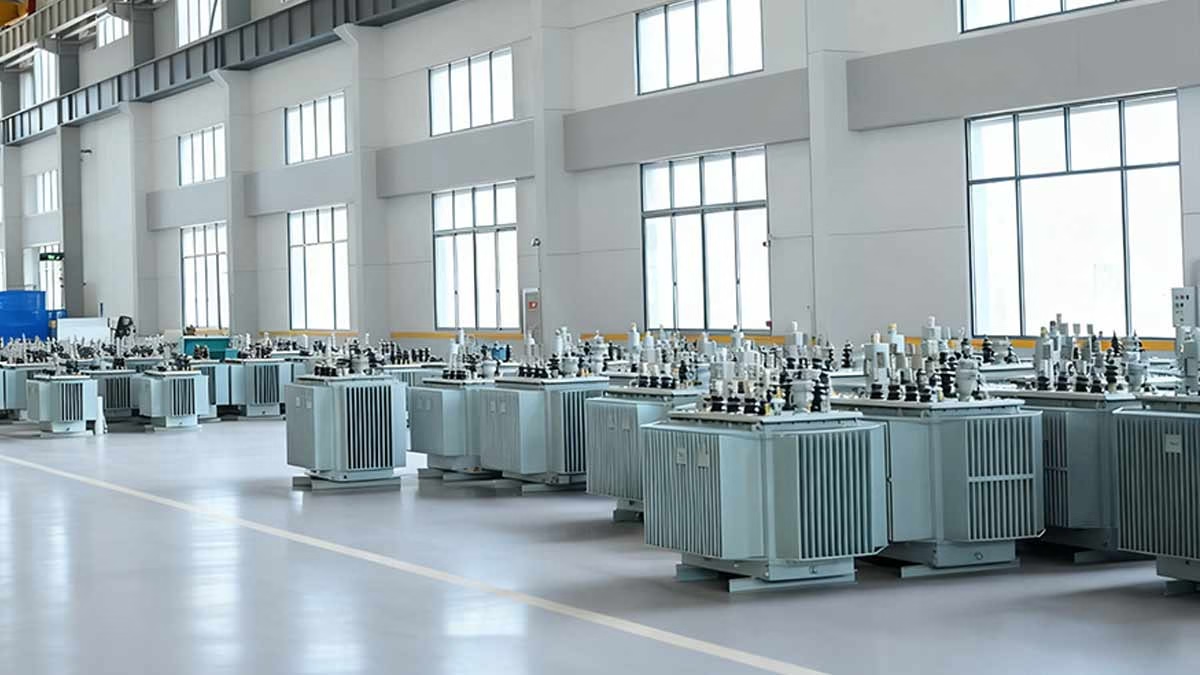
In one busy square, we took integration a step further: collaborating with a local artist to encase a transformer in a sculptural bench. The piece became a popular meeting spot, with most visitors unaware they were sitting on a critical piece of electrical infrastructure.
Despite their small size, these transformers delivered more power than their larger predecessors. Advanced cooling systems and high-efficiency designs enabled us to add electric vehicle charging stations throughout the district—future-proofing the area’s energy needs while maintaining its historic character.
Implementation wasn’t without challenges. The compact design required advanced thermal management to prevent overheating, and we trained maintenance teams on new procedures for servicing concealed units. But the benefits far outweighed the hurdles: increased foot traffic for local businesses, positive feedback from residents, and even a spot on the city’s tourism walking tour map for the artist-integrated transformers.
This project demonstrated that compact transformers aren’t just about saving space—they’re about enhancing the urban experience. As cities grow denser, the ability to integrate essential infrastructure seamlessly into the built environment becomes increasingly critical. The future of urban electrical design is smaller, smarter, and more in tune with the needs of modern city dwellers.
From Blackouts to Bright Lights: How Modern Transformers Boost Urban Power Reliability
We’ve all experienced the chaos of a citywide blackout—disrupted daily routines, lost productivity, and economic impact. But thanks to modern transformer technology, these scenarios are becoming a thing of the past.
Contemporary transformers boost urban power dependability via sophisticated fault identification, rapid response mechanisms, and enhanced durability features. These innovations minimize outages, reduce downtime, and ensure consistent power supply—even during extreme weather or peak demand—creating more resilient cities and stable daily lives.
Advanced transformer with fault detection system High-reliability urban transformer
Let’s explore the key innovations making urban power more reliable:
Advanced Fault Detection: Catching Issues Early
Modern transformers use state-of-the-art sensors and analytics to identify potential problems before they escalate.
Key Technologies:
- Real-time monitoring systems
- Predictive analytics algorithms
- Acoustic and thermal sensing tools
Rapid Response Systems: Swift Action When Problems Occur
When faults do arise, new technologies enable fast, automated resolution to minimize disruption.
Features:
- Automated fault isolation
- Self-healing grid integration
- Remote diagnostics and control
Improved Durability: Built for Urban Challenges
Today’s transformers are engineered to withstand harsh urban environments and extreme weather conditions.
Enhancements:
- Corrosion-resistant materials
- Extreme temperature tolerance
- Impact-resistant enclosures
Smart Grid Integration: Harmonizing Power Distribution
Modern transformers work as part of interconnected smart grids, optimizing performance across the entire network.
Benefits:
- Dynamic load balancing
- Seamless integration with renewable energy
- Demand response capabilities
| Reliability Feature | Urban Benefit | Implementation Challenge |
|---|---|---|
| Fault Detection | Fewer unexpected outages | Managing and analyzing large volumes of sensor data |
| Rapid Response | Minimal downtime | Coordinating with legacy grid systems |
| Improved Durability | Lower maintenance requirements | Higher initial investment in premium materials |
| Smart Grid Integration | Optimized power distribution | Addressing cybersecurity vulnerabilities |
I recently oversaw a project overhauling the power distribution system in a city plagued by frequent outages—and the transformation was remarkable.
We started by replacing aging transformers with state-of-the-art models equipped with advanced fault detection. Within the first month, the system identified a developing issue in a transformer serving a local hospital. We addressed the problem during a scheduled maintenance window, avoiding a potential catastrophic failure that could have disrupted critical healthcare services.
The rapid response capabilities were put to the test during a severe thunderstorm. Lightning struck near a substation, causing a power surge that would have triggered a widespread blackout in the past. Instead, the new system instantly isolated the affected area and rerouted power through alternative paths. Most residents experienced no interruption, and the impacted zone was back online within minutes—not hours.
Durability improvements shone during an unusually harsh winter. While neighboring cities struggled with equipment failures due to freezing temperatures, our transformers—built with corrosion-resistant materials and extreme temperature tolerance—operated flawlessly. The robust design reduced wear and tear, lowering long-term maintenance costs.
Smart grid integration was perhaps the most impactful innovation. The system balanced loads across the network in real time, automatically adjusting power distribution during a summer heatwave to prevent overloads. It also integrated seamlessly with a newly installed solar farm, using excess daytime energy to ease strain on traditional power sources—reducing both costs and environmental impact.
Implementing these advanced systems came with challenges. The sensor data volume required upgrading our data management infrastructure, and we invested in robust cybersecurity measures to protect the digital grid. Training our workforce to manage the new technology was another key step—creating high-skilled jobs and ensuring long-term operational success.
After a year, the results were clear: a 70% reduction in outage frequency, a 60% decrease in average downtime, and soaring customer satisfaction. Local businesses reported increased productivity due to fewer interruptions, and the city became more attractive to tech companies requiring stable power. An unexpected bonus? Reduced reliance on backup diesel generators, cutting the city’s carbon footprint.
This project reinforced the transformative power of modern transformer technology. As we continue to innovate, we’re moving closer to cities that are not just powered, but empowered—resilient against challenges and ready for the energy demands of the future.
The Silent Guardians: Advanced Pad Mounted Transformers’ Critical Role in Urban Life
Those unassuming green boxes on street corners are more than just urban fixtures—they’re the unsung heroes powering our cities.
Cutting-edge pad mounted transformers serve as the backbone of urban power distribution, efficiently stepping down high-voltage electricity to usable levels, ensuring public safety, and enabling smart grid operations. These silent guardians keep cities running smoothly, powering everything from homes and offices to hospitals and emergency services.
Advanced pad mounted transformer in urban setting Urban pad mounted transformer
Let’s explore the vital roles these transformers play in our daily lives:
Voltage Conversion: The Foundation of Usable Power
Pad mounted transformers safely reduce high-voltage electricity from transmission lines to levels suitable for homes and businesses.
Key Functions:
- Efficient voltage step-down
- Maintaining consistent power quality
- Balancing three-phase power distribution
Safety and Accessibility: Protecting Public and Workers
Modern designs prioritize public safety while ensuring easy access for maintenance.
Safety Features:
- Tamper-resistant enclosures
- Internal arc containment systems
- Visible disconnect switches for safe servicing
Smart Grid Enablers: Powering Intelligent Networks
Advanced transformers are essential components of smart grids, enabling data-driven management.
Smart Capabilities:
- Real-time data collection and transmission
- Remote monitoring and control
- Bi-directional power flow for renewable integration
Urban Design Integration: Function Meets Aesthetics
Today’s transformers are designed to blend with urban environments, avoiding the “eyesore” reputation of older models.
Design Considerations:
- Compact footprints for space efficiency
- Noise reduction technologies
- Custom enclosures that complement architecture
| Transformer Role | Urban Impact | Technical Requirement |
|---|---|---|
| Voltage Conversion | Reliable, safe power for daily use | High efficiency, minimal energy losses |
| Safety | Protection for residents and workers | Robust enclosures, fail-safe mechanisms |
| Smart Grid Integration | Enhanced grid management and flexibility | Advanced sensors and communication systems |
| Urban Design | Improved city aesthetics | Compact engineering, noise reduction |
In my years working with urban electrical infrastructure, I’ve witnessed firsthand how advanced pad mounted transformers revolutionize city power systems. One project in a densely populated downtown area stands out as a prime example.
The district’s aging infrastructure struggled to meet modern energy demands, with frequent voltage fluctuations plaguing local businesses reliant on sensitive electronics. We installed a network of high-efficiency pad mounted transformers that not only handled voltage step-down but also improved power quality—eliminating frustrating fluctuations and boosting business productivity.
Safety was a top priority given the high foot traffic. We selected transformers with tamper-resistant enclosures and internal arc containment, then hosted a public demonstration to address community concerns. Using a dummy unit, we simulated fault scenarios, showing how the transformers would contain issues without endangering nearby residents. The demonstration educated the public and built trust in the new infrastructure.
The smart grid capabilities proved transformative during a summer heatwave. As air conditioning use spiked, the transformers automatically adjusted load distribution, preventing overloads. Later, when the city installed solar panels on municipal buildings, the transformers seamlessly managed bi-directional power flow—balancing grid supply with solar input.
Integrating modern transformers into the historic downtown aesthetic was a unique challenge. We collaborated with local architects and artists to design custom enclosures that matched the area’s historic architecture. In one case, we incorporated a transformer into the base of a public sculpture, turning necessary infrastructure into a community landmark.
Noise reduction was another win for residents. Advanced vibration dampening and acoustic insulation made the transformers nearly silent, eliminating the constant hum of older units. This allowed for more flexible placement in noise-sensitive areas, including near residential buildings and parks.
The project’s impact extended beyond power reliability. Property values in the area increased as residents and businesses valued the improved power quality and reduced outage risk. The city’s economic development office even used the advanced electrical infrastructure as a selling point to attract new businesses—highlighting how transformers can drive urban growth.
These silent guardians are essential to modern urban life, working behind the scenes to power our daily routines. As technology evolves, they’ll become even more integrated, efficient, and critical to building the smart cities of tomorrow.
Conclusion
Innovators in pad mounted transformer technology are steering urban electrical infrastructure toward a more efficient, sustainable, and resilient future—powered by smart advancements, eco-friendly designs, compact engineering, enhanced reliability, and state-of-the-art protection systems. These innovations aren’t just upgrading power grids; they’re redefining what cities can be—safer, greener, and more responsive to the needs of their residents. As urban populations grow and energy demands evolve, pad mounted transformers will remain at the forefront of building the cities we deserve.