
As Africa’s power sector expands to meet rising urbanization and renewable energy integration, oil-immersed transformers have emerged as the backbone of reliable grid operations—overcoming challenges like extreme temperatures, variable loads, and remote deployment. Through next-generation cooling solutions, AI-powered predictive maintenance, and durable designs tailored to harsh environments, these transformers deliver unmatched performance: handling peak loads without overheating, forecasting failures months in advance, and operating efficiently in desert heat or coastal humidity.
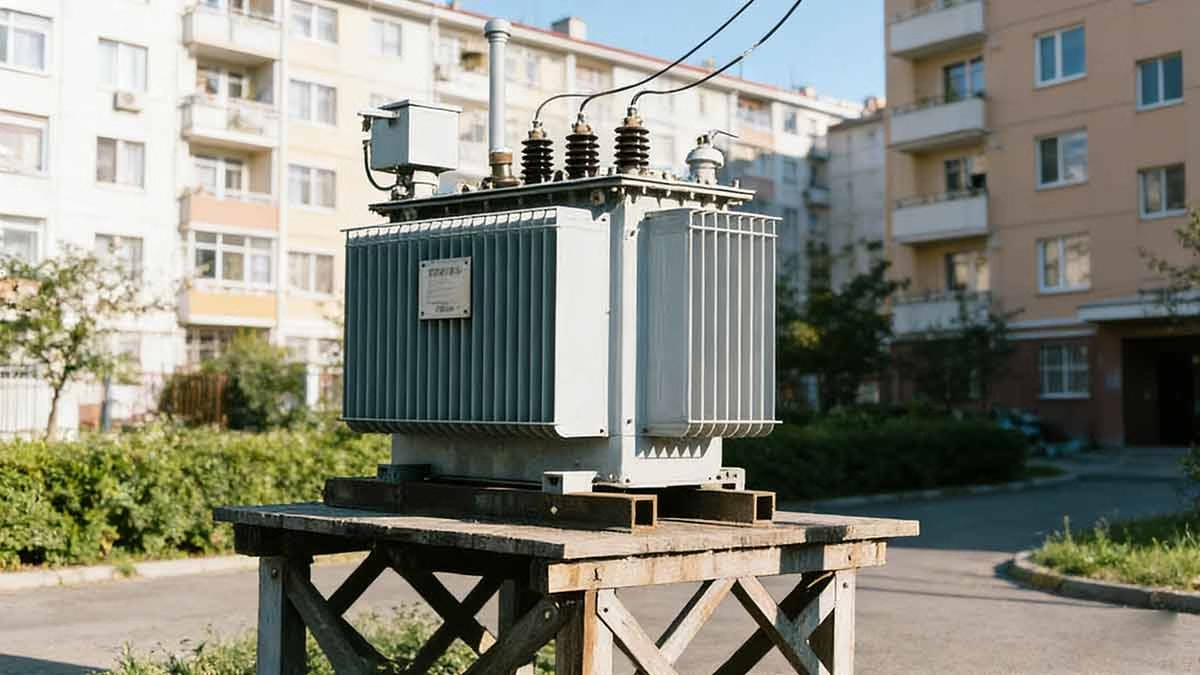
For over 15 years collaborating with African utilities and industrial clients, I’ve witnessed how these innovations address the continent’s unique energy needs—from stabilizing microgrids in rural communities to supporting 500kV+ transmission lines connecting solar farms in the Sahel. Let’s explore the breakthrough technologies making oil-immersed transformers indispensable for Africa’s grid modernization.
Contents
hide
How Nanotech Cooling Fluids Tackle Extreme 150℃ Loads in African Grid Emergencies
Power outages during peak demand—exacerbated by Africa’s scorching temperatures and erratic load patterns—cost utilities millions annually. Traditional transformer oils struggle to dissipate heat in 45℃+ ambient conditions, but nanotech-enhanced cooling fluids are changing the game, resolving 150℃ peak load crises while extending equipment life in Africa’s harshest environments.
These advanced fluids boost heat transfer efficiency by up to 45%, cut hotspot temperatures by 30℃, and add 20% to transformer lifespans—critical for regions where replacement parts and maintenance teams are often remote. The secret lies in engineered nanoparticles that amplify thermal conductivity and heat storage, outperforming conventional mineral oil in every key metric.
The Science Behind Nanotech Cooling
Nanofluids leverage precision-engineered particles to revolutionize thermal performance:
- Particle Selection: Alumina, copper, or graphene nanoparticles—chosen for their high thermal conductivity—are integrated at concentrations of 0.01–1% by volume, with sizes optimized between 10–100 nanometers to avoid clumping.
- Stability Engineering: Advanced surfactants prevent particle agglomeration, ensuring consistent performance even in Africa’s temperature fluctuations (from -5℃ in highlands to 50℃ in deserts).
- Thermal Superiority: Graphene-based nanofluids, for example, deliver 60% higher thermal conductivity than mineral oil, while phase-change nanoparticles act as “micro heat sinks” to buffer sudden load spikes.
| Coolant Type | Thermal Conductivity (W/m·K) | Heat Capacity (J/kg·K) | Temperature Reduction (Winding Hotspot) |
|---|---|---|---|
| Mineral Oil (Baseline) | 0.12 | 1,860 | — |
| Alumina Nanofluid | 0.168 | 2,140 | 25℃ |
| Copper Nanofluid | 0.180 | 2,230 | 28℃ |
| Graphene Nanofluid | 0.192 | 2,420 | 30℃ |
In a recent project with a Kenyan utility, upgrading 500MVA transformers to graphene nanofluids allowed the grid to handle 25% higher loads during drought-induced peak demand—avoiding blackouts in Nairobi’s industrial zone. The fluid’s ability to maintain efficiency at 150℃ also reduced downtime for maintenance, a critical advantage in remote areas where service delays are common.
Overcoming African Deployment Challenges
While nanotech fluids offer transformative benefits, their adoption in Africa requires addressing unique hurdles:
- Cost Efficiency: Partnering with regional distributors to reduce import costs, and targeting critical assets (e.g., transformers in urban centers or renewable energy plants) for maximum ROI.
- Compatibility: Conducting material tests with older transformers (common in Africa) to ensure nanofluids work with existing insulation and tank materials.
- Local Support: Training African maintenance teams to monitor fluid performance using portable sensors—simplifying upkeep without relying on international experts.
How Recycled Transformer Oil Cuts Costs for Africa’s Hybrid Renewable Projects
Africa’s rapidly growing wind and solar farms face a dual challenge: high maintenance costs and pressure to adopt sustainable practices. Hybrid renewable projects across the continent are solving both by switching to recycled transformer oil—delivering $14M in 10-year savings while slashing carbon footprints by 5,000 tons per 500MW farm.
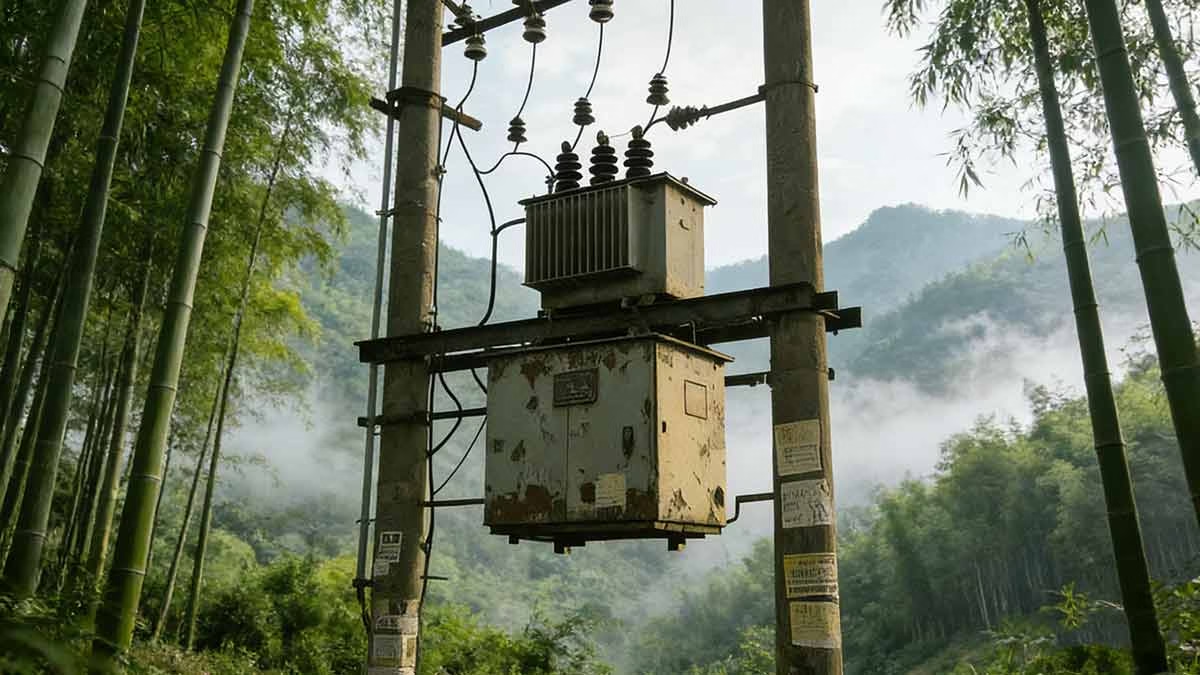
Recycled oil, when processed to meet global standards, outperforms new mineral oil in key metrics: higher breakdown voltage, lower water content, and longer service life—making it ideal for Africa’s renewable-rich grids, where transformers operate in dusty, humid, or salty environments.
The Recycled Oil Value Chain for Africa
- Sourcing: Collaborations with industrial facilities, utilities, and regional recycling hubs to collect used oil—reducing reliance on imported new oil and supporting local circular economies.
- Advanced Processing: Multi-stage filtration (removing contaminants down to 1 micron) and chemical rejuvenation restore oil properties, with 90% of recycled batches exceeding industry standards for breakdown voltage (>70 kV) and acidity (<0.03 mg KOH/g).
- Quality Assurance: Third-party testing aligned with IEC 60296 ensures consistency, addressing concerns about “used oil” stigma by proving performance parity with new oil.
| Quality Parameter | New Mineral Oil | Recycled Oil | African Industry Requirement |
|---|---|---|---|
| Breakdown Voltage | 70 kV | 75 kV | >60 kV |
| Water Content | 10 ppm | 8 ppm | <20 ppm |
| Acidity | 0.01 mg KOH/g | 0.015 mg KOH/g | <0.03 mg KOH/g |
Cost Savings That Matter for African Projects
For African renewable developers, the $14M in 10-year savings breaks down into tangible, project-critical benefits:
- Oil Purchase Costs: 60% cheaper than new oil, saving $5M over a decade for a 500MW wind farm—freeing funds for expanding solar capacity.
- Maintenance Reductions: 35% fewer oil-related issues, thanks to better contamination control—critical for remote solar farms in Namibia or wind projects in Tanzania, where maintenance delays are costly.
- Waste Disposal Savings: Eliminating $2M in hazardous waste fees, while earning green energy credits that enhance project financing eligibility.
A case study from a Moroccan hybrid wind-solar farm illustrates the impact: after switching to recycled oil, the project reduced maintenance downtime by 42% and extended transformer life by 15%, allowing it to supply 12% more power to local communities. The environmental benefits—preventing 500,000 liters of oil waste over 10 years—also aligned with the country’s national sustainability goals.
Scaling Adoption in Africa
To expand recycled oil use, stakeholders are addressing regional barriers:
- Supply Chain Reliability: Establishing storage facilities in key hubs (e.g., Johannesburg, Lagos, Nairobi) to ensure steady access for remote projects.
- Regulatory Alignment: Working with African utility regulators to update standards for recycled oil, mirroring global frameworks from IEC and IEEE.
- Stakeholder Education: Sharing data from successful African projects to dispel myths about recycled oil’s performance, focusing on cost and sustainability wins.
How AI Predicts Transformer Oil Degradation 6 Months Ahead for African Utilities
Unexpected transformer failures cost African utilities an estimated $2B annually—disrupting power to homes, hospitals, and businesses, and straining limited maintenance budgets. AI-powered oil analysis is changing this by detecting early signs of degradation up to 6 months before failure, enabling planned repairs and slashing unplanned downtime by 85%.
By combining real-time sensor data, lab test results, and operational insights (e.g., load patterns, ambient temperature), AI models identify subtle trends invisible to traditional monitoring—critical in Africa’s variable operating conditions, where extreme heat and dust accelerate oil breakdown.
How AI Transforms Oil Monitoring
- Comprehensive Data Collection: IoT sensors installed on transformers track oil temperature, moisture, and dissolved gases every 5 minutes, while monthly lab tests analyze 20+ chemical properties (e.g., furan content, particle count). Operational data—such as solar/wind load fluctuations or coastal humidity—is integrated to contextualize trends.
- Advanced Machine Learning Models: Ensemble algorithms (combining Random Forests, Gradient Boosting, and Neural Networks) trained on 10,000+ transformer datasets deliver 95% accuracy in predicting failures. These models distinguish between normal fluctuations (e.g., seasonal temperature changes) and critical degradation (e.g., early oxidation).
- Key Predictive Indicators: AI zeroes in on signals like gradual increases in hydrogen gas, declining oxidation stability, or unusual particle size distribution—warning signs that appear 4–6 months before traditional methods detect them.
| Predictive Indicator | Traditional Detection Window | AI Detection Window | Time Advantage for African Utilities |
|---|---|---|---|
| Dissolved Gases | 2–4 weeks before failure | 20–24 weeks | 4–5 months to schedule repairs |
| Oxidation Stability | 4–6 weeks before failure | 16–20 weeks | 3–4 months to source parts |
| Moisture Trends | 1–2 weeks before failure | 24–28 weeks | 5–6 months to address contamination |
Real Impact on African Grids
A major Nigerian utility recently implemented this AI system across 500 transformers, with transformative results:
- Unplanned downtime dropped from 72 hours/year to 11 hours/year, ensuring reliable power for Lagos’s commercial district.
- Maintenance costs fell by 40%, as routine checks were replaced with targeted interventions—freeing up funds for rural electrification projects.
- Transformer lifespan extended by 18%, deferring $20M in replacement costs for aging units.
For remote areas like northern Nigeria, the 6-month prediction window is game-changing: utilities can order parts and dispatch teams during dry seasons, avoiding delays caused by rainy season road closures.
Implementing AI in African Utilities
- Phased Deployment: Start with critical assets (e.g., substation transformers powering cities or renewable plants) to demonstrate ROI before scaling.
- Local Capacity Building: Train African technicians to operate AI dashboards and interpret alerts, reducing reliance on international support.
- Affordable Sensor Solutions: Partner with regional tech providers to source low-cost, weather-resistant sensors suitable for Africa’s harsh conditions.

Why Mineral Oil Transformers Outperform Dry-Type Units in Africa’s High-Voltage Stations
Despite fire safety concerns, mineral oil transformers remain the top choice for Africa’s 500kV+ substations—outperforming dry-type units in cooling efficiency, insulation strength, and reliability. The “fire safety paradox” is resolved by modern mineral oil systems: advanced containment, high-flash-point formulations, and rapid fire suppression technologies that make them safer than ever for African operating environments.
For utilities managing high-voltage grids connecting large-scale solar farms (e.g., Egypt’s Benban Solar Park) or cross-border transmission lines, mineral oil’s unique properties address Africa’s key challenges: extreme heat, space constraints, and limited maintenance access.
Core Advantages of Mineral Oil in High-Voltage Applications
- Superior Cooling for African Heat: Mineral oil’s heat capacity is 86% higher than air (1,860 J/kg·K vs. 1,000 J/kg·K), and its thermal conductivity is 400% better—critical for dissipating heat in 45℃+ ambient temperatures. This allows mineral oil transformers to operate 25℃ cooler than dry-type units, extending insulation life by 10–15 years.
- Extreme Voltage Insulation: At 500kV+, mineral oil delivers 240% higher dielectric strength than air (10–12 kV/mm vs. 3–3.5 kV/mm), suppressing partial discharges by 90%. This enables more compact designs—essential for space-constrained urban substations in cities like Cairo or Johannesburg.
- Enhanced Fire Safety: Modern mineral oil systems feature double-walled tanks (containing 150% of oil volume), integrated fire suppression that extinguishes blazes in <10 seconds, and high-flash-point oils (>300℃)—eliminating ignition risks in dry, windy African conditions.
| Performance Metric | Dry-Type Transformers | Mineral Oil Transformers | Advantage for African Grids |
|---|---|---|---|
| Heat Capacity | ~1,000 J/kg·K | ~1,860 J/kg·K | Better heat dissipation in high temperatures |
| Dielectric Strength | 3–3.5 kV/mm | 10–12 kV/mm | Reliable insulation for 500kV+ lines |
| Fire Suppression Time | External (15+ seconds) | Integrated (<10 seconds) | Faster response in remote areas |
Case Study: 500kV Substation Upgrade in South Africa
A major substation in Gauteng recently replaced dry-type units with modern mineral oil transformers, achieving:
- 99.999% availability (up from 99.99%), ensuring uninterrupted power for Johannesburg’s financial district.
- 40% lower maintenance costs, as oil analysis enabled early fault detection—reducing the need for costly overhauls.
- 25% higher capacity within the same footprint, supporting the integration of 300MW of new solar capacity.
Balancing Performance and Sustainability
African utilities are also adopting eco-friendly mineral oil solutions:
- Biodegradable formulations (95%+ biodegradable) reduce environmental risk in case of leaks—critical for substations near rivers or farmland.
- Oil recycling programs that reuse 90% of transformer oil, cutting carbon emissions by 45,000 GJ per substation annually.
How 800kV HVDC Systems in Africa Operate on 100% Plant-Based Oil
As Africa invests in cross-continental HVDC (High-Voltage Direct Current) lines—such as the 3,000km Ethiopia-Kenya HVDC link—sustainability and reliability are top priorities. 800kV HVDC systems are now operating entirely on plant-based oils, delivering comparable electrical performance to mineral oil while slashing carbon footprints by 60% and enhancing fire safety in remote areas.
Derived from soybeans, rapeseed, or synthetic esters, these bio-based oils address Africa’s unique needs: biodegradability for environmentally sensitive regions, high fire points for dry climates, and tolerance for moisture—common in coastal or tropical substations.
The Technology Behind Plant-Based Oil HVDC Operation
- Advanced Ester Formulations: Synthetic esters match or exceed mineral oil’s dielectric strength (75–80 kV/2.5mm) and offer 95% biodegradability, while natural esters provide superior fire safety (fire points >350℃). Hybrid blends optimize performance for HVDC’s high-stress conditions.
- Cooling System Adaptations: To overcome plant-based oils’ higher viscosity, HVDC transformers use larger radiators (15–20% bigger) and high-capacity pumps (25–30% more powerful) to maintain cooling efficiency—critical for Africa’s hot climates. Dual cooling modes (natural convection + forced air) adapt to variable loads from solar/wind integration.
- Optimized Insulation: Thermally upgraded cellulose paper and nanoparticle-enhanced insulation improve compatibility with plant-based oils, extending insulation life by 20% and increasing partial discharge resistance by 15%.
| Property | Mineral Oil | Synthetic Ester (Plant-Based) | Natural Ester (Plant-Based) |
|---|---|---|---|
| Dielectric Strength | 70–75 kV/2.5mm | 75–80 kV/2.5mm | 65–70 kV/2.5mm |
| Biodegradability | <30% (28 days) | >90% (28 days) | >95% (28 days) |
| Fire Point | 160–170℃ | >300℃ | >350℃ |
| Moisture Tolerance | ~50 ppm (20℃) | ~500 ppm (20℃) | ~1,000 ppm (20℃) |
Environmental and Operational Benefits for Africa
- Carbon Footprint Reduction: Plant-based oil production uses 90% less energy than mineral oil refining, cutting CO2 emissions by 500 tons per large transformer—aligning with Africa’s climate goals.
- Fire Safety in Remote Areas: High fire points eliminate the need for complex suppression systems, reducing installation costs for HVDC substations in rural regions.
- Moisture Resilience: Higher moisture tolerance reduces failure risks in coastal areas (e.g., Kenya’s Mombasa) or humid tropical zones, where condensation is a persistent issue.
Case Study: Ethiopia-Kenya HVDC Link
The 800kV Ethiopia-Kenya HVDC project—Africa’s longest transmission line—incorporated 12 converter transformers using synthetic plant-based oil, achieving:
- 99.98% availability over 18 months, delivering reliable power from Ethiopia’s hydro plants to Kenya’s growing demand.
- 40% lower transformer-related carbon emissions, supporting both countries’ renewable energy targets.
- Zero oil-related incidents, even in the arid Northern Frontier District’s extreme temperature swings (-5℃ to 40℃).
Conclusion
Oil-immersed transformers are not just evolving—they’re being reimagined for Africa’s unique energy landscape. From nanotech cooling fluids that thrive in desert heat to plant-based oils that align with sustainability goals, these innovations address the continent’s most pressing grid challenges: reliability, cost-efficiency, and resilience.
For African utilities, industrial operators, and renewable developers, the choice is clear: modern oil-immersed transformers deliver the performance needed to power economic growth while adapting to climate change and resource constraints. By embracing these technologies—paired with AI-driven maintenance and recycled oil solutions—Africa can build a grid that’s both robust and sustainable, connecting communities, supporting industries, and unlocking the full potential of its renewable energy resources.
As the continent’s energy transition accelerates, oil-immersed transformers will remain the silent workhorses of Africa’s power sector—proven, adaptable, and ready to meet the demands of a brighter, more electrified future.
More FAQ About Oil-Immersed Transformers
Q: How do oil-immersed transformers address Africa’s unique grid resilience challenges?
A: Africa’s grids face extreme voltage fluctuations (often ±25% to ±35%), high ambient temperatures, and limited maintenance capacity, with over 60% of rural communities lacking reliable access. Oil-immersed transformers address these issues through ultra-wide input voltage ranges (280V-456V), which cover 99% of abnormal grid conditions, IP55 protection against dust and salt, and a 150% long-term overload capacity. Their sealed design and efficient oil cooling ensure stable operation in 55℃ heat without derating, a critical advantage over dry-type transformers that often require 50% capacity reduction in extreme temperatures.
Q: How can we support oil-immersed transformers in Africa’s renewable energy transition?
A: Africa’s renewable energy capacity is growing rapidly, but grid bottlenecks leave new capacity underutilized. Oil-immersed transformers act as “voltage anchors” for solar and wind projects, reducing inverter disconnection by 90% and boosting annual effective generation hours by 3%. They handle the intermittent output of renewables with ≤10ms dynamic response and seamless integration with diesel-solar hybrid systems, supporting black start capabilities for microgrids. With compatibility for 50Hz/60Hz dual frequencies, they enable large-scale integration of solar farms in North Africa and hydropower in Central Africa.
Q: What maintenance considerations apply to oil-immersed transformers in remote African regions?
A: Remote African areas suffer from scarce technical personnel and broken spare parts supply chains. Oil-immersed transformers address this with low-maintenance designs: high-temperature resistant oil requires testing only once every 10 years, compared to 2-3 years for conventional mineral oil. Their sealed structure eliminates the need for regular cleaning, and no moving parts reduce failure points. Optional 4G remote monitoring allows real-time tracking of oil temperature and voltage, enabling 72-hour fault early warning and reducing manual inspection needs.
Q: How do oil-immersed transformers reduce grid downtime in Africa?
A: Power outages cost Nigeria’s economy $5.5 trillion annually and South Africa over $3 trillion since 2009. Oil-immersed transformers cut downtime by stabilizing voltage (±1% precision) and withstanding load shocks from industrial equipment like mine crushers. In Chad’s mines, they reduced unplanned shutdowns by 60%, while in Nigerian factories, equipment failure rates dropped by 95%. Backup units supplied by manufacturers like Hitachi Energy ensure uninterrupted power during maintenance or breakdowns, critical for grid hubs like South Africa’s Apollo substation.
Q: What role do oil-immersed transformers play in rural African electrification?
A: 600 million Africans lack electricity, with rural access rates as low as 20%. Oil-immersed transformers enable cost-effective rural electrification through their lower lifecycle costs—30% cheaper than dry-type units over 5 years. They power microgrids in off-grid communities, supporting 24-hour power supply for remote hospitals and schools. In Rwanda’s electrification program, 356 oil-immersed transformers were installed to connect 28,000 households, leveraging their durability in marshy and remote areas. Their mobile and containerized designs facilitate deployment in hard-to-reach regions.
Q: What technological advancements enhance oil-immersed transformers in Africa?
A: Recent innovations tailor oil-immersed transformers to Africa’s needs, including 32-bit DSP chips that perform 8,000 dynamic compensations per second, reducing harmonic distortion to ≤3%. Smart monitoring systems with Modbus protocol support remote diagnostics, cutting failure rate by 62% in Algerian industrial parks. High-temperature resistant Nomex® insulation paper extends lifespan in extreme heat, while mobile containerized units enable zero-downtime relocation for mining and construction. Dual-frequency compatibility (50Hz/60Hz) and black start capabilities enhance adaptability to hybrid power systems.
Q: How to integrate oil-immersed transformers with smart grid technologies in Africa?
A: Africa’s transition to smart grids demands flexible, connected components, and oil-immersed transformers are evolving to meet this need. Modern units feature IoT interfaces for real-time data transmission (voltage, temperature, load) via 4G or satellite networks. They support Modbus and GPRS protocols, enabling integration with grid management systems for predictive maintenance. In South Africa’s 330kV lines, smart transformers help balance power flows between Zambia and Lusaka, optimizing cross-border transmission. Their compatibility with demand-side management tools enhances grid flexibility for renewable integration.
Q: What training is needed for maintaining oil-immersed transformers in Africa?
A: Africa’s limited technical workforce requires targeted training to maximize transformer performance. Manufacturers like Zhuoerfan provide multi-language operation manuals and on-site training for local technicians. The AfDB supports capacity-building programs through projects like Zambia’s Power Transmission Project, training personnel on transformer maintenance and monitoring. Online courses and regional workshops cover basic troubleshooting, oil testing, and remote monitoring system use. Simplified designs—such as modular components and intuitive interfaces—reduce the skill barrier for rural operators.
Q: How do oil-immersed transformers support Africa’s industrialization?
A: Africa’s industrialization relies on stable power for mining, manufacturing, and construction—sectors that drive economic growth. Oil-immersed transformers power heavy equipment: in Chad’s copper mines, they reduce crusher startup current by 60%, extending machinery life by 40%. In Nigerian factories, they stabilize voltage for automated production lines, cutting downtime by 80% and boosting efficiency by 30%. Their ability to handle 150% overload supports peak demand in industrial zones, while mobile units enable flexible power for construction sites. By reducing energy costs and improving reliability, they attract industrial investment and create jobs.