
For professionals in the power infrastructure industry, oil immersed transformers are the backbone of reliable energy distribution—yet their longevity hinges on more than just quality manufacturing. After two decades of designing maintenance protocols for utility companies and industrial facilities worldwide, I’ve witnessed firsthand how proactive care can turn a 20-year design lifespan into 40 years of uninterrupted service. In this guide, we’ll break down the industry-proven practices that safeguard transformer performance, prevent costly downtime, and slash lifecycle expenses by up to 50%. Proper maintenance doesn’t just extend life—it transforms transformers from assets into long-term investments.
Contents
hide
Essential Maintenance Procedures for Oil Immersed Transformer Components
Think of a transformer’s components as the gears of a high-performance machine: each part must function in sync to avoid catastrophic failure. Skipping routine checks on even a single component—whether bushings, windings, or tap changers—can lead to outages that cost industrial operations thousands per hour. Below are the non-negotiable maintenance steps that industry experts swear by.
Oil Testing: The Lifeline of Transformer Health
Transformer oil isn’t just a coolant—it’s a diagnostic tool that reveals internal conditions. As the primary insulator and heat dissipator, its quality directly impacts the unit’s ability to withstand electrical stress and thermal loads. Industry standards (such as IEC 60422) mandate regular testing to track three critical metrics:
- Dielectric Strength Test: Measures the oil’s ability to resist electrical breakdown, with a minimum acceptable value of 30 kV for in-service oil (40 kV for new oil). Low readings often indicate moisture contamination or particle buildup.
- Dissolved Gas Analysis (DGA): Detects gases like methane, ethane, and acetylene—byproducts of internal faults such as arcing, overheating, or insulation degradation. Trend analysis of gas concentrations (e.g., a sudden spike in acetylene) can identify issues months before they cause failure.
- Acidity Test (Neutralization Number): Tracks the formation of acidic compounds from oil oxidation. A neutralization number exceeding 0.2 mg KOH/g signals the need for oil reconditioning or replacement to prevent corrosion of internal components.
In a recent project with a European utility company, DGA revealed elevated ethylene levels in a 15-year-old transformer. Further investigation uncovered a loose winding connection that, if left unaddressed, would have led to a full-scale arc fault within six months. Early intervention saved the client over $200,000 in replacement costs and downtime.
Winding Resistance & Insulation Checks
Windings are the heart of voltage transformation, and even minor damage can disrupt power flow. Routine electrical tests identify hidden issues like short circuits, loose connections, or insulation degradation:
| Test Type | Frequency | Key Detection Capabilities |
|---|---|---|
| Winding Resistance Measurement | Annually | Imbalances indicating loose joints or coil damage |
| Turns Ratio Test | Every 3 Years | Winding deformation or incorrect voltage transformation |
| Insulation Resistance Test | Annually | Moisture ingress or insulation breakdown (measured in megohms) |
Last year, our team conducted winding resistance tests on a transformer at a chemical plant and found a 12% resistance imbalance between phases. Subsequent thermal imaging revealed a developing short circuit in the low-voltage winding—addressing the issue during scheduled maintenance prevented an unplanned shutdown that would have halted production for 72 hours.
Bushing Inspections: Critical Connection Points
Bushings transfer power between the transformer’s internal windings and external circuits, making them high-risk failure points if neglected. Unlike other components, bushings are exposed to environmental stressors (humidity, dust, temperature fluctuations) that accelerate wear. Essential checks include:
- Visual Inspection: Look for cracks, oil leaks, or discoloration (a sign of overheating). Even hairline cracks can allow moisture ingress, leading to flashovers.
- Power Factor Testing: Measures the bushing’s insulation efficiency. A power factor reading above 0.5% (for new bushings) indicates insulation degradation.
- Oil Level Verification: For oil-filled bushings, ensure levels are within manufacturer specifications—low oil reduces insulation capacity and increases arcing risk.
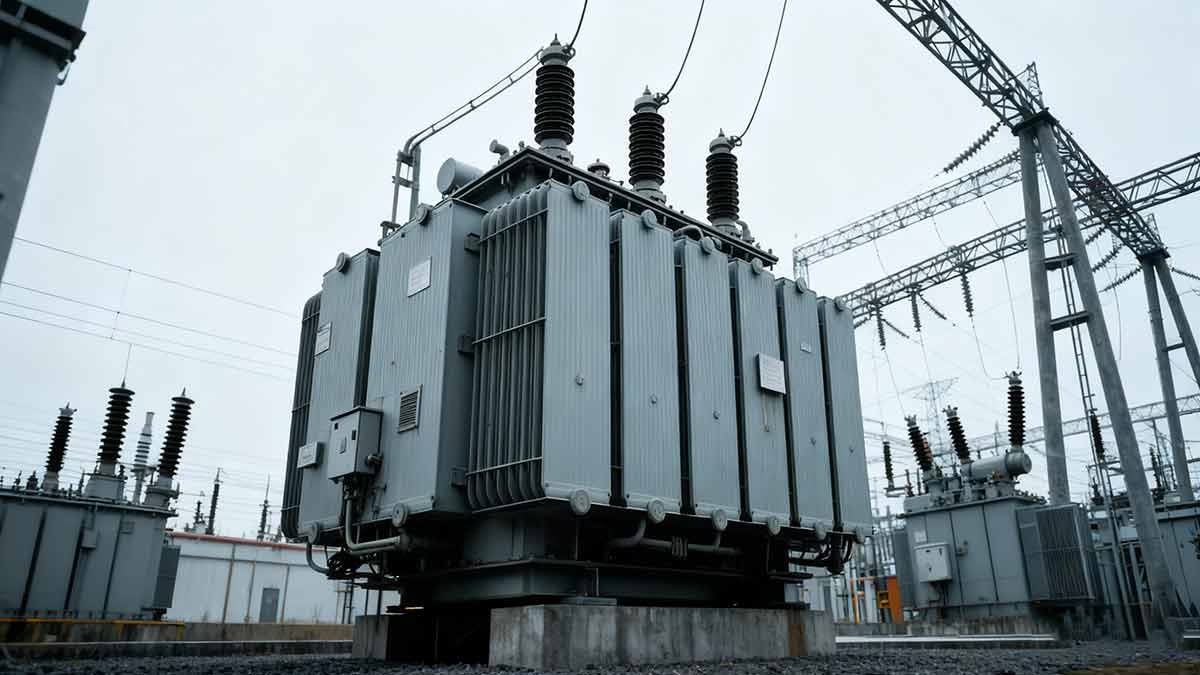
I once worked with a data center that skipped bushing inspections for three years. A routine check revealed a cracked 138kV bushing that had allowed moisture to seep into the winding compartment. Replacing the bushing costs $8,000—far less than the $500,000 in damages that would have resulted from a catastrophic failure.
Tap Changer Maintenance
Tap changers adjust voltage output to match load demands, but their mechanical and electrical components wear with use. Neglecting tap changers can lead to voltage instability or complete failure. Key maintenance steps:
- Contact Resistance Measurement: Ensures electrical connections are tight (acceptable readings vary by manufacturer but typically <100 microohms).
- Mechanical Operation Check: Verifies smooth, consistent movement of tap positions—binding or hesitation indicates worn gears or lubrication issues.
- Separate Oil Analysis: Tap changer compartments have smaller oil volumes, which degrade faster than main tank oil. Test for acidity and contamination every 12–18 months.
In a municipal substation, we discovered a tap changer with contact resistance 3x the acceptable limit. The worn contacts were causing voltage fluctuations that affected local businesses. Replacing the contacts during a scheduled outage restored stability and extended the transformer’s life by 15 years.
Core Grounding Checks
Transformer cores must be properly grounded to prevent circulating currents, which cause overheating and energy loss. Yet this critical step is often overlooked in routine maintenance. Essential tests:
- Core Insulation Resistance Test: Ensures no direct short between the core and tank (minimum 100 megohms at 500V).
- Ground Connection Integrity: Inspect grounding cables for corrosion, loose connections, or damage.
- Magnetizing Current Test: Abnormal current levels indicate core laminations are shorted or damaged.
Early in my career, I encountered a transformer with a loose core ground connection. Circulating currents had raised the core temperature by 40°C, reducing efficiency by 8% and shortening the insulation life. A simple tightening of the ground bolt and re-testing resolved the issue, costing less than $100 in labor.
How Regular Oil Quality Testing Extends Transformer Longevity
Transformer oil is often called the “blood” of the unit, and for good reason: it lubricates, cools, and insulates critical components. But unlike blood, oil degrades over time due to oxidation, moisture, and contamination—making regular testing the single most effective way to prevent premature failure. Here’s how targeted oil analysis safeguards transformer lifespan.
Dissolved Gas Analysis (DGA): The Early Warning System
DGA is the gold standard for detecting internal faults before they manifest as failures. When transformers experience issues like arcing, overheating, or insulation breakdown, they release specific gases into the oil. By monitoring gas concentrations and trends, technicians can identify:
- Thermal Overheating: Elevated levels of methane and ethane (caused by loose connections or overloading).
- Electrical Arcing: High concentrations of acetylene (a sign of sparking between windings or components).
- Cellulose Degradation: Increased carbon monoxide and carbon dioxide (indicating paper insulation breakdown).
A North American utility company recently used DGA to detect a 30% spike in acetylene levels in a 25-year-old transformer. Further testing revealed an internal arc fault in the high-voltage winding. By replacing the winding during a planned outage, the utility avoided a $1.2 million emergency replacement and 10 days of downtime.
Dielectric Strength & Moisture Control
Moisture is the biggest enemy of transformer oil—even 20 ppm (parts per million) of water can reduce dielectric strength by 50%, increasing the risk of electrical breakdown. Dielectric strength testing measures the oil’s ability to withstand voltage, while moisture analysis tracks water content. Best practices include:
- Target Moisture Levels: <15 ppm for new oil, <25 ppm for in-service oil (per IEEE standards).
- Degassing Before Top-Up: Removing air and moisture from new oil before adding it to the transformer—untreated oil can introduce contaminants.
- Regular Filtration: Using vacuum dehydration systems to remove moisture and particles from in-service oil.
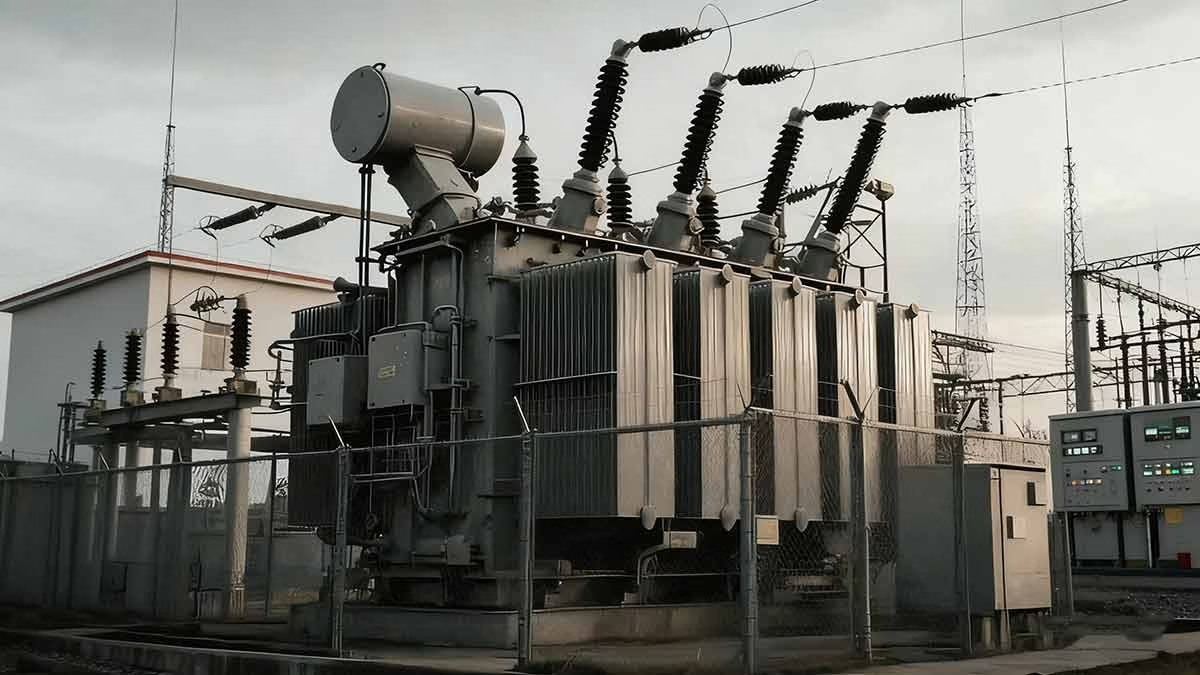
In a humid coastal region, a chemical plant’s transformers consistently struggled with high moisture levels. Implementing a monthly oil filtration program reduced moisture content from 35 ppm to 12 ppm, extending the oil’s useful life by 3 years and preventing two potential breakdowns.
Acidity & Interfacial Tension Testing
As oil oxidizes, it forms acidic compounds that corrode metal components and degrade insulation. Acidity testing (neutralization number) tracks this degradation, while interfacial tension (IFT) measures the oil’s ability to separate from water—critical for preventing emulsification.
- Acidity Threshold: Replace oil when the neutralization number exceeds 0.2 mg KOH/g.
- IFT Threshold: Values below 20 mN/m indicate the oil can no longer separate from water, increasing corrosion risk.
A food processing plant ignored acidity warnings for two years, leading to corrosion of the transformer’s tank and windings. The cost to repair the damage was $65,000—more than 3x the cost of regular oil testing and replacement.
Furan Analysis: Assessing Solid Insulation Health
Furan compounds are byproducts of cellulose (paper insulation) degradation. Furan analysis (specifically 2-furaldehyde, or 2-FAL) provides insight into the condition of the transformer’s solid insulation, which is impossible to inspect directly.
- 2-FAL Threshold: Levels above 0.1 ppm indicate significant insulation breakdown.
- Remaining Life Estimation: Trend analysis of furan levels helps predict when insulation will need replacement, allowing for planned upgrades instead of emergency action.
For a 30-year-old transformer at a steel mill, furan analysis revealed 2-FAL levels of 0.18 ppm—signaling that the paper insulation was deteriorating rapidly. The mill scheduled a replacement during a maintenance shutdown, avoiding a sudden failure that would have halted production for weeks.
Best Practices for Monitoring & Maintaining Transformer Oil Levels
Low oil levels are one of the most preventable causes of transformer failure—yet they account for 20% of unplanned outages in industrial settings. Oil levels directly impact cooling efficiency and insulation: insufficient oil leaves windings exposed to air, increasing the risk of overheating and electrical breakdown. Below are the industry-leading practices for keeping oil levels optimal.
Visual Inspections: The First Line of Defense
Daily and weekly visual checks are simple but effective at catching issues early. Key steps:
- Daily Quick Checks: Verify oil level gauges are within the “normal” range (marked by manufacturers). Look for obvious leaks around the tank, bushings, or valves.
- Weekly Detailed Inspections: Check for oil discoloration (dark brown or black indicates contamination), seepage around gaskets, and damage to level indicators.
- Monthly Surroundings Checks: Inspect the area around the transformer for oil stains—even small puddles can signal a slow leak.
A manufacturing plant in Asia implemented daily visual checks and caught a small leak from a valve stem within 48 hours. Repairing the valve cost $200 and prevented the oil level from dropping to critical levels. Without the check, the leak would have led to a $50,000 repair and 48 hours of downtime.
Choosing Reliable Level Indicators
Not all oil level indicators are created equal—investing in high-quality tools ensures accurate readings:
| Indicator Type | Advantages | Ideal Applications |
|---|---|---|
| Magnetic Level Gauges | Highly accurate, visible from 50+ feet, no glass breakage risk | Large transformers, outdoor substations |
| Sight Glasses | Direct visual confirmation, low cost | Smaller transformers, indoor installations |
| Electronic Sensors | Real-time data, remote monitoring, alarm capabilities | Critical transformers, 24/7 operations |
A utility company upgraded 50 outdoor transformers to magnetic level gauges, eliminating the need for technicians to climb towers for readings. The upgrade reduced inspection time by 60% and improved accuracy—catching three slow leaks that had gone undetected with old sight glasses.
Automated Monitoring Systems
For critical transformers, automated systems provide 24/7 oversight and instant alerts. Key features to look for:
- SCADA Integration: Connects oil level data to central monitoring systems, allowing technicians to track multiple units remotely.
- Threshold Alarms: Sends notifications via email or SMS when oil levels drop below safe ranges or change rapidly (indicating a leak).
- Trend Analysis: Tracks oil level changes over time to predict maintenance needs (e.g., gradual loss may signal a deteriorating seal).
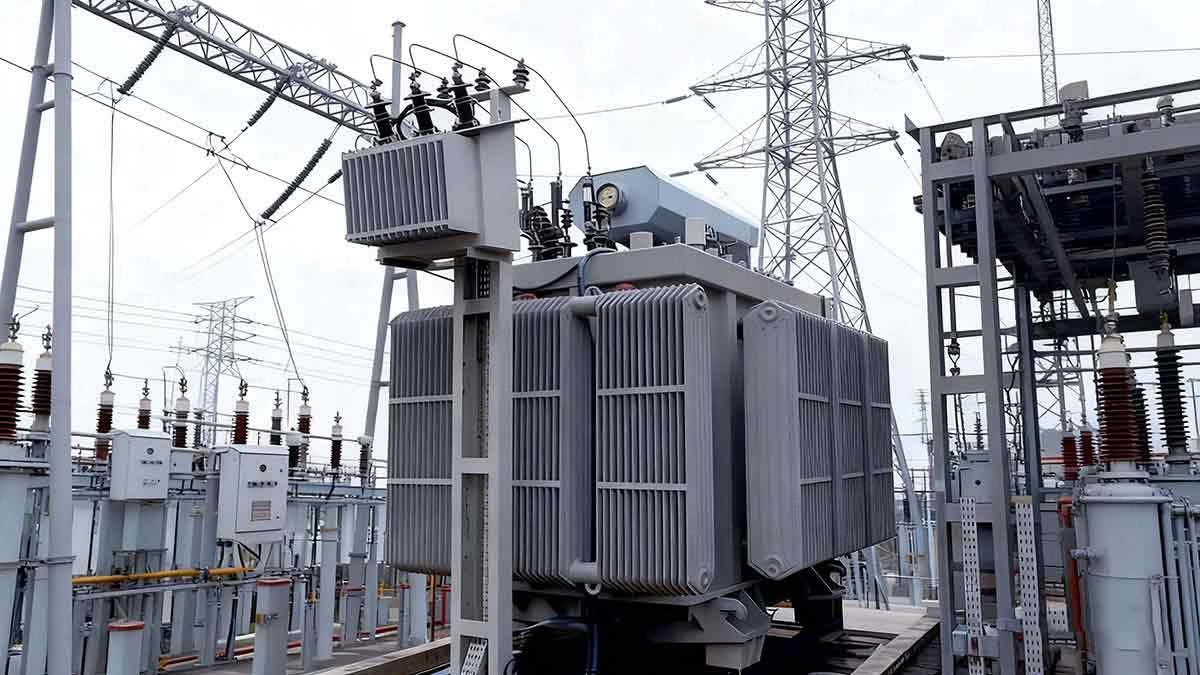
A data center implemented an automated monitoring system for its backup power transformers. Within six months, the system detected a 5% oil level drop in one unit—investigation revealed a faulty gasket. Replacing the gasket during a scheduled maintenance window avoided a potential outage during a power grid failure.
Proper Oil Top-Up Procedures
Adding oil isn’t as simple as pouring from a drum—improper top-up can introduce contaminants and damage the transformer:
- Verify Oil Compatibility: Ensure new oil matches the existing oil’s specifications (e.g., same viscosity, additive package).
- Degas and Filter: Use a portable degassing unit to remove air and moisture from new oil; untreated oil can reduce dielectric strength.
- Account for Temperature: Oil expands when heated, so top up to the correct level based on the transformer’s operating temperature (follow manufacturer guidelines).
- Document the Process: Record the date, oil type, quantity added, and reason for top-up—this helps track trends and identify recurring issues.
A construction company once attempted to top up a transformer with unfiltered oil from a drum. The oil contained metal particles that caused a short circuit two weeks later. The repair cost $30,000—avoidable with proper degassing and filtration.
Leak Detection & Prevention
Preventing leaks is more cost-effective than fixing them. Proactive measures include:
- Seal Inspections: Check gaskets, O-rings, and valve stems quarterly for wear, cracking, or hardening.
- Vibration Monitoring: Excessive vibration (from nearby equipment or wind) can loosen connections—install vibration dampeners if needed.
- Pressure Testing: Conduct annual pressure tests on the tank to identify small leaks (use nitrogen or dry air to avoid moisture ingress).
A wind farm in Europe discovered multiple small leaks in transformer tanks due to vibration from turbine blades. Installing vibration dampeners and replacing worn seals eliminated the leaks, saving $150,000 in annual oil replacement costs.
How Routine Inspections & Preventive Measures Extend Transformer Lifespan
The difference between a transformer that lasts 20 years and one that lasts 40 often comes down to routine inspections and preventive maintenance. Reactive repairs—fixing issues after they cause failure—cost 3–5x more than proactive care and can lead to cascading damage. Below are the key practices that industry leaders use to maximize transformer lifespan.
Visual Inspections: Observing the Obvious
Thorough visual checks uncover issues that electrical tests might miss. Focus on:
- External Condition: Look for rust, dents, or corrosion on the tank and radiators—rust can penetrate the tank and allow moisture ingress.
- Bushing Condition: Check for cracks, contamination (dust, salt), or oil leaks—contaminated bushings have reduced insulation capacity.
- Gauges and Indicators: Ensure pressure relief valves, temperature gauges, and oil level indicators are functioning correctly.
- Cooling System: Verify radiators are clean, fans are intact, and oil flow indicators show normal circulation.
During a visual inspection at a wastewater treatment plant, we noticed rust on the bottom of a transformer tank. Further inspection revealed a small hole caused by corrosion—repairing the tank and applying a protective coating prevented moisture from entering and damaging the windings.
Electrical Testing: Uncovering Hidden Issues
Electrical tests provide objective data on internal conditions. Key tests include:
| Test Type | Frequency | Critical Insights |
|---|---|---|
| Insulation Resistance Test | Annually | Measures insulation integrity—low readings indicate moisture or degradation |
| Power Factor Test | Every 2–3 Years | Assesses overall insulation quality—high power factor signals contamination |
| Turns Ratio Test | Every 3–5 Years | Verifies voltage transformation accuracy—imbalances indicate winding damage |
| Partial Discharge Test | Every 5 Years | Detects electrical discharges that damage insulation over time |
A mining operation conducted annual insulation resistance tests and noticed a gradual decline in readings over three years. Further testing revealed moisture ingress through a faulty breather. Replacing the breather and drying the insulation extended the transformer’s life by 12 years.
Thermal Imaging: Seeing Heat as a Warning Sign
Infrared thermal imaging detects hotspots that are invisible to the naked eye. Hotspots often indicate:
- Loose Connections: High resistance at terminal blocks or bushing connections causes overheating.
- Cooling System Issues: Blocked radiators or faulty fans create hotspots in the tank.
- Internal Faults: Winding short circuits or core damage can manifest as external heat patterns.
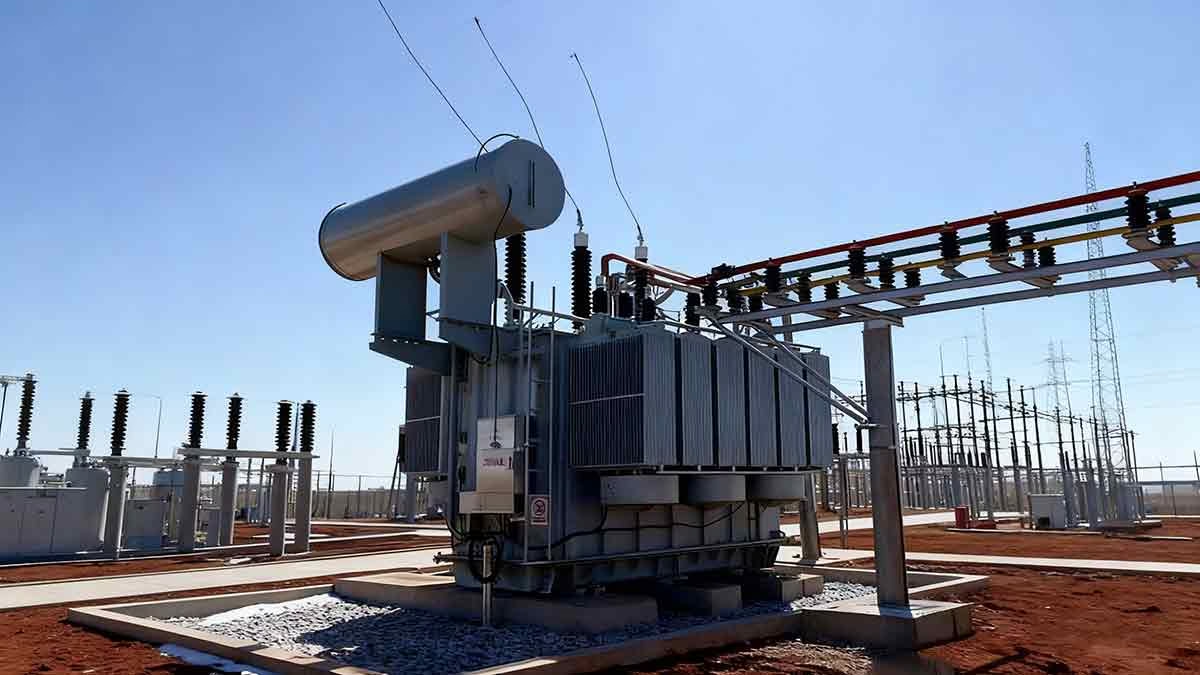
A commercial building used thermal imaging during a routine inspection and found an overheating bushing connection (120°C vs. the normal 60°C). Tightening the connection and cleaning the bushing prevented a potential fire and extended the transformer’s life by 8 years.
Cooling System Maintenance
A well-maintained cooling system reduces thermal stress, which is one of the leading causes of insulation degradation. Key steps:
- Radiator Cleaning: Remove dirt, dust, and debris from radiator fins (use compressed air or water jets) to ensure efficient heat dissipation.
- Fan and Pump Checks: Test fans and pumps monthly—replace worn bearings or motors immediately.
- Oil Flow Verification: Ensure oil circulates freely through the cooling system—blockages can cause overheating.
- Coolant Level Checks: For forced-oil cooling systems, verify coolant levels and quality.
A manufacturing plant’s transformer was running 20°C above normal operating temperature. Inspection revealed blocked radiator fins due to industrial dust. Cleaning the fins reduced operating temperature to within specifications, extending the insulation life by 10 years.
Moisture Management
Moisture accelerates insulation breakdown and oil degradation—controlling it is critical for longevity. Best practices:
- Breather Maintenance: Replace desiccant in breathers when it turns from blue to pink (indicating saturation).
- Sealed Tank Integrity: Inspect tank seals quarterly—replace worn gaskets to prevent atmospheric moisture ingress.
- Online Dehydration: For transformers in humid environments, install online moisture removal systems to continuously extract water from oil.
A coastal power plant implemented a moisture management program, including desiccant breather replacement and online dehydration. Moisture levels in transformer oil dropped from 30 ppm to 10 ppm, and the plant reported zero moisture-related failures over five years.
Load Management
Overloading transformers—even for short periods—increases thermal stress and accelerates insulation aging. Key strategies:
- Monitor Load Patterns: Use smart meters to track peak loads and avoid prolonged overloading (stay within 100% of rated capacity).
- Implement Load Shedding: For critical systems, prioritize essential loads during peak demand to reduce stress on transformers.
- Cooling Upgrades: For transformers consistently running near capacity, upgrade to forced-air or forced-oil cooling to increase load handling capability.
A data center was running its backup transformer at 120% capacity during peak hours. Upgrading the cooling system to OFAF (Oil Forced Air Forced) allowed the transformer to handle the load without overheating, extending its life by 15 years.
The Critical Role of Cooling Systems & Moisture Control in Transformer Maintenance
Two factors stand out as the most influential in transformer longevity: cooling system efficiency and moisture control. A transformer operating at 90°C instead of 80°C will have its insulation life cut in half, while moisture levels above 25 ppm can reduce dielectric strength by 50%. Below’s how to optimize both for maximum lifespan.
Cooling Systems: Beyond Basic Temperature Regulation
Cooling systems do more than keep transformers cool—they enable optimal load handling, reduce energy losses, and prevent thermal aging. The right cooling system depends on the transformer’s size, application, and operating environment:
| Cooling Type | Operating Principle | Ideal For | Maintenance Requirements |
|---|---|---|---|
| ONAN (Oil Natural Air Natural) | Oil circulates naturally; heat dissipates via air convection | Small transformers (<5 MVA), low-load applications | Clean radiators quarterly; inspect for blockages |
| ONAF (Oil Natural Air Forced) | Oil circulates naturally; fans enhance air flow | Medium transformers (5–20 MVA), moderate loads | Test fans monthly; clean radiators biannually |
| OFAF (Oil Forced Air Forced) | Pumps circulate oil; fans force air over radiators | Large transformers (>20 MVA), high-load applications | Inspect pumps and fans monthly; test oil flow annually |
| ODAF (Oil Directed Air Forced) | Oil is directed to hot spots via baffles; fans force air flow | Very large transformers (>100 MVA), industrial applications | Complex system checks quarterly; verify flow paths annually |
A utility company upgraded 10 ONAN-cooled transformers to ONAF systems to accommodate growing demand. The upgrade increased load capacity by 25% and reduced operating temperature by 15°C, extending the transformers’ life by 20 years.
Cooling System Maintenance Best Practices
Neglected cooling systems are a leading cause of transformer failure. Key maintenance steps:
- Radiator Cleaning: Use high-pressure water or compressed air to remove dirt, leaves, and debris—blocked fins reduce heat dissipation by up to 40%.
- Fan Maintenance: Lubricate fan bearings every 6 months; replace worn motors or blades immediately.
- Pump Inspections: For forced-oil systems, check pump seals for leaks; test pressure and flow rates annually.
- Temperature Monitoring: Install temperature sensors to track operating temperature—set alarms for values exceeding manufacturer limits.
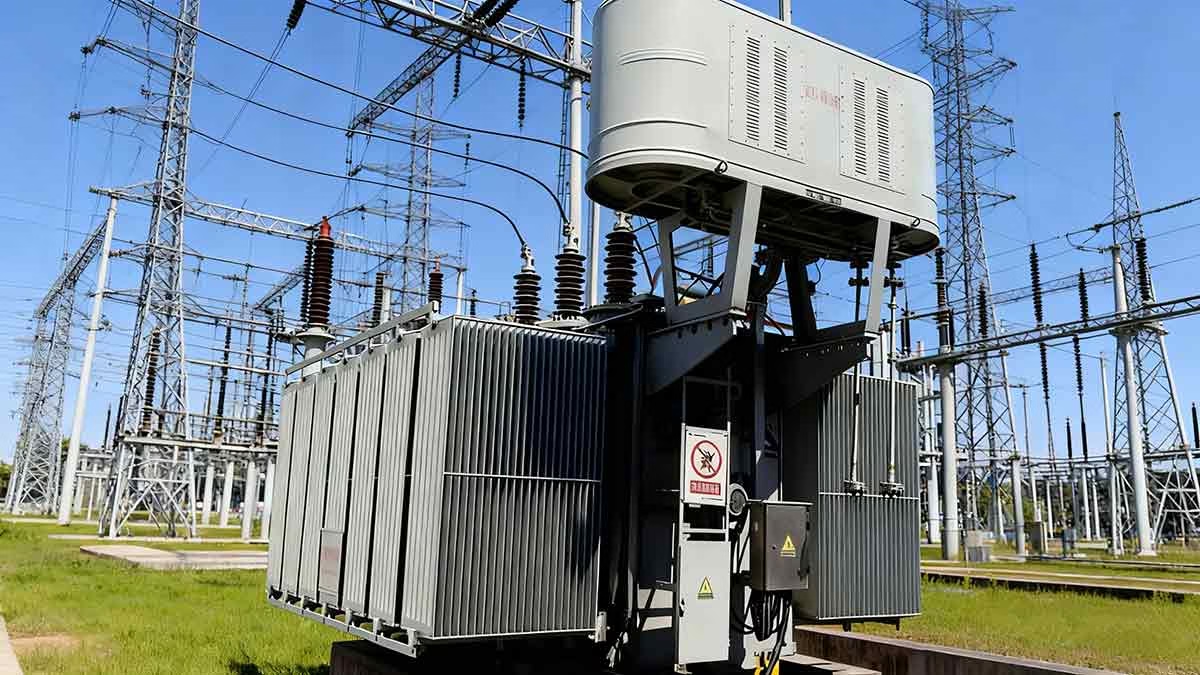
A chemical plant’s transformer was overheating due to a faulty cooling fan. The fan had seized, reducing cooling capacity by 50%. Replacing the fan and cleaning the radiators restored normal operating temperature, preventing insulation damage.
Moisture Control: The Invisible Threat
Moisture enters transformers through breathers, faulty seals, or during maintenance, and its effects are cumulative. Even small amounts of water:
- Degrade Insulation: Moisture breaks down paper insulation, reducing its dielectric strength and lifespan.
- Corrode Components: Water reacts with oil to form acids that corrode metal windings and tank surfaces.
- Reduce Oil Quality: Moisture lowers oil’s dielectric strength, increasing the risk of electrical breakdown.
A manufacturing plant’s transformer failed prematurely due to moisture ingress through a worn gasket. The paper insulation had degraded so much that the windings short-circuited—costing $180,000 to replace. A simple gasket replacement every 5 years would have prevented the failure.
Moisture Control Strategies
Effective moisture management requires a multi-layered approach:
- Sealed Tank Designs: For transformers in humid or corrosive environments, use sealed tanks with nitrogen blanketing to prevent atmospheric moisture ingress.
- Dehydrating Breathers: Install silica gel breathers to absorb moisture from air entering the tank—replace desiccant when it turns pink.
- Online Moisture Removal: Use vacuum dehydration systems to continuously extract water from oil, maintaining moisture levels below 15 ppm.
- Maintenance Best Practices: Avoid opening the tank during humid weather; use dry nitrogen to blanket the tank during maintenance.
A coastal refinery implemented a sealed tank upgrade and online dehydration system for its transformers. Moisture levels remained below 10 ppm, and the refinery reported a 70% reduction in moisture-related maintenance issues.
The Synergy Between Cooling & Moisture Control
Cooling and moisture control are not independent—they work together to protect transformers:
- Cooling Reduces Moisture Production: Lower operating temperatures slow oil oxidation, which produces water as a byproduct.
- Moisture Impairs Cooling: Water in oil reduces heat transfer efficiency, making the cooling system work harder.
- Condensation Risk: Poor cooling can lead to temperature fluctuations, causing moisture to condense inside the tank.
By integrating cooling system checks with moisture monitoring, a utility company reduced transformer failures by 40% over three years. The holistic approach ensured that neither factor was overlooked, maximizing lifespan and reliability.
Conclusion
Oil immersed transformer maintenance is not a one-time task—it’s a continuous commitment to proactive care. By prioritizing regular oil testing, component inspections, oil level management, cooling system optimization, and moisture control, you can extend your transformer’s lifespan by 50–100%, reduce downtime by up to 70%, and slash lifecycle costs significantly.
The key takeaway? Prevention is always more cost-effective than repair. A $1,000 annual maintenance program can save tens of thousands in emergency repairs and replacement costs. For power infrastructure professionals, transformers are too critical to leave to chance—invest in routine maintenance, and your transformers will reward you with decades of reliable service.
Whether you’re managing a small industrial transformer or a large utility substation, the practices outlined in this guide are industry-proven to maximize performance and longevity. By treating maintenance as an investment rather than an expense, you’re safeguarding the heart of your electrical system—and ensuring uninterrupted power for years to come.
More FAQ About Oil Immersed Transformer Maintenance
Q: What are the Core Points of Daily Inspection for Oil-Immersed Transformers?
A: Daily inspection is the first line of defense to prevent potential failures of oil-immersed transformers. Key check items include: observing for oil leakage at the fuel tank, oil conservator, valves and flanges; ensuring the oil level matches the ambient temperature and load conditions; monitoring the top oil temperature and winding temperature to avoid exceeding the specified limits; listening for uniform “buzzing” electromagnetic sound (abnormal noises such as crackling indicate potential faults); checking the operation status of cooling systems like fans and oil pumps; and verifying the integrity of protection devices such as gas relays and pressure relief valves. A standardized inspection process and detailed record system should be established to track equipment status continuously.
Q: How Often Should Insulating Oil Testing Be Performed?
A: Insulating oil is crucial for the insulation and heat dissipation of transformers, so regular testing is essential. Generally, oil sample testing (including chromatographic analysis, dielectric loss, moisture content, and breakdown voltage) should be conducted at least once a year. Chromatographic analysis can effectively detect latent faults by identifying characteristic gases (such as hydrogen, methane, ethylene, and acetylene) generated by local overheating or arcing. If the oil quality deteriorates (e.g., moisture content exceeding 30 ppm, decreased breakdown voltage), filtration, regeneration, or complete replacement is required. Additionally, the desiccant in the breather should be checked regularly and replaced when it turns pink due to moisture absorption.
Q: What Are the Common Causes and Solutions for Oil Leakage in Oil-Immersed Transformers?
A: Oil leakage is a frequent fault in oil-immersed transformers, mainly caused by poor sealing, loose bolts, aging seals, or tank weld cracks. The solution process includes: first locating the exact leakage point; tightening loose bolts evenly to avoid over-tightening damage; replacing aging, cracked, or deformed rubber seals with original specification parts and ensuring clean sealing surfaces; and welding and repairing cracks or defective welds on the fuel tank. During maintenance and handling, it is also necessary to clean the oil conservator and seal it properly to prevent contamination and leakage.
Q: How to Judge and Handle Transformer Overheating Faults?
A: Overheating faults are characterized by abnormal temperature rise, gas relay action (light gas), darkening of oil color, and excessive total hydrocarbons or characteristic gases in chromatographic analysis. Common causes include long-term overloading, unbalanced three-phase load, cooling system failure, poor contact of tap changers, and multi-point grounding of the iron core. Handling measures: verify the load status and balance three-phase current; inspect the cooling system to ensure all units operate normally and clean heat exchangers; conduct oil chromatographic analysis to determine the type and location of overheating; measure winding DC resistance and tap changer contact status; and test iron core insulation resistance to check for multi-point grounding issues.
Q: What Maintenance Measures Are Required for On-Load Tap Changers?
A: On-load tap changers are key components for voltage regulation, and their poor contact is a major fault point. Regular maintenance includes: checking if the position indicator is accurate and the operating mechanism is flexible and reliable; conducting annual oil sample testing, operation tests, and mechanical characteristic tests; ensuring the switching process is smooth; and cleaning and lubricating the mechanism regularly. For off-load tap changers, focus on verifying the correctness of the tap position and the reliability of the locking device. Timely maintenance of tap changers can prevent faults such as winding overheating caused by poor contact.
Q: How to Maintain the Cooling System of Oil-Immersed Transformers?
A: The cooling system directly affects the heat dissipation efficiency of transformers. For forced air cooling (OFAF/ODAF) or forced oil circulation cooling systems, weekly or monthly inspections should include: checking if fans and oil pumps operate normally (including correct rotation direction, no abnormal vibration or noise); verifying that the cooling control device can automatically switch on/off according to oil temperature or load; cleaning dust and dirt on radiators to ensure heat dissipation; and checking the integrity of the cooling system’s oil circuit and valves. Annual maintenance should include testing the insulation and operation status of fan and oil pump motors to prevent sudden failures.
Q: What Are the Standards for Transformer Core Grounding Maintenance?
A: The iron core, clamping parts, fuel tank and other non-charged metal parts of the transformer must be reliably grounded (single-point grounding) to avoid eddy current overheating caused by multi-point grounding. Regular maintenance includes: checking that the grounding wire is intact, firm, and free of corrosion or breakage; measuring the grounding resistance annually to ensure it does not exceed 4 ohms; and inspecting the insulation status of the iron core to prevent multi-point grounding faults. If multi-point grounding is detected, the fault point should be located and eliminated immediately, such as cleaning the insulation surface of the iron core or replacing damaged insulation parts.
Q: How to Handle Gas Relay Action Faults?
A: Gas relay action is an important warning signal for internal transformer faults. When it acts, the first step is to collect gas for color and odor judgment and conduct gas composition analysis: colorless, odorless, and combustible gas indicates overheating of the oil or winding; yellowish-brown gas with an irritating odor indicates insulation aging or breakdown; black flammable gas indicates severe overheating or arcing. Subsequent steps include: checking the transformer’s oil level, oil temperature, and external conditions; conducting electrical tests such as DC resistance and insulation resistance if necessary; locating the fault point (e.g., winding, tap changer) and performing maintenance or replacement. Safety measures such as power outage, inspection, and grounding must be strictly implemented before operation.
Q: What Are the Key Items of Annual Preventive Testing for Oil-Immersed Transformers?
A: Annual preventive testing, based on standards such as DL/T 596 “Code for Preventive Testing of Electrical Equipment”, includes: insulation resistance testing (to evaluate the insulation status of windings and iron cores); winding DC resistance measurement (to check for turn-to-turn short circuits and loose joints); transformation ratio and connection group testing (to verify the correctness of transformation ratio and wiring); dielectric loss factor (tanδ) testing (to assess insulation aging); insulating oil pressure resistance and simplified analysis; and gas relay calibration (to ensure reliable action of light and heavy gas). These tests comprehensively evaluate the equipment’s operating status and identify potential faults early.
Q: When Should Transformer Oil Be Replaced Completely?
A: Complete oil replacement is required when: the oil quality deteriorates severely and cannot be restored through filtration and regeneration (e.g., excessive acid value, serious oxidation, or large amounts of impurities); the transformer experiences severe faults such as internal arcing or short circuits (which cause significant contamination of the insulating oil); or the oil has been in service for an extended period exceeding the recommended lifespan (usually 10-15 years, depending on operating conditions). Before oil replacement, drain the old oil completely, clean the fuel tank thoroughly, replace all oil-resistant rubber seals, and refill with qualified new oil that matches the original grade. A comprehensive test must be conducted before putting the transformer back into operation.
Q: What Are the Warning Signs of Transformer Insulation Aging?
A: Insulation aging is a major threat to transformer safety. Warning signs include: decreased insulation resistance (measured value significantly lower than historical data or industry standards); increased dielectric loss factor (indicating reduced insulation performance); darkening of insulating oil color with a burnt odor; increased moisture and acid value in oil tests; frequent action of gas relays (due to gas generated by insulation decomposition); and partial discharge signals detected by online monitoring devices. Once these signs appear, measures such as oil treatment, insulation reinforcement, or component replacement should be taken promptly. For severe aging, a comprehensive overhaul or transformer replacement is necessary.
Q: What Are the Safety Precautions for Transformer Maintenance?
A: Safety is paramount during transformer maintenance. Key precautions include: strictly implementing power outage, inspection, and grounding procedures before any operation (ensure reliable power cutoff, verify no voltage, and install ground wires on all possible incoming sides); wearing personal protective equipment such as insulating gloves, safety helmets, and insulating boots; prohibiting open flames near the transformer and equipping appropriate fire extinguishers (dry powder or CO₂, avoid foam or water); ensuring the maintenance environment is safe (no flammable materials, stable ground); using qualified insulating oil that matches the original grade when refueling; and keeping complete maintenance records for subsequent tracking and analysis.