
Struggling to navigate the complex pricing of oil-filled transformers? You’re far from alone—buyers often grapple with wide price disparities and unpredictable market shifts that make budgeting a challenge.
Oil-filled transformer prices span from $10,000 to $500,000+ , driven by factors like capacity, raw material costs, design complexity, efficiency ratings, and global supply chain dynamics. With insider knowledge of these variables, you can optimize expenditures by 15–30% while ensuring your transformer meets performance and longevity needs.
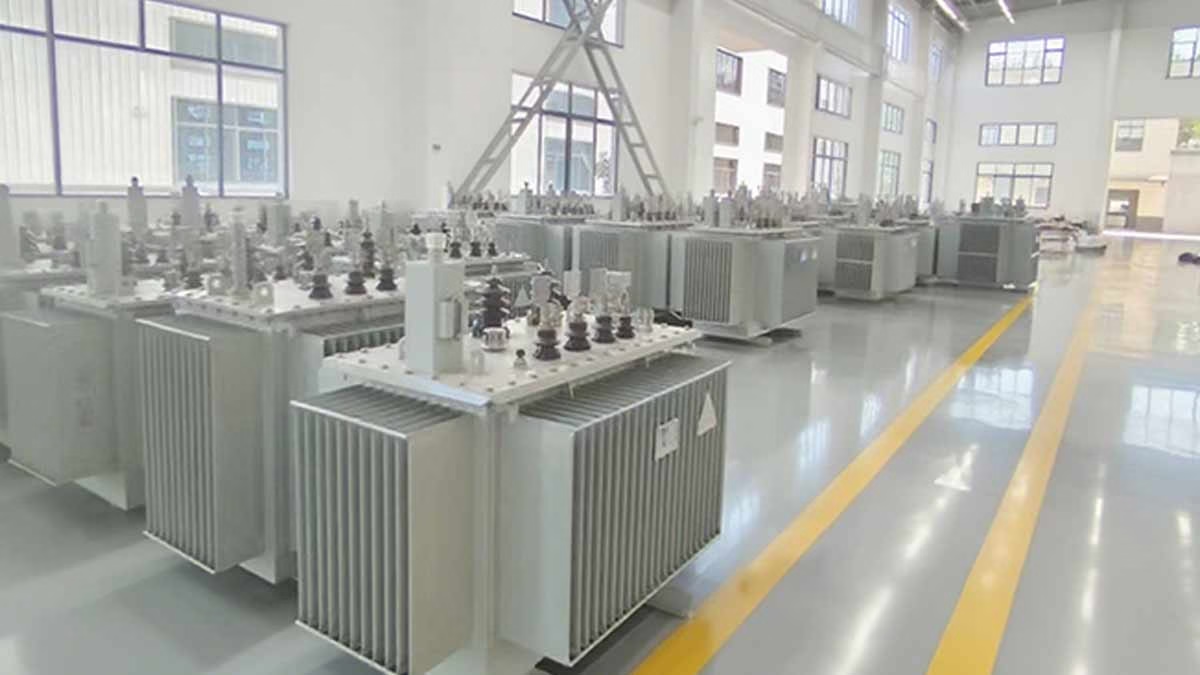
Drawing on two decades of experience in power distribution, this guide breaks down the critical elements shaping transformer pricing and shares actionable strategies to make cost-effective decisions.
Contents
hide
Key Pricing Drivers: What Shapes Oil-Filled Transformer Costs Today?
Budgeting for oil-filled transformers feels daunting when prices seem erratic—but the chaos stems from predictable, manageable factors. Understanding these drivers turns uncertainty into strategic purchasing power.
Core influences on pricing include raw material volatility, design complexity, efficiency standards, market demand, and regulatory compliance. Recent supply chain disruptions and a global push for energy efficiency have further amplified the impact of these factors, making targeted analysis more critical than ever.
Raw Material Costs: The Foundation of Pricing
Raw materials account for 30–40% of a transformer’s total cost, with three key components leading the charge:
- Copper & Aluminum: Essential for windings and conductors, their global market prices fluctuate sharply. A 20% spike in copper costs (common in recent years) can directly increase transformer prices by 15–20%.
- Electrical Steel: Used in transformer cores, high-grade silicon steel enhances efficiency but can raise core costs by 30–40% compared to standard grades.
- Transformer Oil: Critical for insulation and cooling, its price tracks petroleum markets. Specialty oils (e.g., biodegradable or high-fire-point variants) add 5–10% to the total cost.
Design & Manufacturing Complexity
The engineering and production of a transformer directly impact its price tag:
- Efficiency Ratings: High-efficiency models (meeting IE3/IE4 standards) use advanced materials, increasing upfront costs by 15–25—but deliver 30%+ energy savings over five years, offsetting the investment.
- Cooling Systems: Designs range from basic ONAN (Oil Natural Air Natural) to advanced OFAF (Oil Forced Air Forced). Complex cooling adds 10–15% to base prices but is non-negotiable for high-load applications like data centers.
- Special Features: On-load tap changers, smart monitoring systems, or custom voltage configurations can boost costs by up to 25%. However, monitoring systems often cut maintenance expenses by 40% long-term.
Market & Supply Chain Dynamics
External factors introduce volatility that’s impossible to ignore:
- Production Volume: Custom or low-volume orders cost 30–50% more than standard, high-volume units. Consolidating orders (e.g., 10 units instead of 1) can slash per-unit costs by 15%.
- Global Demand Swings: Large infrastructure projects or renewable energy booms (e.g., wind farm expansions) create demand spikes, driving prices up by 10–20% in tight markets.
- Transportation: For large transformers, shipping adds 5–15% to total costs—specialized hauling for oversized units can push this even higher.
Regulatory & Environmental Compliance
Stricter standards shape both design and pricing:
- Efficiency Mandates: Compliance with DOE or IEC standards adds 10–20% to costs but avoids costly retrofits or replacements down the line.
- Environmental Rules: Eco-friendly materials (e.g., biodegradable oil) or emissions controls increase prices by 5–10% but reduce liability risks in sensitive areas.
| Pricing Factor | Impact on Total Cost | Savings Strategy |
|---|---|---|
| Raw Materials | 30–40% | Lock in long-term contracts, bulk purchasing |
| High-Efficiency Design | +15–25% | Calculate 5–10 year energy savings ROI |
| Special Features | +5–25% | Prioritize features with clear cost-benefit ratios |
| Low-Volume/Custom Orders | +30–50% | Standardize specs across projects |
| Transportation | 5–15% | Source regionally when possible |
| Regulatory Compliance | +10–20% | Plan for upcoming standards to avoid rush costs |
Capacity & Size: How Power Ratings Impact Pricing
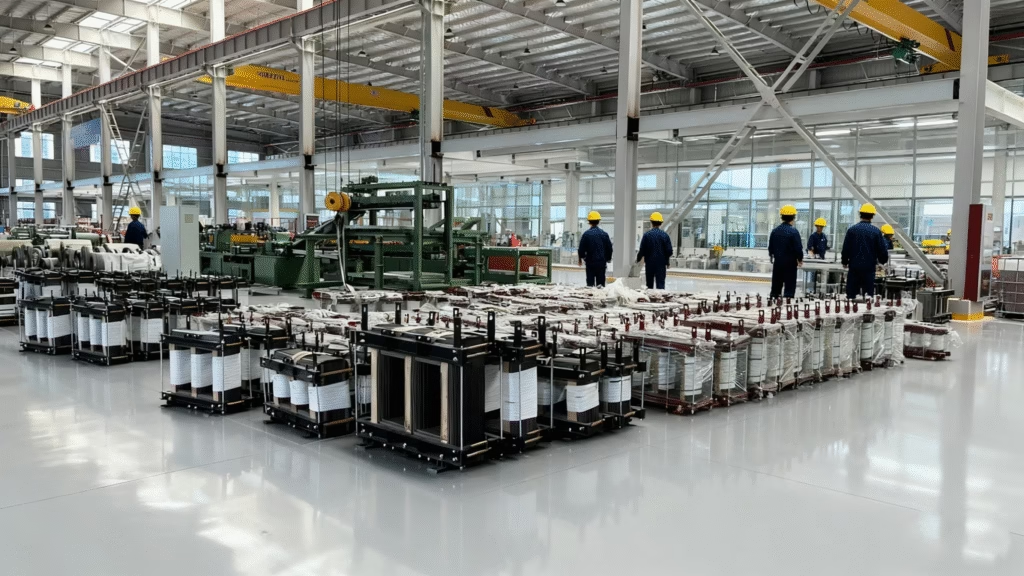
Wondering why a 10 MVA transformer doesn’t cost 10 times more than a 1 MVA unit? The relationship between capacity and price is non-linear—understanding this curve is key to avoiding overpayment or undersizing.
Larger transformers require more materials and complex engineering, but economies of scale kick in at higher capacities. A 10 MVA unit typically costs 3–4 times more than a 1 MVA model, not 10 times. Proper sizing balances current load needs, future growth, and budget constraints to maximize value.
Small to Medium Capacity (1–5 MVA)
- Cost Dynamics: Materials (core and windings) dominate pricing, with costs increasing by 60–80% when doubling capacity (e.g., 1 MVA to 2 MVA).
- Advantages: Standardized designs and high production volumes keep costs predictable. Ordering 5+ units can reduce per-unit expenses by 15%.
- Use Case: Ideal for commercial buildings, small industrial facilities, or residential districts—where standard cooling and design suffice.
Medium to Large Capacity (5–50 MVA)
- Cost Shifts: Cooling systems and transportation become major cost drivers (15–20% of total price). ONAF/OFAF cooling is often required, and specialized shipping for heavy units adds 8–12%.
- Customization Needs: On-load tap changers or voltage regulation features are common, adding 15–20% to costs but critical for grid stability.
- Use Case: Suited for industrial complexes, utility substations, or large commercial developments with high, consistent loads.
Large to Extra-Large Capacity (50+ MVA)
- Premium Pricing: Costs jump exponentially—50+ MVA units cost 10x+ more than small capacity models. Specialized materials, custom engineering, and limited manufacturing capacity drive this premium.
- Key Costs: Engineering and testing account for 10% of total pricing, while high-grade core steel and conductors add 25% compared to standard units.
- Use Case: Reserved for large power plants, regional substations, or industrial facilities with extreme load demands.
| Capacity Range | Relative Cost | Primary Cost Drivers | Sizing Strategy |
|---|---|---|---|
| 1–5 MVA | Base (100%) | Core/windings, standard manufacturing | Opt for standard sizes; order in bulk |
| 5–50 MVA | 3–5x Base | Cooling systems, transportation, customization | Right-size for 5-year growth; avoid over-engineering |
| 50+ MVA | 10x+ Base | Specialized materials, custom engineering | Evaluate modular solutions (multiple smaller units) |
A recent utility project illustrates the value of strategic sizing: The client initially planned a single 40 MVA transformer for future growth, but a load analysis revealed current demand was only 15 MVA. Switching to two 20 MVA units cut upfront costs by 30%, added redundancy, and allowed for phased expansion—saving 25% on lifetime ownership costs.
Quality vs. Price: Striking the Right Balance
Torn between a budget-friendly transformer and a higher-priced, premium option? The decision hinges on total cost of ownership (TCO)—not just upfront price. A cheaper unit may save money today but cost far more in energy losses, maintenance, and premature replacement.
High-quality transformers command 15–30% higher upfront prices but deliver 10–20% better efficiency, 25% longer lifespans, and 30–50% lower maintenance costs. The best choice depends on your application’s criticality, load profile, and expected lifespan.
Efficiency: The Hidden Long-Term Cost
- No-Load Losses: Premium cores (e.g., amorphous steel) reduce idle energy waste by 30%, saving $10,000+ annually for high-utilization transformers.
- Load Losses: Superior windings (high-grade copper) and design cut operational losses by 10–15—critical for transformers running at 70%+ capacity.
- Efficiency ROI: A high-efficiency unit costing 20% more typically breaks even in 3–5 years and delivers 30%+ savings over its 30-year lifespan.
Reliability & Lifespan
- Insulation Quality: Premium insulation extends lifespan from 20–25 years (budget units) to 30+ years (premium models), avoiding costly replacements.
- Build Quality: Rigorous manufacturing standards reduce downtime by 60%—a game-changer for critical applications like data centers or hospitals.
- Overload Capacity: High-quality units handle 20%+ overloads safely, eliminating the need for costly upgrades during demand spikes.
Maintenance & Operational Flexibility
- Monitoring Systems: Advanced sensors add 8% to upfront costs but reduce maintenance expenses by 30% via predictive alerts.
- Ease of Service: Modular designs (premium feature) cut repair time by 40%, lowering labor costs and downtime.
- Oil Quality: Synthetic or high-grade mineral oil adds 5% to costs but doubles oil change intervals (from 5 to 10 years).
| Aspect | Budget Transformers (100% Base Cost) | Premium Transformers (+15–30% Cost) | Long-Term Impact |
|---|---|---|---|
| Initial Price | $X | $X+15–30% | Higher upfront investment |
| Efficiency | Standard (95–97%) | Superior (98–99.5%) | 10–20% lower energy costs |
| Lifespan | 20–25 years | 30+ years | Delayed replacement (saves 50%+ after 25 years) |
| Maintenance Needs | Frequent (2–3 year intervals) | Minimal (5–7 year intervals) | 30–50% lower maintenance costs |
| Overload Capacity | Limited (10% max) | Enhanced (20%+ max) | Greater operational flexibility |
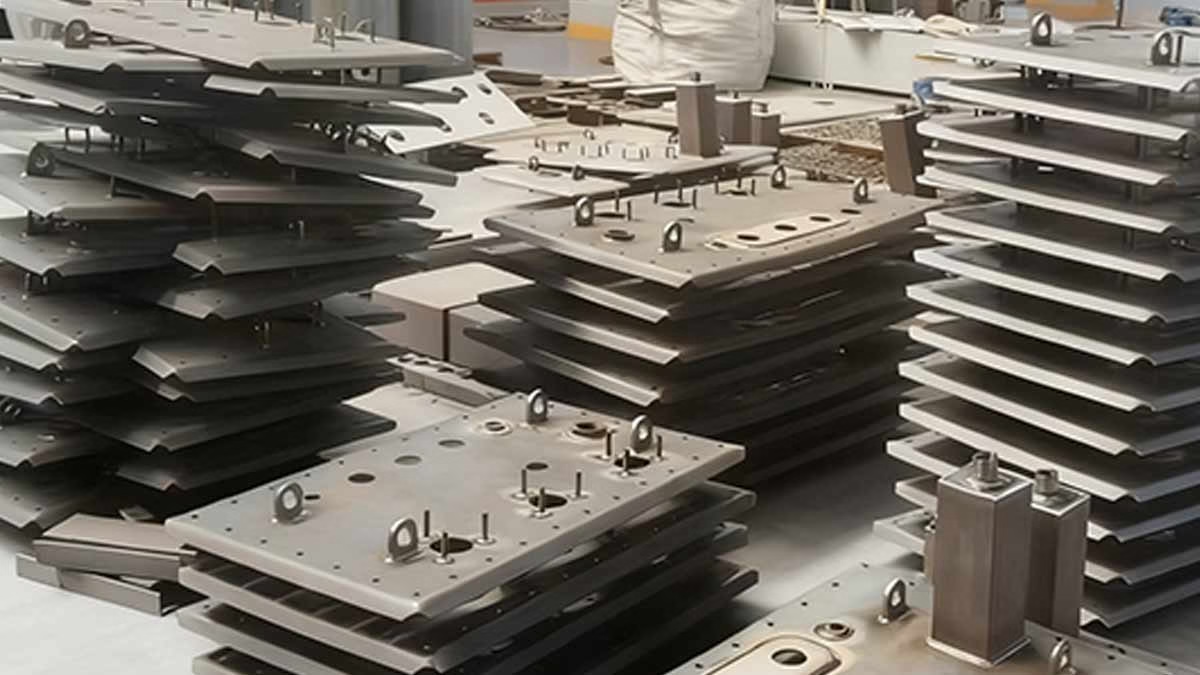
A commercial development project demonstrates this balance: The team opted for mid-range transformers (10% above budget) for general loads (lighting, HVAC) and premium units (25% above budget) for critical systems (data centers, emergency power). This stratified approach delivered a 7-year break-even on mid-range units and 3-year break-even on premium models—with 20% lower TCO over 20 years.
Global Supply Chain: How International Markets Shape Pricing
Oil-filled transformer pricing is deeply influenced by global dynamics—raw material markets, shipping costs, trade policies, and regional manufacturing trends all play a role. Recent disruptions (COVID-19, geopolitical tensions, port congestion) have highlighted the need to understand these factors to mitigate risk and capture savings.
From copper price spikes to tariff changes, global variables can swing transformer prices by 10–40%—but strategic sourcing and proactive planning can neutralize these impacts.
Raw Material Volatility
- Copper & Aluminum: As globally traded commodities, their prices fluctuate with demand from construction, electronics, and renewable energy sectors. A 30% copper price surge (like 2021) can increase transformer costs by 15%.
- Electrical Steel: Limited global production (dominated by a handful of manufacturers) leads to shortages and 20%+ price hikes during high-demand periods.
- Transformer Oil: Tied to petroleum markets, oil prices add 5–10% volatility to total costs.
Manufacturing & Labor Costs
- Regional Differences: Labor costs vary drastically—Asian manufacturers often offer 10–20% lower prices than European or North American counterparts, though automation is narrowing this gap.
- Automation Levels: Highly automated factories deliver consistent quality at competitive prices, even in high-labor-cost regions.
- Currency Exchange: A 10% swing in exchange rates can add or subtract 7% from the cost of international orders.
Shipping & Logistics
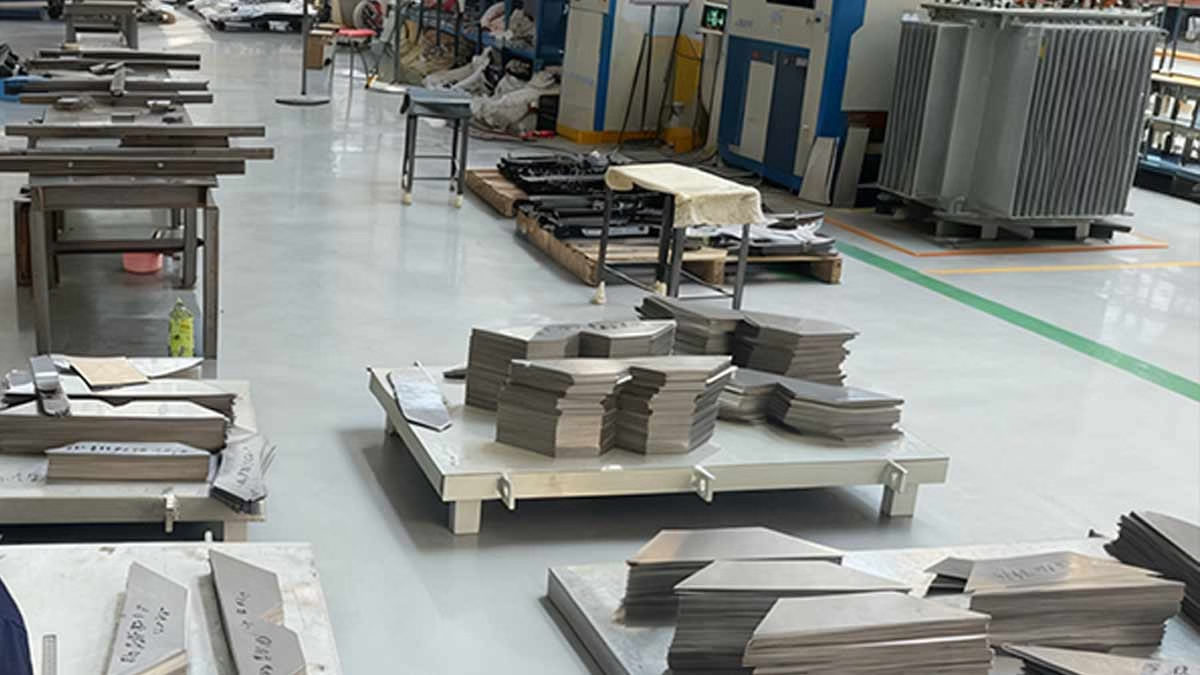
- Container Costs: Post-2020, shipping rates have been highly volatile—spiking by 300% during peak congestion, adding 15% to transformer prices for international orders.
- Specialized Transport: Large transformers require oversized hauling or charter shipping, which can add 8–12% to costs and extend lead times.
- Tariffs & Trade Policies: Changing tariffs can shift cost competitiveness overnight—recent policy changes made some local manufacturers 5% cheaper than imported alternatives.
Global Demand Trends
- Infrastructure Booms: Large-scale projects in Asia or the Middle East create demand spikes, leading to 6-month backlogs and 10% price increases.
- Renewable Energy Growth: Wind and solar projects drive demand for specialized transformers, pushing prices up by 15% as supply struggles to keep pace.
| Global Factor | Price Impact | Mitigation Strategies |
|---|---|---|
| Raw Material Prices | 20–30% | Hedge with long-term contracts, bulk purchasing |
| Shipping Costs | 5–15% | Source regionally, consolidate shipments |
| Currency Fluctuations | 0–10% | Use forward contracts, local currency payments |
| Tariffs & Trade Policies | 0–25% | Diversify suppliers, leverage free-trade agreements |
| Global Demand Spikes | 10–20% | Order 6–12 months in advance, maintain flexible specs |
A recent grid modernization project leveraged these strategies to cut costs by 22%: The team locked in copper prices via a 2-year contract, sourced small transformers from Asian manufacturers, and large units from European suppliers (for quality), and consolidated shipments to reduce logistics costs by 20%.
Cost-Saving Strategies: Expert Tips to Optimize Expenditures
Cutting transformer costs doesn’t mean sacrificing quality—with the right strategies, you can reduce expenses by 15–30% while maintaining performance and reliability. These actionable tips draw on decades of procurement and project management experience.
Bulk Purchasing & Long-Term Agreements
- Volume Discounts: Ordering 5+ units instead of 1–2 can slash per-unit costs by 10–20%. For multi-phase projects, consolidate orders across phases to hit volume thresholds.
- Long-Term Contracts: 3–5 year supply agreements lock in prices, protect against market volatility, and often include 5–10% discounts.
- Consortium Buying: Small utilities or businesses can form buying groups to increase collective order volume, securing 15–25% savings.
Standardization & Specification Optimization
- Standardize Across Projects: Use consistent specs for 80%+ of your needs to simplify procurement, reduce custom engineering costs, and qualify for volume discounts (saves 10–15%).
- Value Engineering: Review specs to eliminate non-critical features. For example, a commercial project trimmed 7% from costs by adjusting cooling requirements for low-load areas.
- Performance-Based Specs: Focus on outcomes (e.g., “98% efficiency”) instead of specific components—this opens the door to innovative, cost-effective solutions (saves 15%).
Strategic Timing & Market Awareness
- Monitor Material Prices: Track copper, steel, and oil markets—delay non-urgent orders during price spikes (can save 5–10%).
- Off-Season Ordering: Manufacturers often offer 5–10% discounts during slow periods (winter for summer installations) to maintain production.
- Futures Contracts: For large projects, use futures contracts to lock in raw material prices, mitigating volatility.
Alternative Sourcing & Lifecycle Optimization
- Refurbished Units: For non-critical applications, thoroughly tested refurbished transformers offer 30–50% savings over new units.
- Emerging Manufacturers: Vet newer suppliers—some offer 15–25% savings without compromising quality (requires factory audits and sample testing).
- Modular Designs: Choose expandable transformers to avoid over-sizing—add capacity later as needs grow (saves 35% on upgrade costs).
Energy Efficiency & Maintenance
- Invest in High-Efficiency Models: The 15–25% upfront premium pays off in 3–5 years via energy savings (10–20% lower operational costs).
- Predictive Maintenance: Smart monitoring systems add 8% to costs but reduce maintenance expenses by 30% and extend lifespan by 25%.
| Strategy | Potential Savings | Implementation Complexity | Best For |
|---|---|---|---|
| Bulk Purchasing | 10–20% | Low | Large projects, multi-site organizations |
| Standardization | 10–15% | Medium | Repeatable projects, utilities |
| Value Engineering | 5–10% | High | Custom or high-spec projects |
| Refurbished Units | 30–50% | Low | Non-critical applications |
| High-Efficiency Models | 10–20% (long-term) | Medium | Long-term installations (10+ years) |
A urban redevelopment project combined these strategies to achieve 32% cost savings: Bulk ordering (15% off), standardization (10% off), off-season purchasing (5% off), and value engineering (7% off)—all without cutting corners on critical performance metrics.
Conclusion
Oil-filled transformer pricing doesn’t have to be a mystery. By understanding the key drivers—raw materials, capacity, quality, global supply chains, and design complexity—you can make strategic decisions that balance upfront costs with long-term value.
The most cost-effective choices aren’t always the cheapest upfront. Instead, they prioritize total cost of ownership: a slightly higher investment in efficiency, quality, or standardization often delivers 15–30% savings over the transformer’s lifespan.
Whether you’re procuring for a small commercial project or a large utility upgrade, the strategies outlined here—bulk purchasing, standardization, strategic timing, and lifecycle optimization—will help you navigate market volatility and secure the best possible value.
By approaching transformer procurement with a holistic mindset, you can avoid overpayment, reduce risk, and ensure your investment delivers reliable performance for decades to come.