
Consistent oil filled transformer maintenance is vital to prolonging their service life, ensuring peak performance, and avoiding unplanned downtime. By integrating routine oil analysis, targeted cleaning, prompt repairs, and strict safety adherence, you’ll not only prevent costly failures but also optimize long-term operational efficiency.
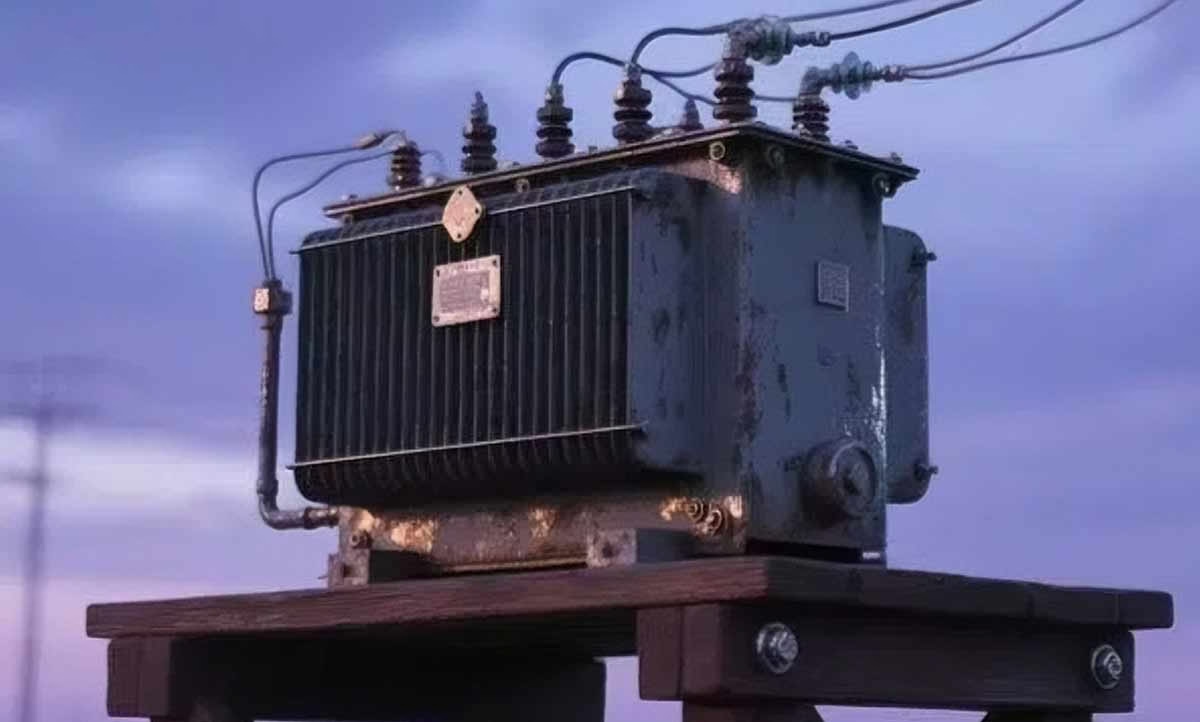
In this guide, I’ll share real-world insights and practical strategies for maintaining oil-filled transformers—from demystifying the role of transformer oil to identifying early fault signals. Whether you’re a facility manager or a maintenance technician, these actionable tips will help keep your power system running reliably.
Contents
hide
Transformer Oil: The Lifeline of Your Power System
Have you ever stopped to consider why oil is integral to transformer functionality? It’s far more than a mere component—this specialized fluid is the backbone of your transformer’s health and durability.
Transformer oil serves dual critical roles as an insulator and coolant, safeguarding internal parts from corrosion while enabling efficient heat dissipation. Neglecting oil maintenance is one of the most common causes of transformer malfunctions, as I’ve witnessed firsthand in countless field projects.
The Three Core Functions of Transformer Oil
Let’s explore how oil keeps your transformer operating:
Insulation: Your Transformer’s Protective Barrier
Transformer oil acts as a high-performance insulator, preventing electrical arcing and short circuits.
- Boasts exceptional dielectric strength to resist electrical breakdown
- Fills microscopic gaps between components for uniform protection
- Shields windings and core from voltage-related damage
Cooling: Regulating Temperature for Efficiency
Effective heat management is key to transformer longevity—and oil is the primary cooling agent.
- Absorbs excess heat generated by windings and core during operation
- Circulates through the system to transfer heat to radiators
- Reduces wear on internal parts by maintaining optimal temperature ranges
Protection: Preserving Internal Components
Beyond insulation and cooling, oil acts as a defensive layer against environmental damage.
- Inhibits oxidation of metal parts to prevent rust and degradation
- Traps moisture that could compromise performance
- Provides valuable insights into internal health through laboratory analysis
| Transformer Oil Roles | Criticality Level | Required Upkeep |
|---|---|---|
| Insulation | Critical | Routine dielectric strength testing |
| Cooling | High | Regular temperature and level monitoring |
| Protection | Medium | Periodic oil quality assessments |
A Real-World Lesson in Oil Maintenance
I once collaborated with a utility company struggling with frequent transformer failures across their distribution network. The root cause? They’d skipped routine oil testing to cut short-term costs. This decision led to widespread outages, millions in repair bills, and lost revenue.

Our team analyzed oil samples from every transformer in the network—and the results were revealing. Many units had dangerously low dielectric strength, meaning their insulating capabilities were compromised. Several samples contained elevated levels of dissolved gases, a clear indicator of internal arcing.
One transformer stood out: its oil was dark brown and emitted a burnt odor. Upon inspection, we found severe coking on the windings—proof of prolonged overheating. The oil had degraded so much that it could no longer cool the unit effectively, putting it on the brink of a major breakdown.
We implemented a comprehensive oil maintenance program, including regular sampling, filtration to remove contaminants, and targeted oil replacement. We also installed real-time monitoring systems on critical transformers to track temperature and gas levels. Within a year, transformer failures dropped by 80%, and the utility saw significant savings in maintenance costs and improved network reliability.
This experience reinforced a key truth: transformer oil is the lifeline of your power system. Treating it as such—through consistent monitoring and maintenance—is essential to maximizing transformer lifespan.
Keep It Clean, Keep It Running: Practical Transformer Maintenance Steps
Are you waiting for your transformer to fail before addressing maintenance? This reactive approach is a recipe for disaster. The good news is that proactive, simple steps can prevent major issues and extend your transformer’s service life.
Below are actionable maintenance tasks designed to be implemented without disrupting critical operations—proven to boost reliability and reduce long-term costs.
Routine Oil Analysis: Your Transformer’s Health Check
Think of oil testing as a comprehensive health screening for your transformer. These tests reveal early signs of degradation or internal issues.
- Dielectric strength testing to assess insulation quality
- Dissolved gas analysis (DGA) to detect internal arcing or overheating
- Acidity and moisture content checks to prevent corrosion
Visual Inspections: Trust Your Observations
Many transformer issues are visible to the trained eye—regular visual checks can catch problems early.
- Look for oil leaks around gaskets, seals, and base areas
- Check for rust, corrosion, or physical damage to the exterior
- Listen for unusual noises (buzzing, crackling) or vibrations
Cooling System Cleaning: Maintain Heat Dissipation
A clogged cooling system forces your transformer to work harder, leading to overheating.
- Remove dust, debris, and vegetation from radiator fins
- Clean fan blades and motors to ensure proper airflow
- Inspect and clean oil pumps for unobstructed circulation
Monitor Key Parameters: Stay Ahead of Issues
Real-time monitoring of critical metrics helps you address problems before they escalate.
- Track oil and winding temperatures
- Monitor load current to avoid overloading
- Keep an eye on dissolved gas levels for early fault detection
| Maintenance Task | Frequency | Key Benefit |
|---|---|---|
| Oil Analysis | Quarterly | Early detection of internal issues |
| Visual Inspection | Monthly | Catch external damage or leaks promptly |
| Cooling System Cleaning | Bi-annually | Sustained cooling efficiency |
| Parameter Monitoring | Continuous | Real-time health tracking |
A Cautionary Tale of Neglect
A manufacturing plant once contacted us after a catastrophic transformer failure shut down their production line for weeks—resulting in millions in lost revenue. The root cause? Years of neglected maintenance.
Our investigation revealed that the transformer’s oil hadn’t been tested in over three years, showing severe degradation. Cooling fans were clogged with dust, causing chronic overheating. Visible oil leaks had gone unaddressed, leading to low oil levels and compromised insulation.
We implemented a structured maintenance program: thorough cleaning of all transformers, quarterly oil testing, and training for their team to perform basic visual inspections. We also installed an online monitoring system to track temperature and gas levels in real time, with alerts for concerning trends.
The results were striking: zero unplanned transformer-related outages in the first year, improved energy efficiency, and significant cost savings. The plant learned that investing in routine maintenance is far more cost-effective than dealing with the consequences of failure.
Warning Signs: How to Detect Transformer Issues Early
Sudden transformer failures are rarely truly “sudden”—they’re almost always preceded by warning signs. Learning to recognize these signals can help you intervene early, avoiding costly downtime and major repairs.
Below are the key red flags to watch for, along with their potential causes and recommended actions.
Unusual Noises: Listen Closely
A healthy transformer emits a steady, low hum. Any deviation from this sound is cause for concern.
- Loud, erratic buzzing or humming: May indicate loose windings or core components
- Crackling or popping sounds: Often a sign of internal arcing or insulation breakdown
- Sudden changes in noise level: Could signal overloading or cooling system failure
Oil Leaks: Don’t Ignore the Drips
Oil leaks aren’t just messy—they’re a critical warning sign of potential failure.
- Leaks around gaskets or seals: Likely due to worn or damaged components
- Leaks at the base or radiator connections: May indicate cracks in the tank or piping
- Low oil levels: Compromises insulation and cooling, leading to overheating
Oil Discoloration: A Window to Internal Health
The color of transformer oil directly reflects its condition.
- Clear or pale yellow: Indicates healthy oil in good condition
- Dark yellow or light brown: Sign of aging or mild contamination
- Black or dark brown with a burnt smell: Severe degradation—immediate action required
Abnormal Temperatures: Feel the Heat
Elevated temperatures are a common indicator of underlying issues.
- Consistently high oil temperatures: May signal overloading or cooling system failure
- Hotspots on the transformer exterior: Can indicate internal faults or poor circulation
- Sudden temperature spikes: Require immediate investigation to prevent damage
Changes in Electrical Parameters: Invisible Warning Signs
Electrical measurements can reveal issues before they’re visible to the naked eye.
- Dropping insulation resistance: Indicates insulation breakdown
- Abnormal power factor readings: May signal moisture or contamination
- Increased partial discharge levels: Early sign of internal arcing
| Warning Sign | Potential Cause | Recommended Action |
|---|---|---|
| Unusual Noises | Loose windings, arcing, or overloading | Schedule immediate inspection |
| Oil Leaks | Worn gaskets, cracks, or damaged connections | Repair leaks and top up oil; inspect for root cause |
| Oil Discoloration | Degradation, contamination, or overheating | Conduct oil analysis and replace if necessary |
| High Temperatures | Overloading, cooling system failure, or internal faults | Reduce load, inspect cooling system, and perform diagnostics |
| Electrical Parameter Changes | Insulation breakdown or winding issues | Conduct detailed electrical testing |
A Close Call at a Substation
I once visited a power substation where operators had ignored a gradual increase in humming from a main transformer. They dismissed it as “normal aging.” During my inspection, I noticed the hum had evolved into a distinct crackling sound.

I insisted on an immediate shutdown—and the inspection revealed severe arcing between windings. The insulation had degraded to the point where the transformer was hours away from a catastrophic failure that would have taken out the entire substation.
This incident taught me the importance of trusting your senses. Even subtle changes in sound, smell, or temperature can be early warning signs. Another case involved a transformer with no visible issues—but routine oil testing revealed darkening oil and elevated dissolved gas levels. Using infrared imaging, we found a hotspot indicating a developing winding fault. By addressing it proactively, we avoided an unplanned outage and saved the utility company millions.
Safety First: Essential Precautions for Transformer Maintenance
Transformer maintenance is critical—but it’s also high-risk work. Electrical hazards, arc flashes, and mechanical dangers require strict safety protocols to protect workers. Below are the non-negotiable safety precautions every team should follow.
Lockout/Tagout: De-Energize Before You Work
Never begin maintenance without confirming the transformer is fully de-energized and secured.
- Disconnect all power sources, including backup systems
- Apply physical locks to disconnect points (one lock per worker)
- Attach clear, visible tags indicating “Maintenance in Progress—Do Not Energize”
- Verify de-energization with a voltage tester before starting work
Personal Protective Equipment (PPE): Your Safety Shield
Proper PPE is non-negotiable when working with transformers.
- Insulated gloves and boots (rated for the transformer’s voltage)
- Arc-flash rated clothing, including jackets and pants
- Safety glasses or face shields to protect against debris and arc flashes
- Hard hats and hearing protection for high-noise environments
Electrical Hazard Awareness: Know the Risks
Understanding potential hazards is the first step to avoiding them.
- Residual charge: Capacitors can hold a charge even after de-energization—discharge them properly
- Induced voltage: Nearby energized equipment can induce voltage in de-energized transformers—use grounding leads
- Arc flash and blast: Even small errors can cause arc flashes with temperatures exceeding 35,000°F—always wear arc-rated PPE
Safety Protocols: Follow Established Procedures
Consistent adherence to safety protocols saves lives.
- Implement a work permit system for all maintenance tasks
- Use the two-person rule for high-risk work (never work alone)
- Develop and review emergency response plans (e.g., for fires, shocks, or arc flashes)
- Conduct pre-job safety briefings to review hazards and procedures
| Safety Aspect | Purpose | Implementation |
|---|---|---|
| Lockout/Tagout | Prevent accidental energization | Mandatory before any maintenance work |
| PPE | Protect against electrical and physical hazards | Required for all workers in the maintenance area |
| Hazard Awareness | Identify and mitigate risks | Regular safety training and pre-job briefings |
| Safety Protocols | Ensure consistent safe practices | Strict adherence to company and industry standards |
Lessons Learned the Hard Way
Early in my career, I nearly made a fatal mistake. Eager to impress on my first transformer maintenance job, I was about to open a cabinet without verifying de-energization. My supervisor stopped me just in time and walked me through the lockout/tagout process—emphasizing that it’s not a formality, but a life-saving step.
Another incident reinforced the importance of PPE. While working on a large substation transformer, a small error caused an arc flash. Thanks to our arc-flash rated suits and face shields, no one was injured. The newer team members who’d grumbled about the “uncomfortable” PPE quickly changed their minds.
I also witnessed a near-miss where a technician almost contacted an energized bus bar while working on a de-energized transformer. He’d forgotten about induced voltage from adjacent equipment. This led us to implement a policy of marking all potential hazard points before starting work.
Safety isn’t just about rules—it’s about culture. Encourage team members to speak up if they see unsafe practices, and prioritize training over speed. A few extra minutes spent on safety can mean the difference between a successful maintenance job and a tragedy.
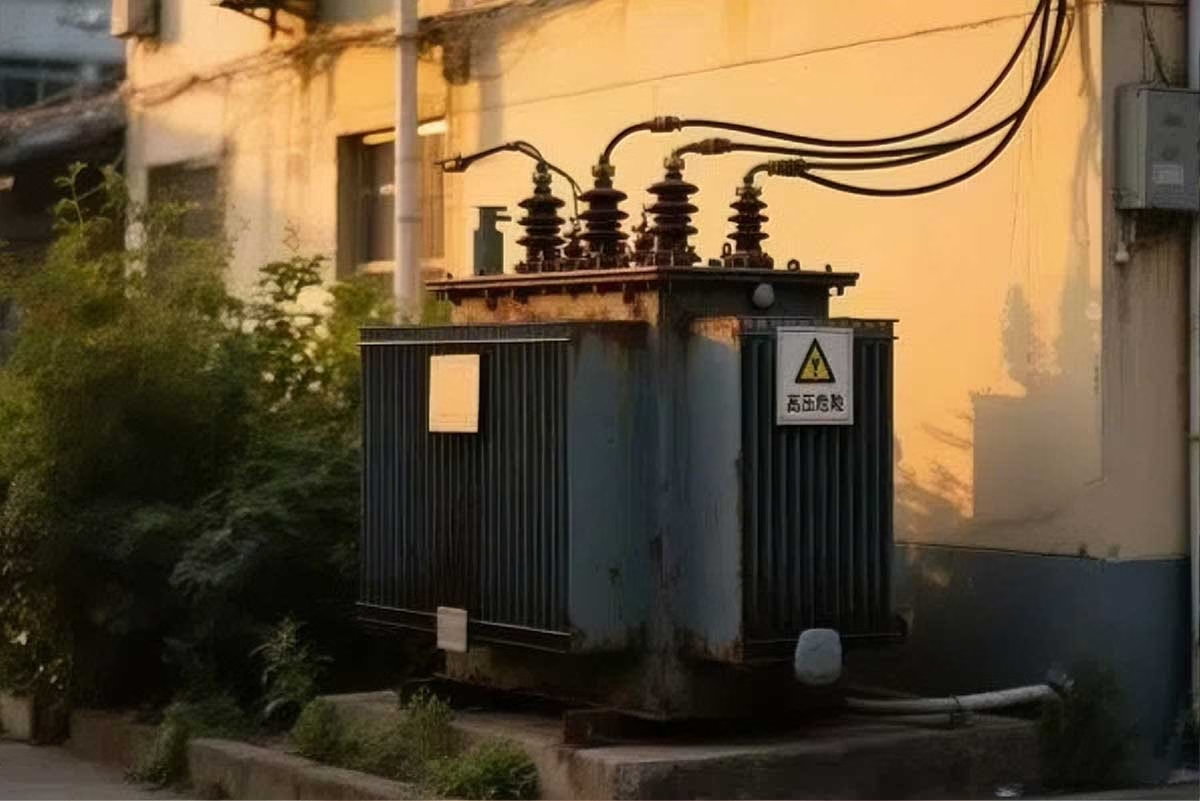
Extend Your Transformer’s Life: Simple Tips Anyone Can Follow
Many facility managers assume transformer maintenance is complex and expensive—but it doesn’t have to be. Small, consistent actions can significantly extend your transformer’s service life and improve reliability. Below are easy-to-implement tips that require minimal expertise or resources.
Regular Oil Checks: Simple Yet Effective
You don’t need advanced training to monitor your transformer’s oil—just a keen eye and basic schedule.
- Monthly visual checks: Look for color changes (darkening) or cloudiness
- Monthly oil level inspections: Ensure levels are within the recommended range
- Annual professional testing: Send samples to a lab for dielectric strength and contamination analysis
Keep It Clean: A Little Effort Goes a Long Way
Dirt, dust, and debris can compromise cooling efficiency and lead to overheating.
- Quarterly radiator cleaning: Remove dust, leaves, and debris from fins using compressed air or a soft brush
- Bushing and insulator cleaning: Wipe down with a damp cloth to remove dirt and grime (ensure de-energization first)
- Prompt leak cleanup: Address oil spills immediately to prevent corrosion and slips
Temperature Monitoring: Stay Ahead of Overheating
Overheating is one of the leading causes of transformer failure—simple monitoring can prevent it.
- Weekly temperature checks: Review oil temperature gauges during routine rounds
- Hotspot detection: Use a basic infrared camera to identify unusual heat patterns (no expertise required)
- Cooling system verification: Ensure fans and pumps are running smoothly during peak load times
Routine Visual Inspections: Catch Issues Early
A quick visual check can reveal problems before they escalate.
- Monthly exterior inspections: Look for rust, corrosion, or physical damage
- Noise checks: Listen for unusual sounds during operation
- Seal and gasket inspections: Check for signs of leaks or wear
| Maintenance Tip | Frequency | Key Benefit |
|---|---|---|
| Oil Checks | Monthly (visual) / Annual (lab testing) | Early detection of degradation or contamination |
| Cleaning | Quarterly | Improved cooling efficiency and reduced corrosion |
| Temperature Monitoring | Weekly | Prevention of overheating and internal damage |
| Routine Inspections | Monthly | Early identification of leaks, damage, or unusual behavior |
A Success Story of Simple Maintenance
A small manufacturing plant once contacted me frustrated with frequent transformer issues. They believed maintenance was too complex and costly, so they’d neglected it for years. I introduced them to these simple tips—and the results were transformative.
We started with monthly oil checks. I showed their team how to visually inspect oil color and check levels—tasks they could complete in minutes during their rounds. We scheduled annual lab testing, which we coordinated during planned downtime to avoid disruption.
Cleaning made a huge difference. The transformers were caked in dust and debris, which had clogged the radiators. After a thorough cleaning, the plant noticed a immediate drop in temperature alarms and improved efficiency.
Temperature monitoring was another game-changer. We installed affordable digital gauges that operators could check easily. I also trained them to use a basic infrared camera to spot hotspots. Within months, they caught an overheating issue caused by a faulty cooling fan—addressing it before it led to failure.
The routine inspection checklist was the most impactful change. We created a simple form that operators could fill out in minutes, documenting noise levels, leak signs, and exterior condition. Within the first month, they discovered a small oil leak from a worn gasket—repairing it cost less than $100, compared to the thousands they would have spent on a major breakdown.
One older transformer was slated for replacement due to poor performance. After six months of following these tips, it was running cooler and more efficiently than ever. The plant extended its life by five years, saving over $50,000 in replacement costs.
Conclusion
Maintaining oil-filled transformers doesn’t have to be complex or costly—but it does require consistency and attention to detail. By understanding the critical role of transformer oil, implementing simple maintenance steps, recognizing early warning signs, prioritizing safety, and following easy care tips, you can significantly enhance the reliability and lifespan of your power system.
The key takeaway? Proactive maintenance is always more cost-effective than reactive repairs. The small time and resources invested in routine upkeep will pay off in fewer failures, reduced downtime, and lower long-term costs. Whether you’re managing a single transformer or an entire network, these strategies will help keep your electrical system running smoothly for years to come.