
Responsible for installing or maintaining telephone pole transformers? This high-stakes work carries inherent risks—missteps can lead to serious harm, equipment failure, or costly service disruptions. Many technicians grapple with the process’s complexity and evolving safety standards, but this guide simplifies critical steps to ensure safe, long-lasting performance.
Covering non-negotiable safety protocols, step-by-step mounting procedures, precise wiring techniques, robust grounding methods, and proactive maintenance strategies, this resource is tailored for both seasoned technicians and those new to the field. Drawing on real-world experience, we break down the critical details you need to execute transformer work with confidence.
Contents
hide
Safety as Priority: Non-Negotiable Precautions for Pole Transformer Work
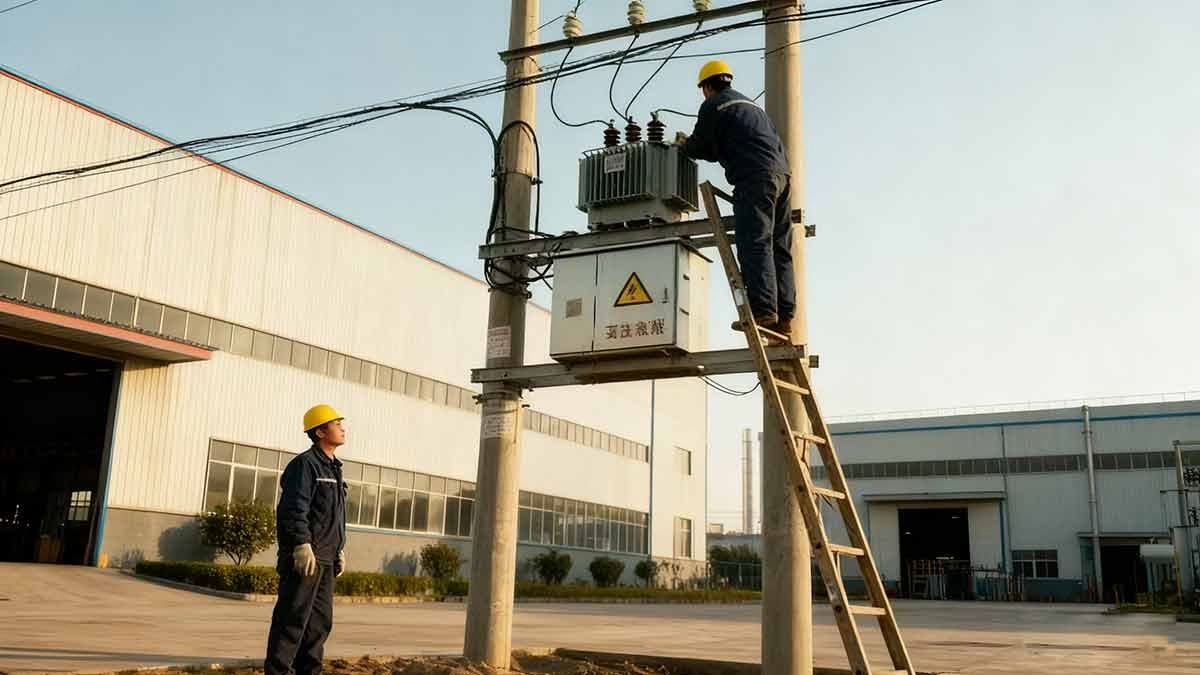
Why is safety non-negotiable in pole transformer operations? Even a single error in this high-voltage environment can result in severe injury or fatalities. Too often, technicians underestimate risks—from arc flashes to falls—compromising their well-being and job success.
Safety in transformer installation and maintenance centers on three pillars: proper protective gear, strict adherence to industry standards, and thorough risk assessment. Key measures include insulated tool use, verified power isolation, and rigorous lockout/tagout protocols—all non-negotiable for mitigating hazards.
Deep Dive into Critical Safety Measures
Personal Protective Equipment (PPE): Your First Line of Defense
PPE is non-negotiable for shielding against electrical and physical hazards. Every technician must wear:
- Voltage-Rated Insulated Gloves: Certified for the specific voltage (minimum 10kV rating) to prevent shock.
- Arc-Flash Safety Glasses: Impact-resistant with side shields to guard against flying debris and electrical arcs.
- ANSI-Certified Hard Hat: Protects from falling tools, debris, or accidental impacts with the transformer or pole.
- Fire-Resistant (FR) Clothing: NFPA 70E-compliant garments to shield against burns from electrical fires or arcs.
- Electrical Hazard (EH) Boots: Insulated soles and heels to prevent ground current exposure.
Early in my career, I saw a close call: a technician using standard work gloves instead of voltage-rated ones narrowly avoided a catastrophic shock while handling transformer terminals. That incident reinforced why cutting corners on PPE is never acceptable.
Adherence to Industry Standards
Compliance with established guidelines ensures consistency and safety:
- OSHA Regulations: Follow 29 CFR 1910.269 for electrical safety in utility work.
- NFPA 70E: Implement arc-flash risk assessments and PPE requirements.
- IEEE Standards: Reference IEEE C57.12 for transformer installation and maintenance best practices.
Rigorous Risk Assessment
Before starting any job, conduct a comprehensive site evaluation:
- Identify hazards (e.g., overhead power lines, wet conditions, unstable terrain).
- Evaluate risk severity (e.g., likelihood of arc flash, fall potential).
- Implement controls (e.g., safety barriers, weather delays, additional staffing).
Verified Power Isolation
Never assume a line is de-energized—follow this ironclad process:
- Disconnect power at the source (substation or distribution panel).
- Verify de-energization with a calibrated voltage tester (test on a known live circuit first to confirm functionality).
- Apply lockout/tagout devices with unique keys—only the technician who applied them may remove them.
Fall Protection for Elevated Work
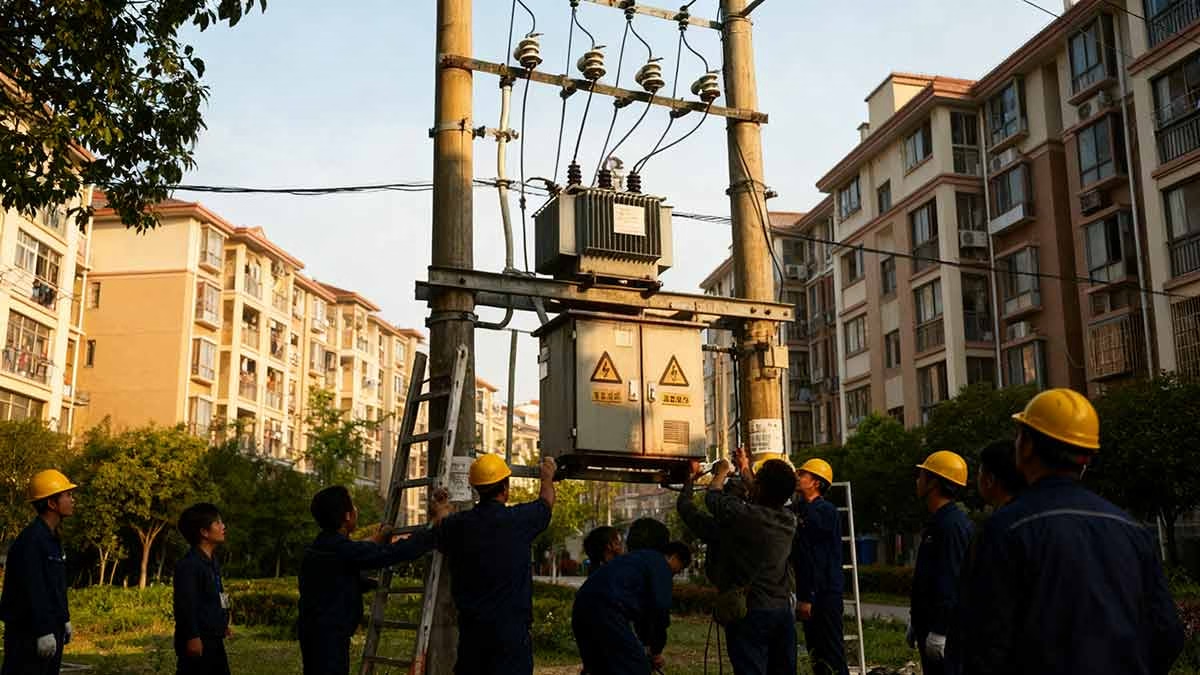
Pole transformer work inherently involves heights—don’t overlook these safeguards:
- Wear a full-body harness with a shock-absorbing lanyard, secured to a stable pole attachment point (not transformer hardware).
- Inspect ladders, lifts, and climbing gear before use (check for cracks, fraying, or mechanical defects).
- Use tool lanyards for all hand tools to prevent drops that could injure workers below or damage equipment.
| Safety Focus | Required Steps | Frequency of Compliance |
|---|---|---|
| PPE Inspection | Check for wear, tears, or insulation damage; replace compromised gear immediately. | Before each shift |
| Tool Integrity | Verify insulation on electrical tools; calibrate testing equipment. | Daily |
| Site Hazard Assessment | Document new or changing risks (e.g., sudden weather shifts, debris accumulation). | Before starting work |
| Emergency Protocols | Review arc-flash response, fall rescue, and first-aid procedures with the team. | Monthly |
| Skills Refresh | Complete OSHA and NFPA 70E refresher training; practice hands-on safety drills. | Annually |
In my experience, safety is a mindset, not just a checklist. During a tight-deadline project, we paused work mid-installation when thunderstorms rolled in—even though the team was eager to finish. That decision prevented potential lightning-related hazards and reinforced that safety always takes priority over speed.
Clear communication is another safety cornerstone. Establish hand signals or radio protocols for team work—misunderstandings in high-voltage environments can have devastating consequences.
Pole Preparation & Mounting: Step-by-Step for Secure Transformer Setup
Unsure how to properly prepare a utility pole or mount a transformer? Rushing this foundational step leads to unstable installations, which can fail under wind, ice, or normal operational stress. Getting it right from the start ensures long-term reliability.
Proper pole preparation and transformer mounting involve four critical stages: pole integrity assessment, crossarm installation, secure lifting and positioning, and final stability verification. Each step requires attention to detail and compatibility with the transformer’s weight and dimensions.
A Structured Approach to Mounting
Step 1: Pole Inspection & Preparation
A transformer is only as stable as the pole supporting it—never skip this step:
- Visual & Mechanical Checks: Examine the pole for cracks, rot, insect damage, or previous repairs. Use a hammer to tap the pole—hollow sounds indicate internal decay.
- Load Capacity Verification: Calculate the total weight the pole must support (transformer + crossarm + hardware). Most utility poles can handle 50–100kVA transformers, but aging or damaged poles may need reinforcement.
- Treatment & Reinforcement: Apply wood preservative to exposed cuts or damage. For weakened poles, install steel reinforcement brackets or use a pole sleeve to boost structural integrity.
Early in my career, I encountered a pole that looked solid from the outside but was rotted internally. A thorough inspection revealed the issue, and we reinforced the pole before mounting—avoiding a potential collapse that could have destroyed the transformer and endangered nearby property.
Step 2: Crossarm Installation
The crossarm serves as the transformer’s base—its installation demands precision:
- Size Selection: Choose a crossarm rated for the transformer’s weight (e.g., 4-foot crossarm for 75kVA units).
- Hardware Quality: Use hot-dip galvanized bolts, braces, and insulators to resist corrosion. All hardware must meet ANSI C135 standards for utility applications.
- Alignment: Ensure the crossarm is level (use a bubble level) and perpendicular to the pole. Misalignment causes uneven weight distribution, increasing stress on the pole and transformer.
Step 3: Transformer Lifting & Positioning
Lifting heavy transformers safely requires proper equipment and technique:
- Lifting Gear: Use a crane or boom truck rated for at least 150% of the transformer’s weight (e.g., a 100kVA transformer weighs ~1,500 lbs—use a 2,250-lb rated lift).
- Attachment Points: Secure lifting slings to the transformer’s dedicated lifting lugs (never attach slings to the tank or terminals).
- Positioning: Align the transformer’s mounting holes with the crossarm brackets. Have a ground team guide the unit to avoid collisions with the pole or other equipment.
Step 4: Final Securing & Stability Check
After positioning, verify the installation’s stability:
- Fastening: Use locknuts or castellated nuts with cotter pins to secure the transformer to the crossarm. Torque bolts to the manufacturer’s specifications (typically 45–55 ft-lbs).
- Balance Test: Gently push the transformer from multiple angles—no shifting or movement should occur.
- Clearance Verification: Ensure minimum clearances (12 inches from the pole, 3 feet from overhead lines, and 8 feet from the ground) to meet safety codes.

| Mounting Step | Key Actions | Required Tools |
|---|---|---|
| Pole Inspection | Check for rot/damage; calculate load capacity; reinforce if needed. | Hammer, moisture meter, load calculator |
| Crossarm Installation | Mount level crossarm; secure with corrosion-resistant hardware. | Bubble level, torque wrench, drill |
| Transformer Lifting | Lift with rated equipment; align with crossarm brackets. | Crane/boom truck, lifting slings |
| Securing | Torque bolts; install locknuts; verify balance. | Torque wrench, level, cotter pins |
| Final Verification | Check clearances; confirm stability; document installation. | Tape measure, inspection checklist |
Weather considerations are often overlooked but critical. In coastal areas or regions prone to high winds, install additional bracing or guy wires to anchor the pole and transformer. I learned this lesson the hard way: a transformer in a coastal town shifted during a storm due to inadequate wind load preparation, requiring costly repairs and downtime.
Documentation is another key step. Record pole condition, hardware used, and installation details—this information proves invaluable for future maintenance or troubleshooting.
Wiring & Connections: Ensuring Reliable Electrical Integration
Confident in your ability to wire pole transformers correctly? This make-or-break step directly impacts power quality, efficiency, and safety. Errors like undersized cables, loose connections, or incorrect phasing can lead to overheating, equipment damage, or outages.
Proper wiring involves selecting the right cables, making secure connections, following manufacturer diagrams, and conducting thorough testing before energization. Each step requires precision—cutting corners leads to costly consequences.
Mastering Wiring & Connection Techniques
Step 1: Cable Selection & Preparation
Cable choice depends on load, voltage, and environmental conditions:
- Size Calculation: Use the NEC’s ampacity tables to select cable size (e.g., 4/0 AWG aluminum for 12kV primary connections, 2 AWG for 240V secondary). Undersized cables cause overheating; oversized cables waste resources.
- Insulation Rating: Choose cables with insulation rated for the application (e.g., EPR insulation for wet environments, XLPE for high-temperature settings).
- Preparation: Strip 0.75–1 inch of insulation from cable ends (use a wire stripper to avoid nicking conductors). Clean stripped ends with a wire brush to remove oxidation.
I once encountered an installation where undersized cables were used for a 75kVA transformer. The cables overheated, melting the insulation and causing a short circuit—resulting in a $10,000 repair bill and 8 hours of downtime. Always double-check cable size calculations.
Step 2: Making Secure Connections
Loose or corroded connections are a leading cause of transformer failures:
- Connector Selection: Use compression connectors or bolted lugs rated for the cable size and voltage. For outdoor installations, choose corrosion-resistant materials (e.g., tinned copper).
- Connection Technique: Crimp compression connectors with a hydraulic crimper (achieve the manufacturer’s specified pressure). For bolted connections, torque bolts to 35–45 ft-lbs to ensure low resistance.
- Corrosion Prevention: Apply anti-oxidation compound to all connections to prevent rust and improve conductivity.
Step 3: Following Wiring Diagrams
Transformer wiring varies by model—never rely on guesswork:
- Diagram Familiarization: Study the manufacturer’s wiring diagram to identify primary (high-voltage) and secondary (low-voltage) terminals, neutral connections, and grounding points.
- Phase Identification: Use color-coding (red = phase A, black = phase B, white = neutral) to ensure correct phasing. Incorrect phasing can damage three-phase equipment.
- Neutral & Ground Separation: Keep neutral and ground connections separate at the transformer (bond them only at the service entrance per NEC requirements).
Step 4: Insulation & Environmental Protection
Outdoor connections require protection from the elements:
- Insulation: Wrap connections with self-amalgamating tape or heat-shrink tubing (rated for the voltage and environmental conditions).
- Surge Protection: Install surge arresters within 18 inches of the transformer’s primary terminals to shield against lightning strikes and voltage spikes.
- Weatherproofing: Seal cable entry points with silicone caulk to prevent moisture ingress, which causes corrosion and insulation breakdown.
Step 5: Pre-Energization Testing
Never energize a transformer without verifying wiring integrity:
- Continuity Test: Use a multimeter to confirm electrical paths between terminals (no open circuits).
- Insulation Resistance Test: Use a megohmmeter to measure insulation resistance (minimum 100MΩ at 5kV for primary windings).
- Turns Ratio Test: Verify the transformer’s voltage ratio (e.g., 12kV/240V) matches the nameplate specifications.
| Wiring Step | Key Actions | Required Tools |
|---|---|---|
| Cable Preparation | Calculate size; strip insulation; clean conductors. | Wire stripper, wire brush, ampacity table |
| Connection Making | Crimp/bolt connectors; apply anti-oxidation compound. | Hydraulic crimper, torque wrench |
| Diagram Compliance | Follow manufacturer’s wiring scheme; verify phasing. | Wiring diagram, phase tester |
| Insulation & Protection | Apply tape/heat-shrink; install surge arresters; seal entry points. | Heat gun, silicone caulk, surge arresters |
| Testing | Conduct continuity, insulation resistance, and turns ratio tests. | Multimeter, megohmmeter, turns ratio tester |
Environmental factors play a critical role in connection longevity. In coastal areas, use marine-grade connectors and extra weatherproofing to combat salt air corrosion. In industrial zones, protect connections from dust and debris with covered junction boxes.
Labeling is another often-overlooked step. Mark all cables and connections with clear, durable labels (e.g., “Primary Phase A,” “Secondary Neutral”) to simplify future maintenance. I’ve saved hours of troubleshooting by investing a few minutes in labeling during installation.
Grounding Techniques: Protecting Transformers & Electrical Systems
Confident in your transformer grounding practices? Many technicians underestimate grounding’s importance—yet it’s the foundation of safety, equipment protection, and system stability. Poor grounding increases shock risks, leaves transformers vulnerable to lightning strikes, and causes voltage fluctuations that damage sensitive equipment.
Effective grounding for pole transformers requires a low-impedance path to earth, properly sized conductors, and secure connections. Key techniques include installing dedicated ground rods, routing conductors correctly, and regular testing to maintain performance.
Building a Reliable Grounding System
1. The Purpose of Transformer Grounding
Grounding serves three critical functions:
- Safety: Provides a path for fault current to dissipate, reducing shock risks for technicians and the public.
- Equipment Protection: Shields the transformer from overvoltage (e.g., lightning strikes) by diverting excess current to earth.
- System Stability: Maintains consistent voltage levels, preventing fluctuations that disrupt power quality.
Early in my career, I troubleshooted a manufacturing facility with frequent equipment failures. The root cause? A poorly grounded pole transformer causing voltage spikes. After installing a proper grounding system, the issues disappeared, and the facility’s equipment lifespan increased by 30%.
2. Ground Rod Selection & Installation
Ground rods form the backbone of the grounding system:
- Material Choice: Use copper-clad steel or galvanized steel rods (10 feet long, 5/8-inch diameter) for optimal conductivity and corrosion resistance.
- Installation Depth: Drive rods at least 8 feet into undisturbed soil (10 feet in dry or rocky conditions). If soil resistivity is high (>25Ω), install two rods spaced 10 feet apart and connect them with a 2 AWG copper conductor.
- Soil Considerations: In rocky soil, use a rock drill to create a pilot hole. In sandy or dry soil, moisten the area around the rod to improve conductivity (avoid chemical soil treatments that damage the rod).
3. Grounding Conductor Installation
The conductor links the transformer to the ground rod—its installation is critical:
- Size Calculation: Select a conductor rated for the maximum fault current (minimum 2 AWG copper for most pole transformers).
- Routing: Run the conductor in a straight line from the transformer’s ground lug to the rod. Avoid sharp bends or kinks, which increase impedance.
- Protection: Bury the conductor at least 6 inches deep to prevent physical damage. For above-ground segments, encase the conductor in PVC conduit.
4. Transformer Ground Connection
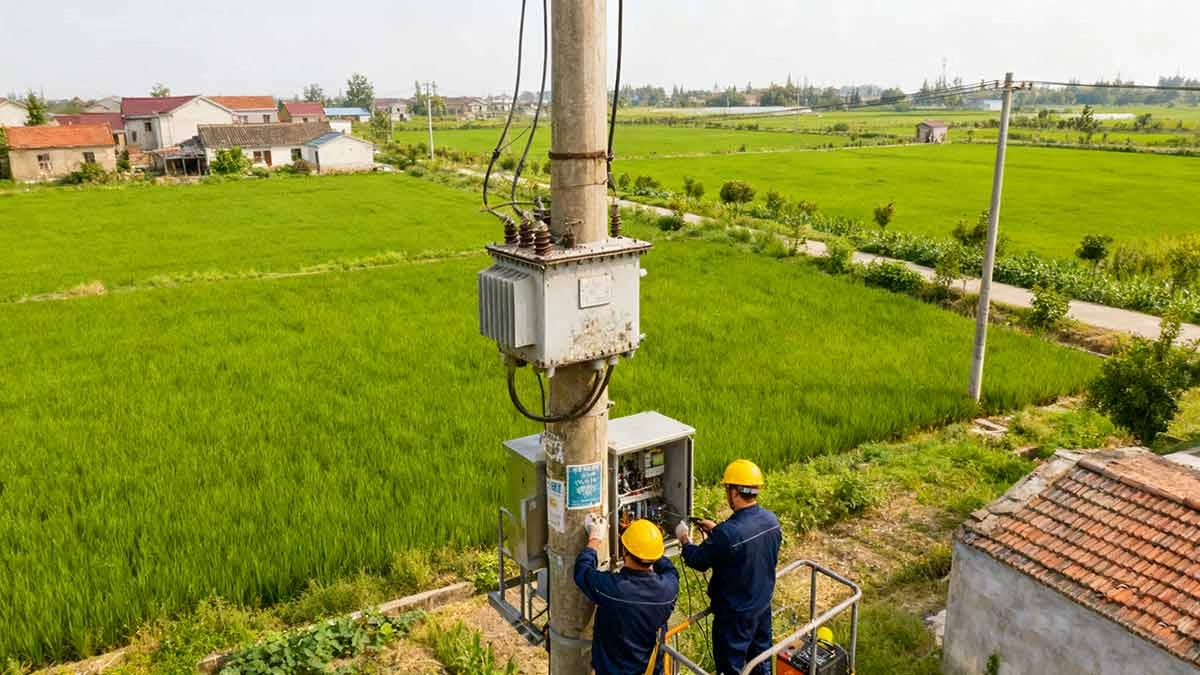
Secure the conductor to the transformer with precision:
- Lug Identification: Locate the transformer’s dedicated ground lug (marked with a green “G” or “Ground” stamp).
- Connection Method: Use a stainless-steel bolt to fasten the conductor to the lug. Torque the bolt to 35 ft-lbs and apply anti-oxidation compound to prevent corrosion.
- Bonding: Bond all metallic components (crossarm, brackets, surge arresters) to the grounding system using 4 AWG copper jumpers. This eliminates dangerous touch potentials during faults.
5. Testing & Maintenance
A grounding system is only effective if it’s regularly verified:
- Resistance Testing: Use a ground resistance tester to measure the system’s resistance (target: ≤5Ω). Retest annually or after severe weather.
- Visual Inspections: Check for corrosion, loose connections, or rod damage. Replace corroded conductors or rods immediately.
- Retesting After Modifications: Always retest the grounding system after upgrading the transformer or modifying the installation.
| Grounding Component | Key Considerations | Required Tools/Materials |
|---|---|---|
| Ground Rod | 10ft copper-clad/galvanized steel; 8ft minimum depth. | Ground rod driver, rock drill (if needed) |
| Conductor | 2 AWG copper; direct routing; 6-inch burial depth. | Conduit, trenching tool, anti-oxidation paste |
| Connection | Stainless-steel bolt; 35 ft-lbs torque; bonding of metallic components. | Torque wrench, wire brush |
| Testing | ≤5Ω resistance target; annual retesting. | Ground resistance tester |
Common grounding mistakes include relying solely on the utility pole’s ground (insufficient for transformer fault currents) and using undersized conductors. I once corrected an installation where a 6 AWG conductor was used—upgrading to 2 AWG reduced ground resistance from 30Ω to 4Ω, drastically improving safety and performance.
In lightning-prone areas, add a separate ground rod for surge arresters. This creates a dedicated path for lightning current, protecting the transformer from voltage spikes.
Routine Checks & Troubleshooting: Extending Transformer Longevity
Do you have a proactive maintenance plan for pole transformers? Many technicians adopt a “wait-until-it-breaks” approach, leading to premature failures, costly repairs, and unplanned downtime. With proper routine checks and targeted troubleshooting, pole transformers can operate reliably for 25+ years.
Effective maintenance combines regular visual inspections, predictive testing, and timely repairs. Key activities include monitoring oil condition, checking for hotspots, verifying electrical performance, and addressing minor issues before they escalate.
A Proactive Maintenance & Troubleshooting Framework
1. Monthly Visual Inspections
Visual checks require no specialized tools but catch early warning signs:
- External Condition: Inspect the transformer tank for rust, dents, or oil leaks. Small leaks (e.g., around gaskets) can be repaired; large leaks indicate tank damage requiring replacement.
- Bushing Integrity: Check bushings (insulating connectors) for cracks, dirt buildup, or arcing marks. Clean dirty bushings with a non-abrasive cleaner; replace cracked ones immediately.
- Oil Level: Verify oil levels through the sight glass (maintain levels between the “min” and “max” marks). Low oil indicates a leak; overfilled oil can cause pressure buildup.
- Vegetation & Debris: Clear vines, branches, or debris from around the transformer—vegetation contact can cause short circuits.
I once caught a small oil leak during a routine inspection. Repairs cost $200 and took 2 hours—far less than the $5,000 and 8-hour downtime that would have resulted if the leak had gone unnoticed.
2. Annual Oil Testing & Analysis
Oil serves as both insulator and coolant—its condition directly impacts transformer life:
- Dielectric Strength Test: Measures the oil’s ability to resist electrical breakdown (minimum 25kV for usable oil).
- Dissolved Gas Analysis (DGA): Detects gases produced by internal faults (e.g., methane from overheating windings).
- Moisture Content: Excessive moisture (≥20 ppm) degrades insulation—use a vacuum dehydrator to remove moisture if needed.
3. Bi-Annual Thermal Imaging
Thermal imaging identifies hidden issues before they cause failure:
- Hotspot Detection: Scan the transformer with a thermal camera to identify overheating windings, loose connections, or faulty bushings.
- Temperature Comparison: Compare temperatures across phases—consistent heating is normal; uneven hotspots indicate problems.
- Connection Checks: Focus on terminal connections—loose connections cause high resistance and overheating (target temperature: ≤140°F).
4. Electrical Testing (Every 3–5 Years)
Periodic electrical tests verify the transformer’s internal condition:
- Turns Ratio Test: Confirms winding integrity (ratio should match the nameplate within ±0.5%).
- Insulation Resistance Test: Measures insulation health (minimum 100MΩ at 5kV for primary windings).
- Power Factor Test: Identifies insulation degradation (power factor >0.5% indicates issues).
5. Continuous Load Monitoring
Prevent overloading by tracking the transformer’s workload:
- Regular Load Checks: Use a clamp meter to measure primary and secondary currents (avoid exceeding 80% of the transformer’s rated current).
- Peak Load Recording: Document peak loads during high-demand periods (e.g., summer HVAC use). If peaks consistently exceed 90% of rating, consider upsizing or load balancing.
- Load Balancing: Distribute three-phase loads evenly to prevent single-phase overloading.
| Maintenance Activity | Frequency | Required Tools/Equipment |
|---|---|---|
| Visual Inspection | Monthly | Inspection checklist, camera |
| Oil Testing | Annually | Oil sampling kit, dielectric tester |
| Thermal Imaging | Bi-annually | Thermal camera |
| Electrical Testing | Every 3–5 years | Transformer test set, megohmmeter |
| Load Monitoring | Quarterly (continuous for critical applications) | Clamp meter, load monitoring software |
Troubleshooting Common Issues
When problems arise, follow a systematic approach to identify root causes:
| Symptom | Probable Cause | Resolution |
|---|---|---|
| Oil Leaks | Gasket deterioration, tank damage, or overfilling | Replace gaskets; repair tank; drain excess oil |
| Overheating | Loose connections, overloading, or internal winding damage | Retorque connections; reduce load; test windings |
| Voltage Fluctuations | Poor grounding, tap changer issues, or utility voltage variations | Retest grounding; inspect tap changer; coordinate with utility |
| Unusual Noise (Humming/Buzzing) | Core loosening, bearing wear, or overload | Tighten core bolts; replace bearings; reduce load |
| Tripping Circuit Breakers | Short circuit, ground fault, or harmonic distortion | Locate short/ground fault; install harmonic filters |
Proactive maintenance pays dividends. A utility company I worked with implemented this maintenance program and reduced unexpected transformer failures by 40% within two years. Detailed record-keeping was key—tracking test results and inspections helped identify trends (e.g., a batch of transformers with faulty gaskets) before widespread failures occurred.

Conclusion
Installing and maintaining telephone pole transformers is a high-responsibility task that demands expertise, attention to detail, and a commitment to safety. From adhering to strict PPE protocols and proper mounting techniques to mastering wiring, grounding, and proactive maintenance, every step impacts the transformer’s safety, efficiency, and longevity.
By following the structured approach outlined in this guide, technicians can minimize risks, prevent costly failures, and ensure reliable power distribution for communities and businesses. Remember: safety is non-negotiable, preparation prevents problems, and proactive maintenance extends equipment life.
Whether you’re a seasoned professional or new to the field, prioritizing best practices and continuous learning will help you excel in this critical role—keeping power flowing safely and reliably where it’s needed most.