
Choosing the right step-down power transformer isn’t a one-size-fits-all task. It demands a holistic evaluation of electrical parameters, application-driven demands, environmental resilience, safety compliance, efficiency metrics, and long-term operational viability. Overlooking any of these elements can lead to subpar performance, safety vulnerabilities, unplanned downtime, or even complete system breakdowns—costly mistakes that plague businesses across industrial, commercial, and residential sectors.
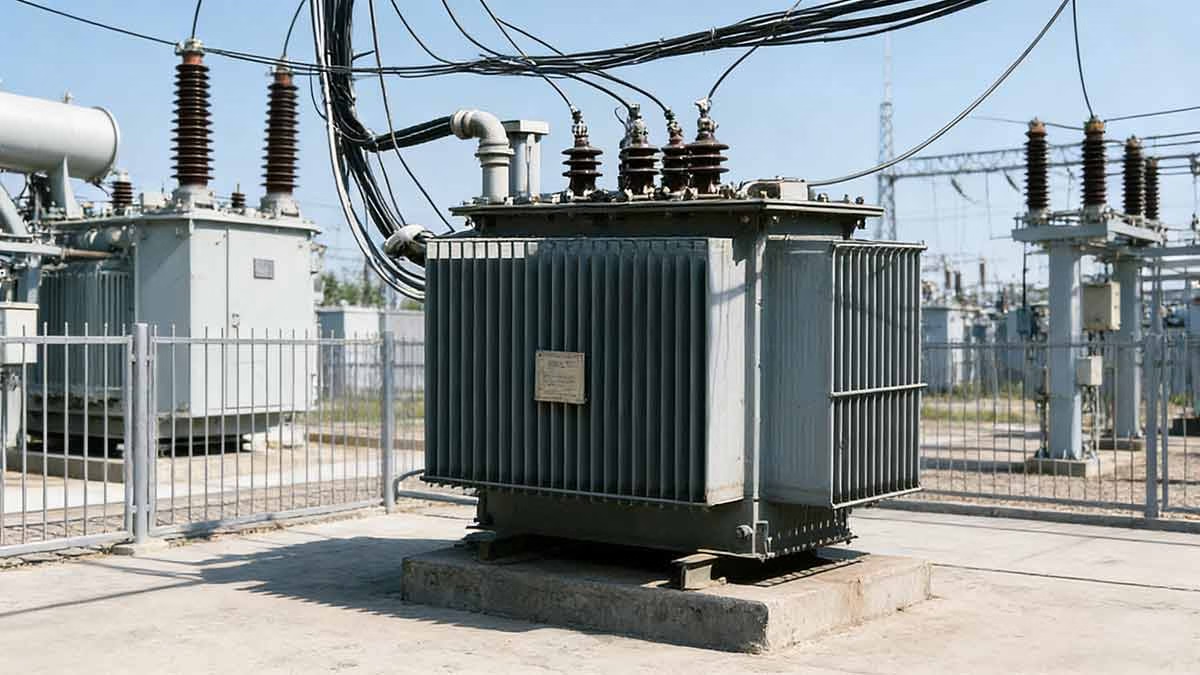
With decades of hands-on experience in the power transformer industry, I’ve witnessed firsthand how a strategic selection process can transform operational reliability and cost efficiency. Below is a comprehensive, actionable guide to navigating the complexities of step-down transformer selection.
Contents
hide
What Critical Electrical Specifications Matter for Step-Down Transformer Selection?
Picking a transformer without vetting its electrical specifications is like buying a car without checking its engine capacity—it might run, but it won’t run well for long. To avoid costly mismatches, you need to prioritize core electrical parameters that define the transformer’s functionality.
The foundational electrical specs for step-down transformers include primary/secondary voltage ratings, power capacity (VA/kVA), operating frequency, impedance, and efficiency benchmarks. Each parameter directly impacts the unit’s ability to deliver stable, safe power tailored to your unique load demands.
I once consulted on a manufacturing plant project where the team selected a transformer solely based on its kVA rating, overlooking impedance entirely. The result? Frequent circuit breaker tripping and unplanned production halts, as the transformer couldn’t coordinate with the plant’s existing protection systems. Let’s break down these specs to avoid such pitfalls.
Voltage Ratings: The Non-Negotiable Foundation
Voltage ratings are the bedrock of transformer compatibility—get these wrong, and nothing else matters.
- Primary Voltage: Must align perfectly with your incoming power supply. Mismatches here can cause immediate overheating or equipment damage.
- Secondary Voltage: Must match the exact voltage requirements of your end-use devices, from motors to control panels.
- Voltage Regulation: Measures how well the transformer maintains a consistent secondary voltage despite load fluctuations. Tight regulation is critical for sensitive equipment like precision instruments or data center servers.
In a recent commercial retrofit project, we needed to power 220V HVAC systems from a 480V mains supply. By selecting a transformer with a 480V primary and 220V secondary, we eliminated voltage fluctuations that had previously caused frequent HVAC failures, cutting maintenance costs by 30% in the first year.
Power Capacity: Size for Both Steady and Peak Loads
Power capacity dictates the maximum load a transformer can handle without overheating. It’s not enough to size for average usage—peak demands must also be factored in.
- VA Rating: Ideal for single-phase transformers used in residential or small commercial settings.
- kVA Rating: The standard for three-phase transformers in industrial and large-scale commercial applications.
- Continuous vs. Peak Load: Steady-state loads require consistent capacity, while peak loads (e.g., motor startups, equipment surges) demand extra headroom to avoid overloads.
| Power Capacity Range | Typical Applications | Recommended Cooling Method |
|---|---|---|
| Under 5 kVA | Residential lighting, portable appliances | Passive air-cooled |
| 5–500 kVA | Retail store power, small factory machinery | Dry-type or oil-immersed |
| Over 500 kVA | Heavy industrial plants, utility substations | Forced-oil forced-air (FOFA) cooling |
On a warehouse expansion project, the initial 75 kVA transformer selection failed to account for peak currents from forklift charging stations and conveyor motor startups. Upgrading to a 100 kVA unit resolved the issue, eliminating overload-related shutdowns and extending equipment lifespan.
Frequency: Match Your Local Power Grid
Frequency is an often-overlooked but critical spec—especially for global projects.
- 50 Hz vs. 60 Hz Compatibility: The transformer must align with your regional grid frequency (e.g., 50 Hz in Europe, 60 Hz in North America). Mismatched frequency leads to reduced efficiency and premature insulation breakdown.
- Frequency Sensitivity: Precision applications (e.g., medical imaging equipment, semiconductor manufacturing) require strict frequency stability.
- Harmonic Mitigation: For non-linear loads like variable frequency drives (VFDs) or LED lighting, opt for K-factor rated transformers to handle harmonic distortions without performance loss.
I once supported a project where European 50 Hz manufacturing equipment was installed in a 60 Hz North American facility. By selecting transformers engineered to handle dual-frequency operations, we prevented overheating and ensured the equipment operated at its designed efficiency.
Impedance: Critical for System Protection Coordination
Impedance directly impacts fault current levels and voltage regulation—two factors that make or break your electrical system’s safety.
- Typical Impedance Range: Distribution transformers typically have an impedance of 2–6%.
- Higher Impedance: Limits fault currents, reducing stress on circuit breakers but increasing voltage drop under heavy loads.
- Lower Impedance: Improves voltage regulation but allows higher fault currents, requiring robust protection systems.
For a data center project, we specified transformers with 5% impedance to sync with upstream circuit breakers. This setup prevented nuisance tripping during minor power fluctuations while ensuring rapid shutdowns during major faults—critical for protecting high-value server equipment.
Efficiency: The Key to Long-Term Cost Savings
Efficiency isn’t just an environmental consideration—it’s a financial one. A transformer’s efficiency directly impacts your monthly energy bills and total cost of ownership (TCO).
- No-Load Losses: Occur even when the transformer is energized but not powering any loads. These continuous losses add up over time, especially for units left running 24/7.
- Load Losses: Increase with power demand and are tied to the transformer’s design and material quality.
- Regional Efficiency Standards: Prioritize transformers that meet or exceed DOE (U.S.), IEC (global), or local efficiency benchmarks to maximize savings.
A client recently upgraded their 20-year-old transformers to high-efficiency models for their office park. While the upfront cost was 25% higher, the energy savings paid for the upgrade in just 2.5 years—with ongoing savings expected over the transformers’ 30-year lifespan.
How Do Application-Specific Requirements Shape Step-Down Transformer Selection?
A transformer that excels in a residential setting will fail miserably in a heavy industrial environment. Application-specific demands are the backbone of a successful selection process, as they dictate everything from load compatibility to special feature needs.
To select the right unit, you must evaluate load type, duty cycle, space constraints, special functionality requirements, and industry-specific regulations. Ignoring these factors is the leading cause of transformer underperformance in real-world applications.
I’ve seen countless cases where a transformer with perfect electrical specs failed in the field—simply because it wasn’t designed for the application’s unique demands. Let’s explore how different use cases influence your selection.
Load Type: Match Transformer Design to Your Equipment
Not all loads are created equal—each requires a transformer tailored to its electrical characteristics.
- Resistive Loads: The simplest category, including lighting systems, electric heaters, and water heaters. These loads have stable power demands and work with standard transformers.
- Inductive Loads: Pumps, compressors, and motors fall into this category. They require transformers that can handle high inrush currents during startup and maintain a stable power factor.
- Capacitive Loads: Found in some electronic equipment and power factor correction systems, these loads can cause voltage spikes if not paired with the right transformer.
- Non-Linear Loads: Computers, VFDs, and LED lighting generate harmonic distortions. K-factor or harmonic mitigating transformers are essential to prevent overheating and efficiency loss.
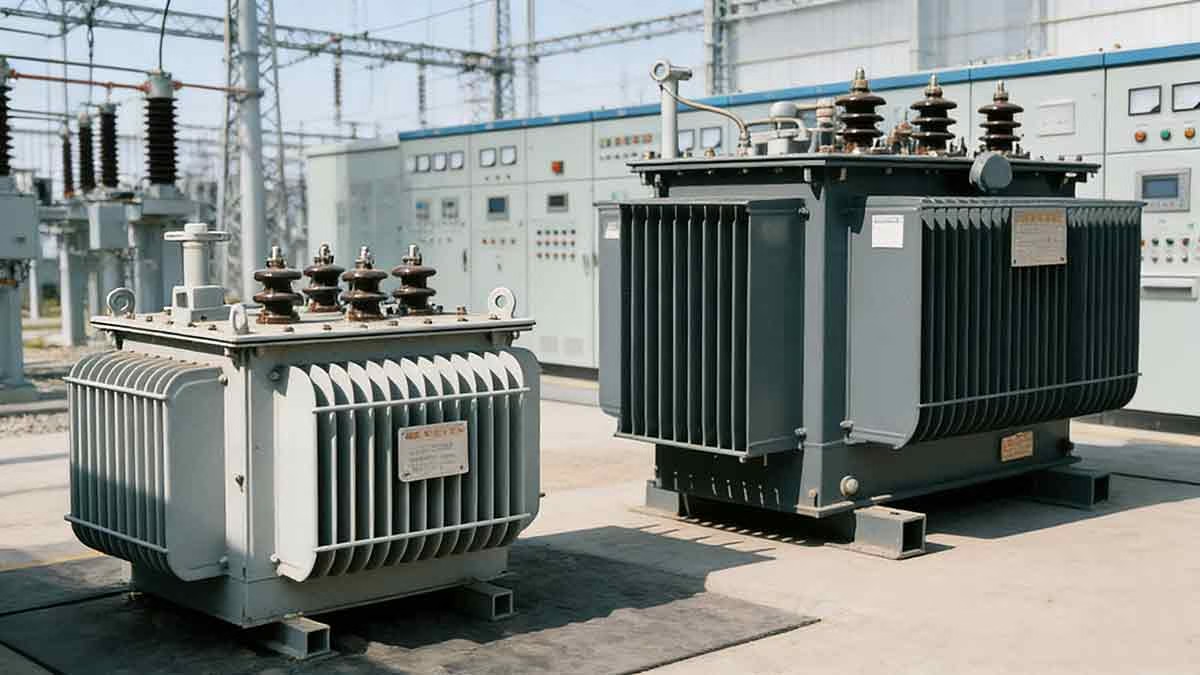
For a large printing press facility, we selected K-13 rated transformers to handle the combined inductive loads from motors and non-linear loads from digital control systems. This eliminated harmonic-related overheating and extended the press’s operational life by 15%.
Duty Cycle: Continuous vs. Intermittent Operation
A transformer’s duty cycle—how often it runs at full load—directly impacts its sizing and design.
- Continuous Duty: Applications like data centers or 24/7 manufacturing plants require transformers rated for non-stop full-load operation, with robust cooling systems.
- Intermittent Duty: Welding shops or construction equipment use transformers that operate in short bursts. These can be sized smaller if peak load durations are properly calculated.
- Cyclic Loads: Facilities with fluctuating demands (e.g., cold storage warehouses with variable compressor runtime) need transformers that handle frequent load changes without stress.
| Duty Type | Operational Description | Transformer Selection Tip |
|---|---|---|
| Continuous | 24/7 full-load operation | Opt for high-efficiency models with enhanced cooling |
| Intermittent | Short, high-load bursts | Prioritize peak load capacity over average load sizing |
| Cyclic | Regular load fluctuations | Choose units with tight voltage regulation |
For a welding shop, we selected a transformer with a higher continuous rating than the average load required. This allowed the unit to handle the intermittent high-current welding cycles without overheating, even during extended production shifts.
Special Features: Tailor the Transformer to Your Needs
Many applications require transformers with custom features to meet unique demands.
- Voltage Taps: Allow for minor voltage adjustments to compensate for line voltage fluctuations—critical for areas with unstable mains supply.
- Electrostatic Shielding: Reduces electromagnetic interference (EMI) between primary and secondary windings, essential for precision equipment like medical devices or laboratory instruments.
- Multiple Secondaries: Provide different voltage outputs from a single transformer, ideal for facilities with mixed equipment voltage requirements.
For a precision audio equipment manufacturer, we specified transformers with electrostatic shielding to eliminate mains-borne EMI. This eliminated audio distortion in the final products, an issue that had previously led to costly product returns.
Space and Weight Constraints: Fit the Transformer to Your Facility
Physical limitations often dictate transformer type—especially in retrofits or space-constrained facilities.
- Indoor vs. Outdoor Installation: Outdoor units require weatherproof enclosures and corrosion-resistant materials, while indoor units may prioritize compact design.
- Limited Floor Space: Cast resin dry-type transformers are more compact than traditional oil-immersed units, making them ideal for tight electrical rooms.
- Weight Restrictions: Roof-mounted or elevated installations require lightweight transformers to meet structural load limits.
For a historic building renovation project, we opted for compact cast resin transformers that fit into the building’s small, existing electrical closets. This eliminated the need for costly structural modifications while meeting all performance requirements.
Industry-Specific Regulations: Meet Compliance Standards
Certain sectors have strict transformer requirements that cannot be overlooked.
- Medical Applications: Transformers must have ultra-low leakage current and EMI levels to avoid interfering with sensitive medical equipment.
- Marine Environments: Units need corrosion-resistant materials and compliance with maritime standards (e.g., ABS, DNV) to withstand saltwater exposure.
- Renewable Energy Systems: Transformers for solar or wind installations must handle variable input voltages and integrate with grid-tie systems seamlessly.
For a hospital’s MRI suite, we selected specially designed transformers with minimal electromagnetic emissions. This prevented interference with the MRI machine’s imaging capabilities—a critical requirement for accurate diagnostics.
What Environmental and Physical Factors Are Essential for Step-Down Transformer Selection?
Just like a smartphone performs poorly in extreme cold, transformers are highly sensitive to their operating environment. Environmental and physical factors directly impact a unit’s lifespan, efficiency, and safety—making them non-negotiable considerations in the selection process.
Key factors to evaluate include ambient temperature, humidity levels, altitude, exposure to contaminants, seismic activity risks, space availability, and noise constraints. Overlooking these elements can lead to premature failure, even for transformers with perfect electrical specs.
I’ve seen transformers fail in as little as two years due to poor environmental planning—units installed in humid, dusty facilities without proper protection. Below is a breakdown of how to protect your transformer from its surroundings.
Ambient Temperature: Keep Your Transformer Cool
Temperature is the single most impactful environmental factor for transformer performance.
- Ambient Temperature Range: Transformers are rated for specific temperature ranges. Operating outside this range reduces efficiency and shortens insulation life.
- Temperature Rise: The increase in transformer temperature under full load. Lower temperature rise indicates a more robust design.
- Insulation Class: Defines the maximum allowable operating temperature of the transformer’s windings (e.g., Class F insulation handles up to 155°C).
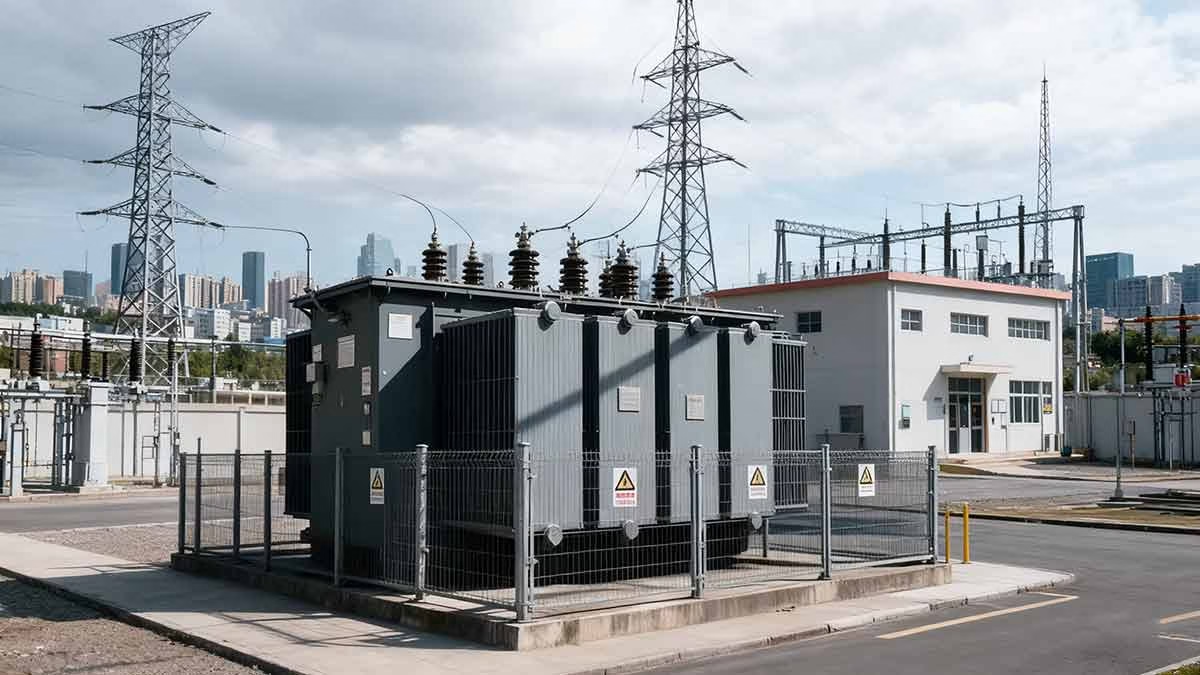
For a project in desert regions where ambient temperatures regularly exceed 55°C, we selected transformers with Class H insulation and forced-air cooling systems. This ensured the units operated within safe temperature limits, even during peak summer months.
Humidity and Moisture: Protect Against Corrosion and Short Circuits
Moisture is the enemy of electrical equipment, and transformers are no exception. High humidity can lead to condensation, corrosion, and short circuits.
- Ingress Protection (IP) Rating: Indicates the transformer’s resistance to dust and water. Higher IP ratings (e.g., IP65) are ideal for outdoor or high-moisture environments.
- Sealed vs. Ventilated Design: Sealed units are better for humid or dusty settings, while ventilated transformers offer better cooling in clean environments.
- Moisture Control Measures: Dehumidifiers or desiccant systems can protect transformers in high-humidity facilities like paper mills or food processing plants.
| Environment Type | Recommended IP Rating | Ideal Transformer Design |
|---|---|---|
| Clean Indoor Spaces | IP21 | Ventilated dry-type |
| Dusty Factory Floors | IP54 | Sealed dry-type |
| Outdoor/High-Moisture Areas | IP65+ | Weatherproof oil-immersed or sealed cast resin |
For a coastal food processing plant with high humidity and salt air exposure, we selected IP66-rated transformers with corrosion-resistant coatings. This prevented rust and condensation buildup, extending the units’ lifespan by 20 years.
Altitude: Account for Thin Air at High Elevations
Altitude impacts transformer cooling and insulation performance—often overlooked in mountainous regions.
- Derating Requirements: At altitudes above 1,000 meters, reduced air density impairs cooling efficiency. Transformers may need to be derated (operated at less than full load) to compensate.
- Insulation Strength: Air’s insulating properties decrease at high altitudes, requiring transformers with enhanced insulation systems.
I once consulted on a mining project in the Andes Mountains at 4,200 meters above sea level. We specified transformers with reinforced insulation and oversized cooling fans to offset the thin air, ensuring reliable operation in the remote, high-altitude environment.
Contaminant Exposure: Shield Against Dust, Chemicals, and Corrosion
Industrial environments often expose transformers to harmful contaminants that degrade performance over time.
- Dust and Particulates: Can clog cooling vents and cause overheating. Sealed transformers or air filtration systems are essential in dusty settings like cement plants.
- Chemical Vapors: Facilities like chemical plants or refineries require transformers with chemical-resistant enclosures and coatings to prevent corrosion.
- Salt Air: Coastal or marine applications need stainless steel components and anti-corrosion treatments to withstand saltwater exposure.
For a petrochemical plant, we selected transformers with epoxy-coated windings and stainless steel enclosures. This protected the units from chemical vapors and prevented corrosion, even in the harsh plant environment.
Seismic Considerations: Prepare for Earthquakes
In earthquake-prone regions, transformers must be designed to withstand seismic activity without tipping or sustaining damage.
- Seismic Rating: Look for transformers certified to meet local seismic standards (e.g., IEEE 693 in the U.S.).
- Mounting Systems: Specialized base mounts and bracing prevent tipping during earthquakes.
- Flexible Connections: Flexible bushing connections absorb shock and prevent damage to electrical wiring during seismic events.
For a California-based data center project, we specified transformers with IEEE 693 seismic certification and reinforced mounting systems. This ensured the units could withstand the region’s expected earthquake intensity, protecting the data center’s critical power supply.
Noise Constraints: Minimize Disturbance in Sensitive Areas
Transformer noise can be a major issue in residential areas, offices, or hospitals—where quiet operation is essential.
- Noise Level Ratings: Measured in decibels (dB), lower ratings are better for noise-sensitive environments.
- Sound Enclosures: Acoustic enclosures can reduce transformer noise by 10–20 dB.
- Vibration Isolation: Mounting transformers on vibration dampers prevents noise transmission to building structures.
For a transformer installation near a residential neighborhood, we selected low-noise dry-type transformers and installed them on vibration isolation pads. This reduced noise levels to below the local regulatory limit, avoiding complaints from nearby homeowners.
How Do Safety Standards and Efficiency Ratings Guide Step-Down Transformer Selection?
Safety and efficiency are two sides of the same coin when it comes to transformers. Prioritizing both ensures compliance with regulations, minimizes operational risks, and maximizes long-term cost savings. Cutting corners on either can lead to catastrophic failures, regulatory fines, or sky-high energy bills.
Safety standards set the minimum requirements for transformer design and operation, while efficiency ratings help you select units that reduce energy waste. Together, they form the foundation of a reliable, cost-effective power system.
In my career, I’ve helped clients avoid costly mistakes by emphasizing safety and efficiency—from rejecting non-compliant transformers to selecting high-efficiency models that deliver decades of savings. Let’s explore how these factors guide your selection.
Safety Standards: Non-Negotiable Compliance
Safety standards are designed to protect people, equipment, and facilities from electrical hazards. Compliance is not optional—it’s a legal and ethical requirement.
- UL Listing: Underwriters Laboratories (UL) certification ensures transformers meet strict safety standards for the U.S. and Canadian markets.
- IEEE/ANSI Standards: These global standards cover transformer design, testing, and performance—critical for ensuring interoperability and safety.
- NEC Compliance: The National Electrical Code (NEC) sets installation requirements to prevent electrical fires and shocks.
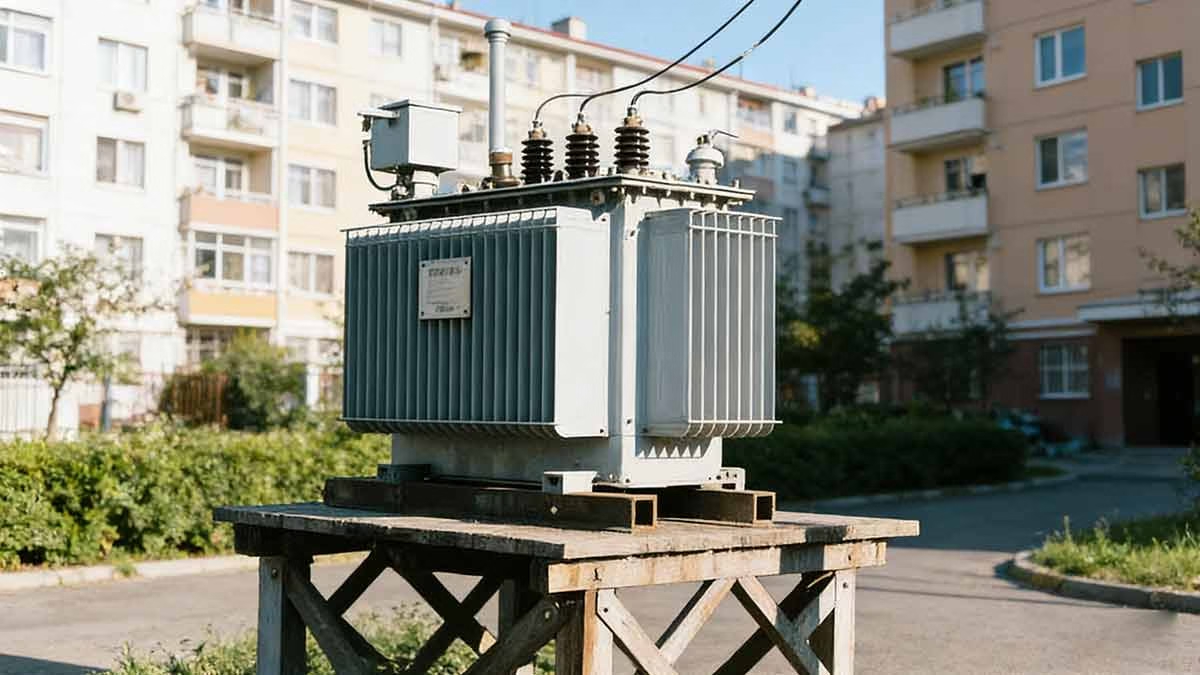
A client once considered using non-UL-listed transformers to save upfront costs. We demonstrated how this decision could lead to insurance coverage denials, regulatory fines, and increased liability in the event of a failure. The client quickly switched to UL-listed units, prioritizing safety over short-term savings.
Efficiency Ratings: Maximize Long-Term Savings
Efficiency ratings are more than just a label—they directly impact your bottom line. A slightly more expensive high-efficiency transformer can save you thousands in energy costs over its lifespan.
- DOE Efficiency Standards: The U.S. Department of Energy sets minimum efficiency requirements for distribution transformers, ensuring basic energy savings.
- NEMA Premium Efficiency: These transformers exceed DOE standards, delivering 30% more energy savings than standard units.
- Total Cost of Ownership (TCO) Analysis: Compare upfront costs with long-term energy and maintenance savings to make the best financial decision.
| Efficiency Level | Energy Savings vs. Standard Models | Upfront Cost Premium | Ideal For |
|---|---|---|---|
| DOE Compliant | Baseline savings (5–10%) | Low | Budget-focused projects with short lifespans |
| NEMA Premium | 30% higher savings | 20–25% higher | Long-term installations (15+ years) |
For a large industrial plant, we conducted a TCO analysis comparing standard and NEMA Premium transformers. While the premium units cost 22% more upfront, they were projected to save over $65,000 in energy costs over 20 years—delivering a significant return on investment.
Fire Safety: Mitigate Risks in Hazardous Environments
Fire safety is a top priority for transformer installations, especially in indoor or high-value facilities like data centers or hospitals.
- Low-Flammability Insulating Fluids: Natural ester fluids are less flammable than traditional mineral oil, reducing fire risk.
- Fire-Resistant Enclosures: Essential for indoor installations, these enclosures contain fires and prevent them from spreading.
- Dry-Type Transformers: Cast resin dry-type transformers are inherently fire-resistant, making them ideal for sensitive environments.
For a downtown data center, we specified K-13-rated dry-type transformers with fire-resistant enclosures. This eliminated the risk of oil fires and ensured compliance with the city’s strict fire codes—critical for protecting the facility’s high-value server equipment.
Electrical Safety Features: Prevent Failures and Shocks
Modern transformers come equipped with advanced safety features that protect against common electrical hazards.
- Thermal Protection: Built-in sensors monitor winding temperature and shut down the transformer if it overheats, preventing failures.
- Ground Fault Protection: Detects ground faults and triggers shutdowns to prevent electrical shocks and fires.
- Short-Circuit Withstand Capability: Ensures the transformer can survive short-circuit events without sustaining damage.
I recall a project where we retrofitted older transformers with modern thermal protection systems. Within the first year, the system prevented a catastrophic failure by shutting down a transformer that was overheating due to a cooling fan malfunction—saving the client hundreds of thousands in repair costs.
Environmental Safety: Reduce Your Carbon Footprint
Environmental safety is becoming increasingly important, with regulations targeting everything from fluid type to energy efficiency.
- PCB-Free Materials: Polychlorinated biphenyls (PCBs) are toxic and banned in most countries—always select PCB-free transformers.
- Oil Containment Systems: For oil-immersed transformers, containment systems prevent spills that can contaminate soil and water.
- Recyclable Components: Choose transformers with recyclable materials to reduce waste at the end of their lifespan.
For an environmentally conscious client, we selected transformers using biodegradable natural ester fluids instead of mineral oil. This reduced fire risk and ensured the fluid could be safely disposed of or recycled at the end of the transformer’s life.
What Long-Term Considerations Should Inform Your Step-Down Transformer Choice?
Selecting a transformer is a long-term investment—one that should serve your facility for 20–30 years or more. Failing to plan for the future can lead to costly upgrades, replacements, or inefficiencies down the line. To make a sustainable choice, you need to consider future load growth, maintenance requirements, lifespan expectations, regulatory changes, and technological advancements.
I’ve worked with many organizations that regretted not thinking long-term—from startups that outgrew their transformers in just two years to factories stuck with outdated units that couldn’t meet new efficiency standards. Below is how to future-proof your transformer selection.
Future Load Growth: Plan for Expansion
Facilities rarely stay the same size—whether you’re a growing startup or a large industrial plant, you need a transformer that can handle increased load demands.
- Oversizing for Growth: Select a transformer with 20–30% extra capacity to accommodate future load increases. This avoids the need for costly replacements as your facility expands.
- Parallel Operation Capability: Choose transformers that can be operated in parallel, allowing you to add units as load demands grow without disrupting the power supply.
- Flexible Voltage Taps: Taps allow you to adjust voltage as your equipment needs change, providing flexibility for future upgrades.
For a rapidly growing e-commerce warehouse, we installed transformers with 30% extra capacity and parallel operation capability. Two years later, when the warehouse expanded, we simply added a second transformer—avoiding the downtime and cost of replacing the original unit.
Maintenance Requirements: Minimize Downtime and Costs
A transformer’s maintenance needs directly impact its lifespan and operational costs. Choosing a unit with low maintenance requirements can save you time and money over the long run.
- Oil-Immersed vs. Dry-Type Maintenance: Oil-immersed transformers require annual oil testing and leak checks, while dry-type units only need maintenance every 3–5 years (e.g., cleaning, connection inspections).
- Remote Monitoring Systems: Smart transformers with built-in diagnostics allow you to monitor performance remotely, enabling predictive maintenance and reducing the need for on-site inspections.
- Accessibility: Ensure the transformer is installed in a location with easy access for maintenance teams—this reduces downtime during service visits.
| Transformer Type | Maintenance Frequency | Key Maintenance Tasks |
|---|---|---|
| Oil-Immersed | Annually | Oil quality testing, leak inspections, and cooling system checks |
| Dry-Type | Every 3–5 Years | Winding cleaning, connection tightening, and insulation checks |
| Smart Transformer | Continuous Remote Monitoring | Predictive maintenance based on real-time data |
For a remote mining operation, we selected smart transformers with remote monitoring capabilities. This allowed the client to perform predictive maintenance from a central location, reducing the need for frequent on-site visits to the mine’s isolated location.
Lifespan Expectations: Invest in Quality for Longevity
A transformer’s lifespan depends on its design, materials, and operating conditions. Investing in a high-quality unit can double or triple its operational life.
- Material Quality: Premium-grade copper windings and high-quality insulation materials extend lifespan significantly.
- Operating Conditions: Proper cooling, humidity control, and load management can add years to a transformer’s life.
- Design Life Ratings: Look for transformers with a 30–40 year design life for critical applications like data centers or power plants.
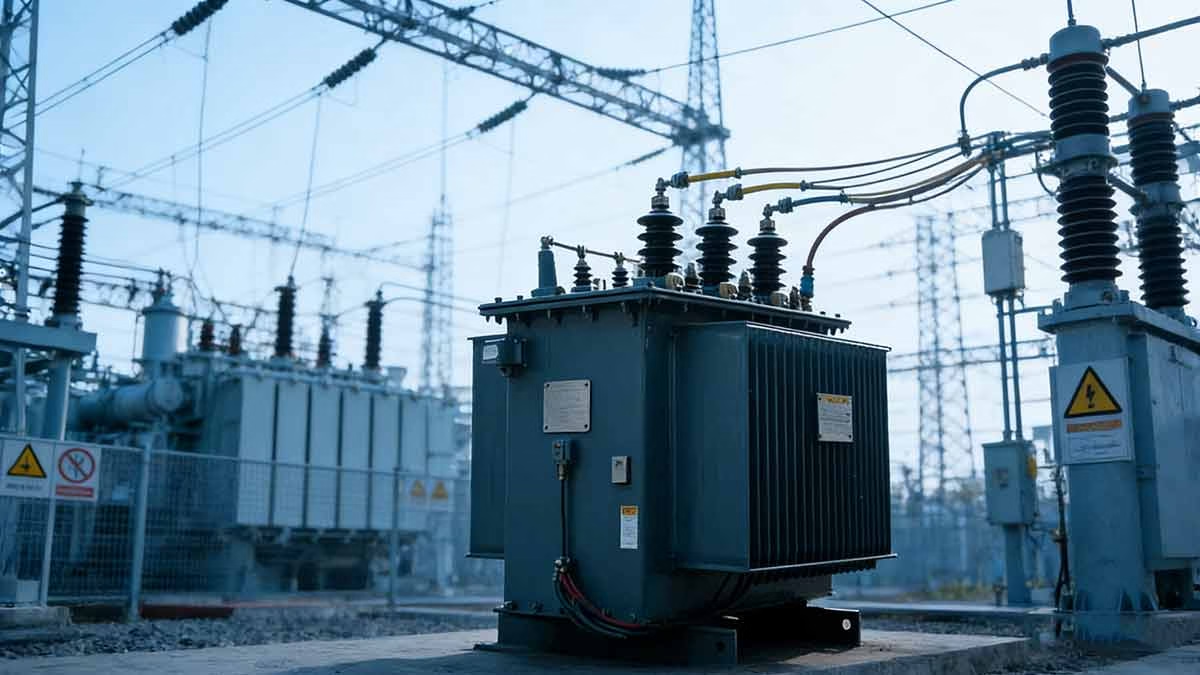
For a critical water treatment plant project, we selected transformers with a 40-year design life and premium copper windings. While the upfront cost was higher, the client avoided the need for frequent replacements—critical for a facility that cannot afford downtime.
Adaptability to Changing Standards
Regulations and efficiency standards evolve over time—your transformer should be able to adapt to these changes without requiring a full replacement.
- Exceed Current Standards: Select transformers that meet or exceed the latest efficiency and safety standards to avoid obsolescence.
- Smart Grid Compatibility: Choose units that can integrate with smart grid technologies, allowing for remote monitoring and load management as grids modernize.
- Modular Design: Modular transformers can be upgraded with new components (e.g., monitoring systems) to meet changing requirements.
For a utility company’s grid modernization project, we specified transformers with smart grid compatibility. This allowed the utility to integrate the units into their existing smart grid system, enabling real-time load management and improving grid reliability.
Total Cost of Ownership (TCO): Look Beyond Upfront Costs
The upfront cost of a transformer is just a small part of its total cost of ownership. To make a smart financial decision, you need to consider energy costs, maintenance costs, downtime costs, and replacement costs over the unit’s lifespan.
- Energy Costs: High-efficiency transformers cost more upfront but save thousands in energy bills over time.
- Maintenance Costs: Low-maintenance dry-type transformers reduce service costs over the long run.
- Downtime Costs: Reliable, high-quality transformers minimize unplanned downtime—a critical factor for facilities like data centers or hospitals.
I once helped a client compare two transformer options: a low-cost standard model and a higher-cost premium model. Our TCO analysis showed that the premium model would save over $120,000 in energy and maintenance costs over 25 years—making it the clear financial choice, despite the higher upfront price.
Vendor Support and Warranty: Ensure Long-Term Reliability
The transformer manufacturer’s support and warranty are just as important as the unit itself. A strong warranty and reliable vendor support can save you from costly repairs and downtime.
- Warranty Terms: Look for comprehensive warranties that cover parts and labor for 5–10 years.
- Vendor Stability: Choose manufacturers with a proven track record of reliability and longevity—avoid fly-by-night companies that may not be around to honor warranties.
- Spare Parts Availability: Ensure the manufacturer will supply spare parts for the transformer’s entire lifespan.
For a critical infrastructure project, we selected transformers from a well-established manufacturer offering a 10-year warranty and guaranteed spare parts availability for 30 years. This provided the client with peace of mind, knowing they could get support and parts for decades to come.
Conclusion
Selecting the right step-down power transformer is a complex but rewarding process that requires a holistic approach. By evaluating electrical specifications, application-specific demands, environmental factors, safety standards, efficiency ratings, and long-term considerations, you can choose a unit that delivers optimal performance, safety, and cost efficiency for decades.
Remember: a transformer is not just a piece of equipment—it’s a long-term investment in your facility’s reliability and productivity. Cutting corners on any of these factors can lead to costly mistakes, but a strategic selection process will pay dividends in the form of reduced downtime, lower energy bills, and peace of mind.
Whether you’re outfitting a small office or a large industrial plant, taking the time to select the right transformer is one of the most important decisions you can make for your power system.
More FAQ About How to Choose the Right Step-Down Transformer
Q: What core parameters should be prioritized when choosing a step-down transformer?
A: The primary core parameters to prioritize include input/output voltage rating, power (kVA) capacity, frequency compatibility, insulation class, and turns ratio. The input voltage must match the available power supply (e.g., 240V AC mains), while the output voltage should align with the load’s requirements (e.g., 12V for electronic devices). Power capacity should be calculated as 1.1-1.2 times the total load power to avoid overloading, as undersized transformers lead to overheating and efficiency loss. Frequency compatibility (50Hz/60Hz) is critical for international applications, and insulation class (F-class 155℃, H-class 180℃) determines the maximum operating temperature, directly impacting service life. The turns ratio (N₁/N₂) must be precisely matched to the voltage conversion ratio (V₁/V₂) to ensure stable output.
Q: How to calculate the required kVA capacity for a step-down transformer?
A: The kVA capacity calculation follows the formula: kVA = (Total Load Power in Watts) / (Power Factor × 1000). A power factor of 0.8-0.9 is typically used for most industrial and commercial loads (e.g., motors, machinery), while resistive loads (e.g., lighting) use a power factor of 1.0. Additionally, a 10-20% capacity margin is mandatory to accommodate load fluctuations and future expansion. For example, if the total load power is 400W with a power factor of 0.8, the required kVA is (400) / (0.8 × 1000) = 0.5kVA, so a 0.6kVA (600VA) transformer is recommended to ensure reliability.
Q: What is the difference between isolating and non-isolating step-down transformers, and how to choose?
A: Isolating step-down transformers have separate primary and secondary windings with no direct electrical connection, providing electrical isolation to protect against electric shock and suppress electromagnetic interference (EMI). They are ideal for sensitive equipment (e.g., medical devices, laboratory instruments) and harsh industrial environments. Non-isolating transformers (autotransformers) use a single tapped winding, offering smaller size, lower cost, and higher efficiency, but no isolation. Choose isolating transformers for safety-critical applications or where EMI is a concern, and non-isolating types for cost-sensitive, low-risk scenarios (e.g., basic lighting, non-critical electronics).
Q: Copper vs. aluminum windings: Which is better for step-down transformers?
A: Copper windings offer higher electrical conductivity (100% IACS vs. 61% for aluminum), lower resistance, and better heat dissipation, resulting in higher efficiency and longer service life. They also have superior mechanical strength, lower creep, and more reliable terminations (copper oxide is conductive, while aluminum oxide is insulating). Aluminum windings are lighter and 3-5 times cheaper, making them suitable for budget-limited, low-load applications (e.g., residential lighting). For industrial, high-load, or long-term applications (e.g., data centers, renewable energy systems), copper windings are preferred despite higher initial costs, as they reduce energy losses and maintenance needs over time.
Q: How to choose a step-down transformer for industrial vs. residential applications?
A: Industrial applications require step-down transformers with high capacity (10kVA+), robust construction, high insulation class (H-class), and forced air or oil cooling to handle continuous heavy loads (e.g., motors, arc furnaces). They should also have high short-circuit withstand capability, often with copper windings for durability. Residential applications prioritize compact size, low noise, and safety features (e.g., overload protection), with capacities typically 0.5-5kVA. Distribution transformers (230V/11kV) are common for residential use, while industrial settings may require power transformers (33kV+) to handle high-voltage inputs. Additionally, industrial transformers need IP54+ protection against dust and moisture, while residential models may use IP20 for indoor clean environments.
Q: What cooling method is suitable for different step-down transformer applications?
A: Natural air cooling (AN) relies on convection and is suitable for small-capacity transformers (≤5kVA) in low-load, well-ventilated environments (e.g., residential wiring closets). Forced air cooling (AF) uses fans to enhance heat dissipation, ideal for medium-capacity transformers (5-50kVA) in industrial settings with moderate loads. Oil cooling is used for large-capacity transformers (≥50kVA) in heavy-industry applications (e.g., substations), providing superior heat transfer but requiring more maintenance. For high-temperature environments (e.g., solar farms, foundries), heat pipe cooling or hybrid AN/AF systems are preferred to ensure stable operation within insulation class limits.
Q: How to balance cost and performance when choosing a step-down transformer?
A: Cost-performance balance involves prioritizing critical parameters while optimizing non-essential features. For budget-limited, low-load applications (e.g., residential lighting), aluminum-wound, IE2, non-isolating transformers offer the best cost-effectiveness. For high-performance, long-term use (e.g., industrial processes, data centers), invest in copper-wound, IE3, isolating transformers—though initial costs are 30-50% higher, energy savings and reduced maintenance costs recover the investment within 3-5 years. Avoid over-specifying capacity (e.g., choosing a 10kVA transformer for a 2kVA load) as it increases costs unnecessarily; instead, use the 10-20% margin rule for sizing.
Q: What are the common mistakes to avoid when choosing a step-down transformer?
A: Common mistakes include undersizing the transformer (leading to overheating and failure), neglecting power factor (resulting in insufficient capacity), and choosing the wrong insulation class for high-temperature environments. Avoid selecting aluminum windings for high-load, long-term applications, as their higher resistance and insulation oxide issues lead to frequent maintenance. Do not use non-isolating transformers for safety-critical or sensitive equipment, as they lack shock protection and EMI suppression. Another mistake is ignoring environmental factors (dust, moisture), which require appropriate IP ratings—using an IP20 transformer outdoors will cause premature failure. Always calculate capacity with a margin and verify standard compliance to avoid these issues.
Q: What factors should be considered when choosing a step-down transformer for harsh industrial environments?
A: For harsh industrial environments (e.g., chemical plants, mining sites), key considerations include robust construction (sealed enclosures, anti-corrosion coatings), high IP rating (IP65+), and H-class insulation to withstand high temperatures and humidity. Copper windings are mandatory for their durability and resistance to short-circuit forces, and forced air or oil cooling ensures stable operation under heavy loads. The transformer should have integrated protective features (overtemperature, overcurrent, short-circuit protection) to minimize downtime. Additionally, choose models with vibration-resistant mounts to withstand industrial machinery vibrations, and verify compliance with ATEX standards for explosive environments if applicable.