
Selecting the ideal power transformer rating demands a strategic blend of load analysis, future scalability, efficiency goals, budget constraints, and environmental adaptability. Accurate load assessment, clarity on power quality needs, and collaboration with seasoned industry partners are non-negotiable for success. The perfect rating balances immediate operational demands with long-term growth, while optimizing both performance and cost over the transformer’s lifecycle.
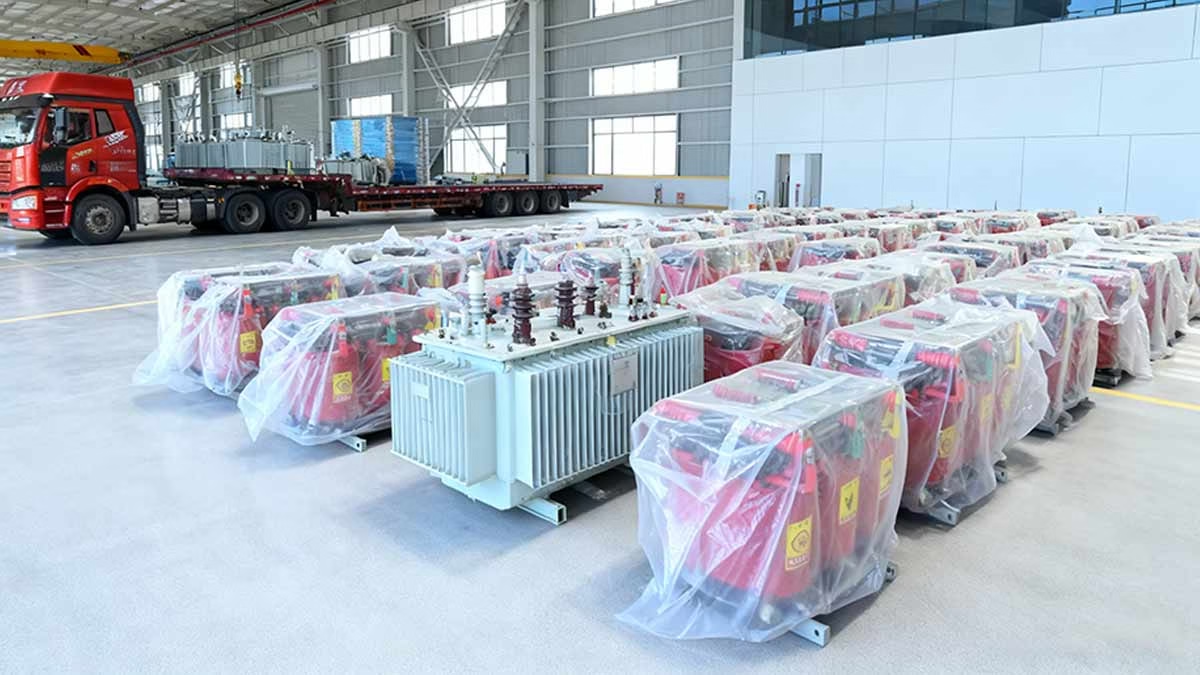
With over two decades in power distribution, I’ve witnessed firsthand how this decision shapes project reliability and bottom lines. Below is a refined breakdown of key considerations and expert insights to guide your selection process.
Contents
hide
Understanding Power Transformer Ratings: Core Selection Factors
Feeling overwhelmed by transformer rating jargon and technical specifications? You’re not alone—even seasoned professionals grapple with this critical step. The key lies in distilling complex parameters into actionable insights tailored to your unique application.
Power transformer ratings hinge on four foundational elements: kVA capacity, voltage ratio, impedance, and efficiency. Beyond these, load characteristics, harmonic content, ambient conditions, and duty cycles directly influence performance. Mastering these factors ensures your transformer meets current needs and adapts to future shifts.
Key Components of Transformer Ratings
- kVA Capacity & Load Profile:The nominal kVA rating defines a transformer’s maximum power handling capacity under standard operating conditions. It must align with—or slightly exceed—your peak expected load. For example, in a recent industrial expansion, we specified a 2000 kVA transformer for a 1600 kVA operational load, allocating 20% headroom for growth.Load factor (average load vs. peak load) impacts thermal performance: continuous loads (e.g., data centers) require higher kVA ratings for stability, while intermittent loads benefit from units with robust short-term overload capabilities. Following ANSI/IEEE C57.92 guidelines, we selected a transformer with 20% overload capacity for a refinery, enabling it to handle 2-hour startup surges without strain.
- Voltage Ratings & Regulation:Primary and secondary voltages must match your system’s exact requirements—no exceptions. For a growing industrial park, we specified dual-voltage primaries (13.8kV/23kV) to accommodate future grid upgrades seamlessly.Voltage regulation (the variance between no-load and full-load voltage) is critical for sensitive equipment: a semiconductor facility required ±2% regulation to protect precision machinery, while commercial buildings often operate effectively with ±5% regulation.Tap changers add flexibility: off-load taps (adjusted during shutdowns) suit seasonal voltage shifts in commercial spaces, while on-load taps cater to dynamic industrial environments.
- Impedance & Fault Handling:Percent impedance controls short-circuit current levels and must align with your protection system. For a hospital, 5.75% impedance balanced fault current limitation with stable voltage regulation.The X/R ratio influences transient recovery voltage, a key factor in circuit breaker compatibility—critical for utility substation retrofits.Short-circuit withstand capacity must exceed your system’s fault levels; for an expanding factory, we selected a unit with enhanced withstand ratings to accommodate future power grid upgrades.
- Efficiency & Losses:No-load losses (constant regardless of load) matter most for lightly loaded transformers—think shopping malls with variable off-peak usage. Load losses (proportional to the square of current) dominate in 24/7 operations like manufacturing plants.Compliance with global standards (DOE efficiency levels in the U.S., EU Ecodesign in Europe) is non-negotiable, but exceeding these standards often yields long-term savings. For a multinational client, we prioritized transformers meeting both DOE and EU benchmarks for global consistency.
| Factor | Critical Considerations | Real-World Application Example |
|---|---|---|
| kVA Capacity | 20–30% buffer above peak load | 2000 kVA unit for 1600 kVA industrial load |
| Voltage Ratio | Exact system matching; future voltage flexibility | 13.8kV/480V for industrial facility |
| Impedance | 5–7% for distribution transformers | 5.75% impedance for hospital power system |
| Efficiency | Exceed minimum standards for lifecycle savings | DOE 2016-compliant unit for 24/7 operation |
| Overload Capacity | 20–30% for 2 hours (ANSI/IEEE compliant) | 120% overload for 2 hours in refinery startup |
| Voltage Regulation | ±2–5% (tighter for sensitive loads) | ±2% regulation for semiconductor equipment |
Overlooking even one factor can lead to costly issues. For a data center, initial focus on current load missed a 5-year expansion plan—we adjusted to a higher kVA rating with dual-voltage primaries, avoiding a $150k replacement 3 years later. In another case, a semiconductor facility’s standard ±5% regulation caused production delays; upgrading to ±2% regulation, while a 15% upfront investment, eliminated downtime and quality control issues.
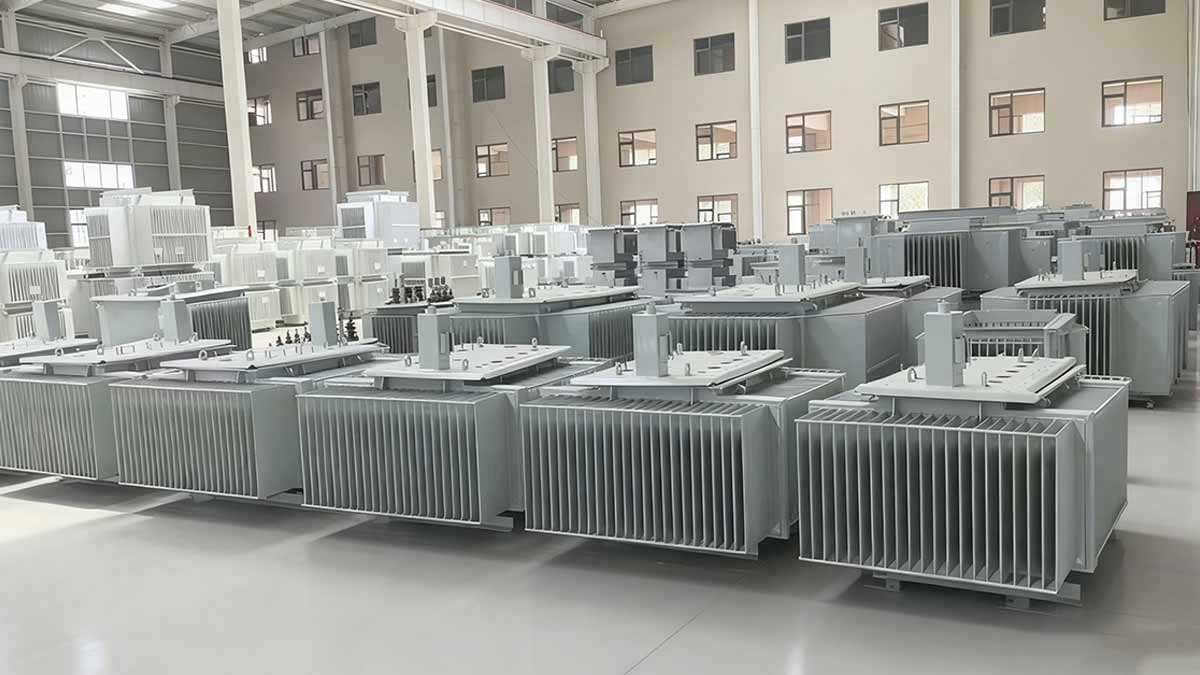
Load Analysis and Future Growth: Accurately Sizing Your Transformer
Unsure how to size a transformer for both current needs and future expansion? This is one of the most common pain points—and one of the costliest to get wrong. Oversizing wastes capital and reduces efficiency, while undersizing risks overloads, downtime, and premature failure.
Accurate sizing requires a deep dive into load behavior: peak demand, load factor, power quality, and growth projections. The process involves gathering historical data, mapping load profiles, accounting for power factor, and estimating future needs. A well-sized transformer typically includes 20–30% growth capacity and handles short-term overloads efficiently.
Step-by-Step Sizing Methodology
- Comprehensive Load Analysis:Gather 12–36 months of historical load data to identify seasonal peaks and patterns. For a retail complex renovation, 3 years of data revealed summer cooling peaks that allowed us to reduce required capacity by 15%.Load profiling (daily, weekly, seasonal curves) uncovers short-duration peaks—critical for industrial plants, where brief production surges can be managed with a smaller transformer featuring strong overload capabilities.Diversity factor (accounting for non-simultaneous peak loads) is game-changing for multi-tenant buildings: applying a 0.8 diversity factor reduced a office building’s required kVA by 20% compared to a simple sum of individual tenant loads.
- Power Quality & Harmonic Assessment:Measure actual power factor—improving it from 0.8 to 0.95 cut a manufacturing facility’s required kVA by 15%.Harmonic analysis is non-negotiable for non-linear loads (e.g., servers, LEDs, VFDs). A data center with high harmonic distortion required a K-13 rated transformer to prevent overheating and extend lifespan.Sensitive loads (e.g., hospital imaging equipment) may need dedicated transformers with tight voltage regulation to avoid performance issues.
- Future Growth Projection:Align sizing with 5–10 year expansion plans. For a tech startup, we installed a 2500 kVA transformer with forced air cooling provisions, enabling a future upgrade to 3125 kVA without full replacement.Anticipate emerging load types: a commercial building project included 20% extra capacity for future EV charging stations, avoiding costly retrofits.A 20–30% safety margin balances growth needs with efficiency—for a university campus, 25% headroom accommodated new buildings without sacrificing operational efficiency.
| Sizing Step | Methodology | Real-World Outcome |
|---|---|---|
| Historical Data Analysis | 12–36 months of load tracking | Identified 22% load growth over 3 years |
| Peak Demand Calculation | 15–30 minute demand intervals | True peak: 1800 kVA (vs. 2200 kVA instantaneous) |
| Load Factor Determination | Average load ÷ Peak load | 0.75 factor (steady industrial usage) |
| Diversity Factor Application | Sum of individual peaks ÷ Coincident peak | 0.8 factor reduced multi-tenant sizing by 20% |
| Power Factor Correction | Target 0.9–0.95 for efficiency | 0.82→0.95 correction cut kVA needs by 15% |
| Harmonic Analysis | THD measurement + K-factor selection | K-13 rating for 15% THD data center load |
| Growth Projection | 5–10 year plans + 20–30% buffer | 30% headroom for 10-year industrial expansion |
A manufacturing facility nearly overinvested in a 3000 kVA transformer based on summed loads—our analysis revealed actual peak demand never exceeded 2200 kVA, with short-lived surges. We specified a 2500 kVA unit with strong overload capacity, cutting upfront costs by 20% and improving efficiency (the unit operates closer to its optimal load range).
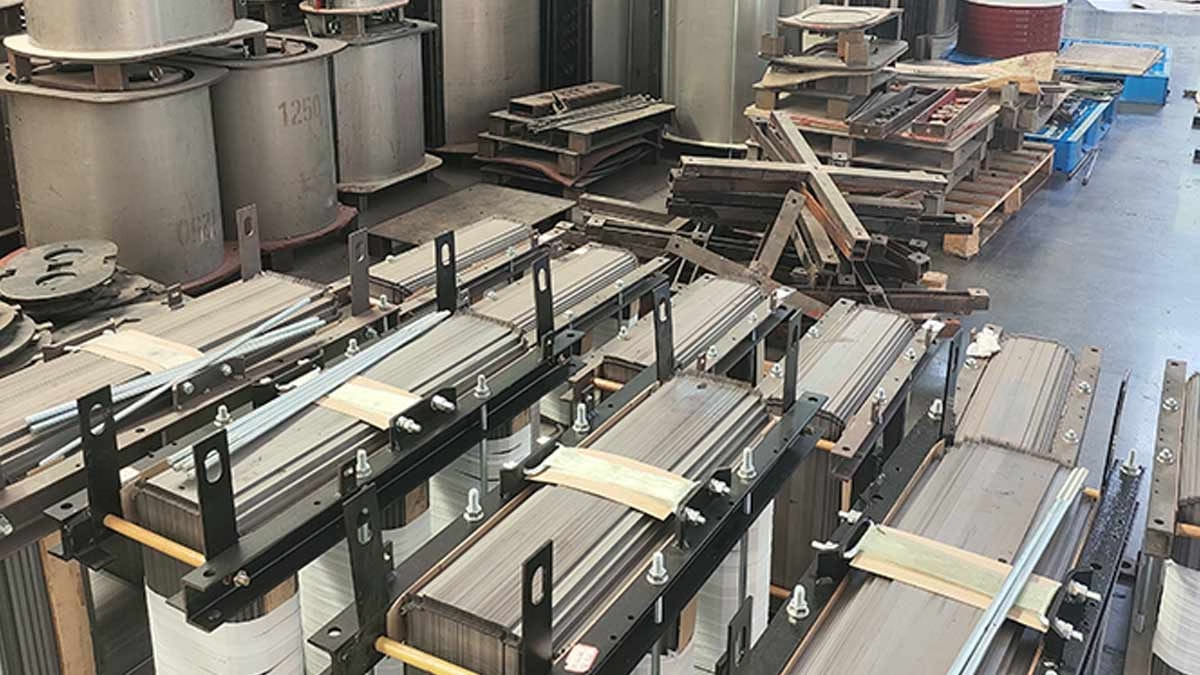
Efficiency vs. Cost: Balancing Performance and Budget
Torn between a high-efficiency transformer and budget constraints? This is a universal dilemma—but the right decision hinges on looking beyond upfront costs to total lifecycle value. High-efficiency models often carry a 15–30% price premium, but their lower operating costs can deliver significant long-term savings. The optimal choice depends on energy rates, load profiles, and expected lifespan—all best evaluated through a Total Cost of Ownership (TCO) analysis.
Striking the Right Balance
- Initial Cost Considerations:High-efficiency transformers cost more upfront, but financing options and auxiliary savings can offset this. For a rooftop installation, an amorphous core transformer’s lighter weight saved $10k in structural reinforcement costs.Installation costs are typically similar across efficiency levels, but size/weight differences may matter—for tight industrial spaces, compact high-efficiency designs eliminate the need for costly facility modifications.High-efficiency units often reduce cooling requirements: a data center project saved $50k in HVAC equipment by selecting low-loss transformers.
- Operational Cost Savings:Energy loss reduction (20–40% vs. standard models) translates to tangible savings. A 24/7 industrial facility with high electricity rates saved $15k annually with a high-efficiency unit.Load factor matters: transformers operate most efficiently at 50–70% load—for a university with 60% average load, high-efficiency models delivered maximum savings.Maintenance costs are comparable, but high-efficiency units often last longer (25–30 years vs. 20–25 for standard models). A utility client reported 20% lower maintenance costs over 10 years with premium efficiency transformers.
- Long-Term Financial Analysis:TCO includes initial cost, energy losses, maintenance, and lifespan—use Net Present Value (NPV) to compare options. A 15-year TCO analysis for a commercial building showed high-efficiency transformers cost 22% less overall, despite a 20% higher upfront price.Payback periods typically range from 3–7 years: an office complex’s 4.2-year payback made the efficiency upgrade an easy decision.Sensitivity analysis (modeling 10–30% energy cost increases) strengthens the case for efficiency—for a manufacturing client, rising rates shortened payback from 5 to 3.5 years.
- Environmental & Regulatory Drivers:Compliance with global standards (DOE 2016, EU Ecodesign Tier 2) is mandatory, but exceeding them future-proofs against stricter regulations. A EU-based project selected transformers exceeding Tier 2, avoiding costly retrofits when standards tightened.Carbon footprint reduction aligns with sustainability goals: a tech company’s high-efficiency transformers cut annual CO2 emissions by 100 tons, supporting their carbon neutrality pledge.Incentives and rebates reduce upfront costs—California utility rebates covered 40% of the efficiency premium for one project, slashing payback to 2.8 years.
| Comparison Factor | Standard Efficiency Transformers | High-Efficiency Transformers |
|---|---|---|
| Initial Cost | Base price | 15–30% higher |
| Annual Energy Losses | Base level | 20–40% lower |
| Typical Payback Period | N/A | 3–7 years |
| 15-Year TCO (Example) | $100,000 | $78,000 (22% lower) |
| CO2 Emissions (Example) | 500 tons/year | 400 tons/year |
| Regulatory Compliance | Meets minimum standards | Exceeds current/future standards |
| Lifespan | 20–25 years | 25–30 years |
A data center initially hesitated at the 25% premium for high-efficiency transformers—until a TCO analysis revealed 3.5-year payback and $450k in savings over 20 years. The decision not only reduced operating costs but also aligned with the facility’s 24/7 load profile, where efficiency gains compound around the clock.
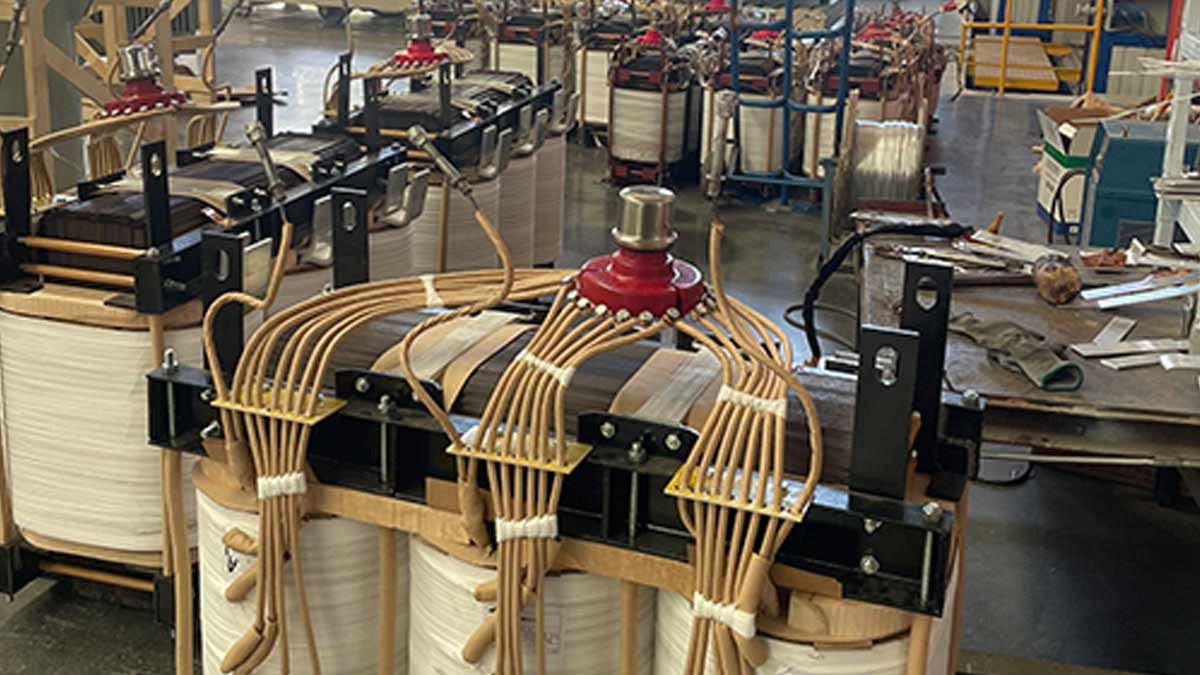
Environmental and Installation Factors: Shaping Your Transformer Rating
Overlooking environmental and installation conditions is a common mistake—one that can lead to reduced performance, premature failure, or safety hazards. These factors directly influence cooling efficiency, insulation integrity, and lifespan, making them critical to rating selection. Key considerations include ambient temperature, altitude, humidity, pollution levels, and space constraints.
Critical Environmental & Installation Considerations
- Ambient Temperature:Assess seasonal temperature ranges and microclimates—for a desert installation, we specified a 55°C-rated transformer with supplemental cooling for 60°C+ days.Cooling system selection (ONAN, ONAF, OFAF) depends on temperature and load: a data center used ONAF cooling with automated fan control to optimize efficiency across variable conditions.High ambient temperatures require derating—per IEEE C57.91, a 2000 kVA transformer derated to 1800 kVA for consistent tropical heat.
- Altitude & Air Density:Installations above 1000m require derating—at 3000m, a mining project’s transformer needed 15% additional capacity to compensate for reduced cooling efficiency.High altitude stresses insulation due to lower air density: a 2500m installation required enhanced insulation to maintain dielectric strength.Pressure relief systems need calibration—mountain substations required adjusted valves to account for lower atmospheric pressure.
- Humidity & Moisture:High humidity demands moisture protection: a coastal installation used IP55 enclosures with built-in dehumidifiers to combat salt-laden air.Moisture-resistant insulation and sealed tank designs suit extreme conditions—hermetically sealed transformers eliminated moisture risks in a tropical rainforest location.Regular insulation resistance testing (quarterly for humid environments) catches early moisture ingress before damage occurs.
- Pollution & Contamination:Industrial zones, coastal areas, and urban centers have unique contamination risks—an industrial site with high particulate matter required enhanced filtration and frequent maintenance.Extended creepage distances and silicone coatings protect against pollution: coastal substation bushings used silicone coatings to prevent salt contamination.Corrosive environments need specialized enclosures—chemical plant transformers used stainless steel enclosures with positive pressure filtration.
- Space & Weight Constraints:Compact designs optimize tight spaces: an urban substation used a cast resin transformer to reduce footprint by 30% vs. traditional models.Weight limitations (e.g., rooftop or old buildings) may require distributed solutions—an old high-rise used three 1000 kVA transformers instead of one 3000 kVA unit to meet structural limits.Maintenance access is critical: a cramped industrial installation included a custom rail system for easy transformer removal.
| Environmental Factor | Impact on Rating | Mitigation Strategy |
|---|---|---|
| High Ambient Temperature | Reduced cooling efficiency → capacity loss | Upsize or enhance cooling; derate per IEEE |
| High Altitude (>1000m) | Lower air density → poor heat dissipation | 10–20% derating; enhanced insulation |
| High Humidity | Insulation degradation; moisture ingress | Sealed designs; dehumidifiers; IP55+ enclosures |
| Heavy Pollution | Conductive buildup → flashovers; corrosion | Extended creepage; silicone coatings; filtration |
| Limited Space | Constrained cooling and size | Compact designs; forced air cooling |
| Weight Restrictions | Limits on single-unit capacity | Distributed smaller transformers; lightweight materials |
A Middle East project nearly specified a standard 40°C-rated transformer—site analysis revealed 50°C+ summer temperatures. We upgraded to an OFAF cooling system with heat-resistant insulation, adding 20% to upfront costs but avoiding catastrophic overheating. Three years later, the unit operates reliably with zero temperature-related issues.
Supplier Insights: Expert Recommendations for Optimal Rating Selection
Confused by conflicting advice on transformer ratings? You’re not alone—many professionals struggle to navigate competing recommendations. The solution lies in a holistic, collaborative approach: leveraging supplier expertise to align technical specifications with your unique needs. Top suppliers emphasize customized solutions over one-size-fits-all ratings, and stress the value of early collaboration.
Key Expert Recommendations
- Prioritize Detailed Load Profiling:Experts reject guesswork—use data loggers for 1–12 months to capture real load patterns. A supplier’s load profile analysis uncovered 30% oversizing in a client’s initial estimate, cutting costs without sacrificing performance.Harmonic analysis is non-negotiable for non-linear loads: a data center project’s harmonic assessment led to a K-factor transformer, preventing costly overheating.Power factor correction should be integrated into sizing—one manufacturing client reduced required kVA by 20% by upgrading from 0.8 to 0.95 power factor.
- Future-Proof with Flexibility:Avoid fixed percentage upsizing—use scenario-based modeling. For a tech company, we modeled three growth paths, leading to a modular transformer that expands in stages.Multi-tap or dual-voltage designs add adaptability: industrial park transformers with multi-tap primaries accommodated diverse tenant needs without oversizing.Smart grid compatibility future-proofs investments: a utility selected IoT-enabled transformers to support upcoming grid modernization.
- Customize for Environmental Conditions:Local climate dictates design: a desert installation used a custom cooling system to maintain efficiency in 50°C+ heat.High-altitude projects need specialized designs: a 4000m mining site required 25% larger capacity to compensate for reduced cooling.Corrosion resistance extends lifespan: coastal substation transformers with specialized coatings added 10 years to expected service life.
- Focus on Total Lifecycle Value:Look beyond upfront costs—suppliers recommend TCO analysis over sticker price. A hospital’s high-efficiency transformer delivered 15% lower 25-year costs despite a 20% premium.Exceed efficiency standards to avoid retrofits: a forward-thinking client selected transformers exceeding current regulations, skipping costly upgrades when standards tightened.Predictive maintenance reduces downtime: remote-monitored transformers at a wind farm cut maintenance visits by 50%.
| Aspect | Traditional Approach | Expert Supplier Recommendation |
|---|---|---|
| Load Analysis | Peak demand estimates | 1–12 months of data logging + harmonic analysis |
| Growth Planning | Fixed 20–30% upsizing | Scenario-based modeling + modular designs |
| Efficiency | Meet minimum standards | Exceed future regulations for TCO savings |
| Environmental Adaptation | Standard designs | Site-specific customization (cooling, insulation) |
| Maintenance | Scheduled inspections | Predictive monitoring + IoT diagnostics |
A data center initially requested a 5 MVA transformer based on projected peaks—supplier analysis revealed high harmonic content and future expansion plans. The solution: three 2 MVA K-13 rated units (modular for growth, harmonic-resistant for load type) at 15% lower TCO than a single 5 MVA unit.
Conclusion
Selecting the right power transformer rating is a multifaceted process that demands detailed load analysis, future-focused planning, efficiency budgeting, environmental awareness, and expert collaboration. There’s no one-size-fits-all solution—success lies in customizing specifications to your unique application, while balancing short-term costs with long-term value.
By prioritizing data-driven load profiling, embracing flexibility for growth, and leveraging supplier expertise, you’ll select a transformer that delivers reliable performance, optimizes energy costs, and adapts to changing needs. Remember: the best transformer rating isn’t just about meeting today’s requirements—it’s about building a resilient power system that supports your goals for years to come.
Collaboration with experienced suppliers is the final piece of the puzzle. Their deep technical knowledge and real-world insights can turn complex requirements into a tailored solution that avoids common pitfalls and maximizes value.