
High-voltage transmission networks rely on power transformers to regulate voltage levels, enabling efficient energy delivery from power plants to end users. These critical components boost voltage at generation sites for long-distance transport—minimizing power loss—and reduce it at substations to safe levels for local distribution. Leveraging electromagnetic induction to transfer energy between circuits, they operate under extreme voltage conditions while maintaining optimal efficiency.
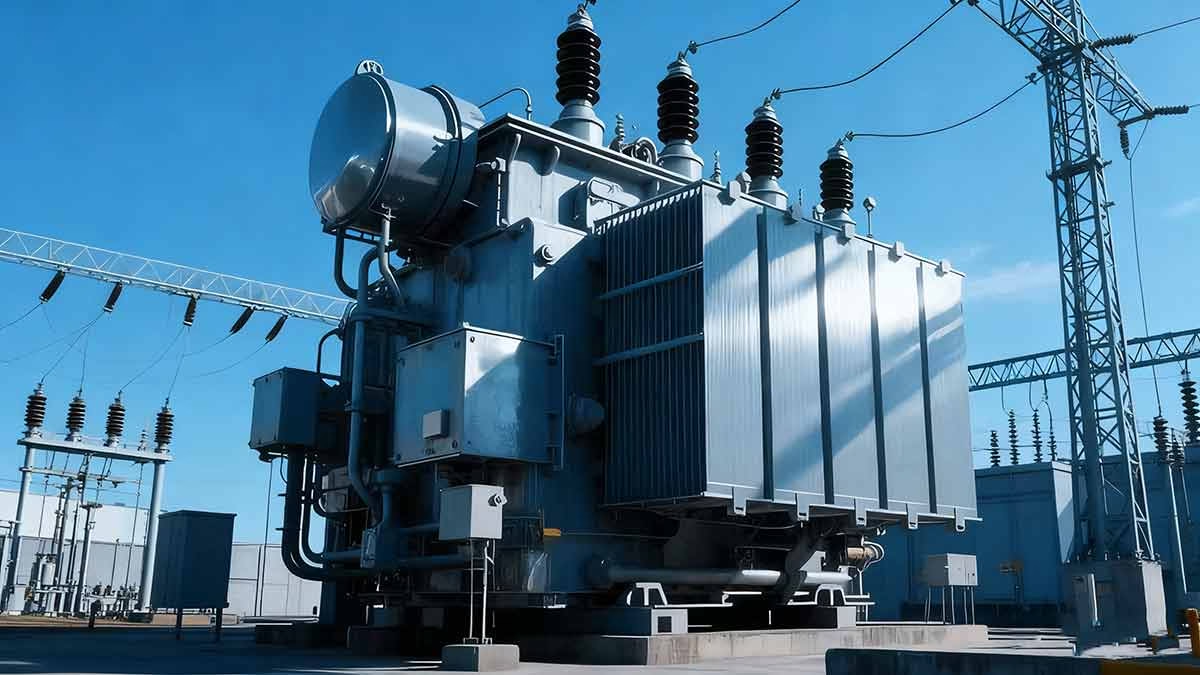
In decades of working with power grids, I’ve witnessed firsthand how transformers serve as the unsung workhorses of electrical infrastructure. Quietly and reliably, they ensure the steady flow of electricity that powers cities, industries, and homes. Below is an in-depth exploration of high-voltage power transformers—their functionality, design, and impact on grid performance.
Contents
hide
The Role of Power Transformers in High Voltage Transmission: From Generation to Distribution
Electricity’s journey from power plant to light switch is a complex, coordinated process—one where power transformers play multiple indispensable roles. Their ability to adapt voltage levels at different stages of transmission makes them irreplaceable for efficient, reliable energy delivery.
Transformers fulfill three core functions in high-voltage systems: voltage step-up at power plants, voltage step-down at substations, and grid regulation (including power flow management and circuit isolation). Drawing from field experience, here’s a breakdown of their role at each stage:
At the Power Plant: Launching Electricity for Long-Distance Travel
Power plants generate electricity at voltages typically between 15 kV and 25 kV—too low for efficient long-distance transmission. Transformers here serve two critical purposes:
- Generator Step-Up Units: Boost generator output to high-voltage transmission standards (100 kV to 765 kV), reducing current flow and minimizing energy loss during transit.
- Auxiliary Transformers: Supply power to the plant’s internal systems (e.g., pumps, turbines, and control rooms).
- Start-Up Transformers: Initiate the power generation process by providing initial power to start plant equipment.
I once led an upgrade project at a large coal-fired power plant, where we replaced an aging main step-up transformer. The unit—roughly the size of a small cottage—was engineered to handle the full output of the plant’s generators, boosting voltage from 22 kV to 400 kV for cross-regional transmission. Its scale underscored just how critical these transformers are to unlocking a plant’s full energy potential.
In Transmission Substations: Managing the Power Highway
Transmission substations act as hubs that connect high-voltage lines, and transformers here are tasked with adjusting voltage levels and balancing grid loads. Key types include:
- Step-Down Transformers: Reduce ultra-high voltages (e.g., 765 kV) to sub-transmission levels (e.g., 230 kV) for distribution to regional networks.
- Autotransformers: Efficiently adjust voltage between compatible transmission levels (e.g., 500 kV to 230 kV) while minimizing energy loss.
- Phase-Shifting Transformers: Control power flow across parallel transmission lines, preventing overloads and enhancing grid stability.
In a recent substation design project, we integrated large autotransformers to link 500 kV and 230 kV systems. Beyond voltage adjustment, these units balanced load distribution across the grid, reducing strain on overburdened lines and improving overall system resilience.
At Distribution Substations: Delivering Power to Neighborhoods
Distribution substations bring electricity closer to end users by further reducing voltage to safe, usable levels:
- Primary Step-Down Transformers: Lower sub-transmission voltages (e.g., 69 kV) to medium-voltage distribution levels (e.g., 12 kV).
- Secondary Distribution Transformers: Reduce medium voltage to residential/commercial standards (e.g., 12 kV to 240/120 V) for direct use.
- Voltage Regulators: Maintain consistent voltage levels despite fluctuating demand (e.g., peak usage during summer or winter).
Last year, I oversaw the upgrade of a suburban distribution substation, where we installed next-generation transformers with smart monitoring capabilities. These units not only improved reliability but also allowed the utility to detect and address issues in real time—preventing outages before they affected customers.
Voltage Transformation Principles: How Power Transformers Manage High Voltage Levels
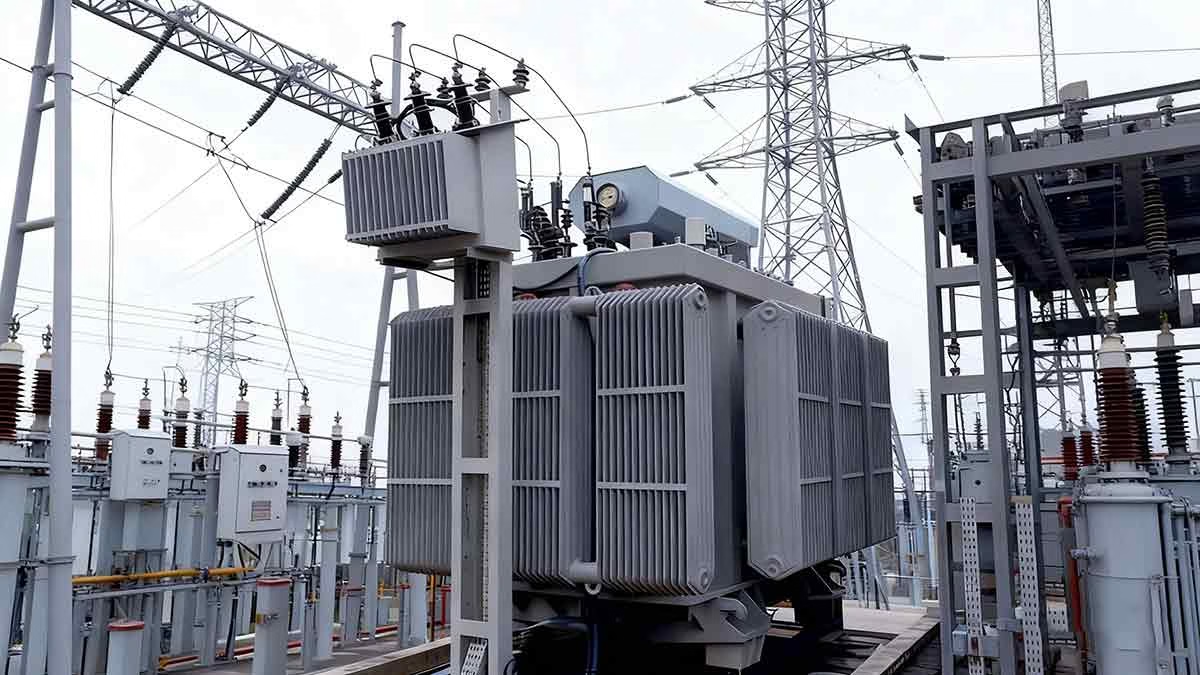
The ability of transformers to handle voltages powerful enough to energize entire cities stems from a fundamental electrical principle: electromagnetic induction. While the science is well-established, the engineering that scales this principle to high-voltage applications is truly remarkable.
At their core, power transformers consist of two or more wire coils (windings) wrapped around a magnetic core. When alternating current (AC) flows through the primary winding, it creates a fluctuating magnetic field. This field induces a voltage in the secondary winding, with the voltage ratio determined by the number of turns in each coil. Below is a deeper dive into the key principles:
Electromagnetic Induction: The Foundation of Transformer Operation
The three critical components of induction-based voltage transformation are:
- Primary Winding: Receives input power from the grid or generator, generating the initial magnetic field.
- Magnetic Core: Typically made of laminated steel, it concentrates and directs the magnetic field to maximize energy transfer between windings.
- Secondary Winding: Captures energy from the magnetic field, producing output voltage at the desired level.
During a maintenance operation early in my career, I got an up-close look at a large power transformer’s internal design. The massive, precisely wound coils and intricate core structure were awe-inspiring—they highlighted how basic physics is engineered to handle millions of watts of power.
Turns Ratio: The Key to Voltage Control
The relationship between primary and secondary voltage is directly proportional to the turns ratio of the windings:
- Voltage Ratio: V₁/V₂ = N₁/N₂ (where V = voltage, N = number of turns). For example, a 25:1 ratio converts 10,000 V to 400 V.
- Current Ratio: I₁/I₂ = N₂/N₁ (inverse of the voltage ratio, as power is conserved).
- Power Conservation: Input power (P₁) is nearly equal to output power (P₂), with only minimal losses (core and winding losses) occurring.
In a recent project, we designed a transformer to step down 230 kV to 69 kV. Calculating the turns ratio was critical—we settled on a 3.33:1 ratio (primary winding with 3.33 times more turns than the secondary), ensuring precise voltage control and minimal energy loss.
High-Voltage Insulation: Safeguarding Performance
Managing extreme voltage requires robust insulation systems to prevent arcing and equipment damage. Common insulation methods include:
- Oil Insulation: Most high-voltage transformers use mineral or synthetic oil for both insulation and cooling.
- Solid Insulation: Cellulose paper or polymer materials wrap around conductors to prevent short circuits.
- Bushings: Insulated sleeves that allow electrical connections to enter/exit the transformer tank safely, even at ultra-high voltages.
I once consulted on a 500 kV transformer upgrade, where we implemented a hybrid insulation system combining high-grade transformer oil and advanced solid insulation. This design improved the unit’s resistance to voltage stress, extending its lifespan by 15–20 years.
Efficiency and Stability: Power Transformers as Key Components in Transmission Systems
Grid reliability and efficiency depend heavily on transformer performance. These units minimize energy loss during transmission, regulate voltage, and balance reactive power—all while isolating different parts of the grid to prevent cascading failures. Their role becomes even more critical as grids integrate renewable energy sources (e.g., wind and solar) with variable output.
Minimizing Transmission Losses
Long-distance power transport is inherently inefficient at low voltages, as higher current increases resistive losses (I²R). Transformers address this by:
- Boosting Voltage: High-voltage transmission reduces current flow, cutting resistive losses significantly.
- Using Efficient Core Materials: Grain-oriented silicon steel or amorphous metals minimize no-load losses (energy wasted when the transformer is idle).
- Optimizing Windings: Low-resistance conductors and advanced winding designs reduce load losses (energy wasted during operation).
In a project to upgrade a 200-mile transmission line, we installed high-efficiency transformers at both ends. The result: a 15% reduction in overall transmission losses, translating to millions of dollars in energy savings annually and increased capacity during peak demand.
Voltage Regulation: Maintaining Steady Power
Fluctuating demand and renewable energy output can cause voltage variations, which can damage equipment and disrupt service. Transformers mitigate this through:
- On-Load Tap Changers (OLTCs): Adjust the turns ratio during operation, allowing real-time voltage control in large power transformers.
- Automatic Voltage Regulators: External devices that work with distribution transformers to maintain consistent voltage levels.
- Phase-Shifting Transformers: Control power flow across parallel lines, preventing voltage dips and overloads.
In a recent smart grid initiative, we integrated OLTCs into key substations. These devices adjusted voltage levels dynamically based on grid conditions, ensuring stability even as solar and wind output fluctuated throughout the day.
Reactive Power Management
Reactive power (var) is essential for maintaining voltage stability but does not contribute to useful work. Transformers help balance reactive power by:
- Compensating for Inductive/Capacitive Loads: Industrial equipment (e.g., motors) and power lines create inductive reactance, which transformers can offset.
- Power Factor Correction: Specialized transformers improve the power factor (ratio of real power to apparent power), reducing strain on the grid.
- Var Support: Injecting or absorbing reactive power as needed to maintain voltage stability.
I advised a large industrial park struggling with low power factor (0.8), which increased electricity costs and grid strain. By installing transformers with power factor correction capabilities, we raised the power factor to 0.95—reducing utility bills by 12% and improving grid reliability for the entire area.
Design Considerations for High Voltage Transmission Transformers: Meeting Unique Challenges
High-voltage transformers are engineered to operate under extreme conditions—handling massive power loads, withstanding voltage surges, and enduring harsh environmental factors. Designing these units requires balancing performance, reliability, and practical constraints (e.g., transportation and installation).
Insulation and Voltage Stress Management
Ultra-high voltages create intense electric fields that can cause insulation breakdown. Engineers address this by:
- Oil-Paper Insulation: Layers of cellulose paper soaked in transformer oil, designed to withstand high electric fields without arcing.
- Graded Insulation: Using materials with varying permittivity to distribute electric field strength evenly.
- Stress Rings: Metal rings placed at conductor ends to control electric field distribution, preventing partial discharges.
In a 765 kV transformer design project, we used advanced computer modeling to optimize the insulation system. The final design included custom-shaped stress rings and graded insulation, ensuring the unit could withstand voltage surges 10 times higher than nominal operating levels.
Cooling System Design
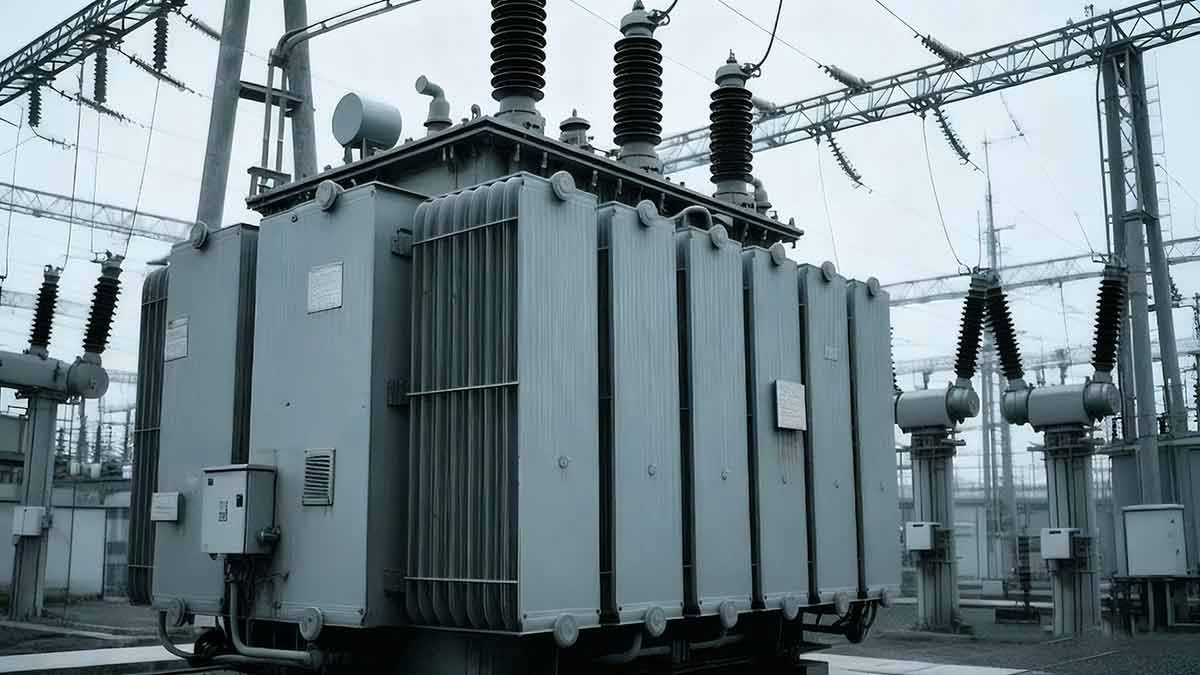
Transformers generate significant heat from core and winding losses—without effective cooling, overheating can damage insulation and reduce lifespan. Common cooling methods include:
- ONAN (Oil Natural, Air Natural): Passive cooling for smaller transformers, relying on natural oil circulation and air convection.
- ONAF (Oil Natural, Air Forced): Uses fans to enhance air flow, suitable for medium-sized units.
- OFAF (Oil Forced, Air Forced): Pumps circulate oil through coolers, with fans boosting heat dissipation—ideal for large power transformers.
- ODAF (Oil Directed, Air Forced): Directs oil flow to hot spots (e.g., winding ends), offering maximum cooling efficiency for high-capacity units.
For a 500 MVA transformer installed in a tropical climate, we implemented an ODAF cooling system. By targeting hot spots with directed oil flow, we achieved a 20% reduction in operating temperature—allowing the unit to handle peak loads without overheating.
Transportation and Installation
Large high-voltage transformers can weigh hundreds of tons and measure dozens of feet in length, making transportation and installation logistical challenges. Engineers address this by:
- Weight and Size Optimization: Designing units within road and bridge weight limits, and considering tunnel clearances and turning radii.
- Modular Design: Breaking large transformers into transportable components for on-site assembly.
- Seismic and Environmental Hardening: Reinforcing units to withstand earthquakes, extreme temperatures, and corrosive environments.
I led a project to install a transformer in a remote mountain substation with limited access. The road had a 50-ton weight limit, so we designed a modular unit that could be transported in three parts and assembled on-site. While complex, this approach allowed us to deliver a high-capacity transformer to a location that would have been inaccessible with a traditional design.
Loss Management and Cooling Strategies in High Voltage Power Transformers
Efficient loss management and cooling are critical to transformer performance—they directly impact efficiency, reliability, and lifespan. By minimizing energy loss and controlling heat, engineers ensure transformers operate optimally even under heavy loads and harsh conditions.
Core Loss Reduction
Core losses (hysteresis and eddy current losses) occur when the magnetic core is magnetized and demagnetized by AC power. Strategies to reduce these losses include:
- Advanced Core Materials: Amorphous metals or high-grade grain-oriented silicon steel, which have lower magnetic reluctance.
- Step-Lap Core Construction: Reduces flux leakage and eddy current losses by minimizing air gaps between core laminations.
- Core Cross-Section Optimization: Balances magnetic flux density and core size to minimize losses without compromising performance.
In a substation upgrade project, we replaced old transformers with units featuring amorphous metal cores. This reduced core losses by 60%—lowering energy consumption and reducing cooling requirements, which allowed for a more compact design.
Winding Loss Management
Winding losses (I²R and eddy current losses) result from current flowing through the transformer’s windings. Key strategies to mitigate these losses include:
- Continuously Transposed Conductors (CTC): Strands of wire are transposed during winding to reduce eddy current losses, lowering winding temperatures.
- Optimal Conductor Sizing: Balancing current density and material use to minimize resistive losses.
- Interleaved Windings: Improves magnetic coupling between primary and secondary windings, reducing stray losses.
For a 400 MVA transformer designed for a industrial facility, we used CTC windings with an optimized transposition pattern. This reduced eddy current losses by 30% compared to conventional designs, significantly improving efficiency under heavy loads.
Advanced Cooling Techniques
Even with loss reduction, transformers generate heat that must be dissipated to prevent overheating. Advanced cooling strategies include:
- Oil-Directed Flow: Channels oil directly to hot spots (e.g., winding ends and core limbs) for targeted cooling.
- Dual Cooling Systems: Combining oil and water cooling for extreme conditions (e.g., high ambient temperatures or heavy loads).
- Smart Cooling Controls: Using sensors and automation to adjust cooling system operation based on load and ambient temperature.
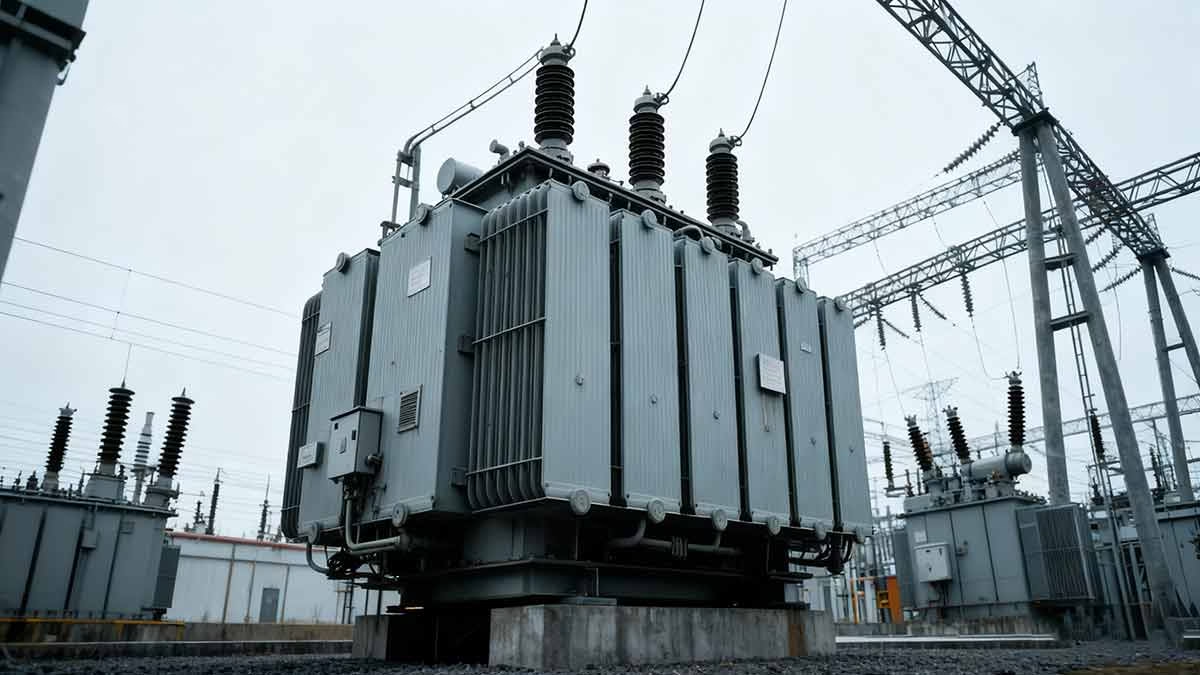
I designed a cooling system for a transformer in a desert environment where daytime temperatures exceed 45°C. The system combined oil-directed flow with water-cooled heat exchangers, and used smart controls to adjust fan and pump speed based on load and temperature. Even in extreme heat, the transformer maintained an operating temperature of 65°C—well within safe limits.
Conclusion
High-voltage power transformers are the backbone of modern electrical grids—they enable efficient long-distance power transmission, regulate voltage levels, and ensure grid stability. Their design and operation involve complex engineering considerations, from electromagnetic induction and insulation to loss management and cooling. As the energy sector shifts toward renewable integration and smart grid development, the role of these transformers becomes even more pivotal—driving efficiency, resilience, and adaptability across power systems worldwide.
Drawing from decades of field experience, it’s clear that transformers are more than just electrical components—they are critical infrastructure that powers economic growth and improves quality of life. By continuing to innovate in materials, design, and cooling technology, we can build more efficient, reliable, and sustainable power grids for the future.