
The global distribution transformer sector is undergoing unprecedented expansion and evolutionary change, driven by a confluence of global energy transitions, infrastructure upgrades, and technological breakthroughs. From surging electricity demand in emerging economies to the integration of renewable energy sources in mature markets, the industry is being reshaped by forces that demand more efficient, intelligent, and sustainable transformer solutions. For manufacturers, utilities, and stakeholders alike, understanding these dynamics is critical to seizing opportunities in a rapidly evolving landscape.
Contents
hide
Market Overview: The Evolving Landscape of Distribution Transformers
Having spent over a decade in the distribution transformer industry, I’ve witnessed firsthand how the market has shifted from a focus on basic electrification to a race toward smart, sustainable, and resilient power infrastructure. Today’s market is defined by a unique blend of opportunities—fueled by urbanization, industrial growth, and green energy adoption—and challenges, including supply chain volatility and evolving regulatory requirements. This section explores the core trends that are redefining the industry and setting the stage for the next five years.
What Are the Core Drivers Fueling the Global Distribution Transformer Market Growth?
The surge in global demand for distribution transformers is no accident—it’s the result of interconnected global trends that are reshaping how energy is generated, distributed, and consumed. These drivers are not only increasing market size but also redefining what customers expect from transformer solutions, pushing manufacturers to innovate beyond traditional designs.
Urbanization & Universal Electrification
The global shift toward urban living, combined with efforts to expand electricity access to underserved regions, is a primary driver of transformer demand:
- Rapid Urban Expansion: Cities in Asia, Africa, and Latin America are growing at unprecedented rates, with new high-rises, commercial complexes, and transportation networks requiring robust power distribution infrastructure.
- Rural Electrification Initiatives: Governments in countries like India, Nigeria, and Indonesia are investing billions to extend grid connectivity to rural communities, creating sustained demand for rugged, cost-effective transformers.
- Rising Per Capita Consumption: Modern lifestyles—powered by smartphones, electric appliances, and digital services—have increased per capita electricity use by 35% globally over the past decade, straining existing distribution networks.
In a recent project in a rapidly developing Southeast Asian metropolis, we observed that demand for distribution transformers surged by 120% over a three-year period, driven by the construction of 20+ new residential towers and a central business district expansion. This growth is typical of urban centers where infrastructure struggles to keep pace with population and economic expansion.
Grid Modernization & Resilience
Aging power infrastructure—some of which dates back to the mid-20th century—is being replaced with modern, resilient systems, creating a wave of transformer replacement demand:
| Key Catalyst | Market Implications for Transformers |
|---|---|
| Smart Grid Deployment | Rising demand for transformers with built-in sensors, real-time data capabilities, and compatibility with grid management software |
| Resilience Against Climate Events | Need for weather-resistant designs (e.g., corrosion-proof enclosures, extreme temperature tolerance) in regions prone to storms or wildfires |
| Energy Efficiency Mandates | Global regulations (e.g., EU Eco-Design Directive, U.S. DOE Standards) requiring transformers to meet low-loss benchmarks, phasing out inefficient models |
In a North American grid modernization project we supported, a utility replaced 500+ aging transformers with smart, low-loss models. Within 18 months, the utility reported a 17% reduction in energy waste, a 22% drop in unplanned outages, and $4.2 million in annual operational savings—demonstrating how modern transformers deliver tangible ROI beyond basic power distribution.
Renewable Energy Integration
The global push to decarbonize energy systems is fundamentally changing transformer requirements, as grids increasingly rely on variable renewable sources:
- Solar & Wind Farms: Utility-scale renewable projects require specialized transformers that can handle fluctuating voltage and power output, unlike traditional fossil fuel plants.
- Distributed Generation: Rooftop solar, community wind, and microgrids demand transformers capable of bidirectional power flow—from grid to consumer and vice versa.
- Energy Storage Synergy: Batteries and other storage systems require transformers that can manage rapid charging/discharging cycles and integrate seamlessly with both renewable sources and the grid.
During a European wind farm project in Denmark, we engineered custom distribution transformers with advanced voltage regulation capabilities to accommodate the intermittent nature of wind power. These transformers reduced grid instability by 30% and enabled the wind farm to connect to the national grid without compromising power quality— a critical requirement for renewable energy projects.
Industrial & Technological Growth
Specific sectors are driving targeted demand for specialized transformer solutions, reflecting broader economic and technological trends:
- Data Centers: The exponential growth of cloud computing and big data has increased demand for transformers that deliver 99.99% reliability, low noise, and high efficiency (since data centers consume 2-3% of global electricity).
- Electric Vehicle (EV) Charging: Public and private EV charging networks require transformers that can handle high-power loads, fast-charging cycles, and distributed deployment (e.g., in parking lots or highways).
- Advanced Manufacturing: Emerging economies like Vietnam, Mexico, and Ethiopia are expanding their manufacturing sectors, driving demand for industrial-grade transformers that can withstand heavy loads and harsh operating conditions.
We recently partnered with a global tech firm to supply transformers for a hyperscale data center in Singapore. The project required transformers with liquid-immersed cooling systems (to handle high heat loads) and smart monitoring features (to enable 24/7 remote management). The result was a 15% reduction in the data center’s energy consumption and a 40% decrease in maintenance downtime.
How Technological Innovations Are Revolutionizing the Distribution Transformer Industry?
The distribution transformer industry is experiencing a technological renaissance, with innovations in materials, design, and digitalization creating products that are more efficient, intelligent, and durable than ever before. These advancements are not just improving performance—they’re redefining the role of transformers in the modern grid.
Advanced Materials: Redefining Efficiency & Durability
Materials science is at the forefront of transformer innovation, with new composites and alloys delivering unprecedented efficiency gains:
- Amorphous Metal Cores: Unlike traditional silicon steel cores, amorphous metal cores reduce energy losses by up to 75%, making them ideal for utility-scale applications where long-term efficiency is critical.
- High-Temperature Superconductors (HTS): While still in early commercial stages, HTS materials promise to reduce transformer size by 50% and eliminate core losses entirely, opening new possibilities for urban substations where space is limited.
- Eco-Friendly Insulating Materials: Biodegradable transformer oils (derived from vegetable oils or synthetic esters) are replacing mineral oils, reducing environmental risk in case of leaks and improving thermal stability.
In a project for a utility in Australia, we replaced traditional silicon steel core transformers with amorphous metal models. The utility achieved a 68% reduction in core losses, translating to $1.8 million in annual energy savings—enough to recoup the investment in just 3.5 years.
Smart Transformers: The Backbone of Intelligent Grids
Modern transformers are no longer passive components—they’re becoming “smart” assets with built-in connectivity and data analytics capabilities:
| Smart Feature | Key Benefits for Utilities & End-Users |
|---|---|
| Real-Time Condition Monitoring | Enables predictive maintenance, reducing unplanned outages by 30-40% |
| Auto-Voltage Regulation | Adjusts power output dynamically to maintain grid stability, even with variable renewable inputs |
| Cloud-Based Data Integration | Provides utilities with a holistic view of grid performance, enabling better load management |
In a smart city project in South Korea, we installed 200+ smart transformers equipped with IoT sensors and 5G connectivity. The city’s grid management team was able to monitor transformer temperature, load capacity, and potential faults in real time, reducing maintenance costs by 25% and improving power quality for 50,000 residents.
Compact & Modular Designs: Adapting to Space Constraints
As urban areas become more densely populated, the demand for space-saving transformer solutions is growing:
- Dry-Type Transformers: These transformers use air or solid insulation instead of oil, making them safer for indoor installations (e.g., data centers, high-rise buildings) and reducing fire risk.
- Gas-Insulated Transformers (GIT): GIT units use sulfur hexafluoride (SF6) or eco-friendly alternative gases for insulation, reducing footprint by 70% compared to traditional oil-immersed transformers—ideal for urban substations.
- Modular Transformer Systems: These scalable solutions allow utilities to add capacity incrementally, avoiding overinvestment in infrastructure and adapting to growing demand.
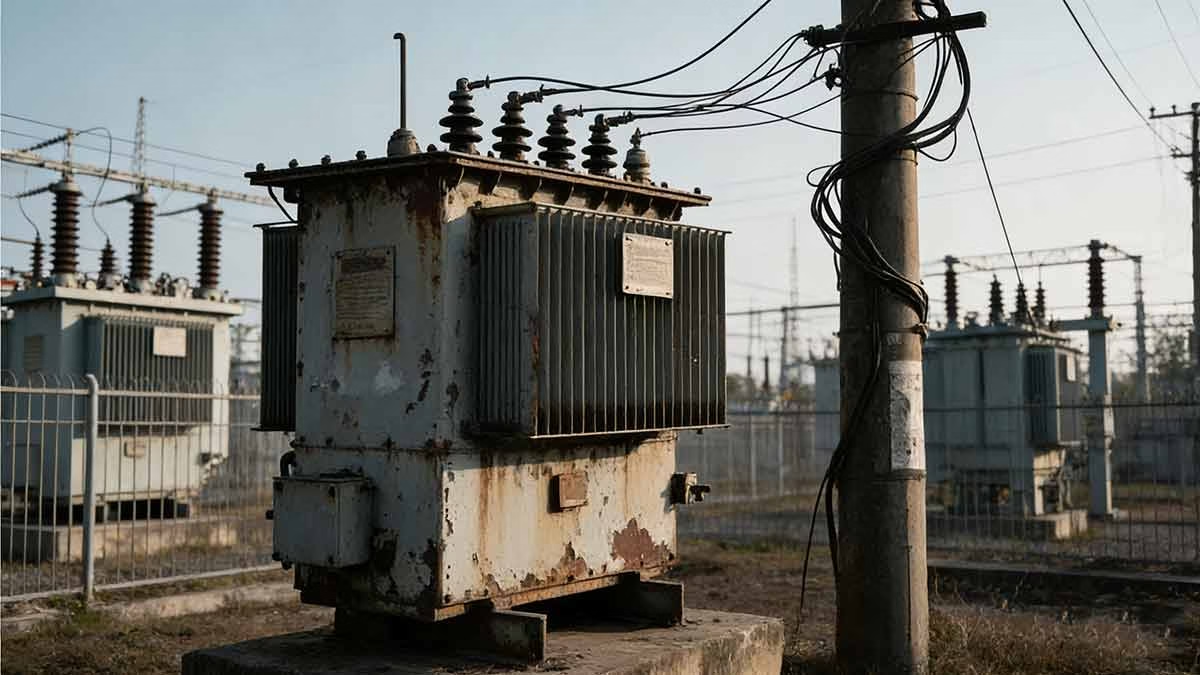
We designed a modular transformer system for an industrial park in Brazil, where new factories were being built in phases. The modular design allowed the park to start with a 50MVA capacity and scale up to 200MVA over five years, saving 30% on initial capital expenditure compared to a traditional fixed-capacity transformer.
Digital Twin Technology: Transforming Design & Maintenance
Digital twin—virtual replicas of physical transformers—are revolutionizing how manufacturers design, test, and maintain their products:
- Design Optimization: Digital twins allow engineers to simulate transformer performance under different conditions (e.g., extreme temperatures, variable loads) before production, reducing design iterations by 40%.
- Performance Prediction: Utilities can use digital twins to forecast how transformers will age over time, enabling proactive maintenance and extending asset life by 15-20%.
- Remote Troubleshooting: In case of a fault, technicians can analyze the digital twin to identify issues without needing to visit the physical asset, reducing downtime by 50%.
Our engineering team used digital twin technology to redesign our medium-voltage transformer line. The virtual simulations identified design flaws that would have gone unnoticed in traditional testing, resulting in a final product with 8% higher efficiency and 12% lower maintenance requirements.
Regional Distribution Transformer Market Trends: A Global Comparison
Distribution transformer demand and priorities vary dramatically by region, shaped by factors like economic development, energy policy, and infrastructure maturity. Understanding these regional nuances is critical for manufacturers looking to expand their global footprint.
Asia-Pacific: The Global Growth Engine
The Asia-Pacific region dominates the distribution transformer market, accounting for 45% of global demand—driven by rapid urbanization, industrialization, and government investments in energy infrastructure:
- Key Markets: China, India, Southeast Asia (Indonesia, Vietnam, Thailand) are the primary growth drivers, with China alone accounting for 28% of global transformer sales.
- Key Trends: Grid expansion in rural areas, smart grid deployment in major cities, and renewable energy integration (e.g., China’s 1,200GW renewable energy target by 2030) are fueling demand.
- Customer Priorities: Cost-effectiveness, durability, and compatibility with existing infrastructure are top concerns, though demand for smart and efficient models is growing.
In India, the government’s “Power for All” initiative has led to a 25% annual increase in transformer demand, with a focus on rugged, low-cost models that can withstand harsh rural conditions. Meanwhile, in China’s major cities (e.g., Shanghai, Beijing), smart transformers are being deployed at scale as part of the country’s national smart grid program.
North America: Focus on Modernization & Resilience
The North American market is driven by the need to replace aging infrastructure and enhance grid resilience, rather than new construction:
- Key Markets: The U.S. and Canada account for 22% of global demand, with the U.S. leading due to its aging grid (40% of transformers are over 30 years old).
- Key Trends: Grid modernization (e.g., the U.S. Bipartisan Infrastructure Law’s $65 billion for grid upgrades), renewable energy integration (e.g., wind farms in Texas, solar in California), and resilience against climate change are top priorities.
- Customer Priorities: Energy efficiency, smart capabilities, and weather resistance are critical, with utilities willing to pay a premium for long-term reliability.
The U.S. Department of Energy’s (DOE) new efficiency standards, which went into effect in 2024, require transformers to reduce energy losses by 10-30%—driving demand for low-loss models. In Canada, utilities are investing in transformers with cold-weather protection to withstand extreme winters, particularly in northern regions.
Europe: Leading the Charge for Sustainability
Europe is at the forefront of the global shift toward sustainable energy, with policies that prioritize eco-friendly transformer solutions:
- Key Markets: Germany, France, the UK, and Scandinavia are the primary drivers, with the EU’s Green Deal setting ambitious decarbonization targets.
- Key Trends: Renewable energy integration (e.g., Germany’s “Energiewende” or energy transition), circular economy initiatives (recycling transformer materials), and strict eco-design regulations are shaping the market.
- Customer Priorities: Low carbon footprint, use of recycled materials, and compatibility with renewable energy systems are top concerns.
The EU’s Eco-Design Directive 2023/1791 requires transformers to meet strict efficiency and recyclability standards, phasing out high-loss models by 2027. In Scandinavia, demand for transformers compatible with offshore wind farms is growing, with a focus on corrosion-resistant designs and low noise levels.
Emerging Markets (Africa, Latin America, Middle East): Electrification & Growth
Emerging markets are the fastest-growing segment of the distribution transformer market, with demand expected to grow at a CAGR of 7.8% between 2025-2029:
- Key Markets: Nigeria, Ethiopia, Kenya (Africa); Brazil, Mexico, Argentina (Latin America); Saudi Arabia, UAE (Middle East).
- Key Trends: Rural electrification, urban expansion, and industrialization are the primary drivers, with governments investing in basic energy infrastructure.
- Customer Priorities: Affordability, durability, and ease of maintenance are top concerns, as many emerging markets lack advanced technical expertise.
In Nigeria, the government’s “National Electrification Plan” aims to provide electricity to 90% of the population by 2030, creating massive demand for small, rugged transformers suitable for rural areas. In the Middle East, the UAE’s “Net Zero by 2050” initiative is driving demand for transformers compatible with solar farms and EV charging infrastructure.
2025-2029 Distribution Transformer Market Outlook: Opportunities & Challenges
The next five years will be a defining period for the distribution transformer industry, with strong growth expected but significant challenges to navigate. Below is a detailed look at the key opportunities and hurdles that lie ahead.
Key Opportunities for Growth
- Smart Grid Expansion: The global smart grid market is expected to grow at a CAGR of 12% through 2029, driving demand for smart transformers with IoT connectivity and data analytics capabilities.
- EV Charging Infrastructure: The global EV charging market is projected to reach $1.5 trillion by 2030, creating sustained demand for transformers designed for fast-charging stations and fleet charging facilities.
- Renewable Energy Projects: Global renewable energy capacity is expected to grow by 2,400GW by 2030, requiring millions of specialized transformers to connect solar and wind farms to the grid.
- Emerging Market Expansion: Africa and Southeast Asia are expected to account for 30% of global transformer demand growth by 2029, as these regions invest in basic electrification and infrastructure.
I’m particularly excited about the EV charging opportunity. We recently partnered with a European EV charging network to supply transformers for 500+ fast-charging stations across Germany and France. The project required transformers that could handle 350kW charging speeds and integrate with the network’s load management software— a niche but high-growth segment of the market.
Technological Breakthroughs to Watch
| Technology | Projected Impact by 2029 |
|---|---|
| AI-Powered Predictive Maintenance | Will reduce transformer downtime by 40% and maintenance costs by 30% |
| Solid-State Transformers (SST) | Will gain traction in niche applications (e.g., EV charging, microgrids) as costs fall by 50% |
| Eco-Friendly Materials | Biodegradable oils and recycled cores will become standard in 60% of transformers |
| 5G-Enabled Remote Monitoring | Will allow utilities to manage transformers in remote areas with 99% reliability |
Solid-state transformers (SST) are particularly promising. While currently 2-3x more expensive than traditional transformers, advancements in semiconductor technology are expected to bring costs down significantly by 2027. SSTs offer advantages like smaller size, faster response times, and bidirectional power flow— making them ideal for EV charging and microgrid applications.
Key Market Challenges
- Raw Material Volatility: Copper and steel—key transformer components—have seen price fluctuations of 20-30% over the past five years, impacting manufacturing costs and profit margins.
- Intense Competition: Low-cost manufacturers from Asia are putting pressure on global players, particularly in the low- and medium-voltage segments.
- Regulatory Complexity: Increasingly strict efficiency and environmental regulations (e.g., EU Eco-Design, U.S. DOE) require manufacturers to invest heavily in R&D to stay compliant.
- Supply Chain Disruptions: Geopolitical tensions and logistics challenges can delay component delivery, impacting production timelines.
To address these challenges, our company has diversified our supplier base (working with 12+ copper and steel suppliers globally) and invested 8% of annual revenue in R&D to develop cost-effective, compliant solutions. We’ve also implemented lean manufacturing processes to reduce waste and improve efficiency.
Sustainability & Energy Efficiency: The New Normal in Transformer Markets
Sustainability is no longer a niche concern—it’s a core driver of the distribution transformer market, shaped by regulatory mandates, customer demand, and global decarbonization goals. Today’s transformers must not only deliver reliable power but also minimize environmental impact throughout their lifecycle.
Eco-Friendly Materials & Design
Manufacturers are increasingly using sustainable materials to reduce the carbon footprint of transformers:
- Biodegradable Transformer Oils: Vegetable-based and synthetic ester oils are replacing mineral oils, which are toxic and non-biodegradable. These eco-friendly oils also offer better thermal performance, extending transformer life.
- Recycled Core & Winding Materials: Up to 70% of a transformer’s core and winding materials can be recycled, and manufacturers are increasingly using recycled steel and copper to reduce virgin material use.
- Low-Carbon Manufacturing: Many companies are powering their factories with renewable energy (e.g., solar, wind) to reduce the carbon footprint of production.
We recently launched a line of “green transformers” that use 100% recycled copper windings, biodegradable ester oil, and a core made from 85% recycled steel. These transformers have a 35% lower carbon footprint than traditional models and have been certified by the International Electrotechnical Commission (IEC) for their eco-friendly design.
Energy Efficiency: Beyond Compliance
Energy efficiency is a top priority for utilities, as transformers account for 3-5% of global electricity consumption through core and copper losses. Innovations in this area include:
- Amorphous Metal Cores: As mentioned earlier, these cores reduce core losses by up to 75% compared to traditional silicon steel cores.
- Optimized Winding Techniques: Advanced winding designs (e.g., foil windings, segmented windings) reduce copper losses by minimizing resistance.
- Active Cooling Systems: Liquid-immersed and forced-air cooling systems improve heat dissipation, allowing transformers to operate at higher efficiency under heavy loads.
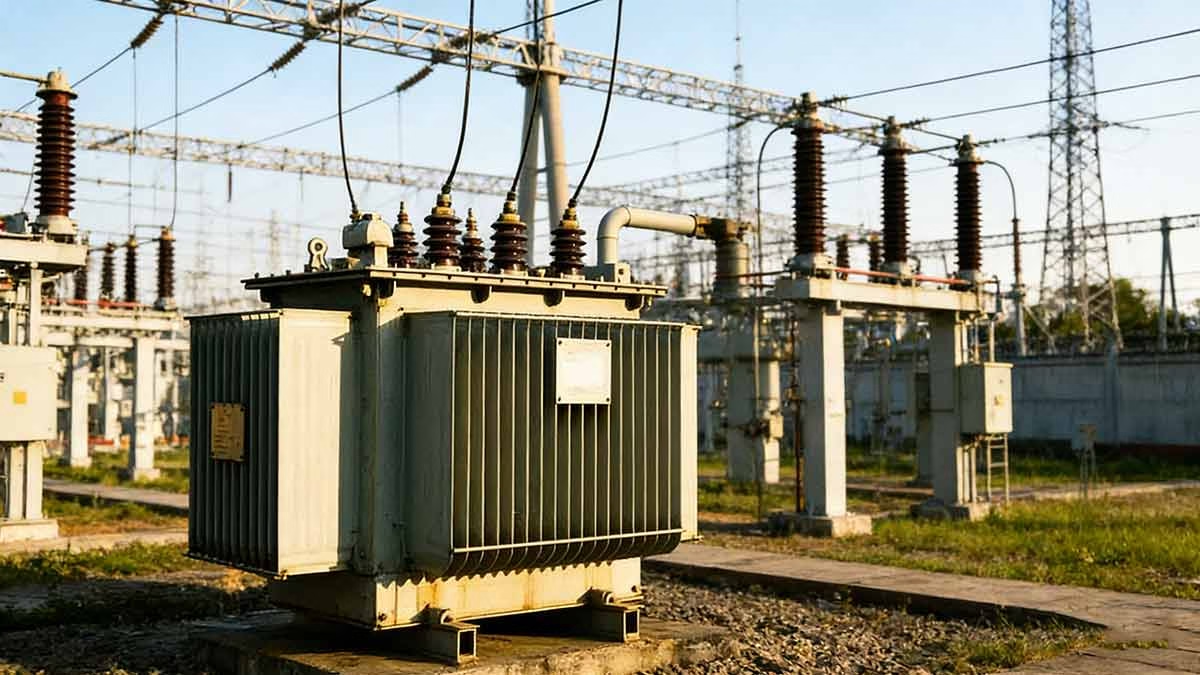
A utility in Spain recently replaced 300 traditional transformers with our high-efficiency models. The switch reduced the utility’s annual energy consumption by 2.8 GWh—enough to power 800 households—and saved $320,000 in annual energy costs.
Circular Economy in Transformer Manufacturing
The circular economy—reducing, reusing, and recycling resources—is gaining traction in the transformer industry:
- Transformer Recycling Programs: Many manufacturers offer take-back programs for end-of-life transformers, ensuring that materials are recycled rather than sent to landfills.
- Remanufacturing: Old transformers can be remanufactured to meet modern efficiency standards, extending their life by 15-20% and reducing waste.
- Modular Design for Repairability: Modular transformers are designed so that individual components (e.g., windings, cores) can be replaced, rather than the entire unit—reducing resource use.
Our company’s transformer recycling program has processed over 5,000 end-of-life units since 2020, recycling 95% of the materials (steel, copper, aluminum) and diverting 12,000 tons of waste from landfills. We also offer a remanufacturing service that costs 30% less than buying a new transformer, making it an attractive option for budget-constrained utilities.
Smart Grids & Sustainable Energy Systems
Transformers play a critical role in enabling sustainable energy systems by integrating renewable sources and optimizing energy distribution:
- Load Balancing: Smart transformers can shift power between high-demand and low-demand areas, reducing energy waste and improving grid efficiency.
- Renewable Integration: Transformers with advanced voltage regulation capabilities ensure that variable renewable sources (solar, wind) can connect to the grid without causing instability.
- Demand Response: Smart transformers can communicate with utilities to reduce load during peak hours, lowering the need for fossil fuel-powered backup generators.
In a smart grid project in the Netherlands, we deployed 150 smart transformers that integrated solar panels, wind turbines, and battery storage systems. The project reduced the grid’s carbon emissions by 22% and improved energy reliability by 18%, demonstrating how transformers can be a linchpin of sustainable energy systems.
Conclusion
The global distribution transformer market is in the midst of a profound transformation, driven by technological innovation, regional growth dynamics, and a global commitment to sustainability. From smart transformers that enable predictive maintenance to eco-friendly models that minimize environmental impact, the industry is evolving to meet the needs of a changing energy landscape.
For manufacturers, the key to success lies in understanding regional priorities, investing in R&D to stay ahead of technological trends, and embracing sustainability as a core business value. For utilities and end-users, the future promises transformers that are more efficient, reliable, and intelligent—delivering better performance while reducing environmental impact.
As the industry moves toward 2029, one thing is clear: distribution transformers will remain a critical component of the global energy infrastructure, and those who adapt to emerging trends will be well-positioned to thrive in a market that is growing, evolving, and full of opportunity.