
What is power transformer? A power transformer acts as the backbone of energy distribution, facilitating energy transfer between electrical circuits via electromagnetic induction. Far more than just voltage adjusters, these devices enable efficient long-distance power delivery while ensuring safe usage in residential, commercial, and industrial settings. With tailored designs for diverse energy sector needs, power transformers come in a range of configurations—each engineered to address specific operational requirements.
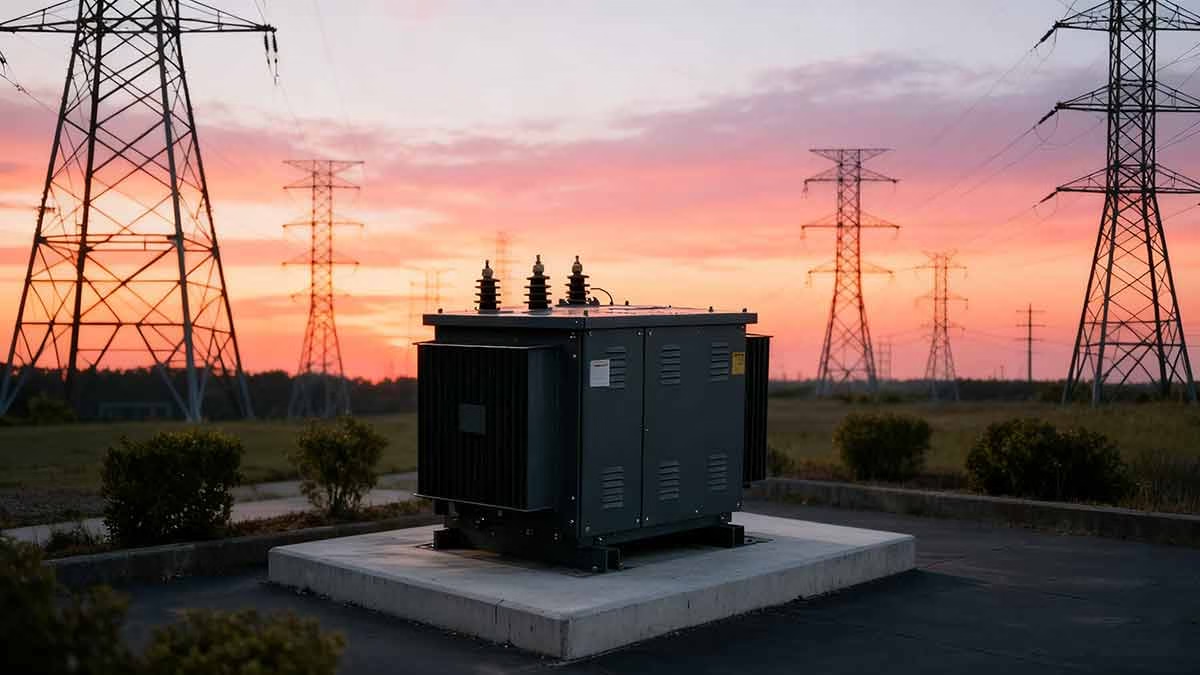
Having spent decades in the transformer manufacturing industry, I’ve witnessed firsthand how these robust machines underpin global electrical infrastructure. From towering substation units to compact distribution transformers, their role in keeping power flowing reliably cannot be overstated. Let’s explore the intricacies of power transformers, from their core functionality to cutting-edge innovations shaping the future of energy.
Contents
hide
How Power Transformers Work: Core Principles Unveiled
Ever wondered why plugging a 220V appliance into a 110V outlet leads to failure? Voltage mismatches highlight the critical need for transformers. But what makes these devices capable of delivering precise voltage levels for every use case?
At their core, power transformers operate on electromagnetic induction—a principle that leverages magnetic fields to transfer energy between coils. By wrapping two or more wire coils around a magnetic core, transformers can either increase (step up) or decrease (step down) voltage, enabling efficient power transmission and safe end-user access. This technology forms the foundation of modern electrical grids, ensuring energy reaches destinations with minimal loss.
The Science Behind Operation
Drawing on years of engineering experience, here’s a breakdown of the key components driving transformer performance:
- Primary Coil: Absorbs incoming electrical power, generating a fluctuating magnetic field.
- Magnetic Core: Focuses and channels the magnetic field to maximize energy transfer efficiency.
- Secondary Coil: Converts the magnetic field back into electrical energy, delivering output power at the desired voltage.
I still recall an early career demonstration with a small-scale transformer: adjusting the number of turns in the secondary coil and watching the output voltage shift instantly. It was a tangible reminder of how simple scientific principles translate into life-changing technology.
Voltage Transformation: Adapting to Grid Needs
Transformers’ ability to modify voltage makes them indispensable for power system flexibility. Below is a breakdown of common transformation types and their real-world applications:
| Transformer Category | Input Voltage Range | Output Voltage Range | Key Application |
|---|---|---|---|
| Step-Up | Low (e.g., 400V) | High (e.g., 40kV+) | Power plants to transmission grids |
| Step-Down | High (e.g., 500kV) | Low (e.g., 35kV) | Transmission to local distribution |
| Isolation | Variable | Matching Input | Medical equipment, noise reduction |
In a recent solar farm project, our team deployed a step-up transformer with a 1:100 turns ratio, boosting 400V solar panel output to 40kV for long-distance grid integration. The result? A 15% improvement in transmission efficiency compared to conventional systems.
Core & Winding Design: Balancing Performance and Durability
Transformer design plays a pivotal role in optimizing efficiency and lifespan. Key considerations include:
- Core Types: Shell-type (ideal for high-power applications), core-type (cost-effective for distribution), and toroidal (compact for industrial machinery).
- Winding Materials: Copper (superior conductivity, higher cost) vs. aluminum (cost-efficient, lighter weight).
- Insulation Systems: Oil-immersed (excellent heat dissipation for heavy loads) vs. dry-type (fire-safe for commercial buildings).
One standout project involved designing a distribution transformer using an amorphous metal core. Compared to traditional silicon steel cores, this innovation reduced core losses by 30%, delivering significant energy savings for a suburban community over its 25-year lifespan.
Exploring Transformer Types: Tailored Solutions for Every Need
In the world of power transformers, “one size fits all” simply doesn’t apply. Different applications demand specialized designs—from high-voltage grid interconnections to low-current industrial processes. Let’s dive into the most common types and their unique use cases.
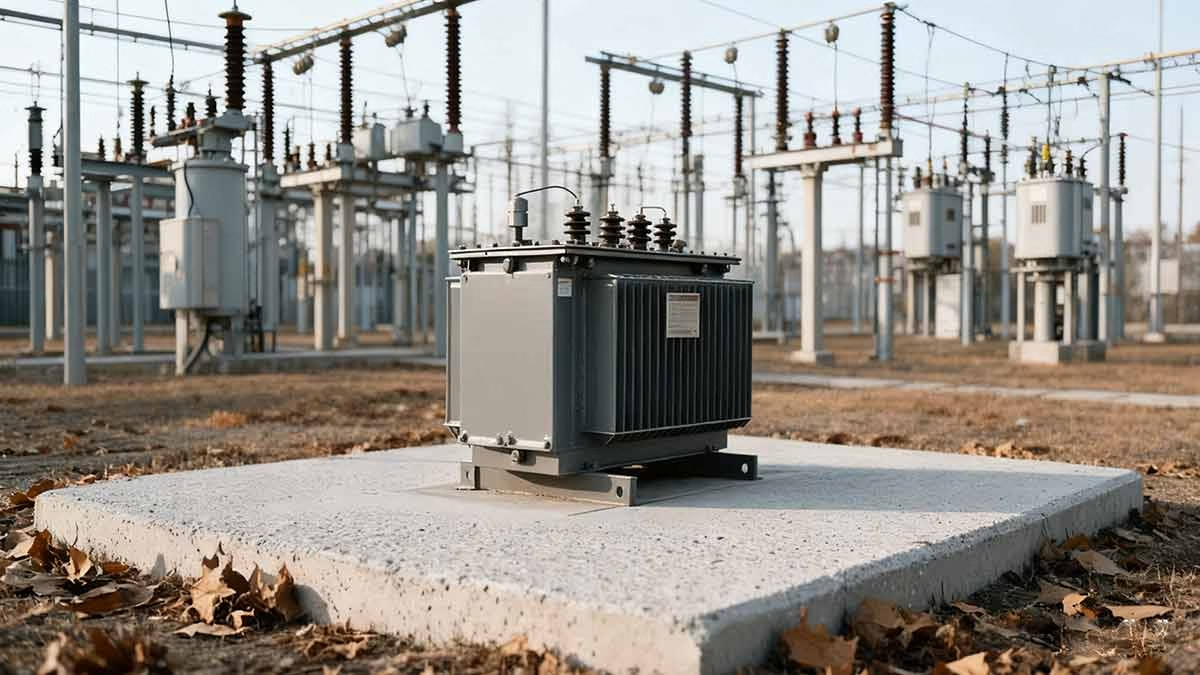
Power transformers are categorized by their function, with each type engineered to address specific electrical challenges. From step-up/step-down units that form the grid backbone to specialized transformers for niche industries, this diversity ensures reliable power delivery across sectors.
Step-Up & Step-Down Transformers: Grid Workhorses
These transformers are the unsung heroes of long-distance power transmission:
- Step-Up Transformers: Installed at power plants to boost generator output (typically 15- 25kV) to ultra-high voltages (138- 765kV), minimizing energy loss during transmission.
- Step-Down Transformers: Located in substations, reducing high transmission voltages to manageable levels (35kV or lower) for local distribution.
- Distribution Transformers: The final link in the chain, lowering voltage to 240/120V for residential and commercial use.
I once oversaw the installation of a 1000 MVA step-up transformer at a hydroelectric plant—comparable in size to a compact cottage. This single unit handled the full output of the plant’s generators, stepping up 13.8kV to 500kV for cross-country transmission.
Autotransformers: Efficient Voltage Regulation
Autotransformers stand out for their compact design and high efficiency, using a single winding to adjust voltage levels. Here’s how they deliver value:
| Key Feature | Operational Benefit | Target Application |
|---|---|---|
| Single Winding | Reduced material usage, lower cost | Grid voltage regulation |
| High Efficiency | Minimal energy loss | Interconnecting different voltage grids |
| Variable Output | Flexible voltage adjustment | Industrial process control |
In a recent grid modernization project, we used autotransformers to link 345kV and 138kV systems. Their compact footprint allowed installation in a space-constrained substation, while their 99.7% efficiency translated to annual energy savings of over 500 MWh.
Special-Purpose Transformers: Niche Industry Solutions
Certain industries require transformers engineered for extreme conditions or unique power demands:
- Rectifier Transformers: Convert AC to DC for high-voltage DC (HVDC) transmission and industrial electrolysis.
- Furnace Transformers: Deliver high currents (up to 100,000A) at low voltages for metal smelting and arc furnace operations.
- Traction Transformers: Power electric trains and subway systems, with rugged designs to withstand vibration and temperature fluctuations.
A memorable project involved designing custom furnace transformers for an aluminum smelter. These units had to handle massive currents while operating in high-temperature environments—we incorporated specialized cooling systems and corrosion-resistant materials to ensure 24/7 reliability.
The Role of Power Transformers in Transmission & Distribution
Have you ever pondered how electricity travels hundreds of miles from a remote power plant to your home without losing most of its energy? Power transformers make this feat possible, serving as the critical link in every stage of the power delivery chain.
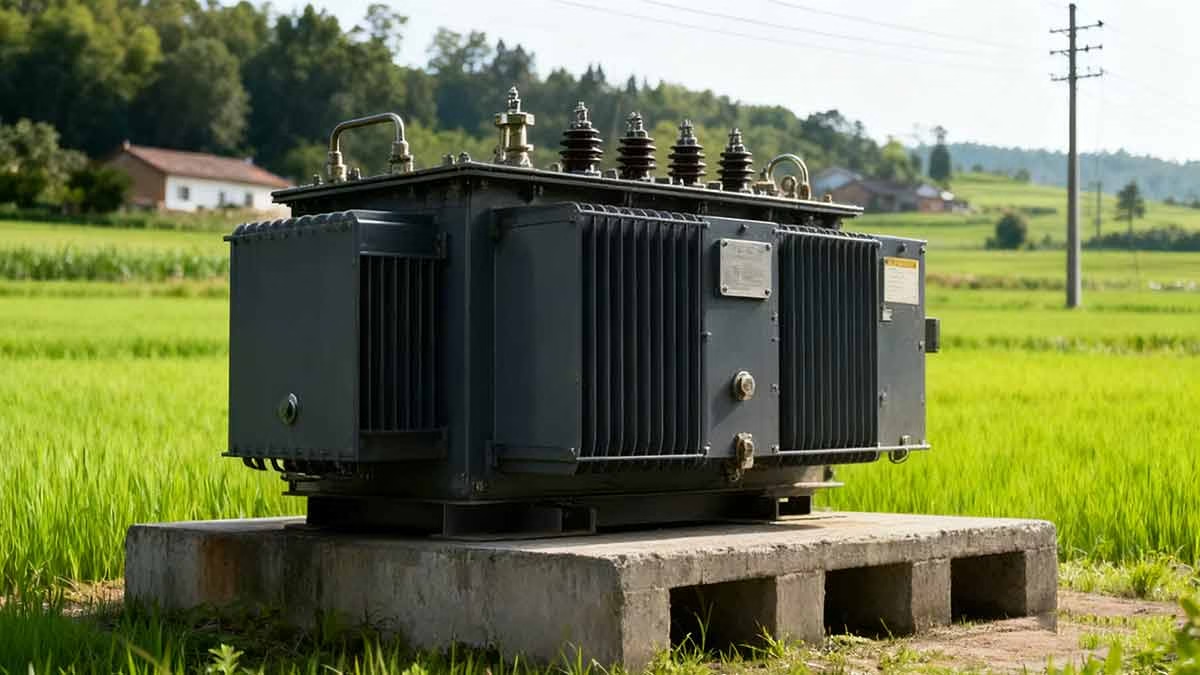
From generation to end use, transformers enable efficient, safe, and reliable power distribution. By stepping up voltage for long-distance transmission (reducing current and minimizing losses) and stepping it down in stages for local use, they ensure electricity reaches consumers in the right form—every time.
Power Generation & Step-Up Transformation
The journey of electricity begins at power plants, where generators produce voltage at 15-25kV—too low for efficient long-distance transmission. Step-up transformers address this by boosting voltage to 138-765kV, reducing current, and cutting energy loss by up to 90%.
At a coal-fired power plant project, our team installed a step-up transformer that elevated 22kV generator output to 500kV. The unit weighed over 200 tons and required specialized transportation—reminding me of the engineering marvels that underpin our energy infrastructure.
Transmission Substations: Managing the Power Highway
Transmission substations act as hubs for voltage adjustment and grid interconnection. Key functions include:
| Substation Function | Input Voltage | Output Voltage | Operational Impact |
|---|---|---|---|
| Voltage Step-Down | 500kV/345kV | 230kV/138kV | Prepares power for regional distribution |
| Grid Interconnection | Variable | Variable | Links different power grids for stability |
| Switching & Protection | N/A | N/A | Isolates faulty sections to prevent outages |
In a recent substation upgrade project, we replaced aging transformers with modern units featuring advanced voltage regulation. This improvement enhanced power quality for over 500,000 residents, reducing voltage fluctuations by 30%.
Distribution Transformers: Delivering Power to Your Doorstep
Distribution transformers are the final step in the power delivery chain, ensuring electricity is safe for end use:
- Primary Step-Down: Reduces transmission voltages (e.g., 35kV) to distribution levels (e.g., 12kV).
- Secondary Step-Down: Lowers voltage to 240/120V for residential, commercial, and light industrial use.
- Smart Load Management: Modern units include monitoring capabilities to balance power distribution and prevent overloads.
Last year, I led a project to replace outdated transformers in a suburban neighborhood. The new units featured IoT-enabled sensors for real-time monitoring, allowing the utility to detect issues before they caused outages—reducing unplanned downtime by 45%.
Industry-Specific Transformer Applications
Different industries have unique power requirements—from the high currents needed for manufacturing to the clean, stable power required for medical equipment. Power transformers are engineered to meet these diverse needs, with specialized designs for every sector.
From heavy industry to renewable energy, transformers play a pivotal role in enabling sector-specific operations. By adapting to unique voltage, current, and environmental demands, they ensure reliable power delivery—even in the most challenging conditions.
Heavy Industry & Manufacturing
Manufacturing facilities rely on transformers to power production lines, with designs tailored to high-load, continuous-operation needs:
- Arc Furnace Transformers: Supply the massive currents (up to 200,000A) required for steel and metal production.
- Rectifier Transformers: Convert AC to DC for electroplating, electrolysis, and battery manufacturing.
- Variable Frequency Transformers: Adjust voltage and frequency to control industrial motors and conveyor systems.
For an automotive manufacturing plant, our team designed a multi-voltage transformer system. It delivered high-voltage power for robotic welding stations, medium-voltage for assembly line equipment, and low-voltage for lighting and controls—all while maintaining 99.5% efficiency under fluctuating loads.
Healthcare & Medical Facilities
Medical equipment demands clean, stable power to ensure patient safety and accurate diagnostics. Transformers for healthcare applications include:
| Medical Application | Transformer Type | Critical Feature |
|---|---|---|
| MRI Machines | Isolation Transformers | Immunity to magnetic field interference |
| Operating Rooms | K-rated Transformers | Mitigates harmonic distortion from sensitive equipment |
| Emergency Power | Cast Resin Transformers | Fire-resistant design for critical care areas |
In a hospital upgrade project, we installed isolation transformers for a new MRI suite. These units not only provided the required 480V power but also shielded other hospital equipment from the MRI’s strong magnetic field—preventing signal interference and ensuring diagnostic accuracy.
Renewable Energy Integration
As the world shifts to solar, wind, and hydro power, transformers play a key role in integrating variable energy sources into the grid:
- Solar Farm Transformers: Convert DC power from solar panels to AC, then step up voltage for grid connection.
- Wind Turbine Transformers: Handle variable frequency output from turbines, ensuring stable grid integration.
- Energy Storage Transformers: Support bidirectional power flow for battery storage systems, enabling peak-load management.
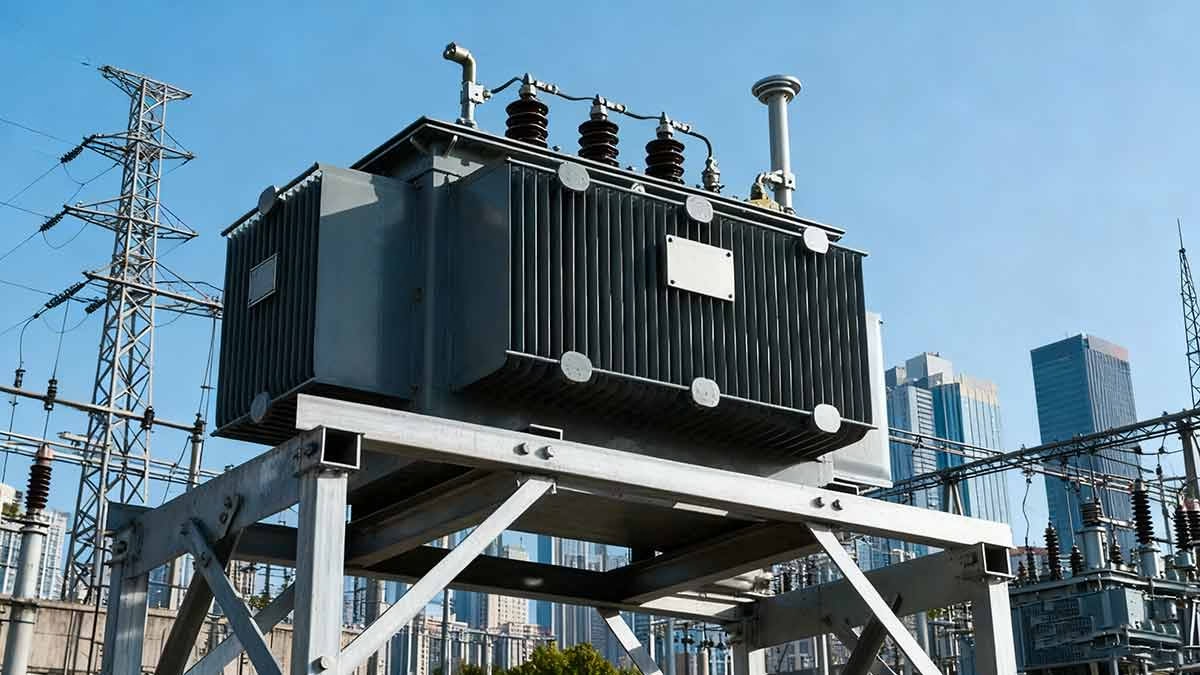
For an offshore wind farm project, we designed transformers to withstand saltwater corrosion, high winds, and temperature extremes. These units featured sealed enclosures and advanced voltage regulation, ensuring reliable power delivery even as wind speeds fluctuated from 5 to 50 mph.
Innovations Shaping the Future of Transformer Technology
As energy systems evolve—driven by renewable integration, smart grids, and electrification—transformer technology is advancing to meet new challenges. From AI-powered monitoring to next-generation materials, these innovations are making transformers more efficient, reliable, and sustainable.
Today’s transformer innovations focus on three key goals: enhancing efficiency, enabling real-time monitoring, and supporting the transition to clean energy. These advancements are not just improving performance—they’re redefining how power systems operate.
Smart Monitoring & Predictive Maintenance
Modern transformers are equipped with IoT sensors and AI analytics, turning them into “smart” devices:
- IoT Sensors: Track temperature, oil quality, partial discharge, and load levels in real time.
- AI-Powered Diagnostics: Analyze data to predict potential failures, enabling proactive maintenance.
- Remote Management: Allow engineers to monitor and adjust transformers from off-site locations.
We recently implemented a smart monitoring system for a fleet of urban distribution transformers. The sensors collected data on 20+ parameters, and the AI platform identified early signs of overheating in three units—preventing catastrophic failures and reducing maintenance costs by 30%.
Advanced Materials for Enhanced Efficiency
New materials are pushing the boundaries of transformer performance:
| Material Type | Application | Key Benefit |
|---|---|---|
| Amorphous Metals | Core Construction | 30-40% lower core losses than silicon steel |
| High-Temperature Superconductors (HTS) | Windings | Near-zero electrical resistance, minimal energy loss |
| Nanofluids | Cooling Systems | 20% better heat dissipation than traditional oils |
In a pilot project, we tested an HTS transformer for a utility company. The unit’s windings, made from superconducting materials, reduced energy losses by 50% compared to conventional transformers. While HTS technology is still costly, it holds enormous potential for high-efficiency grids of the future.
Solid-State Transformers: The Next Generation
Solid-state transformers (SSTs) represent a paradigm shift in power conversion, replacing traditional magnetic cores and windings with semiconductor-based technology. Key advantages include:
- Superior Power Quality: Active filtering of harmonics and voltage fluctuations.
- Bidirectional Power Flow: Seamless integration of distributed energy resources (solar, wind, batteries).
- Compact Design: Up to 70% smaller and lighter than traditional transformers.
I’m currently part of a research team exploring SSTs for microgrid applications. These devices can adjust voltage and frequency in microseconds, making them ideal for balancing power from renewable sources. While still in the early stages of commercialization, SSTs could revolutionize how we distribute electricity in urban and remote areas.
Conclusion
Power transformers are the unsung heroes of modern energy systems, enabling efficient transmission, safe distribution, and sector-specific power delivery. From the core principles of electromagnetic induction to cutting-edge innovations like smart monitoring and solid-state technology, these devices continue to evolve to meet the demands of a changing world.
As the global shift to renewable energy accelerates and power grids become more complex, transformers will play an increasingly critical role in ensuring energy reliability, sustainability, and efficiency. For manufacturers like us, this means continuing to innovate—designing transformers that are not just powerful, but also smart, durable, and tailored to the unique needs of our customers.
Whether you’re powering a manufacturing plant, a hospital, or a residential neighborhood, the right transformer can make all the difference. With decades of engineering expertise and a focus on innovation, we’re proud to deliver solutions that keep the world powered—today and tomorrow.