
Elevating the efficiency of 3 phase distribution transformer in expansive power grids requires integrating cutting-edge core materials, intelligent monitoring solutions, and dynamic load management approaches. These advancements deliver tangible value—slashing energy waste, trimming operational expenses, and fortifying the reliability of power networks that underpin industries and communities.
Contents
hide
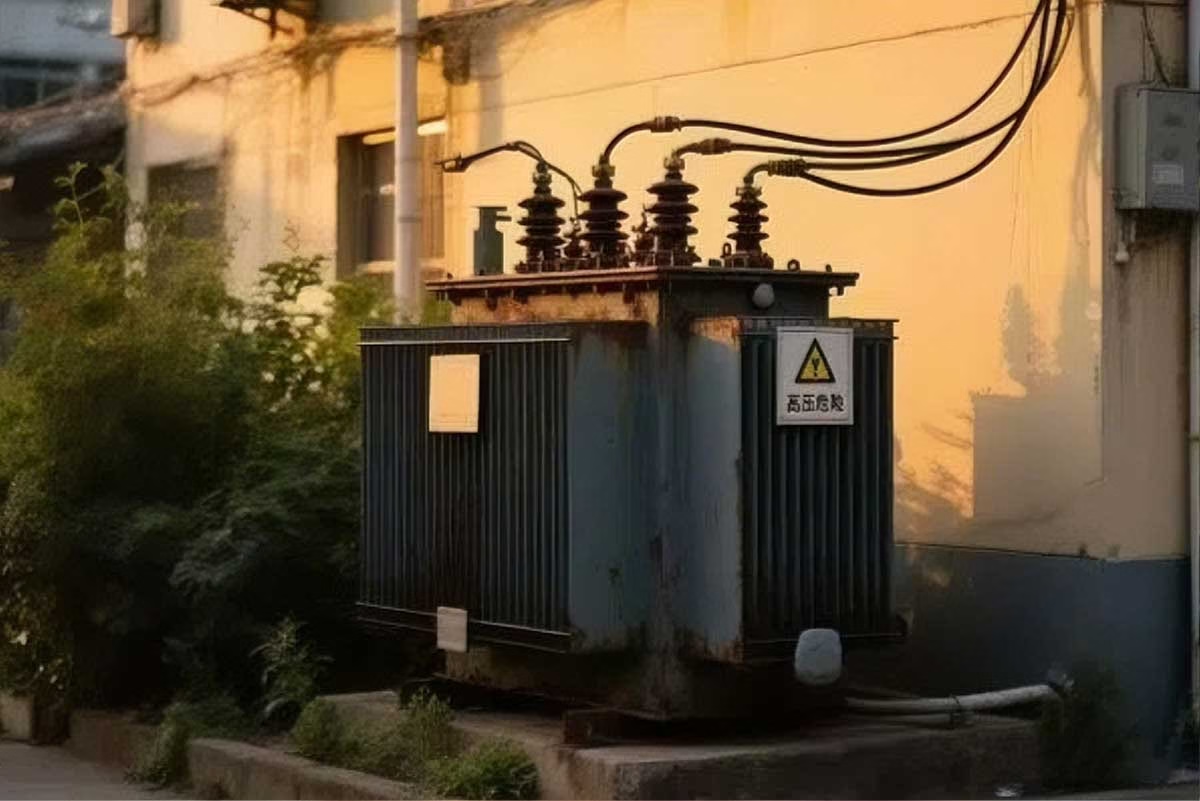
Power Trio: Unveiling the Role of 3 Phase Distribution Transformer in Urban Energy Systems
Have you ever paused to consider how cities maintain uninterrupted power flow around the clock? The answer lies in 3 phase transformers—unsung workhorses of the electrical grid that deliver unmatched performance for urban energy needs. What sets these transformers apart, and why are they irreplaceable for powering modern cities?
As the backbone of urban power distribution, 3-phase transformers outperform single-phase systems in both efficiency and stability. By utilizing three alternating currents offset by 120 degrees, they ensure a consistent, uninterrupted power supply—enabling efficient transmission of large electricity volumes over extended distances. This design makes them the preferred choice for meeting the demands of dense urban landscapes.
The Fundamentals: What Defines a “3-Phase” Transformer?
3-phase power is engineered for balance and efficiency in electricity distribution, with core characteristics that set it apart:
- Three independent windings
- 120-degree phase offset
- Equitable load distribution
Power Transmission: Maximizing Output, Minimizing Losses
3-phase systems excel at high-capacity power transmission, offering key advantages:
- Greater power density for space-efficient installations
- Reduced energy loss during long-distance transmission
- Lower cable requirements, cutting material and installation costs
Load Balancing: Sustaining Stable Power Delivery
A standout benefit of 3-phase systems is their ability to adapt to fluctuating loads:
- Uniform power distribution across phases
- Diminished voltage fluctuations, protecting sensitive equipment
- Superior handling of motor-driven loads common in industrial settings
Applications: From Factories to Residential Neighborhoods
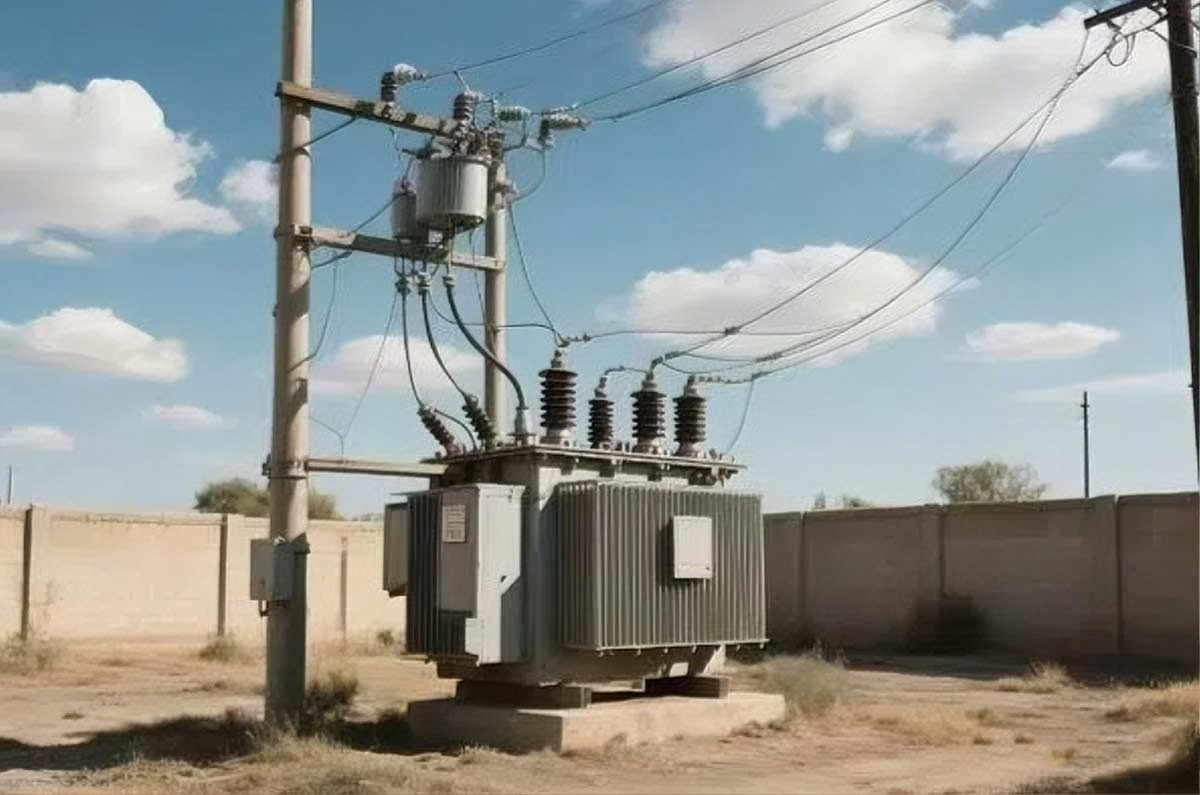
3-phase transformers are versatile enough to serve diverse settings:
- Heavy industrial machinery and manufacturing plants
- Large commercial complexes and high-rise buildings
- Residential area power distribution networks
| Feature | Single-Phase | Three-Phase |
|---|---|---|
| Power Capacity | Moderate | High |
| Efficiency | Satisfactory | Exceptional |
| Load Balancing | Limited | Superior |
| Cost-Effectiveness | Ideal for small loads | Optimal for large loads |
A recent project vividly demonstrated the impact of 3-phase transformers in industrial environments. A major manufacturing facility was grappling with recurring power disruptions and skyrocketing energy bills, despite having upgraded production equipment. The root cause? A patchwork distribution system mixing outdated single-phase units and aging 3-phase transformers, leading to inefficiencies and power quality issues.
Our team began with a comprehensive load analysis, discovering significant daily fluctuations in power demand—driven by heavy machinery that caused sharp consumption spikes. Based on these insights, we designed a tailored 3-phase distribution system centered on modern, high-efficiency transformers. These units featured advanced core materials that reduced no-load losses by up to 60%, paired with optimized winding designs to minimize load losses under variable conditions.
A key innovation was the implementation of an intelligent load balancing system. This technology dynamically adjusted power distribution across the three phases, preventing overloads and extending the lifespan of both transformers and connected equipment. The results were striking: within the first month, the facility saw a 15% drop in overall energy use, and voltage fluctuations—once a persistent problem for sensitive machinery—were virtually eliminated.
Beyond energy savings, the stable power supply reduced equipment malfunctions and downtime, with the plant manager reporting a 30% decrease in power-related maintenance calls. An unexpected bonus? The new transformers generated less heat, easing the burden on the facility’s cooling systems and creating a more comfortable working environment.
This project highlighted that effective 3-phase systems are more than just a wiring upgrade—they’re about building balanced, efficient, and reliable power infrastructure capable of meeting modern industry’s complex demands. For plant managers and engineers seeking to optimize their power systems, the first step is a thorough assessment of existing setups, including load patterns and power quality issues. While the upfront investment in efficient 3-phase systems can be significant, the long-term returns—from energy savings to extended equipment life and improved productivity—often far outweigh the cost.
Watts Up? Practical Strategies to Enhance 3-Phase Transformer Efficiency
Tired of watching energy costs erode your bottom line? Boosting the efficiency of your 3-phase transformer could be the solution—and it’s more achievable than you might think. By focusing on targeted improvements, you can cut energy waste, extend equipment life, and reduce operational expenses without overhauls.
Enhancing 3-phase transformer efficiency hinges on four core strategies: upgrading core materials, refining winding designs, optimizing cooling systems, and integrating smart monitoring technologies. Each area addresses specific loss points, delivering cumulative gains that drive meaningful cost savings and performance improvements.
Core Upgrades: The Foundation of Efficiency
The transformer core is critical to minimizing energy loss—modern materials deliver dramatic improvements over traditional designs:
- Amorphous metal cores (offering ultra-low no-load losses)
- Grain-oriented silicon steel (enhanced magnetic conductivity)
- Laser-scribed laminations (reducing eddy current losses)
Winding Optimization: Reducing Resistance and Waste
Transformers’ windings are another key source of energy loss—optimized designs make a significant difference:
- High-conductivity copper conductors (lowering resistance)
- Improved winding geometry (minimizing eddy currents)
- Advanced transposition techniques for large conductors (ensuring uniform current distribution)
Cooling System Enhancements: Sustaining Performance
Effective cooling preserves efficiency and extends transformer life—innovative solutions deliver better heat management:
- Advanced oil circulation systems (improved thermal transfer)
- Nanofluid additives (boosting cooling capacity)
- Hybrid cooling designs (combining forced oil and air for variable loads)
Smart Monitoring: Data-Driven Efficiency
Modern monitoring systems turn data into actionable insights, optimizing performance and preventing issues:
- Real-time load tracking (identifying inefficiency hotspots)
- Temperature and oil quality sensors (alerting to potential problems)
- Predictive maintenance algorithms (reducing unplanned downtime)
| Upgrade Area | Potential Efficiency Gains | Implementation Complexity |
|---|---|---|
| Core Materials | 20-30% reduction in no-load losses | Medium-High |
| Winding Design | 10-15% reduction in load losses | Medium |
| Cooling Systems | 5-10% overall efficiency boost | Medium |
| Smart Monitoring | 3-5% savings via optimized operation | Low-Medium |
A recent project with a large industrial complex illustrates the power of these strategies. The facility was facing soaring energy costs, with their existing 3-phase transformers—though not outdated—failing to meet modern efficiency standards. Our team took a targeted approach to upgrades, starting with the core.
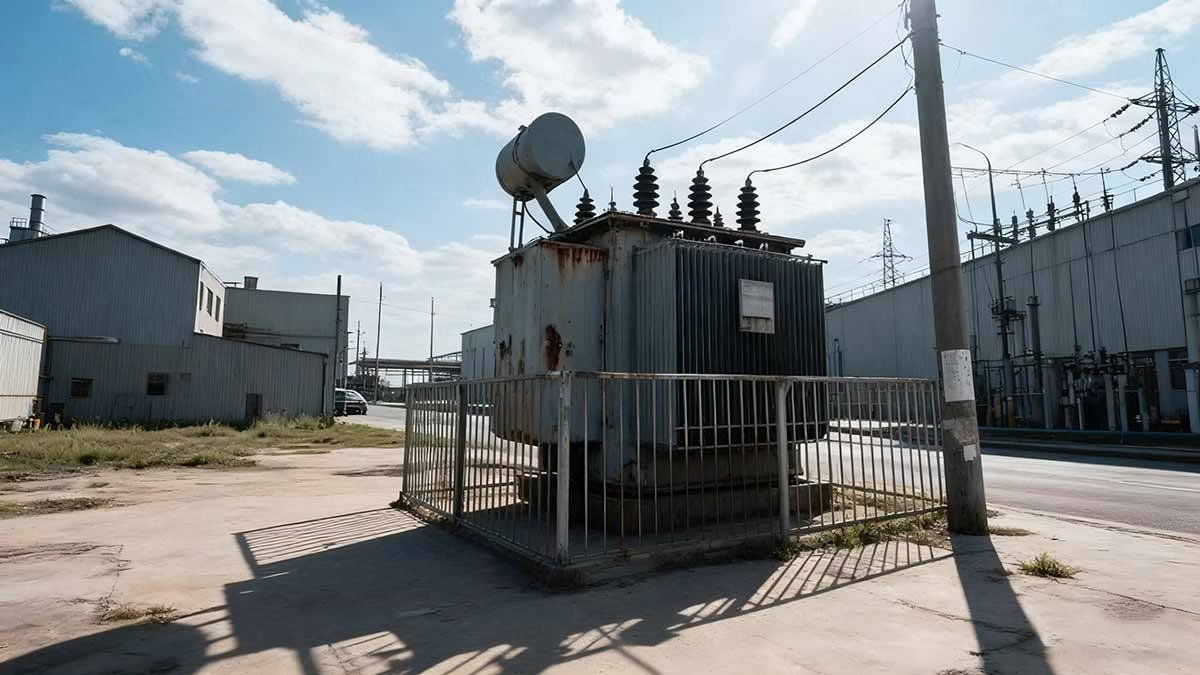
Replacing standard silicon steel cores with amorphous metal alternatives delivered an astonishing 70% reduction in no-load losses. Initially skeptical, the plant manager was convinced by the immediate drop in energy consumption. Next, we redesigned the windings using high-conductivity copper and optimized geometry, cutting load losses by 15%—a significant saving in a high-power industrial setting.
The facility’s aging cooling system was another priority. We installed a hybrid cooling setup that combined forced oil and air, ensuring efficient heat management even during peak load periods. This not only improved efficiency but also allowed the transformers to handle higher loads without overheating.
The game-changer, however, was the smart monitoring system. Equipped with real-time load tracking, temperature sensors, and predictive algorithms, the system provided visibility into transformer performance and identified potential issues before they escalated. One standout feature was its ability to analyze load patterns and recommend optimal times for energy-intensive operations—shifting production to off-peak hours reduced strain on transformers and leveraged lower electricity rates.
The results exceeded expectations: within the first year, the facility saw a 25% reduction in transformer-related energy losses, translating to hundreds of thousands of dollars in savings. The upgrades also extended transformer lifespan by an estimated 5 years, delaying costly replacements, and improved power quality—reducing downtime caused by sensitive equipment failures.
This project proved that transformer efficiency isn’t about one big fix, but a series of targeted improvements that compound over time. For industrial managers looking to cut costs and improve sustainability, the first step is a comprehensive audit of existing systems to identify loss points. While some upgrades require upfront investment, the long-term savings and reliability gains deliver a strong return—turning transformers from energy consumers into efficiency drivers.
From Power Plant to Outlet: How Efficient Transformers Power the Journey of Electricity
Flipping a light switch or plugging in a device feels effortless—but the journey of electricity from power plant to your home is a marvel of engineering, with efficient transformers playing a critical role at every step. How do these unsung heroes ensure electricity travels safely, efficiently, and reliably across vast distances?
Efficient transformers are the backbone of power transmission and distribution, performing two essential functions: stepping up voltage for long-distance travel (minimizing losses) and stepping down voltage for safe consumer use. Modern, high-efficiency models reduce waste at each stage, ensuring more generated power reaches end-users—cutting costs and environmental impact while improving grid reliability.
Power Generation: The First Step
Electricity’s journey begins at power plants, where transformers kickstart efficient transmission:
- Step-up transformers boost voltage to ultra-high levels (reducing losses during long-distance travel)
- High-efficiency core and winding designs minimize initial energy waste
- Advanced cooling systems handle the high power outputs of modern plants
Long-Distance Transmission: The High-Voltage Highway
Efficient transformers enable electricity to travel hundreds of miles with minimal loss:
- Ultra-high voltage transformers (up to 1,000 kV) for maximum efficiency
- Low-loss core materials (reducing no-load energy waste)
- Smart monitoring systems (optimizing performance under variable conditions)
Substation Step-Down: Preparing for Local Distribution
At substations, transformers reduce voltage to levels suitable for regional distribution:
- Large-capacity step-down transformers (handling high volumes of electricity)
- On-load tap changers (dynamically adjusting voltage to match demand)
- Oil preservation systems (extending transformer lifespan and reliability)
Local Distribution: The Final Mile
Distribution transformers deliver electricity to homes, businesses, and communities:
- Pole-mounted and pad-mounted designs (adapting to urban and rural settings)
- Amorphous core materials (minimizing no-load losses in 24/7 operation)
- Smart grid integration (enabling load balancing and renewable energy integration)
| Journey Stage | Transformer Type | Key Efficiency Features |
|---|---|---|
| Generation | Step-Up | High-grade cores, advanced cooling |
| Transmission | Ultra-High Voltage | Low-loss designs, smart monitoring |
| Substation | Step-Down | Load tap changers, oil preservation |
| Local Distribution | Low-Voltage | Amorphous cores, smart grid compatibility |
A project upgrading a medium-sized city’s transformer network highlighted the impact of efficiency across the entire electricity journey. The city was plagued by frequent brownouts and high energy costs, driven by an aging infrastructure struggling to meet growing demand. Our team took a holistic approach, upgrading transformers at every stage of the power chain.
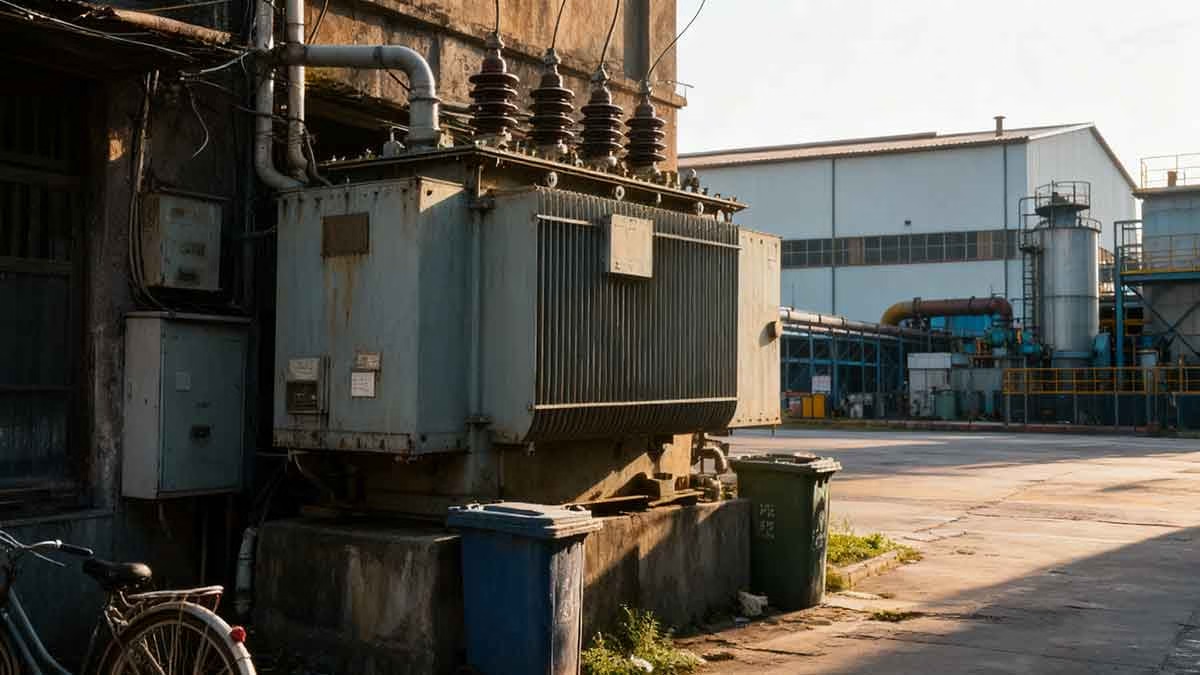
At the local power plant, we replaced decades-old step-up transformers with state-of-the-art models featuring advanced core materials and intelligent cooling systems. These new units handled the plant’s full output with significantly lower losses, setting the stage for efficient transmission. Next, we upgraded the transmission network with ultra-high voltage transformers, creating a more resilient backbone that maintained efficiency even during peak demand.
Substations saw some of the most impactful changes. We installed new step-down transformers with on-load tap changers, which dynamically adjusted voltage to match real-time demand—eliminating the voltage fluctuations that caused brownouts. An advanced oil preservation system extended the transformers’ lifespan, reducing long-term replacement costs.
The distribution level presented unique challenges, with a mix of old and new neighborhoods requiring tailored solutions. We deployed pole-mounted transformers for older areas and pad-mounted units for newer developments—all featuring amorphous core materials that cut no-load losses by up to 70% compared to traditional designs. Integrating smart grid technologies allowed for real-time load balancing and predictive maintenance, further improving efficiency and reliability.
The results were transformative: within a year, the city saw a 30% reduction in transformer-related energy losses, and brownouts became a thing of the past. The utility company reported fewer customer complaints, and the reduced energy waste allowed the power plant to serve more residents without expanding generation capacity—delaying costly plant upgrades and cutting the city’s carbon footprint.
Local businesses also benefited from improved power quality, with fewer equipment failures and increased productivity. This project underscored a critical lesson: the efficiency of electricity’s journey depends on every link in the chain. By upgrading transformers at every stage—from power plant to outlet—we created a synergistic system that delivered far greater benefits than isolated improvements.
For utility managers and city planners, the takeaway is clear: a holistic approach to transformer upgrades delivers outsized returns. While upfront costs can be significant, the long-term savings, improved reliability, and reduced environmental impact make efficient transformers a smart investment in the future of power distribution.
Green Giants: How Efficient 3-Phase Transformers Drive Sustainability
Concerned about reducing your carbon footprint while cutting costs? Efficient 3-phase transformers offer a powerful solution—combining energy savings with environmental benefits that help fight climate change. These “green giants” are quietly revolutionizing power distribution, but how exactly do they make a difference for the planet?
Efficient 3-phase transformers slash energy waste in power networks, directly reducing greenhouse gas emissions. By utilizing advanced materials, optimizing load management, and integrating with renewable energy sources, they minimize the need for additional power generation—lowering carbon footprints while improving grid reliability and cutting operational costs.
Material Innovations: Building a Greener Core
The materials used in transformers are central to their environmental impact—modern alternatives deliver superior efficiency and sustainability:
- Amorphous metal cores (ultra-low no-load losses)
- High-grade silicon steel (enhanced magnetic performance)
- Nanocrystalline materials (improved efficiency in compact designs)
Smart Load Management: Reducing Waste, Cutting Emissions
Intelligent load management ensures transformers operate at peak efficiency, minimizing energy waste:
- Dynamic phase balancing (preventing overloads and reducing losses)
- Predictive load forecasting (optimizing operation for demand patterns)
- Integration with demand response programs (shifting usage to low-carbon periods)
Renewable Energy Integration: Enabling a Clean Energy Future
Efficient transformers are critical to unlocking the potential of renewable energy sources:
- Bi-directional power flow capabilities (supporting solar and wind feed-in)
- Voltage regulation (managing fluctuations from variable renewable sources)
- Harmonic mitigation (ensuring power quality with renewable integration)
Lifecycle Sustainability: From Manufacturing to Disposal
Modern transformers prioritize sustainability throughout their lifecycle:
- Recyclable materials (reducing waste at end-of-life)
- Biodegradable insulating oils (minimizing environmental risk)
- Extended lifespans (reducing replacement frequency and resource use)
| Aspect | Traditional Transformers | Eco-Efficient Transformers |
|---|---|---|
| Core Losses | Higher | Significantly reduced |
| Load Management | Basic | Advanced, dynamic |
| Renewable Integration | Limited | Seamless, bi-directional |
| Lifecycle Impact | Higher environmental footprint | Lower, more sustainable |
A project with a large industrial park demonstrated the environmental power of efficient 3-phase transformers. The park—home to multiple manufacturing facilities—was committed to reducing its carbon footprint but struggled with high energy waste from outdated transformers. Our team conducted a comprehensive energy audit, revealing that the existing network’s inefficiencies were responsible for thousands of metric tons of unnecessary CO2 emissions annually.
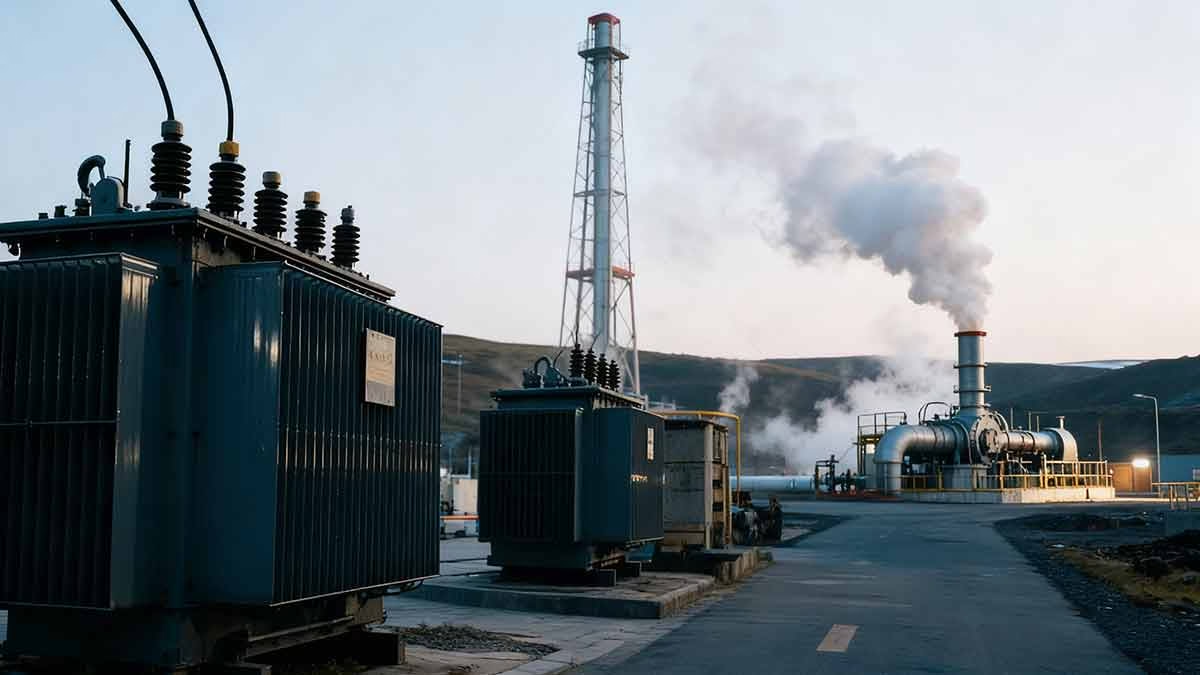
Our solution centered on upgrading to high-efficiency 3-phase transformers with amorphous metal cores, which cut no-load losses by 70% compared to the park’s existing silicon steel core units. For a facility operating 24/7, this translated to massive energy savings—even during low-production periods. We also optimized the transformers’ windings with high-conductivity copper, reducing load losses by 15% and further lowering emissions.
Smart load management was another key component. We installed advanced monitoring systems that analyzed production schedules and historical data to predict load patterns, allowing the transformers to adjust output dynamically. This not only improved efficiency but also enabled the park to participate in demand response programs, shifting energy-intensive operations to times when the grid relied more on renewable sources.
Crucially, the new transformers were designed to integrate with the park’s planned solar panel installation. Featuring bi-directional power flow capabilities and harmonic mitigation, they ensured smooth integration of solar energy into the grid—eliminating power quality issues and maximizing the use of clean energy. We also used biodegradable insulating oils, reducing environmental risk in case of leaks and improving fire safety ratings (leading to lower insurance costs for the facilities).
The results were remarkable: in the first year, the industrial park reduced transformer-related energy losses by 25%, cutting CO2 emissions by over 1,000 metric tons—equivalent to removing 200+ cars from the road annually. The reduced energy demand also lessened the burden on the local power plant, leading to additional regional emissions savings.
The project’s success sparked interest from other businesses in the area, and we soon collaborated with the local utility to expand efficient transformer deployments across their network. This ripple effect highlighted that efficient transformers aren’t just a win for individual facilities—they’re a catalyst for community-wide sustainability.
This experience underscored that efficient 3-phase transformers are more than energy-saving devices—they’re critical components of a sustainable energy infrastructure. By reducing waste at every stage of power distribution, they lower the overall demand for electricity generation, cutting greenhouse gas emissions and helping businesses meet their sustainability goals. For organizations looking to reduce their environmental impact, transformer efficiency should be a cornerstone of their strategy—delivering both cost savings and a smaller carbon footprint.
Smart Power: Cutting-Edge Technologies Shaping the Future of 3-Phase Transformers
How are power grids becoming smarter, greener, and more reliable? The answer lies in the evolution of 3-phase transformers—where advanced technologies are driving a revolution in performance and sustainability. From IoT connectivity to AI-driven analytics, these innovations are redefining what transformers can do— but what exactly is changing, and how does it benefit users and the planet?
Smart 3-phase transformers integrate IoT (Internet of Things) connectivity, AI (Artificial Intelligence) analytics, and advanced sensors to deliver real-time performance optimization, predictive maintenance, and seamless smart grid integration. These technologies transform traditional transformers into intelligent assets that adapt to changing conditions, minimize energy waste, and support the transition to renewable energy—all while reducing downtime and operational costs.
IoT Connectivity: Transforming Transformers into Connected Assets
Modern transformers are joining the IoT, enabling unprecedented visibility and control:
- Real-time data transmission (tracking performance metrics remotely)
- Remote monitoring and control (adjusting settings without on-site visits)
- Smart grid integration (communicating with other network components for coordinated operation)
AI and Machine Learning: Predictive Performance and Maintenance
AI is revolutionizing transformer management, turning data into actionable insights:
- Predictive maintenance algorithms (identifying potential issues before failures occur)
- Load forecasting (optimizing operation for future demand patterns)
- Fault detection and diagnosis (reducing downtime with rapid issue resolution)
Advanced Sensors: Delivering Precise, Real-Time Data
Cutting-edge sensors provide the data foundation for smart transformer operation:
- Dissolved gas analysis sensors (detecting internal faults early)
- Fiber optic temperature sensors (monitoring hotspots with precision)
- Partial discharge detectors (identifying insulation degradation)
Smart Materials: Enhancing Resilience and Efficiency
Innovative materials are making transformers more durable, efficient, and adaptable:
- Self-healing insulation (repairing minor damage automatically)
- Phase-changing cooling materials (maintaining optimal temperatures)
- Nanocomposites (improving mechanical and electrical performance)
| Feature | Traditional Transformers | Smart Transformers |
|---|---|---|
| Monitoring | Manual, periodic checks | Continuous, real-time |
| Maintenance | Scheduled, reactive | Predictive, proactive |
| Efficiency | Static, fixed performance | Dynamically optimized |
| Grid Integration | Limited compatibility | Seamless, bi-directional |
A project modernizing a large urban power grid showcased the transformative potential of these technologies. The city was struggling with frequent outages and inefficient power distribution, exacerbated by a growing population and increasing renewable energy integration. Our solution: deploy a network of smart 3-phase transformers that could communicate with each other and the central grid control system.
Each transformer was equipped with a suite of advanced sensors—including dissolved gas analysis tools and fiber optic temperature monitors—providing real-time data on internal conditions. This data was fed into an AI-driven platform that learned from operational patterns, identifying early warning signs of potential failures. Within months, the system had prevented several outages by alerting maintenance teams to transformers showing signs of stress—before they could fail.
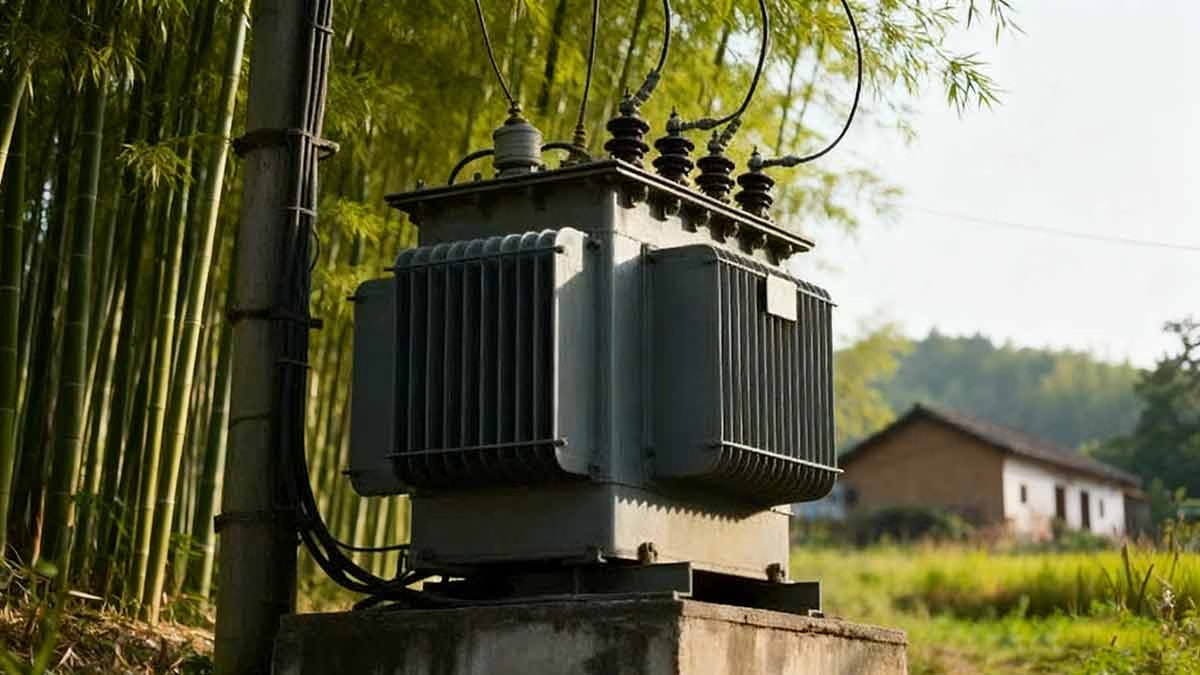
IoT connectivity enabled grid operators to monitor and control the entire transformer network from a central location. They could balance loads across transformers in real-time, reducing strain on individual units and improving overall efficiency. The transformers also featured self-healing insulation, which automatically repaired minor damage—cutting down on maintenance calls and extending equipment life.
During a summer heatwave, the system demonstrated its true value. The AI platform predicted a potential overload in a residential area due to increased air conditioning use. It automatically adjusted load distribution across nearby transformers and activated additional cooling systems—preventing a major blackout and ensuring reliable power for thousands of households.
The smart transformers also proved pivotal in integrating renewable energy. Their ability to handle bi-directional power flow and rapid voltage adjustments made it easier to incorporate solar and wind energy into the grid, reducing reliance on fossil fuels and cutting emissions. Additionally, the data collected by the transformers provided city planners with insights to guide future infrastructure development—ensuring the grid grew sustainably with the city.
The results were impressive: a 40% reduction in transformer-related outages, a 15% improvement in energy efficiency, and smoother integration of renewable energy sources. The city’s power grid became more resilient, efficient, and adaptable—setting a benchmark for smart urban energy systems.
This project highlighted that the future of power distribution lies in the convergence of hardware and software. Smart transformers aren’t just more efficient—they’re intelligent assets that enable grids to adapt to changing demands, integrate clean energy, and deliver reliable power to communities. For utility companies and city planners, embracing these technologies is essential to building sustainable, resilient energy systems that meet the challenges of the 21st century.
Conclusion
3-phase distribution transformers are undergoing a profound evolution, driven by advanced materials, smart technologies, and a focus on sustainability. From amorphous metal cores that minimize energy loss to IoT connectivity and AI analytics that enable predictive performance, these innovations are redefining efficiency in large-scale power networks. By reducing waste, improving reliability, and supporting renewable energy integration, modern 3-phase transformers are not just optimizing power distribution—they’re paving the way for a greener, more resilient energy future. As industries and communities strive for greater sustainability and cost savings, these advanced transformers stand as critical assets in building efficient, future-ready power systems.