
Still relying on conventional power transformers? You could be missing out on transformative gains that redefine efficiency, reliability, and sustainability in power distribution. The energy industry is evolving at unprecedented speed—and electronic transformers are leading the charge as the future-forward solution for modern infrastructure.
Unlike traditional counterparts, electronic transformers deliver industry-leading efficiency, seamless smart grid connectivity, compact footprints, extended lifespans, and minimized environmental impact. These advantages aren’t just incremental—they’re game-changing for businesses, utilities, and projects prioritizing long-term value and performance.
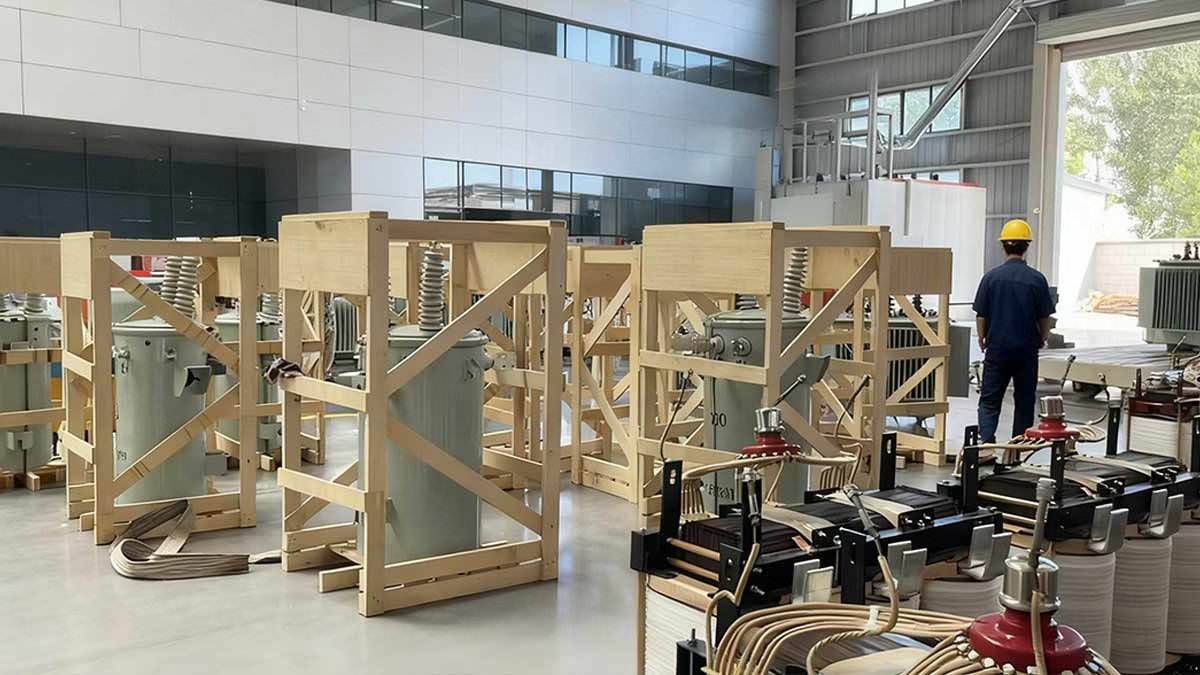
Drawing on decades of experience in power infrastructure, this guide breaks down why electronic transformers are becoming the gold standard for modern power systems. We’ll compare key performance metrics, real-world applications, and long-term benefits to help you make an informed choice for your next project.
Contents
hide
Efficiency & Energy Losses: Electronic vs Conventional Transformers
Tired of wasting resources on inefficient power distribution? The efficiency gap between electronic and conventional transformers isn’t just marginal—it’s a difference that translates to significant cost savings and reduced energy waste over time.
Electronic transformers consistently achieve 98–99% efficiency, while conventional models typically max out at 95–97%. For large-scale or continuous-operation applications, this 2–4% difference adds up to thousands of kilowatt-hours (kWh) in annual savings and a faster return on investment (ROI).
Key Performance Breakdown
- Core Losses: Electronic transformers use advanced amorphous metals or nanocrystalline cores, slashing core losses to 0.05–0.1% of rated power. Conventional transformers, relying on standard silicon steel, suffer 0.2–0.5% core losses—up to 10x higher.
- Copper Losses: Precision winding techniques and optimized conductor designs reduce electronic transformers’ copper losses to 0.5–1% of rated power, compared to 1–2% for conventional models.
- Partial Load Efficiency: Where electronic transformers truly shine—they maintain high efficiency even when operating below full capacity. A conventional transformer’s efficiency drops to 90% at 25% load, while electronic models hold steady at 97%.
| Load Percentage | Conventional Transformer Efficiency | Electronic Transformer Efficiency |
|---|---|---|
| 100% | 97% | 99% |
| 75% | 96% | 98.5% |
| 50% | 94% | 98% |
| 25% | 90% | 97% |
Real-World Impact
On a recent utility project, we replaced a 1,000 kVA conventional transformer with an electronic model. The results were striking:
- 35,000 kWh in annual energy savings
- $4,200 in yearly cost reductions (based on $0.12/kWh)
- A 3.5-year payback period on the initial investment
This efficiency edge is particularly valuable for data centers, industrial facilities, and utilities—where transformers operate 24/7 and even small losses compound over time.
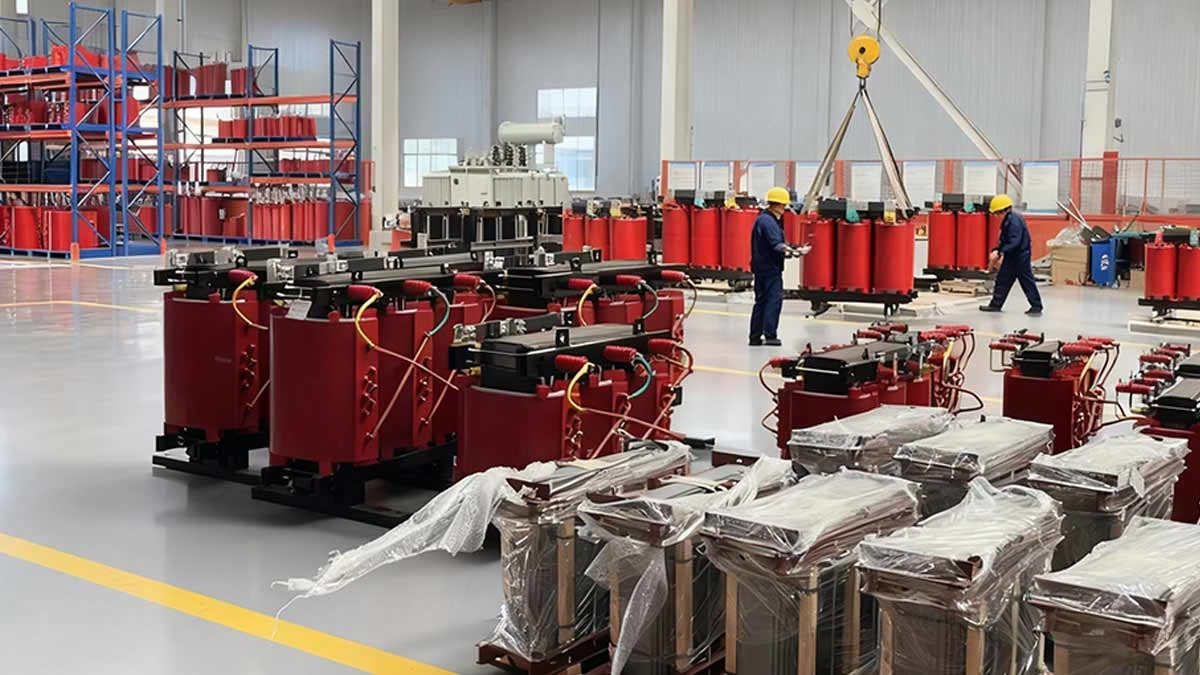
Smart Grid Integration: How Electronic Transformers Enhance Network Intelligence
Struggling with grid instability, power quality issues, or limited control over your power network? Electronic transformers are the linchpin of smart grid modernization, offering real-time visibility and dynamic control that conventional models can’t match.
Unlike traditional transformers—static devices with fixed settings—electronic transformers act as intelligent nodes in the grid. They communicate seamlessly with control systems, adjust to fluctuating demands, and integrate effortlessly with renewable energy sources and storage solutions.
Core Smart Grid Capabilities
- Real-Time Monitoring: Embedded sensors track voltage, current, power factor, and temperature 24/7, sending data to central management platforms. This enables early fault detection and data-driven decision-making.
- Instant Voltage Regulation: Conventional transformers require manual tap adjustments (taking minutes to hours), while electronic models regulate voltage in milliseconds—maintaining stability even during peak demand or renewable energy fluctuations.
- Seamless Communication: They integrate with SCADA systems, IoT platforms, and grid management software, responding to remote commands and coordinating with other grid components.
- Fault Resilience: Electronic transformers detect and isolate faults in milliseconds, reroute power automatically, and minimize outage duration. In one urban grid project, this reduced unplanned downtime by 60%.
Renewable Energy Compatibility
As solar and wind adoption grows, electronic transformers address the unique challenges of distributed energy:
- They handle bidirectional power flow (critical for rooftop solar or on-site wind farms).
- Dynamic load balancing mitigates the intermittency of renewable sources.
- They optimize integration with battery storage, ensuring efficient energy shifting between peak and off-peak hours.
While conventional transformers can be retrofitted for basic smart grid functions, electronic models are engineered from the ground up for intelligence—eliminating compatibility issues and performance limitations.
Size & Weight: Space-Saving Advantages for Modern Installations
Dealing with tight spaces, structural constraints, or high installation costs? Electronic transformers’ compact, lightweight design solves the most common infrastructure challenges in urban, industrial, and retrofitted projects.
Electronic transformers are typically 30–50% smaller and lighter than conventional models with the same kVA rating. This isn’t just a convenience—it opens up new installation possibilities and reduces project costs across the board.
Key Size & Weight Comparisons
For a 1,000 kVA transformer (a common industrial/commercial rating):
| Metric | Conventional Transformer | Electronic Transformer | Reduction |
|---|---|---|---|
| Footprint | 2.5m x 1.5m | 1.8m x 1.2m | 40% |
| Height | 2.2m | 1.8m | 18% |
| Weight | 3,000–4,000 kg | 1,800–2,500 kg | 30–50% |
Real-World Benefits
- Easier Installation: Lighter weight means no need for heavy-duty cranes or reinforced flooring—cutting installation time by 30–40% in tight spaces.
- Space Optimization: In a recent urban substation retrofit, we fit 50% more capacity using electronic transformers—all within the existing building footprint.
- Flexible Placement: Compact designs enable underground, rooftop, or wall-mounted installations—ideal for dense cities or retrofitted facilities where space is at a premium.
- Lower Transportation Costs: Reduced weight slashes shipping expenses, especially for remote or hard-to-reach project sites.
The size advantage isn’t just about fitting into small spaces—it’s about designing more efficient, cost-effective power infrastructure that adapts to modern project constraints.
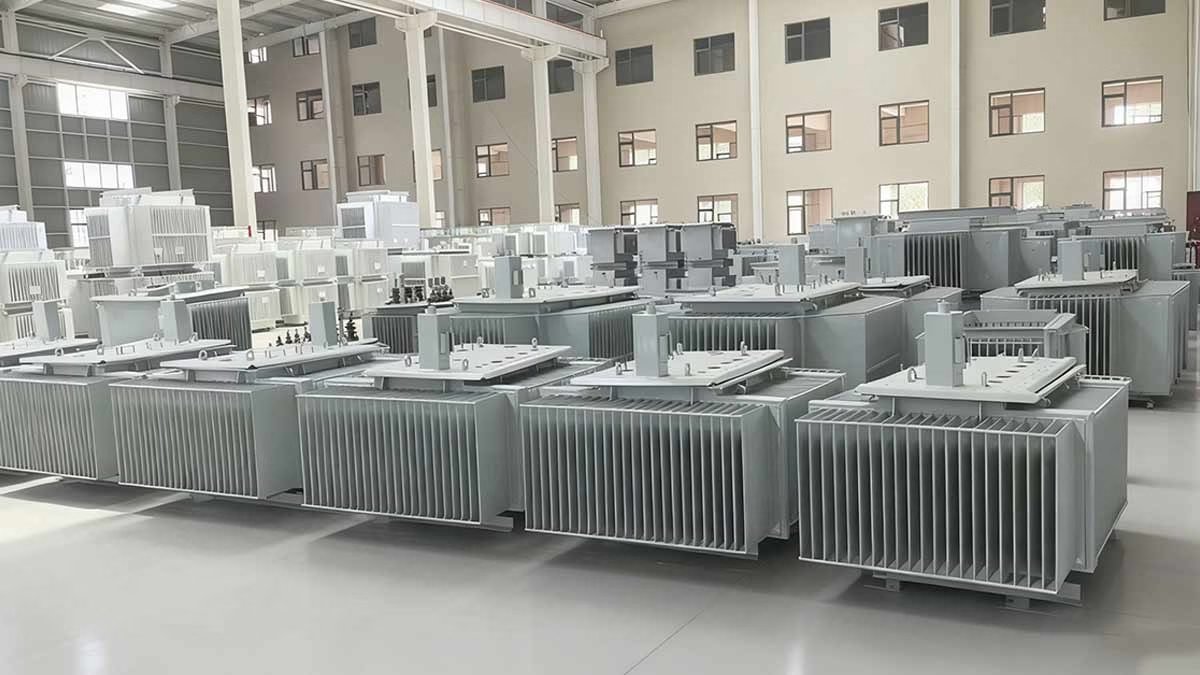
Maintenance & Lifespan: Long-Term Operational Reliability
Fed up with frequent maintenance, unexpected breakdowns, or premature transformer replacements? Electronic transformers deliver long-term reliability that minimizes downtime, reduces operational costs, and extends asset life.
With fewer moving parts, advanced self-diagnostic systems, and robust designs, electronic transformers require 50% less maintenance than conventional models—and last 5–10 years longer. For businesses and utilities, this translates to predictable budgets and uninterrupted power.
Maintenance Requirements Compared
| Aspect | Conventional Transformer | Electronic Transformer |
|---|---|---|
| Routine Maintenance | Oil testing/filtration (1–2x/year), tap changer servicing, bushing inspections | Annual visual checks, remote diagnostics (no oil handling for dry-type models) |
| Average Lifespan | 20–30 years | 25–35 years |
| Failure Rate | 0.5–1% per year | 0.2–0.5% per year |
| Mid-Life Refurbishment | Required (15–20 years) | Rarely needed |
Real-World Operational Data
Over 5 years managing a mixed fleet of transformers at a manufacturing facility:
- Conventional 1,000 kVA unit: 10 maintenance visits, 2 unplanned outages, 48 total downtime hours.
- Electronic 1,000 kVA unit: 5 routine check-ups, 0 unplanned outages, 8 total downtime hours.
Key Reliability Drivers
- Solid-State Design: No oil, tap changers, or mechanical switches—eliminating the most common failure points in conventional transformers.
- Predictive Maintenance: Built-in sensors and AI-driven analytics identify potential issues before they cause breakdowns—enabling proactive servicing instead of emergency repairs.
- Environmental Resilience: Sealed enclosures and advanced cooling systems protect against moisture, dust, and temperature extremes—reducing wear and tear in harsh conditions.
- Remote Diagnostics: Many issues can be diagnosed and resolved remotely, eliminating the need for on-site technician visits for minor problems.
The long-term benefits go beyond reduced maintenance costs—they’re about building power infrastructure that you can rely on for decades, not just years.
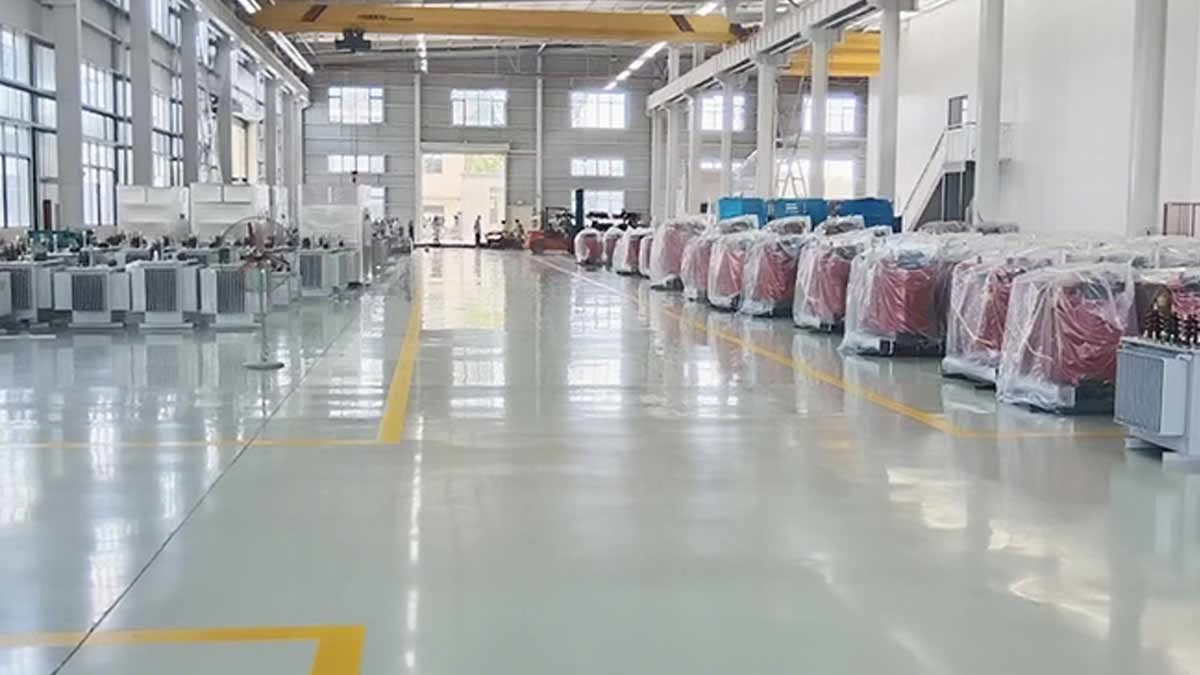
Environmental Impact: Sustainable Power Infrastructure
Concerned about your project’s carbon footprint, oil leakage risks, or end-of-life waste? Electronic transformers are the eco-friendly choice for modern power systems—delivering lower emissions, reduced resource use, and minimized environmental harm.
From manufacturing to operation to disposal, electronic transformers outperform conventional models in every sustainability metric—aligning with global carbon reduction goals and corporate ESG initiatives.
Key Environmental Advantages
- Lower Carbon Emissions: 98–99% efficiency reduces annual CO2 emissions by 30–40% compared to conventional models. A 1,000 kVA electronic transformer emits 10–15 tons of CO2 yearly, vs. 15–20 tons for conventional units.
- Oil-Free or Low-Oil Designs: Most electronic transformers are dry-type (no oil) or use 70–80% less oil than conventional models—eliminating the risk of soil or water contamination from leaks.
- Reduced Material Use: Compact size means 30–50% less raw material (steel, copper) in manufacturing—lowering embodied carbon.
- Better Recyclability: Advanced materials (amorphous metals, recyclable plastics) are easier to separate and reuse at end-of-life—reducing landfill waste by 40%.
- Quieter Operation: Electronic transformers operate at 40–60 dB (similar to a conversation), vs. 60–80 dB for conventional models—reducing noise pollution in urban or residential areas.
Real-World Sustainability Impact
For a 10 MVA substation upgrade, the environmental difference was dramatic:
| Metric | Conventional Solution | Electronic Solution |
|---|---|---|
| Land Use | 100 m² | 70 m² |
| Oil Volume | 8,000 liters | 2,000 liters |
| Annual Energy Loss | 350 MWh | 200 MWh |
| 20-Year CO2 Emissions | 3,000 tons | 1,700 tons |
Choosing electronic transformers isn’t just good for the environment—it’s good for your brand reputation and alignment with global sustainability standards.
Conclusion
Electronic transformers represent a paradigm shift in power distribution—offering unmatched efficiency, smart grid compatibility, space savings, reliability, and sustainability. While their upfront cost may be higher than conventional models, the long-term benefits—lower energy bills, reduced maintenance, extended lifespan, and minimized environmental impact—deliver superior ROI for modern projects.
Whether you’re upgrading an existing substation, designing a new industrial facility, or building a smart city infrastructure, electronic transformers provide the flexibility, performance, and reliability needed to meet today’s power demands while preparing for tomorrow’s challenges.
The energy industry’s future is electronic—and making the switch now positions your project for long-term success in an increasingly efficient, connected, and sustainable world.