
The cost of dry-type transformers in 2025 will be shaped by a dynamic mix of raw material volatility, technological innovation, market demand shifts, production scalability, regulatory updates, and custom project requirements. For buyers and project planners, navigating these factors is critical to budgeting accurately and selecting a solution that balances upfront investment with long-term value.
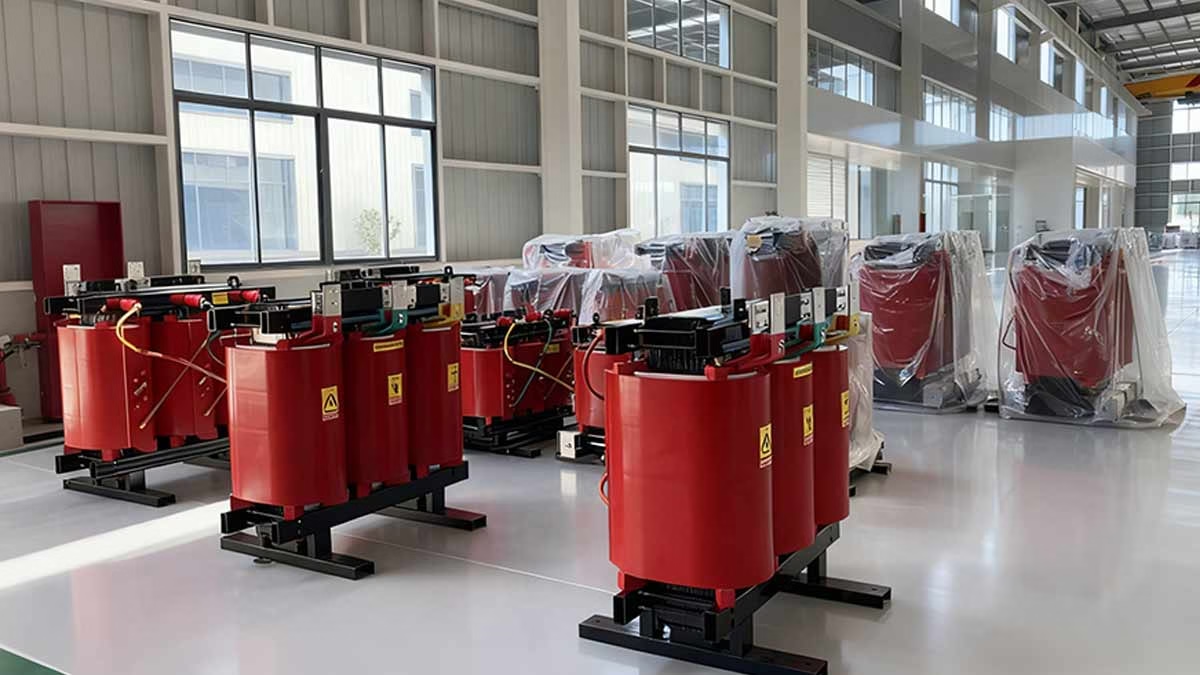
With over two decades of engineering and manufacturing experience in the transformer sector, we’ve witnessed how these elements intersect to drive pricing. Below, we break down the critical factors defining dry-type transformer costs in 2025—backed by industry insights and real-world applications.
Contents
hide
2025 Dry-Type Transformer Market: Types & Price Landscapes
Curious about which dry-type transformer types will dominate 2025 markets and their associated price points? The answer hinges on application needs, performance requirements, and budget constraints—with three core types leading the industry.
In 2025, cast resin, vacuum pressure impregnated (VPI), and open-wound dry-type transformers will remain the primary options, with prices spanning $5,000 to $500,000. Cast resin models will command premium pricing for their fire safety and durability, while open-wound transformers offer a cost-effective solution for basic applications.
Breakdown of 2025’s Leading Transformer Types
Cast Resin Transformers: Premium Performance for Critical Applications
Cast resin transformers are the gold standard for high-stakes environments, where safety and reliability justify a higher upfront cost.
- Price Range:
- Small (≤500 kVA): $16,000 – $52,000
- Medium (500–2,500 kVA): $53,000 – $205,000
- Large (>2,500 kVA): $210,000 – $510,000
- Key Advantages: Fire-resistant design, robust short-circuit tolerance, minimal maintenance.
- Top Applications: Data centers, high-rise commercial buildings, hospitals, and industrial facilities with strict safety codes.
- Real-World Example: We supplied a 2,200 kVA cast resin transformer for a hyperscale data center in 2024, priced at $195,000. The client prioritized its zero-oil design and low fire risk—critical for protecting sensitive IT infrastructure and meeting local building codes.
Vacuum Pressure Impregnated (VPI) Transformers: Balanced Value & Versatility
VPI transformers strike a sweet spot between performance and cost, making them the most versatile option for mid-range applications.
- Price Range:
- Small (≤500 kVA): $11,000 – $42,000
- Medium (500–2,500 kVA): $43,000 – $155,000
- Large (>2,500 kVA): $158,000 – $410,000
- Key Advantages: Excellent thermal stability, suitability for indoor/outdoor use, cost-effective for medium loads.
- Top Applications: Renewable energy projects (solar/wind), industrial plants, and commercial complexes.
- Real-World Example: For a 1,600 kVA solar farm in the Southwest U.S., we specified a VPI transformer priced at $128,000. Its weather-resistant design and efficient load handling made it ideal for the outdoor installation, delivering reliable performance without the premium cost of cast resin.
Open-Wound Transformers: Economic Solutions for Basic Needs
Open-wound transformers remain the go-to for cost-sensitive, low-complexity applications where environmental conditions are controlled.
- Price Range:
- Small (≤500 kVA): $5,500 – $26,000
- Medium (500–1,000 kVA): $27,000 – $83,000
- Large (>1,000 kVA): $85,000 – $208,000
- Key Advantages: Lowest upfront cost, easy inspection, and maintenance.
- Top Applications: Small workshops, light industrial facilities, temporary installations, and rural commercial spaces.
- Real-World Example: A 350 kVA open-wound transformer ($19,500) was the perfect fit for a family-owned manufacturing workshop. The client’s clean, dry facility and stable load profile meant they didn’t need the advanced features of cast resin or VPI—saving 30% on upfront costs.
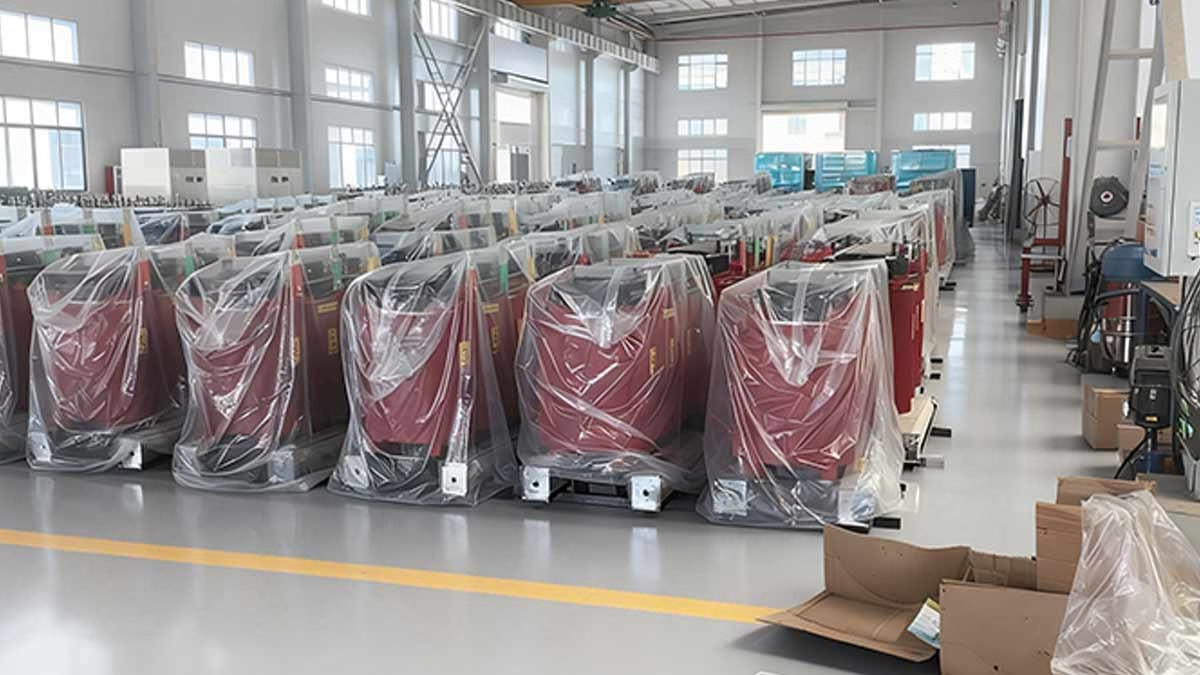
2025 Dry-Type Transformer Price Comparison
| Transformer Type | Small (≤500 kVA) | Medium (500–2,500 kVA) | Large (>2,500 kVA) |
|---|---|---|---|
| Cast Resin | $16k – $52k | $53k – $205k | $210k – $510k |
| VPI | $11k – $42k | $43k – $155k | $158k – $410k |
| Open-Wound | $5.5k – $26k | $27k – $83k | $85k – $208k |
Note: Prices reflect 2025 projections based on current market trends, material costs, and production volumes. Final pricing may vary by manufacturer, customization, and regional demand.
A critical consideration beyond upfront cost is total ownership value. For example, a client initially opted for a $22,000 open-wound transformer for their expanding warehouse—but after reviewing their 5-year growth plan, we recommended a $38,000 VPI model. The VPI transformer’s higher load capacity and durability eliminated the need for a costly replacement just two years later, saving the client $45,000 in long-term expenses.
Raw Material Shifts: Driving 2025 Transformer Pricing
Raw material costs are the backbone of transformer pricing—and 2025 will see significant volatility in key inputs like copper, electrical steel, and insulation materials. These fluctuations can swing final transformer prices by 10–30%, making it essential to track material trends and plan accordingly.
Key Materials & Their 2025 Impact
Copper: The High-Stakes Conductor
Copper is irreplaceable for transformer windings, accounting for 30–40% of total material costs.
- 2025 Trend: Projected 15–20% price increase, driven by demand from renewable energy (solar/wind) and electric vehicle (EV) manufacturing. Supply constraints—particularly from top producers like Chile and Peru—will amplify volatility.
- Cost Impact: A 20% rise in copper prices translates to a 6–8% increase in overall transformer costs. For a 1,000 kVA cast resin transformer, this could add $8,000–$12,000 to the final price.
- Industry Adaptations: Manufacturers are optimizing winding designs to reduce copper usage, while some are exploring aluminum-copper hybrids for non-critical applications. We recently redesigned a 500 kVA VPI transformer’s windings to cut copper consumption by 12%—mitigating cost hikes for our clients.
Electrical Steel: The Core Cost Driver
Electrical steel (grain-oriented or amorphous) forms the transformer’s core, representing 20–25% of material costs.
- 2025 Trend: 10–15% price growth, fueled by demand from the EV sector and supply chain disruptions. Amorphous steel—used for high-efficiency models—will see steeper increases due to limited production capacity.
- Cost Impact: A 15% surge in electrical steel prices adds 3–4% to transformer costs. For large-scale projects using 10+ transformers, this can translate to six-figure budget adjustments.
- Industry Adaptations: Our engineering team has adopted thinner-gauge grain-oriented steel for standard models, improving efficiency while offsetting material costs. For a utility client, this reduced core losses by 8% without increasing the price tag.
Insulation & Resin Materials: Hidden Cost Shifters
Insulation materials (for all types) and epoxy resin (for cast resin transformers) are smaller but impactful cost factors.
- Insulation Trends: 5–10% price increase by 2025, driven by eco-friendly regulations phasing out harmful chemicals. Nano-enhanced and bio-based insulation options—while more durable—command a 15–20% premium.
- Resin Trends: 8–12% price hike, linked to crude oil volatility and increased demand for high-performance formulations. Coastal and humid applications require moisture-resistant resin, adding 5–7% to costs.
- Real-World Example: For a coastal wind farm project, we used moisture-resistant epoxy resin in cast resin transformers—adding $3,500 per unit, but extending lifespan by 15 years and reducing maintenance costs by 40%.
2025 Raw Material Cost Impact Summary
| Material | 2025 Price Surge | Impact on Transformer Cost |
|---|---|---|
| Copper | 15–20% | 6–8% increase |
| Electrical Steel | 10–15% | 3–4% increase |
| Insulation Materials | 5–10% | 1–1.5% increase |
| Epoxy Resin (Cast Resin) | 8–12% | 1.5–2% increase |
To mitigate these risks, we advise clients to:
- Lock in long-term supply agreements with material price escalation clauses.
- Prioritize transformer designs that optimize material usage (e.g., compact windings, efficient cores).
- Consider total cost of ownership over upfront savings—high-quality materials often reduce maintenance and energy costs.
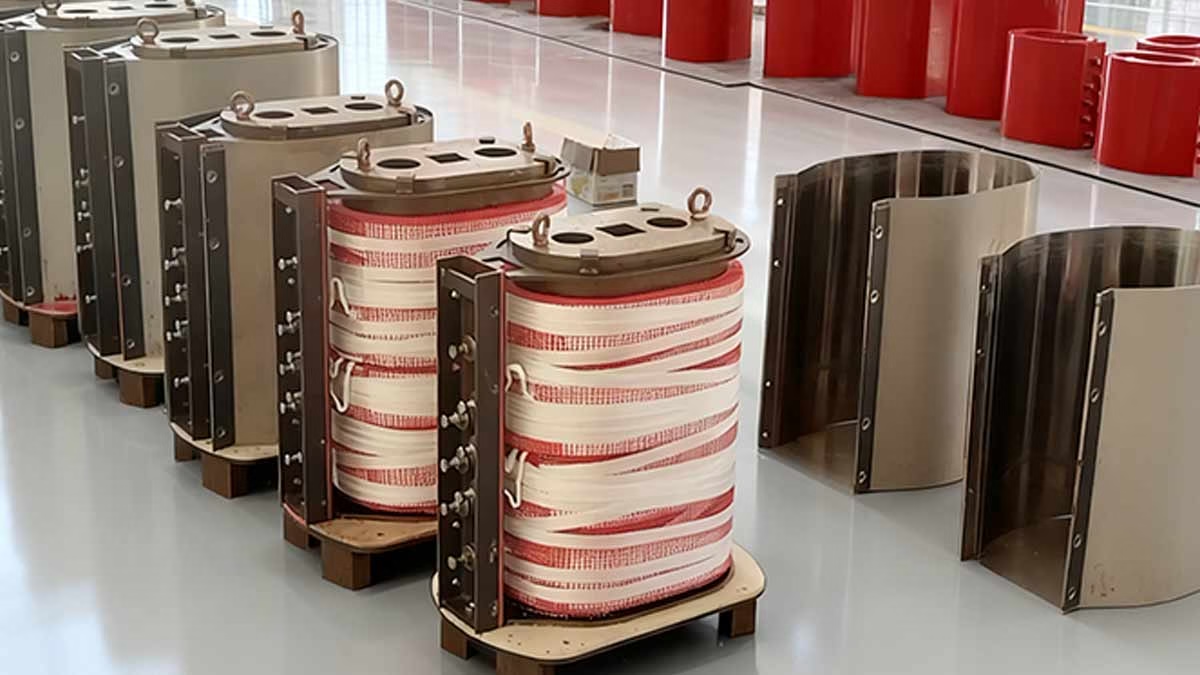
Technology & Efficiency: How Innovation Shapes 2025 Costs
Technological advancements are redefining dry-type transformer value—with innovations like smart monitoring, advanced core materials, and high-efficiency designs driving upfront costs but delivering substantial long-term savings. In 2025, buyers will face a clear tradeoff: pay more initially for cutting-edge features or opt for standard models with higher operational expenses.
Key Innovations & Their Cost Implications
Advanced Core Materials: Efficiency at a Premium
- Amorphous Metal Cores: 20–30% more expensive than traditional silicon steel, but reduce no-load losses by 70%. For a 2,000 kVA transformer, this translates to $10,000–$15,000 in additional upfront cost—offset by $15,000–$20,000 in annual energy savings.
- High-Grade Grain-Oriented Steel: 10–15% price premium, improving overall efficiency by 0.5–1%. Ideal for large transformers (1,000 kVA+) with high load factors.
- Case Study: We installed an amorphous metal core transformer for a manufacturing plant in 2023. The $12,000 upfront premium was recovered in 2.8 years through reduced energy bills, and the client will save an estimated $120,000 over the transformer’s 20-year lifespan.
Smart Monitoring & Predictive Maintenance
IoT-enabled sensors and AI-driven diagnostics are becoming standard in mid-to-high-end transformers—adding functionality but increasing costs.
- Cost Impact: $6,000–$22,000 per transformer, depending on complexity (e.g., real-time load tracking, thermal monitoring, remote control).
- Long-Term Benefits: Extends transformer life by 10–15%, reduces unplanned downtime by 40%, and cuts maintenance costs by 25%.
- Case Study: A data center client invested in AI-monitored transformers ($18,000 premium per unit). Within 18 months, the system detected a cooling fan malfunction—preventing a potential outage that would have cost $300,000 in lost revenue.
High-Efficiency Designs & Cooling Systems
Stricter global efficiency standards (e.g., EU Ecodesign, U.S. DOE) are pushing manufacturers to exceed minimum requirements—driving up costs but lowering energy waste.
- Cost Impact: High-efficiency models (99%+ efficiency) command a 10–20% premium over standard units (97–98% efficiency). Advanced cooling systems (e.g., forced air, phase-change) add 5–10% to costs.
- Value Proposition: For transformers operating 24/7 (e.g., data centers, hospitals), the energy savings can recover the premium in 3–7 years.
- Example: A 1,500 kVA high-efficiency transformer ($145,000) uses 8,000 fewer kWh monthly than a standard model ($125,000)—saving $9,600 annually at $0.10/kWh.
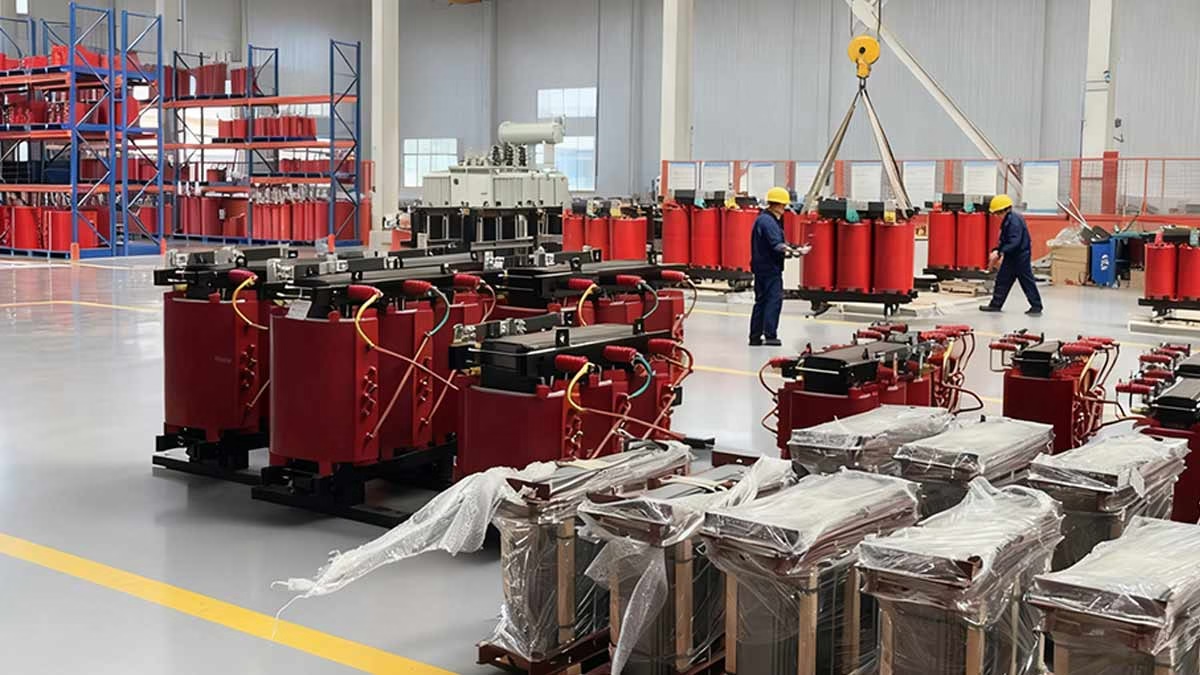
Technology Cost-Benefit Comparison
| Innovation | Upfront Cost Increase | Long-Term Benefits | Typical ROI Period |
|---|---|---|---|
| Amorphous Metal Cores | 5–10% | 70% lower no-load losses | 3–5 years |
| Smart Monitoring Systems | 3–8% | 40% less downtime, 25% lower maintenance | 4–6 years |
| High-Efficiency Design | 10–20% | 15–30% reduced energy losses | 3–7 years |
| Advanced Cooling | 5–10% | Higher load capacity, extended lifespan | 5–8 years |
The key takeaway? Innovation isn’t just about “new technology”—it’s about aligning features with your application. For a temporary construction site, a standard open-wound transformer makes sense. For a critical data center, smart monitoring and high efficiency are non-negotiable investments that protect against costly disruptions.
Market Dynamics & Production Scale: Pricing Strategies for 2025
Transformer pricing in 2025 will be heavily influenced by global demand shifts, competition, and economies of scale. These factors can create price variations of 10–25% for identical transformer specifications—making market awareness as important as technical requirements.
Key Market Forces Shaping 2025 Pricing
Demand Surges in High-Growth Sectors
- Renewable Energy: Solar and wind projects will drive a 15–20% demand spike for medium-to-large dry-type transformers (500–2,500 kVA), leading to 5–10% price premiums in this segment.
- Data Centers: Hyperscale data center expansions will increase demand for cast resin transformers by 12–15%, with lead times extending to 16–20 weeks for custom models.
- Regional Trends: Asia-Pacific’s infrastructure boom will push prices up 10–15% in the region, while mature markets (North America, Europe) will see stable or slightly declining prices (-5% to +5%) for standard models.
Global Competition: Balancing Cost & Quality
- Emerging Market Manufacturers: Offer 15–25% lower prices for standard transformers, but often lack certifications (e.g., IEC, UL) and after-sales support. Risks include shorter lifespans (10–12 years vs. 20+ for premium models) and higher failure rates.
- Established Players: Command 10–20% premiums for proven reliability, compliance, and service. For critical applications, this premium is often justified by reduced downtime.
- Our Perspective: We advise clients to avoid the “race to the bottom” on price. A 20% cheaper transformer from an unproven supplier may cost 3x more in repairs and replacements over 10 years.
Economies of Scale: Volume & Standardization
- Bulk Orders: Purchasing 5+ transformers can reduce unit costs by 10–15% through streamlined production. We secured a 12% discount for a utility client ordering 12 identical 1,000 kVA VPI transformers.
- Standardization vs. Customization: Standardized voltage ratings (e.g., 480V/208Y-120V) and capacities cost 20–40% less than custom designs. Modular transformers—allowing partial upgrades—strike a balance between flexibility and cost.
- Production Capacity: Manufacturers operating at >80% capacity may charge 5–10% more due to limited supply, while those with excess capacity may offer discounts of 10–15% to fill orders.
2025 Market Pricing Impact Summary
| Factor | Potential Price Impact | Most Affected Segment |
|---|---|---|
| Renewable Energy Demand | +5% to +10% | Medium-to-large VPI/cast resin |
| Emerging Market Competition | -15% to -25% | Standard open-wound/VPI |
| Bulk Orders (5+ units) | -10% to -15% | All standard models |
| Customization | +20% to +40% | Specialized industrial transformers |
| High Production Capacity Utilization | +5% to +10% | All types (peak demand periods) |
To navigate these dynamics, we recommend:
- Planning purchases 6–8 months in advance for custom or high-demand models.
- Diversifying suppliers to mitigate regional price spikes.
- Prioritizing standardization where possible, and modular designs for future growth.
Regulatory Compliance & Customization: Hidden 2025 Cost Drivers
Regulatory updates and project-specific customization are often overlooked—but they can add 15–30% to dry-type transformer costs in 2025. Stricter efficiency, safety, and environmental standards, combined with unique application needs, are forcing manufacturers to adapt designs—with costs passed to buyers.
Regulatory Compliance: The Unseen Price Tag
Efficiency Standards
- Global Updates: The EU’s revised Ecodesign Directive (2025) and U.S. DOE’s Level 2 standards will require transformers to cut energy losses by 5–10% compared to current models. Compliance requires higher-grade materials and optimized designs—adding 8–15% to costs.
- Regional Variations: California’s Title 20 and China’s GB 20052 will impose even stricter requirements, pushing premiums to 12–18% for transformers sold in these markets.
Safety & Environmental Regulations
- Fire Safety: Indoor installations (e.g., high-rises, hospitals) will require compliance with IEC 60076-11 (fire behavior) and NFPA 70 (NEC) standards. Enhanced insulation and fire containment features add 5–10% to costs.
- Eco-Friendly Requirements: Restrictions on hazardous substances (e.g., certain flame retardants) will drive adoption of bio-based insulation—adding 3–7% to costs. For cast resin transformers, low-VOC epoxy formulations will increase prices by 4–6%.
Customization: Tailoring to Unique Needs
Every project has unique requirements—and customization comes at a cost. Below are the most common customizations and their 2025 price impacts:
- Non-Standard Voltages: Specialized ratios (e.g., 13.8kV/480V) add 10–20% to costs due to custom winding designs and testing.
- Extreme Environment Adaptations: Transformers for high altitudes (>3,000m), extreme temperatures (-40°C to 55°C), or corrosive environments (coastal, industrial) require specialized materials and cooling—adding 15–25% to costs.
- Size/Weight Constraints: Compact urban installations or rooftop projects demand slim designs, often requiring custom cores and windings—increasing costs by 20–30%.
- Noise Reduction: Ultra-low noise (≤50 dB) transformers for hospitals, schools, or residential areas use sound-dampening enclosures and low-vibration cores—adding 10–15% to costs.
Industry-Specific Customizations
- Marine/Offshore: Corrosion-resistant materials and IP67 ratings for offshore wind farms add 30–50% to costs.
- Data Centers: Redundant cooling and harmonic filtering for sensitive IT equipment increase prices by 15–25%.
- Mining: Dust-proof, ruggedized transformers for underground or high-vibration sites cost 25–35% more than standard models.
Regulatory & Customization Cost Impact
| Factor | Potential Cost Increase | Primary Driver |
|---|---|---|
| Stricter Efficiency Standards | 8–15% | Higher-grade materials, optimized designs |
| Fire Safety Compliance | 5–10% | Enhanced insulation, containment features |
| Non-Standard Voltages | 10–20% | Custom winding design/testing |
| Extreme Environment Adaptations | 15–25% | Specialized materials, cooling systems |
| Marine/Offshore Requirements | 30–50% | Corrosion resistance, IP67 ratings |
Mitigating Hidden Costs
- Engage manufacturers early to align custom needs with standard components (e.g., using modular windings for non-standard voltages).
- Stay ahead of regulatory changes to avoid last-minute design revisions.
- Evaluate whether custom features are critical—e.g., a rural workshop may not need the same fire safety features as a downtown high-rise.
Conclusion
Dry-type transformer costs in 2025 will be defined by a complex interplay of raw material trends, technological innovation, market dynamics, regulatory compliance, and customization needs. While upfront prices will fluctuate based on these factors, the most successful purchasing decisions will prioritize total cost of ownership—balancing initial investment with energy savings, maintenance costs, and lifespan.
For buyers, the key is to:
- Align transformer type with application needs (e.g., cast resin for critical safety, open-wound for cost-sensitive projects).
- Track raw material and regulatory trends to budget accurately.
- Balance standardization and customization to optimize costs.
- Prioritize innovations that deliver clear ROI (e.g., smart monitoring for high-uptime applications).
At every step, partnering with an experienced manufacturer helps navigate these complexities—ensuring you get a transformer that meets performance, compliance, and budget goals. As 2025 unfolds, the transformers that deliver the greatest value will be those that balance efficiency, durability, and adaptability—proving that cost is just one piece of the puzzle.